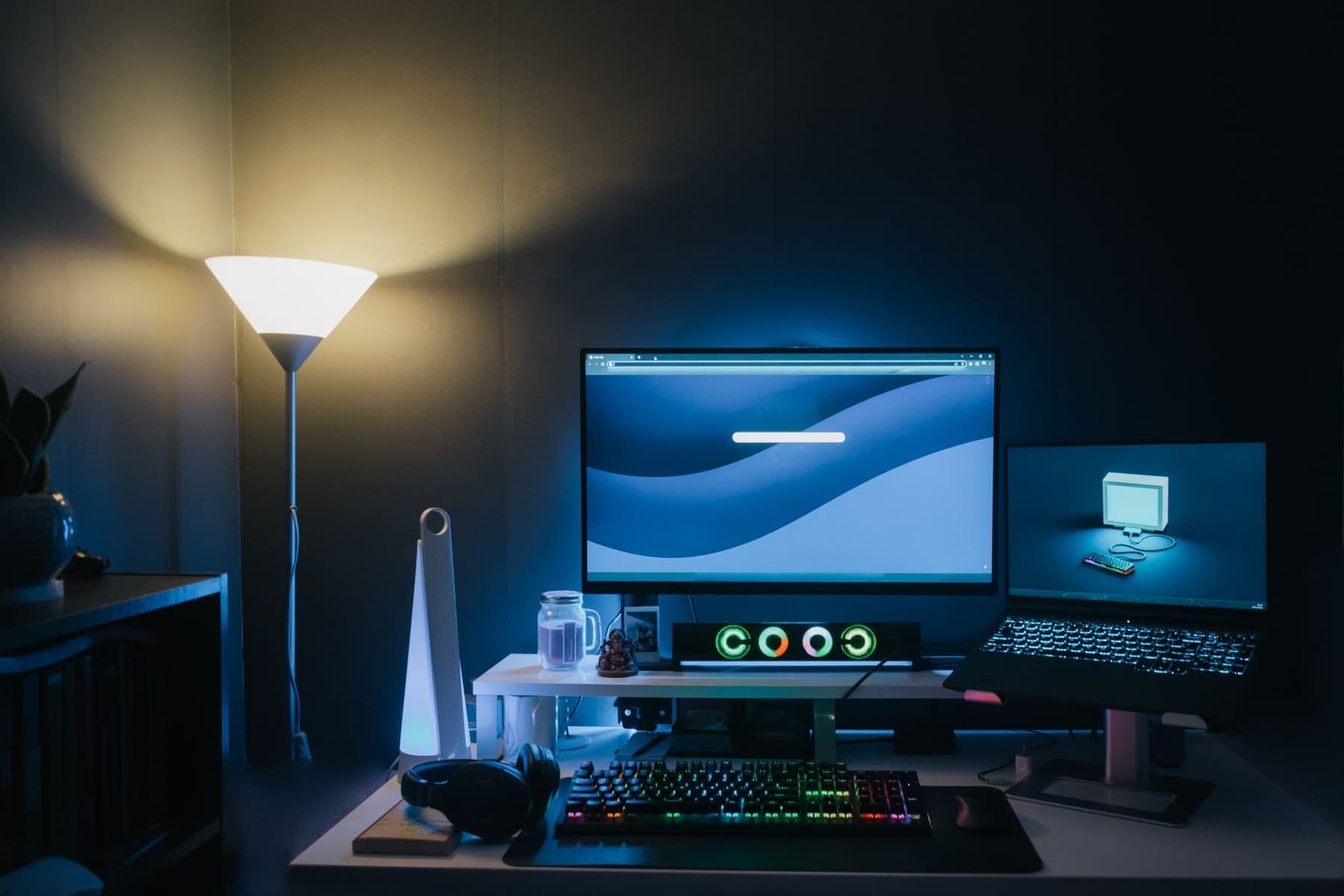
For gaming at a desk, the SteelSeries Arctis Nova Pro Wireless is the best choice, because its 2.4 GHz wireless link avoids Bluetooth latency and it has a retractable boom microphone and two hot-swappable batteries rated at up to 22 hours each. For handheld and console gaming away from a desk, the JBL Tour One M3 is the better buy, because its Smart Tx transmitter feeds audio from any 3.5 mm or USB-C source. For zero latency at the lowest price, use a wired in-ear such as the Sennheiser IE 200.
The one axis
Why Bluetooth is the problem
Standard Bluetooth audio buffers. That buffer is what keeps music playing smoothly when you put your phone in a pocket, and it is exactly what you do not want when a footstep needs to arrive at the same moment as the frame it belongs to.
You notice it first on lip sync in cutscenes, and second, more expensively, on anything where the sound is a cue rather than a soundtrack. This is why a gaming headset ships a dongle instead of just using the Bluetooth radio that is already in every laptop.
A travel headphone is tuned to survive a bad connection. A gaming headset is tuned to never have one. Those are different engineering problems.
The routes
The four ways to get audio into your ears
| Route | Latency | Microphone | Portable |
|---|---|---|---|
| Wired 3.5 mm | None | Only with an inline mic cable | Completely |
| 2.4 GHz dongle | Very low, purpose-built | Boom microphone | Desk-bound in practice |
| Dedicated transmitter, e.g. JBL Smart Tx | Low | Headphone's own array | Yes |
| Standard Bluetooth | Highest, and variable | Headphone's own array | Yes |
Where you play
Pick by location, then by everything else
You play at a desk, and you talk to people
Buy the headset. The boom microphone alone justifies it: a travel headphone’s microphone array is engineered to isolate your voice from a windy street, not to sound good, and the difference is obvious to everyone except you.
You play on a handheld, on a commute
Buy a travel headphone that ships a transmitter. The Tour One M3 does, and the same transmitter solves the airline-jack problem later — the in-flight entertainment page covers that use in full.
You want one pair for gaming and travel
That is the Tour One M3 as well, and it is the honest compromise on this page. A desk headset cannot go in a personal item, and headphones versus headset is the page that argues that decision out properly.
A caution
Long sessions are a volume problem
Gaming sessions run longer than albums do, and the risk with any headphone is cumulative exposure rather than a single loud moment. Our guide on whether noise canceling is bad for your ears covers the mechanism, and the short version is that canceling lets you listen quieter, which is the useful part.
In short
Key takeaways
- At a desk: SteelSeries Arctis Nova Pro Wireless, for the 2.4 GHz link, the boom microphone and two hot-swap batteries at up to 22 hours each.
- On a handheld: JBL Tour One M3, because the Smart Tx transmitter feeds audio from any 3.5 mm or USB-C source.
- Lowest latency of all is a wire, and the Sennheiser IE 200 is the cheapest way to have one.
- Standard Bluetooth buffers audio, which is why it is the wrong link for games.
- A desk headset is not a travel product — there is a base station involved.
At a glance
Quick picks
Scores are our editorial judgment from published specifications and cited third-party measurements, not our own testing. The rubric is published in full. Tap any row for the full write-up.
| # | Product | Best for | Score | Price |
|---|---|---|---|---|
| 1 | 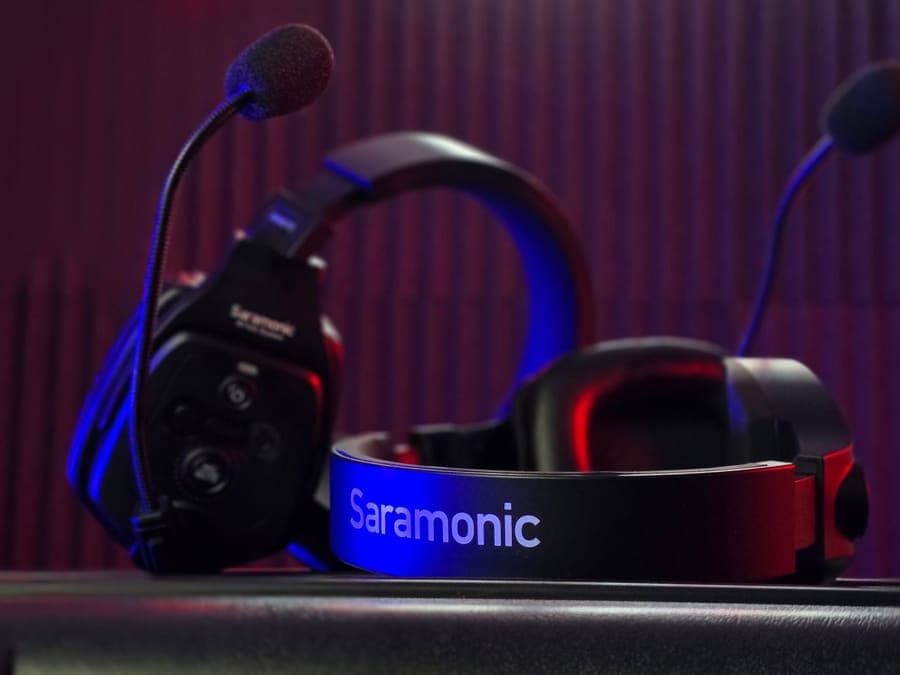 SteelSeries Arctis Nova Pro WirelessThe headset answer rather than the headphone answer: a retractable broadcast microphone, a base station, and two hot-swap batteries so it never has to stop to charge. | Best at a desk | 8.88.8 out of 10, our editorial score | |
| 2 |  JBL Tour One M3The only headphone here that ships with the answer to the airline-jack problem in the box: the Smart Tx transmitter plugs into the seat and sends the movie to your headphones over Bluetooth. | Best for handheld and console away from the desk | 8.78.7 out of 10, our editorial score | |
| 3 | 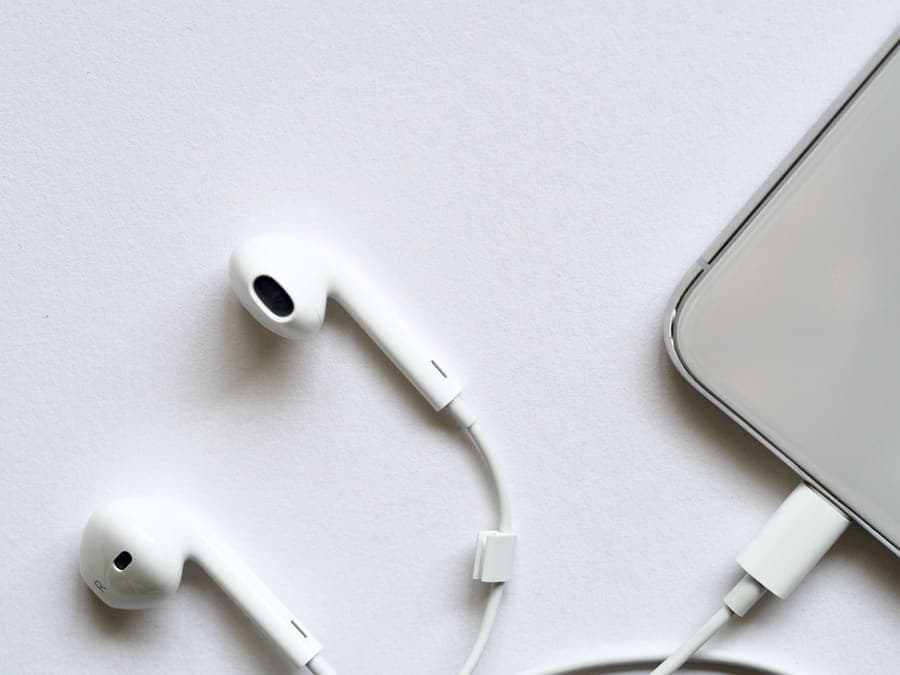 Sennheiser IE 200A wired in-ear monitor with a published specification sheet rather than a marketing number: 4 g per side, a 7 mm dynamic driver and tips you can mount two ways to change the bass. | Zero latency, for the price of a cable | 8.78.7 out of 10, our editorial score |
#ad Amazon links are affiliate links. No live price is shown anywhere on this site, so every button reads “Check price on Amazon”. How this is funded.
The picks in full
Every pick, in detail
1. Best at a desk
SteelSeries Arctis Nova Pro Wireless
The headset answer rather than the headphone answer: a retractable broadcast microphone, a base station, and two hot-swap batteries so it never has to stop to charge.
Our editorial score: 8.8 / 10
#ad Live price not shown. How this is funded
Also sold direct by SteelSeries — we earn nothing there, so check both.
At a desk the right answer is a headset, not a headphone, and the reason is the 2.4 GHz link. A dedicated wireless dongle is built for low latency in a way Bluetooth is not, and in a game latency is not a nuisance, it is the whole experience.
Two hot-swappable batteries at up to 22 hours each mean the headset itself never has to stop. A retractable broadcast-quality bidirectional microphone beats any travel headphone’s built-in array, because a boom sits in front of your mouth instead of guessing from the earcup.
It also carries active canceling and transparency, a GameDAC Gen 2 with an ESS Sabre quad-DAC, and multi-system connect so a PC and a console share one headset. What it is not, at all, is portable — there is a base station on your desk.
What works on a plane
- Hot-swap batteries mean the headset is never out of action, only one battery is
- 2.4 GHz is the low-latency link that Bluetooth cannot match for games
- A retractable boom microphone beats every travel headphone's built-in array
- Switches between two systems, so the PC and the console share one headset
What does not
- A base station on the desk makes this the opposite of a travel product
- Heavy and large next to anything designed to go in a personal item
- Costs flagship-headphone money and cannot replace one on a plane
How it scores against the five travel axes
Published specifications
| Spec | Figure | Source |
|---|---|---|
| Battery | Up to 22 hours per battery, two hot-swappable batteries | SteelSeries |
| Noise control | Active noise canceling with transparency mode | SteelSeries |
| Wireless | 2.4 GHz plus Bluetooth, with multi-system connect | SteelSeries |
| DAC | GameDAC Gen 2, ESS Sabre quad-DAC, 96 kHz / 24-bit Hi-Res certified | SteelSeries |
| Microphone | Retractable broadcast-quality bidirectional, AI noise cancellation rated at 25 dB | SteelSeries |
| Drivers | Hi-Res capable, frequency range quoted up to 40 kHz | SteelSeries |
| Tuning | 10-band parametric EQ via SteelSeries software | SteelSeries |
2. Best for handheld and console away from the desk
JBL Tour One M3
The only headphone here that ships with the answer to the airline-jack problem in the box: the Smart Tx transmitter plugs into the seat and sends the movie to your headphones over Bluetooth.
Our editorial score: 8.7 / 10
#ad Live price not shown. How this is funded
Also sold direct by JBL — we earn nothing there, so check both.
The Smart Tx transmitter in the box is the quiet answer to handheld gaming. Plug it into a Switch, a Steam Deck or anything with a 3.5 mm or USB-C output and it sends the audio to the headphones on its own link, rather than leaving you at the mercy of the console’s Bluetooth stack.
Up to 40 rated hours with canceling on, 278 g, and both a 3.5 mm and a USB-C wired path in the box. It is the only product here that is genuinely good at gaming on a train and good on a plane afterwards.
What works on a plane
- The Smart Tx transmitter solves in-flight entertainment without a separate purchase
- Up to 40 rated hours with canceling on, comfortably over a long-haul plus layover
- Five minutes of charge buys five hours
- Both a 3.5 mm and a USB-C wired path in the box
What does not
- The Smart Tx is one more small object to lose, and it needs its own charge
- 278 g sits between the Sony and the Sennheiser without beating either at their own game
- Noise canceling is very good rather than class-leading
How it scores against the five travel axes
Published specifications
| Spec | Figure | Source |
|---|---|---|
| Battery, Bluetooth | Up to 70 hours | JBL |
| Battery, ANC on | Up to 40 hours | JBL |
| Quick charge | 5 minutes gives 5 hours | JBL |
| Battery cell | 850 mAh, full charge approx. 2 hours | JBL |
| Weight | 278 g | JBL |
| Smart Tx | Transmitter streams from non-Bluetooth sources including in-flight entertainment | JBL |
| In the box | USB-C-to-3.5 mm and USB-C-to-USB-C cables, USB-C to USB-A adapter | JBL |
3. Zero latency, for the price of a cable
Sennheiser IE 200
A wired in-ear monitor with a published specification sheet rather than a marketing number: 4 g per side, a 7 mm dynamic driver and tips you can mount two ways to change the bass.
Our editorial score: 8.7 / 10
#ad Live price not shown. How this is funded
Also sold direct by Sennheiser — we earn nothing there, so check both.
If you play on a handheld with a headphone jack, a wire has no latency at all, and that is not a claim any wireless product can make. Four grams a side and a 1.2 m braided cable with a 3.5 mm angled plug.
No microphone on the stock cable, so this is a single-player answer rather than a party-chat one. For competitive play where audio cues matter, a wire remains the cheapest real advantage available.
What works on a plane
- A real specification sheet with distortion and impedance figures, which most earbuds never publish
- 4 g per side and no battery, so it never runs out and never degrades
- Detachable MMCX cable means a frayed cable is a repair rather than a replacement
- Two tip-mounting positions change the bass without an app or an EQ
What does not
- Wired, so there is a cable in your lap and no Bluetooth on a plane without an adapter
- No active noise canceling at all — isolation comes entirely from the tip seal
- No microphone on the stock cable, so it is not a call headset
How it scores against the five travel axes
Published specifications
| Spec | Figure | Source |
|---|---|---|
| Frequency response | 6 - 20,000 Hz | Sennheiser |
| Impedance | 16 ohm (18 ohm with cable) | Sennheiser |
| Sound pressure level | 119 dB (1 kHz, 1 Vrms) | Sennheiser |
| Distortion | THD < 0.08 % | Sennheiser |
| Transducer | 7 mm dynamic, closed | Sennheiser |
| Weight | 4 g | Sennheiser |
| Cable | 1.2 m braided, MMCX connectors, 3.5 mm angled plug | Sennheiser |
| List price | $159.95 at the time of writing | Sennheiser |
How we decide
How these picks were chosen
We do not run a test lab and we do not claim to have flown with these units. Every verdict on this page is one of three things: a measurement published by somebody who does own a test rig and is credited by name, a manufacturer specification we quote and then interpret against what a long flight actually demands, or a plainly-labeled editorial judgment. The five axes we score on — cabin-noise reduction, battery on a long-haul, pack size, comfort past hour three, and wired fallback — are the ones that decide a travel purchase, and the weighting is published in full.
Questions
Common questions
Can you use noise canceling headphones for gaming?
You can, and the canceling itself is genuinely useful in a shared room. The problem is the connection rather than the headphone: over standard Bluetooth the audio lags the picture. Use a wired connection or a dedicated transmitter and a travel headphone is a perfectly good gaming headphone.
Do I need a gaming headset, or will headphones do?
If you talk to other players, the boom microphone is the reason to buy a headset, and it is a big one. If you play alone, a good pair of headphones on a wire will usually sound better than a headset at the same price, because none of the money went on a microphone and a dongle.
Is Bluetooth latency really noticeable in games?
In anything where sound is a cue, yes. You notice it first as lip sync drifting in cutscenes. The fix is not a better Bluetooth codec but a different link entirely: a 2.4 GHz dongle, a dedicated transmitter, or a cable.
What is the best headphone for Nintendo Switch or Steam Deck?
Either a wired pair into the 3.5 mm jack, which has no latency at all, or a headphone that ships its own transmitter such as the JBL Tour One M3. Pairing directly over the handheld’s own Bluetooth is the option most likely to disappoint.
Sources
Where these figures come from
Read next
Related reading
- Headphones vs headset
The same decision, argued out properly.
- Best headphones for in-flight entertainment
The transmitter trick, applied to a seatback screen.
- JBL Tour One M3 review
The handheld pick, in detail.
- Bluetooth and in-flight entertainment
Why Bluetooth needs help connecting to anything that is not a phone.
- Are noise-canceling headphones bad for your ears?
Relevant to sessions that run long.