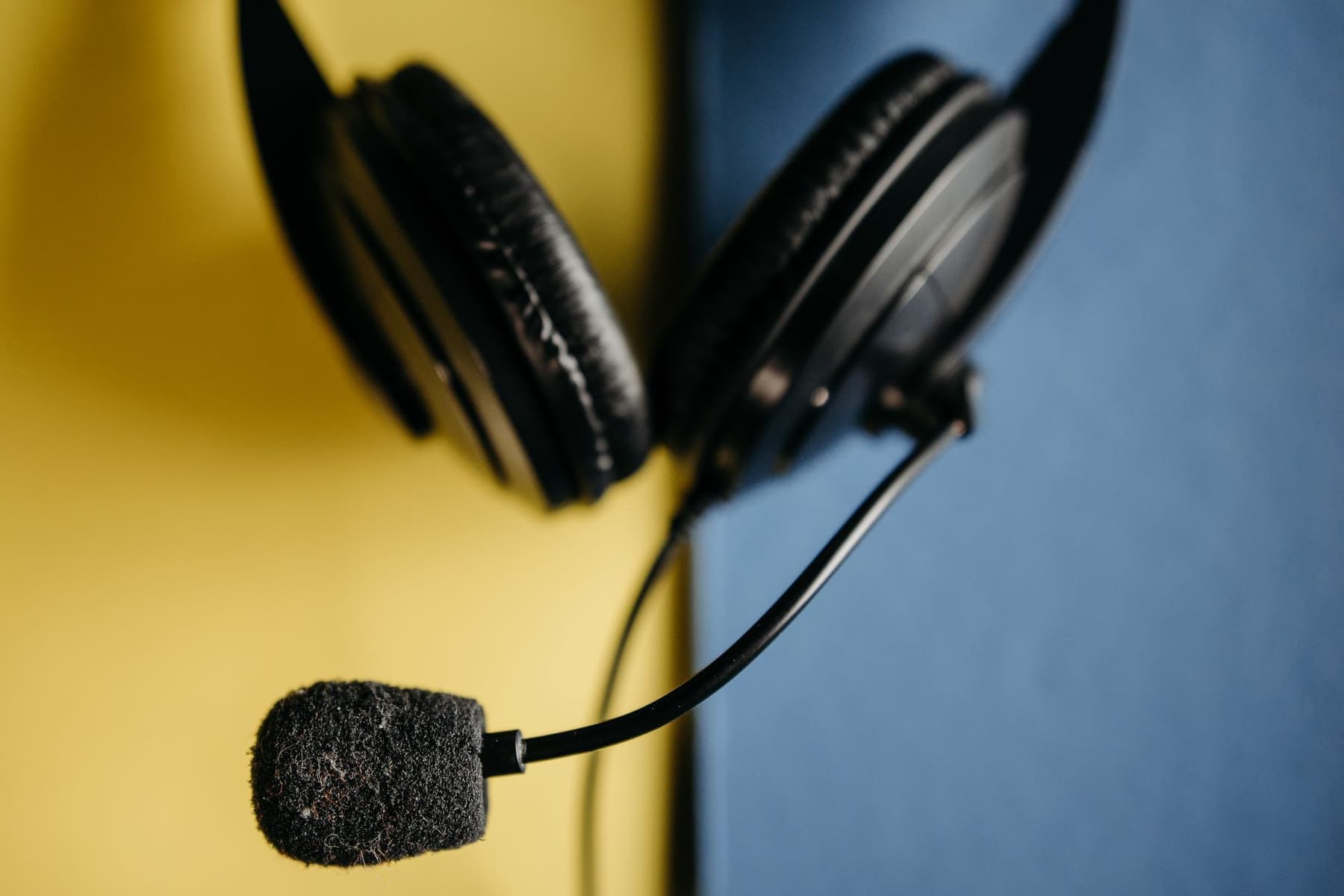
Buy a headset if other people regularly have to hear you: a boom microphone sits in front of your mouth and starts with a far better signal than any array built into an earcup. Buy headphones if you have to carry them, because a headset is built around a desk — the SteelSeries Arctis Nova Pro Wireless ships with a base station, while the Sony WH-1000XM6 is 254 g and folds into a case.
The definition
The only difference that matters
People use the two words loosely, so it is worth pinning down. A headset is a headphone with a microphone designed to be positioned near your mouth, usually on an arm. A headphone has microphones too — several of them — but they live in the earcups, where they are primarily there to serve the noise canceling.
Both have microphones. Only one has a microphone that is allowed to be anywhere near your mouth, and physics does the rest.
Every other difference — the base station, the weight, the 2.4 GHz dongle, the fact that one folds — follows from designing around that arm rather than around a bag.
The matrix
Where each one wins
| Headset (Arctis Nova Pro Wireless) | Headphones (Sony WH-1000XM6) | |
|---|---|---|
| Microphone | Retractable boom, bidirectional | Earcup array |
| Microphone noise reduction | AI, rated at 25 dB | Not separately published |
| Wireless link | 2.4 GHz plus Bluetooth | Bluetooth 5.3 |
| Latency for games | Low, by design | Buffered, and variable |
| Battery | Up to 22 hours per battery, two, hot-swappable | Up to 30 hours, canceling on |
| Weight | Not published by SteelSeries in the specs we could verify | Approx. 254 g |
| Folds for travel | No, and there is a base station | Yes, into a case |
| Noise canceling | Yes, with transparency | Yes, the deepest on this site |
The honest bit
You are the only person who cannot hear your microphone
This is the part that keeps people on the wrong product for years. Your headphone sounds fine to you, because you never hear its output. The array in an earcup is engineered to isolate your voice from a windy street and a cafe, and its priority is intelligibility rather than tone. The result is thin, slightly processed and occasionally clipped.
A boom does not need any of that processing, because it starts ten centimeters from the source. If you are on calls professionally, record a minute of yourself on each and listen back. The decision will make itself.
Verdict by scenario
The verdict
You are on video calls several hours a day
Headset. How you sound to colleagues is a professional asset and the boom is the cheapest possible improvement to it. If you need it to be portable too, see best noise-canceling headphones for office calls for the compromise position.
You game at a desk with other people
Headset. The 2.4 GHz link solves latency as well, which Bluetooth does not — best headphones for gaming goes through the four connection routes.
You fly, commute or work from cafes
Headphones. A base station does not go in a personal item, and 254 g that folds beats everything a headset offers the moment you leave the desk.
You want one thing for work and travel
Headphones, plus a cheap dedicated headset for the desk. Two specialized products usually cost less than one compromised one, and neither is annoying to use.
You mostly listen and rarely talk
Headphones. You are being asked to pay for a microphone you will not use and to give up portability for it.
In short
Key takeaways
- A headset has a microphone positioned near your mouth. A headphone has microphones in the earcups serving the noise canceling.
- The Arctis Nova Pro Wireless boom is bidirectional with AI noise cancellation rated at 25 dB, on a 2.4 GHz link.
- The Sony WH-1000XM6 is 254 g, folds into a case and runs up to 30 hours with canceling on.
- You never hear your own microphone, which is why people stay on the wrong product. Record yourself on both.
- Two specialized products often cost less than one compromised one.
At a glance
Quick picks
Scores are our editorial judgment from published specifications and cited third-party measurements, not our own testing. The rubric is published in full. Tap any row for the full write-up.
| # | Product | Best for | Score | Price |
|---|---|---|---|---|
| 1 | 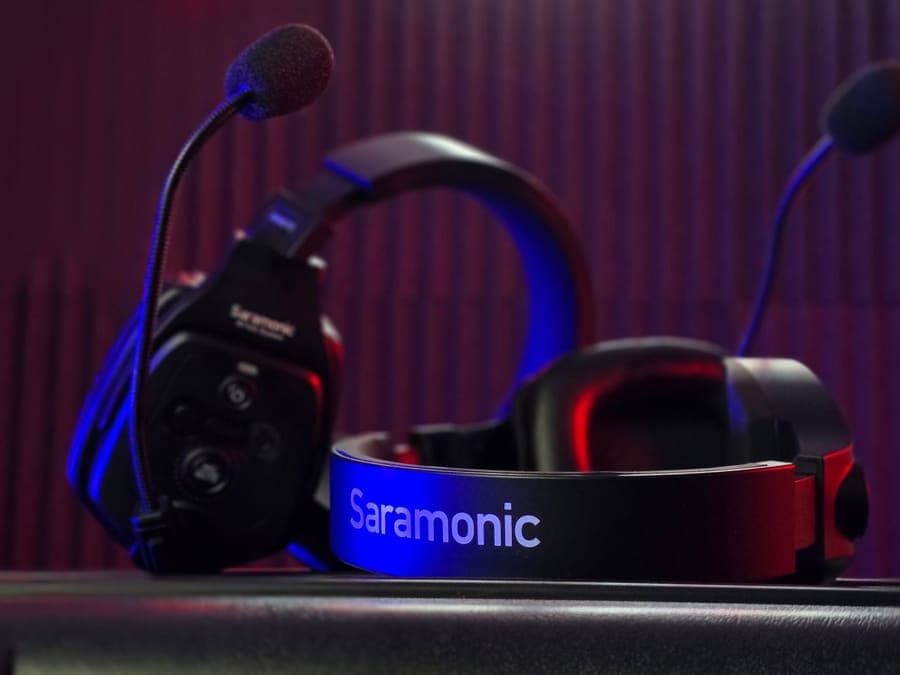 SteelSeries Arctis Nova Pro WirelessThe headset answer rather than the headphone answer: a retractable broadcast microphone, a base station, and two hot-swap batteries so it never has to stop to charge. | If people have to hear you clearly | 8.88.8 out of 10, our editorial score | |
| 2 | 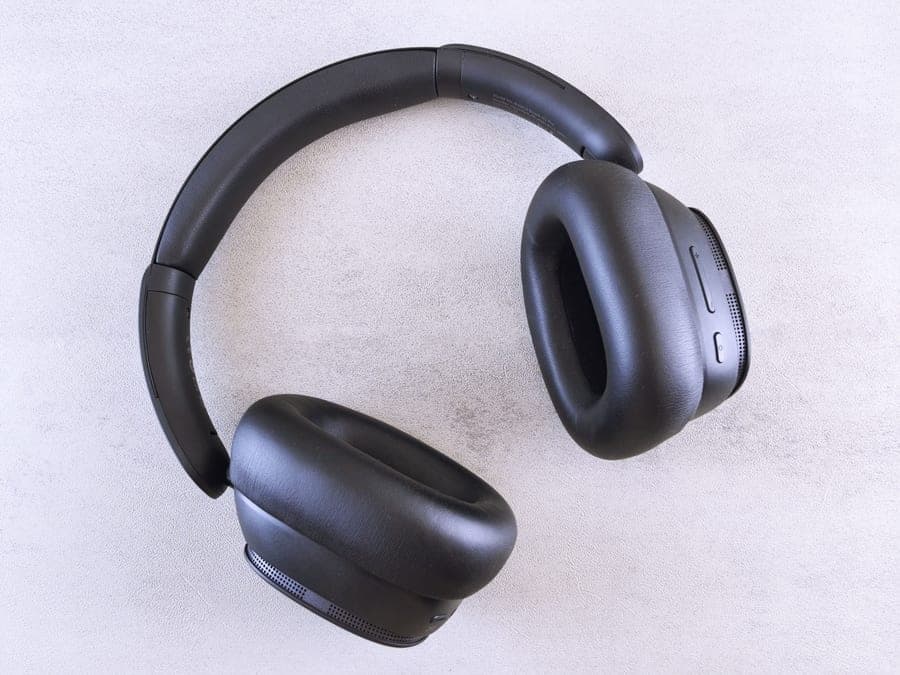 Sony WH-1000XM6The most complete travel headphone on sale: 254 g, 30 rated hours with noise canceling on, and it folds into a case small enough to stop being a decision. | If you have to carry it | 9.19.1 out of 10, our editorial score |
#ad Amazon links are affiliate links. No live price is shown anywhere on this site, so every button reads “Check price on Amazon”. How this is funded.
The picks in full
Every pick, in detail
1. If people have to hear you clearly
SteelSeries Arctis Nova Pro Wireless
The headset answer rather than the headphone answer: a retractable broadcast microphone, a base station, and two hot-swap batteries so it never has to stop to charge.
Our editorial score: 8.8 / 10
#ad Live price not shown. How this is funded
Also sold direct by SteelSeries — we earn nothing there, so check both.
The retractable boom is the whole product. A microphone positioned in front of your mouth starts with a far better signal than any array buried in an earcup, and no amount of processing closes that gap.
SteelSeries specifies it as broadcast-quality and bidirectional, with AI noise cancellation rated at 25 dB. Two hot-swappable batteries at up to 22 hours each mean the headset itself never stops. It adds a 2.4 GHz link for low latency, active canceling with transparency, and multi-system connect.
The cost is that there is a base station on your desk and this is emphatically not a travel product.
What works on a plane
- Hot-swap batteries mean the headset is never out of action, only one battery is
- 2.4 GHz is the low-latency link that Bluetooth cannot match for games
- A retractable boom microphone beats every travel headphone's built-in array
- Switches between two systems, so the PC and the console share one headset
What does not
- A base station on the desk makes this the opposite of a travel product
- Heavy and large next to anything designed to go in a personal item
- Costs flagship-headphone money and cannot replace one on a plane
How it scores against the five travel axes
Published specifications
| Spec | Figure | Source |
|---|---|---|
| Battery | Up to 22 hours per battery, two hot-swappable batteries | SteelSeries |
| Noise control | Active noise canceling with transparency mode | SteelSeries |
| Wireless | 2.4 GHz plus Bluetooth, with multi-system connect | SteelSeries |
| DAC | GameDAC Gen 2, ESS Sabre quad-DAC, 96 kHz / 24-bit Hi-Res certified | SteelSeries |
| Microphone | Retractable broadcast-quality bidirectional, AI noise cancellation rated at 25 dB | SteelSeries |
| Drivers | Hi-Res capable, frequency range quoted up to 40 kHz | SteelSeries |
| Tuning | 10-band parametric EQ via SteelSeries software | SteelSeries |
2. If you have to carry it
Sony WH-1000XM6
The most complete travel headphone on sale: 254 g, 30 rated hours with noise canceling on, and it folds into a case small enough to stop being a decision.
Our editorial score: 9.1 / 10
#ad Live price not shown. How this is funded
Also sold direct by Sony — we earn nothing there, so check both.
254 g, folds into a case, up to 30 rated hours with canceling on, and a microphone array that is good enough for calls without being good enough for a podcast. That is the honest summary of every travel headphone on this site.
For a call on a train it is fine, and the canceling makes the call better for you even where the array does not make it better for them. For four hours a day on video calls, it is the wrong tool and everyone on the call knows it before you do.
What works on a plane
- Folds, which halves the space it takes in a personal item
- 254 g is light for a flagship over-ear, and weight is what you feel at hour four
- LDAC plus LC3 means it is not locked to one phone ecosystem
- 30 rated hours with noise canceling on covers almost any single routing
What does not
- You pay a flagship price for the last increment of noise canceling
- The folding hinge is one more mechanism to eventually wear out
- No airline two-prong adapter in the box
How it scores against the five travel axes
Published specifications
| Spec | Figure | Source |
|---|---|---|
| Weight | Approx. 254 g (9 oz) | Sony Help Guide specifications |
| Battery, NC on | Up to 30 hours | Sony specifications |
| Battery, NC off | Up to 40 hours | Sony specifications |
| Full charge | Approx. 3.5 hours | Sony Help Guide specifications |
| Bluetooth | 5.3 | Sony Help Guide specifications |
| Codecs | SBC, AAC, LDAC, LC3 | Sony Help Guide specifications |
| Wired response | 4 Hz - 40,000 Hz (IEC) | Sony Help Guide specifications |
| Folds | Yes, into a magnetic-closure case | Sony |
How we decide
How these picks were chosen
We do not run a test lab and we do not claim to have flown with these units. Every verdict on this page is one of three things: a measurement published by somebody who does own a test rig and is credited by name, a manufacturer specification we quote and then interpret against what a long flight actually demands, or a plainly-labeled editorial judgment. The five axes we score on — cabin-noise reduction, battery on a long-haul, pack size, comfort past hour three, and wired fallback — are the ones that decide a travel purchase, and the weighting is published in full.
Questions
Common questions
What is the difference between headphones and a headset?
A headset has a microphone designed to sit near your mouth, normally on an arm. Headphones have microphones in the earcups, but those exist mainly to serve the noise canceling and they are much further from your voice. Everything else, from the base station to the weight, follows from that design choice.
Is a headset better for calls than noise canceling headphones?
For how you sound to other people, yes, clearly. A boom microphone starts with a far better signal than an earcup array and needs far less processing. For how the call sounds to you, canceling headphones can be better, because they remove the room you are sitting in.
Can you use a gaming headset for travel?
In practice, no. A wireless gaming headset is built around a desk: it usually needs a base station or a dongle, it does not fold, and it is heavier than a travel headphone. Pack a travel headphone and leave the headset where it works.
Do I need a boom microphone for working from home?
If you are on calls for several hours a day, it is the cheapest upgrade available to how you come across. If you take two calls a week, a good headphone array is entirely adequate and you should not give up portability for it.
Sources
Where these figures come from
Read next
Related reading
- Best headphones for gaming
The same products, ranked by where you play.
- Best noise-canceling headphones for office calls
The portable compromise, in detail.
- Headphones vs IEMs
The other form-factor decision on this hub.
- Best noise-canceling headphones for remote work
Where this decision usually gets made.
- How we choose
Why an unpublished weight stays blank in our tables.