
For office calls the deciding specifications are the microphone array and whether the headphone offers sidetone — letting you hear your own voice — not canceling depth. Without sidetone people speak too loudly on calls without realizing. The JBL Tour One M3 has the most granular mode control, including a Talk Thru mode. If call quality is your single overriding requirement, a purpose-built business headset will beat every consumer headphone here.
The reversal
Calls judge the outbound signal
Every other page on this site is about what reaches your ears. This one is mostly about what reaches somebody else’s, and that changes which specifications matter.
| Specification | For listening | For calls |
|---|---|---|
| Canceling depth | The main event | Almost irrelevant to how you sound |
| Microphone array and beamforming | Irrelevant | The main event |
| Sidetone / hearing your own voice | Irrelevant | Decisive for how loudly you speak |
| Wind and keyboard rejection | Irrelevant | Very relevant |
| Weight and clamp | Matters at hour four | Matters more — meetings are back to back |
| Rated battery hours | Critical when flying | Irrelevant at a desk |
A headphone can be the best thing on sale for a long-haul flight and an unremarkable headset. Those are two different products wearing the same shape.
The feature nobody names
Sidetone is the one to look for
Sidetone means the headphone plays a little of your own voice back into your ears. It sounds like an odd thing to want and it is the single most useful call feature there is.
The reason is a reflex called the Lombard effect: when you cannot hear yourself, you automatically raise your voice. Seal your ears with canceling on, and you will speak considerably louder than you think — which everyone on the call notices and you do not.
Manufacturers call the feature different things. What you want is any mode that lets some of the outside world, including your own voice, through while you are speaking — JBL’s Talk Thru, or simply switching to transparency during calls. Transparency mode versus noise canceling covers how the modes differ.
Be honest about this
A consumer headphone is not a business headset
Worth stating plainly rather than implying otherwise. A dedicated business headset has a boom microphone positioned a few centimeters from your mouth. Every product on this page has microphones built into the earcups, several centimeters away and pointing at the room.
That is a physics gap that beamforming and processing narrow but do not close. So:
- If calls are most of your job and audio quality on those calls is professionally important, buy a purpose-built headset. It will outperform everything here on the one axis you care about.
- If calls are part of a day that also involves focus work, a commute and flights, a good consumer headphone is the right compromise, and the products above are the best of them.
We do not cover business headsets on this site, because every product here was verified against travel-focused sources fetched during research and dedicated headsets were not part of that. Rather than recommend something unchecked, this page tells you when to look elsewhere.
Practical
Five habits that improve calls more than a purchase
Use transparency while speaking
The single biggest improvement, and it costs nothing. You will speak at a normal volume rather than shouting.
Record yourself once
Make a thirty-second voice memo through the headphone in your actual working environment and listen back. It tells you more about how you sound on calls than any specification will, and most people have never done it.
Keep canceling on for listening
Canceling does not affect how you sound, and it substantially improves how well you hear somebody on a bad connection. Leave it on and manage your own voice with a mode switch rather than by disabling canceling.
Move away from the keyboard
Earcup microphones sit closer to your hands than to your mouth. Keyboard noise is the most common complaint about consumer headphones on calls, and pushing the keyboard back a little does more than any processing.
Take a wired fallback to conference rooms
Room hardware often expects a 3.5 mm input. The Sennheiser, Soundcore, Bose and JBL all ship a cable — see best wired headphones for flights for who includes what.
Related situations
Other noise problems at work
If your real problem is concentrating rather than being heard, the criteria are completely different — pad seal rather than microphones — and the page for that is best noise-canceling headphones for an open-plan office. If you work from home, see best noise-canceling headphones for remote work.
In short
Key takeaways
- Calls judge the outbound signal, which reverses most of this site's usual conclusions.
- Sidetone is the feature to look for: without hearing yourself you will speak much too loudly.
- Canceling depth barely affects how you sound. Leave it on for listening and switch modes to speak.
- Earcup microphones are several centimeters from your mouth. A boom-mic business headset beats all of these on call quality.
- Record a thirty-second voice memo in your real environment. It tells you more than any spec sheet.
- Keyboard noise is the commonest complaint, because the mics are closer to your hands than your mouth.
At a glance
Quick picks
Scores are our editorial judgment from published specifications and cited third-party measurements, not our own testing. The rubric is published in full. Tap any row for the full write-up.
| # | Product | Best for | Score | Price |
|---|---|---|---|---|
| 1 |  JBL Tour One M3The only headphone here that ships with the answer to the airline-jack problem in the box: the Smart Tx transmitter plugs into the seat and sends the movie to your headphones over Bluetooth. | Best for calls | 8.78.7 out of 10, our editorial score | |
| 2 | 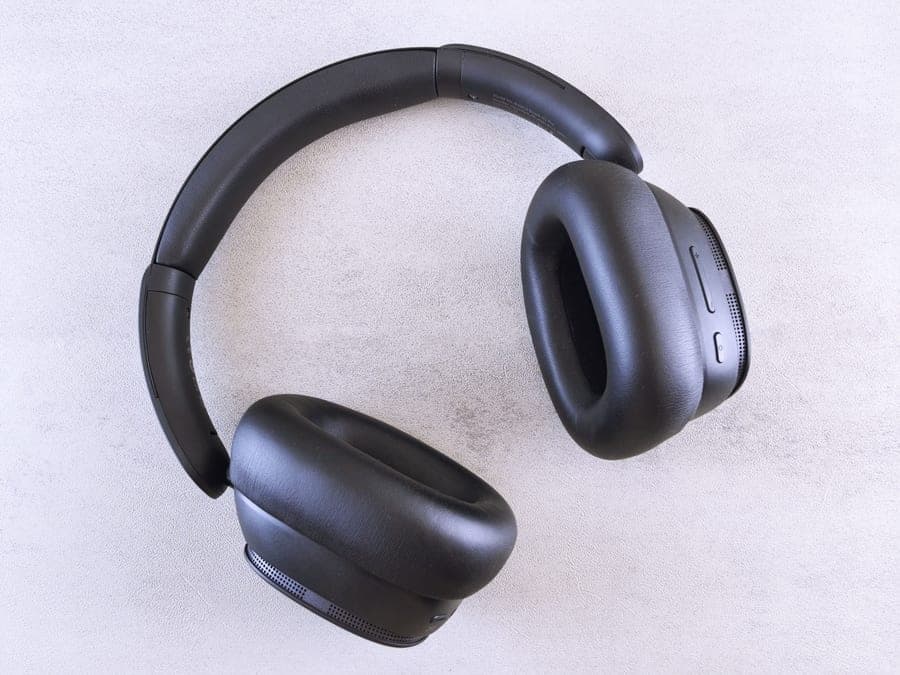 Sony WH-1000XM6The most complete travel headphone on sale: 254 g, 30 rated hours with noise canceling on, and it folds into a case small enough to stop being a decision. | Best all-round for calls and everything else | 9.19.1 out of 10, our editorial score | |
| 3 | 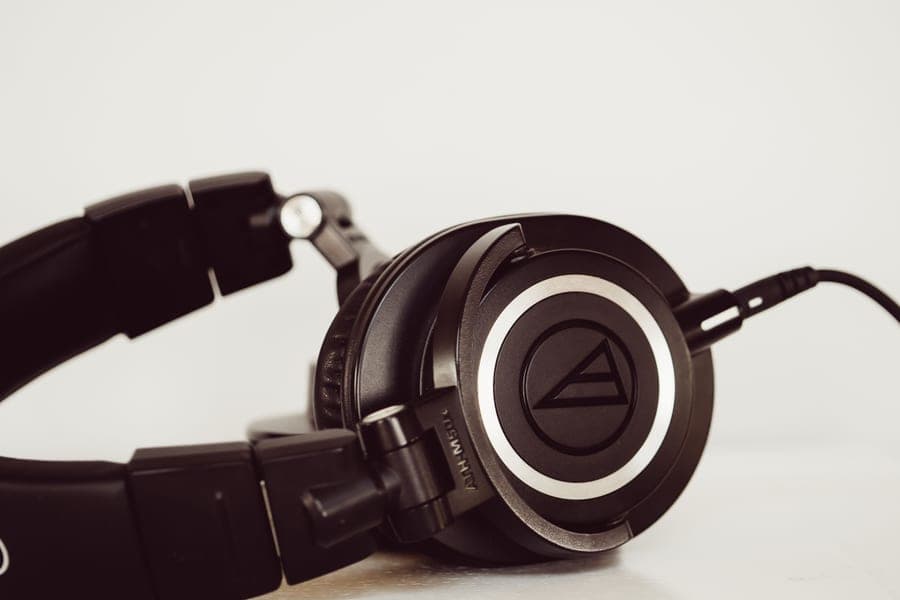 Bose QuietComfort Ultra Headphones (2nd Gen)The quietest cabin of anything here, and the only over-ear in this group whose box already contains the audio cable a seatback screen needs. | Best if your room is loud | 9.09.0 out of 10, our editorial score | |
| 4 | 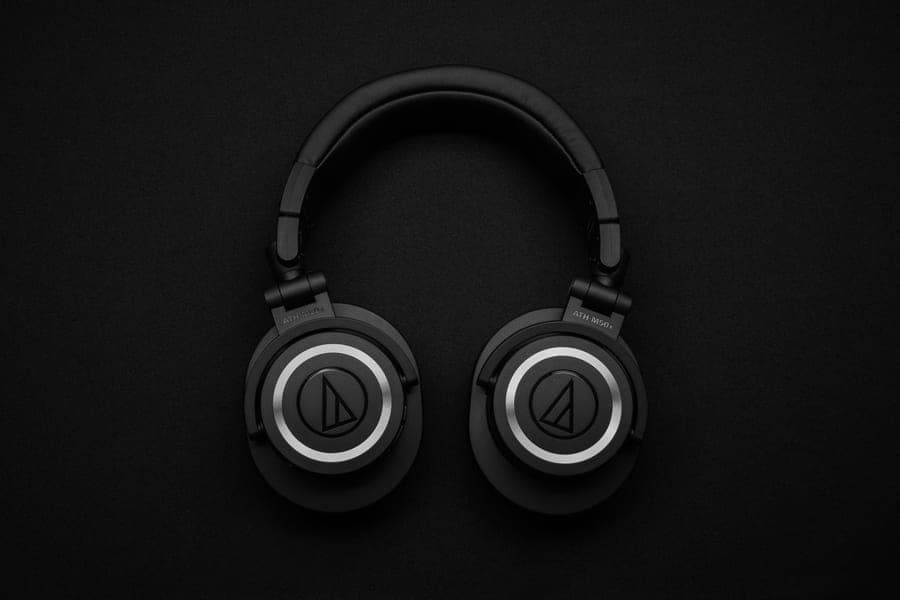 Sennheiser MOMENTUM 4 WirelessSennheiser publishes up to 60 hours. That is the difference between charging at the gate and not thinking about a charger for an entire two-week trip. | Best for long meeting days | 8.88.8 out of 10, our editorial score |
#ad Amazon links are affiliate links. No live price is shown anywhere on this site, so every button reads “Check price on Amazon”. How this is funded.
The picks in full
Every pick, in detail
1. Best for calls
JBL Tour One M3
The only headphone here that ships with the answer to the airline-jack problem in the box: the Smart Tx transmitter plugs into the seat and sends the movie to your headphones over Bluetooth.
Our editorial score: 8.7 / 10
#ad Live price not shown. How this is funded
Also sold direct by JBL — we earn nothing there, so check both.
The JBL takes this page on control rather than on raw specification, and for calls that is the right criterion. Its app switches between ANC, Ambient Aware and Talk Thru modes, which maps onto the actual problem: you need to be sealed off while listening and able to hear your own voice while speaking.
Talk Thru specifically is the feature that matters. Without hearing yourself, everyone speaks too loudly on a call and does not know it, which is the single most common complaint about taking calls in noise-canceling headphones.
Up to 40 rated hours with canceling on covers a week of meetings, and five hours from a five-minute charge covers the morning you forgot.
What works on a plane
- The Smart Tx transmitter solves in-flight entertainment without a separate purchase
- Up to 40 rated hours with canceling on, comfortably over a long-haul plus layover
- Five minutes of charge buys five hours
- Both a 3.5 mm and a USB-C wired path in the box
What does not
- The Smart Tx is one more small object to lose, and it needs its own charge
- 278 g sits between the Sony and the Sennheiser without beating either at their own game
- Noise canceling is very good rather than class-leading
How it scores against the five travel axes
Published specifications
| Spec | Figure | Source |
|---|---|---|
| Battery, Bluetooth | Up to 70 hours | JBL |
| Battery, ANC on | Up to 40 hours | JBL |
| Quick charge | 5 minutes gives 5 hours | JBL |
| Battery cell | 850 mAh, full charge approx. 2 hours | JBL |
| Weight | 278 g | JBL |
| Smart Tx | Transmitter streams from non-Bluetooth sources including in-flight entertainment | JBL |
| In the box | USB-C-to-3.5 mm and USB-C-to-USB-C cables, USB-C to USB-A adapter | JBL |
2. Best all-round for calls and everything else
Sony WH-1000XM6
The most complete travel headphone on sale: 254 g, 30 rated hours with noise canceling on, and it folds into a case small enough to stop being a decision.
Our editorial score: 9.1 / 10
#ad Live price not shown. How this is funded
Also sold direct by Sony — we earn nothing there, so check both.
If one headphone has to handle calls, focus work, a commute and flights, this is it. The microphone array is among the better ones in this group, and the processing that keeps the canceling steady also keeps the outbound signal steady when your environment changes.
Approximately 254 g matters a great deal for a day of back-to-back calls. It is the lightest flagship here, and weight is what you notice at hour six of a meeting-heavy day.
The caveat that applies to every product on this page: a consumer headphone’s microphones are not a dedicated business headset’s boom mic, and if call quality is your single overriding requirement, a purpose-built headset will beat all of these.
What works on a plane
- Folds, which halves the space it takes in a personal item
- 254 g is light for a flagship over-ear, and weight is what you feel at hour four
- LDAC plus LC3 means it is not locked to one phone ecosystem
- 30 rated hours with noise canceling on covers almost any single routing
What does not
- You pay a flagship price for the last increment of noise canceling
- The folding hinge is one more mechanism to eventually wear out
- No airline two-prong adapter in the box
How it scores against the five travel axes
Published specifications
| Spec | Figure | Source |
|---|---|---|
| Weight | Approx. 254 g (9 oz) | Sony Help Guide specifications |
| Battery, NC on | Up to 30 hours | Sony specifications |
| Battery, NC off | Up to 40 hours | Sony specifications |
| Full charge | Approx. 3.5 hours | Sony Help Guide specifications |
| Bluetooth | 5.3 | Sony Help Guide specifications |
| Codecs | SBC, AAC, LDAC, LC3 | Sony Help Guide specifications |
| Wired response | 4 Hz - 40,000 Hz (IEC) | Sony Help Guide specifications |
| Folds | Yes, into a magnetic-closure case | Sony |
3. Best if your room is loud
Bose QuietComfort Ultra Headphones (2nd Gen)
The quietest cabin of anything here, and the only over-ear in this group whose box already contains the audio cable a seatback screen needs.
Our editorial score: 9.0 / 10
#ad Live price not shown. How this is funded
Also sold direct by Bose — we earn nothing there, so check both.
Two distinct things matter for calls in a noisy room: how much you hear of the room, and how much of it your colleagues hear. The Bose is strongest on the first, and its firm pad seal also reduces how much room noise reaches its own microphones.
If you take calls from an open-plan floor, that combination is the argument for it.
Immersive Audio is irrelevant for calls, so the 23-hour figure that constrains it elsewhere does not apply here — plan on the 30-hour rating, which covers a week easily.
What works on a plane
- The best low-frequency canceling in this group, which is exactly the band engine drone lives in
- The 2.5 mm-to-3.5 mm cable is in the box, so a seatback screen needs nothing extra
- Compact hard case for a full-size over-ear
- Up to 45 hours with canceling off, if you only want isolation on a train
What does not
- Immersive Audio costs you a third of the battery, dropping to 23 rated hours
- Heavier than the Sony by roughly 10 g, and clamp is firmer out of the box
- The hard case is compact but still rigid, so it will not squash into a full bag
How it scores against the five travel axes
Published specifications
| Spec | Figure | Source |
|---|---|---|
| Battery, ANC on | Up to 30 hours | Bose |
| Battery, ANC off | Up to 45 hours | Bose |
| Battery, Immersive Audio on | Up to 23 hours | Bose |
| Weight | Approx. 264 g (9.3 oz) as reported | Published reviews |
| USB-C audio | 16-bit, 44.1 or 48 kHz lossless input | Bose support |
| In the box | Hard case, USB-C cable, 2.5 mm-to-3.5 mm audio cable | Bose |
| Folds | Earcups rotate flat into a compact hard case | Bose |
Read the full Bose QuietComfort Ultra Headphones (2nd Gen) review
4. Best for long meeting days
Sennheiser MOMENTUM 4 Wireless
Sennheiser publishes up to 60 hours. That is the difference between charging at the gate and not thinking about a charger for an entire two-week trip.
Our editorial score: 8.8 / 10
#ad Live price not shown. How this is funded
Also sold direct by Sennheiser — we earn nothing there, so check both.
For a day of back-to-back calls the binding constraint is usually not audio at all, it is whether you still want the headphone on at four in the afternoon. The gentlest clamp here and the deepest pads are what decide that.
Up to 60 rated hours also means it is never the thing that fails mid-meeting, and the included 1.2 m aux cable gives a wired fallback for conference-room hardware that expects a 3.5 mm input.
What works on a plane
- Up to 60 rated hours, roughly double the flagship norm
- The 1.2 m 3.5 mm cable is in the box, so seatback screens work straight out of the bag
- Fold-flat earcups make the carry case slim rather than deep
- The 42 mm transducer is the most relaxed listen here over a very long session
What does not
- Published measurements consistently place its noise canceling a step behind the Bose
- The case is broad, so it eats width in a personal item even though it is slim
- Fold-flat is not fold-up, so the footprint is larger than the Sony's
How it scores against the five travel axes
Published specifications
| Spec | Figure | Source |
|---|---|---|
| Battery | Up to 60 hours playback | Sennheiser |
| Weight | Approx. 293-295 g | Sennheiser / published reviews |
| Transducer | 42 mm | Sennheiser |
| In the box | Carry case, USB-C cable, 1.2 m 3.5 mm auxiliary cable | Sennheiser |
| Folds | Fold-flat earcups | Sennheiser |
How we decide
How these picks were chosen
We do not run a test lab and we do not claim to have flown with these units. Every verdict on this page is one of three things: a measurement published by somebody who does own a test rig and is credited by name, a manufacturer specification we quote and then interpret against what a long flight actually demands, or a plainly-labeled editorial judgment. The five axes we score on — cabin-noise reduction, battery on a long-haul, pack size, comfort past hour three, and wired fallback — are the ones that decide a travel purchase, and the weighting is published in full.
Questions
Common questions
What are the best noise-canceling headphones for work calls?
The JBL Tour One M3, for the most granular mode control including a Talk Thru mode that lets you hear yourself while speaking. The Sony WH-1000XM6 is the best all-rounder if the same headphone also handles focus work, a commute and flights.
Why do I speak too loudly wearing noise-canceling headphones?
Because of a reflex called the Lombard effect: when you cannot hear yourself you automatically raise your voice. Sealing your ears with canceling on triggers it, and you will not notice. Switching to transparency while you speak fixes it entirely.
Does noise canceling improve how I sound on a call?
Barely. Canceling affects what reaches your ears, not what your microphones pick up. What decides how you sound is the microphone array, its beamforming, and how well it rejects wind and keyboard noise.
Should I buy a business headset instead?
If calls are most of your job and call quality is professionally important, yes. A boom microphone sits a few centimeters from your mouth; earcup microphones sit several centimeters away pointing at the room, and no amount of processing closes that gap. If calls are one part of a varied day, a good consumer headphone is the right compromise.
Why do my colleagues hear my keyboard?
Because the microphones are built into the earcups, which puts them closer to your hands than to your mouth. Pushing the keyboard back a little and typing more lightly does more about this than any processing setting.
How can I tell how I actually sound?
Record a thirty-second voice memo through the headphone in your real working environment and listen back. It is the most informative thirty seconds you can spend, and almost nobody does it.
Sources
Where these figures come from
Read next
Related reading
- Best noise-canceling headphones for an open-plan office
If concentrating is the problem rather than being heard.
- Transparency mode vs noise canceling
The mode to use while speaking, and why.
- Best noise-canceling headphones for remote work
A home office is a different noise problem.
- Best wired headphones for flights
Which models ship a cable for conference-room hardware.
- JBL Tour One M3 review
The top pick here, in detail.