
Noise canceling removes outside sound by playing an inverted wave. Transparency mode does the opposite: it uses the same external microphones to pipe the outside world into your ears, so you can hear it without taking the headphones off. Use canceling on a plane, a train or at a desk; use transparency on a street, at a ticket barrier, during a conversation, and whenever you are speaking on a call.
Same hardware, opposite job
How transparency works
The hardware is identical. A noise-canceling headphone has microphones on the outside of each earcup, and a processor that decides what to do with what they hear.
- Canceling: compute the inverse of the incoming sound and play that, so the waves cancel.
- Transparency: play the incoming sound as-is, mixed with your audio, so you hear the room through the headphone rather than despite it.
Which is why transparency exists at all on this class of product: the microphones were already there for the canceling. It is a software decision, not extra hardware, and that is also why implementation quality varies so much between brands.
Transparency is not the absence of canceling. It is the deliberate addition of the outside world, which is a different and harder thing to do well.
An important distinction: transparency is not the same as simply switching canceling off. With everything off, a sealed over-ear still blocks a lot of sound passively. Transparency actively compensates for that seal, which is why a good implementation can make you feel like you are not wearing headphones at all.
When to use each
A straightforward table
| Situation | Mode | Why |
|---|---|---|
| Cruising on a plane | Canceling | Continuous low-frequency drone is the ideal case |
| Cabin service, crew speaking to you | Transparency | So you can answer without removing them |
| Safety briefing | Off, or remove them | You need to actually hear it |
| Train or subway | Canceling | Rolling noise is continuous and low |
| Listening for your stop | Transparency | Announcements are transients you want |
| Walking on a street | Transparency | Situational awareness. This one is not optional |
| Cycling | Transparency, or nothing | Check local law; awareness is critical |
| Open-plan office, concentrating | Canceling | Removes HVAC; the seal handles voices |
| Somebody at your desk | Transparency | Faster and less rude than taking them off |
| Speaking on a call | Transparency or Talk Thru | Otherwise you will shout without knowing |
| Listening on a call | Canceling | You will hear a poor connection better |
| Sleeping on a flight | Canceling, nothing playing | Pure ear protection, full battery |
| A shop, a barrier, an order | Transparency | Ordinary courtesy and practicality |
The safety case
Transparency outdoors is not a preference
Worth stating firmly. Walking a city street with full canceling on removes the specific cues you rely on without realizing: an approaching vehicle, a bicycle bell, a shout, a change in the traffic pattern behind you.
Active canceling is particularly good at continuous low-frequency sound, which is exactly what an approaching engine is. It is removing the most useful warning you have.
Which reframes how to judge these products: how fast and how naturally a headphone switches between modes is a safety feature, not a convenience. If switching is slow, awkward or buried in an app, you will not do it — and that is a real consequence. Best noise-canceling headphones for commuting ranks on exactly this.
The calls problem
Why you should speak in transparency
This is the single most useful practical tip on the page. There is a reflex called the Lombard effect: when you cannot hear your own voice, you automatically raise it.
Seal your ears with canceling on, start speaking, and you will be considerably louder than you think. Everyone on the call notices and you do not. Switching to transparency — or using a dedicated mode like JBL’s Talk Thru — lets you hear yourself and immediately fixes it.
The right pattern on a call is therefore mixed: canceling while listening, because you will hear a poor connection much better, and transparency while speaking. Best noise-canceling headphones for office calls goes further into the call-specific specifications.
The costs
What each mode costs you
| Model | Canceling on | Transparency | Off |
|---|---|---|---|
| Apple AirPods Pro 3 | 8 h | up to 10 h | - |
| Sony WH-1000XM6 | up to 30 h | - | up to 40 h |
| Bose QuietComfort Ultra 2nd Gen | up to 30 h | - | up to 45 h |
| Soundcore Space Q45 | up to 50 h | - | up to 65 h |
Two observations. Apple publishes a longer figure for transparency than for canceling, which is a genuine point in its favor for commuting where transparency is the dominant mode. And switching the electronics off entirely gains you a substantial amount on every over-ear here, which is worth remembering on a very long trip where you only want the passive isolation — see active canceling versus passive isolation.
Judging implementations
What a good transparency mode sounds like
Three things distinguish a good one, and none appear on a spec sheet.
- Your own voice sounds normal. The hardest part. A poor implementation makes you sound boomy and strange to yourself, which is unpleasant enough that people stop using the mode.
- No audible hiss. Amplifying a quiet room amplifies the microphone noise floor too. A good implementation is clean in a quiet space, which is where cheap ones fall apart.
- Switching is instant and jolt-free. If there is a gap, a pop or a lurch in level, you will avoid switching — which as the safety section notes has real consequences.
These are the things to test in a shop, and they are more worth your two minutes than comparing canceling depth, which you cannot meaningfully judge in a quiet room anyway.
In short
Key takeaways
- Same microphones, opposite job: canceling plays the inverse, transparency plays the outside world in.
- Transparency is not the same as switching canceling off — it actively compensates for the physical seal.
- Canceling for planes, trains and desks. Transparency for streets, barriers, conversations and speaking on calls.
- Transparency outdoors is a safety requirement, not a preference — and switching speed is therefore a safety feature.
- Speak in transparency on calls, or you will shout without knowing. Listen with canceling on.
- Apple rates transparency at 10 hours against 8 with canceling, so the mode you use most is the efficient one.
At a glance
Quick picks
Scores are our editorial judgment from published specifications and cited third-party measurements, not our own testing. The rubric is published in full. Tap any row for the full write-up.
| # | Product | Best for | Score | Price |
|---|---|---|---|---|
| 1 | 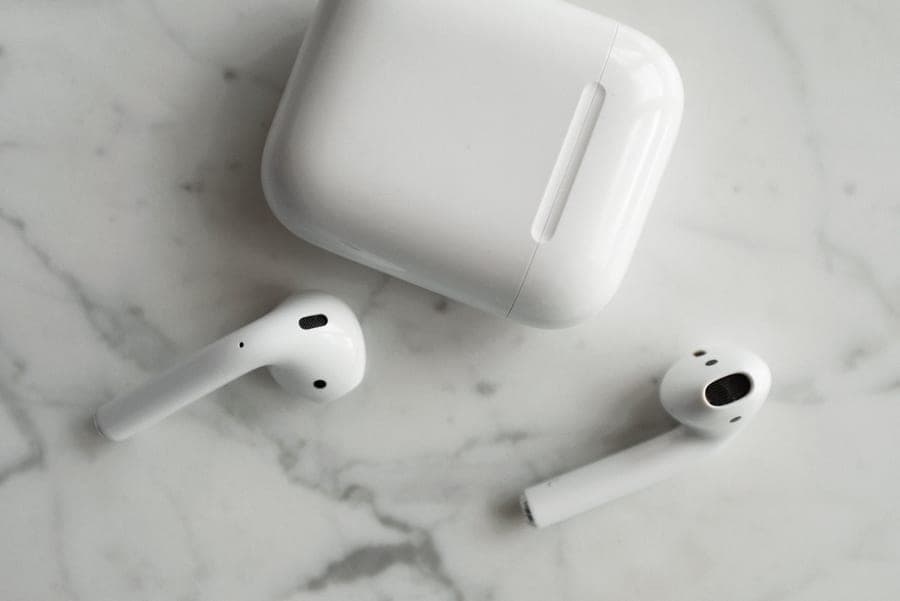 Apple AirPods Pro 3Eight rated hours with canceling on, foam tips in five sizes and an IP57 rating. If your phone is an iPhone this is the least friction of anything here. | Best transparency mode | 8.88.8 out of 10, our editorial score | |
| 2 |  JBL Tour One M3The only headphone here that ships with the answer to the airline-jack problem in the box: the Smart Tx transmitter plugs into the seat and sends the movie to your headphones over Bluetooth. | Best mode control | 8.78.7 out of 10, our editorial score | |
| 3 | 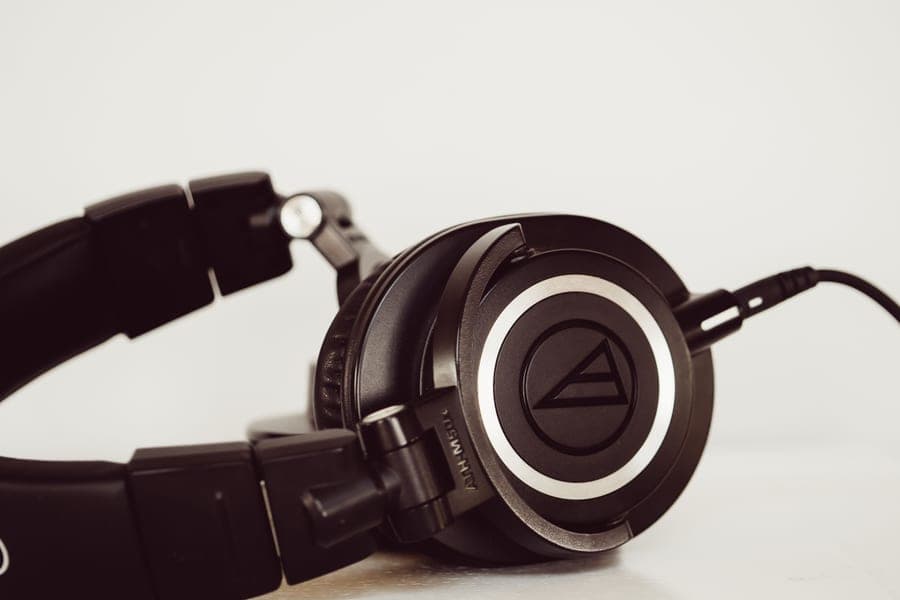 Bose QuietComfort Ultra Headphones (2nd Gen)The quietest cabin of anything here, and the only over-ear in this group whose box already contains the audio cable a seatback screen needs. | Best canceling half | 9.09.0 out of 10, our editorial score | |
| 4 | 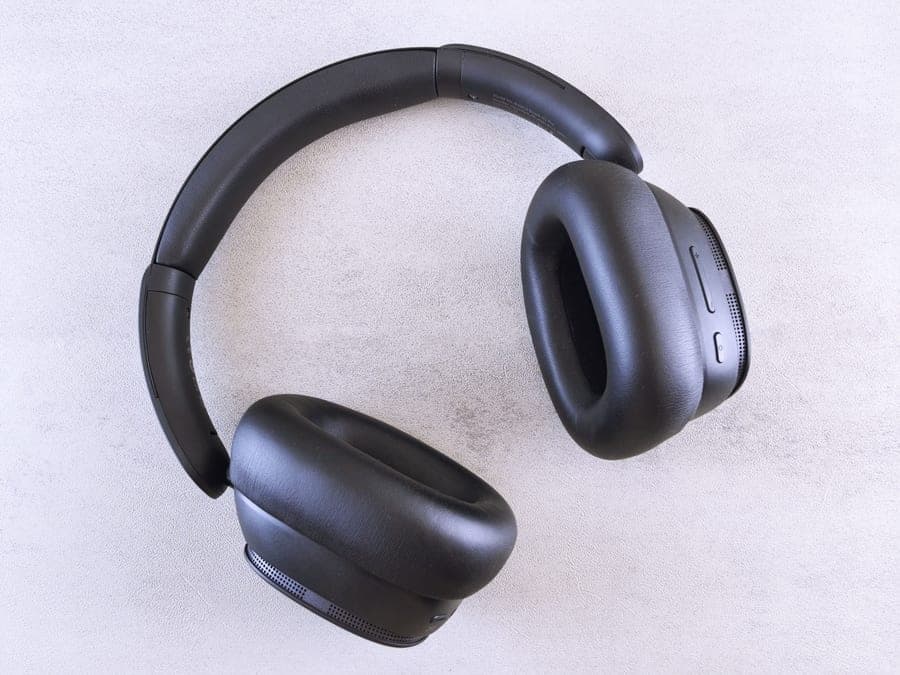 Sony WH-1000XM6The most complete travel headphone on sale: 254 g, 30 rated hours with noise canceling on, and it folds into a case small enough to stop being a decision. | Best balance of both | 9.19.1 out of 10, our editorial score |
#ad Amazon links are affiliate links. No live price is shown anywhere on this site, so every button reads “Check price on Amazon”. How this is funded.
The picks in full
Every pick, in detail
1. Best transparency mode
Apple AirPods Pro 3
Eight rated hours with canceling on, foam tips in five sizes and an IP57 rating. If your phone is an iPhone this is the least friction of anything here.
Our editorial score: 8.8 / 10
#ad Live price not shown. How this is funded
Also sold direct by Apple — we earn nothing there, so check both.
Apple’s transparency implementation is the most natural of anything on this site, and on a commute or in an office that matters more than canceling depth does — because it is the mode you use several times an hour.
The revealing specification: Apple rates transparency at up to 10 hours against 8 with canceling on. The mode you use most on a busy day is also the most efficient one, which is not true of every product.
What works on a plane
- Eight rated hours and 24 with the case, matching the best of the premium earbuds
- Foam tips in five sizes solve the fit problem that ruins canceling on most buds
- IP57 on both buds and case is the toughest rating in this group
- Live Translation and heart-rate sensing are genuinely useful abroad, not spec-sheet filler
What does not
- Apple's 2x noise figure is a manufacturer claim measured against its own predecessor, not an independent measurement
- The best features need an iPhone; on Android it is a good but ordinary earbud
- No wired option, so in-flight entertainment needs a transmitter
How it scores against the five travel axes
Published specifications
| Spec | Figure | Source |
|---|---|---|
| Battery, ANC on | 8 hours listening | Apple tech specs |
| Battery, Transparency | Up to 10 hours | Apple tech specs |
| Total with case | Up to 24 hours with ANC | Apple tech specs |
| Quick charge | 5 minutes in the case gives around 1 hour | Apple tech specs |
| Ear tips | Foam tips in five sizes | Apple |
| Water resistance | IP57, buds and case | Apple |
| Apple's ANC claim | Removes up to 2x more noise than AirPods Pro 2 | Apple newsroom |
2. Best mode control
JBL Tour One M3
The only headphone here that ships with the answer to the airline-jack problem in the box: the Smart Tx transmitter plugs into the seat and sends the movie to your headphones over Bluetooth.
Our editorial score: 8.7 / 10
#ad Live price not shown. How this is funded
Also sold direct by JBL — we earn nothing there, so check both.
Three named modes rather than two: ANC, Ambient Aware and Talk Thru. That distinction is genuinely useful because “let some of the world in” and “let me hear my own voice while I speak” are different requirements.
Talk Thru specifically addresses the biggest practical problem with wearing canceling headphones for calls: without hearing yourself you speak far too loudly and do not notice.
What works on a plane
- The Smart Tx transmitter solves in-flight entertainment without a separate purchase
- Up to 40 rated hours with canceling on, comfortably over a long-haul plus layover
- Five minutes of charge buys five hours
- Both a 3.5 mm and a USB-C wired path in the box
What does not
- The Smart Tx is one more small object to lose, and it needs its own charge
- 278 g sits between the Sony and the Sennheiser without beating either at their own game
- Noise canceling is very good rather than class-leading
How it scores against the five travel axes
Published specifications
| Spec | Figure | Source |
|---|---|---|
| Battery, Bluetooth | Up to 70 hours | JBL |
| Battery, ANC on | Up to 40 hours | JBL |
| Quick charge | 5 minutes gives 5 hours | JBL |
| Battery cell | 850 mAh, full charge approx. 2 hours | JBL |
| Weight | 278 g | JBL |
| Smart Tx | Transmitter streams from non-Bluetooth sources including in-flight entertainment | JBL |
| In the box | USB-C-to-3.5 mm and USB-C-to-USB-C cables, USB-C to USB-A adapter | JBL |
3. Best canceling half
Bose QuietComfort Ultra Headphones (2nd Gen)
The quietest cabin of anything here, and the only over-ear in this group whose box already contains the audio cable a seatback screen needs.
Our editorial score: 9.0 / 10
#ad Live price not shown. How this is funded
Also sold direct by Bose — we earn nothing there, so check both.
The other end of the same hardware. If canceling is the mode you live in — long flights, a loud commute, an open-plan office — this removes the most.
Its Aware mode is good rather than best in class, and the multi-function button switches between Quiet, Aware and Immersion modes directly, which is faster than an app.
What works on a plane
- The best low-frequency canceling in this group, which is exactly the band engine drone lives in
- The 2.5 mm-to-3.5 mm cable is in the box, so a seatback screen needs nothing extra
- Compact hard case for a full-size over-ear
- Up to 45 hours with canceling off, if you only want isolation on a train
What does not
- Immersive Audio costs you a third of the battery, dropping to 23 rated hours
- Heavier than the Sony by roughly 10 g, and clamp is firmer out of the box
- The hard case is compact but still rigid, so it will not squash into a full bag
How it scores against the five travel axes
Published specifications
| Spec | Figure | Source |
|---|---|---|
| Battery, ANC on | Up to 30 hours | Bose |
| Battery, ANC off | Up to 45 hours | Bose |
| Battery, Immersive Audio on | Up to 23 hours | Bose |
| Weight | Approx. 264 g (9.3 oz) as reported | Published reviews |
| USB-C audio | 16-bit, 44.1 or 48 kHz lossless input | Bose support |
| In the box | Hard case, USB-C cable, 2.5 mm-to-3.5 mm audio cable | Bose |
| Folds | Earcups rotate flat into a compact hard case | Bose |
Read the full Bose QuietComfort Ultra Headphones (2nd Gen) review
4. Best balance of both
Sony WH-1000XM6
The most complete travel headphone on sale: 254 g, 30 rated hours with noise canceling on, and it folds into a case small enough to stop being a decision.
Our editorial score: 9.1 / 10
#ad Live price not shown. How this is funded
Also sold direct by Sony — we earn nothing there, so check both.
Strong on both halves without leading either, which is characteristically Sony. The ambient mode is adjustable rather than binary, and the processing switches between modes without an audible jolt — which sounds cosmetic and is the difference between a mode you use and one you avoid.
30 rated hours with canceling on, and a 3.5 mm socket for when you want no electronics at all.
What works on a plane
- Folds, which halves the space it takes in a personal item
- 254 g is light for a flagship over-ear, and weight is what you feel at hour four
- LDAC plus LC3 means it is not locked to one phone ecosystem
- 30 rated hours with noise canceling on covers almost any single routing
What does not
- You pay a flagship price for the last increment of noise canceling
- The folding hinge is one more mechanism to eventually wear out
- No airline two-prong adapter in the box
How it scores against the five travel axes
Published specifications
| Spec | Figure | Source |
|---|---|---|
| Weight | Approx. 254 g (9 oz) | Sony Help Guide specifications |
| Battery, NC on | Up to 30 hours | Sony specifications |
| Battery, NC off | Up to 40 hours | Sony specifications |
| Full charge | Approx. 3.5 hours | Sony Help Guide specifications |
| Bluetooth | 5.3 | Sony Help Guide specifications |
| Codecs | SBC, AAC, LDAC, LC3 | Sony Help Guide specifications |
| Wired response | 4 Hz - 40,000 Hz (IEC) | Sony Help Guide specifications |
| Folds | Yes, into a magnetic-closure case | Sony |
Questions
Common questions
What is transparency mode on headphones?
It uses the same external microphones as noise canceling, but instead of playing an inverted wave to cancel the outside world, it plays the outside world into your ears mixed with your audio. So you hear the room through the headphones rather than despite them.
Is transparency mode the same as turning noise canceling off?
No. With everything off, a sealed over-ear still blocks a lot of sound passively. Transparency actively compensates for that seal by amplifying the outside in, which is why a good implementation can make you feel as if you are not wearing headphones at all.
When should I use transparency mode?
Walking on a street, at a ticket barrier, in a shop, when someone speaks to you, when you are listening for an announcement, and whenever you are speaking on a call. Use canceling on a plane, on a train and while concentrating at a desk.
Why do I speak too loudly on calls with headphones on?
Because of the Lombard effect: when you cannot hear your own voice you automatically raise it. Sealing your ears with canceling on triggers it and you will not notice. Switching to transparency while speaking fixes it immediately.
Does transparency mode use more battery than canceling?
Not necessarily. Apple rates the AirPods Pro 3 at up to 10 hours in transparency against 8 with canceling on, so there it is actually the more efficient mode. Switching the electronics off entirely gains you the most on every over-ear.
Which headphones have the best transparency mode?
The Apple AirPods Pro 3 has the most natural-sounding implementation of anything on this site, which matters more than canceling depth for commuting. The JBL Tour One M3 has the most granular control, with separate Ambient Aware and Talk Thru modes.
Sources
Where these figures come from
Read next
Related reading
- Best noise-canceling headphones for commuting
Where transparency quality is the top-ranked criterion.
- Best noise-canceling headphones for office calls
The call-specific specifications, including sidetone.
- Active canceling vs passive isolation
Why switching everything off still leaves you isolated.
- Are noise-canceling headphones bad for your ears?
Situational awareness is the concrete risk, and this is the fix.
- Best noise-canceling earbuds for commuting
The earbud version, where mode switching happens most.