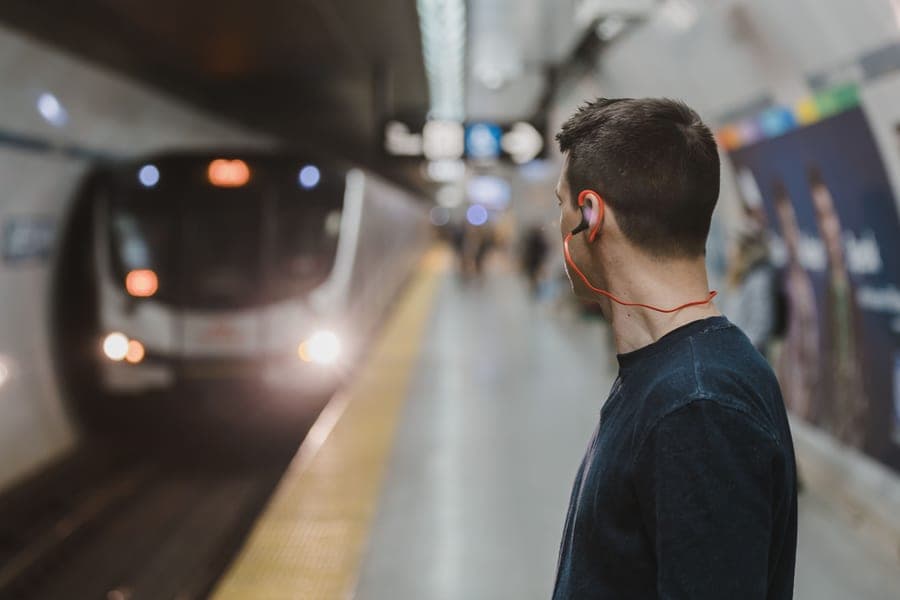
For commuting the best noise-canceling earbuds are the Apple AirPods Pro 3, because on a daily commute transparency mode matters more than battery life and Apple’s implementation is the most natural here — rated at up to 10 hours, longer than its canceling figure. The Sony WF-1000XM6 is the best all-rounder, and the Bose QuietComfort Ultra Earbuds cancel most on a loud subway, where their six-hour rating is irrelevant.
The priorities invert
Why this list is not the flights list
Three things change completely between a flight and a commute, and they change the ranking.
- Battery stops mattering. You are near a charger every night, and a commute is forty minutes. The six-hour rating that costs the Bose a place on the long-flight page is completely irrelevant here.
- Transparency mode starts mattering a great deal. On a flight you put them in and leave them. On a commute you need to hear an announcement, a barrier, a colleague, a coffee order, your stop — repeatedly, every day.
- The noise is transient rather than continuous. A plane is a steady drone, which is ideal for active canceling. A commute is brake squeal, chimes, rail joints, announcements and street noise, most of which sits where canceling is weakest.
On a flight you measure a headphone by how much it removes. On a commute you measure it by how fast it gives the world back.
The comparison
The field, ranked for daily use
| Model | Transparency | Water rating | Rated hours | Best for |
|---|---|---|---|---|
| Apple AirPods Pro 3 | Best here, rated up to 10 h | IP57 | 8 h ANC | Mixed commute with lots of interaction |
| Sony WF-1000XM6 | Very good, steady switching | IPX4 | up to 8 h | All-round daily use |
| Bose QC Ultra Earbuds 2nd Gen | Good | IPX4 | up to 6 h | A loud subway or metro |
| EarFun Air Pro 4 | Adequate | - | 11 h | A commute where things get lost |
The honest limit
Canceling will not remove a conversation
Worth saying plainly because it is the most common disappointment on a commute. Speech sits in roughly the 500 Hz to 4 kHz range, which is where active canceling is least effective and where the physical seal does almost all the work.
So a loud conversation on a train will not disappear. What reduces it is a good tip seal plus something playing at a moderate level. If you want silence rather than masking, the honest answer is that you want a better seal, not a better algorithm — and for earbuds that means the right tips. Active canceling versus passive isolation explains where the boundary falls.
Safety
Transparency mode is not optional on a commute
This is a practical point rather than a lecture. A commute involves roads, platform edges, cyclists and level crossings, and full canceling removes exactly the cues you need for those — an approaching vehicle, a bell, a shout.
The right pattern is canceling on the train and transparency on the street, and what makes that workable is how fast and how naturally you can switch. That is why transparency quality is the top-ranked criterion on this page rather than a footnote. Transparency mode versus noise canceling covers the modes properly.
Or go over-ear
Should you use over-ears for commuting instead?
For a rail commute it is a reasonable question. Over-ears seal better against voices, which is the commute’s hardest problem, and comfort over a long working day is better if you keep them on at your desk.
Earbuds win on the practical side: they go in a pocket, they are not a statement on a crowded train, and they do not leave you carrying a case. See best noise-canceling headphones for commuting for the over-ear version of this page, and best noise-canceling headphones for an open-plan office if the commute is only half the problem.
In short
Key takeaways
- Battery is not a differentiator on a commute. You charge every night, and a commute is forty minutes.
- Transparency quality is the top criterion: you need the world back repeatedly, every day.
- Apple AirPods Pro 3 has the best transparency and is rated at up to 10 hours in it — longer than its ANC figure.
- A subway is the closest daily environment to a plane, which is where the Bose's canceling earns itself.
- Canceling will not remove a conversation. The tip seal plus audio does that work.
- Full canceling on a street is a genuine safety problem. Switch to transparency and back.
At a glance
Quick picks
Scores are our editorial judgment from published specifications and cited third-party measurements, not our own testing. The rubric is published in full. Tap any row for the full write-up.
| # | Product | Best for | Score | Price |
|---|---|---|---|---|
| 1 | 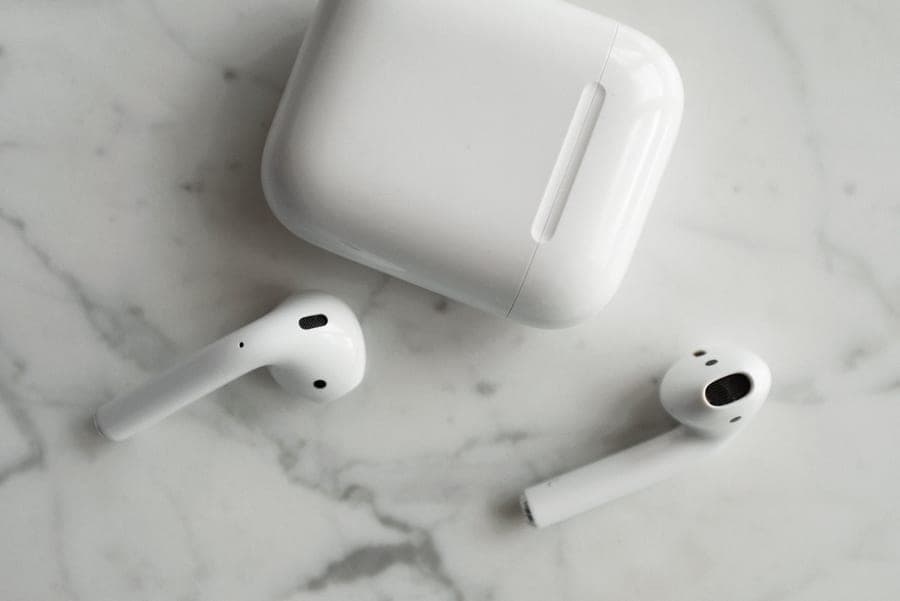 Apple AirPods Pro 3Eight rated hours with canceling on, foam tips in five sizes and an IP57 rating. If your phone is an iPhone this is the least friction of anything here. | Best for commuting | 8.88.8 out of 10, our editorial score | |
| 2 | 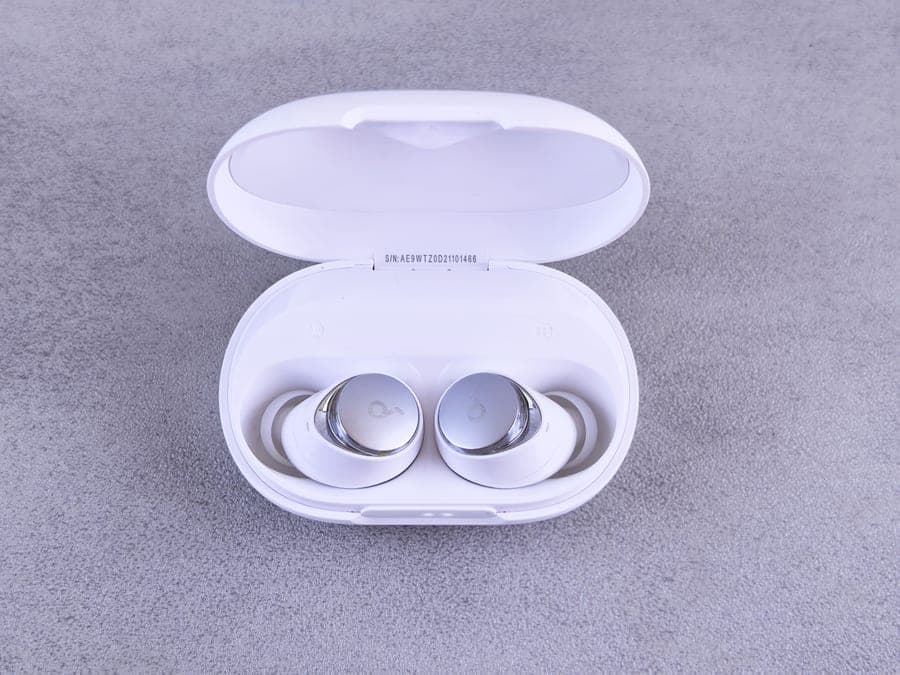 Sony WF-1000XM6Eight rated hours per bud and 24 with the case, at roughly 6.5 g each. The most sensible premium earbud for a flight, because you never have to plan around the battery. | Best all-round commuter | 8.98.9 out of 10, our editorial score | |
| 3 | 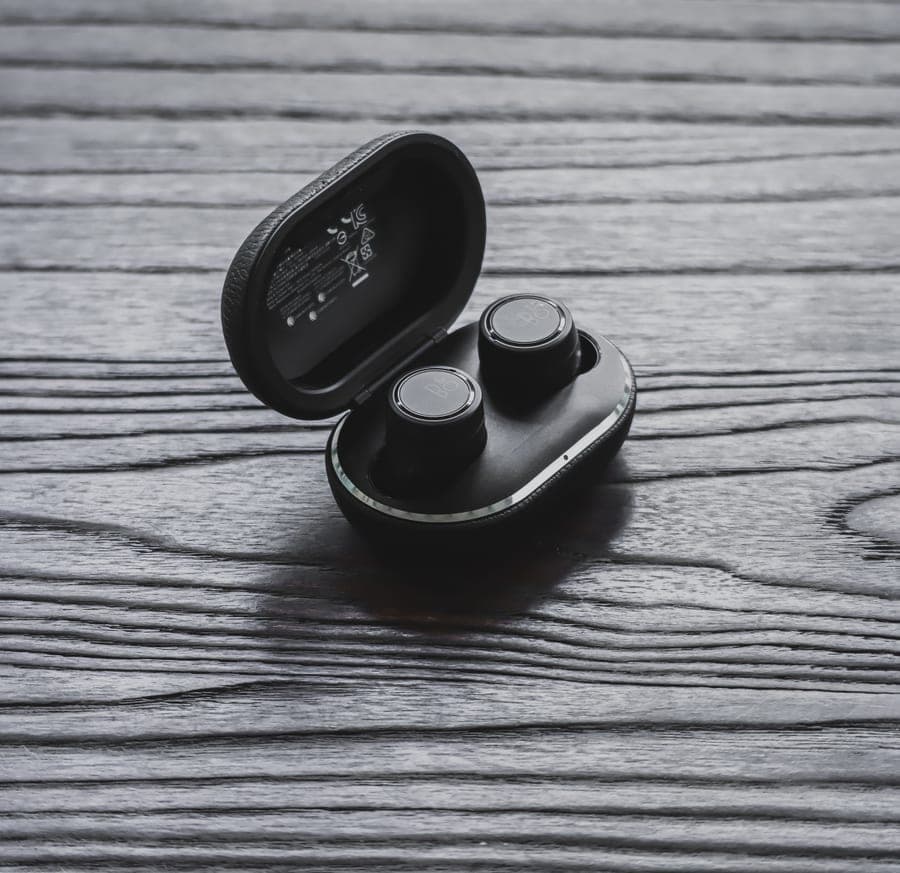 Bose QuietComfort Ultra Earbuds (2nd Gen)The quietest earbuds you can put in a pocket, with the shortest single-charge runtime of the premium set: six rated hours, four with Immersive Audio on. | Best for a loud subway | 8.48.4 out of 10, our editorial score | |
| 4 |  EarFun Air Pro 4Eleven rated hours per bud and 52 with the case, plus LDAC and aptX Lossless, for a small fraction of flagship money. It buys most of the quiet for a little of the price. | Best commuting value | 8.08.0 out of 10, our editorial score |
#ad Amazon links are affiliate links. No live price is shown anywhere on this site, so every button reads “Check price on Amazon”. How this is funded.
The picks in full
Every pick, in detail
1. Best for commuting
Apple AirPods Pro 3
Eight rated hours with canceling on, foam tips in five sizes and an IP57 rating. If your phone is an iPhone this is the least friction of anything here.
Our editorial score: 8.8 / 10
#ad Live price not shown. How this is funded
Also sold direct by Apple — we earn nothing there, so check both.
For a commute the deciding feature is how quickly and how naturally you can hear the world again, and Apple’s Transparency implementation is the best here. On a platform, at a ticket barrier, buying coffee, listening for your stop — you use that far more often on a commute than on a flight.
Apple rates Transparency at up to 10 hours, which is longer than its canceling figure — so the mode you use most on a commute is also the most efficient one.
IP57 on both buds and case is the other commute-relevant spec. A commute happens in weather, twice a day, every day, and IP57 is meaningfully tougher than the IPX4 on the alternatives.
What works on a plane
- Eight rated hours and 24 with the case, matching the best of the premium earbuds
- Foam tips in five sizes solve the fit problem that ruins canceling on most buds
- IP57 on both buds and case is the toughest rating in this group
- Live Translation and heart-rate sensing are genuinely useful abroad, not spec-sheet filler
What does not
- Apple's 2x noise figure is a manufacturer claim measured against its own predecessor, not an independent measurement
- The best features need an iPhone; on Android it is a good but ordinary earbud
- No wired option, so in-flight entertainment needs a transmitter
How it scores against the five travel axes
Published specifications
| Spec | Figure | Source |
|---|---|---|
| Battery, ANC on | 8 hours listening | Apple tech specs |
| Battery, Transparency | Up to 10 hours | Apple tech specs |
| Total with case | Up to 24 hours with ANC | Apple tech specs |
| Quick charge | 5 minutes in the case gives around 1 hour | Apple tech specs |
| Ear tips | Foam tips in five sizes | Apple |
| Water resistance | IP57, buds and case | Apple |
| Apple's ANC claim | Removes up to 2x more noise than AirPods Pro 2 | Apple newsroom |
2. Best all-round commuter
Sony WF-1000XM6
Eight rated hours per bud and 24 with the case, at roughly 6.5 g each. The most sensible premium earbud for a flight, because you never have to plan around the battery.
Our editorial score: 8.9 / 10
#ad Live price not shown. How this is funded
Also sold direct by Sony — we earn nothing there, so check both.
Eight rated hours is far more than a commute needs, which on this page is the point: you charge nightly, so battery stops being a differentiator and everything else moves up.
What matters instead is that the canceling stays steady as the noise around you changes constantly — a platform, a tunnel, a station concourse, a street. Sony’s dual processors and eight microphones are exactly the hardware for that, and it is the difference between canceling that settles and canceling that hunts.
LDAC also matters more on a commute than on a flight, because you are listening on your own phone rather than to an airline’s film soundtrack.
What works on a plane
- Eight rated hours per charge clears most short-haul flights without touching the case
- 24 hours total with the case is the strongest reserve in the premium earbud set
- LDAC means it is not tied to one phone platform
- Roughly 6.5 g per bud effectively disappears when you are trying to sleep on your side
What does not
- Canceling is excellent but the Bose still takes the low-frequency band
- No wired fallback at all, so a seatback screen needs a transmitter
- IPX4 is splash resistance, not weather resistance
How it scores against the five travel axes
Published specifications
| Spec | Figure | Source |
|---|---|---|
| Battery, earbuds | Up to 8 hours | Sony |
| Total with case | Up to 24 hours (16 from the case) | Sony |
| Weight | Approx. 6.5 g per bud with M tips | Sony |
| Driver | 8.4 mm | Sony |
| Bluetooth | 5.3 | Sony |
| Codecs | SBC, AAC, LDAC, LC3 | Sony |
| Water resistance | IPX4 | Sony |
| Processor | HD Noise Canceling Processor QN3e, dual processors, eight microphones | Sony |
3. Best for a loud subway
Bose QuietComfort Ultra Earbuds (2nd Gen)
The quietest earbuds you can put in a pocket, with the shortest single-charge runtime of the premium set: six rated hours, four with Immersive Audio on.
Our editorial score: 8.4 / 10
#ad Live price not shown. How this is funded
Also sold direct by Bose — we earn nothing there, so check both.
On a commute the six-hour rating that holds these back on a flight is simply irrelevant — nobody commutes for six hours — and what is left is the strongest low-frequency canceling in the form factor.
A subway or metro is the closest daily environment to a plane: continuous rolling and tunnel noise with sharp transients on top. The continuous part is exactly what Bose removes best, and on a loud underground system the difference from the alternatives is audible.
The shallow fit and three stabilizer band sizes also suit twice-daily use, where you are putting them in and taking them out repeatedly rather than settling in for fourteen hours.
What works on a plane
- Canceling that genuinely rivals a full-size over-ear, in something pocketable
- The shallow fit is far more tolerable than deep-insertion buds on a long flight
- Wireless case charging is one fewer cable in the bag
What does not
- Six rated hours means a case top-up mid-flight on any long-haul
- Immersive Audio cuts that to four, so on a plane you will mostly leave it off
- 18 hours total with the case is the weakest reserve in the premium earbud set
How it scores against the five travel axes
Published specifications
| Spec | Figure | Source |
|---|---|---|
| Battery, Immersive off | Up to 6 hours | Bose support |
| Battery, Immersive on | Up to 4 hours | Bose support |
| Total with case | Up to 18 hours | Bose support |
| Case charging | USB-C and wireless | Bose support |
| Water resistance | IPX4 | Bose support |
| Fit | Three stabilizer band sizes, shallow insertion | Bose |
Read the full Bose QuietComfort Ultra Earbuds (2nd Gen) review
4. Best commuting value
EarFun Air Pro 4
Eleven rated hours per bud and 52 with the case, plus LDAC and aptX Lossless, for a small fraction of flagship money. It buys most of the quiet for a little of the price.
Our editorial score: 8.0 / 10
#ad Live price not shown. How this is funded
There is a specific argument for inexpensive earbuds on a commute that has nothing to do with affordability: a commute is where earbuds get lost. Dropped on a platform, left on a seat, knocked out by a bag on a crowded train. Twice a day, five days a week.
These are good enough to be worth using and cheap enough that losing one is an annoyance rather than a disaster, which makes them a genuinely rational commuting choice rather than a compromise.
Eleven rated hours means the weekly charging is trivial. The canceling is a step behind the premium set, and on a commute with constantly changing noise the hunting is more noticeable than it is on a steady flight.
What works on a plane
- Eleven rated hours per bud is longer than any premium earbud here
- 52 hours with the case means a two-week trip without a charger thought
- aptX Lossless and LDAC at this price is genuinely unusual
- Losing one on a plane is an annoyance rather than a disaster
What does not
- The 50 dB figure is EarFun's own rating, not an independent measurement, and the gap to Bose is clear
- Adaptive canceling is less steady than the flagships when cabin noise changes
- App polish and firmware support are a step behind the majors
How it scores against the five travel axes
How we decide
How these picks were chosen
We do not run a test lab and we do not claim to have flown with these units. Every verdict on this page is one of three things: a measurement published by somebody who does own a test rig and is credited by name, a manufacturer specification we quote and then interpret against what a long flight actually demands, or a plainly-labeled editorial judgment. The five axes we score on — cabin-noise reduction, battery on a long-haul, pack size, comfort past hour three, and wired fallback — are the ones that decide a travel purchase, and the weighting is published in full.
Questions
Common questions
What are the best noise-canceling earbuds for commuting?
The Apple AirPods Pro 3, because on a commute transparency mode matters more than battery and its implementation is the most natural here — rated at up to 10 hours, longer than its canceling figure. The Sony WF-1000XM6 is the best all-rounder and the Bose cancels most on a loud subway.
Do noise-canceling earbuds work on a subway?
Yes, for the steady rolling and tunnel noise, which is most of the volume. They do much less about brake squeal, door chimes and announcements, because those are short transients rather than continuous tones — which is arguably what you want when you need to hear your stop.
Will earbuds block out people talking on the train?
Not really. Speech sits in roughly the 500 Hz to 4 kHz range, where active canceling is weakest and the physical tip seal does almost all the work. A good seal plus something playing at a moderate level is what actually helps.
Is it safe to wear noise-canceling earbuds while walking?
Full canceling on a street removes exactly the cues you need — an approaching vehicle, a bell, a shout. Use transparency mode outside and canceling on the train. How fast and naturally a product switches between them is a genuine safety feature, not a convenience.
Do I need long battery life for commuting?
No. A commute is forty minutes and you are near a charger every night, so even the shortest rating here is far more than enough. Battery life is the least useful specification to compare for this use, which is why the ranking differs from the flying pages.
Earbuds or over-ear headphones for a commute?
Earbuds for practicality: a pocket rather than a case, and less conspicuous on a crowded train. Over-ears for better isolation against voices and for comfort if you keep them on at your desk afterwards.
Sources
Where these figures come from
Read next
Related reading
- Best noise-canceling headphones for commuting
The over-ear version of this page.
- Transparency mode vs noise canceling
The mode you will use most on a commute.
- Active canceling vs passive isolation
Why a conversation does not disappear.
- Best noise-canceling headphones for an open-plan office
If the commute is only half your noise problem.
- Apple AirPods Pro 3 review
The top pick here, in detail.