1. Best noise canceling in an earbud
Bose QuietComfort Ultra Earbuds (2nd Gen)
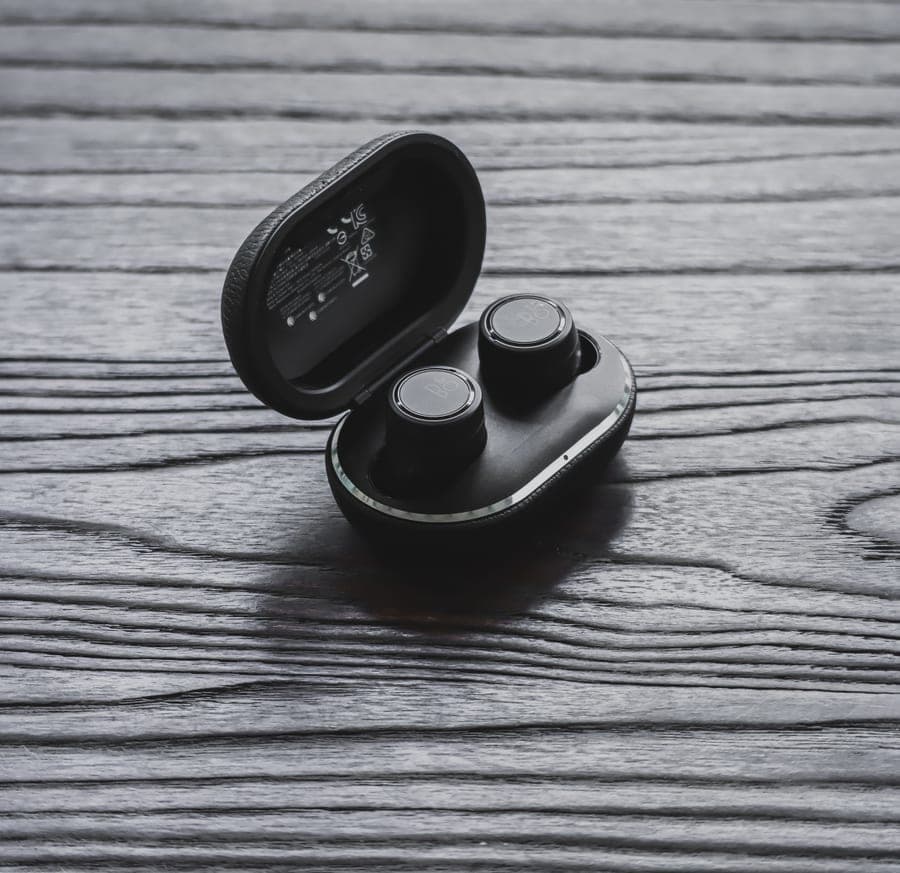
The quietest earbuds you can put in a pocket, with the shortest single-charge runtime of the premium set: six rated hours, four with Immersive Audio on.
Our editorial score: 8.4 / 10
#ad Live price not shown. How this is funded
Also sold direct by Bose — we earn nothing there, so check both.
Bose built these to do one thing better than anyone else, and they do it: this is the closest an earbud gets to full-size canceling, in something that lives in a pocket. If the reason you want earbuds is that you want over-ear quiet without the over-ear, this is the product.
The cost is battery, and it is a real cost. Six rated hours with Immersive Audio off, four with it on, eighteen total with the case. Every other premium earbud here gives you more.
What works on a plane
- Canceling that genuinely rivals a full-size over-ear, in something pocketable
- The shallow fit is far more tolerable than deep-insertion buds on a long flight
- Wireless case charging is one fewer cable in the bag
What does not
- Six rated hours means a case top-up mid-flight on any long-haul
- Immersive Audio cuts that to four, so on a plane you will mostly leave it off
- 18 hours total with the case is the weakest reserve in the premium earbud set
How it scores against the five travel axes
Published specifications
| Spec | Figure | Source |
|---|---|---|
| Battery, Immersive off | Up to 6 hours | Bose support |
| Battery, Immersive on | Up to 4 hours | Bose support |
| Total with case | Up to 18 hours | Bose support |
| Case charging | USB-C and wireless | Bose support |
| Water resistance | IPX4 | Bose support |
| Fit | Three stabilizer band sizes, shallow insertion | Bose |
Read the full Bose QuietComfort Ultra Earbuds (2nd Gen) review
The Bose QuietComfort Ultra Earbuds (2nd Gen) are the quietest noise-canceling earbuds for flying. Bose rates them at up to 6 hours with Immersive Audio off, up to 4 hours with it on, and up to 18 hours total with the case. That is the shortest runtime of the premium earbud set, so on a long-haul you will use the case more than once. The shallow fit, with three stabilizer band sizes, is more tolerable over a long flight than deep-insertion designs.
The short version
Who this is for, and who it is not
Buy them if quiet is the point and pocketability is non-negotiable. Short and medium flights, daily rail commuting, an open-plan office — anywhere the sessions are under six hours and the quiet matters, these are the best answer in the form factor.
Do not buy them for a 14-hour long-haul as your only headphone, because six rated hours and an 18-hour case reserve means real battery management on that trip. The Sony WF-1000XM6 gives you eight and twenty-four for a small step back in canceling, and that is usually the better travel trade. And do not buy them planning to use Immersive Audio on a plane, because four rated hours makes that impractical.
Criterion one
Cabin noise: the best in the form factor
Bose’s twenty years of work on low-frequency canceling shows up here as clearly as it does in the over-ear QuietComfort Ultra. Against the continuous 50 to 300 Hz drone of a cruising cabin, these do work you would not expect from something this size.
Part of the reason is the fit system. Bose supplies three sizes of stabilizer band and uses a shallower insertion depth than comparably stable earbuds, which sounds like a comfort decision and is also an acoustic one: a stable earbud holds its seal, and a held seal is where a large share of the total reduction comes from. An earbud that shifts slightly in your ear during a flight loses canceling performance no firmware can recover.
The shallow fit is the most underrated thing about these. It is why they are still tolerable at hour four, and part of why they cancel as well as they do.
Criterion two
Battery: the honest weakness
| Mode | Rated hours | With the case |
|---|---|---|
| Immersive Audio off | up to 6 | up to 18 total |
| Immersive Audio on | up to 4 | up to 18 total |
Six hours is fine for a transatlantic leg if you are prepared to put them away for the descent. It is not fine for a 14-hour routing without planning: you will be at the case twice, and the case only holds 18 hours in total, so on a two-leg itinerary with no charger you are genuinely managing a budget.
Compare that with 24 hours total on the Sony and the AirPods Pro 3, or 52 on the EarFun Air Pro 4. The case supports wireless charging as well as USB-C, which helps — you can drop it on a pad in a lounge rather than finding a cable. But the arithmetic is the arithmetic. Best earbuds for long flights ranks the field on exactly this.
Criterion three
Pack size: as small as this gets
A pocketable case with wireless charging. There is nothing to say here beyond the obvious: this is the form factor that wins the packing argument outright, and the case supporting a charging pad means one fewer cable in the bag.
Criterion four
Comfort past hour three, and sleeping
The shallow insertion is a genuine advantage over a long session. Earbuds that sit deep in the canal seal wonderfully and become uncomfortable surprisingly fast; these do not push as far in, and the stabilizer band takes some of the retention load off the tip.
For sleeping, they are usable but not the best in class purely because they are slightly larger in the ear than the Sony. If you sleep pressed against a window, a smaller bud is a smaller pressure point. IPX4 covers sweat and splashes.
As with every earbud, the tips decide most of this. Use the smallest tip and band combination that still seals reliably, not the largest that fits.
Criterion five
The seatback screen: no
No wired option, as with every noise-canceling earbud. For airline entertainment you need a Bluetooth transmitter plugged into the seat jack. That also solves the battery problem indirectly, because a transmitter lets you switch to your wired backup headphones when the buds go back in the case.
The alternatives
What else you should look at
- Sony WF-1000XM6 — eight rated hours and 24 with the case, for a small step back in quiet. The better long-haul earbud.
- Apple AirPods Pro 3 — eight rated hours, IP57, foam tips in five sizes, and the best iPhone integration.
- EarFun Air Pro 4 — 11 rated hours and 52 with the case, for a fraction of the price and a clear step down in canceling.
- Bose QuietComfort Ultra Headphones (2nd Gen) — the same canceling philosophy with 30 rated hours, if you can carry the over-ear.
Where it sits in our roundups
These take the canceling slot in best noise-canceling earbuds for flights and appear in best noise-canceling earbuds for travel and best noise-canceling earbuds for commuting, where six hours is no constraint at all. The head-to-head is against the AirPods Pro 3.
In short
Key takeaways
- The quietest earbuds here, and genuinely close to full-size canceling against engine drone.
- Six rated hours, four with Immersive Audio, 18 total with the case — the shortest reserve in the premium set.
- Three stabilizer band sizes and a shallow fit make them tolerable at hour four and help hold the seal.
- Case charges wirelessly as well as over USB-C.
- For a 14-hour routing the Sony WF-1000XM6 is the better trade: eight hours and 24 with the case.
How we decide
How these picks were chosen
We do not run a test lab and we do not claim to have flown with these units. Every verdict on this page is one of three things: a measurement published by somebody who does own a test rig and is credited by name, a manufacturer specification we quote and then interpret against what a long flight actually demands, or a plainly-labeled editorial judgment. The five axes we score on — cabin-noise reduction, battery on a long-haul, pack size, comfort past hour three, and wired fallback — are the ones that decide a travel purchase, and the weighting is published in full.
Questions
Common questions
How long do the Bose QuietComfort Ultra Earbuds last?
Bose rates them at up to 6 hours with Immersive Audio off, up to 4 hours with it on, and up to 18 hours total with the charging case. That is the shortest runtime of the current premium earbuds.
Are they the quietest earbuds you can buy?
On the available evidence, yes for flying. Bose’s low-frequency canceling is the strongest in the category and it carries over from its over-ear models. The remaining gap to a full-size over-ear is concentrated in the deepest frequencies and depends heavily on your tip and band fit.
Should I use Immersive Audio on a plane?
Probably not for the whole flight. It drops the rating from six hours to four, which on any long leg means more trips to the case. Most travelers are better off leaving it off and enabling it for a film.
Can I sleep in them?
Usable, but not the best in class. The shallow fit helps and they are more tolerable than deep-insertion designs, but they sit slightly larger in the ear than the Sony WF-1000XM6, which matters if you sleep pressed against a window.
Can they connect to in-flight entertainment?
No. Like every noise-canceling earbud they have no wired option, so a seatback screen needs a Bluetooth transmitter plugged into the airline jack.
Sources
Where these figures come from
Read next
Related reading
- AirPods Pro 3 vs Bose QuietComfort Ultra Earbuds
The premium earbud decision, where runtime is the real axis.
- Best noise-canceling earbuds for flights
The full field, ranked for a cabin.
- Sony WF-1000XM6 review
Eight rated hours and 24 with the case, for a little less quiet.
- Best earbuds for long flights
Where the six-hour rating becomes the deciding factor.