1. Best earbuds overall for travel
Sony WF-1000XM6
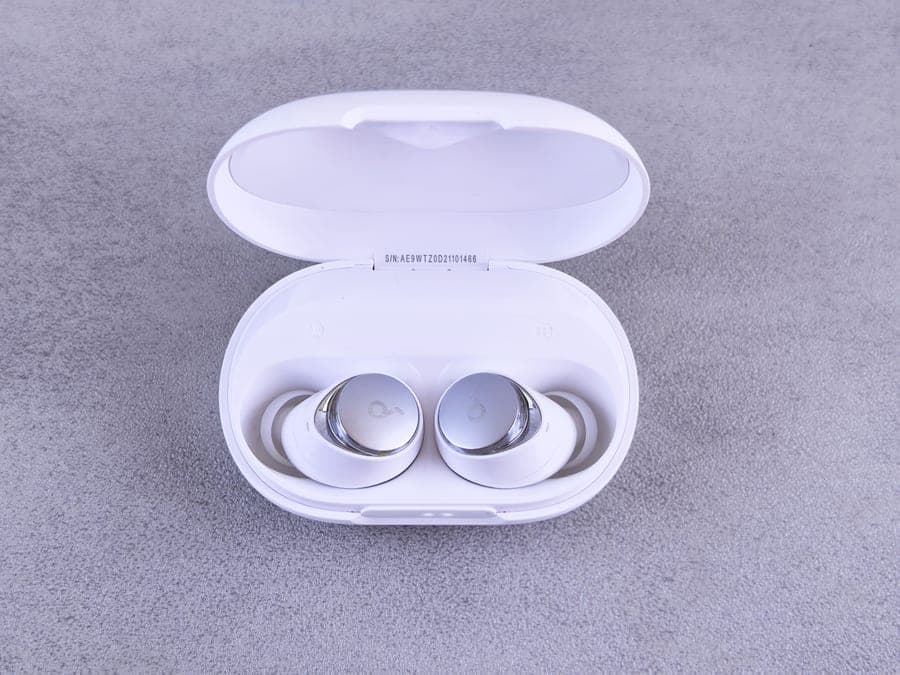
Eight rated hours per bud and 24 with the case, at roughly 6.5 g each. The most sensible premium earbud for a flight, because you never have to plan around the battery.
Our editorial score: 8.9 / 10
#ad Live price not shown. How this is funded
Also sold direct by Sony — we earn nothing there, so check both.
The Bose QuietComfort Ultra Earbuds cancel more. The AirPods Pro 3 integrate better with an iPhone. The WF-1000XM6 wins the travel argument anyway, for the same reason its over-ear sibling does: it is the one that does not ask you to manage a compromise mid-flight.
Eight rated hours per charge and twenty-four with the case is the strongest reserve in the premium set. Roughly 6.5 g per bud means you can sleep on your side in them. LDAC means it works properly on Android. Nothing here requires a workaround.
What works on a plane
- Eight rated hours per charge clears most short-haul flights without touching the case
- 24 hours total with the case is the strongest reserve in the premium earbud set
- LDAC means it is not tied to one phone platform
- Roughly 6.5 g per bud effectively disappears when you are trying to sleep on your side
What does not
- Canceling is excellent but the Bose still takes the low-frequency band
- No wired fallback at all, so a seatback screen needs a transmitter
- IPX4 is splash resistance, not weather resistance
How it scores against the five travel axes
Published specifications
| Spec | Figure | Source |
|---|---|---|
| Battery, earbuds | Up to 8 hours | Sony |
| Total with case | Up to 24 hours (16 from the case) | Sony |
| Weight | Approx. 6.5 g per bud with M tips | Sony |
| Driver | 8.4 mm | Sony |
| Bluetooth | 5.3 | Sony |
| Codecs | SBC, AAC, LDAC, LC3 | Sony |
| Water resistance | IPX4 | Sony |
| Processor | HD Noise Canceling Processor QN3e, dual processors, eight microphones | Sony |
The Sony WF-1000XM6 is the best all-round noise-canceling earbud for travel. Sony rates it at up to 8 hours per charge and 24 hours total with the case, the buds weigh roughly 6.5 g each with medium tips, and it supports SBC, AAC, LDAC and LC3 so it is not tied to one phone platform. The Bose QuietComfort Ultra Earbuds cancel slightly more; they are rated at six hours rather than eight.
The short version
Who this is for, and who it is not
Buy it if you want one set of earbuds for everything and you fly enough that battery planning would otherwise be a thing. Buy it especially if your phone is Android, because LDAC is genuinely useful and the Apple-ecosystem-first alternatives are ordinary on Android.
Do not buy it if the only thing you want is maximum quiet, because the Bose QuietComfort Ultra Earbuds take the low band. Do not buy it if your phone is an iPhone and you value instant switching between Apple devices, because the AirPods Pro 3 does that better and matches the battery. And do not buy it expecting to watch the seatback screen, because no mainstream noise-canceling earbud has a wired option at all.
Criterion one
Cabin noise: near-flagship, in a pocket
Sony specifies an HD Noise Canceling Processor QN3e, dual processors and eight microphones. What that buys in practice is canceling that is remarkably close to a full-size over-ear against steady drone, and that holds steady rather than hunting when cabin conditions change.
An earbud has a physics disadvantage in the deepest frequencies — a smaller cavity, and a seal that depends entirely on a silicone tip rather than on a pad against your whole ear. That disadvantage is real and it is where the Bose still wins. But the gap between a premium earbud and a premium over-ear on a plane is now much smaller than it used to be, and smaller than the difference in what you have to carry.
Canceling in an earbud is dominated by seal. If yours seems weak, change the tips before you change the earbuds.
That last point is the single most useful thing to know about earbud canceling, and it applies to every product in the category. Active canceling versus passive isolation explains why the seal carries so much of the load.
Criterion two
Battery: the strongest reserve in the set
Sony rates the buds at up to 8 hours, with 16 more in the case for 24 hours total. The case charges over USB and wirelessly.
| Model | Per charge | Total with case |
|---|---|---|
| EarFun Air Pro 4 | 11 h | 52 h |
| Sony WF-1000XM6 | up to 8 h | up to 24 h |
| Apple AirPods Pro 3 | 8 h | up to 24 h |
| Bose QC Ultra Earbuds 2nd Gen | up to 6 h (4 h immersive) | up to 18 h |
Eight hours clears most short and medium flights outright. On a 13-hour long-haul you will use the case once, which takes a few minutes in the seat and is not a hardship — the important thing is that 24 hours total means the case itself will not run dry mid-trip. The Bose’s 18 hours is where that starts to get tight.
Criterion three
Pack size: the whole argument for earbuds
Roughly 6.5 g per bud with medium tips, in a case that goes in a pocket. For comparison, the Apple AirPods Max is 386.2 g plus a 134.5 g case.
That is not a marginal difference in a personal item. It is the difference between packing headphones and not thinking about headphones, and for a great many travelers it decides the form factor before any other criterion is considered. If you are still weighing the two, earbuds versus over-ear for flying is the page for that decision rather than either product roundup.
Criterion four
Comfort past hour three, and sleeping
Light enough to be genuinely forgettable, which is the correct goal for an earbud. The IPX4 rating means sweat and splashes are fine; it is not weather resistance.
The sleeping case is where earbuds win decisively over any over-ear. You can lie with your head against a window, or on a shoulder, in a way that no earcup allows. The caveat is that any in-ear device pressed between your head and a hard surface eventually hurts, and 6.5 g is much better at this than most but not perfect. Best earbuds for sleeping on a plane goes into what to look for.
Tip fit is the other half of comfort. A tip that is slightly too large seals beautifully for twenty minutes and aches by hour two. Sony supplies a range; use the smallest one that still seals.
Criterion five
The seatback screen: no
The WF-1000XM6 has no wired option, because no mainstream noise-canceling earbud does. If you want to watch the airline’s films, you need a Bluetooth transmitter plugged into the seat jack.
This is worth planning for rather than discovering. A transmitter is small, cheap, rated at 25+ hours, pairs two sets of headphones at once, and lives permanently in a bag once you own one. Buy it at the same time as the earbuds and the problem never occurs. See Bluetooth headphones and in-flight entertainment for the full picture.
The alternatives
What else you should look at
- Bose QuietComfort Ultra Earbuds (2nd Gen) — quieter, and rated at six hours rather than eight. Take it if quiet is the whole point.
- Apple AirPods Pro 3 — same battery, IP57, foam tips in five sizes, and far better on an iPhone.
- EarFun Air Pro 4 — 11 rated hours and 52 with the case, for a small fraction of the price.
- Sony WH-1000XM6 — the over-ear sibling, if 30 hours and a 3.5 mm socket matter more than pocketability.
Where it sits in our roundups
The WF-1000XM6 leads best noise-canceling earbuds for flights and best noise-canceling earbuds for travel, and appears in best earbuds for long flights and best earbuds for sleeping on a plane.
In short
Key takeaways
- Eight rated hours per charge and 24 with the case is the strongest reserve in the premium earbud set.
- Roughly 6.5 g per bud is what makes side-sleeping possible on a plane.
- LDAC and LC3 support means it is not an iPhone-first product.
- The Bose cancels more; the difference is concentrated in the deepest frequencies and depends on your tip seal.
- No wired option at all, so budget for a Bluetooth transmitter if you watch seatback films.
How we decide
How these picks were chosen
We do not run a test lab and we do not claim to have flown with these units. Every verdict on this page is one of three things: a measurement published by somebody who does own a test rig and is credited by name, a manufacturer specification we quote and then interpret against what a long flight actually demands, or a plainly-labeled editorial judgment. The five axes we score on — cabin-noise reduction, battery on a long-haul, pack size, comfort past hour three, and wired fallback — are the ones that decide a travel purchase, and the weighting is published in full.
Questions
Common questions
How long do the Sony WF-1000XM6 last on a flight?
Sony rates the buds at up to 8 hours per charge and 24 hours total with the case. Eight hours covers most short and medium flights outright; on a long-haul you will put them back in the case once mid-flight.
Are the WF-1000XM6 as quiet as over-ear headphones?
Close, but not equal. An earbud has less cavity volume and depends entirely on a tip seal, so the deepest frequencies are where a full-size over-ear still wins. The practical gap is now far smaller than the difference in what you have to carry.
Can I use them with in-flight entertainment?
Not directly. No mainstream noise-canceling earbud has a wired option, so a seatback screen requires a Bluetooth transmitter plugged into the airline jack. Buy one at the same time and the problem never comes up.
Do they work well with Android?
Yes. Sony lists SBC, AAC, LDAC and LC3, so on an Android phone you get a genuinely better codec rather than falling back to the lowest-common-denominator option.
Sony WF-1000XM6 or Bose QuietComfort Ultra Earbuds?
Sony if you want the fewest compromises — more runtime, LDAC, a bigger case reserve. Bose if maximum quiet is the whole reason you are buying, and you accept six rated hours instead of eight.
Sources
Where these figures come from
Read next
Related reading
- Best noise-canceling earbuds for flights
The full earbud field, with the Sony at the top.
- Earbuds vs over-ear for flying
The form-factor decision, before the product decision.
- Bose QuietComfort Ultra Earbuds review
The quieter alternative, at six rated hours.
- Sony WH-1000XM6 review
The over-ear sibling, at 30 rated hours with a 3.5 mm socket.