Choose over-ear headphones for flying if you want long runtime, comfort across long waking hours, and a wired route to the seatback screen — 30 to 60 rated hours against an earbud ceiling of about 8. Choose earbuds if you pack tight or intend to sleep, because roughly 6.5 g in a pocket beats 386.2 g plus a case, and you cannot sleep on your side in an earcup. Neither is better; the trip decides.
Five axes
The decision, one criterion at a time
| Axis | Winner | The margin |
|---|---|---|
| Runtime | Over-ear, decisively | 30 to 60 rated hours against about 8 per charge |
| Pack size | Earbuds, decisively | Roughly 6.5 g a bud in a pocket against 254 to 386 g plus a case |
| Sleeping | Earbuds, decisively | You cannot lie on an earcup at all |
| Comfort while awake | Over-ear, moderately | Nothing in your ear canal for nine hours |
| The seatback screen | Over-ear, unless you buy a transmitter | Four over-ears ship a cable; no earbud has a socket |
| Canceling depth | Over-ear, slightly | Bigger sealed cavity wins in the deepest frequencies |
Over-ears win four axes and earbuds win two. The two earbuds win are the ones that decide it for most people, because a bag that will not close and a flight you cannot sleep through are concrete problems.
Axis one
Runtime: not close
Premium earbuds are rated at 8 hours per charge, with 24 in total from the case. Over-ears run from 20 rated hours (the Apple AirPods Max) through 30 (Sony, Bose) to 60 (Sennheiser).
What that means in a seat: an over-ear covers a long-haul plus a layover with margin, while earbuds mean a case visit somewhere in the middle. A case visit is a few minutes and not a hardship, so the practical significance is smaller than the numbers suggest — unless your itinerary is long enough that the case reserve itself runs out. Best earbuds for long flights has the arithmetic.
Axis two
Pack size: also not close
Roughly 6.5 g a bud in a case that goes in a jacket pocket, against 254 g to 386.2 g plus a case of 134.5 g at the worst. In a 40-liter personal item that also holds a laptop, a charger, a water bottle and something to read, that difference decides whether the headphones go in the bag at all.
Over-ears mitigate this with a folding hinge, and how well varies a lot — the Sony folds up into a compact block, the Apple does not fold at all. Best foldable noise-canceling headphones ranks that.
Axis three
Sleeping: earbuds, absolutely
If you sleep on planes, this axis alone probably decides it. Sleeping upright means your head goes against a window, a pillow or a shoulder, and an over-ear earcup in any of those positions becomes a rigid object pressing into your skull. It hurts within about an hour.
No over-ear solves this — it is geometry, not quality. Earbuds at roughly 6.5 g are genuinely sleepable. See best earbuds for sleeping on a plane.
Axis four
Comfort while awake: over-ear, with caveats
For nine waking hours of reading and watching, most people find a well-made over-ear more tolerable than anything in their ear canal. Nothing is inserted, the pressure is spread over a large area, and you can lift one cup to talk to someone.
Two caveats. Weight matters enormously here and the spread is 132 g across the flagships. And if you wear glasses, the over-ear advantage narrows considerably, because spectacle arms turn clamp force into a pressure line — see best headphones for glasses wearers.
Axis five
The seatback screen: over-ear, unless you spend a little
An over-ear can have a 3.5 mm socket and four current models ship the cable. No noise-canceling earbud has a socket at all.
But this axis is buyable. A Bluetooth transmitter in the seat jack, rated at 25+ hours, gives earbuds full access to the airline’s films for a modest one-off cost — and it lives in your bag permanently afterwards. So treat this as a small addition to the earbud budget rather than a reason to change form factor. Best wired earbuds for flights explains the whole situation.
The verdict
A decision table
| If this describes you | Buy |
|---|---|
| You sleep on flights | Earbuds |
| You travel with one bag | Earbuds |
| You fly multi-leg with unreliable charging | Over-ear |
| You wear glasses | Earbuds, usually |
| You fly long-haul awake, reading and watching | Over-ear |
| You watch airline films and will not buy an accessory | Over-ear with a cable |
| You want one pair for flights, commute and desk | Over-ear |
| You fly a few times a year and hate carrying things | Earbuds |
And the answer nobody likes but plenty of frequent long-haul passengers reach: both. An over-ear for the waking hours and earbuds to sleep in. That is two different problems rather than an indulgence, and if you fly long-haul monthly it is a rational kit.
In short
Key takeaways
- Over-ears win runtime, comfort while awake, canceling depth and the seatback screen.
- Earbuds win pack size and sleeping, and those two decide it for most travelers.
- Runtime: 30 to 60 rated hours for over-ears against about 8 per charge for earbuds.
- Pack size: roughly 6.5 g a bud against 254 to 386 g plus a case.
- The seatback-screen axis is buyable — a transmitter closes it for earbuds for a modest one-off cost.
- Frequent long-haul flyers often carry both, and that is two problems rather than an extravagance.
At a glance
Quick picks
Scores are our editorial judgment from published specifications and cited third-party measurements, not our own testing. The rubric is published in full. Tap any row for the full write-up.
| # | Product | Best for | Score | Price |
|---|---|---|---|---|
| 1 | 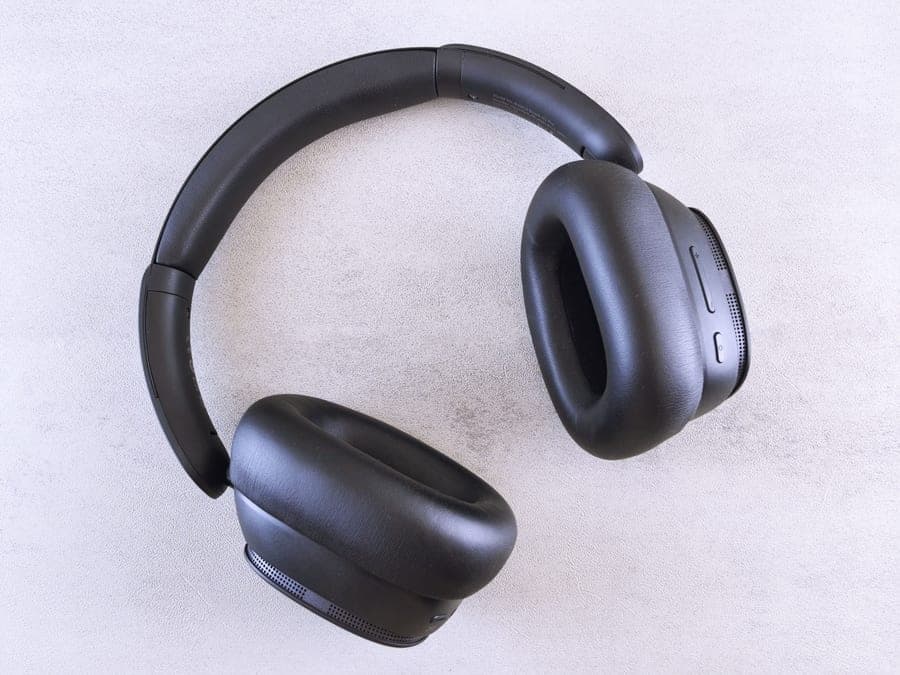 Sony WH-1000XM6The most complete travel headphone on sale: 254 g, 30 rated hours with noise canceling on, and it folds into a case small enough to stop being a decision. | If you chose over-ear | 9.19.1 out of 10, our editorial score | |
| 2 | 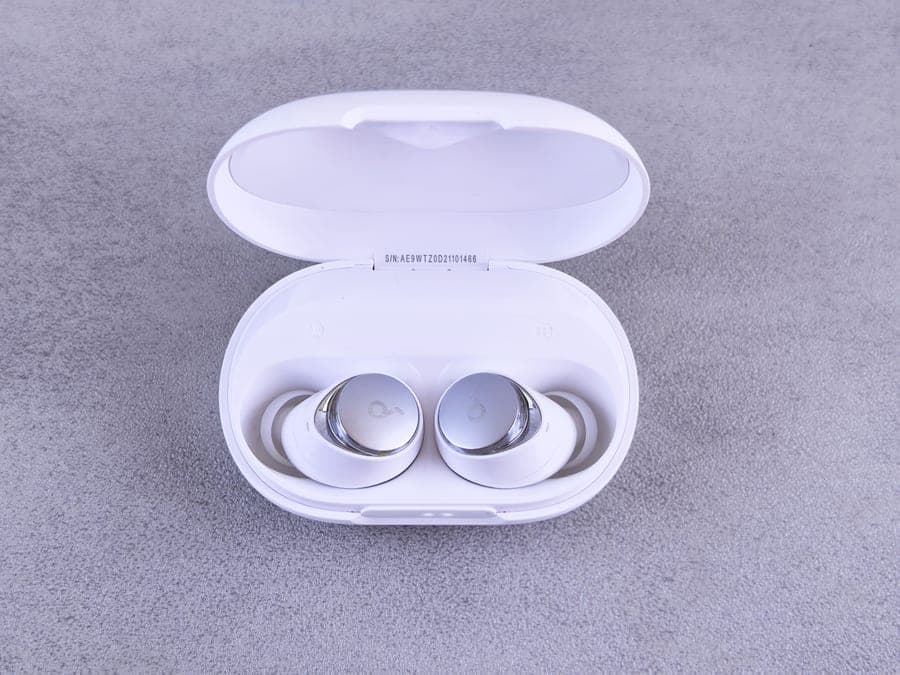 Sony WF-1000XM6Eight rated hours per bud and 24 with the case, at roughly 6.5 g each. The most sensible premium earbud for a flight, because you never have to plan around the battery. | If you chose earbuds | 8.98.9 out of 10, our editorial score | |
| 3 | 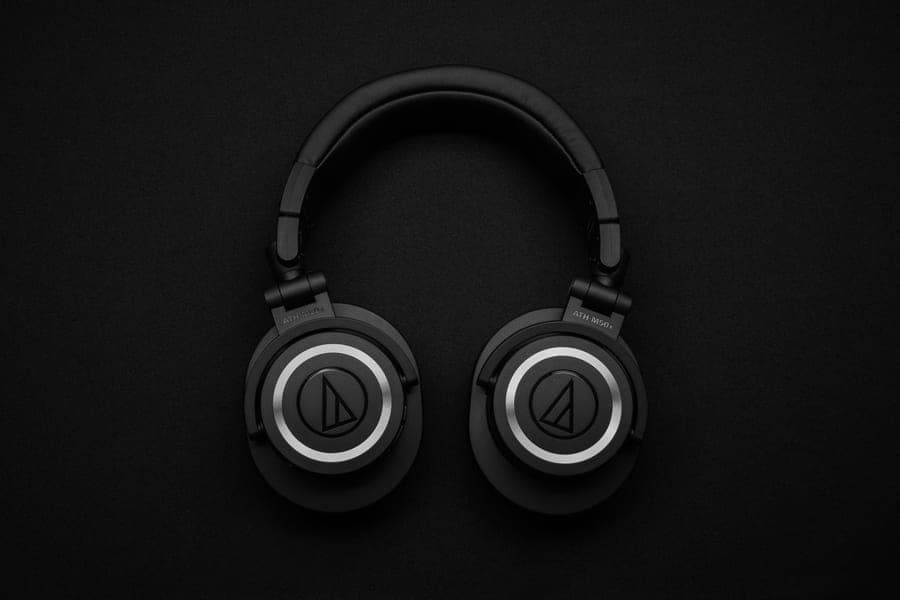 Sennheiser MOMENTUM 4 WirelessSennheiser publishes up to 60 hours. That is the difference between charging at the gate and not thinking about a charger for an entire two-week trip. | If runtime decided it for you | 8.88.8 out of 10, our editorial score | |
| 4 |  Twelve South AirFly Pro 2The single accessory that makes any wireless headphone work with a seatback screen: plug it into the airline jack and it sends the audio to your headphones over Bluetooth. | If you chose earbuds and want the screen | 9.09.0 out of 10, our editorial score |
#ad Amazon links are affiliate links. No live price is shown anywhere on this site, so every button reads “Check price on Amazon”. How this is funded.
The picks in full
Every pick, in detail
1. If you chose over-ear
Sony WH-1000XM6
The most complete travel headphone on sale: 254 g, 30 rated hours with noise canceling on, and it folds into a case small enough to stop being a decision.
Our editorial score: 9.1 / 10
#ad Live price not shown. How this is funded
Also sold direct by Sony — we earn nothing there, so check both.
The over-ear answer, and the one to buy if this page sends you that way. Approximately 254 g makes it the lightest flagship, it folds into a compact case which addresses the form factor’s main weakness, it is rated at up to 30 hours with canceling on, and it has a 3.5 mm socket for the seatback screen.
In other words it is the over-ear that gives up the least of what makes over-ears awkward, while keeping all of what makes them good.
What works on a plane
- Folds, which halves the space it takes in a personal item
- 254 g is light for a flagship over-ear, and weight is what you feel at hour four
- LDAC plus LC3 means it is not locked to one phone ecosystem
- 30 rated hours with noise canceling on covers almost any single routing
What does not
- You pay a flagship price for the last increment of noise canceling
- The folding hinge is one more mechanism to eventually wear out
- No airline two-prong adapter in the box
How it scores against the five travel axes
Published specifications
| Spec | Figure | Source |
|---|---|---|
| Weight | Approx. 254 g (9 oz) | Sony Help Guide specifications |
| Battery, NC on | Up to 30 hours | Sony specifications |
| Battery, NC off | Up to 40 hours | Sony specifications |
| Full charge | Approx. 3.5 hours | Sony Help Guide specifications |
| Bluetooth | 5.3 | Sony Help Guide specifications |
| Codecs | SBC, AAC, LDAC, LC3 | Sony Help Guide specifications |
| Wired response | 4 Hz - 40,000 Hz (IEC) | Sony Help Guide specifications |
| Folds | Yes, into a magnetic-closure case | Sony |
2. If you chose earbuds
Sony WF-1000XM6
Eight rated hours per bud and 24 with the case, at roughly 6.5 g each. The most sensible premium earbud for a flight, because you never have to plan around the battery.
Our editorial score: 8.9 / 10
#ad Live price not shown. How this is funded
Also sold direct by Sony — we earn nothing there, so check both.
The earbud answer, for the same reason: fewest compromises within the form factor. Eight rated hours per charge and 24 with the case is the best runtime-plus-reserve combination in the premium set, roughly 6.5 g a bud means you can sleep on your side, and LDAC means it is not tied to one platform.
Remember the one thing it cannot do: there is no wired option, so budget for a transmitter if the seatback screen matters.
What works on a plane
- Eight rated hours per charge clears most short-haul flights without touching the case
- 24 hours total with the case is the strongest reserve in the premium earbud set
- LDAC means it is not tied to one phone platform
- Roughly 6.5 g per bud effectively disappears when you are trying to sleep on your side
What does not
- Canceling is excellent but the Bose still takes the low-frequency band
- No wired fallback at all, so a seatback screen needs a transmitter
- IPX4 is splash resistance, not weather resistance
How it scores against the five travel axes
Published specifications
| Spec | Figure | Source |
|---|---|---|
| Battery, earbuds | Up to 8 hours | Sony |
| Total with case | Up to 24 hours (16 from the case) | Sony |
| Weight | Approx. 6.5 g per bud with M tips | Sony |
| Driver | 8.4 mm | Sony |
| Bluetooth | 5.3 | Sony |
| Codecs | SBC, AAC, LDAC, LC3 | Sony |
| Water resistance | IPX4 | Sony |
| Processor | HD Noise Canceling Processor QN3e, dual processors, eight microphones | Sony |
3. If runtime decided it for you
Sennheiser MOMENTUM 4 Wireless
Sennheiser publishes up to 60 hours. That is the difference between charging at the gate and not thinking about a charger for an entire two-week trip.
Our editorial score: 8.8 / 10
#ad Live price not shown. How this is funded
Also sold direct by Sennheiser — we earn nothing there, so check both.
If the battery axis is what sent you toward over-ears, this is the endpoint of that argument. Sennheiser publishes up to 60 hours, which is more than seven times the premium earbud ceiling, and it includes a 1.2 m aux cable for the seatback screen.
The gentlest clamp here also makes it the most comfortable over a genuinely long session, which is the other axis over-ears win.
What works on a plane
- Up to 60 rated hours, roughly double the flagship norm
- The 1.2 m 3.5 mm cable is in the box, so seatback screens work straight out of the bag
- Fold-flat earcups make the carry case slim rather than deep
- The 42 mm transducer is the most relaxed listen here over a very long session
What does not
- Published measurements consistently place its noise canceling a step behind the Bose
- The case is broad, so it eats width in a personal item even though it is slim
- Fold-flat is not fold-up, so the footprint is larger than the Sony's
How it scores against the five travel axes
Published specifications
| Spec | Figure | Source |
|---|---|---|
| Battery | Up to 60 hours playback | Sennheiser |
| Weight | Approx. 293-295 g | Sennheiser / published reviews |
| Transducer | 42 mm | Sennheiser |
| In the box | Carry case, USB-C cable, 1.2 m 3.5 mm auxiliary cable | Sennheiser |
| Folds | Fold-flat earcups | Sennheiser |
4. If you chose earbuds and want the screen
Twelve South AirFly Pro 2
The single accessory that makes any wireless headphone work with a seatback screen: plug it into the airline jack and it sends the audio to your headphones over Bluetooth.
Our editorial score: 9.0 / 10
#ad Live price not shown. How this is funded
Also sold direct by Twelve South — we earn nothing there, so check both.
The item that removes the earbud form factor’s biggest disadvantage. Plug it into the seatback jack and your earbuds can reach the airline’s films — which is otherwise the one thing an over-ear can do that earbuds simply cannot.
25+ rated hours so it outlasts the flight, and dual pairing so two people can share one screen. If you have chosen earbuds, buying this alongside them effectively closes the gap on four of the five axes below.
What works on a plane
- 25+ rated hours outlasts any single flight you will ever take
- Pairs two sets of headphones, so two people can watch one screen
- Receiver mode makes it useful in a rental car with only an aux input
- Works with any Bluetooth headphone, so it outlives whatever you own now
What does not
- One more small object to charge and not lose
- Adds a small amount of latency, which shows on lip sync for some people
- A single 3.5 mm plug, so older twin-socket seats still want a two-prong adapter
How it scores against the five travel axes
Published specifications
| Spec | Figure | Source |
|---|---|---|
| Battery | 25+ hours | Twelve South |
| Full charge | About 2 hours via USB-C | Twelve South |
| Bluetooth | 5.3, aptX HD Adaptive | Twelve South |
| Modes | Transmitter and receiver | Twelve South |
| Pairing | Two sets of headphones at once | Twelve South |
| Connection | 3.5 mm AUX | Twelve South |
How we decide
How these picks were chosen
We do not run a test lab and we do not claim to have flown with these units. Every verdict on this page is one of three things: a measurement published by somebody who does own a test rig and is credited by name, a manufacturer specification we quote and then interpret against what a long flight actually demands, or a plainly-labeled editorial judgment. The five axes we score on — cabin-noise reduction, battery on a long-haul, pack size, comfort past hour three, and wired fallback — are the ones that decide a travel purchase, and the weighting is published in full.
Questions
Common questions
Are earbuds or over-ear headphones better for flying?
Neither, in the abstract. Over-ears win on runtime (30 to 60 rated hours against about 8), comfort across long waking hours and a wired route to the seatback screen. Earbuds win on pack size and on being sleepable, and those two tend to decide it for real travelers.
Do over-ear headphones cancel more noise than earbuds?
Slightly, in the deepest low frequencies, because a bigger sealed cavity gives the active system more to work with. The gap has narrowed a lot — premium earbuds now get genuinely close, and the difference depends heavily on whether your tips seal properly.
Can I sleep in over-ear headphones on a plane?
Not comfortably. Sleeping upright puts your head against a window, a pillow or your shoulder, and an earcup in any of those positions becomes a rigid pressure point that hurts within about an hour. The headband also stops you turning your head.
Which is better for a long-haul flight?
Over-ear, if you will be awake: the runtime covers the routing plus its layover, and hour-four comfort is better. Earbuds, if you intend to sleep. Plenty of frequent long-haul passengers carry both and switch.
Can earbuds connect to the airplane seatback screen?
Not directly — no noise-canceling earbud has a 3.5 mm socket. A Bluetooth transmitter in the seat jack solves it for a modest one-off cost and works with any earbuds you own now or later.
Which is better if I wear glasses?
Earbuds, usually. Spectacle arms break an over-ear’s pad seal, which costs real isolation, and they concentrate clamp force into a pressure line above the ear. An earbud has no pad and no clamp, so neither problem exists.
Sources
Where these figures come from
Read next
Related reading
- Best noise-canceling earbuds for flights
If this page sent you toward earbuds.
- Best noise-canceling headphones for flights
If this page sent you toward over-ears.
- Best earbuds for sleeping on a plane
The axis earbuds win outright.
- Best foldable noise-canceling headphones
How much over-ears can mitigate the pack-size problem.
- Best wired earbuds for flights
How to buy your way out of the seatback-screen axis.