An over-ear headphone has a pad that seals around your whole ear; an on-ear presses on the outside of the ear. Over-ear gives far better isolation, makes active noise canceling effective, and holds a larger battery — at the cost of heat, bulk and weight. On-ear is lighter, cooler and more portable, and suits warm rooms, short sessions and situations where you want to stay aware of what is around you. For flights, trains and open-plan offices, over-ear is the right answer.
One difference
What the pad actually changes
An over-ear pad forms a closed chamber: your ear is inside a sealed volume of air. An on-ear pad sits on the pinna, so the chamber is open to the room along every edge. Four consequences follow, and they are the whole comparison.
Isolation
Sealing is what reduces noise passively, and passive reduction does most of the work above roughly 1 kHz — voices, announcements, keyboards. An on-ear has effectively none of it. You will hear the room.
Whether canceling works
Active canceling needs a predictable, enclosed acoustic space to generate and maintain an inverted waveform. An open on-ear leaks continuously, so canceling in that form factor is weak at best. This is why almost no serious canceling headphone is on-ear, and why on-ear is not represented in the flight canceling roundup at all.
Heat
A sealed pad traps warmth and moisture against your skin. On-ear does not, which is the one axis where it wins decisively — a warm office in summer is where on-ear owners are quietly content and over-ear owners are taking them off every hour.
Pressure distribution
Over-ear loads the sides of your head around the ear. On-ear loads the ear cartilage itself, which is comfortable for some people and sore for others. Neither is universally better; they are different pressure points, and only trying them tells you which suits you.
On-ear is not a cheaper over-ear. It is a different trade: you give up all of the isolation to get back all of the heat and bulk.
Side by side
The two form factors compared
| Over-ear | On-ear | |
|---|---|---|
| Pad position | Seals around the ear | Presses on the ear |
| Passive isolation | Good, especially above 1 kHz | Minimal |
| Active canceling | Effective; the standard design for it | Weak, because the chamber leaks |
| Heat | Warm, traps moisture | Cool, open to the room |
| Weight, typical | approx. 250-390 g | Much lighter; often not published |
| Battery, typical | 20-70 rated hours | Usually wired, so unlimited |
| Packed size | A case, often rigid | Folds flat or into a pocket |
| Awareness of the room | Poor by design | High |
| Best for | Flights, trains, open-plan offices | Warm rooms, short sessions, staying aware |
By situation
Which to buy, situation by situation
- Flights and long-haul: over-ear, without qualification. You need canceling for the drone and isolation for everything else, and the battery has to cover a routing. See best headphones for airplanes.
- Trains and buses: over-ear. Rumble is low-frequency, which is the canceling case.
- Open-plan office: over-ear, because the problem is voices and voices need a seal, not processing — the open-plan roundup goes into why.
- A warm room, four hours at a desk: on-ear is a serious option. Heat is the comfort variable that defeats over-ear here.
- At home with family around: on-ear, so you hear the room. An open design is a feature rather than a flaw in that setting.
- Walking near traffic: neither, really — an open-ear or bone conduction design is the better answer, covered in best headphones for walking.
A third option
Where earbuds sit in this
Earbuds seal inside the canal rather than around or on the ear, which gives them isolation comparable to a good over-ear in a package that disappears. The costs are canal comfort over long sessions and much smaller batteries.
If you are genuinely choosing between all three, earbuds vs over-ear for flying takes the two sealed options apart, and headphones vs in-ear monitors covers the sound-quality end of the same question.
What to look for
What to buy, and the three things to check
- If you need quiet, buy over-ear. Nothing about on-ear design delivers isolation, and no amount of processing compensates for a leaking chamber.
- If you overheat, buy on-ear. It is the one problem over-ear cannot fix, and pad material only moves it a little.
- Check which pressure point suits you. Over-ear presses the sides of your head, on-ear presses the ear itself. People differ, and nothing published tells you which you are.
The three picks below are the best over-ear case on this site, the best on-ear, and the cheapest honest version of on-ear so the trade-off is affordable to test.
In short
Key takeaways
- Over-ear seals around the ear; on-ear presses on it. Everything else follows from that.
- Isolation and effective active canceling both require a sealed chamber, so they are over-ear properties.
- On-ear wins on heat, weight and packed size, and on staying aware of the room.
- For flights, trains and open-plan offices, buy over-ear. For a warm desk or a busy home, on-ear is a real option.
- The two load different pressure points — the sides of the head versus the ear cartilage.
- Earbuds are the third option: over-ear isolation in a pocketable package, with a smaller battery.
At a glance
Quick picks
Scores are our editorial judgment from published specifications and cited third-party measurements, not our own testing. The rubric is published in full. Tap any row for the full write-up.
| # | Product | Best for | Score | Price |
|---|---|---|---|---|
| 1 | 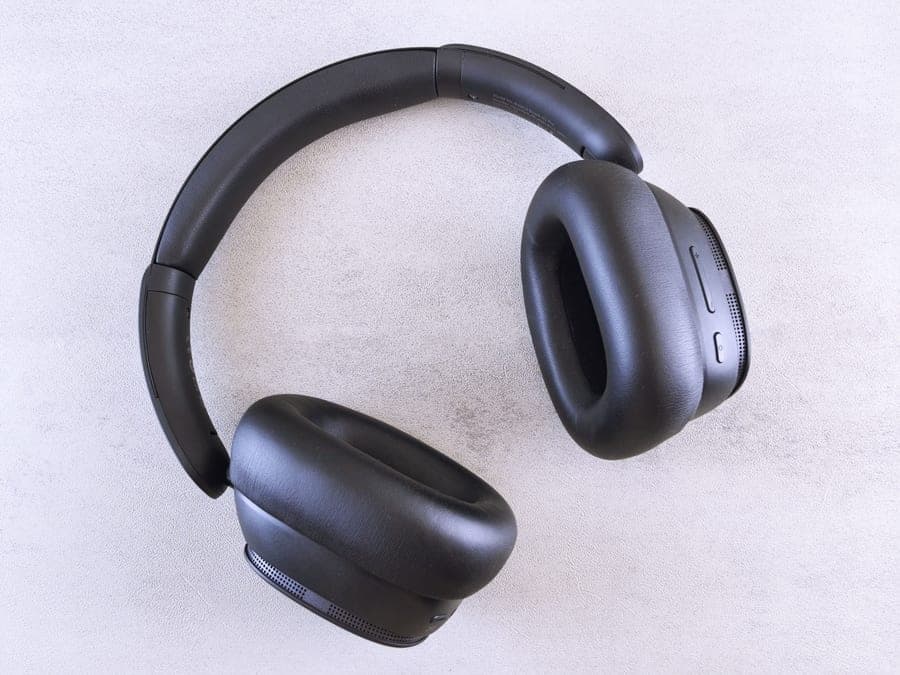 Sony WH-1000XM6The most complete travel headphone on sale: 254 g, 30 rated hours with noise canceling on, and it folds into a case small enough to stop being a decision. | Best over-ear, if isolation matters | 9.19.1 out of 10, our editorial score | |
| 2 | 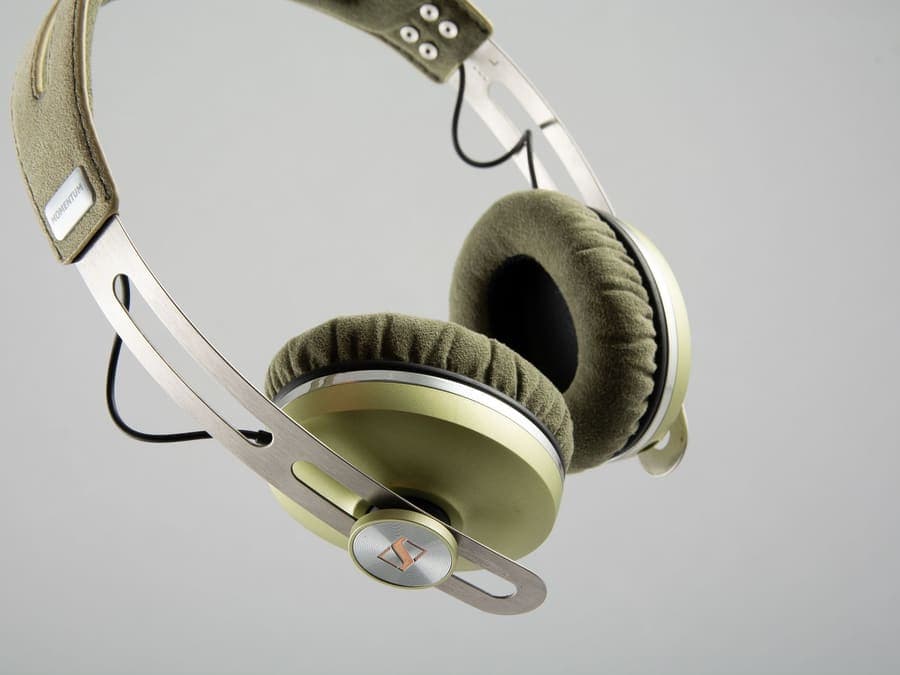 Koss Porta ProListed at $49.99 with a limited lifetime warranty, which means the cheapest headphone here is also the one least likely to need replacing. | Best on-ear | 7.47.4 out of 10, our editorial score | |
| 3 | 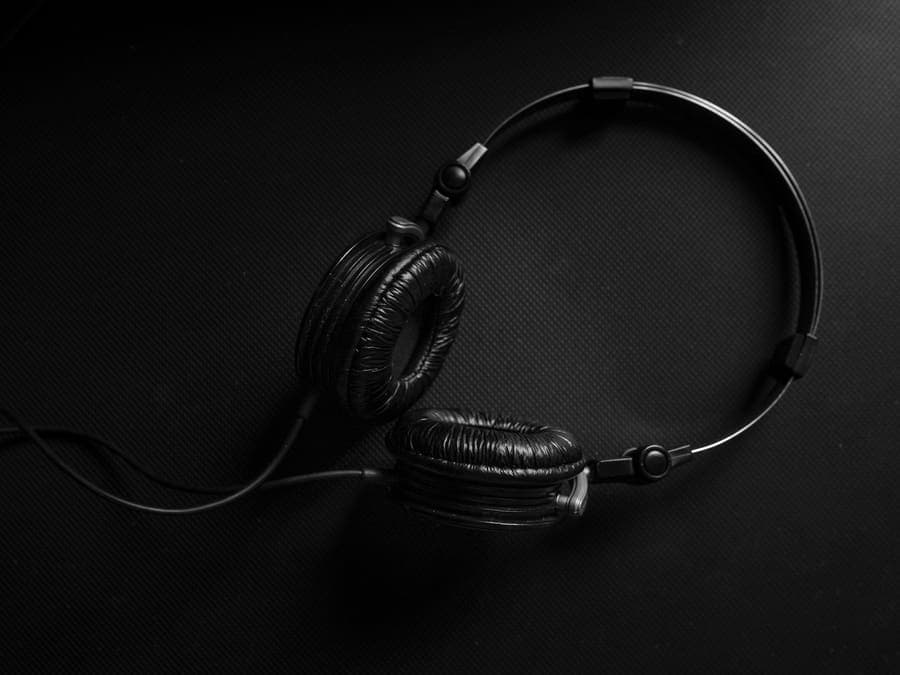 Koss KSC75$24.99 for a clip-on with titanium-coated diaphragms, a published distortion figure and the same limited lifetime warranty. Nothing at this price is more honest. | The cheapest honest version of on-ear | 7.27.2 out of 10, our editorial score |
#ad Amazon links are affiliate links. No live price is shown anywhere on this site, so every button reads “Check price on Amazon”. How this is funded.
The picks in full
Every pick, in detail
1. Best over-ear, if isolation matters
Sony WH-1000XM6
The most complete travel headphone on sale: 254 g, 30 rated hours with noise canceling on, and it folds into a case small enough to stop being a decision.
Our editorial score: 9.1 / 10
#ad Live price not shown. How this is funded
Also sold direct by Sony — we earn nothing there, so check both.
The case for over-ear in one product. A pad that seals all the way around your ear is what makes deep active canceling possible, because canceling needs a closed acoustic volume to work against.
Approximately 254 g, up to 30 rated hours with canceling on and 40 with it off, about 3.5 hours to a full charge, SBC, AAC, LDAC and LC3, 4 Hz to 40,000 Hz over the cable, and it folds into a case.
The costs of the sealed design are exactly what on-ear avoids: it is warmer against your head, it is bulkier in a bag, and it isolates you from the room whether you want that or not.
What works on a plane
- Folds, which halves the space it takes in a personal item
- 254 g is light for a flagship over-ear, and weight is what you feel at hour four
- LDAC plus LC3 means it is not locked to one phone ecosystem
- 30 rated hours with noise canceling on covers almost any single routing
What does not
- You pay a flagship price for the last increment of noise canceling
- The folding hinge is one more mechanism to eventually wear out
- No airline two-prong adapter in the box
How it scores against the five travel axes
Published specifications
| Spec | Figure | Source |
|---|---|---|
| Weight | Approx. 254 g (9 oz) | Sony Help Guide specifications |
| Battery, NC on | Up to 30 hours | Sony specifications |
| Battery, NC off | Up to 40 hours | Sony specifications |
| Full charge | Approx. 3.5 hours | Sony Help Guide specifications |
| Bluetooth | 5.3 | Sony Help Guide specifications |
| Codecs | SBC, AAC, LDAC, LC3 | Sony Help Guide specifications |
| Wired response | 4 Hz - 40,000 Hz (IEC) | Sony Help Guide specifications |
| Folds | Yes, into a magnetic-closure case | Sony |
2. Best on-ear
Koss Porta Pro
Listed at $49.99 with a limited lifetime warranty, which means the cheapest headphone here is also the one least likely to need replacing.
Our editorial score: 7.4 / 10
#ad Live price not shown. How this is funded
Also sold direct by Koss — we earn nothing there, so check both.
The on-ear argument made properly, and at $49.99 at the time of writing. It presses lightly on the ear rather than enclosing it, which means it runs cool, weighs very little and folds flat into a pocket rather than a case.
15 Hz to 25,000 Hz, 101 dB SPL/1mW sensitivity, a 4 ft dual-entry cable with a 3.5 mm plug, and a limited lifetime warranty — which is a real statement about a product at this price.
What you give up is the seal, and therefore all of the isolation. On a plane or a train this is the wrong product; at a desk in a warm room for four hours it is a better companion than most flagships.
What works on a plane
- A limited lifetime warranty on a $49.99 headphone, which is not a normal thing to find
- Wired, so there is no battery to degrade and nothing to charge
- Collapses flat into a bag with no case and no hinge to snap
- The 3.5 mm plug works with a seatback screen directly, no transmitter required
What does not
- Open-backed on-ear, so it blocks very little and leaks sound to your neighbor
- No noise canceling whatsoever — this is the wrong purchase for engine drone
- Foam pads wear out, though replacements are cheap and easy to fit
How it scores against the five travel axes
3. The cheapest honest version of on-ear
Koss KSC75
$24.99 for a clip-on with titanium-coated diaphragms, a published distortion figure and the same limited lifetime warranty. Nothing at this price is more honest.
Our editorial score: 7.2 / 10
#ad Live price not shown. How this is funded
Also sold direct by Koss — we earn nothing there, so check both.
$24.99 at the time of writing, clip-on rather than headband, and here to make a point: the on-ear trade-off is available for the price of a cable.
15 Hz to 25,000 Hz, 101 dB SPL/1mW, distortion under 0.2 percent, a 4 ft dual-entry cable and the same limited lifetime warranty.
It is open, so it leaks sound in both directions. That makes it genuinely useful for working while staying aware of a room, and genuinely useless anywhere you need quiet or privacy.
What works on a plane
- $24.99 with a limited lifetime warranty, which is a genuinely unusual combination
- Publishes a distortion figure, which almost nothing at this price does
- Clip-on and tiny, so it disappears into a jacket pocket
- Wired and battery-free, so it is always ready and never degrades
What does not
- Open-backed by design, so it blocks essentially nothing
- The ear clips are an acquired taste and do not suit every ear
- No microphone, no controls, no canceling — it is a driver on a wire
How it scores against the five travel axes
How we decide
How these picks were chosen
We do not run a test lab and we do not claim to have flown with these units. Every verdict on this page is one of three things: a measurement published by somebody who does own a test rig and is credited by name, a manufacturer specification we quote and then interpret against what a long flight actually demands, or a plainly-labeled editorial judgment. The five axes we score on — cabin-noise reduction, battery on a long-haul, pack size, comfort past hour three, and wired fallback — are the ones that decide a travel purchase, and the weighting is published in full.
Questions
Common questions
What is the difference between over-ear and on-ear headphones?
An over-ear pad seals around your whole ear, creating a closed chamber. An on-ear pad presses on the outside of the ear, leaving the chamber open to the room. That single difference determines isolation, heat, bulk and whether active canceling works.
Which is better, over-ear or on-ear headphones?
Over-ear for any situation where you want quiet: flights, trains, an open-plan office. On-ear for warm rooms, lighter carry, and situations where you want to stay aware of what is around you. They are different trades, not different quality levels.
Do on-ear headphones have good noise canceling?
Not really. Active canceling needs a sealed acoustic chamber to generate and hold an inverted waveform, and an on-ear design leaks continuously around the pad. That is why virtually every serious canceling headphone is over-ear.
Are on-ear headphones more comfortable?
Cooler, lighter and less bulky, which many people experience as more comfortable over a long session in a warm room. But they load the ear cartilage directly, which some people find sore in a way a surrounding pad never is.
Are on-ear headphones bad for your ears?
No more than any other form factor. The hearing risk in headphone use is volume, and on-ear designs can actually push volume up because they isolate so little — you end up competing with the room. In a quiet space that is a non-issue.
Sources
Where these figures come from
Read next
Related reading
- Earbuds vs over-ear for flying
The other form-factor decision, judged for a cabin.
- Headphones vs in-ear monitors
The sound-quality end of the same question.
- Best headphones under $50
Where both on-ear picks on this page sit.
- Active canceling vs passive isolation
Why a seal is a prerequisite rather than a nice-to-have.