
Buy an IEM if you listen mostly somewhere quiet and want the most measurable sound per dollar: the Sennheiser IE 200 publishes distortion under 0.08 percent at a $159.95 list price, weighs 4 g a side and never needs charging. Buy headphones if you listen on a plane, a train or in an office, because an IEM has no active noise canceling, no microphone, no wireless and nothing to hold back eleven hours of cabin drone.
Definitions
What an IEM actually is
IEM stands for in-ear monitor. The name comes from stage use, where performers needed a sealed in-ear feed instead of a floor wedge. The everyday meaning now is a wired in-ear with a detachable cable, a published specification sheet and no electronics beyond the driver.
The distinction from a true wireless earbud is not size or shape, it is what is inside. An earbud contains a radio, a battery, microphones and a processor. An IEM contains a driver. Everything that follows comes from that difference.
The matrix
Where each one wins, plainly
| IEM (Sennheiser IE 200) | Headphones (Sony WH-1000XM6) | |
|---|---|---|
| Published distortion figure | THD under 0.08 % | Not published |
| Active noise canceling | None. Seal only | Yes, and the deepest here |
| Weight | 4 g per side | Approx. 254 g |
| Battery | None needed | Up to 30 hours, canceling on |
| Microphone | None on the stock cable | Built-in array |
| Wireless | No | Bluetooth 5.3, LDAC and LC3 |
| Seatback screen | Plugs straight in | Needs a cable or a transmitter |
| List price | $159.95 | Flagship pricing |
An IEM spends every dollar on the driver. A wireless headphone spends most of them on everything that is not the driver. Both are reasonable; they answer different questions.
The isolation question
The thing most people get wrong
IEMs are often described as blocking noise better than headphones. On paper, a well-fitted in-ear does isolate impressively across the mid and high range — a good tip seal is genuinely effective passive isolation.
Where it falls apart is the low band. Passive isolation is weakest exactly where aircraft and rail noise is strongest, and active canceling is strongest exactly there. That is not a small overlap; it is the whole reason canceling exists. ANC versus passive isolation goes through the mechanism properly.
- Above roughly 1 kHz — a sealed IEM is excellent, often better than an over-ear.
- Below roughly 300 Hz — a sealed IEM does comparatively little, and that is where engine drone lives.
- On a plane — the low band is the entire problem, so the canceling headphone wins even though the IEM measures better.
Verdict by scenario
The verdict
Listening at home, on a sofa, at a desk
The IEM, clearly. There is no noise to cancel, nothing to charge, and you are getting a published specification sheet for a fraction of flagship money. This is the scenario IEMs were made for.
A long-haul flight or a daily train
The headphones, and it is not close. Cabin noise is a low-frequency problem and active canceling is the only tool that addresses it. See the flights roundup.
An open-plan office where you take calls
The headphones. The IE 200 has no microphone on its stock cable, which ends the argument on its own — the office-calls page covers what to look for.
You want one pair and you fly twice a year
The headphones. An IEM is the better second purchase, not the better only purchase. Buy for the hard environment and the easy one takes care of itself.
You already own good headphones and want an upgrade in sound
The IEM, absolutely. This is the case where $159.95 buys more audible improvement than another few hundred on a wireless flagship would.
In short
Key takeaways
- An IEM is a wired in-ear with a published spec sheet and no electronics beyond the driver. That is the whole difference.
- Sennheiser IE 200: 6-20,000 Hz, THD under 0.08 %, 4 g a side, detachable MMCX cable, $159.95 list.
- Sealed IEMs isolate well above about 1 kHz and poorly below about 300 Hz, which is exactly where engine noise sits.
- For a plane or a train, the canceling headphone wins even though the IEM measures better.
- For a quiet room, the IEM wins on sound per dollar by a wide margin.
At a glance
Quick picks
Scores are our editorial judgment from published specifications and cited third-party measurements, not our own testing. The rubric is published in full. Tap any row for the full write-up.
| # | Product | Best for | Score | Price |
|---|---|---|---|---|
| 1 | 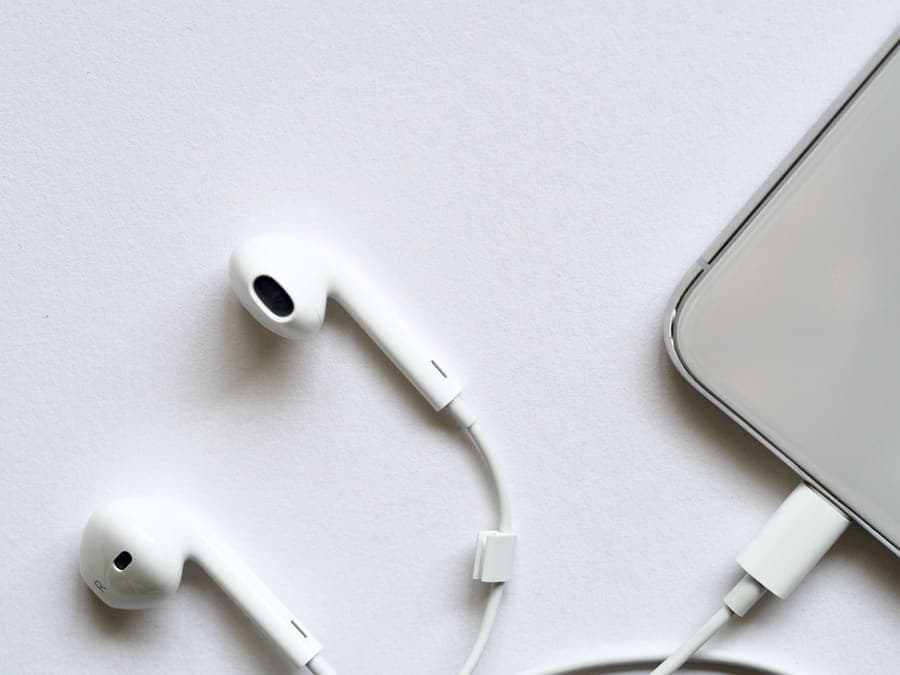 Sennheiser IE 200A wired in-ear monitor with a published specification sheet rather than a marketing number: 4 g per side, a 7 mm dynamic driver and tips you can mount two ways to change the bass. | If sound per dollar is the goal | 8.78.7 out of 10, our editorial score | |
| 2 | 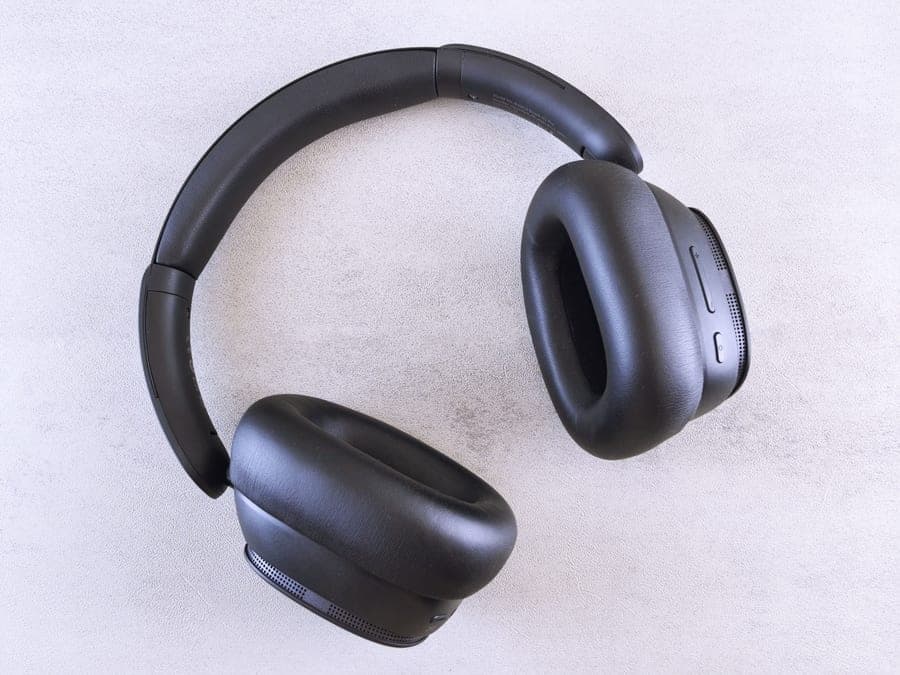 Sony WH-1000XM6The most complete travel headphone on sale: 254 g, 30 rated hours with noise canceling on, and it folds into a case small enough to stop being a decision. | If you are on a plane or a train | 9.19.1 out of 10, our editorial score |
#ad Amazon links are affiliate links. No live price is shown anywhere on this site, so every button reads “Check price on Amazon”. How this is funded.
The picks in full
Every pick, in detail
1. If sound per dollar is the goal
Sennheiser IE 200
A wired in-ear monitor with a published specification sheet rather than a marketing number: 4 g per side, a 7 mm dynamic driver and tips you can mount two ways to change the bass.
Our editorial score: 8.7 / 10
#ad Live price not shown. How this is funded
Also sold direct by Sennheiser — we earn nothing there, so check both.
The IE 200 publishes what almost no wireless headphone will: 6 Hz to 20,000 Hz, 16 ohms, 119 dB SPL at 1 kHz and 1 Vrms, and total harmonic distortion under 0.08 percent. At a $159.95 list price that is an unusual amount of disclosed engineering.
Four grams a side, a 7 mm dynamic driver, a 1.2 m braided cable on MMCX connectors so a frayed lead is a repair rather than a replacement, and two tip-mounting positions that change the bass without an app or an EQ.
Nothing to charge, nothing to pair, nothing to degrade. In ten years it will work exactly as well as it does today, which is not true of anything with a battery in it.
What works on a plane
- A real specification sheet with distortion and impedance figures, which most earbuds never publish
- 4 g per side and no battery, so it never runs out and never degrades
- Detachable MMCX cable means a frayed cable is a repair rather than a replacement
- Two tip-mounting positions change the bass without an app or an EQ
What does not
- Wired, so there is a cable in your lap and no Bluetooth on a plane without an adapter
- No active noise canceling at all — isolation comes entirely from the tip seal
- No microphone on the stock cable, so it is not a call headset
How it scores against the five travel axes
Published specifications
| Spec | Figure | Source |
|---|---|---|
| Frequency response | 6 - 20,000 Hz | Sennheiser |
| Impedance | 16 ohm (18 ohm with cable) | Sennheiser |
| Sound pressure level | 119 dB (1 kHz, 1 Vrms) | Sennheiser |
| Distortion | THD < 0.08 % | Sennheiser |
| Transducer | 7 mm dynamic, closed | Sennheiser |
| Weight | 4 g | Sennheiser |
| Cable | 1.2 m braided, MMCX connectors, 3.5 mm angled plug | Sennheiser |
| List price | $159.95 at the time of writing | Sennheiser |
2. If you are on a plane or a train
Sony WH-1000XM6
The most complete travel headphone on sale: 254 g, 30 rated hours with noise canceling on, and it folds into a case small enough to stop being a decision.
Our editorial score: 9.1 / 10
#ad Live price not shown. How this is funded
Also sold direct by Sony — we earn nothing there, so check both.
Everything the IEM gives up, this has. Active canceling deep enough to take a real bite out of engine drone, a microphone array, Bluetooth with LDAC and LC3, and 254 g of over-ear comfort that does not involve putting anything in your ear canal for eleven hours.
Up to 30 rated hours with canceling on, and it folds into a case. The measurable sound-per-dollar figure is worse and it does not matter, because on a plane the noise floor removes more detail than the specification difference ever contained.
What works on a plane
- Folds, which halves the space it takes in a personal item
- 254 g is light for a flagship over-ear, and weight is what you feel at hour four
- LDAC plus LC3 means it is not locked to one phone ecosystem
- 30 rated hours with noise canceling on covers almost any single routing
What does not
- You pay a flagship price for the last increment of noise canceling
- The folding hinge is one more mechanism to eventually wear out
- No airline two-prong adapter in the box
How it scores against the five travel axes
Published specifications
| Spec | Figure | Source |
|---|---|---|
| Weight | Approx. 254 g (9 oz) | Sony Help Guide specifications |
| Battery, NC on | Up to 30 hours | Sony specifications |
| Battery, NC off | Up to 40 hours | Sony specifications |
| Full charge | Approx. 3.5 hours | Sony Help Guide specifications |
| Bluetooth | 5.3 | Sony Help Guide specifications |
| Codecs | SBC, AAC, LDAC, LC3 | Sony Help Guide specifications |
| Wired response | 4 Hz - 40,000 Hz (IEC) | Sony Help Guide specifications |
| Folds | Yes, into a magnetic-closure case | Sony |
How we decide
How these picks were chosen
We do not run a test lab and we do not claim to have flown with these units. Every verdict on this page is one of three things: a measurement published by somebody who does own a test rig and is credited by name, a manufacturer specification we quote and then interpret against what a long flight actually demands, or a plainly-labeled editorial judgment. The five axes we score on — cabin-noise reduction, battery on a long-haul, pack size, comfort past hour three, and wired fallback — are the ones that decide a travel purchase, and the weighting is published in full.
Questions
Common questions
What is the difference between IEMs and earbuds?
Shape is not the difference; contents are. An IEM is a wired in-ear containing a driver and nothing else, usually with a detachable cable and a published specification sheet. A true wireless earbud also contains a battery, a Bluetooth radio, microphones and a processor, and the budget is split across all of them.
Do IEMs block more noise than headphones?
Above roughly 1 kHz, a well-sealed IEM often blocks more than an over-ear does. Below roughly 300 Hz it blocks comparatively little, and that low band is where aircraft and rail noise lives. Active canceling is strongest exactly where passive isolation is weakest.
Are IEMs better value than wireless headphones?
On measurable sound per dollar, yes, by a wide margin, because none of the money goes on radios, batteries or microphones. On usefulness in a noisy place, no. The right question is not which is better value but which environment you listen in.
Can you use IEMs on a plane?
You can, and they plug straight into the seatback screen without an adapter or a transmitter, which is a genuine advantage. What you will not get is any active canceling against the engine drone, so an eleven-hour flight is a louder experience than it needs to be.
Why do IEMs have detachable cables?
Because the cable is the part that fails. On a fixed-cable earphone a frayed lead is the end of the product; on an MMCX or 2-pin connector it is a cheap replacement. It also lets you swap to a cable with a microphone or a different plug.
Sources
Where these figures come from
Read next
Related reading
- Earbuds vs over-ear for flying
The same axis, restricted to wireless products.
- ANC vs passive isolation
Why a good seal is not the same thing as canceling.
- Best headphones for music listening
Where the IE 200 shows up again, for the same reason.
- Best wired earbuds for flights
The wired case, made specifically for a cabin.
- Headphones vs headset
The other form-factor decision, decided by the microphone.