
For music specifically, the Sennheiser MOMENTUM 4 Wireless is the best wireless pick: it has the largest transducer here at 42 mm, the gentlest clamp, an aux cable in the box and up to 60 rated hours. The Sony WH-1000XM6 is the better all-rounder because of its codec list, which includes LDAC and LC3. If you will accept a cable, the Sennheiser IE 200 publishes a full specification sheet including distortion under 0.08 percent at a $159.95 list price.
What we can check
Which sound claims are checkable and which are not
We do not run a test lab, so nothing on this page is our own measurement. What we can do is separate the claims that a manufacturer has published a number for from the ones that are adjectives.
| Checkable | Not checkable from a spec sheet |
|---|---|
| Transducer size, in millimeters | Whether the tuning suits your taste |
| Codec support, by name | How the canceling behaves on a moving train |
| Published frequency response and its measurement standard | Soundstage and imaging |
| Total harmonic distortion, where disclosed | Whether the bass is tight or bloated |
| Whether an analogue cable is in the box | How a headphone ages after two years |
| Rated battery, with canceling on and off | Any decibel figure with no measurement standard |
A 42 mm driver is a fact. “Immersive, room-filling sound” is a sentence. Only one of those survives being checked.
The codec question
Codecs matter less than the room you are in
Codec arguments get more attention than they deserve on a commute. LDAC carries more data than AAC, and on a quiet sofa with a good recording you may hear it. On a train at 75 dB you will not, because the noise floor has already removed far more detail than the codec ever will.
- On Android, LDAC is worth having, and the Sony and the Soundcore Space One both support it.
- On iPhone, AAC is the ceiling regardless of what the headphone supports, so the codec list is not a reason to choose.
- Wired sidesteps the whole argument, which is part of why the IE 200 is on this page.
Where to spend
Spend on canceling or spend on drivers, not both
If you listen mostly somewhere noisy
Spend on canceling. Lowering the noise floor recovers more musical detail than a better driver adds, because detail you cannot hear over a diesel engine is detail you did not get. The page on getting to actual silence covers how far that can go.
If you listen mostly somewhere quiet
Spend on the transducer and the tuning, and consider dropping the wireless requirement entirely. The IE 200 is the clearest illustration of how much sound you can buy once you stop paying for radios and batteries.
If you want one pair for everything
Take the Sony and stop optimizing. It is the least specialized product here, which on a single-purchase decision is the feature.
In short
Key takeaways
- Sennheiser MOMENTUM 4 Wireless: the largest transducer here at 42 mm, gentlest clamp, aux cable included, up to 60 rated hours.
- Sony WH-1000XM6: the best codec list — SBC, AAC, LDAC and LC3 — and the best all-rounder for a noisy commute.
- Sennheiser IE 200 at $159.95 publishes distortion under 0.08 percent, which almost no wireless headphone discloses.
- In a noisy place, canceling depth improves perceived sound more than a bigger driver does.
- Codec arguments matter on a quiet sofa and essentially not at all on a train.
At a glance
Quick picks
Scores are our editorial judgment from published specifications and cited third-party measurements, not our own testing. The rubric is published in full. Tap any row for the full write-up.
| # | Product | Best for | Score | Price |
|---|---|---|---|---|
| 1 | 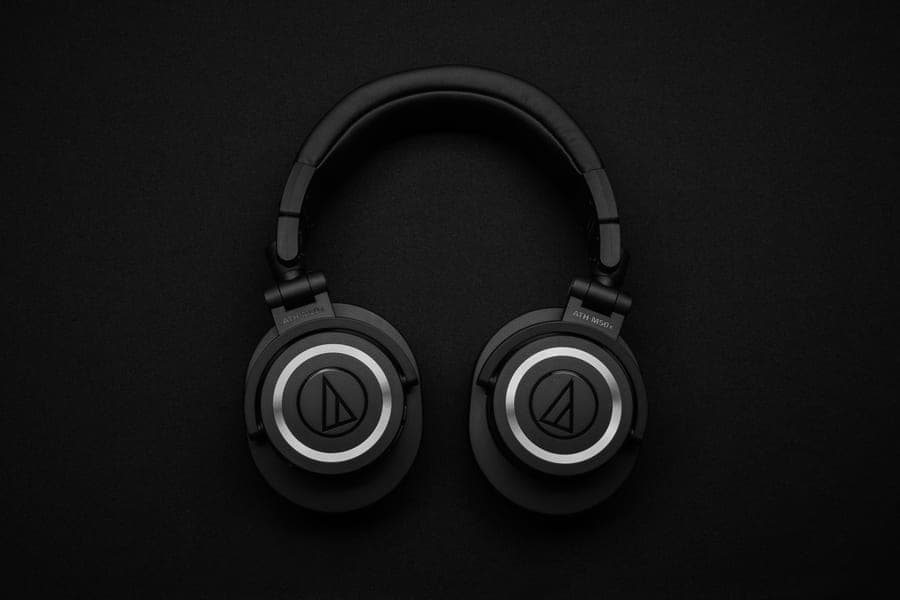 Sennheiser MOMENTUM 4 WirelessSennheiser publishes up to 60 hours. That is the difference between charging at the gate and not thinking about a charger for an entire two-week trip. | Best wireless for music | 8.88.8 out of 10, our editorial score | |
| 2 | 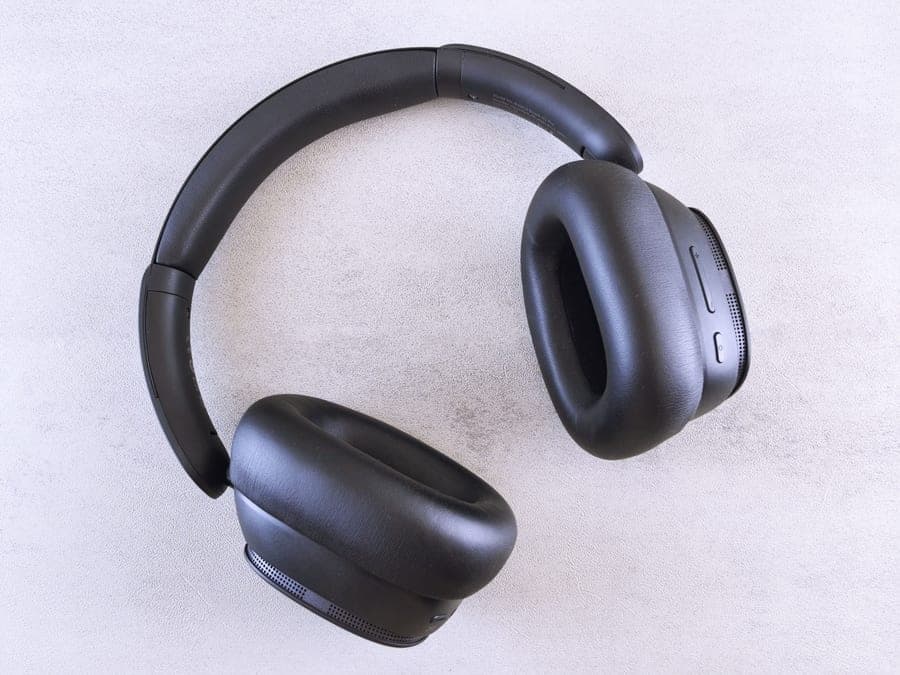 Sony WH-1000XM6The most complete travel headphone on sale: 254 g, 30 rated hours with noise canceling on, and it folds into a case small enough to stop being a decision. | Best all-rounder for a commute | 9.19.1 out of 10, our editorial score | |
| 3 | 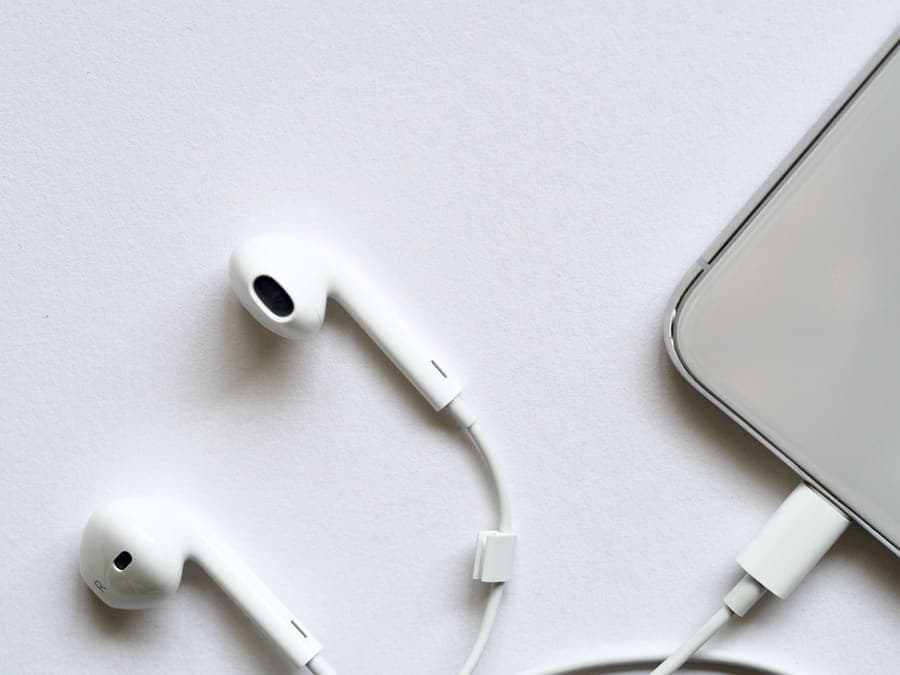 Sennheiser IE 200A wired in-ear monitor with a published specification sheet rather than a marketing number: 4 g per side, a 7 mm dynamic driver and tips you can mount two ways to change the bass. | Best sound per dollar, if you accept a cable | 8.78.7 out of 10, our editorial score | |
| 4 | 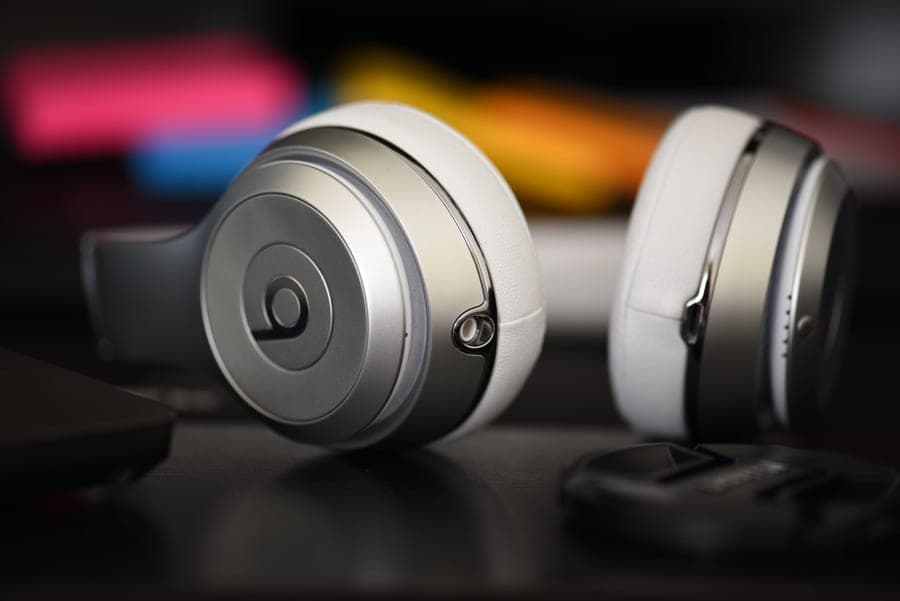 Apple AirPods Max (USB-C)Superb on an iPhone and genuinely hostile to a carry-on: 386.2 g, no fold, a soft case that leaves the headband exposed, and no audio cable in the box. | Best if you are inside Apple | 7.47.4 out of 10, our editorial score |
#ad Amazon links are affiliate links. No live price is shown anywhere on this site, so every button reads “Check price on Amazon”. How this is funded.
The picks in full
Every pick, in detail
1. Best wireless for music
Sennheiser MOMENTUM 4 Wireless
Sennheiser publishes up to 60 hours. That is the difference between charging at the gate and not thinking about a charger for an entire two-week trip.
Our editorial score: 8.8 / 10
#ad Live price not shown. How this is funded
Also sold direct by Sennheiser — we earn nothing there, so check both.
The largest transducer of any wireless headphone on this site at 42 mm, the gentlest clamp, an aux cable in the box and up to 60 rated hours. If the listening is the point rather than the commute, this is the one.
The clamp matters more than people expect for long listening. A tight clamp changes the seal as your jaw moves and as the pads warm, and a changing seal is a changing bass response. A gentle clamp holds a stable sound for longer.
What you give up is canceling depth against the Bose and the Sony, and a slightly bigger folded footprint. On a train that is a fair trade. On a long-haul flight it is not — see the long-haul page for that version of the argument.
What works on a plane
- Up to 60 rated hours, roughly double the flagship norm
- The 1.2 m 3.5 mm cable is in the box, so seatback screens work straight out of the bag
- Fold-flat earcups make the carry case slim rather than deep
- The 42 mm transducer is the most relaxed listen here over a very long session
What does not
- Published measurements consistently place its noise canceling a step behind the Bose
- The case is broad, so it eats width in a personal item even though it is slim
- Fold-flat is not fold-up, so the footprint is larger than the Sony's
How it scores against the five travel axes
Published specifications
| Spec | Figure | Source |
|---|---|---|
| Battery | Up to 60 hours playback | Sennheiser |
| Weight | Approx. 293-295 g | Sennheiser / published reviews |
| Transducer | 42 mm | Sennheiser |
| In the box | Carry case, USB-C cable, 1.2 m 3.5 mm auxiliary cable | Sennheiser |
| Folds | Fold-flat earcups | Sennheiser |
2. Best all-rounder for a commute
Sony WH-1000XM6
The most complete travel headphone on sale: 254 g, 30 rated hours with noise canceling on, and it folds into a case small enough to stop being a decision.
Our editorial score: 9.1 / 10
#ad Live price not shown. How this is funded
Also sold direct by Sony — we earn nothing there, so check both.
The codec list is the reason it is here: SBC, AAC, LDAC and LC3. LDAC is the high-bitrate route on Android, and LC3 is the modern low-power one, so this is the least phone-dependent of the flagships.
Sony publishes a wired response of 4 Hz to 40,000 Hz on the IEC measurement, 254 g and up to 30 hours with canceling on. On a noisy train, deeper canceling does more for perceived sound quality than any driver does, because the noise floor is what is actually eating your detail.
What works on a plane
- Folds, which halves the space it takes in a personal item
- 254 g is light for a flagship over-ear, and weight is what you feel at hour four
- LDAC plus LC3 means it is not locked to one phone ecosystem
- 30 rated hours with noise canceling on covers almost any single routing
What does not
- You pay a flagship price for the last increment of noise canceling
- The folding hinge is one more mechanism to eventually wear out
- No airline two-prong adapter in the box
How it scores against the five travel axes
Published specifications
| Spec | Figure | Source |
|---|---|---|
| Weight | Approx. 254 g (9 oz) | Sony Help Guide specifications |
| Battery, NC on | Up to 30 hours | Sony specifications |
| Battery, NC off | Up to 40 hours | Sony specifications |
| Full charge | Approx. 3.5 hours | Sony Help Guide specifications |
| Bluetooth | 5.3 | Sony Help Guide specifications |
| Codecs | SBC, AAC, LDAC, LC3 | Sony Help Guide specifications |
| Wired response | 4 Hz - 40,000 Hz (IEC) | Sony Help Guide specifications |
| Folds | Yes, into a magnetic-closure case | Sony |
3. Best sound per dollar, if you accept a cable
Sennheiser IE 200
A wired in-ear monitor with a published specification sheet rather than a marketing number: 4 g per side, a 7 mm dynamic driver and tips you can mount two ways to change the bass.
Our editorial score: 8.7 / 10
#ad Live price not shown. How this is funded
Also sold direct by Sennheiser — we earn nothing there, so check both.
This is the honest answer that the wireless market would rather not give. At a $159.95 list price the IE 200 publishes 6 Hz to 20,000 Hz, 16 ohms, 119 dB SPL and distortion under 0.08 percent — a set of figures almost no wireless headphone discloses at all.
Four grams a side, a detachable MMCX cable so a frayed lead is a repair rather than a bin, and two tip-mounting positions that change the bass without an app.
The cost is everything convenience: a wire, no canceling, no microphone and no Bluetooth. Isolation is whatever the tip seal gives you and nothing more.
What works on a plane
- A real specification sheet with distortion and impedance figures, which most earbuds never publish
- 4 g per side and no battery, so it never runs out and never degrades
- Detachable MMCX cable means a frayed cable is a repair rather than a replacement
- Two tip-mounting positions change the bass without an app or an EQ
What does not
- Wired, so there is a cable in your lap and no Bluetooth on a plane without an adapter
- No active noise canceling at all — isolation comes entirely from the tip seal
- No microphone on the stock cable, so it is not a call headset
How it scores against the five travel axes
Published specifications
| Spec | Figure | Source |
|---|---|---|
| Frequency response | 6 - 20,000 Hz | Sennheiser |
| Impedance | 16 ohm (18 ohm with cable) | Sennheiser |
| Sound pressure level | 119 dB (1 kHz, 1 Vrms) | Sennheiser |
| Distortion | THD < 0.08 % | Sennheiser |
| Transducer | 7 mm dynamic, closed | Sennheiser |
| Weight | 4 g | Sennheiser |
| Cable | 1.2 m braided, MMCX connectors, 3.5 mm angled plug | Sennheiser |
| List price | $159.95 at the time of writing | Sennheiser |
4. Best if you are inside Apple
Apple AirPods Max (USB-C)
Superb on an iPhone and genuinely hostile to a carry-on: 386.2 g, no fold, a soft case that leaves the headband exposed, and no audio cable in the box.
Our editorial score: 7.4 / 10
#ad Live price not shown. How this is funded
Also sold direct by Apple — we earn nothing there, so check both.
If your library lives in Apple Music and your other devices are Apple, the handoff and the spatial-audio implementation are the part you actually experience day to day, and no specification captures it.
It is also the heaviest thing here by a wide margin, and the case is not a case in any protective sense. Buy it for the ecosystem, not for the gram count.
What works on a plane
- Lossless audio over USB-C, and the tightest handoff between an iPhone, iPad and Mac of anything here
- The metal-and-mesh build is the most durable in this group
- Spatial Audio with head tracking makes a movie on your own iPad genuinely better
What does not
- 386.2 g, the heaviest here by roughly 90 g, and you feel every gram past hour three
- Does not fold, and the Smart Case leaves the headband exposed while adding 134.5 g
- 20 rated hours is the shortest battery in this group and will not clear a long-haul plus a layover
- No 3.5 mm cable in the box, so a seatback screen needs an adapter you buy separately
How it scores against the five travel axes
Published specifications
| Spec | Figure | Source |
|---|---|---|
| Weight | 13.6 oz (386.2 g) | Apple tech specs |
| Smart Case weight | 4.74 oz (134.5 g) | Apple tech specs |
| Dimensions | 168.6 mm W x 83.4 mm D x 187.3 mm H | Apple tech specs |
| Battery, ANC on | Up to 20 hours listening | Apple tech specs |
| Quick charge | 5 minutes gives around 1.5 hours | Apple tech specs |
| Bluetooth | 5.0 | Apple tech specs |
| In the box | Headphones, Smart Case, USB-C cable, documentation | Apple tech specs |
| Folds | No | Apple tech specs |
How we decide
How these picks were chosen
We do not run a test lab and we do not claim to have flown with these units. Every verdict on this page is one of three things: a measurement published by somebody who does own a test rig and is credited by name, a manufacturer specification we quote and then interpret against what a long flight actually demands, or a plainly-labeled editorial judgment. The five axes we score on — cabin-noise reduction, battery on a long-haul, pack size, comfort past hour three, and wired fallback — are the ones that decide a travel purchase, and the weighting is published in full.
Questions
Common questions
Do more expensive headphones actually sound better?
Up to a point, and then the money buys canceling, materials and build rather than sound. The clearest illustration is that a $159.95 wired in-ear publishes better distortion figures than wireless headphones costing twice as much. You are mostly paying for radios, batteries, microphones and convenience.
Is LDAC worth it for music?
On Android, in a quiet room, with a well-recorded source, it can be. On a train or a plane the ambient noise floor removes far more detail than any codec difference. On an iPhone the question does not arise, because AAC is the ceiling whatever the headphone supports.
Are wired headphones still better than wireless for music?
On published specifications, generally yes at the same price, because none of the budget goes on radios, batteries or microphones. Whether that difference matters depends entirely on where you listen. In a quiet room it is audible; in a noisy carriage the canceling on a wireless pair matters more.
Does driver size determine sound quality?
No. A larger driver moves more air and generally makes deep bass easier, which is why the 42 mm transducer in the MOMENTUM 4 is worth noting, but tuning decides far more than diameter. A 7 mm driver in the IE 200 sits right next to it on this page for exactly that reason.
Sources
Where these figures come from
Read next
Related reading
- Headphones vs IEMs
The form-factor version of the wired-versus-wireless argument.
- Best headphones with deep bass
If low end specifically is what you are buying for.
- Best wireless headphones
The same field, ranked on convenience rather than sound.
- Best noise-canceling headphones for silence
Why lowering the noise floor recovers detail.
- How we choose
What we verify, and what we refuse to claim.