
For silence rather than music, the Bose QuietComfort Ultra Headphones get closest, because their canceling stays smooth with nothing playing over it. The Sony WH-1000XM6 is within a hair on depth and far easier to carry at 254 g with up to 30 rated hours. No headphone produces actual silence: canceling works on steady low-frequency sound and does comparatively little against speech, which is the noise most people are trying to escape.
The honest ceiling
What canceling can and cannot remove
Canceling works by generating an inverted copy of incoming sound. That is straightforward for a sound that is steady and predictable, and very hard for one that is not. The practical consequence is a sharp split:
| Noise | How well canceling handles it |
|---|---|
| Aircraft engine at cruise | Very well. This is the case it was designed for |
| Rail rumble, road noise, a bus | Very well |
| Air conditioning and server hum | Very well |
| A washing machine, a distant mower | Well |
| Voices and conversation | Poorly. Speech is neither steady nor low |
| A door slam, a dog, a dropped plate | Not at all. Too sudden to predict |
Canceling deletes the hum of the world. It barely touches the people in it. If your problem is a colleague on a call, no headphone on this page solves it.
A different test
Judging a headphone with nothing playing
Almost every review judges canceling with music on, which hides things. Worn in silence, three faults become obvious that never show up otherwise:
- Hiss. The canceling system’s own noise floor. Inaudible under music, obvious in a quiet room.
- Hunting. Adaptive systems re-measuring the room and audibly changing their mind. Settled canceling is worth more than deep canceling here.
- Pressure. The sensation some people feel as the system works, often described as altitude. It is not harmful, and for some people it is the reason they cannot do this at all — our cabin-pressure guide covers what is actually happening.
What to add
If canceling alone is not enough
Add a masking sound
The counter-intuitive fix for speech is not more canceling but a low, steady sound — brown noise, rain, a fan. Canceling removes the drone, the masking covers the voices, and the combination works far better than either alone.
Consider passive instead
For very loud, non-steady environments, certified passive protection outperforms any canceling headphone and it is not close. That is a different product with a published attenuation rating — see the page on mowing and power tools for what that looks like.
Do not turn the volume up
Raising the volume to beat a noise floor you have not touched is the one habit worth avoiding, and it is the thing canceling is genuinely good for — it lets you listen quieter. Are noise-canceling headphones bad for your ears?
In short
Key takeaways
- Bose QuietComfort Ultra gets closest to silence, because its canceling stays smooth with nothing playing over it.
- Sony WH-1000XM6 is within a hair on depth at 254 g, folds, and runs up to 30 rated hours.
- Soundcore Space One is the value pick at a $99.99 list price, with up to 40 rated hours with canceling on and an aux cable in the box.
- Canceling handles steady low-frequency noise very well and speech poorly. That limit is physics, not brand.
- For voices, add a low masking sound rather than more canceling.
At a glance
Quick picks
Scores are our editorial judgment from published specifications and cited third-party measurements, not our own testing. The rubric is published in full. Tap any row for the full write-up.
| # | Product | Best for | Score | Price |
|---|---|---|---|---|
| 1 | 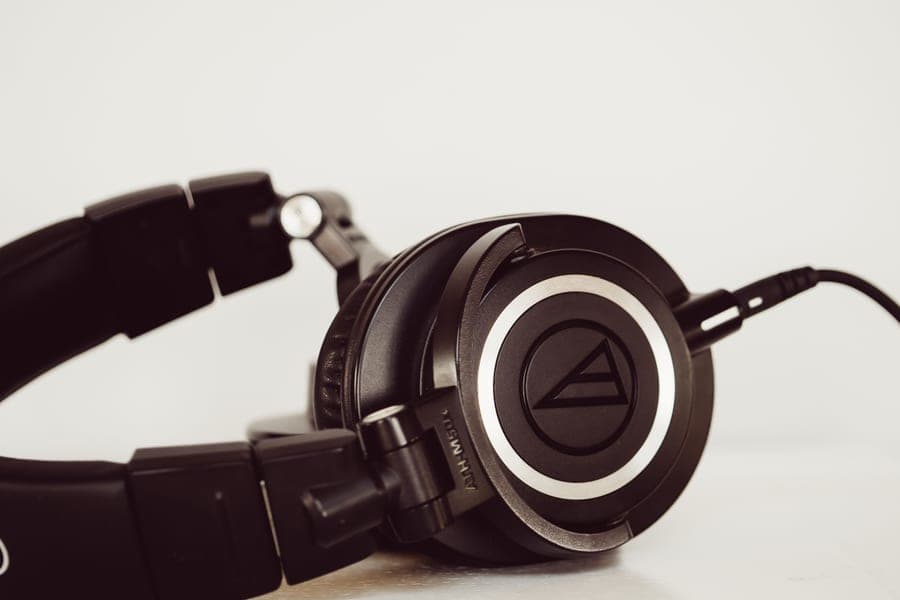 Bose QuietComfort Ultra Headphones (2nd Gen)The quietest cabin of anything here, and the only over-ear in this group whose box already contains the audio cable a seatback screen needs. | Closest to actual silence | 9.09.0 out of 10, our editorial score | |
| 2 | 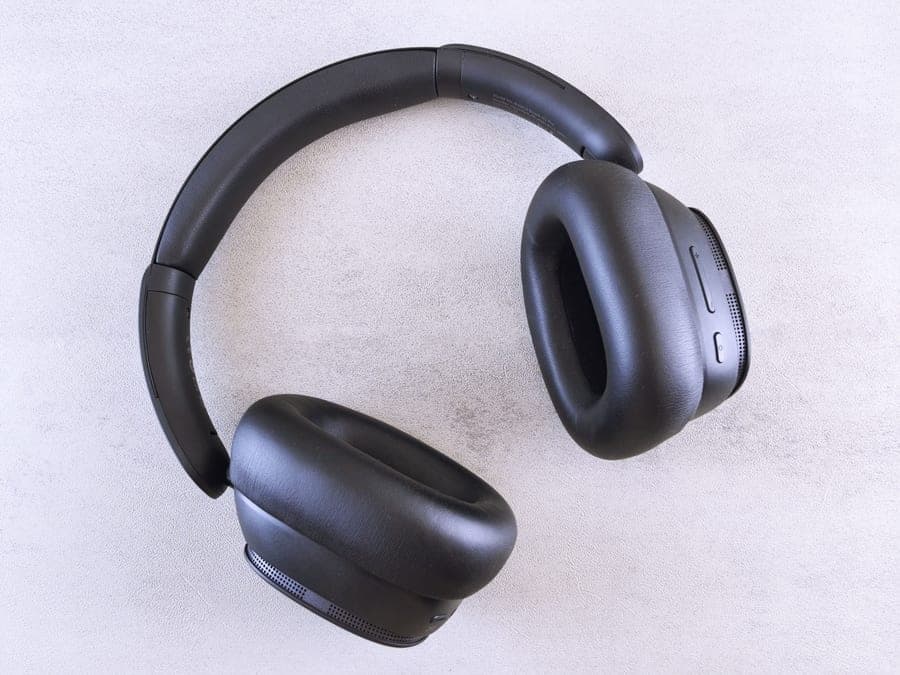 Sony WH-1000XM6The most complete travel headphone on sale: 254 g, 30 rated hours with noise canceling on, and it folds into a case small enough to stop being a decision. | Best silence you can actually carry | 9.19.1 out of 10, our editorial score | |
| 3 | 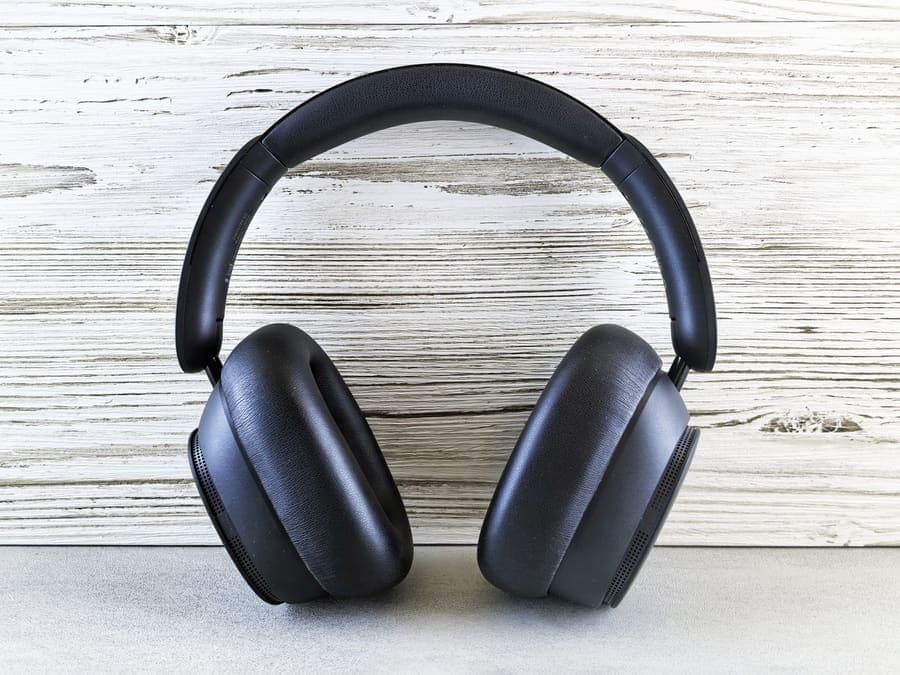 Soundcore Space OneA $99.99 list price that buys 40 rated hours with canceling on, LDAC, 40 mm drivers, a folding hinge and an aux cable. The specification sheet at this level is genuinely hard to argue with. | Best value for quiet | 8.58.5 out of 10, our editorial score |
#ad Amazon links are affiliate links. No live price is shown anywhere on this site, so every button reads “Check price on Amazon”. How this is funded.
The picks in full
Every pick, in detail
1. Closest to actual silence
Bose QuietComfort Ultra Headphones (2nd Gen)
The quietest cabin of anything here, and the only over-ear in this group whose box already contains the audio cable a seatback screen needs.
Our editorial score: 9.0 / 10
#ad Live price not shown. How this is funded
Also sold direct by Bose — we earn nothing there, so check both.
Bose invented this category and the QuietComfort Ultra is still where the argument about depth ends. If the single thing you want is for the world to recede, this is the one.
What matters for silence specifically, rather than for music, is how the canceling behaves when there is nothing playing over it. With no music to mask it, you hear the canceling itself — a faint pressure, and on weaker systems a hiss that hunts as the noise changes. Bose handles that better than anything else here, and it is the reason this page has a different winner from the general wireless roundup.
It is the least travel-optimized of the flagships on folded size, and it sits at the top of the price range.
What works on a plane
- The best low-frequency canceling in this group, which is exactly the band engine drone lives in
- The 2.5 mm-to-3.5 mm cable is in the box, so a seatback screen needs nothing extra
- Compact hard case for a full-size over-ear
- Up to 45 hours with canceling off, if you only want isolation on a train
What does not
- Immersive Audio costs you a third of the battery, dropping to 23 rated hours
- Heavier than the Sony by roughly 10 g, and clamp is firmer out of the box
- The hard case is compact but still rigid, so it will not squash into a full bag
How it scores against the five travel axes
Published specifications
| Spec | Figure | Source |
|---|---|---|
| Battery, ANC on | Up to 30 hours | Bose |
| Battery, ANC off | Up to 45 hours | Bose |
| Battery, Immersive Audio on | Up to 23 hours | Bose |
| Weight | Approx. 264 g (9.3 oz) as reported | Published reviews |
| USB-C audio | 16-bit, 44.1 or 48 kHz lossless input | Bose support |
| In the box | Hard case, USB-C cable, 2.5 mm-to-3.5 mm audio cable | Bose |
| Folds | Earcups rotate flat into a compact hard case | Bose |
Read the full Bose QuietComfort Ultra Headphones (2nd Gen) review
2. Best silence you can actually carry
Sony WH-1000XM6
The most complete travel headphone on sale: 254 g, 30 rated hours with noise canceling on, and it folds into a case small enough to stop being a decision.
Our editorial score: 9.1 / 10
#ad Live price not shown. How this is funded
Also sold direct by Sony — we earn nothing there, so check both.
Within a hair of the Bose on depth, and 254 g that folds into a case small enough to stop being a decision. Up to 30 rated hours with canceling on, which matters here more than usual: if you wear them for quiet, you wear them for far longer than an album.
It also has the better pad comfort story of the two for all-day use, and comfort is the real constraint on silence. A headphone you take off at hour two is not producing silence at hour three.
What works on a plane
- Folds, which halves the space it takes in a personal item
- 254 g is light for a flagship over-ear, and weight is what you feel at hour four
- LDAC plus LC3 means it is not locked to one phone ecosystem
- 30 rated hours with noise canceling on covers almost any single routing
What does not
- You pay a flagship price for the last increment of noise canceling
- The folding hinge is one more mechanism to eventually wear out
- No airline two-prong adapter in the box
How it scores against the five travel axes
Published specifications
| Spec | Figure | Source |
|---|---|---|
| Weight | Approx. 254 g (9 oz) | Sony Help Guide specifications |
| Battery, NC on | Up to 30 hours | Sony specifications |
| Battery, NC off | Up to 40 hours | Sony specifications |
| Full charge | Approx. 3.5 hours | Sony Help Guide specifications |
| Bluetooth | 5.3 | Sony Help Guide specifications |
| Codecs | SBC, AAC, LDAC, LC3 | Sony Help Guide specifications |
| Wired response | 4 Hz - 40,000 Hz (IEC) | Sony Help Guide specifications |
| Folds | Yes, into a magnetic-closure case | Sony |
3. Best value for quiet
Soundcore Space One
A $99.99 list price that buys 40 rated hours with canceling on, LDAC, 40 mm drivers, a folding hinge and an aux cable. The specification sheet at this level is genuinely hard to argue with.
Our editorial score: 8.5 / 10
#ad Live price not shown. How this is funded
Also sold direct by Soundcore — we earn nothing there, so check both.
Listed at $99.99, with up to 40 rated hours with canceling on and 55 in normal mode. For someone who wants quiet at a desk rather than on a plane, the battery figure is the one that counts, and 40 hours beats every flagship here.
It is also the sensible way to find out whether you get on with canceling at all before committing flagship money, and both a travel pouch and an aux cable are in the box.
The 98 percent canceling claim is marketing rather than a published measurement, and the pads are where the money was saved. For a full working day in an open-plan office that is a real limitation — see the open-plan page for that use specifically.
What works on a plane
- 40 rated hours with canceling on, from a headphone listed at $99.99
- LDAC at this price is unusual, and it is the codec Android users actually want
- Folds and ships with an aux cable, so the seatback screen is covered
- 265 g is not heavy, and the pouch means it travels without a hard case
What does not
- The 98 percent noise-reduction claim is marketing, not a published measurement
- A pouch is not a hard case, so it needs care in a crushed bag
- Pads are the first thing that gives at this price, well before the electronics
How it scores against the five travel axes
Published specifications
| Spec | Figure | Source |
|---|---|---|
| List price | $99.99 at the time of writing | Soundcore |
| Battery, ANC on | Up to 40 hours | Soundcore |
| Battery, normal mode | Up to 55 hours | Soundcore |
| Quick charge | 5 minutes for 4 hours | Soundcore |
| Weight | 265 g (9.35 oz) | Soundcore |
| Drivers | 40 mm | Soundcore |
| Codecs | LDAC | Soundcore |
| Folds | Yes, ear cups rotate and fold | Soundcore |
| In the box | Travel pouch and aux cable | Soundcore |
How we decide
How these picks were chosen
We do not run a test lab and we do not claim to have flown with these units. Every verdict on this page is one of three things: a measurement published by somebody who does own a test rig and is credited by name, a manufacturer specification we quote and then interpret against what a long flight actually demands, or a plainly-labeled editorial judgment. The five axes we score on — cabin-noise reduction, battery on a long-haul, pack size, comfort past hour three, and wired fallback — are the ones that decide a travel purchase, and the weighting is published in full.
Questions
Common questions
Do noise canceling headphones block all sound?
No, and no headphone does. They are very effective against steady low-frequency noise such as an aircraft engine, rail rumble or air conditioning, and much less effective against speech and sudden sounds. That limit comes from how the technology works rather than from how much you spend.
Which headphones are quietest with no music playing?
The Bose QuietComfort Ultra, in our reading of the published behavior and the measurements we cite. Worn in silence, the things that matter are the canceling system’s own hiss and whether it hunts as the noise changes, neither of which shows up when music is masking them.
Can noise canceling block someone talking?
Barely. Speech sits above the frequency range canceling is good at and it is not steady enough to predict. The practical answer is a low masking sound such as brown noise or rain played quietly underneath, which covers voices while the canceling handles the drone.
Is it safe to wear noise canceling headphones with nothing playing?
Yes. With no audio playing there is no sound exposure at all, which is the opposite of a risk. Some people feel a pressure sensation from the canceling itself, which is not harmful but is a reason some people dislike it.
Would earplugs be quieter than noise canceling headphones?
Against voices and sudden sounds, often yes. Against an aircraft engine, no — passive protection is weakest exactly where canceling is strongest. The quietest combination is usually both, and for genuinely loud environments you want certified protection with a published attenuation rating.
Sources
Where these figures come from
Read next
Related reading
- Best noise-canceling headphones for an open-plan office
The same goal, in the environment canceling struggles with most.
- Best noise-canceling headphones for sensory overload
Where wearing them without audio is the point.
- How noise canceling works on a plane
The mechanism behind the frequency limit.
- ANC vs passive isolation
The two halves of the quiet, and where each is strongest.
- Best wireless headphones
The same field, ranked for general use rather than silence.