
Active noise canceling and passive isolation handle different frequencies. Active canceling removes continuous low-frequency sound — engine drone, traffic rumble, air conditioning — by playing an inverted wave. Passive isolation is the physical seal of the earcup or ear tip, and it handles everything higher: voices, keyboards, chimes and sudden sounds. If your problem is people talking, no amount of active canceling will help and only a better seal will.
The split
Which does what
| Sound | Roughly | Handled by | Realistic reduction |
|---|---|---|---|
| Aircraft engine drone | 50-300 Hz | Active canceling | Very large |
| Road and tire noise | Low, broadband | Mostly active | Large |
| HVAC and building plant | Low, continuous | Active canceling | Often complete |
| Train rolling noise | Low, continuous | Active canceling | Large |
| Conversation | 500 Hz-4 kHz | Passive seal | Moderate |
| A crying child | Mid to high | Passive seal | Modest |
| Keyboards and printers | High transients | Passive seal | Modest |
| Doors, chimes, carts | Broadband transients | Passive seal | Small |
Look down that table and the pattern is unmistakable. Everything continuous is active. Everything human is the seal.
Why the boundary exists
It comes down to wavelength and predictability
Active canceling has to measure a wave, compute its inverse, and play that inverse before the original reaches your eardrum. Two things make that easy or hard.
- Wavelength. A 100 Hz tone is roughly 3.4 meters long, which gives the processor a comparatively enormous amount of time. A 4 kHz sound is about 8.5 cm, which leaves almost none.
- Predictability. A continuous drone can be modeled once and canceled repeatedly. Speech changes several times a second, so the model is obsolete before it is applied.
Passive isolation has neither constraint, because it is not computing anything — it is simply mass and a seal blocking sound mechanically. And mechanical blocking works better at high frequencies than low ones, which is exactly complementary. The two techniques are good at opposite ends, which is why every good headphone uses both. How noise-canceling headphones work on a plane goes deeper on the active half.
The practical test
Diagnose your own noise problem
This is the useful part. Work out which half your problem is, because it determines where your money should go.
| Your problem | Which half | Where to spend |
|---|---|---|
| Long flights leave me exhausted | Active | A flagship with the deepest low-frequency canceling |
| My open-plan office is full of talking | Passive | Clamp and pad quality, not canceling depth |
| My neighbor's building work | Mostly active | Any decent canceling handles rumble; impacts get through |
| I can hear my family through the door | Passive | A better seal, and something playing |
| My earbuds cancel less than reviewed | Passive | Different ear tips, before anything else |
| Train rolling noise | Active | Canceling depth genuinely matters |
| A crying baby two rows back | Passive | A seal plus audio. No algorithm fixes this |
Three consequences
What follows from all this
For earbuds, tips matter more than the processor
An earbud’s passive isolation comes entirely from a tip sealing in your canal — a small contact area that varies enormously between people. So a cheap earbud that seals properly will out-cancel an expensive one that does not.
If your earbuds seem to underperform their reviews, change the tips before you conclude anything else. Use the smallest tip that seals reliably, not the largest that fits. Foam tips cost very little and are the single highest-return upgrade in this category.
For over-ears, clamp is a feature not a flaw
Firm clamp is uncomfortable initially and produces a better seal, which means better performance against voices. That is why the Bose is stronger in an office than a gentler-clamping rival even when the active specifications are comparable, and why our open-plan office roundup ranks on clamp rather than canceling.
The exception is glasses. Spectacle arms break the seal and concentrate clamp into a pressure line, which costs you passive performance and comfort at once — see best headphones for glasses wearers.
Pads are a consumable
Perished pads are firmer and seal worse, so an old headphone loses real passive performance. Replacing pads on a three-year-old headphone recovers more than any firmware update ever will — see how to clean headphone ear pads.
The marketing translation
What to make of the decibel claims
Manufacturers quote figures like “up to 50 dB” or “reduces noise by up to 98 percent”. Those numbers describe a best case at a favorable frequency, usually the low band where active canceling is strongest, and they are published without a stated measurement standard.
They are not lies and they are not comparable between brands. Treat them as evidence the manufacturer takes canceling seriously rather than as data. What is genuinely comparable is the physical specifications — clamp, pad depth, tip options, insertion depth — because those tell you about the passive half, and the passive half is what most people’s actual complaints are about.
In short
Key takeaways
- Active canceling removes continuous low-frequency sound. Passive sealing handles everything higher.
- The boundary exists because of wavelength and predictability: long, steady waves are easy to invert.
- If your problem is people talking, no algorithm helps and only a better seal will.
- For earbuds, tip selection contributes more to real performance than the processor does.
- For over-ears, firm clamp is a feature: it holds the seal that does the work against voices.
- Manufacturer decibel claims describe a best case at a favorable frequency and are not comparable between brands.
At a glance
Quick picks
Scores are our editorial judgment from published specifications and cited third-party measurements, not our own testing. The rubric is published in full. Tap any row for the full write-up.
| # | Product | Best for | Score | Price |
|---|---|---|---|---|
| 1 | 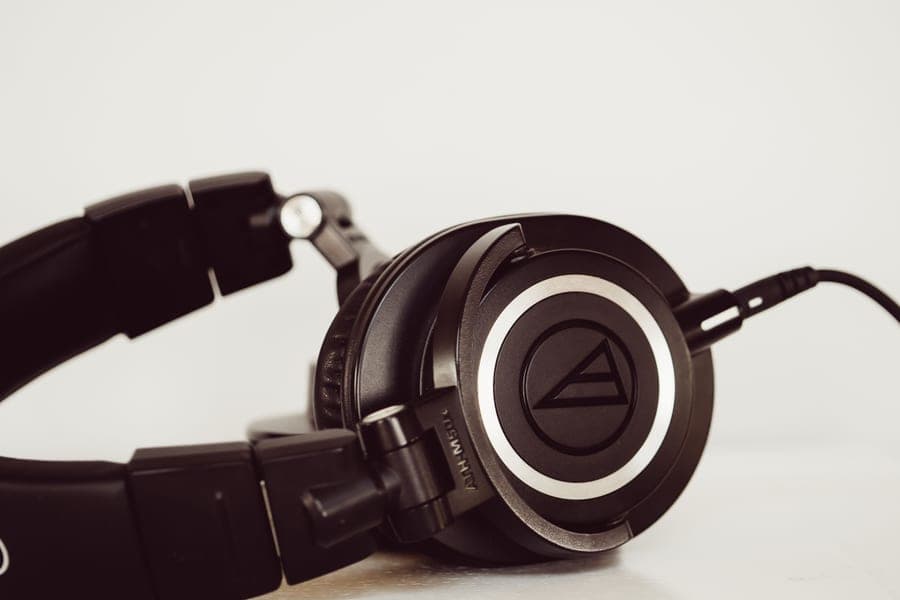 Bose QuietComfort Ultra Headphones (2nd Gen)The quietest cabin of anything here, and the only over-ear in this group whose box already contains the audio cable a seatback screen needs. | Best active canceling | 9.09.0 out of 10, our editorial score | |
| 2 | 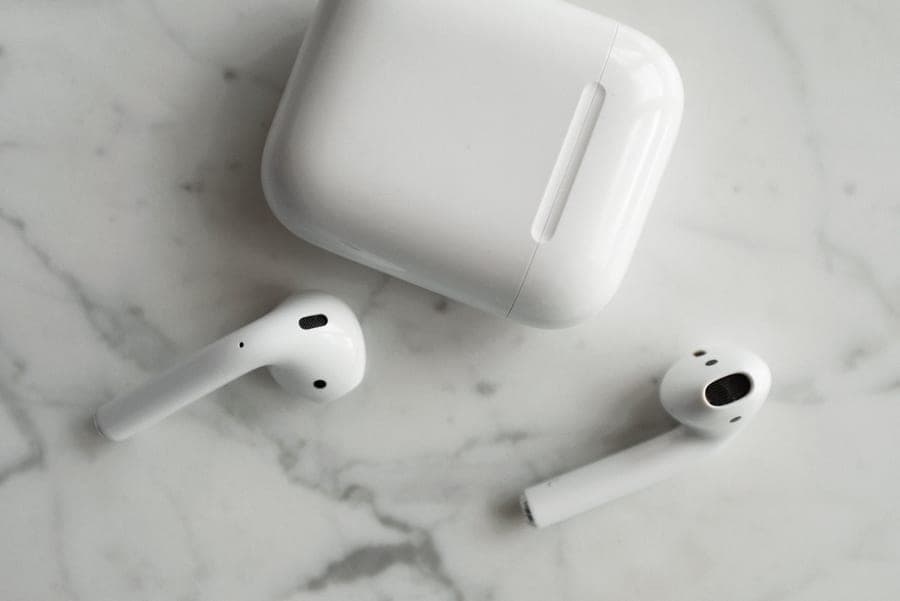 Apple AirPods Pro 3Eight rated hours with canceling on, foam tips in five sizes and an IP57 rating. If your phone is an iPhone this is the least friction of anything here. | Best passive seal in an earbud | 8.88.8 out of 10, our editorial score | |
| 3 | 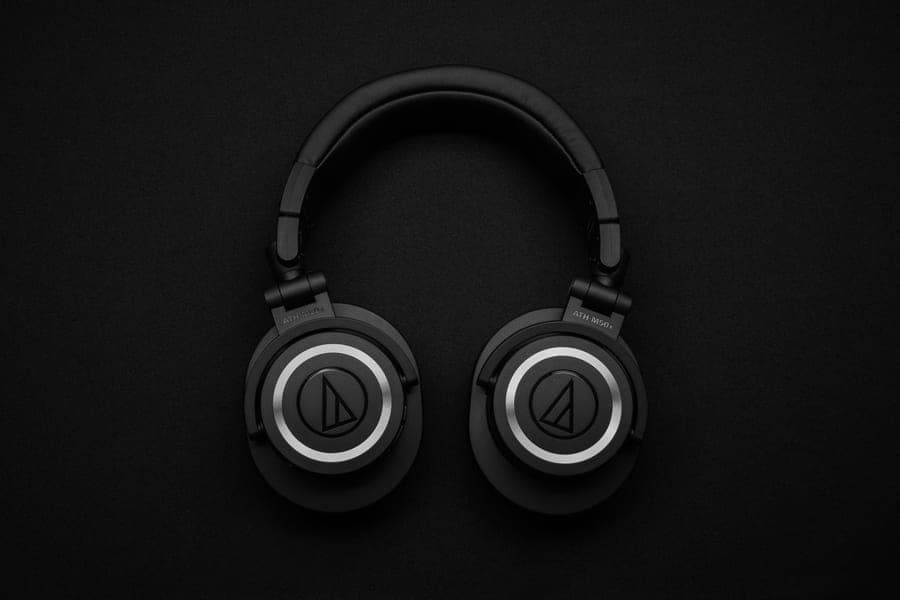 Sennheiser MOMENTUM 4 WirelessSennheiser publishes up to 60 hours. That is the difference between charging at the gate and not thinking about a charger for an entire two-week trip. | Best passive seal in an over-ear | 8.88.8 out of 10, our editorial score | |
| 4 | 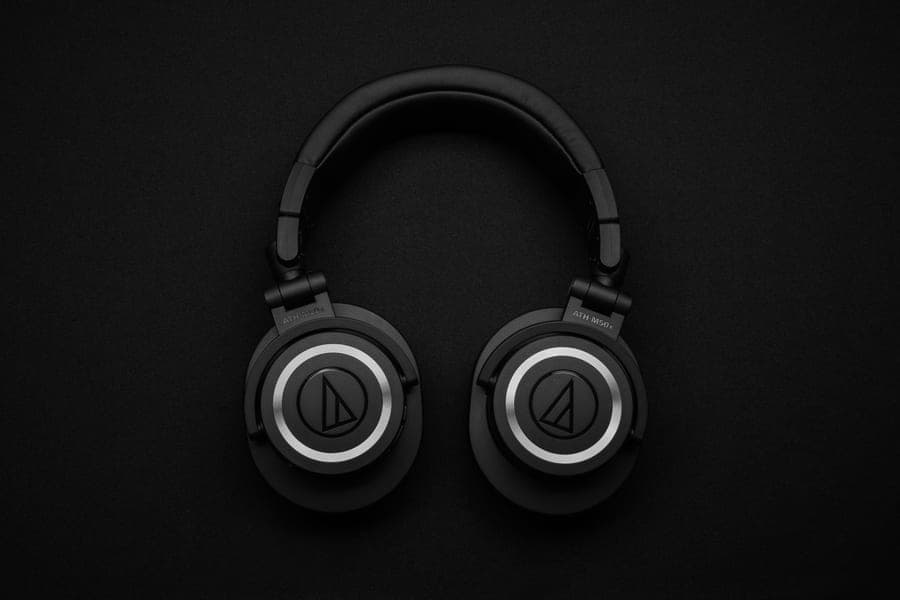 Soundcore Space Q45Fifty rated hours with canceling on, a hard case and a 3.5 mm cable in the box, at a fraction of flagship money. The compromise is in the last 10 percent of quiet, not the first 80. | Best value on both halves | 8.28.2 out of 10, our editorial score |
#ad Amazon links are affiliate links. No live price is shown anywhere on this site, so every button reads “Check price on Amazon”. How this is funded.
The picks in full
Every pick, in detail
1. Best active canceling
Bose QuietComfort Ultra Headphones (2nd Gen)
The quietest cabin of anything here, and the only over-ear in this group whose box already contains the audio cable a seatback screen needs.
Our editorial score: 9.0 / 10
#ad Live price not shown. How this is funded
Also sold direct by Bose — we earn nothing there, so check both.
If your problem is the low, continuous half — engine drone, traffic rumble, air conditioning, building plant — this is the product that removes the most of it. That is the active side of the division.
Its firm clamp also means it is strong on the passive side, which is not a coincidence: Bose understands that the seal gives the electronics a stable environment to work in. You get both halves from one design decision.
What works on a plane
- The best low-frequency canceling in this group, which is exactly the band engine drone lives in
- The 2.5 mm-to-3.5 mm cable is in the box, so a seatback screen needs nothing extra
- Compact hard case for a full-size over-ear
- Up to 45 hours with canceling off, if you only want isolation on a train
What does not
- Immersive Audio costs you a third of the battery, dropping to 23 rated hours
- Heavier than the Sony by roughly 10 g, and clamp is firmer out of the box
- The hard case is compact but still rigid, so it will not squash into a full bag
How it scores against the five travel axes
Published specifications
| Spec | Figure | Source |
|---|---|---|
| Battery, ANC on | Up to 30 hours | Bose |
| Battery, ANC off | Up to 45 hours | Bose |
| Battery, Immersive Audio on | Up to 23 hours | Bose |
| Weight | Approx. 264 g (9.3 oz) as reported | Published reviews |
| USB-C audio | 16-bit, 44.1 or 48 kHz lossless input | Bose support |
| In the box | Hard case, USB-C cable, 2.5 mm-to-3.5 mm audio cable | Bose |
| Folds | Earcups rotate flat into a compact hard case | Bose |
Read the full Bose QuietComfort Ultra Headphones (2nd Gen) review
2. Best passive seal in an earbud
Apple AirPods Pro 3
Eight rated hours with canceling on, foam tips in five sizes and an IP57 rating. If your phone is an iPhone this is the least friction of anything here.
Our editorial score: 8.8 / 10
#ad Live price not shown. How this is funded
Also sold direct by Apple — we earn nothing there, so check both.
Foam tips in five sizes is the clearest example on this site of a manufacturer engineering the passive side rather than only the active one. Foam conforms to the canal instead of pressing a silicone ring against it, and five sizes covers far more ears than the usual three.
Since earbud canceling is dominated by seal, that is arguably a bigger contributor to real-world performance than the processor is. Eight rated hours with canceling on, 24 with the case, IP57.
What works on a plane
- Eight rated hours and 24 with the case, matching the best of the premium earbuds
- Foam tips in five sizes solve the fit problem that ruins canceling on most buds
- IP57 on both buds and case is the toughest rating in this group
- Live Translation and heart-rate sensing are genuinely useful abroad, not spec-sheet filler
What does not
- Apple's 2x noise figure is a manufacturer claim measured against its own predecessor, not an independent measurement
- The best features need an iPhone; on Android it is a good but ordinary earbud
- No wired option, so in-flight entertainment needs a transmitter
How it scores against the five travel axes
Published specifications
| Spec | Figure | Source |
|---|---|---|
| Battery, ANC on | 8 hours listening | Apple tech specs |
| Battery, Transparency | Up to 10 hours | Apple tech specs |
| Total with case | Up to 24 hours with ANC | Apple tech specs |
| Quick charge | 5 minutes in the case gives around 1 hour | Apple tech specs |
| Ear tips | Foam tips in five sizes | Apple |
| Water resistance | IP57, buds and case | Apple |
| Apple's ANC claim | Removes up to 2x more noise than AirPods Pro 2 | Apple newsroom |
3. Best passive seal in an over-ear
Sennheiser MOMENTUM 4 Wireless
Sennheiser publishes up to 60 hours. That is the difference between charging at the gate and not thinking about a charger for an entire two-week trip.
Our editorial score: 8.8 / 10
#ad Live price not shown. How this is funded
Also sold direct by Sennheiser — we earn nothing there, so check both.
Deep pads that seal without needing to crush your ears, which is the passive side done well in a full-size headphone. Its active canceling is a clear step behind the Bose, and in practice the gap is narrower than the measurements suggest precisely because the passive isolation is good.
Up to 60 rated hours and the gentlest clamp here. If your noise problem is more voices than drone, this is the honest recommendation even though it loses on the specification everyone compares.
What works on a plane
- Up to 60 rated hours, roughly double the flagship norm
- The 1.2 m 3.5 mm cable is in the box, so seatback screens work straight out of the bag
- Fold-flat earcups make the carry case slim rather than deep
- The 42 mm transducer is the most relaxed listen here over a very long session
What does not
- Published measurements consistently place its noise canceling a step behind the Bose
- The case is broad, so it eats width in a personal item even though it is slim
- Fold-flat is not fold-up, so the footprint is larger than the Sony's
How it scores against the five travel axes
Published specifications
| Spec | Figure | Source |
|---|---|---|
| Battery | Up to 60 hours playback | Sennheiser |
| Weight | Approx. 293-295 g | Sennheiser / published reviews |
| Transducer | 42 mm | Sennheiser |
| In the box | Carry case, USB-C cable, 1.2 m 3.5 mm auxiliary cable | Sennheiser |
| Folds | Fold-flat earcups | Sennheiser |
4. Best value on both halves
Soundcore Space Q45
Fifty rated hours with canceling on, a hard case and a 3.5 mm cable in the box, at a fraction of flagship money. The compromise is in the last 10 percent of quiet, not the first 80.
Our editorial score: 8.2 / 10
#ad Live price not shown. How this is funded
Also sold direct by Soundcore — we earn nothing there, so check both.
Included to make a specific point: the cheapest over-ear here gets most of the passive isolation of the flagships, because a sealed pad against your head is not expensive engineering. Where it gives ground is the active side, and specifically in the deepest frequencies and in adaptive steadiness.
Which means if your problem is mostly voices, the budget headphone loses much less than the price difference implies. Up to 50 rated hours, hard case and 3.5 mm cable included.
What works on a plane
- Up to 50 rated hours with canceling on, which beats every flagship here
- Hard case and 3.5 mm cable included, so nothing else to buy for a seatback screen
- Five minutes of charge buys four hours, which covers a gate-side mistake
- The cheapest way to get genuinely useful drone reduction on a plane
What does not
- Soundcore's own 98 percent figure is a marketing claim, not a measurement, and the gap to Bose is audible
- 295 g with plainer pad materials, so hour four is less comfortable than the Sennheiser's
- Plastic build will not survive being crushed in an overhead bin the way the metal Apple would
How it scores against the five travel axes
Published specifications
| Spec | Figure | Source |
|---|---|---|
| Battery, ANC on | Up to 50 hours | Soundcore |
| Battery, ANC off | Up to 65 hours | Soundcore |
| Quick charge | 5 minutes gives 4 hours | Soundcore |
| Weight | Approx. 295 g (10.3 oz) | Soundcore / published reviews |
| Bluetooth | 5.3 | Soundcore |
| In the box | Hard-shell case, 3.5 mm cable, USB-C cable | Soundcore |
Questions
Common questions
What is the difference between active noise canceling and passive isolation?
Active canceling plays an inverted copy of incoming sound to cancel it, and works best on continuous low-frequency noise such as engine drone. Passive isolation is the physical seal of the earcup or ear tip blocking sound mechanically, and it handles higher frequencies — voices, keyboards, chimes.
Why can't noise canceling block out voices?
Speech sits roughly between 500 Hz and 4 kHz, where wavelengths are short and the sound changes several times a second. The system cannot model it fast enough. What reduces speech is the physical seal, plus something playing at a moderate level.
Do I need active noise canceling at all?
It depends on your noise. For flights, trains, traffic and air conditioning — all continuous and low-frequency — it is transformative. For an office full of talking, a well-sealing passive headphone gets you most of the way and the active system adds less than you would expect.
Why do my earbuds cancel less than the reviews said?
Almost always the ear tips. Earbud passive isolation comes entirely from a tip seal in your canal, and the medium tips fitted in the factory are wrong for a large fraction of ears. Try a different size, and choose the smallest one that seals reliably.
Are the manufacturer decibel claims meaningful?
Only loosely. Figures like “up to 50 dB” or “98 percent” describe a best case at a favorable frequency, published without a stated measurement standard, so they are not comparable between brands. Physical specifications — clamp, pad depth, tip options — tell you more.
Does replacing worn ear pads actually help?
Yes, more than most upgrades. Perished pads are firmer and seal worse, which costs real passive isolation. Replacing the pads on a headphone you have owned for a few years recovers performance no firmware update can.
Sources
Where these figures come from
Read next
Related reading
- How noise-canceling headphones work on a plane
The active half, in detail.
- Best noise-canceling headphones for an open-plan office
Where the passive half decides the ranking.
- How to clean headphone ear pads
Because pads are a consumable and the seal degrades.
- Best headphones for glasses wearers
What a broken seal costs, and what it does not.
- Best noise-canceling earbuds for flights
Where tip selection matters more than the processor.