For small ears the Apple AirPods Pro 3 is the best pick, because Apple ships foam tips in five sizes and foam seals at lower insertion pressure than silicone. The Bose QuietComfort Ultra Earbuds are the better answer if deep insertion is what hurts: they use a shallow fit with three stabilizer band sizes. The Sony WF-1000XM6 is the lightest at roughly 6.5 g per bud.
The core fact
Canceling is a seal problem before it is a processor problem
An earbud reduces noise two ways. The tip physically blocks sound, which is passive isolation and handles the higher frequencies. The electronics then generate an inverted waveform for the low frequencies, which is active canceling. The second one only works properly if the first one is working, because the processor is correcting a cavity it assumes is sealed.
So a flagship bud with a bad seal performs worse than a cheap bud with a good one. This is not a small effect and it is why fit advice outranks spec comparison on this page. Active canceling versus passive isolation works the physics through properly.
A $300 earbud that does not seal is a worse product than a $60 earbud that does. Fit is not a comfort preference, it is the specification.
Two different problems
“Small ears” is usually one of two things
A narrow canal, where no tip is small enough
The symptom is that the smallest tip in the box still feels like it is being forced, or it seals but aches within the hour. The fix is tip range and tip material: more sizes, and foam rather than silicone, because foam compresses into the canal instead of asking the canal to stretch around it.
A shallow concha, where the bud will not stay put
The symptom is different: the bud seals fine for a minute and then works loose, especially when you talk or chew. The tip is not the problem here; retention is. The fix is fit hardware that braces against the outer ear, which is what the Bose stabilizer bands do.
Getting this diagnosis right matters, because the two problems have opposite solutions. Buying more tip sizes will not fix a retention problem, and a stabilizer band will not fix a canal that is too narrow.
The matrix
What each one actually gives you
| AirPods Pro 3 | Bose QC Ultra Earbuds | Sony WF-1000XM6 | EarFun Air Pro 4 | |
|---|---|---|---|---|
| Tips in the box | Foam, five sizes | Not published as a count | Not published as a count | Not published as a count |
| Fit hardware | None | Three stabilizer band sizes | None | None |
| Insertion | In-canal | Shallow | In-canal | In-canal |
| Weight per bud | Not published | Not published | approx. 6.5 g | Not published |
| Battery, canceling on | 8 h | up to 6 h | up to 8 h | 11 h |
| Total with case | up to 24 h | up to 18 h | up to 24 h | 52 h |
| Water resistance | IP57 buds and case | IPX4 | IPX4 | Not published |
What to look for
Five things that decide fit, in order
- How many tip sizes ship in the box. Five beats three, and a stated count beats a vague “multiple sizes”. This is the only fit specification most manufacturers publish at all.
- Foam or silicone. Foam conforms to the canal and seals at lower pressure, which is why it usually suits a narrow canal better. Silicone is easier to clean and lasts longer.
- Insertion depth. A shallow-fit design sidesteps canal size almost entirely. If deep buds have always hurt, change category rather than tip.
- Fit hardware. Stabilizer bands or wings brace against the outer ear. They fix retention, which is a different problem from sealing.
- Weight per bud. Less mass means less for a weak grip to lose hold of. Few manufacturers publish it, which is why the one figure we can cite here is worth noting.
A test you can run
How to tell whether yours are sealing
Put them in, play nothing, and turn canceling on. You should hear the room drop and feel a mild pressure sensation. Now press each bud gently inward about a millimeter. If the noise floor drops again when you press, you are not sealed, and the tip is wrong.
Second test: with music playing at a normal level, open and close your jaw. If the bass comes and goes, the seal is marginal and will fail the moment you talk to a flight attendant.
One honest alternative
If no earbud works, stop buying earbuds
Some ears simply do not take in-canal buds comfortably, and no amount of tip shopping changes that. An over-ear seals against the side of your head instead of inside your ear, which removes the entire problem — at the cost of carrying something much larger. See best over-ear headphones for flights and earbuds versus over-ear for flying.
In short
Key takeaways
- AirPods Pro 3 ships foam tips in five sizes — the widest stated tip range here, and foam seals at lower pressure.
- Bose QuietComfort Ultra Earbuds use shallow insertion plus three stabilizer band sizes, which sidesteps canal size.
- Sony WF-1000XM6 is roughly 6.5 g per bud, the only published per-bud weight in this group.
- EarFun Air Pro 4 is the cheap way to find out whether canceling earbuds suit your ear at all.
- A bud that does not seal cancels very little, whatever the processor costs.
- Narrow canal and shallow concha are different problems with opposite fixes — diagnose before you buy.
At a glance
Quick picks
Scores are our editorial judgment from published specifications and cited third-party measurements, not our own testing. The rubric is published in full. Tap any row for the full write-up.
| # | Product | Best for | Score | Price |
|---|---|---|---|---|
| 1 | 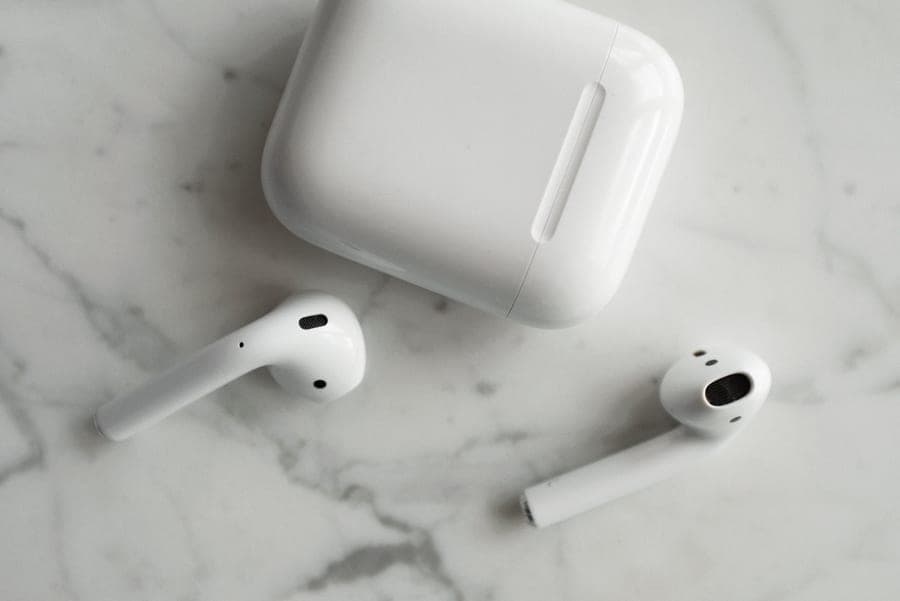 Apple AirPods Pro 3Eight rated hours with canceling on, foam tips in five sizes and an IP57 rating. If your phone is an iPhone this is the least friction of anything here. | Best tip range in the box | 8.88.8 out of 10, our editorial score | |
| 2 | 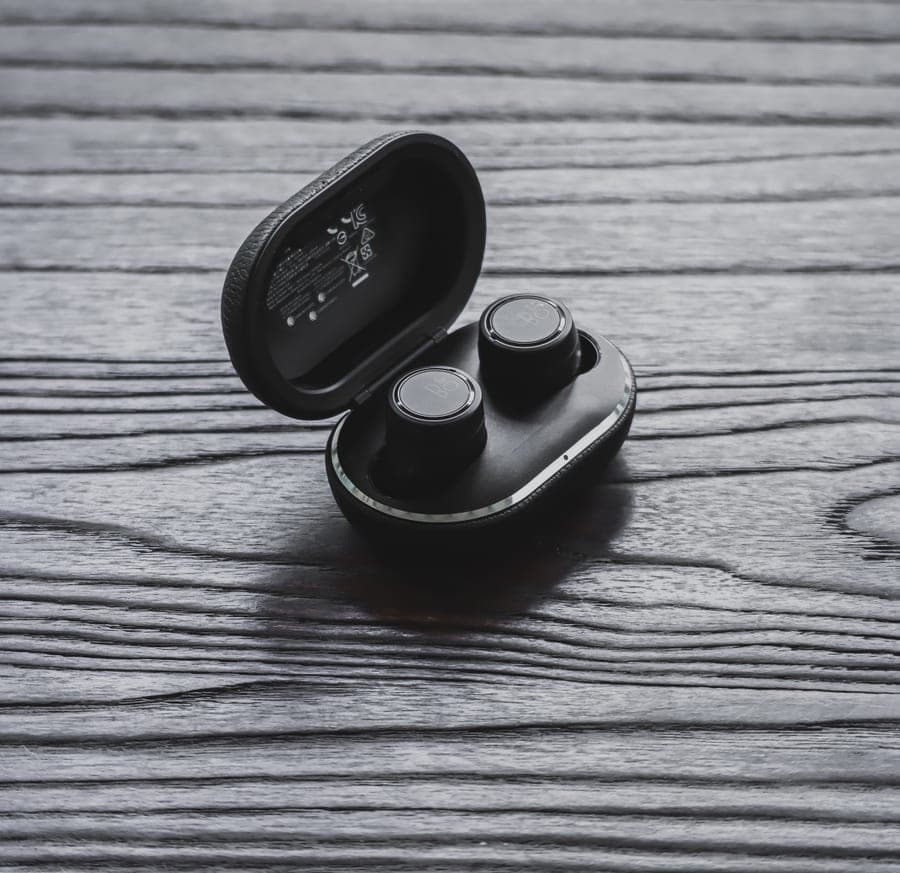 Bose QuietComfort Ultra Earbuds (2nd Gen)The quietest earbuds you can put in a pocket, with the shortest single-charge runtime of the premium set: six rated hours, four with Immersive Audio on. | Best for a shallow fit | 8.48.4 out of 10, our editorial score | |
| 3 | 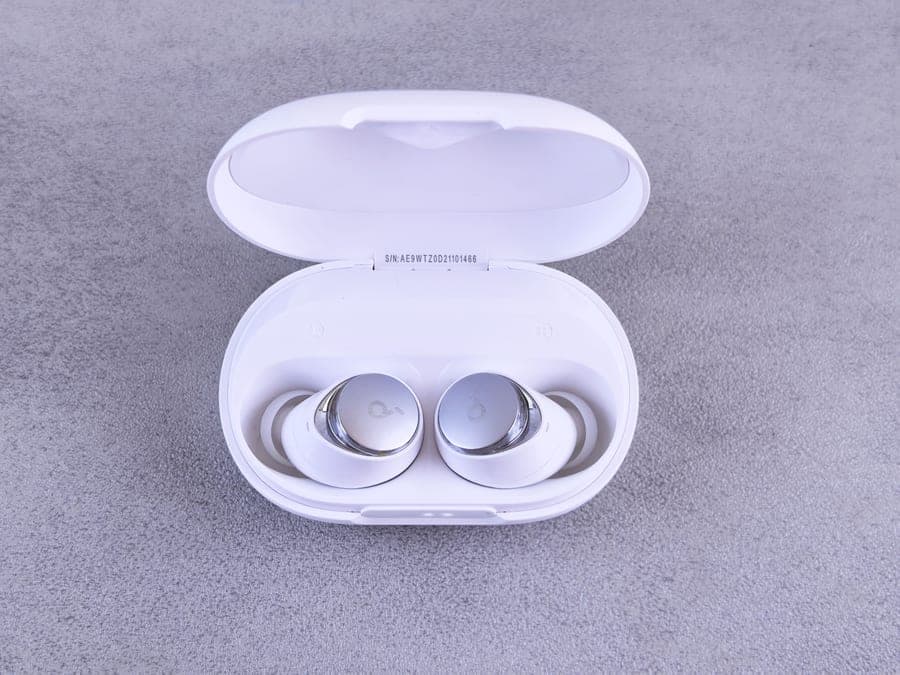 Sony WF-1000XM6Eight rated hours per bud and 24 with the case, at roughly 6.5 g each. The most sensible premium earbud for a flight, because you never have to plan around the battery. | Lightest per bud | 8.98.9 out of 10, our editorial score | |
| 4 |  EarFun Air Pro 4Eleven rated hours per bud and 52 with the case, plus LDAC and aptX Lossless, for a small fraction of flagship money. It buys most of the quiet for a little of the price. | Best cheap option to experiment with | 8.08.0 out of 10, our editorial score |
#ad Amazon links are affiliate links. No live price is shown anywhere on this site, so every button reads “Check price on Amazon”. How this is funded.
The picks in full
Every pick, in detail
1. Best tip range in the box
Apple AirPods Pro 3
Eight rated hours with canceling on, foam tips in five sizes and an IP57 rating. If your phone is an iPhone this is the least friction of anything here.
Our editorial score: 8.8 / 10
#ad Live price not shown. How this is funded
Also sold direct by Apple — we earn nothing there, so check both.
Apple ships foam tips in five sizes. That is the single most useful fact on this page, because every other variable on an earbud is negotiable and the seal is not. Five sizes means the extra-small is a real option rather than a hope.
Foam also behaves differently from silicone in a small canal: it compresses to the shape of the ear rather than needing the ear to accommodate a fixed dome, so it seals at lower insertion pressure. That is why it tends to ache less over a long session.
Eight rated hours with canceling on and up to 24 with the case, plus IP57 on both buds and the case. The catch is platform: the best of it needs an iPhone, and on Android it is a good but ordinary earbud.
What works on a plane
- Eight rated hours and 24 with the case, matching the best of the premium earbuds
- Foam tips in five sizes solve the fit problem that ruins canceling on most buds
- IP57 on both buds and case is the toughest rating in this group
- Live Translation and heart-rate sensing are genuinely useful abroad, not spec-sheet filler
What does not
- Apple's 2x noise figure is a manufacturer claim measured against its own predecessor, not an independent measurement
- The best features need an iPhone; on Android it is a good but ordinary earbud
- No wired option, so in-flight entertainment needs a transmitter
How it scores against the five travel axes
Published specifications
| Spec | Figure | Source |
|---|---|---|
| Battery, ANC on | 8 hours listening | Apple tech specs |
| Battery, Transparency | Up to 10 hours | Apple tech specs |
| Total with case | Up to 24 hours with ANC | Apple tech specs |
| Quick charge | 5 minutes in the case gives around 1 hour | Apple tech specs |
| Ear tips | Foam tips in five sizes | Apple |
| Water resistance | IP57, buds and case | Apple |
| Apple's ANC claim | Removes up to 2x more noise than AirPods Pro 2 | Apple newsroom |
2. Best for a shallow fit
Bose QuietComfort Ultra Earbuds (2nd Gen)
The quietest earbuds you can put in a pocket, with the shortest single-charge runtime of the premium set: six rated hours, four with Immersive Audio on.
Our editorial score: 8.4 / 10
#ad Live price not shown. How this is funded
Also sold direct by Bose — we earn nothing there, so check both.
The other way to solve a small ear is to stop going deep. Bose uses a shallow insertion with three stabilizer band sizes, so the bud is held in place by the outer ear rather than wedged into the canal.
For anyone who finds deep-insertion buds painful after an hour, this is a genuinely different experience rather than a smaller version of the same one. It is also the reason these are more tolerable than they should be on a long flight.
The cost is battery: up to 6 rated hours, 4 with Immersive Audio on, and 18 total with the case. That is the weakest reserve of the premium set, so on a long-haul you will be topping them up.
What works on a plane
- Canceling that genuinely rivals a full-size over-ear, in something pocketable
- The shallow fit is far more tolerable than deep-insertion buds on a long flight
- Wireless case charging is one fewer cable in the bag
What does not
- Six rated hours means a case top-up mid-flight on any long-haul
- Immersive Audio cuts that to four, so on a plane you will mostly leave it off
- 18 hours total with the case is the weakest reserve in the premium earbud set
How it scores against the five travel axes
Published specifications
| Spec | Figure | Source |
|---|---|---|
| Battery, Immersive off | Up to 6 hours | Bose support |
| Battery, Immersive on | Up to 4 hours | Bose support |
| Total with case | Up to 18 hours | Bose support |
| Case charging | USB-C and wireless | Bose support |
| Water resistance | IPX4 | Bose support |
| Fit | Three stabilizer band sizes, shallow insertion | Bose |
Read the full Bose QuietComfort Ultra Earbuds (2nd Gen) review
3. Lightest per bud
Sony WF-1000XM6
Eight rated hours per bud and 24 with the case, at roughly 6.5 g each. The most sensible premium earbud for a flight, because you never have to plan around the battery.
Our editorial score: 8.9 / 10
#ad Live price not shown. How this is funded
Also sold direct by Sony — we earn nothing there, so check both.
Roughly 6.5 g per bud with the medium tips fitted. Mass is the other half of the fit problem: a heavy bud in a small ear slowly works its way loose because gravity is pulling on something the canal is not gripping well.
Eight rated hours and up to 24 with the case, an 8.4 mm driver, LDAC and LC3, and the QN3e processor with eight microphones. It is the most complete travel earbud here, and the weight is a real argument on a small ear rather than a spec-sheet detail.
Sony does not publish a count of the tip sizes in the box in the specifications we could verify, so we do not quote one. If tip range is your deciding factor, the AirPods Pro 3 states its five sizes outright.
What works on a plane
- Eight rated hours per charge clears most short-haul flights without touching the case
- 24 hours total with the case is the strongest reserve in the premium earbud set
- LDAC means it is not tied to one phone platform
- Roughly 6.5 g per bud effectively disappears when you are trying to sleep on your side
What does not
- Canceling is excellent but the Bose still takes the low-frequency band
- No wired fallback at all, so a seatback screen needs a transmitter
- IPX4 is splash resistance, not weather resistance
How it scores against the five travel axes
Published specifications
| Spec | Figure | Source |
|---|---|---|
| Battery, earbuds | Up to 8 hours | Sony |
| Total with case | Up to 24 hours (16 from the case) | Sony |
| Weight | Approx. 6.5 g per bud with M tips | Sony |
| Driver | 8.4 mm | Sony |
| Bluetooth | 5.3 | Sony |
| Codecs | SBC, AAC, LDAC, LC3 | Sony |
| Water resistance | IPX4 | Sony |
| Processor | HD Noise Canceling Processor QN3e, dual processors, eight microphones | Sony |
4. Best cheap option to experiment with
EarFun Air Pro 4
Eleven rated hours per bud and 52 with the case, plus LDAC and aptX Lossless, for a small fraction of flagship money. It buys most of the quiet for a little of the price.
Our editorial score: 8.0 / 10
#ad Live price not shown. How this is funded
Fit is the one thing you cannot read off a page, which makes an expensive first attempt a bad bet. Eleven rated hours per bud and 52 with the case, plus aptX Lossless and LDAC, from something inexpensive enough to treat as an experiment.
If it seals, you have found out cheaply that canceling earbuds work for your ear. If it does not, you have learned the same thing for far less.
Be clear about the gap: EarFun’s 50 dB figure is its own rating rather than an independent measurement, the adaptive canceling is less steady than the flagships, and the stock tip selection is narrow — which is exactly the constraint this page is about.
What works on a plane
- Eleven rated hours per bud is longer than any premium earbud here
- 52 hours with the case means a two-week trip without a charger thought
- aptX Lossless and LDAC at this price is genuinely unusual
- Losing one on a plane is an annoyance rather than a disaster
What does not
- The 50 dB figure is EarFun's own rating, not an independent measurement, and the gap to Bose is clear
- Adaptive canceling is less steady than the flagships when cabin noise changes
- App polish and firmware support are a step behind the majors
How it scores against the five travel axes
How we decide
How these picks were chosen
We do not run a test lab and we do not claim to have flown with these units. Every verdict on this page is one of three things: a measurement published by somebody who does own a test rig and is credited by name, a manufacturer specification we quote and then interpret against what a long flight actually demands, or a plainly-labeled editorial judgment. The five axes we score on — cabin-noise reduction, battery on a long-haul, pack size, comfort past hour three, and wired fallback — are the ones that decide a travel purchase, and the weighting is published in full.
Questions
Common questions
What are the best earbuds for small ears?
The Apple AirPods Pro 3, because Apple ships foam tips in five sizes and foam seals at lower insertion pressure than silicone. If deep insertion is what hurts rather than tip size, the Bose QuietComfort Ultra Earbuds use a shallow fit with three stabilizer band sizes instead.
Why do earbuds hurt my ears after an hour?
Usually because the tip is slightly too large and is holding its seal by pressing outward on the canal wall. A smaller tip, or a foam tip that compresses rather than pushes, normally fixes it. If every size hurts, the problem is insertion depth and a shallow-fit design is the better category.
Do noise-canceling earbuds work if they do not fit properly?
Not well. The tip provides the passive isolation that blocks higher frequencies, and the active canceling is calculated for a sealed cavity. Break the seal and you lose the passive half outright and degrade the active half. A cheap bud that seals out-performs an expensive one that does not.
Are foam or silicone tips better for small ears?
Foam, generally. It compresses to the shape of the canal and seals at lower pressure, which is why it tends to be comfortable for longer in a narrow canal. Silicone lasts longer, cleans more easily and is less fiddly to fit, so it is the better choice if size was never the problem.
How do I know if my earbuds are sealed?
Play nothing, turn canceling on, then press each bud gently inward about a millimeter. If the room gets quieter when you press, you were not sealed. A second check: with music playing, open and close your jaw — if the bass disappears, the seal is marginal.
What if no earbuds fit my ears?
Switch form factor. An over-ear seals against the side of your head rather than inside your ear canal, so canal size stops mattering entirely. The trade is bulk: you carry a case instead of pocketing one.
Sources
Where these figures come from
Read next
Related reading
- Best noise-canceling earbuds for travel
The same field without the fit constraint applied.
- Best earbuds for sleeping on a plane
Where a shallow fit matters even more than it does here.
- Active canceling vs passive isolation
Why the tip seal decides how well the processor can work.
- Earbuds vs over-ear for flying
The honest alternative if no bud ever fits comfortably.
- Apple AirPods Pro 3 review
The top pick here, assessed in full against the travel criteria.