
The best over-ear headphone for flights is the Sony WH-1000XM6: at approximately 254 g it is the lightest full-size flagship, it folds, and Sony rates it at up to 30 hours with noise canceling on. The Bose QuietComfort Ultra Headphones (2nd Gen) cancels more; the Sennheiser MOMENTUM 4 Wireless is the most comfortable past hour four and is rated at up to 60 hours; the Apple AirPods Max is the strongest build and the hardest to pack at 386.2 g with no folding hinge.
Why choose full-size
What an over-ear actually gives you
Two structural advantages, and they are both real:
- Runtime. Thirty to sixty rated hours against a premium earbud ceiling of eight. On a long flight that is the difference between never thinking about the battery and going to the case mid-flight.
- Comfort across long sitting hours, while awake. Nothing is in your ear canal. For a nine-hour flight spent reading and watching, most people find a well-made over-ear more tolerable than any in-ear design.
There is a third advantage that only matters on a plane: an over-ear can have a 3.5 mm socket, and every noise-canceling earbud on sale cannot. That makes the seatback screen a cable problem rather than an accessory problem.
And two structural disadvantages, which are also real: volume in a bag, and that you cannot sleep on your side in one. If either of those is decisive for you, read earbuds versus over-ear for flying before buying anything on this page.
The comparison
The full-size field, on the axes that matter
| Model | Weight | Fold | Rated hours, ANC on | Clamp |
|---|---|---|---|---|
| Sony WH-1000XM6 | approx. 254 g | Folds up | up to 30 | Moderate |
| Bose QuietComfort Ultra 2nd Gen | approx. 264 g | Rotates flat | up to 30 (23 immersive) | Firm |
| JBL Tour One M3 | 278 g | Fold-flat | up to 40 | Moderate |
| Sennheiser MOMENTUM 4 | approx. 293 g | Fold-flat | up to 60 | Gentle |
| Soundcore Space Q45 | approx. 295 g | Folds | up to 50 | Moderate |
| Apple AirPods Max (USB-C) | 386.2 g | None | up to 20 | Moderate |
The lightest headphone here is 132 g lighter than the heaviest. Nothing else on the spec sheet moves the experience of hour six as much as that.
Three things to check
What to look at that reviews rarely mention
Fold-up versus fold-flat is a real distinction
Three different behaviors get called “folding”. Fold-up (the Sony, the Soundcore) collapses the headband as well as rotating the cups, producing a compact block. Fold-flat (the Sennheiser, the JBL, and the Bose’s rotating cups) keeps the full width and gives you a slim, wide object. No fold at all (the Apple) means the case is a fixed cuboid the size of the headphone.
Which is better depends on your bag. A slim wide case slides into a laptop compartment beautifully; a compact block works better in a packing cube. Best foldable noise-canceling headphones goes into this in detail.
Clamp force is not the same as comfort
Firm clamp is uncomfortable at first and produces a better passive seal, which means better isolation against voices — the noise active canceling cannot touch. Gentle clamp is comfortable immediately and seals slightly less well. Clamp also relaxes over months of use, so a firm headphone gets better and a gentle one does not get worse.
Which you prefer is genuinely personal. If you wear glasses, prefer gentle — a firm clamp turns spectacle arms into pressure points, and that is the single most common comfort complaint in the category.
Check what is in the box, not just what is in the headphone
Having a 3.5 mm socket and having a cable are different things. The Sony has a socket and no cable. Apple has neither. The Bose ships a 2.5 mm-to-3.5 mm cable, the Sennheiser a 1.2 m aux cable, the Soundcore a 3.5 mm cable, and the JBL two cables plus an adapter plus a transmitter. That is a four-way spread on an item most buyers assume is standard. Best wired headphones for flights has the full picture.
In short
Key takeaways
- Sony WH-1000XM6 is the best over-ear for flying: approximately 254 g, folds up, up to 30 rated hours.
- An over-ear's real advantages are runtime and a 3.5 mm socket, which no noise-canceling earbud has.
- Fold-up, fold-flat and no-fold are three genuinely different packing outcomes.
- Firm clamp seals better against voices; gentle clamp suits glasses wearers. Both relax over time.
- The Apple AirPods Max is the strongest build and the weakest travel case, and both statements are true.
At a glance
Quick picks
Scores are our editorial judgment from published specifications and cited third-party measurements, not our own testing. The rubric is published in full. Tap any row for the full write-up.
| # | Product | Best for | Score | Price |
|---|---|---|---|---|
| 1 | 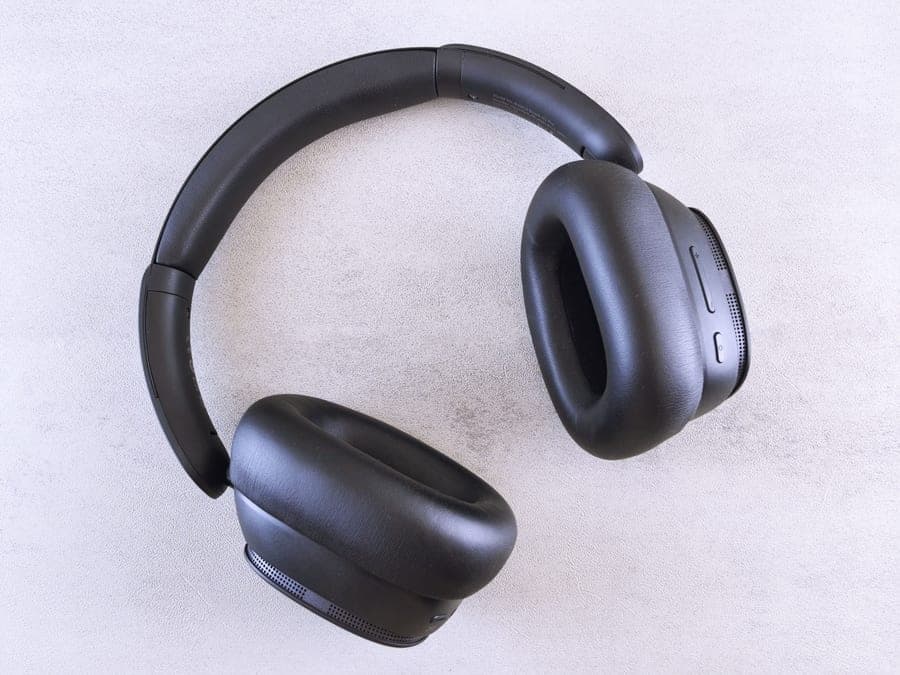 Sony WH-1000XM6The most complete travel headphone on sale: 254 g, 30 rated hours with noise canceling on, and it folds into a case small enough to stop being a decision. | Best over-ear overall | 9.19.1 out of 10, our editorial score | |
| 2 | 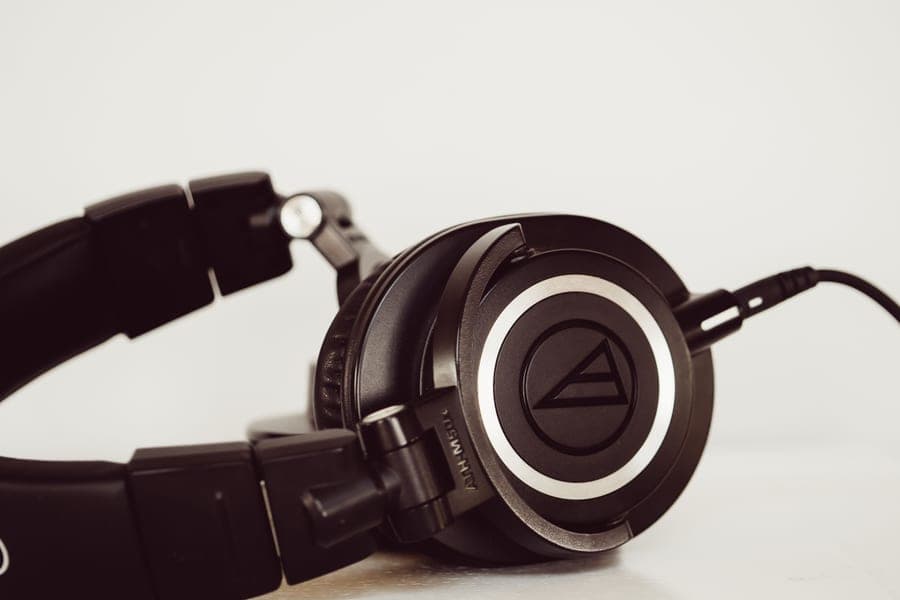 Bose QuietComfort Ultra Headphones (2nd Gen)The quietest cabin of anything here, and the only over-ear in this group whose box already contains the audio cable a seatback screen needs. | Best canceling in the category | 9.09.0 out of 10, our editorial score | |
| 3 | 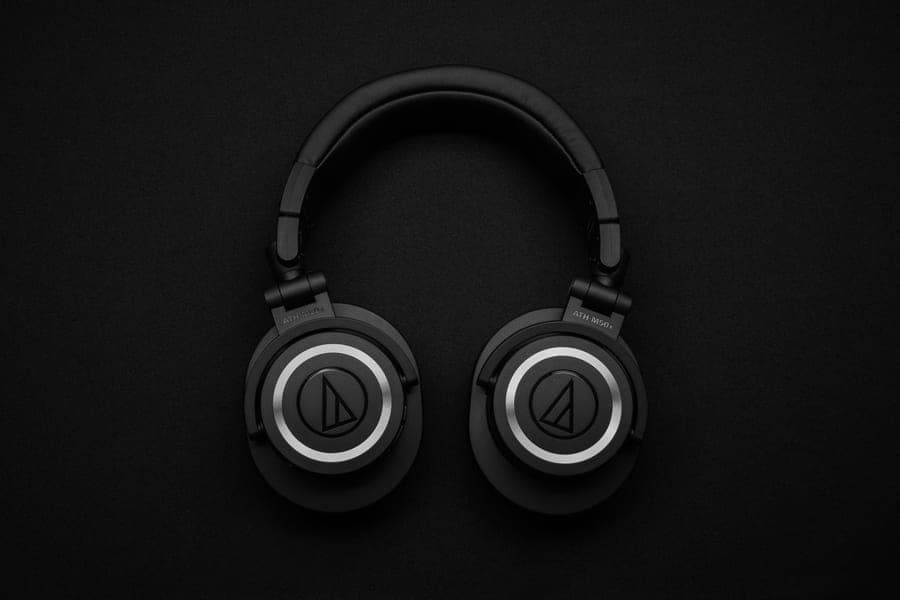 Sennheiser MOMENTUM 4 WirelessSennheiser publishes up to 60 hours. That is the difference between charging at the gate and not thinking about a charger for an entire two-week trip. | Best for very long sessions | 8.88.8 out of 10, our editorial score | |
| 4 |  JBL Tour One M3The only headphone here that ships with the answer to the airline-jack problem in the box: the Smart Tx transmitter plugs into the seat and sends the movie to your headphones over Bluetooth. | Best over-ear for seatback screens | 8.78.7 out of 10, our editorial score | |
| 5 | 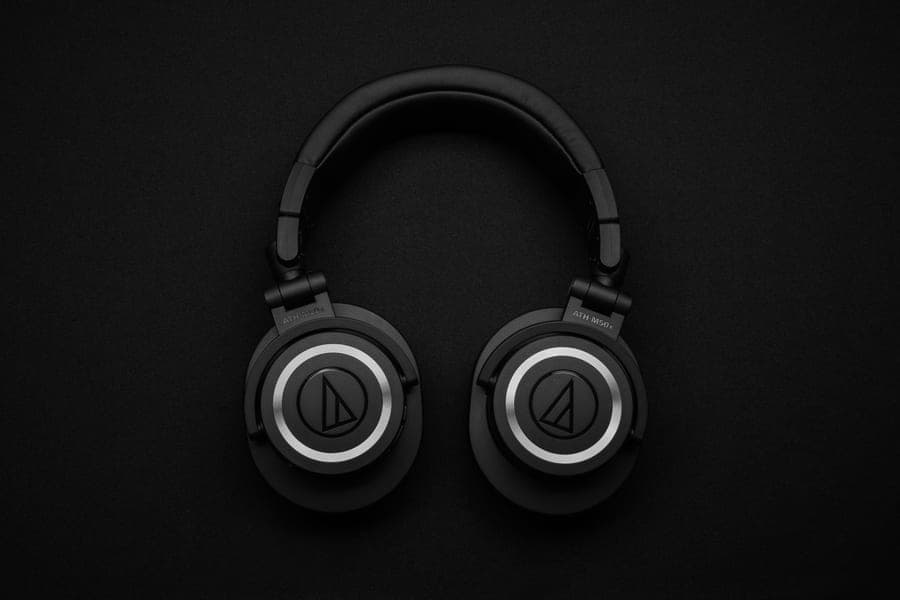 Soundcore Space Q45Fifty rated hours with canceling on, a hard case and a 3.5 mm cable in the box, at a fraction of flagship money. The compromise is in the last 10 percent of quiet, not the first 80. | Best budget over-ear | 8.28.2 out of 10, our editorial score | |
| 6 |  Apple AirPods Max (USB-C)Superb on an iPhone and genuinely hostile to a carry-on: 386.2 g, no fold, a soft case that leaves the headband exposed, and no audio cable in the box. | Best build, worst packing | 7.47.4 out of 10, our editorial score |
#ad Amazon links are affiliate links. No live price is shown anywhere on this site, so every button reads “Check price on Amazon”. How this is funded.
The picks in full
Every pick, in detail
1. Best over-ear overall
Sony WH-1000XM6
The most complete travel headphone on sale: 254 g, 30 rated hours with noise canceling on, and it folds into a case small enough to stop being a decision.
Our editorial score: 9.1 / 10
#ad Live price not shown. How this is funded
Also sold direct by Sony — we earn nothing there, so check both.
Within the over-ear category specifically, the XM6 wins on the two numbers that define the form factor’s weaknesses. At approximately 254 g it is the lightest, which directly addresses the weight penalty an over-ear carries. And it folds, which directly addresses the volume penalty.
In other words, it is the over-ear that is least bad at being an over-ear, while still canceling within a hair of the best. That combination is why it is the default recommendation in this form factor.
What works on a plane
- Folds, which halves the space it takes in a personal item
- 254 g is light for a flagship over-ear, and weight is what you feel at hour four
- LDAC plus LC3 means it is not locked to one phone ecosystem
- 30 rated hours with noise canceling on covers almost any single routing
What does not
- You pay a flagship price for the last increment of noise canceling
- The folding hinge is one more mechanism to eventually wear out
- No airline two-prong adapter in the box
How it scores against the five travel axes
Published specifications
| Spec | Figure | Source |
|---|---|---|
| Weight | Approx. 254 g (9 oz) | Sony Help Guide specifications |
| Battery, NC on | Up to 30 hours | Sony specifications |
| Battery, NC off | Up to 40 hours | Sony specifications |
| Full charge | Approx. 3.5 hours | Sony Help Guide specifications |
| Bluetooth | 5.3 | Sony Help Guide specifications |
| Codecs | SBC, AAC, LDAC, LC3 | Sony Help Guide specifications |
| Wired response | 4 Hz - 40,000 Hz (IEC) | Sony Help Guide specifications |
| Folds | Yes, into a magnetic-closure case | Sony |
2. Best canceling in the category
Bose QuietComfort Ultra Headphones (2nd Gen)
The quietest cabin of anything here, and the only over-ear in this group whose box already contains the audio cable a seatback screen needs.
Our editorial score: 9.0 / 10
#ad Live price not shown. How this is funded
Also sold direct by Bose — we earn nothing there, so check both.
An over-ear’s structural advantage is that it seals against your whole ear, giving a large sealed cavity for the active system to work in. Bose exploits that better than anyone: this removes more of the deep low-frequency energy than any earbud can, and more than any other over-ear here.
Firm clamp is part of how it gets there, which is worth knowing before you buy. That firmness is what holds the passive seal the electronics build on, and it relaxes over months of use.
What works on a plane
- The best low-frequency canceling in this group, which is exactly the band engine drone lives in
- The 2.5 mm-to-3.5 mm cable is in the box, so a seatback screen needs nothing extra
- Compact hard case for a full-size over-ear
- Up to 45 hours with canceling off, if you only want isolation on a train
What does not
- Immersive Audio costs you a third of the battery, dropping to 23 rated hours
- Heavier than the Sony by roughly 10 g, and clamp is firmer out of the box
- The hard case is compact but still rigid, so it will not squash into a full bag
How it scores against the five travel axes
Published specifications
| Spec | Figure | Source |
|---|---|---|
| Battery, ANC on | Up to 30 hours | Bose |
| Battery, ANC off | Up to 45 hours | Bose |
| Battery, Immersive Audio on | Up to 23 hours | Bose |
| Weight | Approx. 264 g (9.3 oz) as reported | Published reviews |
| USB-C audio | 16-bit, 44.1 or 48 kHz lossless input | Bose support |
| In the box | Hard case, USB-C cable, 2.5 mm-to-3.5 mm audio cable | Bose |
| Folds | Earcups rotate flat into a compact hard case | Bose |
Read the full Bose QuietComfort Ultra Headphones (2nd Gen) review
3. Best for very long sessions
Sennheiser MOMENTUM 4 Wireless
Sennheiser publishes up to 60 hours. That is the difference between charging at the gate and not thinking about a charger for an entire two-week trip.
Our editorial score: 8.8 / 10
#ad Live price not shown. How this is funded
Also sold direct by Sennheiser — we earn nothing there, so check both.
The gentlest clamp in this field, deep pads that do not rely on crushing your ears for a seal, and a 42 mm transducer whose relaxed presentation is simply less tiring over eleven hours. At approximately 293 g it is not the lightest, and it is still the one we would wear for longest.
Up to 60 rated hours is the other reason it belongs in any over-ear conversation. The form factor’s biggest advantage over earbuds is runtime, and this is where that advantage is largest.
What works on a plane
- Up to 60 rated hours, roughly double the flagship norm
- The 1.2 m 3.5 mm cable is in the box, so seatback screens work straight out of the bag
- Fold-flat earcups make the carry case slim rather than deep
- The 42 mm transducer is the most relaxed listen here over a very long session
What does not
- Published measurements consistently place its noise canceling a step behind the Bose
- The case is broad, so it eats width in a personal item even though it is slim
- Fold-flat is not fold-up, so the footprint is larger than the Sony's
How it scores against the five travel axes
Published specifications
| Spec | Figure | Source |
|---|---|---|
| Battery | Up to 60 hours playback | Sennheiser |
| Weight | Approx. 293-295 g | Sennheiser / published reviews |
| Transducer | 42 mm | Sennheiser |
| In the box | Carry case, USB-C cable, 1.2 m 3.5 mm auxiliary cable | Sennheiser |
| Folds | Fold-flat earcups | Sennheiser |
4. Best over-ear for seatback screens
JBL Tour One M3
The only headphone here that ships with the answer to the airline-jack problem in the box: the Smart Tx transmitter plugs into the seat and sends the movie to your headphones over Bluetooth.
Our editorial score: 8.7 / 10
#ad Live price not shown. How this is funded
Also sold direct by JBL — we earn nothing there, so check both.
The over-ear form factor is the only one that can reach a seatback screen with a plain cable, and the JBL takes that advantage further than anyone by shipping the Smart Tx transmitter too. Three wired routes and one wireless one, all in the box.
278 g and up to 40 rated hours with canceling on puts it comfortably in the middle of the field on the fundamentals. The reason to buy it is the connectivity, not the weight.
What works on a plane
- The Smart Tx transmitter solves in-flight entertainment without a separate purchase
- Up to 40 rated hours with canceling on, comfortably over a long-haul plus layover
- Five minutes of charge buys five hours
- Both a 3.5 mm and a USB-C wired path in the box
What does not
- The Smart Tx is one more small object to lose, and it needs its own charge
- 278 g sits between the Sony and the Sennheiser without beating either at their own game
- Noise canceling is very good rather than class-leading
How it scores against the five travel axes
Published specifications
| Spec | Figure | Source |
|---|---|---|
| Battery, Bluetooth | Up to 70 hours | JBL |
| Battery, ANC on | Up to 40 hours | JBL |
| Quick charge | 5 minutes gives 5 hours | JBL |
| Battery cell | 850 mAh, full charge approx. 2 hours | JBL |
| Weight | 278 g | JBL |
| Smart Tx | Transmitter streams from non-Bluetooth sources including in-flight entertainment | JBL |
| In the box | USB-C-to-3.5 mm and USB-C-to-USB-C cables, USB-C to USB-A adapter | JBL |
5. Best budget over-ear
Soundcore Space Q45
Fifty rated hours with canceling on, a hard case and a 3.5 mm cable in the box, at a fraction of flagship money. The compromise is in the last 10 percent of quiet, not the first 80.
Our editorial score: 8.2 / 10
#ad Live price not shown. How this is funded
Also sold direct by Soundcore — we earn nothing there, so check both.
Approximately 295 g and up to 50 rated hours with canceling on, in a hard case with a 3.5 mm cable, for a fraction of flagship money. Within the over-ear category this is the value benchmark, and on battery it beats every flagship except the Sennheiser.
Plainer pads mean hour five is less comfortable, and the plastic build is less resilient than the metal Apple or the better-finished flagships. The included hard case matters more here than anywhere, precisely because of that.
What works on a plane
- Up to 50 rated hours with canceling on, which beats every flagship here
- Hard case and 3.5 mm cable included, so nothing else to buy for a seatback screen
- Five minutes of charge buys four hours, which covers a gate-side mistake
- The cheapest way to get genuinely useful drone reduction on a plane
What does not
- Soundcore's own 98 percent figure is a marketing claim, not a measurement, and the gap to Bose is audible
- 295 g with plainer pad materials, so hour four is less comfortable than the Sennheiser's
- Plastic build will not survive being crushed in an overhead bin the way the metal Apple would
How it scores against the five travel axes
Published specifications
| Spec | Figure | Source |
|---|---|---|
| Battery, ANC on | Up to 50 hours | Soundcore |
| Battery, ANC off | Up to 65 hours | Soundcore |
| Quick charge | 5 minutes gives 4 hours | Soundcore |
| Weight | Approx. 295 g (10.3 oz) | Soundcore / published reviews |
| Bluetooth | 5.3 | Soundcore |
| In the box | Hard-shell case, 3.5 mm cable, USB-C cable | Soundcore |
6. Best build, worst packing
Apple AirPods Max (USB-C)
Superb on an iPhone and genuinely hostile to a carry-on: 386.2 g, no fold, a soft case that leaves the headband exposed, and no audio cable in the box.
Our editorial score: 7.4 / 10
#ad Live price not shown. How this is funded
Also sold direct by Apple — we earn nothing there, so check both.
The AirPods Max sits last on this page, and it is worth being precise about why, because it is a genuinely excellent headphone. It is last because every specification that defines the over-ear form factor’s weakness is at its worst here: 386.2 g, fixed dimensions with no fold, a soft case that adds 134.5 g without enclosing the headband, and 20 rated hours.
The mesh canopy headband is genuine engineering — it distributes the weight far better than a conventional band, and these feel lighter than the number suggests. The metal build is the most durable here. The canceling is top tier.
If you fly short-haul with a roomy bag and your devices are all Apple, none of the above is a problem. If you fly long-haul in economy, the AirPods Pro 3 is the Apple product that suits the trip.
What works on a plane
- Lossless audio over USB-C, and the tightest handoff between an iPhone, iPad and Mac of anything here
- The metal-and-mesh build is the most durable in this group
- Spatial Audio with head tracking makes a movie on your own iPad genuinely better
What does not
- 386.2 g, the heaviest here by roughly 90 g, and you feel every gram past hour three
- Does not fold, and the Smart Case leaves the headband exposed while adding 134.5 g
- 20 rated hours is the shortest battery in this group and will not clear a long-haul plus a layover
- No 3.5 mm cable in the box, so a seatback screen needs an adapter you buy separately
How it scores against the five travel axes
Published specifications
| Spec | Figure | Source |
|---|---|---|
| Weight | 13.6 oz (386.2 g) | Apple tech specs |
| Smart Case weight | 4.74 oz (134.5 g) | Apple tech specs |
| Dimensions | 168.6 mm W x 83.4 mm D x 187.3 mm H | Apple tech specs |
| Battery, ANC on | Up to 20 hours listening | Apple tech specs |
| Quick charge | 5 minutes gives around 1.5 hours | Apple tech specs |
| Bluetooth | 5.0 | Apple tech specs |
| In the box | Headphones, Smart Case, USB-C cable, documentation | Apple tech specs |
| Folds | No | Apple tech specs |
How we decide
How these picks were chosen
We do not run a test lab and we do not claim to have flown with these units. Every verdict on this page is one of three things: a measurement published by somebody who does own a test rig and is credited by name, a manufacturer specification we quote and then interpret against what a long flight actually demands, or a plainly-labeled editorial judgment. The five axes we score on — cabin-noise reduction, battery on a long-haul, pack size, comfort past hour three, and wired fallback — are the ones that decide a travel purchase, and the weighting is published in full.
Questions
Common questions
Are over-ear headphones better than earbuds on a plane?
For runtime and for comfort across long waking hours, yes — 30 to 60 rated hours against a premium earbud ceiling of eight, and nothing in your ear canal. For packing and for sleeping, no. An over-ear earcup pressed against a bulkhead becomes painful quickly.
What is the lightest over-ear noise-canceling headphone?
Of the current flagships, the Sony WH-1000XM6 at approximately 254 g. The heaviest is the Apple AirPods Max at 386.2 g. Weight is the most predictive single number for how a headphone feels at hour four.
Do all over-ear headphones fold?
No. The Apple AirPods Max does not fold at all. Others split into fold-up (the Sony, the Soundcore) which collapses the headband into a compact block, and fold-flat (the Sennheiser, the JBL) which rotates the cups but keeps the full width.
Does clamp force matter for flying?
Yes, in both directions. Firmer clamp produces a better passive seal and therefore better isolation against speech, which active canceling cannot remove. Gentler clamp is more comfortable immediately and much better if you wear glasses. Clamp relaxes over months of use.
Which over-ear headphones can I use with the seatback screen?
All of them physically, if they have a 3.5 mm socket — but only the Bose, Sennheiser, Soundcore and JBL ship with a cable. The Sony has a socket and no cable; the Apple AirPods Max has neither.
Sources
Where these figures come from
Read next
Related reading
- Earbuds vs over-ear for flying
The form-factor decision, before the product decision.
- Best foldable noise-canceling headphones
Fold-up, fold-flat and no-fold, ranked.
- Best headphones for glasses wearers
Where clamp force becomes the deciding spec.
- Sony WH-1000XM6 review
The top pick, in detail.
- Best noise-canceling headphones for flights
The whole field, both form factors.