For a smaller head the Sony WH-1000XM6 is the best over-ear pick, because at approximately 254 g it is the lightest flagship here and a folding headband has a longer adjustment travel than a fixed one. For a genuinely small head the Koss Porta Pro at a $49.99 list price is the better fit, because an on-ear design removes the cup-alignment problem entirely. No manufacturer publishes a headband size range, so these are reasoned picks rather than measured ones.
Start here
The specification you need does not exist
We checked. Across the manufacturer pages cited at the foot of this page, not one publishes a headband adjustment range, a clamping force in newtons, or a minimum head circumference. Those are the three numbers that would answer this question properly, and the industry does not disclose any of them.
That is worth saying plainly rather than papering over, because the alternative is what most pages on this query do: invent a ranking out of adjectives. What we can use instead are three things that are published, and one that is structural.
- Weight, where it is published. A lighter headphone needs less clamp to stay in place, and excess clamp is the main discomfort on a small head.
- Whether the headband folds. A folding headband has to travel further by design, so the small end of its range tends to be a usable position.
- On-ear versus over-ear. An on-ear rests on the ear and has no cup opening to align, so it sidesteps the problem rather than managing it.
- Whether a return is easy. The only real test is wearing it. Buy where you can send it back.
Why it matters
A loose fit costs you the thing you bought
This is not only a comfort complaint. An over-ear’s noise reduction has two halves: the pad pressing against your head forms a physical seal that blocks higher frequencies, and the electronics generate an inverted waveform for the low ones. The second half is calculated on the assumption that the first half is intact.
If the cups sit high and the pad does not close around your ear, you lose the passive half outright, and the active canceling is now correcting a cavity that is open. That is why a poorly fitting flagship can be out-performed by a cheaper headphone that seals. Active canceling versus passive isolation explains the split in full.
The gap you cannot see between the pad and your jaw is where the canceling you paid for goes.
Three symptoms
How to tell the fit is wrong
The band bottoms out and the cups still sit high
You have run the adjustment to its shortest position and the earcup opening is still above your ear canal. This is the unambiguous version of the problem and no amount of wearing-in fixes it. The headphone is the wrong size.
The pads touch at the top but not under your jaw
The cup is pivoting on its top edge instead of sitting flat, usually because the yoke cannot rotate far enough for a narrower head. Bass sounds thin and canceling feels weak while the fit feels fine, which makes this the one people misdiagnose as a sound problem.
They slide forward when you look down
Classic too-large symptom: the headband is bridging rather than resting, so the whole assembly pivots. Tightening the clamp to compensate trades one discomfort for another.
The matrix
The four picks on what is actually published
| Sony WH-1000XM6 | Koss Porta Pro | Soundcore Space One | Sony WF-1000XM6 | |
|---|---|---|---|---|
| Design | Over-ear | On-ear, open-back | Over-ear | Earbuds |
| Weight | approx. 254 g | Not published | 265 g | approx. 6.5 g per bud |
| Headband folds | Yes, fold-up | Collapses flat | Cups rotate and fold | n/a |
| Headband range | Not published | Not published | Not published | n/a |
| Clamping force | Not published | Not published | Not published | n/a |
| Noise canceling | Yes | None | Yes | Yes |
| Battery, canceling on | up to 30 h | n/a, wired | up to 40 h | up to 8 h |
| List price | Not quoted here | $49.99 | $99.99 | Not quoted here |
Four of the eight rows are the same answer, and that is the finding rather than an omission. Where a price appears it is the manufacturer’s own list price at the time of writing; we publish no street prices, per the methodology.
What to look for
Buying advice that does not depend on missing specs
- Prefer lighter. Under about 270 g an over-ear can stay put without much clamp. Above roughly 350 g it needs grip, and grip is the problem you are trying to avoid.
- Prefer a folding headband to a fixed one. Not for packing — for adjustment travel.
- Consider on-ear seriously, and know what it costs. It fixes the geometry and gives up isolation. On a plane that is a genuine downgrade; in a quiet room it is barely one.
- Check the pad, not the band. A thicker, softer pad conforms around a jawline and rescues a marginal fit. A thin, firm pad does not.
- Buy where you can return it. The only measurement that exists is your own head.
In short
Key takeaways
- No manufacturer publishes a headband range, clamping force or minimum head size. That is the real finding here.
- Sony WH-1000XM6: approximately 254 g, lightest flagship, and a folding headband travels further by design.
- Koss Porta Pro at a $49.99 list price solves the geometry with an on-ear design — but blocks very little and has no canceling.
- Soundcore Space One at $99.99 and 265 g is the low-risk way to test the fit question.
- Sony WF-1000XM6 removes the headband problem entirely at roughly 6.5 g per bud.
- A loose fit does not just feel loose. It breaks the pad seal, and the canceling leaks out of the gap.
At a glance
Quick picks
Scores are our editorial judgment from published specifications and cited third-party measurements, not our own testing. The rubric is published in full. Tap any row for the full write-up.
| # | Product | Best for | Score | Price |
|---|---|---|---|---|
| 1 | 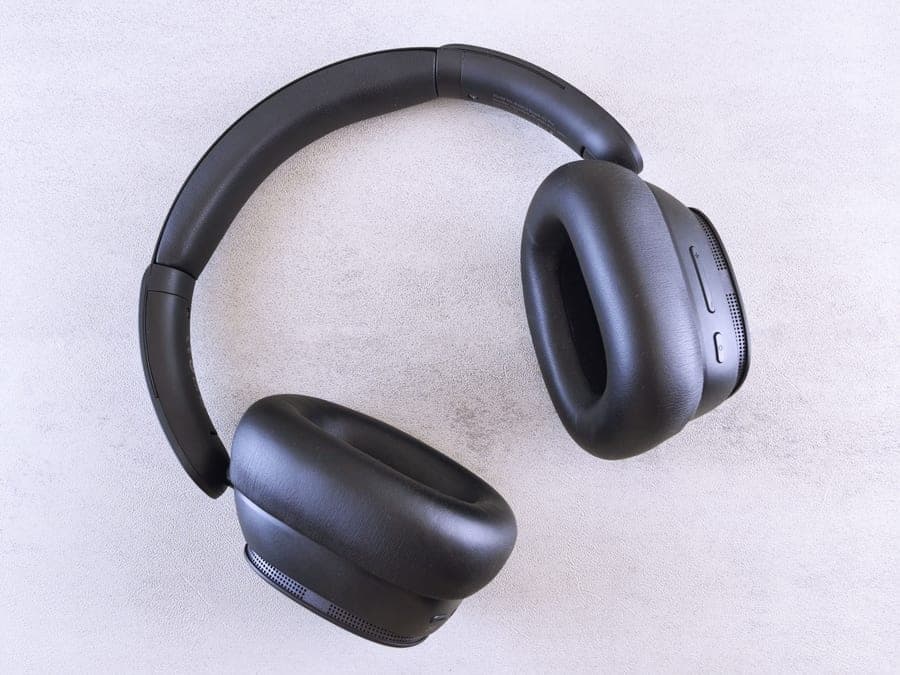 Sony WH-1000XM6The most complete travel headphone on sale: 254 g, 30 rated hours with noise canceling on, and it folds into a case small enough to stop being a decision. | Best over-ear overall | 9.19.1 out of 10, our editorial score | |
| 2 | 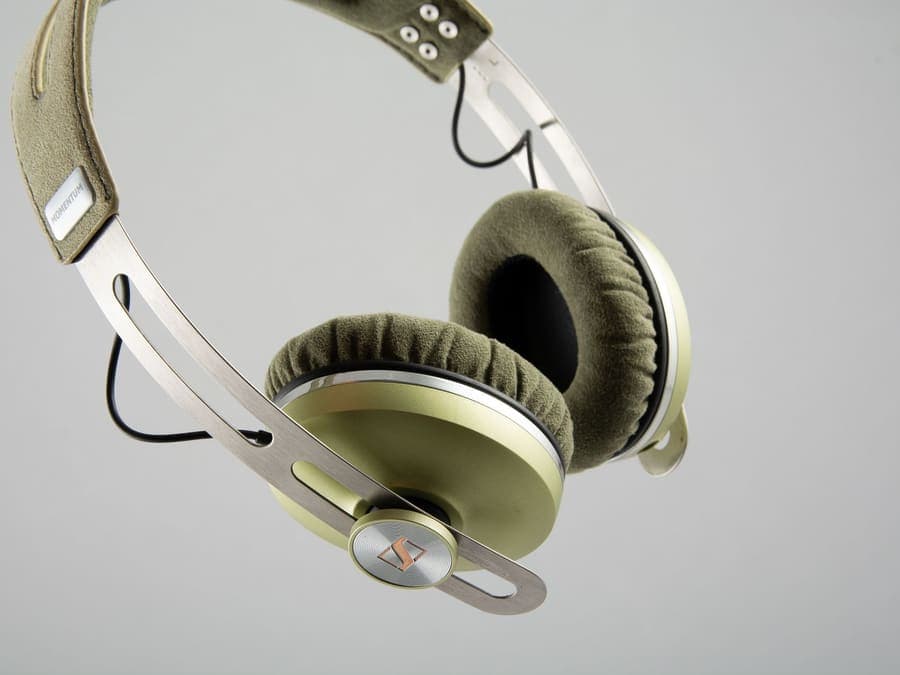 Koss Porta ProListed at $49.99 with a limited lifetime warranty, which means the cheapest headphone here is also the one least likely to need replacing. | Best for a genuinely small head | 7.47.4 out of 10, our editorial score | |
| 3 | 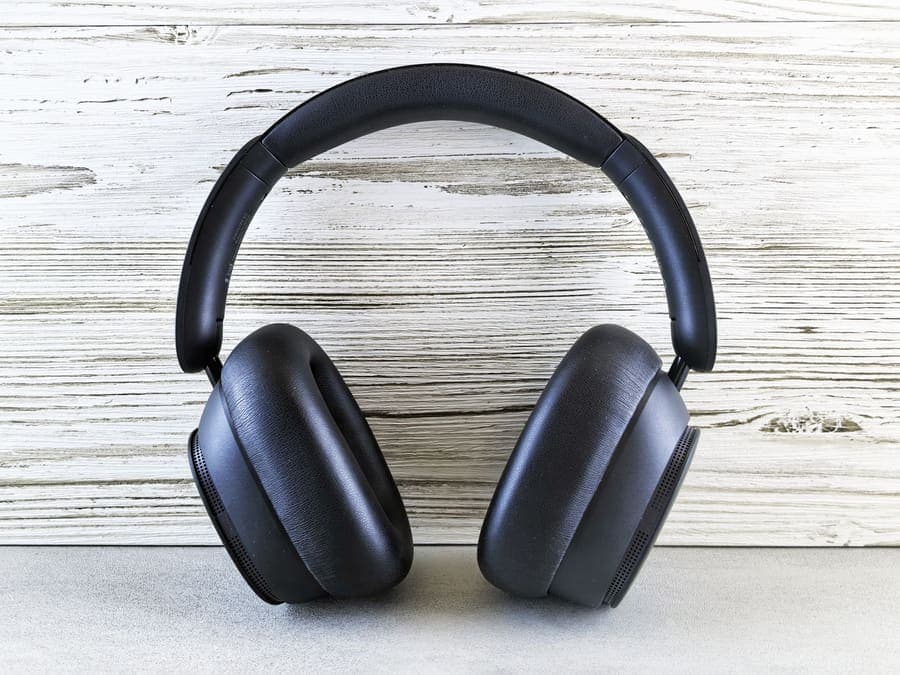 Soundcore Space OneA $99.99 list price that buys 40 rated hours with canceling on, LDAC, 40 mm drivers, a folding hinge and an aux cable. The specification sheet at this level is genuinely hard to argue with. | Best value over-ear | 8.58.5 out of 10, our editorial score | |
| 4 | 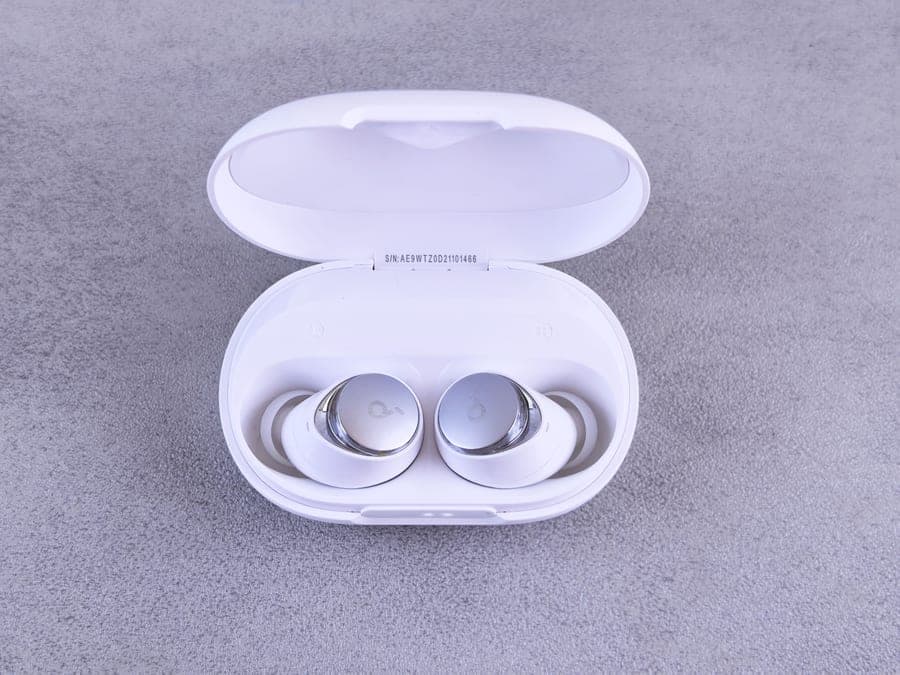 Sony WF-1000XM6Eight rated hours per bud and 24 with the case, at roughly 6.5 g each. The most sensible premium earbud for a flight, because you never have to plan around the battery. | The way to stop having this problem | 8.98.9 out of 10, our editorial score |
#ad Amazon links are affiliate links. No live price is shown anywhere on this site, so every button reads “Check price on Amazon”. How this is funded.
The picks in full
Every pick, in detail
1. Best over-ear overall
Sony WH-1000XM6
The most complete travel headphone on sale: 254 g, 30 rated hours with noise canceling on, and it folds into a case small enough to stop being a decision.
Our editorial score: 9.1 / 10
#ad Live price not shown. How this is funded
Also sold direct by Sony — we earn nothing there, so check both.
The lightest flagship here at approximately 254 g, and weight is the most useful proxy we have for this problem: a lighter headphone needs less clamp to stay put, and less clamp is what a smaller head wants.
It also folds — the headband collapses as well as the cups rotating — which matters here for a non-obvious reason. A folding headband means the adjustment mechanism is built to travel a long way, so the short end of its range is a real position rather than the limit of a slider.
Up to 30 rated hours with canceling on, a 3.5 mm socket for a seatback screen, LDAC and LC3. Sony does not publish a headband adjustment range, so we are not going to invent one — this is a reasoned pick, not a measured one.
What works on a plane
- Folds, which halves the space it takes in a personal item
- 254 g is light for a flagship over-ear, and weight is what you feel at hour four
- LDAC plus LC3 means it is not locked to one phone ecosystem
- 30 rated hours with noise canceling on covers almost any single routing
What does not
- You pay a flagship price for the last increment of noise canceling
- The folding hinge is one more mechanism to eventually wear out
- No airline two-prong adapter in the box
How it scores against the five travel axes
Published specifications
| Spec | Figure | Source |
|---|---|---|
| Weight | Approx. 254 g (9 oz) | Sony Help Guide specifications |
| Battery, NC on | Up to 30 hours | Sony specifications |
| Battery, NC off | Up to 40 hours | Sony specifications |
| Full charge | Approx. 3.5 hours | Sony Help Guide specifications |
| Bluetooth | 5.3 | Sony Help Guide specifications |
| Codecs | SBC, AAC, LDAC, LC3 | Sony Help Guide specifications |
| Wired response | 4 Hz - 40,000 Hz (IEC) | Sony Help Guide specifications |
| Folds | Yes, into a magnetic-closure case | Sony |
2. Best for a genuinely small head
Koss Porta Pro
Listed at $49.99 with a limited lifetime warranty, which means the cheapest headphone here is also the one least likely to need replacing.
Our editorial score: 7.4 / 10
#ad Live price not shown. How this is funded
Also sold direct by Koss — we earn nothing there, so check both.
The unglamorous answer that actually solves the geometry. The Porta Pro is an on-ear design on a slim sprung metal band: it rests on the ear rather than enclosing it, so there is no cup opening that has to line up with anything.
That removes the failure this entire page is about. An over-ear that is too large sits with its cups above your ears and leaks; an on-ear simply presses where you put it. Koss describes an adjustable headband plus adjustable temporal pads, which is the closest thing to a published fit-adjustment feature anywhere in this group.
Listed at $49.99 with a limited lifetime warranty, 15 - 25,000 Hz, 60 ohms, and a 4 ft 3.5 mm cable. Be clear on the trade: it is open-backed, so it blocks very little and leaks sound to your neighbor, and it has no canceling at all. On a plane that is a real cost — see best wired headphones for flights.
What works on a plane
- A limited lifetime warranty on a $49.99 headphone, which is not a normal thing to find
- Wired, so there is no battery to degrade and nothing to charge
- Collapses flat into a bag with no case and no hinge to snap
- The 3.5 mm plug works with a seatback screen directly, no transmitter required
What does not
- Open-backed on-ear, so it blocks very little and leaks sound to your neighbor
- No noise canceling whatsoever — this is the wrong purchase for engine drone
- Foam pads wear out, though replacements are cheap and easy to fit
How it scores against the five travel axes
3. Best value over-ear
Soundcore Space One
A $99.99 list price that buys 40 rated hours with canceling on, LDAC, 40 mm drivers, a folding hinge and an aux cable. The specification sheet at this level is genuinely hard to argue with.
Our editorial score: 8.5 / 10
#ad Live price not shown. How this is funded
Also sold direct by Soundcore — we earn nothing there, so check both.
265 g, listed at $99.99, with up to 40 rated hours with canceling on, 40 mm drivers, LDAC and a folding hinge. Within 11 g of the flagship Sony on weight for a third of the money, which is the relevant comparison on this page because weight is our best available proxy.
It is also the sensible headphone to take a chance on. Fit is the one thing you cannot read off a specification sheet, so finding out at $99.99 is a better bet than finding out at flagship money.
The gap is pads and how steadily the canceling holds. Pads matter more than usual here, because a marginal fit depends on the pad conforming to the side of your head.
What works on a plane
- 40 rated hours with canceling on, from a headphone listed at $99.99
- LDAC at this price is unusual, and it is the codec Android users actually want
- Folds and ships with an aux cable, so the seatback screen is covered
- 265 g is not heavy, and the pouch means it travels without a hard case
What does not
- The 98 percent noise-reduction claim is marketing, not a published measurement
- A pouch is not a hard case, so it needs care in a crushed bag
- Pads are the first thing that gives at this price, well before the electronics
How it scores against the five travel axes
Published specifications
| Spec | Figure | Source |
|---|---|---|
| List price | $99.99 at the time of writing | Soundcore |
| Battery, ANC on | Up to 40 hours | Soundcore |
| Battery, normal mode | Up to 55 hours | Soundcore |
| Quick charge | 5 minutes for 4 hours | Soundcore |
| Weight | 265 g (9.35 oz) | Soundcore |
| Drivers | 40 mm | Soundcore |
| Codecs | LDAC | Soundcore |
| Folds | Yes, ear cups rotate and fold | Soundcore |
| In the box | Travel pouch and aux cable | Soundcore |
4. The way to stop having this problem
Sony WF-1000XM6
Eight rated hours per bud and 24 with the case, at roughly 6.5 g each. The most sensible premium earbud for a flight, because you never have to plan around the battery.
Our editorial score: 8.9 / 10
#ad Live price not shown. How this is funded
Also sold direct by Sony — we earn nothing there, so check both.
The honest observation on a headband page: an earbud has no headband. If every over-ear you have tried sits high or slides forward, the structural answer is to stop buying things that span your skull.
Roughly 6.5 g per bud, eight rated hours with up to 24 from the case, LDAC and LC3, and canceling that is genuinely close to a full-size over-ear. The fit problem moves from your head to your ear canal, which for many people is the easier problem — and best earbuds for small ears handles it if it is not.
What you give up is any wired fallback, so a seatback screen needs a transmitter.
What works on a plane
- Eight rated hours per charge clears most short-haul flights without touching the case
- 24 hours total with the case is the strongest reserve in the premium earbud set
- LDAC means it is not tied to one phone platform
- Roughly 6.5 g per bud effectively disappears when you are trying to sleep on your side
What does not
- Canceling is excellent but the Bose still takes the low-frequency band
- No wired fallback at all, so a seatback screen needs a transmitter
- IPX4 is splash resistance, not weather resistance
How it scores against the five travel axes
Published specifications
| Spec | Figure | Source |
|---|---|---|
| Battery, earbuds | Up to 8 hours | Sony |
| Total with case | Up to 24 hours (16 from the case) | Sony |
| Weight | Approx. 6.5 g per bud with M tips | Sony |
| Driver | 8.4 mm | Sony |
| Bluetooth | 5.3 | Sony |
| Codecs | SBC, AAC, LDAC, LC3 | Sony |
| Water resistance | IPX4 | Sony |
| Processor | HD Noise Canceling Processor QN3e, dual processors, eight microphones | Sony |
How we decide
How these picks were chosen
We do not run a test lab and we do not claim to have flown with these units. Every verdict on this page is one of three things: a measurement published by somebody who does own a test rig and is credited by name, a manufacturer specification we quote and then interpret against what a long flight actually demands, or a plainly-labeled editorial judgment. The five axes we score on — cabin-noise reduction, battery on a long-haul, pack size, comfort past hour three, and wired fallback — are the ones that decide a travel purchase, and the weighting is published in full.
Questions
Common questions
What are the best headphones for a small head?
The Sony WH-1000XM6 among over-ears, because at approximately 254 g it is the lightest flagship and its folding headband has a longer adjustment travel. For a genuinely small head, the Koss Porta Pro at a $49.99 list price fits better because an on-ear design has no cup opening that has to align with your ear.
Do manufacturers publish a headband size range?
No. We checked every manufacturer page cited on this article and none publishes a headband adjustment range, a clamping force or a minimum head circumference. The usable published figures are weight and whether the headband folds, which is why those are what this page ranks on.
Why do my headphones sound thin if they fit loosely?
Because the pad is not sealing against your head. The seal is what blocks higher frequencies and, more importantly, it is the closed cavity the active canceling assumes. Break it and bass leaks out and canceling loses effectiveness — which people often misread as a sound-quality fault rather than a fit one.
Are on-ear headphones better for small heads?
For fit, yes — they rest on the ear, so there is no earcup opening that has to line up. For noise, no. Most on-ear designs, including the one recommended here, are open-backed and block very little, which makes them the wrong tool for engine drone on a plane.
Are earbuds a better choice if over-ears never fit?
Often. An earbud has no headband at all, so skull size stops mattering and the fit question moves to the ear canal and the tip. Roughly 6.5 g a bud, eight rated hours and 24 with the case, at the cost of no wired fallback for a seatback screen.
Will tightening the headband help?
It will stop them sliding and it will make them less comfortable, which is trading one problem for another. If the cups still sit above your ears at the shortest setting, extra clamp cannot fix the geometry — the headphone is the wrong size for you.
Sources
Where these figures come from
- Sony WH-1000XM6 Help Guide specifications (weight, Bluetooth, codecs)
- Koss Porta Pro product page (list price $49.99, frequency response, impedance, warranty)
- Soundcore Space One product page (list price $99.99, weight, battery, drivers)
- Bose QuietComfort Ultra Headphones (2nd Gen) product page, checked for a published headband range
Read next
Related reading
- Best headphones for glasses wearers
The other fit problem that breaks the pad seal, for a different reason.
- Best earbuds for small ears
If the fit problem moves to your ear canal instead.
- Active canceling vs passive isolation
Why a broken seal costs you more than comfort.
- Best over-ear headphones for flights
The full over-ear field, ranked without the fit constraint.
- Best headphones under $50
Where the Porta Pro sits, and why the honest answer there is wired.