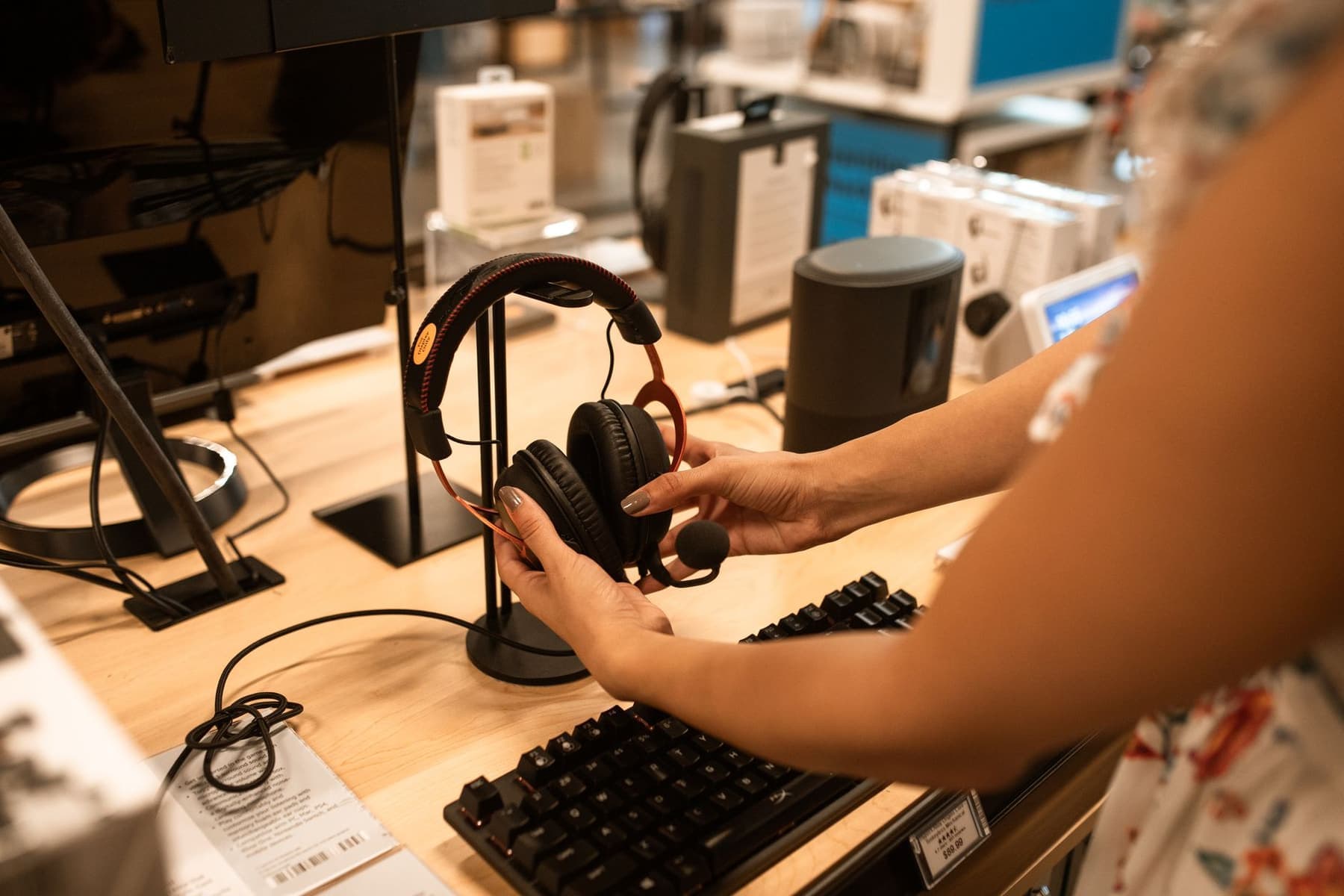
To choose noise-canceling headphones, work through six questions in order: what noise are you removing, over-ear or earbuds, how many hours do you need, how small must it pack, how long will you wear it in one sitting, and do you need a 3.5 mm cable. Low constant noise such as engine drone favors deep active canceling; voices and office chatter favor a good physical seal instead.
Question one
What noise are you actually removing?
This is the only question that matters, and almost nobody asks it first. Active canceling works by sampling incoming sound and playing an inverted copy of it. That only works on sound the processor can predict, which means long, repeating, low-frequency waves.
Canceling is excellent at
- Jet engine and airflow drone at cruise
- Train and bus rumble
- Road traffic as a continuous wash
- Building plant: air handling, a compressor, a fridge
Canceling is poor at
- Speech, which is irregular and higher in the range
- A crying child, for the same reason
- Keyboards, cutlery, doors — short transients
- Footsteps overhead, which are impact noise through structure
If your list is mostly in the second group, the thing that will help you is a good physical seal plus something to listen to, not a deeper canceling chip. Active canceling vs passive isolation is the full version of that argument.
Buy canceling for drone. Buy a good seal for voices. Most disappointed buyers bought the first thing for the second problem.
Question two
Over-ear or earbuds?
Over-ear gives you more battery, better long-session comfort because the weight sits on your head rather than in your canal, and usually deeper canceling. Earbuds give you a product that disappears into a pocket, works lying on your side, and does not make your ears hot.
The deciding factor is rarely sound. It is whether you will carry it and whether you will lie down in it. Earbuds vs over-ear for flying works through the trade in detail.
Question three
How many hours do you really need?
Compare rated battery against door-to-door time, not against the length of the activity. A ten-hour flight is a 20-hour day once you count the drive, the wait, the layover and the evening at the other end.
Two further details catch people out. The headline figure on a box is often the canceling-off number, which is not how you will use it. And rated figures are measured at a moderate volume with a fresh battery — in the cold, at high volume, on a three-year-old cell, expect less. Headphone battery life for long-haul flights has the arithmetic.
Question four
How small does it have to pack?
The question that decides whether you own a travel headphone or own a headphone you leave at home. Measure the case, not the headphone: a rigid case is correct for the hinge and is also the thing that eats space in a personal item.
Folding designs vary more than you would expect — some fold at the hinge into a compact block, some only rotate the cups flat, and some do neither. Best foldable noise-canceling headphones ranks that specifically.
Question five
How long will you wear it in one sitting?
Under an hour and comfort barely discriminates between products. Past three hours it becomes the only thing you care about, and it is decided by clamp force, pad depth, weight and pad heat — three of which no manufacturer publishes.
Weight is the usable proxy: lighter headphones need less grip to stay put. The practical band for a canceling over-ear is roughly 250 g to 300 g, with anything near 390 g noticeably heavier. The lightest canceling headphones lists the published figures, and the comfort ranking weighs pads and clamp above the gram count.
Question six
Do you need a cable?
Yes, if any of these apply: you watch in-flight entertainment, you use an older desk setup, you want a fallback when the battery dies, or you want to avoid Bluetooth latency when watching video. A 3.5 mm socket costs nothing and several premium headphones now omit it, or include the socket and omit the cable.
Two specifics worth knowing: lag between picture and sound over Bluetooth is a real problem on a seatback screen, covered in Bluetooth audio latency on a plane, and a transmitter is the workaround when there is no socket at all.
Ignore these
Three claims that tell you nothing
| The claim | What it really means |
|---|---|
| "Up to 50 dB of noise cancellation" | A peak reduction at one favorable frequency, not a flat figure. No canceling product carries a certified rating; only hearing protection does. |
| "Hi-Res Audio" / codec badges | Only useful if your phone speaks the same codec, and inaudible against cabin noise in any case. |
| Driver diameter | A bigger driver is not a better driver. Tuning and the seal decide what you hear. |
| Frequency response range | Published ranges extend far beyond human hearing and say nothing about how a headphone sounds. |
The figures worth comparing are the dull ones: rated hours in the mode you will use, published weight, whether it folds, what is in the box, and whether the pads are replaceable. For how this site weighs them, see our methodology.
What to look for
The checklist, and which to buy
- Match the technology to the noise. Drone and rumble means active canceling. Voices means a sealing design plus masking audio.
- Read the canceling-on battery figure. It is the one that describes your actual use, and it is rarely the number on the front of the box.
- Check what cable is supplied, not just whether there is a socket.
- Use published weight as your comfort proxy and then read owner reports of that specific model for clamp and pad heat.
- Confirm the pads are replaceable. They are the first part to wear out and the cheapest to renew.
The four picks below map onto the four most common answers: one for people who want a single safe choice, one for deep low-frequency noise, one for anyone whose answer is earbuds, and one for a budget that is the binding constraint.
In short
Key takeaways
- Start with the noise. Canceling handles steady low frequencies; a physical seal handles voices.
- Decide over-ear or earbuds on whether you will carry it and whether you will lie down in it.
- Compare rated hours against door-to-door time, using the canceling-on figure.
- Measure the case, not the headphone, if packing space is a constraint.
- Weight is the only published comfort spec. Clamp, pad depth and heat are not published at all.
- Ignore dB reduction claims, codec badges and driver diameter when comparing products.
At a glance
Quick picks
Scores are our editorial judgment from published specifications and cited third-party measurements, not our own testing. The rubric is published in full. Tap any row for the full write-up.
| # | Product | Best for | Score | Price |
|---|---|---|---|---|
| 1 | 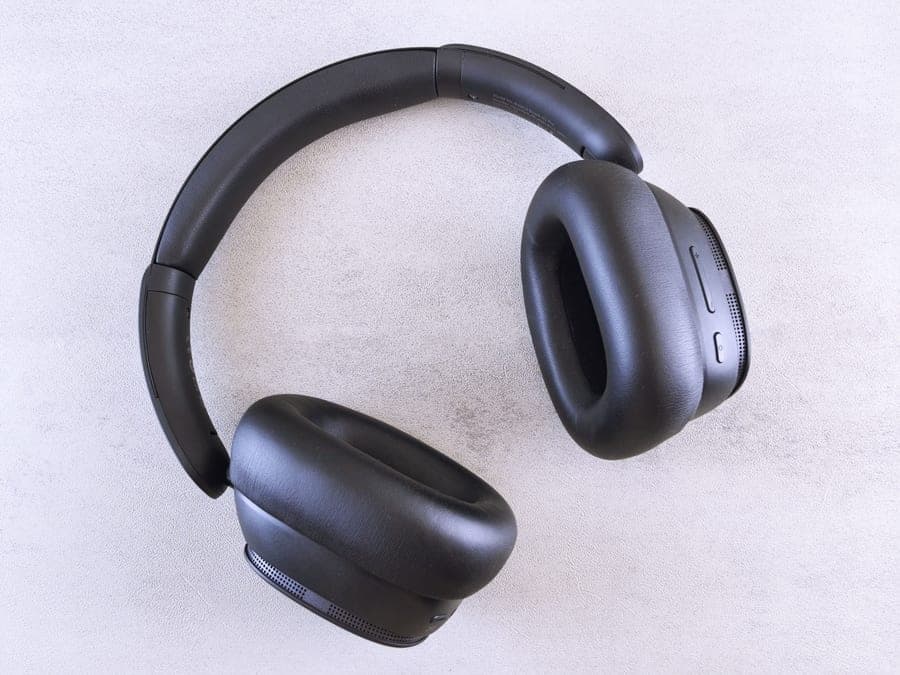 Sony WH-1000XM6The most complete travel headphone on sale: 254 g, 30 rated hours with noise canceling on, and it folds into a case small enough to stop being a decision. | If you want one decision, not six | 9.19.1 out of 10, our editorial score | |
| 2 | 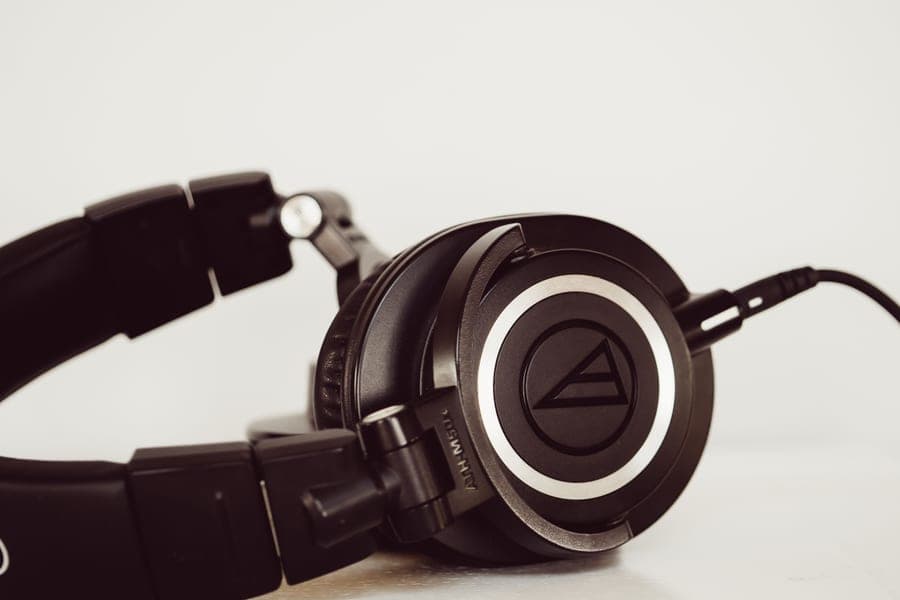 Bose QuietComfort Ultra Headphones (2nd Gen)The quietest cabin of anything here, and the only over-ear in this group whose box already contains the audio cable a seatback screen needs. | If the noise is low and constant | 9.09.0 out of 10, our editorial score | |
| 3 | 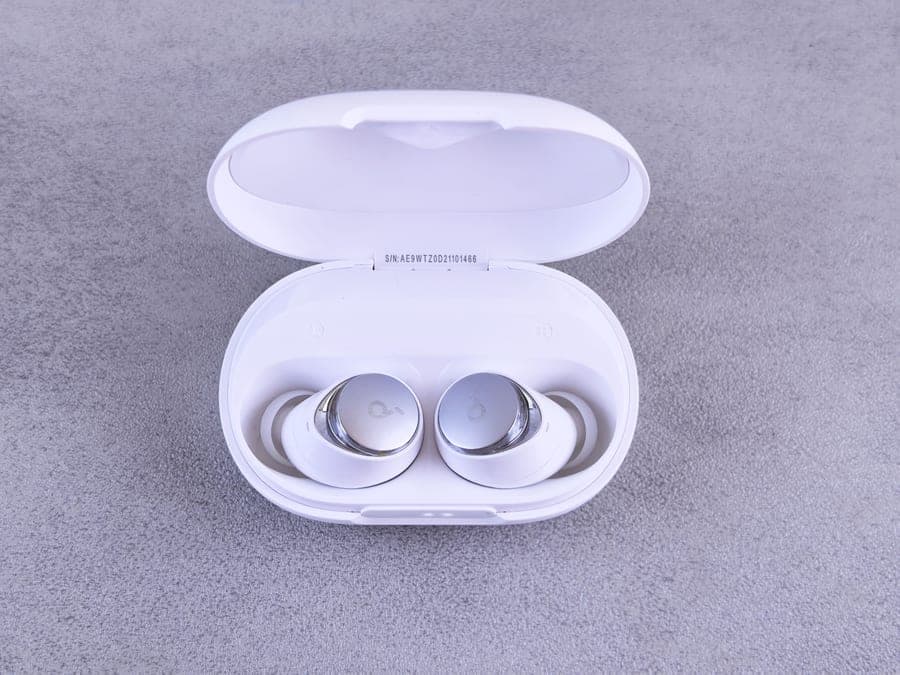 Sony WF-1000XM6Eight rated hours per bud and 24 with the case, at roughly 6.5 g each. The most sensible premium earbud for a flight, because you never have to plan around the battery. | If the answer to question two is earbuds | 8.98.9 out of 10, our editorial score | |
| 4 | 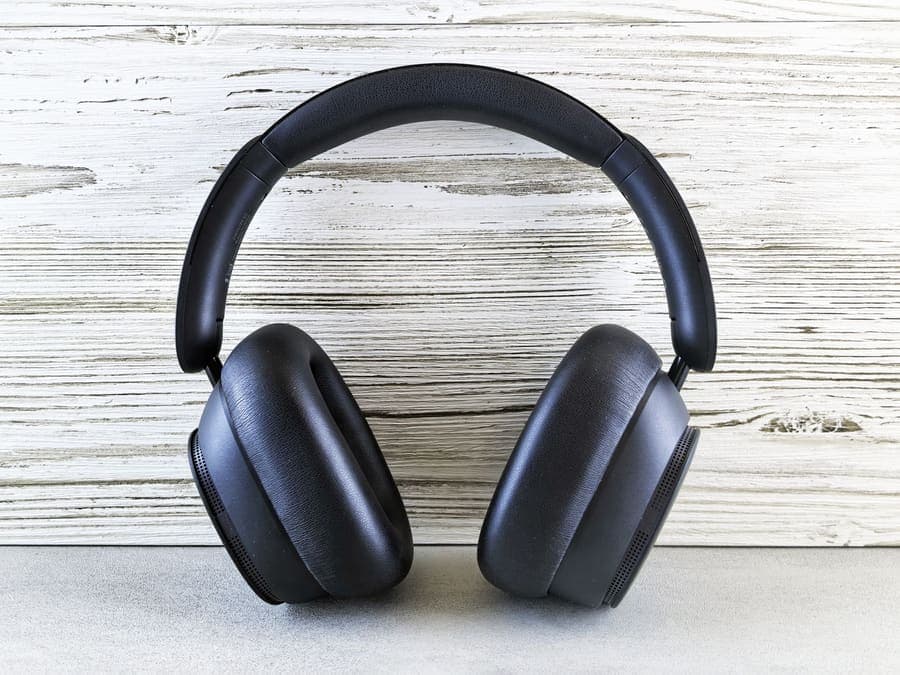 Soundcore Space OneA $99.99 list price that buys 40 rated hours with canceling on, LDAC, 40 mm drivers, a folding hinge and an aux cable. The specification sheet at this level is genuinely hard to argue with. | If the budget is the real constraint | 8.58.5 out of 10, our editorial score |
#ad Amazon links are affiliate links. No live price is shown anywhere on this site, so every button reads “Check price on Amazon”. How this is funded.
The picks in full
Every pick, in detail
1. If you want one decision, not six
Sony WH-1000XM6
The most complete travel headphone on sale: 254 g, 30 rated hours with noise canceling on, and it folds into a case small enough to stop being a decision.
Our editorial score: 9.1 / 10
#ad Live price not shown. How this is funded
Also sold direct by Sony — we earn nothing there, so check both.
The default answer for someone who does not want to run the whole process. It is the only headphone on this site that does not lose badly on any single criterion: approximately 254 g, up to 30 rated hours with canceling on and 40 with it off, folds into a case, SBC, AAC, LDAC and LC3.
It wins the carry decision outright, which is the criterion most buyers under-weight and then regret. The 4 Hz to 40,000 Hz wired response covers the seatback-screen case, though Sony does not supply a cable.
What works on a plane
- Folds, which halves the space it takes in a personal item
- 254 g is light for a flagship over-ear, and weight is what you feel at hour four
- LDAC plus LC3 means it is not locked to one phone ecosystem
- 30 rated hours with noise canceling on covers almost any single routing
What does not
- You pay a flagship price for the last increment of noise canceling
- The folding hinge is one more mechanism to eventually wear out
- No airline two-prong adapter in the box
How it scores against the five travel axes
Published specifications
| Spec | Figure | Source |
|---|---|---|
| Weight | Approx. 254 g (9 oz) | Sony Help Guide specifications |
| Battery, NC on | Up to 30 hours | Sony specifications |
| Battery, NC off | Up to 40 hours | Sony specifications |
| Full charge | Approx. 3.5 hours | Sony Help Guide specifications |
| Bluetooth | 5.3 | Sony Help Guide specifications |
| Codecs | SBC, AAC, LDAC, LC3 | Sony Help Guide specifications |
| Wired response | 4 Hz - 40,000 Hz (IEC) | Sony Help Guide specifications |
| Folds | Yes, into a magnetic-closure case | Sony |
2. If the noise is low and constant
Bose QuietComfort Ultra Headphones (2nd Gen)
The quietest cabin of anything here, and the only over-ear in this group whose box already contains the audio cable a seatback screen needs.
Our editorial score: 9.0 / 10
#ad Live price not shown. How this is funded
Also sold direct by Bose — we earn nothing there, so check both.
Choose this if your answer to question one is engine drone, train rumble or building plant. The low-frequency reduction is the deepest here, and that is the band those noises occupy.
Up to 30 rated hours with canceling on, 23 with Immersive Audio, up to 45 with canceling off, approximately 264 g as reported, earcups that rotate flat into a hard case, and a 2.5 mm-to-3.5 mm cable in the box.
What works on a plane
- The best low-frequency canceling in this group, which is exactly the band engine drone lives in
- The 2.5 mm-to-3.5 mm cable is in the box, so a seatback screen needs nothing extra
- Compact hard case for a full-size over-ear
- Up to 45 hours with canceling off, if you only want isolation on a train
What does not
- Immersive Audio costs you a third of the battery, dropping to 23 rated hours
- Heavier than the Sony by roughly 10 g, and clamp is firmer out of the box
- The hard case is compact but still rigid, so it will not squash into a full bag
How it scores against the five travel axes
Published specifications
| Spec | Figure | Source |
|---|---|---|
| Battery, ANC on | Up to 30 hours | Bose |
| Battery, ANC off | Up to 45 hours | Bose |
| Battery, Immersive Audio on | Up to 23 hours | Bose |
| Weight | Approx. 264 g (9.3 oz) as reported | Published reviews |
| USB-C audio | 16-bit, 44.1 or 48 kHz lossless input | Bose support |
| In the box | Hard case, USB-C cable, 2.5 mm-to-3.5 mm audio cable | Bose |
| Folds | Earcups rotate flat into a compact hard case | Bose |
Read the full Bose QuietComfort Ultra Headphones (2nd Gen) review
3. If the answer to question two is earbuds
Sony WF-1000XM6
Eight rated hours per bud and 24 with the case, at roughly 6.5 g each. The most sensible premium earbud for a flight, because you never have to plan around the battery.
Our editorial score: 8.9 / 10
#ad Live price not shown. How this is funded
Also sold direct by Sony — we earn nothing there, so check both.
The pick when space, side-sleeping or simply not wanting something on your head decides it. Approximately 6.5 g per bud with the medium tips, up to 8 rated hours per bud and 24 with the case.
The HD Noise Canceling Processor QN3e, dual processors and eight microphones, with SBC, AAC, LDAC and LC3. The one criterion it fails is wired fallback: there is no socket, so a seatback screen needs a transmitter.
What works on a plane
- Eight rated hours per charge clears most short-haul flights without touching the case
- 24 hours total with the case is the strongest reserve in the premium earbud set
- LDAC means it is not tied to one phone platform
- Roughly 6.5 g per bud effectively disappears when you are trying to sleep on your side
What does not
- Canceling is excellent but the Bose still takes the low-frequency band
- No wired fallback at all, so a seatback screen needs a transmitter
- IPX4 is splash resistance, not weather resistance
How it scores against the five travel axes
Published specifications
| Spec | Figure | Source |
|---|---|---|
| Battery, earbuds | Up to 8 hours | Sony |
| Total with case | Up to 24 hours (16 from the case) | Sony |
| Weight | Approx. 6.5 g per bud with M tips | Sony |
| Driver | 8.4 mm | Sony |
| Bluetooth | 5.3 | Sony |
| Codecs | SBC, AAC, LDAC, LC3 | Sony |
| Water resistance | IPX4 | Sony |
| Processor | HD Noise Canceling Processor QN3e, dual processors, eight microphones | Sony |
4. If the budget is the real constraint
Soundcore Space One
A $99.99 list price that buys 40 rated hours with canceling on, LDAC, 40 mm drivers, a folding hinge and an aux cable. The specification sheet at this level is genuinely hard to argue with.
Our editorial score: 8.5 / 10
#ad Live price not shown. How this is funded
Also sold direct by Soundcore — we earn nothing there, so check both.
$99.99 at the time of writing, 265 g, up to 40 rated hours with canceling on and 55 in normal mode, five minutes of charge for four hours, 40 mm drivers, LDAC, and it folds.
It answers four of the six questions as well as a flagship. Where it loses is canceling depth at the very bottom of the range and pad quality at hour four — both real, neither worth four times the money unless you fly often.
What works on a plane
- 40 rated hours with canceling on, from a headphone listed at $99.99
- LDAC at this price is unusual, and it is the codec Android users actually want
- Folds and ships with an aux cable, so the seatback screen is covered
- 265 g is not heavy, and the pouch means it travels without a hard case
What does not
- The 98 percent noise-reduction claim is marketing, not a published measurement
- A pouch is not a hard case, so it needs care in a crushed bag
- Pads are the first thing that gives at this price, well before the electronics
How it scores against the five travel axes
Published specifications
| Spec | Figure | Source |
|---|---|---|
| List price | $99.99 at the time of writing | Soundcore |
| Battery, ANC on | Up to 40 hours | Soundcore |
| Battery, normal mode | Up to 55 hours | Soundcore |
| Quick charge | 5 minutes for 4 hours | Soundcore |
| Weight | 265 g (9.35 oz) | Soundcore |
| Drivers | 40 mm | Soundcore |
| Codecs | LDAC | Soundcore |
| Folds | Yes, ear cups rotate and fold | Soundcore |
| In the box | Travel pouch and aux cable | Soundcore |
Questions
Common questions
How do I choose noise-canceling headphones?
Work through six questions in order: the noise you want removed, over-ear or earbuds, hours needed, packed size, single-sitting comfort, and whether you need a 3.5 mm cable. The first question decides most of the rest — steady low-frequency noise favors deep active canceling, while voices favor a good seal.
What specifications actually matter on noise-canceling headphones?
Rated battery with canceling switched on, published weight, whether it folds and how large the case is, what cable is in the box, and whether the ear pads are replaceable. Those five decide how the product feels to own.
Is a higher dB noise cancellation number better?
Not reliably. A figure like “up to 50 dB” is a peak at a favorable frequency rather than a flat reduction, and it is not certified by anyone. Only hearing protection carries a certified Noise Reduction Rating.
How much should I spend on noise-canceling headphones?
About $100 buys canceling that genuinely works, long battery and a folding design. Going to flagship money buys the last few decibels at the bottom of the frequency range plus better pads. If you fly often, that is worth it; if you ride a bus, it usually is not.
Do I need a 3.5 mm cable with wireless headphones?
You do if you watch in-flight entertainment, use older equipment, or want a fallback when the battery dies. Check whether a cable is actually supplied: several premium models include the socket and leave the cable out of the box.
Sources
Where these figures come from
- Sony WH-1000XM6 Help Guide specifications (weight, battery, codecs, wired response)
- Bose QuietComfort Ultra Headphones (2nd Gen) product page (battery, in the box)
- Sony WF-1000XM6 specifications (battery, weight per bud, processor, codecs)
- Soundcore Space One product page (list price $99.99, battery, folding, drivers)
Read next
Related reading
- Active canceling vs passive isolation
Question one in full: which technology handles which noise.
- Best noise-canceling headphones for flights
The ranked answer if flying is why you are shopping.
- The comfiest wireless headphones
Question five, with the specs nobody publishes explained.
- Are noise-canceling headphones worth it for flying?
The step before choosing one: whether to buy at all.