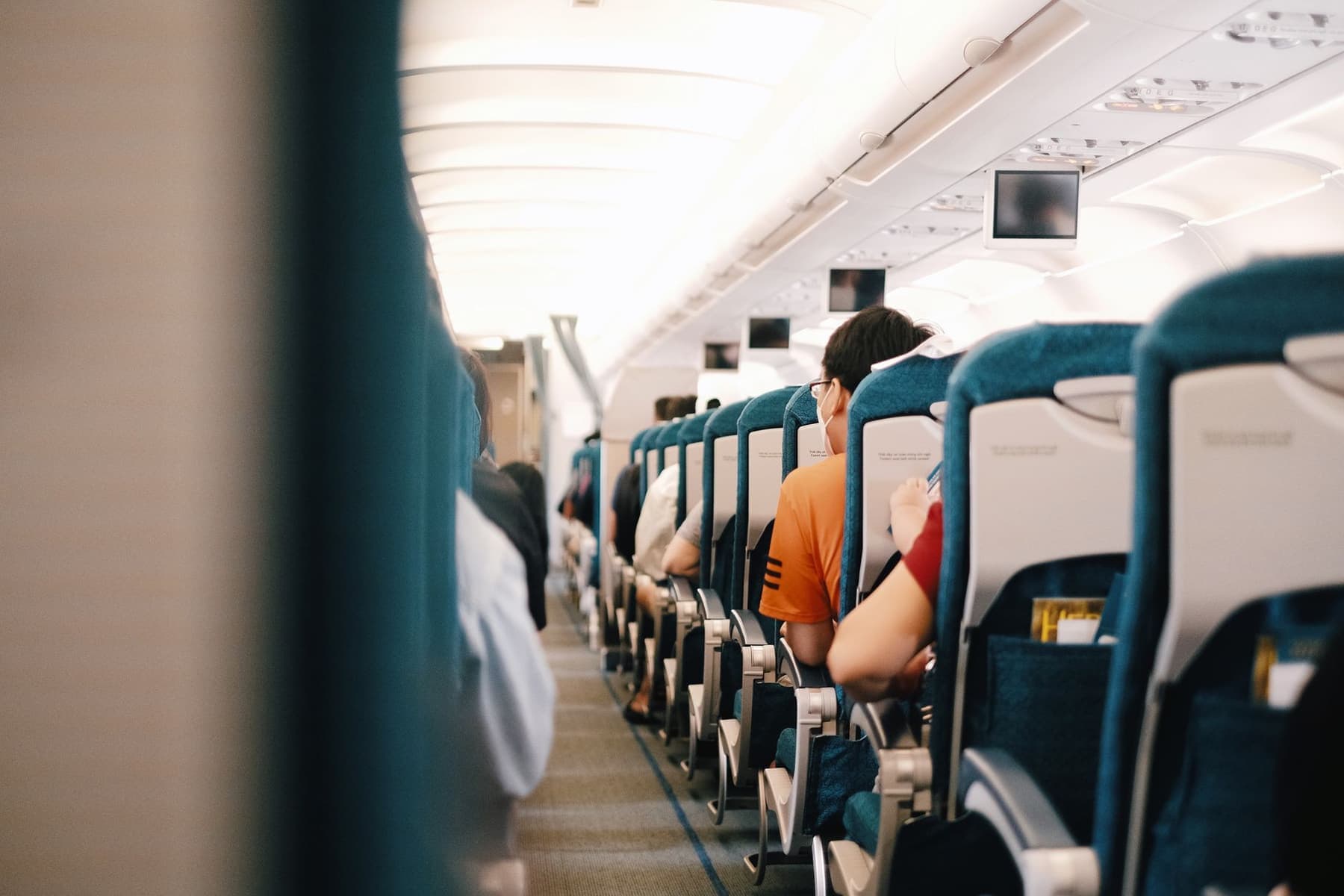
Yes, for most people who fly more than once or twice a year. Active canceling targets the steady low-frequency engine drone that dominates a cabin, which is the one kind of noise it is genuinely good at, and the effect is dramatic rather than subtle. The threshold where it stops being a compromise is around $100: the Soundcore Space One lists at $99.99 with up to 40 rated hours. Above that you are buying weight, packed size and the last increment of quiet, not the basic benefit.
Why it works on a plane
A cabin is the ideal case for this technology
Active canceling works by sampling the noise around you and generating an inverted waveform to cancel it. That calculation is only reliable when the noise is steady and predictable, which is why canceling is excellent against a jet engine and poor against a conversation.
A cruising cabin is about as good as it gets: a continuous low-frequency rush that barely changes for hours. The noise sits in the band the processor handles best, it does not surprise the system, and it is loud enough that removing it is immediately obvious rather than a subtle improvement. If you have only ever tried canceling in a quiet room, you have not seen what it does. How noise canceling works on a plane covers the mechanism properly.
This is the one environment the technology was really designed for. Everywhere else it is a compromise; in a cabin it is the intended use.
The second benefit
The benefit that is hard to market
The obvious value is that the plane gets quieter. The less obvious one is that you arrive less wrung out. Sitting in continuous loud noise for nine hours is tiring in a way that is difficult to notice while it is happening and very easy to notice when it stops.
There is a second-order effect too. With the drone gone you listen to music and dialogue at a much lower volume, because you are no longer competing with the background. That is better for your ears than turning a cheap headphone up, which is the alternative most people default to — and it is the strongest version of the case for buying these. Are noise-canceling headphones bad for your ears handles that question directly.
What it does not do
Four things the money does not buy
- It does not remove people. Speech is irregular and higher in frequency than canceling handles well. A crying baby two rows back will still reach you, and no amount of money changes that.
- It does not help with ear pressure. A common and entirely reasonable assumption, and it is wrong — the cabin pressure page explains why.
- It does not get you the in-flight movie. Most seatback systems are a 3.5 mm socket, so a Bluetooth headphone needs either a cable, an adapter or a transmitter. On several flagships the cable is not in the box.
- It is not hearing protection. There is no certified Noise Reduction Rating on any canceling headphone. That matters nowhere on a plane, and a great deal around power tools — see noise canceling versus earplugs.
The money
What each price band actually changes
| Spend | What you get | What you give up |
|---|---|---|
| Under $50 | A wired headphone with a decent seal | Canceling entirely. The honest answer at this price is wired |
| About $100 | Real drone reduction, 40 rated hours, a fold, an aux cable | Pad materials, a hard case, and canceling that holds steady when noise changes |
| About $200 | Better pads and steadier canceling | Long-session comfort against the top of the range |
| $300 and up | The last increment of quiet, lower weight, a smaller folded block | Roughly three times the money for the final 10 to 20 percent |
Every price above is the manufacturer’s own list price at the time of writing, read off their product page and cited below. We publish no street prices at all, because this site has no verified live retailer feed and a number written once is wrong within weeks.
Who should not buy
Two buyers for whom the answer is no
You fly once a year, on short hops
A 90-minute flight twice a year does not justify the purchase on its own. If you want something for the trip, a cheap wired in-ear with a good tip seal costs a fraction as much and solves most of what you will notice on a short leg.
You cannot wear the thing comfortably
Some people get a pressure sensation from active canceling that ranges from odd to unpleasant. It is real, it does not go away with practice for everyone, and it makes the whole category the wrong purchase. If that is you, passive isolation from a well-sealed in-ear does a meaningful amount of work with none of the sensation — and the ceiling on how much is in active canceling versus passive isolation.
What to look for
If the answer is yes, judge it on four things
- Rated battery with canceling on. Not the headline figure, the canceling-on figure. Anything from 30 hours upward stops you planning around it.
- Whether it folds, and what case it ships in. Packed size is the difference between taking it and leaving it. A fold-up beats a fold-flat for a personal item.
- Whether the audio cable is in the box. Several flagships omit it, and one does not even have a socket. That turns the seatback screen into a separate purchase.
- Weight. The one number that predicts how hour four feels. Under about 270 g is comfortable territory; above roughly 350 g you will know about it.
In short
Key takeaways
- Yes for most people who fly more than once or twice a year. A cabin is the ideal case for this technology.
- The threshold where it stops being a compromise is about $100 — the Soundcore Space One lists at $99.99 with up to 40 rated hours.
- Above $100 you are buying weight, packed size and the last increment of quiet, not the core benefit.
- It does not remove speech, does not help with ear pressure, and is not certified hearing protection.
- A real second benefit: you listen at a lower volume because you are not competing with the drone.
- Say no if you fly once a year on short hops, or if the canceling pressure sensation bothers you.
At a glance
Quick picks
Scores are our editorial judgment from published specifications and cited third-party measurements, not our own testing. The rubric is published in full. Tap any row for the full write-up.
| # | Product | Best for | Score | Price |
|---|---|---|---|---|
| 1 | 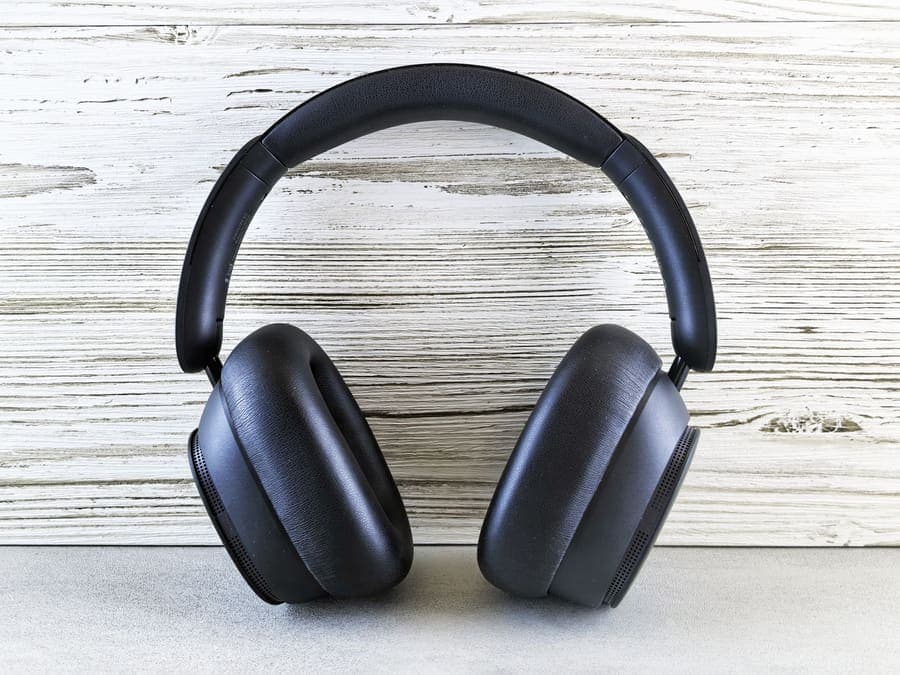 Soundcore Space OneA $99.99 list price that buys 40 rated hours with canceling on, LDAC, 40 mm drivers, a folding hinge and an aux cable. The specification sheet at this level is genuinely hard to argue with. | Where the answer becomes yes | 8.58.5 out of 10, our editorial score | |
| 2 | 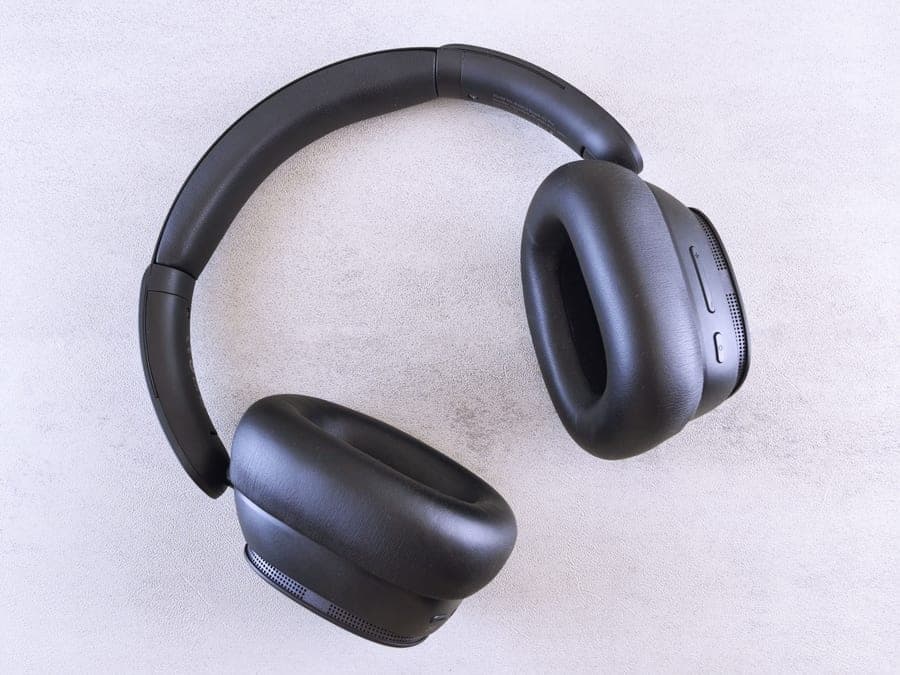 Sony WH-1000XM6The most complete travel headphone on sale: 254 g, 30 rated hours with noise canceling on, and it folds into a case small enough to stop being a decision. | If you fly several times a year | 9.19.1 out of 10, our editorial score | |
| 3 | 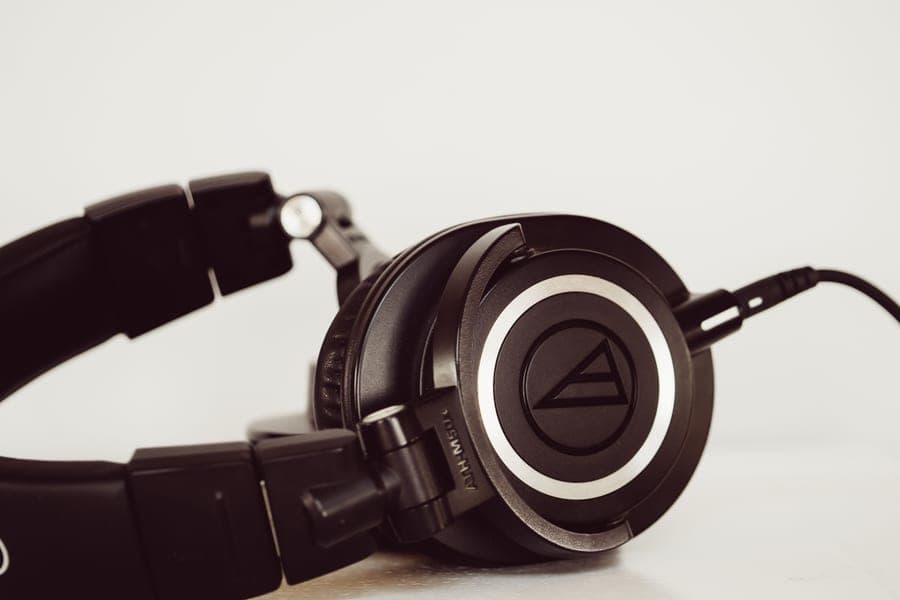 Bose QuietComfort Ultra Headphones (2nd Gen)The quietest cabin of anything here, and the only over-ear in this group whose box already contains the audio cable a seatback screen needs. | If silence is the point | 9.09.0 out of 10, our editorial score | |
| 4 | 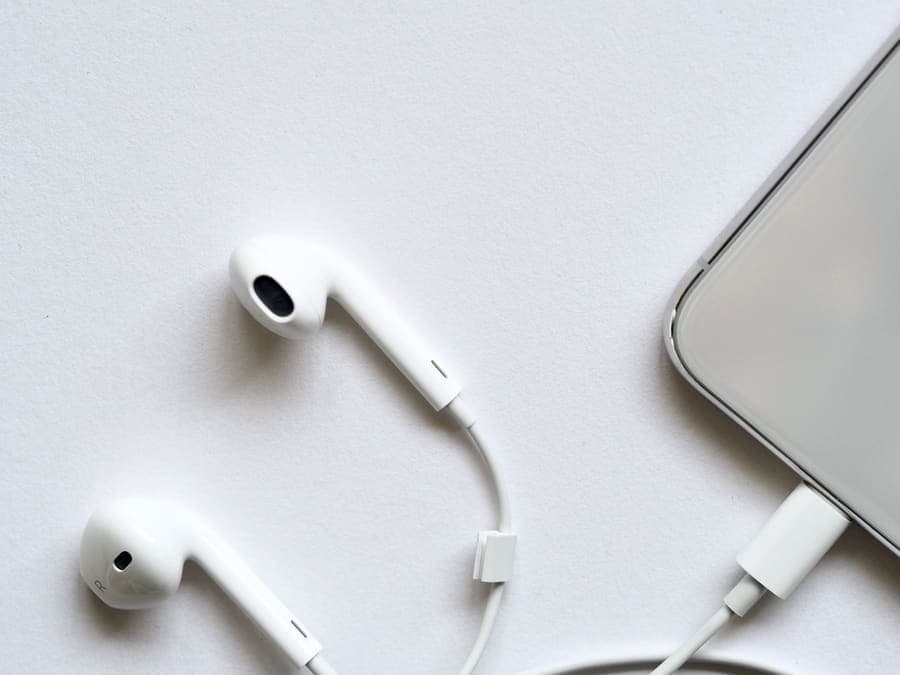 Sennheiser IE 200A wired in-ear monitor with a published specification sheet rather than a marketing number: 4 g per side, a 7 mm dynamic driver and tips you can mount two ways to change the bass. | If the answer for you is no | 8.78.7 out of 10, our editorial score |
#ad Amazon links are affiliate links. No live price is shown anywhere on this site, so every button reads “Check price on Amazon”. How this is funded.
The picks in full
Every pick, in detail
1. Where the answer becomes yes
Soundcore Space One
A $99.99 list price that buys 40 rated hours with canceling on, LDAC, 40 mm drivers, a folding hinge and an aux cable. The specification sheet at this level is genuinely hard to argue with.
Our editorial score: 8.5 / 10
#ad Live price not shown. How this is funded
Also sold direct by Soundcore — we earn nothing there, so check both.
The cheapest point at which we would say “yes, worth it” without qualifying it. Soundcore lists it at $99.99 with up to 40 rated hours with canceling on, 40 mm drivers, LDAC, 265 g, a folding hinge, and a travel pouch plus an aux cable in the box.
For a once- or twice-a-year flyer this is the whole answer, and the remaining few hundred dollars is genuinely optional rather than a compromise you are talking yourself into.
The 98 percent noise-reduction claim is Soundcore’s marketing rather than a published measurement, the pouch is not a hard case, and pads are the first thing that gives at this price. All three are real, and none of them stops this being the sensible purchase.
What works on a plane
- 40 rated hours with canceling on, from a headphone listed at $99.99
- LDAC at this price is unusual, and it is the codec Android users actually want
- Folds and ships with an aux cable, so the seatback screen is covered
- 265 g is not heavy, and the pouch means it travels without a hard case
What does not
- The 98 percent noise-reduction claim is marketing, not a published measurement
- A pouch is not a hard case, so it needs care in a crushed bag
- Pads are the first thing that gives at this price, well before the electronics
How it scores against the five travel axes
Published specifications
| Spec | Figure | Source |
|---|---|---|
| List price | $99.99 at the time of writing | Soundcore |
| Battery, ANC on | Up to 40 hours | Soundcore |
| Battery, normal mode | Up to 55 hours | Soundcore |
| Quick charge | 5 minutes for 4 hours | Soundcore |
| Weight | 265 g (9.35 oz) | Soundcore |
| Drivers | 40 mm | Soundcore |
| Codecs | LDAC | Soundcore |
| Folds | Yes, ear cups rotate and fold | Soundcore |
| In the box | Travel pouch and aux cable | Soundcore |
2. If you fly several times a year
Sony WH-1000XM6
The most complete travel headphone on sale: 254 g, 30 rated hours with noise canceling on, and it folds into a case small enough to stop being a decision.
Our editorial score: 9.1 / 10
#ad Live price not shown. How this is funded
Also sold direct by Sony — we earn nothing there, so check both.
Where the flagship premium starts to repay itself: approximately 254 g, up to 30 rated hours with canceling on, folds into a compact case, a 3.5 mm socket, and LDAC plus LC3 so it is not tied to one phone.
The specific things the extra money buys are weight and packed size — the two variables you feel on every single trip rather than only on a long one. 254 g is light for a flagship, and that is what hour four feels like.
You are paying a flagship price for the last increment of canceling, and the folding hinge is one more mechanism that can eventually wear out.
What works on a plane
- Folds, which halves the space it takes in a personal item
- 254 g is light for a flagship over-ear, and weight is what you feel at hour four
- LDAC plus LC3 means it is not locked to one phone ecosystem
- 30 rated hours with noise canceling on covers almost any single routing
What does not
- You pay a flagship price for the last increment of noise canceling
- The folding hinge is one more mechanism to eventually wear out
- No airline two-prong adapter in the box
How it scores against the five travel axes
Published specifications
| Spec | Figure | Source |
|---|---|---|
| Weight | Approx. 254 g (9 oz) | Sony Help Guide specifications |
| Battery, NC on | Up to 30 hours | Sony specifications |
| Battery, NC off | Up to 40 hours | Sony specifications |
| Full charge | Approx. 3.5 hours | Sony Help Guide specifications |
| Bluetooth | 5.3 | Sony Help Guide specifications |
| Codecs | SBC, AAC, LDAC, LC3 | Sony Help Guide specifications |
| Wired response | 4 Hz - 40,000 Hz (IEC) | Sony Help Guide specifications |
| Folds | Yes, into a magnetic-closure case | Sony |
3. If silence is the point
Bose QuietComfort Ultra Headphones (2nd Gen)
The quietest cabin of anything here, and the only over-ear in this group whose box already contains the audio cable a seatback screen needs.
Our editorial score: 9.0 / 10
#ad Live price not shown. How this is funded
Also sold direct by Bose — we earn nothing there, so check both.
The pick when the honest answer to “why am I buying these” is to make the cabin stop. Bose takes the deepest part of the low band, which is exactly where engine drone sits, and nothing here is quieter.
Up to 30 rated hours with canceling on, up to 45 with it off, and the 2.5 mm-to-3.5 mm audio cable is already in the box — so the seatback screen needs nothing extra, which the Sony cannot say.
Immersive Audio costs you a third of the battery at 23 rated hours, the clamp is firmer out of the box, and the hard case will not squash into a full bag.
What works on a plane
- The best low-frequency canceling in this group, which is exactly the band engine drone lives in
- The 2.5 mm-to-3.5 mm cable is in the box, so a seatback screen needs nothing extra
- Compact hard case for a full-size over-ear
- Up to 45 hours with canceling off, if you only want isolation on a train
What does not
- Immersive Audio costs you a third of the battery, dropping to 23 rated hours
- Heavier than the Sony by roughly 10 g, and clamp is firmer out of the box
- The hard case is compact but still rigid, so it will not squash into a full bag
How it scores against the five travel axes
Published specifications
| Spec | Figure | Source |
|---|---|---|
| Battery, ANC on | Up to 30 hours | Bose |
| Battery, ANC off | Up to 45 hours | Bose |
| Battery, Immersive Audio on | Up to 23 hours | Bose |
| Weight | Approx. 264 g (9.3 oz) as reported | Published reviews |
| USB-C audio | 16-bit, 44.1 or 48 kHz lossless input | Bose support |
| In the box | Hard case, USB-C cable, 2.5 mm-to-3.5 mm audio cable | Bose |
| Folds | Earcups rotate flat into a compact hard case | Bose |
Read the full Bose QuietComfort Ultra Headphones (2nd Gen) review
4. If the answer for you is no
Sennheiser IE 200
A wired in-ear monitor with a published specification sheet rather than a marketing number: 4 g per side, a 7 mm dynamic driver and tips you can mount two ways to change the bass.
Our editorial score: 8.7 / 10
#ad Live price not shown. How this is funded
Also sold direct by Sennheiser — we earn nothing there, so check both.
The pick for the person this page has just talked out of canceling. A wired in-ear with an actual specification sheet: 6 Hz to 20,000 Hz, 16 ohms, 119 dB SPL at 1 kHz and 1 Vrms, total harmonic distortion under 0.08 percent, 4 g a side, listed at $159.95.
No battery to die, nothing to pair, and the 3.5 mm plug works directly with the airline jack, which no canceling headphone on this page manages without an extra purchase. Isolation comes entirely from the tip seal, which handles higher frequencies but not drone.
No canceling, no microphone, no Bluetooth. On a plane that is a real cost, and headphones versus IEMs argues it out in full.
What works on a plane
- A real specification sheet with distortion and impedance figures, which most earbuds never publish
- 4 g per side and no battery, so it never runs out and never degrades
- Detachable MMCX cable means a frayed cable is a repair rather than a replacement
- Two tip-mounting positions change the bass without an app or an EQ
What does not
- Wired, so there is a cable in your lap and no Bluetooth on a plane without an adapter
- No active noise canceling at all — isolation comes entirely from the tip seal
- No microphone on the stock cable, so it is not a call headset
How it scores against the five travel axes
Published specifications
| Spec | Figure | Source |
|---|---|---|
| Frequency response | 6 - 20,000 Hz | Sennheiser |
| Impedance | 16 ohm (18 ohm with cable) | Sennheiser |
| Sound pressure level | 119 dB (1 kHz, 1 Vrms) | Sennheiser |
| Distortion | THD < 0.08 % | Sennheiser |
| Transducer | 7 mm dynamic, closed | Sennheiser |
| Weight | 4 g | Sennheiser |
| Cable | 1.2 m braided, MMCX connectors, 3.5 mm angled plug | Sennheiser |
| List price | $159.95 at the time of writing | Sennheiser |
Questions
Common questions
Are noise-canceling headphones worth it for flying?
For most people who fly more than once or twice a year, yes. A cabin is steady low-frequency noise, which is the kind active canceling is genuinely good at, and the effect is dramatic rather than subtle. The threshold where it stops being a compromise is around $100.
How much do I need to spend on noise-canceling headphones?
About $100 gets you real drone reduction, a long rated battery, a folding hinge and an aux cable — the Soundcore Space One is listed at $99.99 with up to 40 rated hours with canceling on. Above that you are paying for lower weight, a smaller folded size and the final 10 to 20 percent of quiet.
Are expensive noise-canceling headphones worth it?
It depends on hours of use. What the top of the range buys is the last increment of canceling depth, lower weight and pads that are still comfortable at hour five. If you fly long-haul monthly those are worth real money. If you fly twice a year they are not.
Are cheap noise-canceling headphones worth it?
Around $100, yes. Below about $70 the canceling tends to be a sticker rather than a feature, and the honest alternative is a wired headphone with a good seal — no battery, no processing, and the 3.5 mm plug works with the seatback screen directly.
Do noise-canceling headphones stop a crying baby on a plane?
No, not meaningfully. Canceling targets steady low-frequency noise; a baby is irregular and much higher in frequency. What reduces it is the physical seal of the pad or tip, plus something to listen to that masks what gets through.
Will noise-canceling headphones work with the in-flight entertainment screen?
Not by themselves. Most seatback systems use a 3.5 mm socket, so you need the audio cable, which some flagships do not include, or a Bluetooth transmitter plugged into the jack. One popular over-ear has no 3.5 mm socket at all.
Sources
Where these figures come from
- Soundcore Space One product page (list price $99.99, battery, weight, drivers, LDAC)
- Sony WH-1000XM6 Help Guide specifications (weight, codecs)
- Bose QuietComfort Ultra Headphones (2nd Gen) product page (battery, in the box)
- Sennheiser IE 200 specifications (list price $159.95, frequency response, distortion, weight)
Read next
Related reading
- How noise canceling works on a plane
The mechanism, and why a cabin is the ideal case for it.
- Active canceling vs passive isolation
What the electronics do, and what the seal does.
- Best headphones under $100
The ceiling where the answer here becomes yes.
- Best noise-canceling headphones for flights
The full ranked field, if you have decided to buy.
- Noise-canceling headphones vs earplugs
The cheaper alternative, and exactly where it wins.