
Active noise canceling works by measuring incoming sound with a microphone and playing an inverted copy of it, so the two waves cancel. It is unusually effective on a plane because cabin noise is dominated by continuous low-frequency energy in roughly the 50 to 300 Hz band — long wavelengths, highly predictable, which is the easiest case for the technology. It is much weaker against speech and sudden sounds, which sit higher and change too fast to model.
The mechanism
Inverting a wave, in about a millisecond
A sound wave is a pattern of pressure changes. If you produce a second wave whose pressure changes are exactly opposite — a peak where the first has a trough — the two sum to something close to nothing. That is destructive interference, and it is all active noise canceling does.
In practice a headphone has microphones on the outside of each earcup measuring the incoming noise, a processor computing the inverse, and the driver playing that inverse alongside your music. The whole loop has to happen faster than the sound takes to travel from the microphone to your eardrum.
Which is exactly where the limits come from.
Why planes are the good case
Three things make cabin noise easy to cancel
- It is low-frequency, so the wavelengths are long. A 100 Hz tone has a wavelength of roughly 3.4 meters. The processor has a comparatively enormous amount of time to compute and play the inverse before the wave arrives. A 4 kHz sound has a wavelength of about 8.5 cm, which leaves almost no margin.
- It is continuous. Engine and airflow noise does not stop or change character suddenly. The system can model it once and keep applying the model, rather than starting again every few milliseconds.
- It is loud enough to be worth removing. A cruising cabin sits at roughly 80 dB, and most of that energy is in the band being canceled. Remove it and the change is dramatic rather than subtle.
A plane is close to the ideal case for this technology. That is why noise canceling feels like magic at 35,000 feet and like a mild improvement in a cafe.
The limits
What it cannot remove, and why
| Sound | Frequency | Canceled? | What actually helps |
|---|---|---|---|
| Engine and airflow drone | roughly 50-300 Hz | Very well | The active system |
| Air conditioning hiss | Mid to high | Partly | The pad or tip seal |
| Conversation in the next row | roughly 500 Hz-4 kHz | Barely | The seal, plus audio |
| A crying child | Mid to high, deliberately piercing | Barely | The seal, plus audio |
| A door, a chime, a cart | Broadband transient | Almost not at all | Nothing much |
The pattern is consistent: the higher and the more sudden the sound, the less active canceling does, and the more the physical seal of the headphone is carrying. That division of labor is the single most useful thing to understand in this category, and it has its own guide.
Setting expectations
What it should feel like when you put them on
Not silence. What you should notice is that the pressure behind the sound disappears — a sensation people often describe as the cabin suddenly feeling further away. Speech in the next row is still audible, quieter. The cart still passes. What is gone is the thing you had stopped noticing, which is the thing that was making hour six feel like hour ten.
That last point is the real benefit and it is hard to market. Continuous low-frequency noise at 80 dB is measurably fatiguing even when you have adapted to it and stopped consciously hearing it. Removing it is why you arrive less wrecked, and it is a better reason to own these than the sound quality is.
Two practical consequences
What the physics means for how you buy and use them
Canceling works without music playing
The active system does not need an audio signal — it is measuring the outside and playing an inverse regardless. So you can wear noise-canceling headphones as pure ear protection on a flight, and that is both effective and the best thing you can do for your hearing, because you are not raising a volume to compete with the drone.
The seal is not optional
Active canceling handles the low band; the physical seal handles everything above it, and it also gives the active system a stable acoustic environment to work in. Anything that breaks the seal — spectacle arms, a wrong-sized ear tip, perished pads — costs you real performance. For earbuds that means tip selection matters more than the processor; for over-ears it means looking after the pads is genuine maintenance rather than cosmetics.
Where to go next
If you have the physics and want the products
For over-ears, start with best noise-canceling headphones for flights, which ranks the field on cabin-noise reduction alongside the four other things that decide a travel purchase. For earbuds, best noise-canceling earbuds for flights.
And if the question behind your question was whether you are allowed to use them during takeoff, the answer is yes — can you use noise-canceling headphones on a plane covers the rules.
In short
Key takeaways
- Active canceling plays an inverted copy of incoming sound so the two waves cancel.
- Cabin noise is low-frequency, continuous and loud — the three things that make it the easy case.
- A 100 Hz wave is roughly 3.4 m long, which gives the processor plenty of time. A 4 kHz wave gives almost none.
- Speech and sudden sounds are barely canceled. The physical seal handles those.
- Expect the pressure behind the sound to disappear, not silence.
- It works with no music playing, which is the best way to use it for your hearing.
At a glance
Quick picks
Scores are our editorial judgment from published specifications and cited third-party measurements, not our own testing. The rubric is published in full. Tap any row for the full write-up.
| # | Product | Best for | Score | Price |
|---|---|---|---|---|
| 1 | 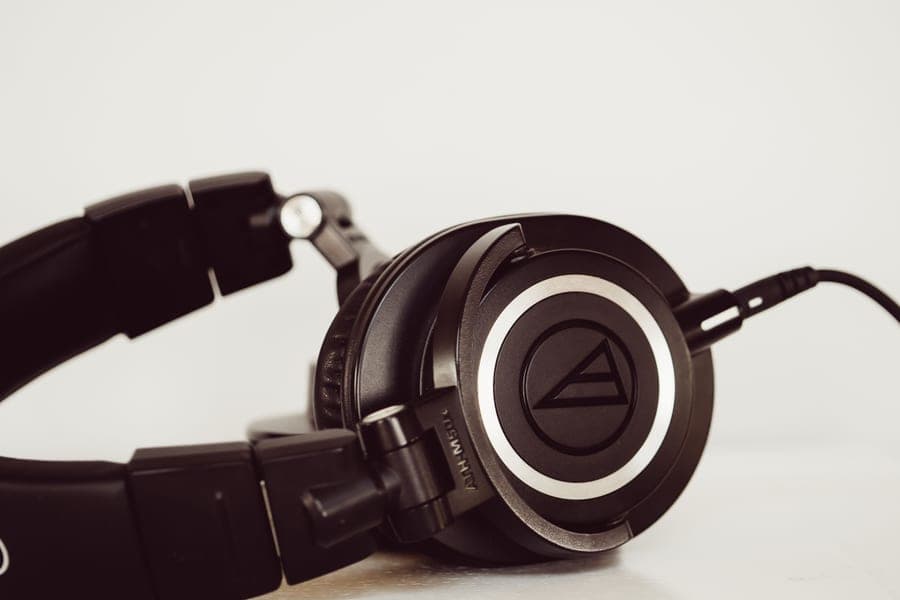 Bose QuietComfort Ultra Headphones (2nd Gen)The quietest cabin of anything here, and the only over-ear in this group whose box already contains the audio cable a seatback screen needs. | Best at the physics | 9.09.0 out of 10, our editorial score | |
| 2 | 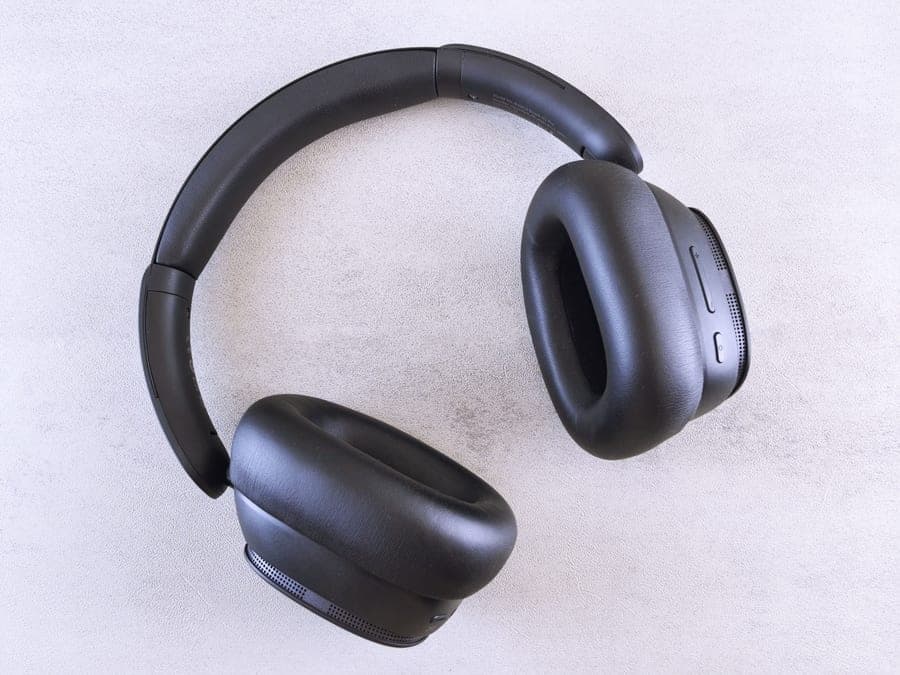 Sony WH-1000XM6The most complete travel headphone on sale: 254 g, 30 rated hours with noise canceling on, and it folds into a case small enough to stop being a decision. | Best all-round application of it | 9.19.1 out of 10, our editorial score | |
| 3 | 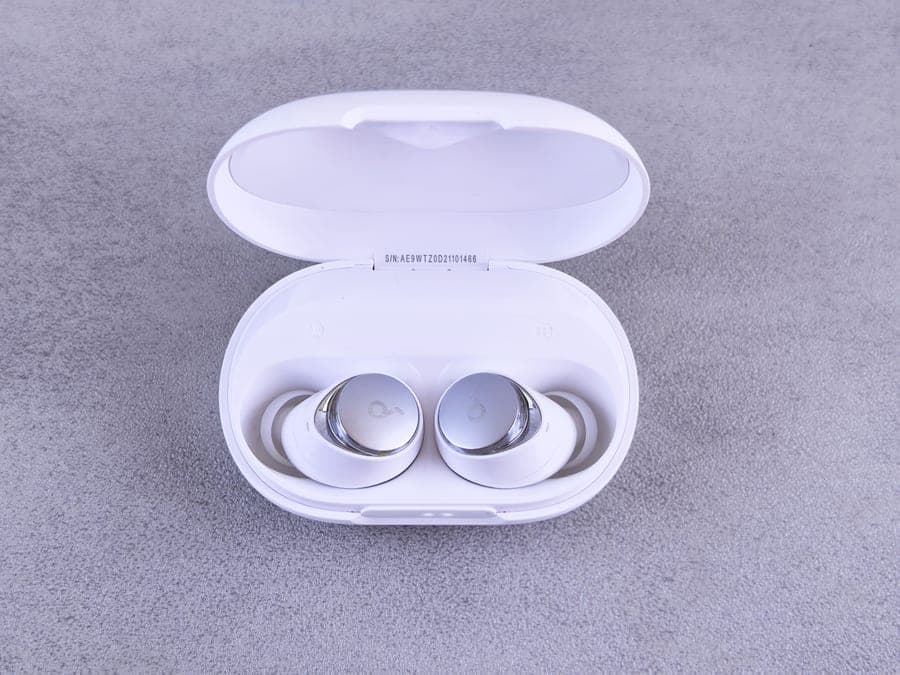 Sony WF-1000XM6Eight rated hours per bud and 24 with the case, at roughly 6.5 g each. The most sensible premium earbud for a flight, because you never have to plan around the battery. | The same physics, in an earbud | 8.98.9 out of 10, our editorial score |
#ad Amazon links are affiliate links. No live price is shown anywhere on this site, so every button reads “Check price on Amazon”. How this is funded.
The picks in full
Every pick, in detail
1. Best at the physics
Bose QuietComfort Ultra Headphones (2nd Gen)
The quietest cabin of anything here, and the only over-ear in this group whose box already contains the audio cable a seatback screen needs.
Our editorial score: 9.0 / 10
#ad Live price not shown. How this is funded
Also sold direct by Bose — we earn nothing there, so check both.
If the explanation above has convinced you that low-frequency canceling is the thing that matters on a plane, this is the product that does the most of it. Bose has been iterating on exactly this problem for longer than anyone.
Up to 30 rated hours with canceling on, and the 2.5 mm-to-3.5 mm cable in the case lid. Read the Immersive Audio figure carefully though: it drops the rating to 23 hours.
What works on a plane
- The best low-frequency canceling in this group, which is exactly the band engine drone lives in
- The 2.5 mm-to-3.5 mm cable is in the box, so a seatback screen needs nothing extra
- Compact hard case for a full-size over-ear
- Up to 45 hours with canceling off, if you only want isolation on a train
What does not
- Immersive Audio costs you a third of the battery, dropping to 23 rated hours
- Heavier than the Sony by roughly 10 g, and clamp is firmer out of the box
- The hard case is compact but still rigid, so it will not squash into a full bag
How it scores against the five travel axes
Published specifications
| Spec | Figure | Source |
|---|---|---|
| Battery, ANC on | Up to 30 hours | Bose |
| Battery, ANC off | Up to 45 hours | Bose |
| Battery, Immersive Audio on | Up to 23 hours | Bose |
| Weight | Approx. 264 g (9.3 oz) as reported | Published reviews |
| USB-C audio | 16-bit, 44.1 or 48 kHz lossless input | Bose support |
| In the box | Hard case, USB-C cable, 2.5 mm-to-3.5 mm audio cable | Bose |
| Folds | Earcups rotate flat into a compact hard case | Bose |
Read the full Bose QuietComfort Ultra Headphones (2nd Gen) review
2. Best all-round application of it
Sony WH-1000XM6
The most complete travel headphone on sale: 254 g, 30 rated hours with noise canceling on, and it folds into a case small enough to stop being a decision.
Our editorial score: 9.1 / 10
#ad Live price not shown. How this is funded
Also sold direct by Sony — we earn nothing there, so check both.
Within a hair of the Bose on the physics, and better at everything around it: approximately 254 g, it folds up, 30 rated hours with no mode caveat, and a 3.5 mm socket.
The dual processors and eight-microphone array matter for the part of the explanation about adaptive behavior — a system that settles on a changing noise profile rather than hunting for it.
What works on a plane
- Folds, which halves the space it takes in a personal item
- 254 g is light for a flagship over-ear, and weight is what you feel at hour four
- LDAC plus LC3 means it is not locked to one phone ecosystem
- 30 rated hours with noise canceling on covers almost any single routing
What does not
- You pay a flagship price for the last increment of noise canceling
- The folding hinge is one more mechanism to eventually wear out
- No airline two-prong adapter in the box
How it scores against the five travel axes
Published specifications
| Spec | Figure | Source |
|---|---|---|
| Weight | Approx. 254 g (9 oz) | Sony Help Guide specifications |
| Battery, NC on | Up to 30 hours | Sony specifications |
| Battery, NC off | Up to 40 hours | Sony specifications |
| Full charge | Approx. 3.5 hours | Sony Help Guide specifications |
| Bluetooth | 5.3 | Sony Help Guide specifications |
| Codecs | SBC, AAC, LDAC, LC3 | Sony Help Guide specifications |
| Wired response | 4 Hz - 40,000 Hz (IEC) | Sony Help Guide specifications |
| Folds | Yes, into a magnetic-closure case | Sony |
3. The same physics, in an earbud
Sony WF-1000XM6
Eight rated hours per bud and 24 with the case, at roughly 6.5 g each. The most sensible premium earbud for a flight, because you never have to plan around the battery.
Our editorial score: 8.9 / 10
#ad Live price not shown. How this is funded
Also sold direct by Sony — we earn nothing there, so check both.
Included because the explanation applies to earbuds with one important modification: the passive part of the reduction comes from a tip seal in your canal rather than a pad against your head, which is a much smaller contact area and far more variable between people.
That is why tip selection matters so much for earbuds, and why the same product can seem excellent to one person and mediocre to another. Eight rated hours, 24 with the case, roughly 6.5 g a bud.
What works on a plane
- Eight rated hours per charge clears most short-haul flights without touching the case
- 24 hours total with the case is the strongest reserve in the premium earbud set
- LDAC means it is not tied to one phone platform
- Roughly 6.5 g per bud effectively disappears when you are trying to sleep on your side
What does not
- Canceling is excellent but the Bose still takes the low-frequency band
- No wired fallback at all, so a seatback screen needs a transmitter
- IPX4 is splash resistance, not weather resistance
How it scores against the five travel axes
Published specifications
| Spec | Figure | Source |
|---|---|---|
| Battery, earbuds | Up to 8 hours | Sony |
| Total with case | Up to 24 hours (16 from the case) | Sony |
| Weight | Approx. 6.5 g per bud with M tips | Sony |
| Driver | 8.4 mm | Sony |
| Bluetooth | 5.3 | Sony |
| Codecs | SBC, AAC, LDAC, LC3 | Sony |
| Water resistance | IPX4 | Sony |
| Processor | HD Noise Canceling Processor QN3e, dual processors, eight microphones | Sony |
Questions
Common questions
How do noise-canceling headphones actually work?
Microphones on the outside of each earcup measure the incoming sound, a processor computes its exact inverse, and the driver plays that inverse. The two waves cancel through destructive interference. The whole loop has to complete faster than the sound takes to reach your eardrum, which is why it works best on long, slow, low-frequency waves.
Why do noise-canceling headphones work so well on planes?
Because cabin noise is nearly the ideal case: it is dominated by continuous low-frequency energy in roughly the 50 to 300 Hz band, the wavelengths are long so the processor has time, and it is loud enough at around 80 dB that removing it is dramatic rather than subtle.
Why can't they block out people talking?
Speech sits roughly between 500 Hz and 4 kHz, where wavelengths are short — a 4 kHz wave is about 8.5 cm — and it changes constantly. By the time the system has characterized the waveform it has already changed. What reduces speech is the physical seal of the earcup or ear tip.
Do noise-canceling headphones work without music playing?
Yes. The active system measures the outside and plays an inverse regardless of whether you are listening to anything, so you can use them as pure ear protection. That is also the best way to use them for your hearing, since you are not raising a volume to compete with the drone.
Does the earcup seal matter, or is it all the electronics?
The seal matters a great deal. Active canceling handles the low band; the physical seal handles everything above it and gives the electronics a stable environment to work in. Spectacle arms, a wrong-sized ear tip or perished pads all cost you real performance.
Will I hear silence when I put them on?
No, and anyone promising that is overselling. What you should notice is the pressure behind the sound disappearing — the cabin feeling further away. Speech in the next row stays audible but quieter, and carts and doors still get through.
Sources
Where these figures come from
Read next
Related reading
- Active canceling vs passive isolation
The division of labor, which is the most useful thing to understand here.
- Can you use noise-canceling headphones on a plane?
The rules, including takeoff and landing.
- Best noise-canceling headphones for flights
The products, ranked on this and four other criteria.
- Best noise-canceling earbuds for flights
The same physics, with a tip seal instead of a pad.
- Are noise-canceling headphones bad for your ears?
Why using canceling instead of volume is the right habit.