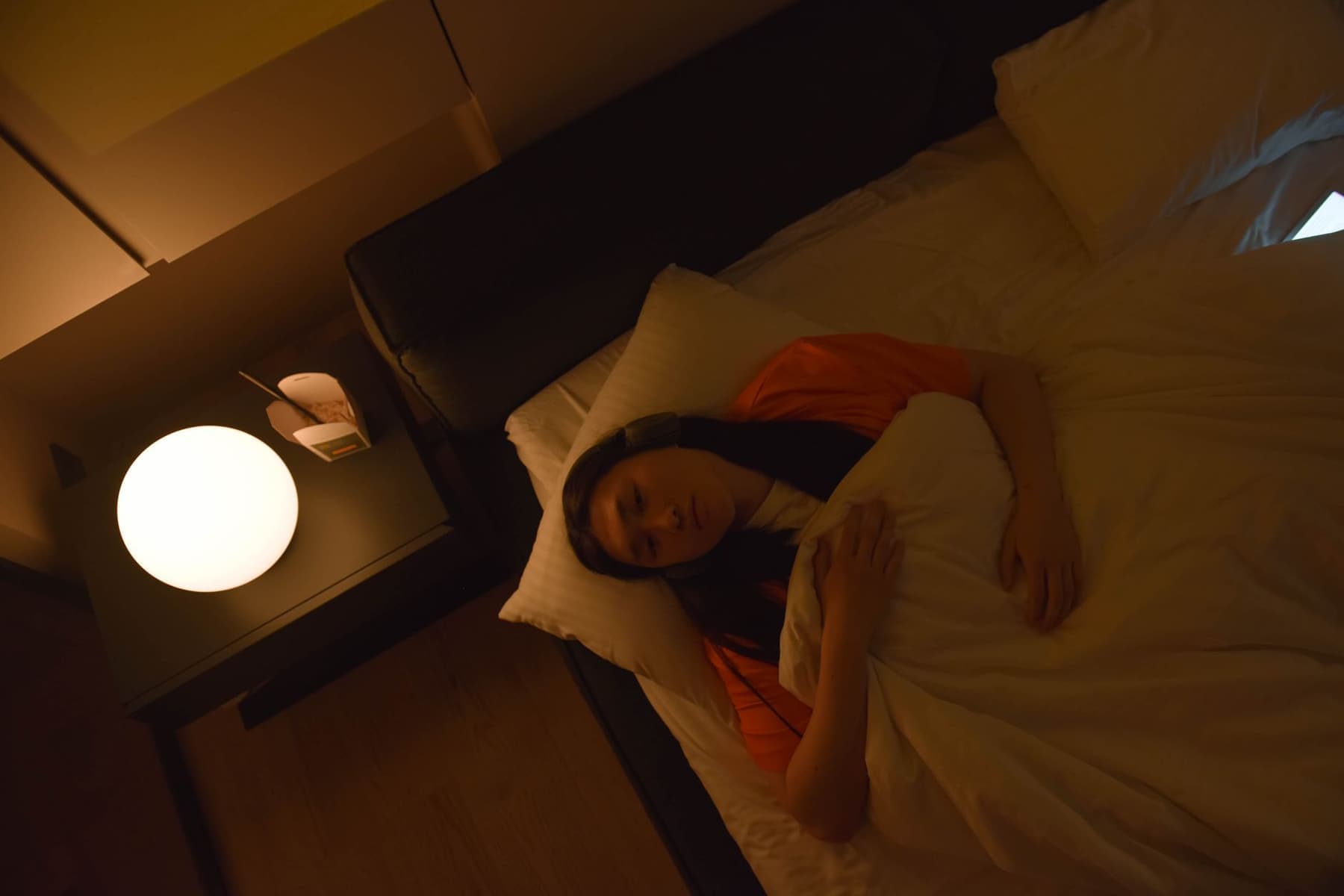
The faint, even hiss you hear when canceling is switched on in a silent room is the system’s own noise floor. Active canceling works by picking up outside sound with microphones, amplifying an inverted copy and playing it into your ear, and every microphone and amplifier in that chain contributes a small amount of broadband electrical noise that the driver then reproduces. It is not a fault, no manufacturer publishes a figure for it, and switching canceling off removes it.
Why it happens
An active system cannot be silent
A passive headphone is a sealed cup with a driver in it. With no signal playing, it makes no sound, because nothing in it is switched on.
A canceling headphone is a signal chain that is running whenever the feature is on: a microphone on the outside of the cup, often a second microphone on the inside, a processor, an amplifier and the driver. Microphones and amplifiers have a noise floor — a small, broadband electrical signal present even with no input. That floor is amplified along with everything else and reproduced by the driver. In a loud place you never hear it. In a silent room it is the only thing there is to hear.
Two things follow from that, and they are the two things people find counter-intuitive:
- The quieter your room, the more obvious it gets. Which means the hiss appears exactly when you were hoping for silence — at night, in a hotel room, in a library.
- Deeper canceling does not mean less hiss. More gain in the loop can mean more, not less. This is not a feature you can buy your way past with a flagship.
The mechanism of the useful half of the system — why an inverted copy reduces engine drone at all — is set out in how noise-cancelling headphones work on a plane.
Silence is a passive achievement. The moment you switch something on to help, you have added a sound.
Is it a fault
Telling normal hiss from a problem
| What you hear | Likely cause | What to do |
|---|---|---|
| Faint, even, steady hiss in both ears, only with canceling on | The system's own noise floor | Normal. Switch canceling off in quiet rooms |
| Hiss in one ear only, consistent when pads are swapped | Microphone or driver fault | Warranty conversation |
| Rhythmic pulsing or thumping | Canceling loop reacting to a seal that is breaking and remaking | Reseat it; check tips and pads |
| Roaring that comes and goes outdoors | Wind on the external microphones | Switch canceling off outdoors |
| A tone or ringing with nothing playing and canceling off | Not the headphone | See a clinician |
| New crackle or distortion that was not there before | Driver or firmware fault | Update firmware, then warranty |
Two of those rows have their own pages, because they are common enough to deserve them: do noise-cancelling headphones work in wind for the roaring, and do noise-cancelling headphones help tinnitus for the tone that is still there with the headphone switched off, which is a different thing entirely and not something a headphone causes or fixes.
Reducing it
Five ways to get rid of the hiss
- Switch canceling off. The whole and complete fix. On a well-sealed over-ear you keep most of the passive isolation and you gain battery — the Bose above is rated for 45 hours with canceling off against 30 with it on.
- Use a low or adaptive canceling setting. Many headphones offer intermediate levels, which reduce loop gain and therefore the floor.
- Play something, even very quietly. Almost any program material masks the floor completely. This is why the hiss is a bedtime complaint rather than a listening one.
- Use a passive product in quiet rooms. A wired in-ear or a passive on-ear has no floor of its own. Keeping a cheap wired pair for the hotel room is a genuinely sensible arrangement.
- Check the seal before blaming the circuit. A leaking seal makes the loop work harder and can turn a steady floor into pulsing. How to improve noise cancelling is the method.
On purpose
The other question: using white noise deliberately
The same search brings people here for the opposite reason — not to remove a hiss, but to add one. White noise, pink noise, rain and fan sounds are all masking tools, and they work on exactly the problems canceling is worst at.
Why it works where canceling does not
Canceling handles continuous low-frequency sound. Masking handles anything, because it does not care what the interfering sound is — it simply raises a broadband floor until the interference stops being distinguishable. That makes it the right tool against voices, a door, a dog or a seatmate, which is explained further in do noise-cancelling headphones block voices.
Canceling plus masking is the strongest combination
Used together they divide the work properly: canceling removes the low-frequency floor, masking covers the irregular midrange on top, and because canceling has already removed the drone you need the masking at a lower volume than you otherwise would. That is the arrangement most people who sleep well on planes have arrived at by accident.
Three practical cautions
- Watch the volume. Masking is still sound going into your ears for hours. NIOSH sets its recommended exposure limit at 85 A-weighted decibels averaged over an eight-hour workday, and a full night of masking is an eight-hour exposure.
- Watch the battery. A full night of playback plus canceling is a real drain, and if you are doing it on a flight it comes out of the budget in headphone battery life for long-haul flights.
- Watch the form factor. An over-ear is close to unusable on your side. The practical options are in how to sleep with headphones on and best earbuds for sleeping on a plane.
In short
Key takeaways
- The hiss with canceling on is the noise floor of the microphones and amplifiers in the loop.
- It is normal, it is loudest in a quiet room, and no manufacturer publishes a figure for it.
- Deeper canceling does not mean less hiss; more loop gain can mean more.
- Switching canceling off removes it entirely, and usually adds battery: Bose publishes 45 hours off against 30 on.
- Hiss in one ear only, or rhythmic pulsing, is a fault or a seal problem rather than the noise floor.
- Deliberate white noise is the right tool against voices, and works best layered on top of canceling.
At a glance
Quick picks
Scores are our editorial judgment from published specifications and cited third-party measurements, not our own testing. The rubric is published in full. Tap any row for the full write-up.
| # | Product | Best for | Score | Price |
|---|---|---|---|---|
| 1 | 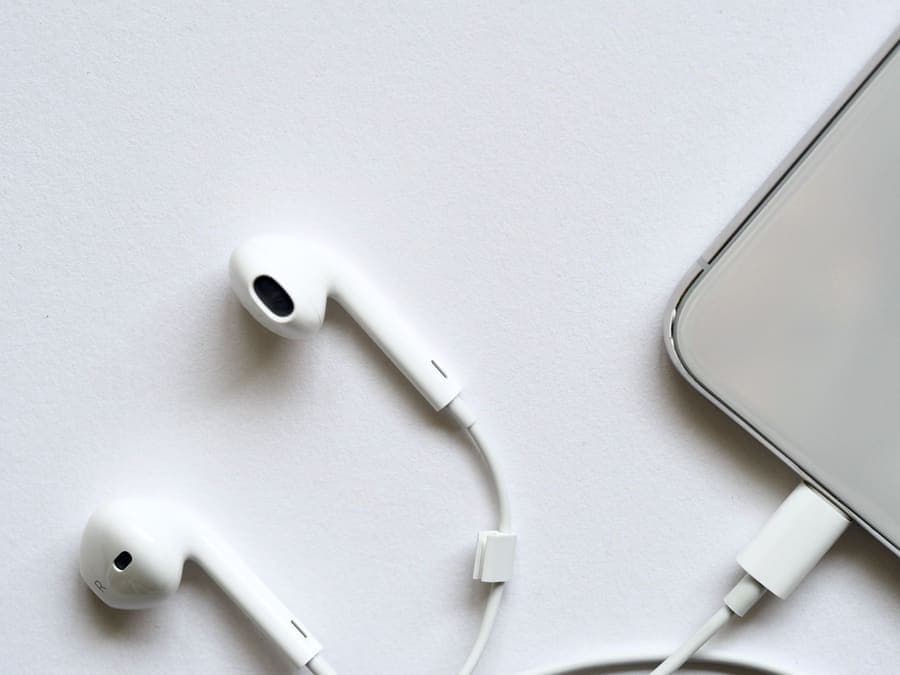 Sennheiser IE 200A wired in-ear monitor with a published specification sheet rather than a marketing number: 4 g per side, a 7 mm dynamic driver and tips you can mount two ways to change the bass. | Best for no self-noise at all | 8.78.7 out of 10, our editorial score | |
| 2 | 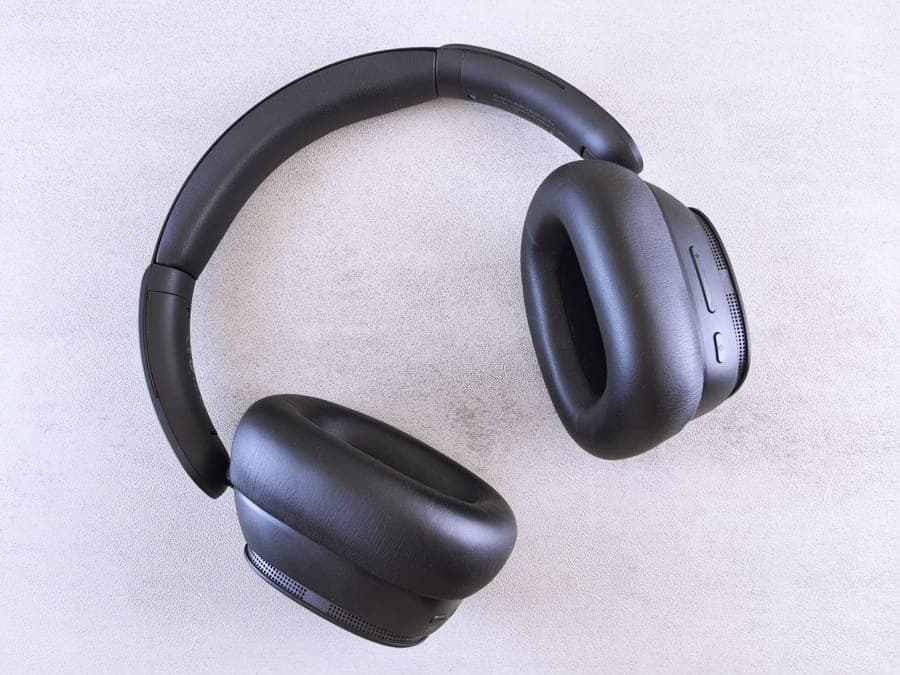 Sony WH-1000XM6The most complete travel headphone on sale: 254 g, 30 rated hours with noise canceling on, and it folds into a case small enough to stop being a decision. | Best for being able to switch it all off | 9.19.1 out of 10, our editorial score | |
| 3 | 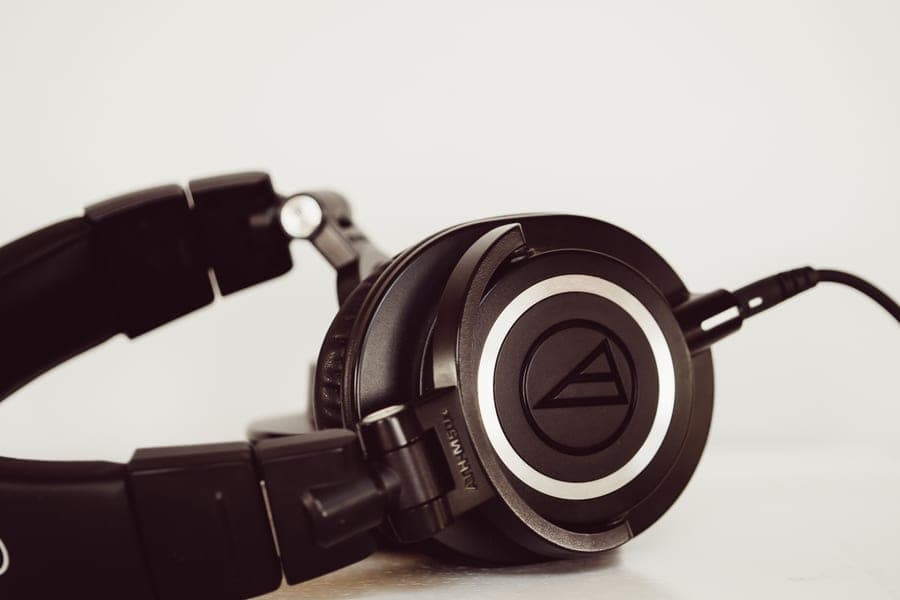 Bose QuietComfort Ultra Headphones (2nd Gen)The quietest cabin of anything here, and the only over-ear in this group whose box already contains the audio cable a seatback screen needs. | Best wired path on a canceling flagship | 9.09.0 out of 10, our editorial score |
#ad Amazon links are affiliate links. No live price is shown anywhere on this site, so every button reads “Check price on Amazon”. How this is funded.
The picks in full
Every pick, in detail
1. Best for no self-noise at all
Sennheiser IE 200
A wired in-ear monitor with a published specification sheet rather than a marketing number: 4 g per side, a 7 mm dynamic driver and tips you can mount two ways to change the bass.
Our editorial score: 8.7 / 10
#ad Live price not shown. How this is funded
Also sold direct by Sennheiser — we earn nothing there, so check both.
The only way to guarantee a headphone adds no hiss is to buy one with nothing in the signal path to generate it. A wired in-ear monitor with no battery, no microphones and no processing has no noise floor of its own beyond your source.
6 Hz to 20,000 Hz, 16 ohm impedance (18 with the cable), 119 dB at 1 kHz and 1 Vrms, total harmonic distortion under 0.08 percent, a 7 mm closed dynamic transducer, 4 g, and a 1.2 m braided cable with MMCX connectors and an angled 3.5 mm plug. $159.95 at the time of writing.
It isolates by seal alone, which means it does nothing about engine drone. For anyone whose whole complaint is that canceling adds a sound, that trade is often worth making.
What works on a plane
- A real specification sheet with distortion and impedance figures, which most earbuds never publish
- 4 g per side and no battery, so it never runs out and never degrades
- Detachable MMCX cable means a frayed cable is a repair rather than a replacement
- Two tip-mounting positions change the bass without an app or an EQ
What does not
- Wired, so there is a cable in your lap and no Bluetooth on a plane without an adapter
- No active noise canceling at all — isolation comes entirely from the tip seal
- No microphone on the stock cable, so it is not a call headset
How it scores against the five travel axes
Published specifications
| Spec | Figure | Source |
|---|---|---|
| Frequency response | 6 - 20,000 Hz | Sennheiser |
| Impedance | 16 ohm (18 ohm with cable) | Sennheiser |
| Sound pressure level | 119 dB (1 kHz, 1 Vrms) | Sennheiser |
| Distortion | THD < 0.08 % | Sennheiser |
| Transducer | 7 mm dynamic, closed | Sennheiser |
| Weight | 4 g | Sennheiser |
| Cable | 1.2 m braided, MMCX connectors, 3.5 mm angled plug | Sennheiser |
| List price | $159.95 at the time of writing | Sennheiser |
2. Best for being able to switch it all off
Sony WH-1000XM6
The most complete travel headphone on sale: 254 g, 30 rated hours with noise canceling on, and it folds into a case small enough to stop being a decision.
Our editorial score: 9.1 / 10
#ad Live price not shown. How this is funded
Also sold direct by Sony — we earn nothing there, so check both.
The practical answer for most people: a canceling headphone whose canceling you can turn off, and which still works wired when the battery is out of the equation entirely.
Up to 30 rated hours with canceling on and 40 with it off, approximately 254 g, about 3.5 hours to a full charge, Bluetooth 5.3, SBC, AAC, LDAC and LC3, and a wired response quoted at 4 Hz to 40,000 Hz over the cable with the headset powered on. It folds into a magnetic-closure case.
Note the asterisk on that wired figure: it is measured with the headset powered on, so it is not a passive-mode specification. Sony does not publish a self-noise figure, and nor does anyone else.
What works on a plane
- Folds, which halves the space it takes in a personal item
- 254 g is light for a flagship over-ear, and weight is what you feel at hour four
- LDAC plus LC3 means it is not locked to one phone ecosystem
- 30 rated hours with noise canceling on covers almost any single routing
What does not
- You pay a flagship price for the last increment of noise canceling
- The folding hinge is one more mechanism to eventually wear out
- No airline two-prong adapter in the box
How it scores against the five travel axes
Published specifications
| Spec | Figure | Source |
|---|---|---|
| Weight | Approx. 254 g (9 oz) | Sony Help Guide specifications |
| Battery, NC on | Up to 30 hours | Sony specifications |
| Battery, NC off | Up to 40 hours | Sony specifications |
| Full charge | Approx. 3.5 hours | Sony Help Guide specifications |
| Bluetooth | 5.3 | Sony Help Guide specifications |
| Codecs | SBC, AAC, LDAC, LC3 | Sony Help Guide specifications |
| Wired response | 4 Hz - 40,000 Hz (IEC) | Sony Help Guide specifications |
| Folds | Yes, into a magnetic-closure case | Sony |
3. Best wired path on a canceling flagship
Bose QuietComfort Ultra Headphones (2nd Gen)
The quietest cabin of anything here, and the only over-ear in this group whose box already contains the audio cable a seatback screen needs.
Our editorial score: 9.0 / 10
#ad Live price not shown. How this is funded
Also sold direct by Bose — we earn nothing there, so check both.
If you want flagship canceling for the flight and a clean path for a quiet room, this is the product with the most capable second mode: a 16-bit, 44.1 or 48 kHz lossless audio input over USB-C, which makes it a wired USB audio device rather than just a headphone with a socket.
Up to 30 rated hours with canceling on, 45 with it off, and 23 with Immersive Audio enabled. A hard case, a USB-C cable and a 2.5 mm-to-3.5 mm audio cable are in the box, and the earcups rotate flat into the case.
Forty-five hours with canceling off is the figure that matters on this page: running it passively is not a compromise mode, it is the longer-lasting one. Bose does not publish a weight; approximately 264 g is the widely reported figure.
What works on a plane
- The best low-frequency canceling in this group, which is exactly the band engine drone lives in
- The 2.5 mm-to-3.5 mm cable is in the box, so a seatback screen needs nothing extra
- Compact hard case for a full-size over-ear
- Up to 45 hours with canceling off, if you only want isolation on a train
What does not
- Immersive Audio costs you a third of the battery, dropping to 23 rated hours
- Heavier than the Sony by roughly 10 g, and clamp is firmer out of the box
- The hard case is compact but still rigid, so it will not squash into a full bag
How it scores against the five travel axes
Published specifications
| Spec | Figure | Source |
|---|---|---|
| Battery, ANC on | Up to 30 hours | Bose |
| Battery, ANC off | Up to 45 hours | Bose |
| Battery, Immersive Audio on | Up to 23 hours | Bose |
| Weight | Approx. 264 g (9.3 oz) as reported | Published reviews |
| USB-C audio | 16-bit, 44.1 or 48 kHz lossless input | Bose support |
| In the box | Hard case, USB-C cable, 2.5 mm-to-3.5 mm audio cable | Bose |
| Folds | Earcups rotate flat into a compact hard case | Bose |
Read the full Bose QuietComfort Ultra Headphones (2nd Gen) review
Questions
Common questions
Why do my noise-cancelling headphones make a white noise sound?
Because the canceling system is running. A microphone, a processor and an amplifier sit between the outside world and your ear, and each contributes a small amount of broadband electrical noise that the driver reproduces. In a loud place it is inaudible; in a silent room it is the only sound present.
Is the hissing sound a sign my headphones are faulty?
Not if it is faint, even and in both ears, and only present with canceling on. Treat it as a fault if it is in one ear only and stays in that ear after you swap the pads, if it pulses rhythmically, or if it is a new crackle or distortion.
Which noise-cancelling headphones have no white noise?
Any of them, with canceling switched off. If you want a product that cannot produce it at all, you need a passive design with no electronics in the signal path — a wired in-ear monitor such as the Sennheiser IE 200, or a passive on-ear.
Does more expensive noise cancelling hiss less?
Not reliably. The floor comes from the microphones and the loop gain, so a deeper canceling system can be noisier rather than quieter. Nobody publishes a self-noise specification, so there is no way to shop for this figure.
Can I use a white noise app with noise-cancelling headphones?
Yes, and it is the strongest combination available: canceling removes the low-frequency floor and the masking covers the irregular midrange that canceling cannot touch. Because the drone is gone, you need the masking at a lower volume than you otherwise would.
Is the hiss the same thing as tinnitus?
No. The hiss stops when you switch canceling off or take the headphones off; tinnitus is the perception of sound with no external source and does not. If a tone or ringing persists with the headphones off, that is a clinical question rather than a product one.
Sources
Where these figures come from
- Sennheiser IE 200 product page (frequency response, impedance, sound pressure level, distortion, transducer, weight, cable, list price)
- Sony WH-1000XM6 Help Guide specifications (battery with canceling on and off, weight, charge time, codecs, wired response measured with the headset powered on)
- Bose QuietComfort Ultra Headphones (2nd Gen) product page (30 hours canceling on, 45 hours off, 23 with Immersive Audio, USB-C lossless input, in the box)
- CDC / NIOSH, About noise and hearing loss (85 dBA recommended exposure limit over an eight-hour workday)
Read next
Related reading
- How noise-cancelling headphones work on a plane
The useful half of the same signal chain.
- How to sleep with headphones on
Where deliberate masking is usually the point.
- Do noise-cancelling headphones block voices?
Why masking beats canceling in the speech band.
- Do noise-cancelling headphones help tinnitus?
The sound that does not stop when you take them off.