
Mostly no. Active canceling is built for continuous low-frequency noise, roughly the 50 to 300 Hz band an aircraft engine produces. Speech sits roughly between 500 Hz and 4 kHz, where wavelengths are short and the sound changes several times a second, which is the hardest case for a canceling circuit. What reduces a voice is the passive seal of the pad or ear tip, plus masking it with something you are listening to.
Two reasons
Why speech is the hardest thing to cancel
The wavelengths are too short
Canceling works by playing an inverted copy of the incoming sound. To do that the processor has to sample the sound, invert it and emit it before the original reaches your eardrum. A 100 Hz tone is roughly 3.4 meters long, which gives the processor an enormous amount of time to work in. A 4 kHz sound is about 8.5 cm, which leaves almost none.
Speech lives mostly in the second half of that range. The full derivation is in ANC vs passive noise isolation, which sets out which band each mechanism handles and why the crossover sits where it does.
Speech will not hold still
The second problem is more fundamental. Engine drone is stationary: it is the same sound now as it was a second ago, so a model of it stays accurate. Speech is the opposite — it changes amplitude and spectrum several times a second by design, because that variation is what carries the information.
A system that predicts the next instant of a steady tone very well predicts the next instant of a sentence very badly. That is why canceling can take 20 dB off a cabin and almost nothing off a conversation at the same desk.
A jet engine is a sound that repeats. A voice is a sound designed not to.
What works
The three things that actually reduce a voice
- Passive isolation. Mass and seal. A deep pad fully around the ear, or a tip sealed in the canal. This is the entire mechanism available to you in the speech band, and it is why fit work matters more here than money — how to improve noise cancelling is the practical companion to this page.
- Masking. Playing something with energy in the same band so the voice stops being distinguishable. Instrumental music, rain, pink noise. This is what people are actually doing when they say canceling headphones block chatter, and it works — at a volume you should keep an eye on, since NIOSH sets its recommended exposure limit at 85 A-weighted decibels averaged over an eight-hour workday.
- Certified passive protection. A hearing protector with an NRR. 25 or 26 dB of certified broadband reduction beats any consumer canceling product against speech, comfortably. The catch is that it is designed for a worksite, not a meeting.
The comparison
Four approaches against a voice
| Approach | Reduction, as published | Works on speech? | Wearable all day? |
|---|---|---|---|
| Canceling over-ear (Bose QC Ultra) | No figure published | Partly, via the pad seal | Yes |
| Canceling earbud (Sony WF-1000XM6) | No figure published | Better, via the canal seal | Tiring after several hours |
| Wired IEM (Sennheiser IE 200) | No figure published | Yes, by seal alone | Tiring, and wired |
| Hearing protector (3M WorkTunes Connect) | 26 dB NRR, certified | Yes, broadband | Yes, but it looks industrial |
| Hearing protector (ISOtunes LINK 2.0) | 25 dB NRR, ANSI certified | Yes, broadband | Yes, with an 85 dB output cap |
| Open-ear (Shokz OpenRun Pro 2) | None by design | No | Yes |
The exception
One case where canceling does help with people
Not the voices themselves — the floor underneath them. In an open-plan office the continuous component is the air handling, the server fan, the lift motor, the road outside. Those are low-frequency and stationary, which is exactly canceling’s best case.
Removing that floor does two useful things. It makes the room feel less fatiguing, and it means you need less volume to mask the voices on top, because you are no longer competing with the building as well. That is a real benefit and it is why canceling headphones are still the right purchase for a noisy office — just not for the reason most buyers expect. The open-plan office roundup ranks products on that combined basis.
What not to do
Three approaches that make it worse
- Turning the volume up to drown them out. It works, and it is how people damage their hearing with a canceling headphone. If you are raising the volume to beat a voice, the fit is the thing to fix — do noise-cancelling headphones protect your hearing sets out the trade honestly.
- Leaving transparency or ambient mode on. That mode exists to let voices in. It is the correct setting for a platform announcement and the wrong one for concentration — transparency mode vs noise canceling.
- Buying a more expensive canceling headphone. If the current one does not block a voice, the next one will not either, because the limitation is the band rather than the budget. Spend the money on a better seal or on earplugs under a headphone — noise-cancelling headphones vs earplugs compares the two directly.
In short
Key takeaways
- Active canceling targets continuous low-frequency noise, roughly 50 to 300 Hz.
- Speech sits roughly between 500 Hz and 4 kHz, where wavelengths are too short for the circuit to act in time.
- Speech also changes several times a second, so the system cannot model it the way it models engine drone.
- What reduces a voice is the passive seal of the pad or tip, plus masking with what you are playing.
- Certified hearing protectors at 25 to 26 dB NRR outperform every consumer canceling product against speech.
- Canceling still helps in an office by removing the low-frequency floor under the voices.
At a glance
Quick picks
Scores are our editorial judgment from published specifications and cited third-party measurements, not our own testing. The rubric is published in full. Tap any row for the full write-up.
| # | Product | Best for | Score | Price |
|---|---|---|---|---|
| 1 | 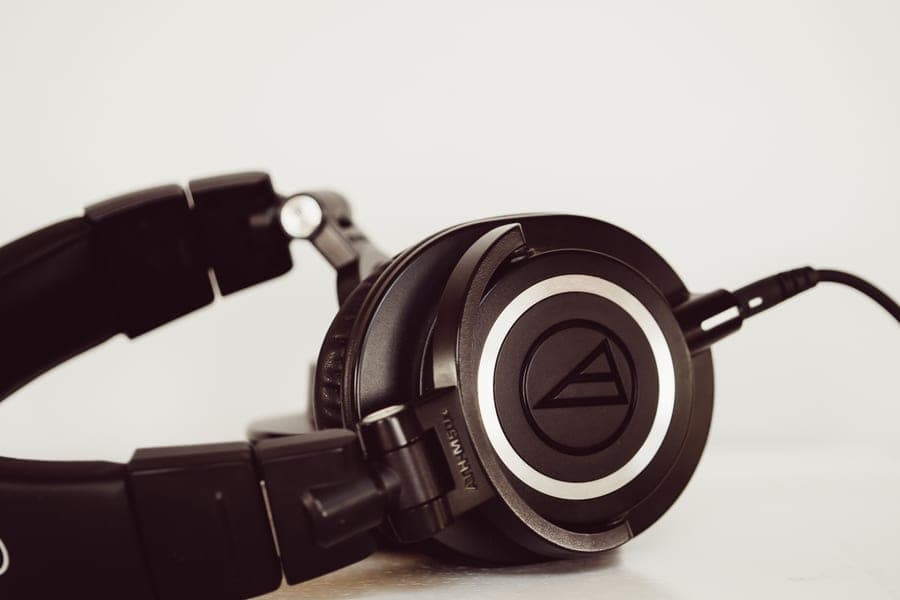 Bose QuietComfort Ultra Headphones (2nd Gen)The quietest cabin of anything here, and the only over-ear in this group whose box already contains the audio cable a seatback screen needs. | Best consumer headphone against chatter | 9.09.0 out of 10, our editorial score | |
| 2 | 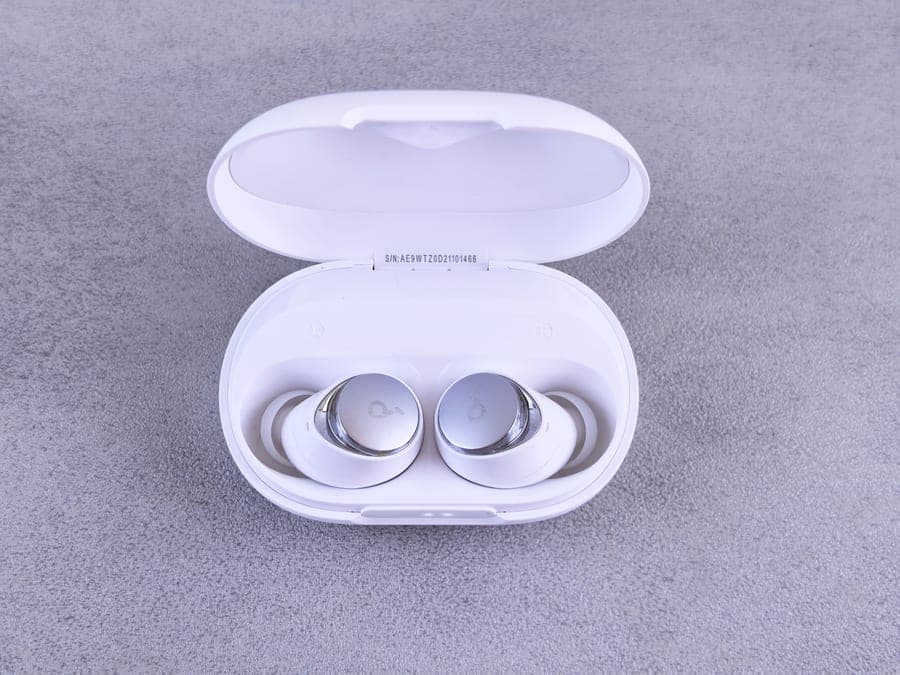 Sony WF-1000XM6Eight rated hours per bud and 24 with the case, at roughly 6.5 g each. The most sensible premium earbud for a flight, because you never have to plan around the battery. | Best passive seal per gram | 8.98.9 out of 10, our editorial score | |
| 3 | 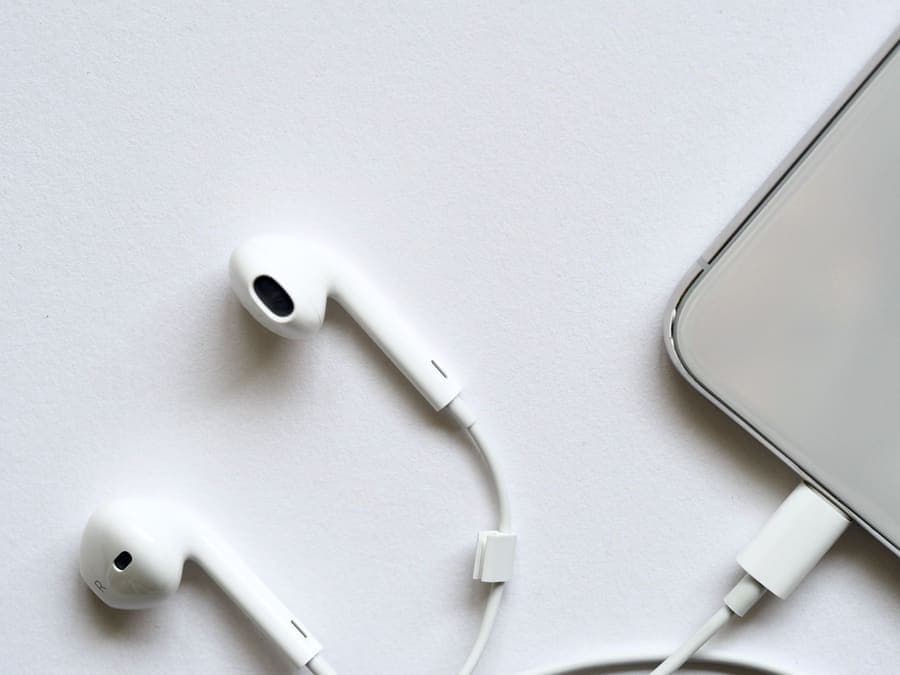 Sennheiser IE 200A wired in-ear monitor with a published specification sheet rather than a marketing number: 4 g per side, a 7 mm dynamic driver and tips you can mount two ways to change the bass. | Best isolation with no electronics at all | 8.78.7 out of 10, our editorial score | |
| 4 | 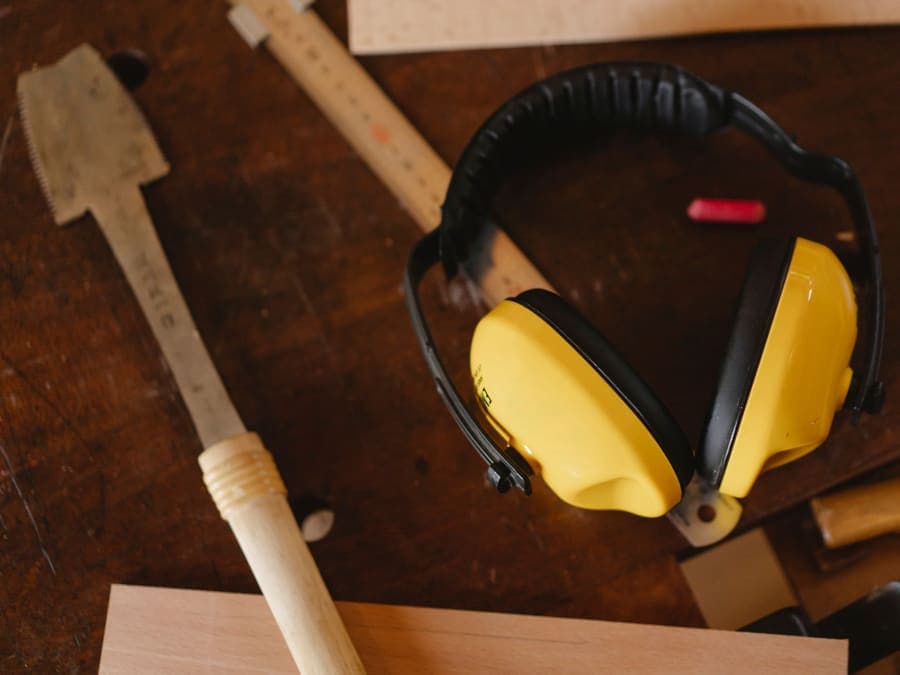 3M WorkTunes ConnectA certified hearing protector that happens to stream Bluetooth, which is the right way round for a petrol mower. Noise canceling headphones protect nothing. | Best certified reduction, if you can wear it | 8.78.7 out of 10, our editorial score |
#ad Amazon links are affiliate links. No live price is shown anywhere on this site, so every button reads “Check price on Amazon”. How this is funded.
The picks in full
Every pick, in detail
1. Best consumer headphone against chatter
Bose QuietComfort Ultra Headphones (2nd Gen)
The quietest cabin of anything here, and the only over-ear in this group whose box already contains the audio cable a seatback screen needs.
Our editorial score: 9.0 / 10
#ad Live price not shown. How this is funded
Also sold direct by Bose — we earn nothing there, so check both.
If you want the best a consumer canceling headphone can do against voices, this is it — and the reason is as much the pad seal as the canceling circuit. A deep, well-sealed over-ear earcup is a physical barrier, and the physical barrier is what handles speech frequencies.
Up to 30 rated hours with canceling on, 45 with it off, 23 with Immersive Audio enabled, a 16-bit 44.1 or 48 kHz lossless input over USB-C, and a hard case, USB-C cable and 2.5 mm-to-3.5 mm audio cable in the box. Earcups rotate flat into the case.
It will not remove a conversation. It will reduce it to a muffled presence you can cover with music at a sane volume, which for most open-plan work is the realistic goal. Bose does not publish a weight; approximately 264 g is the widely reported figure.
What works on a plane
- The best low-frequency canceling in this group, which is exactly the band engine drone lives in
- The 2.5 mm-to-3.5 mm cable is in the box, so a seatback screen needs nothing extra
- Compact hard case for a full-size over-ear
- Up to 45 hours with canceling off, if you only want isolation on a train
What does not
- Immersive Audio costs you a third of the battery, dropping to 23 rated hours
- Heavier than the Sony by roughly 10 g, and clamp is firmer out of the box
- The hard case is compact but still rigid, so it will not squash into a full bag
How it scores against the five travel axes
Published specifications
| Spec | Figure | Source |
|---|---|---|
| Battery, ANC on | Up to 30 hours | Bose |
| Battery, ANC off | Up to 45 hours | Bose |
| Battery, Immersive Audio on | Up to 23 hours | Bose |
| Weight | Approx. 264 g (9.3 oz) as reported | Published reviews |
| USB-C audio | 16-bit, 44.1 or 48 kHz lossless input | Bose support |
| In the box | Hard case, USB-C cable, 2.5 mm-to-3.5 mm audio cable | Bose |
| Folds | Earcups rotate flat into a compact hard case | Bose |
Read the full Bose QuietComfort Ultra Headphones (2nd Gen) review
2. Best passive seal per gram
Sony WF-1000XM6
Eight rated hours per bud and 24 with the case, at roughly 6.5 g each. The most sensible premium earbud for a flight, because you never have to plan around the battery.
Our editorial score: 8.9 / 10
#ad Live price not shown. How this is funded
Also sold direct by Sony — we earn nothing there, so check both.
The in-ear argument: a tip sealed in the ear canal is a better barrier to midrange and high-frequency sound than almost any pad resting on the side of your head, because there is no leak path around the outer ear.
Approximately 6.5 g per bud with the medium tips, up to 8 rated hours per bud and up to 24 with the case, an 8.4 mm driver, IPX4, SBC, AAC, LDAC and LC3, and the HD Noise Canceling Processor QN3e with dual processors and eight microphones.
For voices specifically this is often the better buy than a flagship over-ear, and it is cheaper to carry. The limit is that a seal in the canal is tiring over a full working day in a way a pad is not.
What works on a plane
- Eight rated hours per charge clears most short-haul flights without touching the case
- 24 hours total with the case is the strongest reserve in the premium earbud set
- LDAC means it is not tied to one phone platform
- Roughly 6.5 g per bud effectively disappears when you are trying to sleep on your side
What does not
- Canceling is excellent but the Bose still takes the low-frequency band
- No wired fallback at all, so a seatback screen needs a transmitter
- IPX4 is splash resistance, not weather resistance
How it scores against the five travel axes
Published specifications
| Spec | Figure | Source |
|---|---|---|
| Battery, earbuds | Up to 8 hours | Sony |
| Total with case | Up to 24 hours (16 from the case) | Sony |
| Weight | Approx. 6.5 g per bud with M tips | Sony |
| Driver | 8.4 mm | Sony |
| Bluetooth | 5.3 | Sony |
| Codecs | SBC, AAC, LDAC, LC3 | Sony |
| Water resistance | IPX4 | Sony |
| Processor | HD Noise Canceling Processor QN3e, dual processors, eight microphones | Sony |
3. Best isolation with no electronics at all
Sennheiser IE 200
A wired in-ear monitor with a published specification sheet rather than a marketing number: 4 g per side, a 7 mm dynamic driver and tips you can mount two ways to change the bass.
Our editorial score: 8.7 / 10
#ad Live price not shown. How this is funded
Also sold direct by Sennheiser — we earn nothing there, so check both.
The in-ear monitor answer, and a genuinely useful one here: deep insertion with no canceling circuit, no battery and no processing. Against speech it performs as well as products costing three times as much, because against speech the only thing that works is the seal.
6 Hz to 20,000 Hz, 16 ohm impedance (18 with the cable), 119 dB at 1 kHz and 1 Vrms, total harmonic distortion under 0.08 percent, a 7 mm closed dynamic transducer, 4 g, and a 1.2 m braided cable with MMCX connectors and a 3.5 mm angled plug. $159.95 at the time of writing.
It is wired, which means an adapter on most phones, and it does nothing at all about engine drone. On a plane it is the wrong product. At a desk full of talking it is quietly one of the right ones — headphones vs IEMs covers the full trade.
What works on a plane
- A real specification sheet with distortion and impedance figures, which most earbuds never publish
- 4 g per side and no battery, so it never runs out and never degrades
- Detachable MMCX cable means a frayed cable is a repair rather than a replacement
- Two tip-mounting positions change the bass without an app or an EQ
What does not
- Wired, so there is a cable in your lap and no Bluetooth on a plane without an adapter
- No active noise canceling at all — isolation comes entirely from the tip seal
- No microphone on the stock cable, so it is not a call headset
How it scores against the five travel axes
Published specifications
| Spec | Figure | Source |
|---|---|---|
| Frequency response | 6 - 20,000 Hz | Sennheiser |
| Impedance | 16 ohm (18 ohm with cable) | Sennheiser |
| Sound pressure level | 119 dB (1 kHz, 1 Vrms) | Sennheiser |
| Distortion | THD < 0.08 % | Sennheiser |
| Transducer | 7 mm dynamic, closed | Sennheiser |
| Weight | 4 g | Sennheiser |
| Cable | 1.2 m braided, MMCX connectors, 3.5 mm angled plug | Sennheiser |
| List price | $159.95 at the time of writing | Sennheiser |
4. Best certified reduction, if you can wear it
3M WorkTunes Connect
A certified hearing protector that happens to stream Bluetooth, which is the right way round for a petrol mower. Noise canceling headphones protect nothing.
Our editorial score: 8.7 / 10
#ad Live price not shown. How this is funded
Also sold direct by 3M — we earn nothing there, so check both.
The only product class in this category with a standardized, certified reduction figure: 26 dB Noise Reduction Rating. Passive protection works across the spectrum rather than only at the low end, which is exactly what makes it effective against voices.
40+ rated hours, USB-C charging, Bluetooth with an integrated microphone for calls, water and sweat resistant, with auto shut-off and a low-battery indicator.
3M publishes its own caution and it matters: 3M recommends fit testing, because many users receive less reduction than the NRR suggests. It also looks like what it is, which rules it out of most offices on social grounds rather than acoustic ones.
What works on a plane
- A published, certified 26 dB NRR rather than an uncertified marketing decibel figure
- 40+ rated hours outlasts any weekend of yard work by a wide margin
- Passive attenuation keeps working if the battery dies, which is the whole safety point
- Built for dust, sweat and being dropped on a driveway
What does not
- Bulky and warm — this is safety equipment, not a travel headphone
- Sound quality is adequate rather than good, which is the correct trade here
- 3M itself warns that real-world fit usually delivers less than the rated NRR
How it scores against the five travel axes
Published specifications
| Spec | Figure | Source |
|---|---|---|
| Noise Reduction Rating | 26 dB NRR | 3M product page |
| Battery | 40+ hours, rechargeable | 3M product page |
| Charging | USB-C | 3M product page |
| Connection | Bluetooth wireless, with integrated microphone for calls | 3M product page |
| Durability | Water and sweat resistant | 3M product page |
| Convenience | Auto shut-off and low-battery indicator | 3M product page |
| 3M's own caution | 3M recommends fit testing; many users receive less reduction than the NRR suggests | 3M product page |
Questions
Common questions
Do noise-cancelling headphones block out voices?
Not effectively. Active canceling is designed for continuous low-frequency noise; speech sits roughly between 500 Hz and 4 kHz and changes several times a second, which is the hardest case for the circuit. What reduces a voice is the passive seal of the earcup or ear tip, plus whatever you are playing over the top.
What blocks out people talking best?
A certified hearing protector. The 3M WorkTunes Connect publishes 26 dB NRR and the ISOtunes LINK 2.0 publishes 25 dB NRR, ANSI certified — standardized, broadband figures that no consumer canceling product can match against speech. For an office, a well-sealed canceling over-ear plus masking audio is the practical compromise.
Are earbuds better than over-ear headphones for blocking voices?
Often yes. A tip sealed in the ear canal leaves no leak path around the outer ear, so passive isolation in the speech band is usually better than a pad resting on the side of the head. The cost is that a canal seal is more tiring across a full working day.
Why does my canceling work on a plane but not in an office?
Because the two noises are different in kind. Engine drone is low-frequency and stationary, which is canceling’s best case. Office noise is mostly speech, which is higher in frequency and constantly changing — its worst case. Nothing is wrong with the headphone.
Would earplugs work better than noise-cancelling headphones for chatter?
For speech specifically, good earplugs are frequently better, because they are pure passive isolation across the whole spectrum. What you lose is the ability to listen to anything, and the low-frequency removal that canceling does well.
Sources
Where these figures come from
- Bose QuietComfort Ultra Headphones (2nd Gen) product page (battery, USB-C lossless input, in the box, earcups rotate flat)
- Sony WF-1000XM6 specifications (weight per bud, battery, driver, IPX4, codecs, processor and microphones)
- Sennheiser IE 200 product page (frequency response, impedance, sound pressure level, distortion, transducer, weight, cable, list price)
- 3M WorkTunes Connect product page (26 dB NRR, 40+ hours, USB-C, Bluetooth with microphone, 3M's fit-testing caution)
- ISOtunes LINK 2.0 product page (25 dB NRR ANSI certified, OSHA and NIOSH compliance, SafeMax 85 dB cap)
- CDC / NIOSH, About noise and hearing loss (85 dBA recommended exposure limit over an eight-hour workday)
Read next
Related reading
- ANC vs passive noise isolation
The band-by-band derivation this page rests on.
- Best noise-cancelling headphones for an open-plan office
The ranked buying page for exactly this problem.
- Noise-cancelling headphones vs earplugs
Pure passive isolation, compared directly.
- How to improve noise cancelling
Fit work, which is the only lever you have in the speech band.