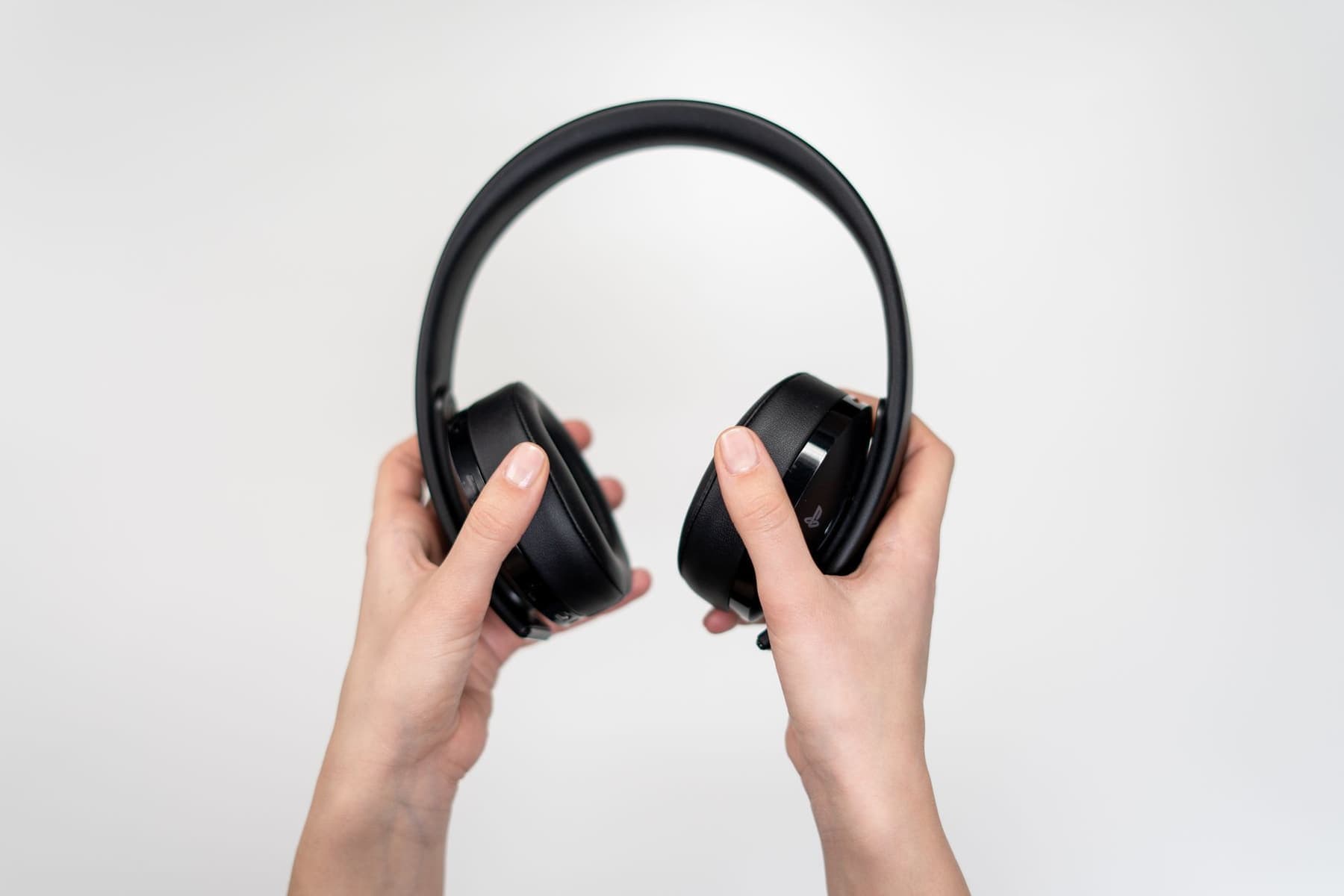
Fix the seal before anything else. Reseat the headphone or ear tip, try the next tip size up and down, clear glasses arms and hair out of the pad seal, clean the pads and tips, replace pads that have gone hard, then update firmware and re-run the manufacturer’s fit test. Those six steps recover almost all disappointing canceling performance, because the circuit rarely degrades and the seal always does.
Why the seal
Canceling is only half the system
A canceling headphone reduces noise two ways at once. Passive isolation — the physical barrier of a pad or a tip — handles the higher frequencies, roughly from the midrange up. Active canceling handles the low end, the 50 to 300 Hz band where an aircraft engine or a train bogie lives. ANC vs passive noise isolation sets out the division properly.
When people say canceling has got worse, what they almost always mean is that the passive half has got worse, because the passive half is made of foam and leather and it ages. The active half is firmware and silicon and it does not.
There is a second, less obvious effect. The canceling circuit is tuned for a particular acoustic volume between the driver and your eardrum. A compressed pad or a badly seated tip changes that volume, so the system is now correcting for a cavity it was not designed around. That is why a leaking seal does not just let noise in — it degrades the canceling as well.
Nothing about the processor wore out. The foam did.
The six steps
In order of how much difference each one makes
- Reseat it. For an over-ear, lift the cup clear and set it down so the pad lands fully behind your ear, with no cartilage under the rim. For an earbud, insert it, twist until it seats, and then run the manufacturer’s fit test if there is one. This single step fixes more complaints than every other step combined.
- Change the tip size. Try one size up and one size down from whatever came fitted, and try them on each ear separately — ear canals are frequently not the same size. A tip that is too small leaks; a tip that is too large will not seat deeply enough to seal. Both feel identical from the outside: weak canceling.
- Clear the seal. Glasses arms are the biggest offender, and the fix is to put the pad behind the arm rather than over it, or to use thinner frames. Best headphones for glasses wearers covers which designs tolerate it. Hair tucked under a pad, a hood seam, a hat brim, a mask strap and an earring all do the same thing on a smaller scale.
- Clean everything. Pads collect skin oil, which hardens the foam. Silicone tips collect wax, which blocks the nozzle and kills the seal at the same time. The method matters more than the frequency, and it is set out step by step in how to clean headphone ear pads. Never push a tool into a microphone port.
- Replace the pads or the tips. Pads are a consumable. After twelve to twenty-four months of regular use the foam has compressed and the covering has stiffened, and a replacement set restores both the isolation and the cavity the canceling was tuned for. It is the cheapest meaningful upgrade available to any headphone owner, and how long noise-cancelling headphones last covers what else wears out and in what order.
- Update the firmware, then recalibrate. Canceling algorithms ship in firmware and genuinely do improve across updates. Install it, then re-run whatever fit test, ear-tip test or personalized EQ the app offers, because those profiles are tied to a firmware version and are not always migrated.
Fit systems
What each manufacturer gives you to work with
| Model | Fit hardware, as published | Form |
|---|---|---|
| Apple AirPods Pro 3 | Foam tips in five sizes | Earbuds |
| Bose QuietComfort Ultra Earbuds | Three stabilizer band sizes, shallow insertion | Earbuds |
| Sennheiser MOMENTUM 4 | Deep pads, relaxed clamp, fold-flat cups | Over-ear |
| Soundcore Space One | Hear ID customized EQ, rotating and folding cups | Over-ear |
| Soundcore Space Q45 | Hear ID customized EQ, 161 x 190 x 88 mm body | Over-ear |
| Sony WF-1000XM6 | Multiple tip sizes; approx. 6.5 g per bud with M tips | Earbuds |
What will not help
Four things people try that do not work
- Turning the volume up. It masks noise rather than cancels it, and it is the mechanism by which people damage their hearing with a canceling headphone. NIOSH sets its recommended exposure limit at 85 A-weighted decibels averaged over an eight-hour day; at that level you have to raise your voice to be heard three feet away.
- Expecting canceling to remove voices. It will not, and no amount of fit work changes that — do noise-cancelling headphones block voices explains why the band is wrong.
- Using it outdoors in wind. Canceling gets worse, not better, because the wind is pushing the microphones around. Do noise-cancelling headphones work in wind covers the mechanism.
- Buying a more expensive headphone with the same fit problem. If the current pair leaks because of your glasses or your ear-canal shape, a flagship will leak in exactly the same place.
When it really is the headphone
Three signs the fit is not the problem
Work through the six steps first. If all of these are true afterwards, the hardware is at fault rather than the seal:
- It is one side only, consistently, with pads swapped. Swap the left and right pads. If the weak side stays weak, it is a driver or microphone fault rather than a seal.
- There is a new hiss or pulsing that was not there before. Covered in noise-cancelling headphones and white noise.
- Canceling cuts out when you move your jaw or walk. That is usually a cracked housing or a loose microphone, and it is a warranty conversation.
In short
Key takeaways
- Reseating the headphone or ear tip fixes more canceling complaints than anything else.
- Try one tip size up and one down, and check each ear separately.
- Glasses arms, hair, hoods and hat brims all break the pad seal and all feel like weak canceling.
- Pads are a consumable: after 12 to 24 months they compress and both isolation and canceling degrade.
- A bad seal also changes the acoustic cavity the canceling circuit was tuned for, so it hurts twice.
- Update firmware, then re-run the fit test or EQ calibration, because profiles are tied to the firmware version.
At a glance
Quick picks
Scores are our editorial judgment from published specifications and cited third-party measurements, not our own testing. The rubric is published in full. Tap any row for the full write-up.
| # | Product | Best for | Score | Price |
|---|---|---|---|---|
| 1 | 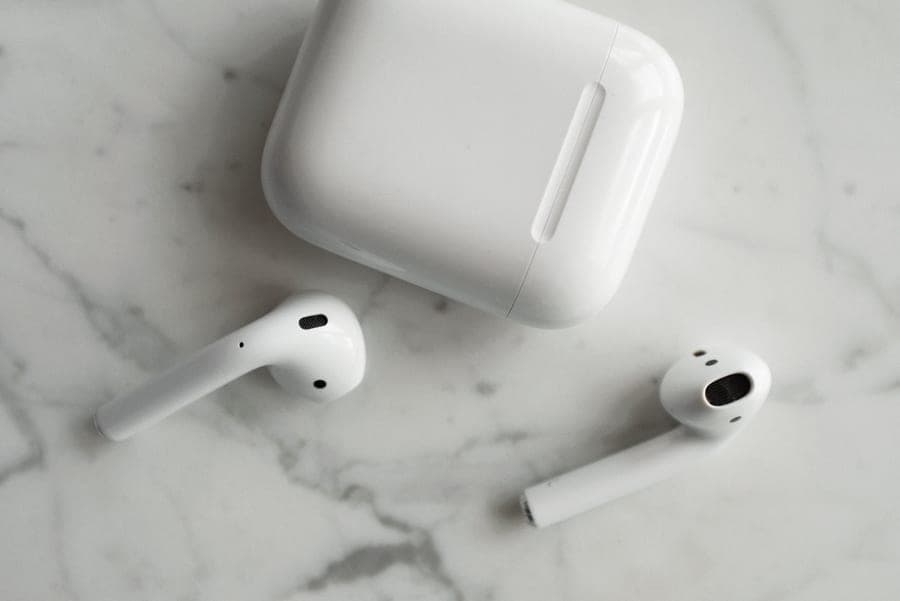 Apple AirPods Pro 3Eight rated hours with canceling on, foam tips in five sizes and an IP57 rating. If your phone is an iPhone this is the least friction of anything here. | Best fit system in an earbud | 8.88.8 out of 10, our editorial score | |
| 2 | 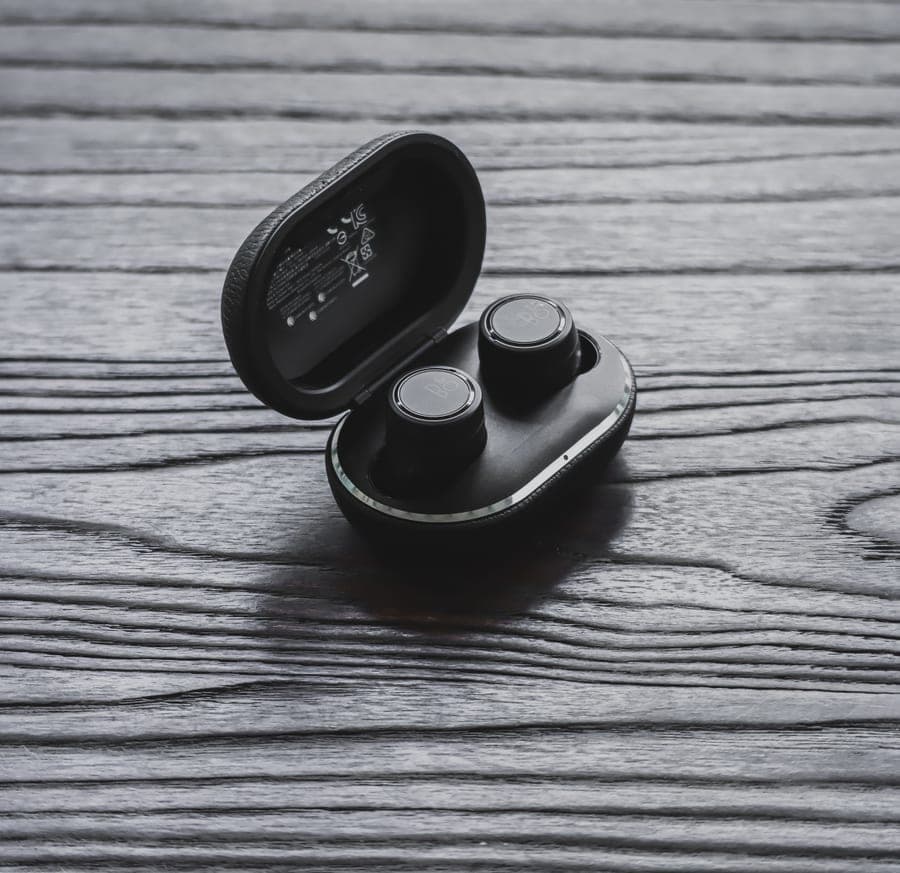 Bose QuietComfort Ultra Earbuds (2nd Gen)The quietest earbuds you can put in a pocket, with the shortest single-charge runtime of the premium set: six rated hours, four with Immersive Audio on. | Best for a seal that stays put | 8.48.4 out of 10, our editorial score | |
| 3 | 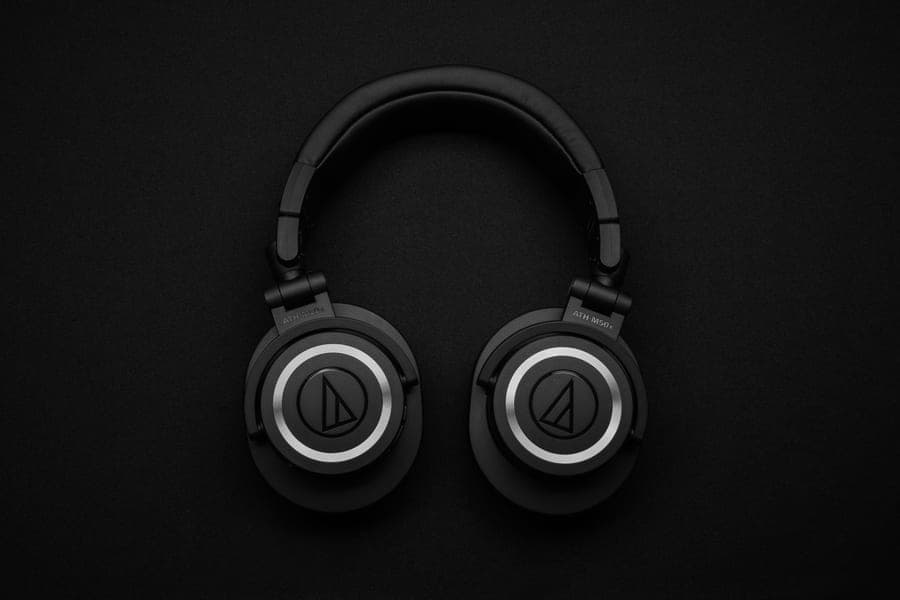 Sennheiser MOMENTUM 4 WirelessSennheiser publishes up to 60 hours. That is the difference between charging at the gate and not thinking about a charger for an entire two-week trip. | Best over-ear seal over a long sitting | 8.88.8 out of 10, our editorial score |
#ad Amazon links are affiliate links. No live price is shown anywhere on this site, so every button reads “Check price on Amazon”. How this is funded.
The picks in full
Every pick, in detail
1. Best fit system in an earbud
Apple AirPods Pro 3
Eight rated hours with canceling on, foam tips in five sizes and an IP57 rating. If your phone is an iPhone this is the least friction of anything here.
Our editorial score: 8.8 / 10
#ad Live price not shown. How this is funded
Also sold direct by Apple — we earn nothing there, so check both.
If the problem is that no tip seals properly, this is the product that attacks it directly: Apple supplies foam tips in five sizes rather than the usual three. Foam conforms to the canal rather than pressing against it, which is the difference between a seal that works and a seal that works for twenty minutes.
8 hours of listening with canceling on, up to 10 in Transparency, up to 24 with the case, and five minutes in the case for around an hour. IP57 on both buds and case.
Apple states the canceling removes up to 2x more noise than AirPods Pro 2. That is Apple’s own claim rather than an independent measurement. The reason it belongs on this page is the tip range, not the claim.
What works on a plane
- Eight rated hours and 24 with the case, matching the best of the premium earbuds
- Foam tips in five sizes solve the fit problem that ruins canceling on most buds
- IP57 on both buds and case is the toughest rating in this group
- Live Translation and heart-rate sensing are genuinely useful abroad, not spec-sheet filler
What does not
- Apple's 2x noise figure is a manufacturer claim measured against its own predecessor, not an independent measurement
- The best features need an iPhone; on Android it is a good but ordinary earbud
- No wired option, so in-flight entertainment needs a transmitter
How it scores against the five travel axes
Published specifications
| Spec | Figure | Source |
|---|---|---|
| Battery, ANC on | 8 hours listening | Apple tech specs |
| Battery, Transparency | Up to 10 hours | Apple tech specs |
| Total with case | Up to 24 hours with ANC | Apple tech specs |
| Quick charge | 5 minutes in the case gives around 1 hour | Apple tech specs |
| Ear tips | Foam tips in five sizes | Apple |
| Water resistance | IP57, buds and case | Apple |
| Apple's ANC claim | Removes up to 2x more noise than AirPods Pro 2 | Apple newsroom |
2. Best for a seal that stays put
Bose QuietComfort Ultra Earbuds (2nd Gen)
The quietest earbuds you can put in a pocket, with the shortest single-charge runtime of the premium set: six rated hours, four with Immersive Audio on.
Our editorial score: 8.4 / 10
#ad Live price not shown. How this is funded
Also sold direct by Bose — we earn nothing there, so check both.
Bose attacks the same problem from the other direction: three stabilizer band sizes and a shallow-insertion design. The band holds the bud in position so the seal does not creep as you move or talk, which is the specific failure that makes canceling seem to come and go.
Up to 6 rated hours with Immersive Audio off and 4 with it on, up to 18 hours total with the case, case charging over USB-C and wirelessly, and IPX4.
Six hours is short and there is no wired fallback. What you are buying is the deepest canceling in an earbud on this site, and a fit system designed to let you actually get it.
What works on a plane
- Canceling that genuinely rivals a full-size over-ear, in something pocketable
- The shallow fit is far more tolerable than deep-insertion buds on a long flight
- Wireless case charging is one fewer cable in the bag
What does not
- Six rated hours means a case top-up mid-flight on any long-haul
- Immersive Audio cuts that to four, so on a plane you will mostly leave it off
- 18 hours total with the case is the weakest reserve in the premium earbud set
How it scores against the five travel axes
Published specifications
| Spec | Figure | Source |
|---|---|---|
| Battery, Immersive off | Up to 6 hours | Bose support |
| Battery, Immersive on | Up to 4 hours | Bose support |
| Total with case | Up to 18 hours | Bose support |
| Case charging | USB-C and wireless | Bose support |
| Water resistance | IPX4 | Bose support |
| Fit | Three stabilizer band sizes, shallow insertion | Bose |
Read the full Bose QuietComfort Ultra Earbuds (2nd Gen) review
3. Best over-ear seal over a long sitting
Sennheiser MOMENTUM 4 Wireless
Sennheiser publishes up to 60 hours. That is the difference between charging at the gate and not thinking about a charger for an entire two-week trip.
Our editorial score: 8.8 / 10
#ad Live price not shown. How this is funded
Also sold direct by Sennheiser — we earn nothing there, so check both.
For an over-ear the seal is the pad, and the pad is defeated by heat and clamping force as much as by shape. This is the most relaxed clamp of the over-ears here, with deep pads that sit around the ear rather than on it.
Up to 60 rated hours of playback, approximately 293 to 295 g, a 42 mm transducer, and fold-flat earcups with a carry case and a 1.2 m 3.5 mm cable.
The relevance to this page is that a pad which stays comfortable stays sealed. A firmer clamp gives a better seal for an hour and a worse one for the next three, because you start adjusting it.
What works on a plane
- Up to 60 rated hours, roughly double the flagship norm
- The 1.2 m 3.5 mm cable is in the box, so seatback screens work straight out of the bag
- Fold-flat earcups make the carry case slim rather than deep
- The 42 mm transducer is the most relaxed listen here over a very long session
What does not
- Published measurements consistently place its noise canceling a step behind the Bose
- The case is broad, so it eats width in a personal item even though it is slim
- Fold-flat is not fold-up, so the footprint is larger than the Sony's
How it scores against the five travel axes
Published specifications
| Spec | Figure | Source |
|---|---|---|
| Battery | Up to 60 hours playback | Sennheiser |
| Weight | Approx. 293-295 g | Sennheiser / published reviews |
| Transducer | 42 mm | Sennheiser |
| In the box | Carry case, USB-C cable, 1.2 m 3.5 mm auxiliary cable | Sennheiser |
| Folds | Fold-flat earcups | Sennheiser |
Questions
Common questions
How can I make my noise cancelling work better?
Fix the seal. Reseat the headphone or ear tip, try the next tip size up and down, clear glasses arms and hair out of the pad seal, clean the pads and tips, replace pads that have gone hard, and then update the firmware and re-run the fit test. The canceling circuit almost never degrades; the seal always does.
Why has my noise cancelling got worse over time?
Because the pads or tips have aged. Foam compresses and coverings stiffen, which reduces passive isolation and changes the acoustic cavity the canceling was tuned for. A replacement pad set typically restores most of the original performance for a fraction of the price of new headphones.
Does ear tip size really affect noise cancelling?
More than any other variable on an earbud. It is why Apple supplies foam tips in five sizes and Bose supplies three stabilizer band sizes. A tip one size out can make a flagship feel like a budget pair.
Do firmware updates improve noise cancelling?
They can, because the canceling algorithm lives in firmware. Install updates, and re-run any fit test or personalized EQ afterwards, since those calibration profiles are tied to a firmware version and are not always carried across.
Will turning the volume up help block noise?
It masks noise rather than removing it, and it is the main way people damage their hearing with a canceling headphone. NIOSH sets its recommended exposure limit at 85 A-weighted decibels averaged over an eight-hour workday, and masking a loud cabin pushes you toward that.
Sources
Where these figures come from
- Apple AirPods Pro 3 tech specs (foam tips in five sizes, battery, IP57, ANC claim)
- Bose QuietComfort Ultra Earbuds (2nd Gen) specifications (three stabilizer band sizes, shallow insertion, battery, IPX4)
- Sennheiser MOMENTUM 4 Wireless product page (pad and earcup design, 60 hours, weight, transducer)
- Soundcore Space One product page (Hear ID customized EQ, rotating and folding earcups)
- Soundcore Space Q45 product page (Hear ID customized EQ, published dimensions)
- CDC / NIOSH, About noise and hearing loss (85 dBA recommended exposure limit over eight hours; raising your voice at three feet)
Read next
Related reading
- How to clean headphone ear pads
Step four, in full, including the without-removing-them method.
- ANC vs passive noise isolation
Why the seal is half the system rather than an accessory.
- How long do noise-cancelling headphones last?
Which parts wear out, in what order, and what is replaceable.
- Why do noise-cancelling headphones hurt my ears?
When a better seal is the thing causing the problem.