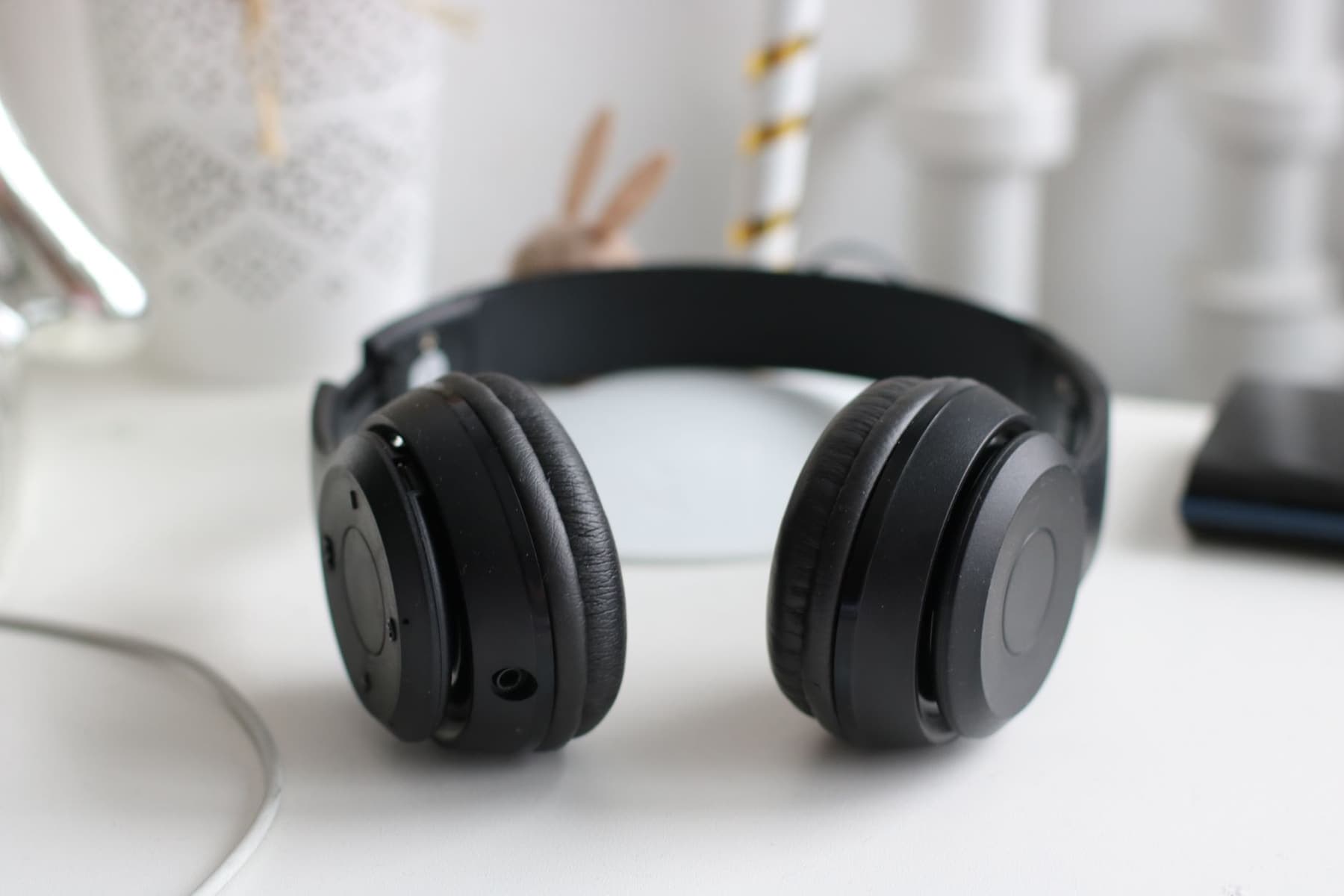
Expect a well-treated pair of noise-canceling headphones to last three to five years, and longer if you replace the ear pads. The battery is usually the first thing to limit them, losing capacity gradually over hundreds of charge cycles rather than failing suddenly. Ear pads wear out in roughly one to two years of daily use and are cheap to replace; the folding hinge is the part that fails permanently, almost always from being carried loose in a bag rather than in its case.
Two questions
Hours per charge, or years of ownership?
People asking this question mean one of two things. If you mean hours, the rated figures run from about 20 to about 70 hours with canceling on, and the honest arithmetic against a real trip is in headphone battery life for long-haul flights.
If you mean years, the answer is three to five for most people, extendable by replacing pads, and this page is about why.
Part one
The battery: gradual, not sudden
Lithium-ion cells lose capacity with charge cycles and with time, and a headphone cell is no different. The failure is not dramatic: a headphone rated for 30 hours gives you perhaps 25 after two years and perhaps 18 after four, and because the decline is slow most people never notice until a flight catches them out.
What accelerates it
- Heat. The main enemy. A car dashboard in summer, or a bag in direct sun, does more damage in an afternoon than a month of normal use.
- Sitting at 100 percent on the charger permanently. A cell held full is under more stress than one cycling in the middle of its range.
- Sitting fully flat for months. Long storage at zero is the one state that can damage a cell irreversibly. Charge to around half before storing anything away.
What to do about it
Buy more rated capacity than you need, so the decline stays invisible for longer. Prefer a headphone with a 3.5 mm input, because a dead cell ends a wireless-only headphone and merely changes how you use a wired-capable one. And keep it out of hot cars.
A battery rarely kills a headphone. Being carried loose in a bag kills headphones, and it does it at the hinge.
Part two
The pads: the part that actually ends most headphones
Ear pads are consumables. Coated pads crack and flake where skin oils break the surface down; fabric pads flatten and lose depth. Either way, roughly one to two years of daily use is normal, and the result is a headphone that is simultaneously less comfortable and worse at isolating, because the seal is gone.
This is the cheapest and most effective repair available on any headphone, and it is also the reason to check before you buy whether replacement pads exist for your model. A headphone with available pads can be good for a decade. One without them has the lifespan of its pads. How to clean headphone ear pads covers slowing the wear down.
Part three
The hinge: the failure that is permanent
Folding mechanisms and headband sliders are the only parts of a headphone that are not practically repairable, and they fail for one reason: a folded headphone carried loose in a bag, taking the weight of everything else in that bag through the joint.
Using the supplied case is not a precaution, it is the single habit that decides whether a travel headphone reaches year five. The full set of packing habits is in how to pack headphones for travel.
Part four
The cable: fails at the plug, always
If there is a cable, it will eventually fail at the strain relief where it enters the plug, because that is where the sharpest repeated bend happens. Winding a cable in one direction round and round builds twist into the conductors and makes it worse; winding over and under in alternating directions does not.
Where a cable is detachable — a 3.5 mm input on an over-ear, or MMCX connectors on an in-ear monitor — this is a $15 problem rather than a dead product.
Reference
What wears out, how fast, and what it costs
| Part | Typical life | Failure mode | Fixable? |
|---|---|---|---|
| Ear pads | 1-2 years of daily use | Coating cracks, foam flattens, seal lost | Yes, cheaply, if replacements exist for the model |
| Battery | 3-5 years to a noticeable decline | Gradual capacity loss over charge cycles | Rarely by the owner; sometimes by a service center |
| Folding hinge / slider | Indefinite if cased, or one bad bag | Cracks under load from being carried loose | Usually not |
| Cable | 1-3 years if used daily | Conductor break at the plug strain relief | Yes, if detachable |
| Headband padding | 2-4 years | Compresses, surface splits | Sometimes, model dependent |
| Software support | Varies by manufacturer | App dropped, firmware no longer updated | No, but the headphone keeps working |
Earbuds
Why earbuds last less long
Canceling earbuds have a shorter ownership life than over-ear headphones, and it is structural rather than a quality difference. The cells are tiny, so the same number of cycles removes a larger proportion of a smaller capacity; there are three cells to age, two buds and a case; and the buds live in pockets, bags and bathrooms.
Three years is a reasonable expectation for a canceling earbud in daily use, against four or five for an over-ear. If longevity is high on your list, that difference belongs in the form-factor decision alongside comfort and carry size — see earbuds vs over-ear.
What to look for
What to buy for a long life, and three checks
- Replaceable ear pads, confirmed before purchase. Search for pads for the specific model. If none exist, you are buying the pads’ lifespan.
- A 3.5 mm input. It is what the headphone becomes when the battery no longer holds a useful charge, and it costs the manufacturer almost nothing to include.
- Rated capacity above what you need. Headroom is how you make years of gradual decline invisible.
The three picks below are the one with the most battery headroom to lose, the one whose folding case and canceling-off mode make long ownership easiest, and a wired pair with a limited lifetime warranty and nothing to degrade at all.
In short
Key takeaways
- Expect three to five years from a canceling over-ear in regular use, longer if you replace the pads.
- The battery declines gradually over hundreds of cycles; heat and long storage at zero are what accelerate it.
- Ear pads wear out in one to two years of daily use and are the cheapest effective repair available.
- The folding hinge is the one permanent failure, and it comes from carrying the headphone loose in a bag.
- A 3.5 mm input is what a headphone becomes when the cell is finished — prefer models that have one.
- Canceling earbuds last around three years: smaller cells, three of them, and a harder life.
At a glance
Quick picks
Scores are our editorial judgment from published specifications and cited third-party measurements, not our own testing. The rubric is published in full. Tap any row for the full write-up.
| # | Product | Best for | Score | Price |
|---|---|---|---|---|
| 1 | 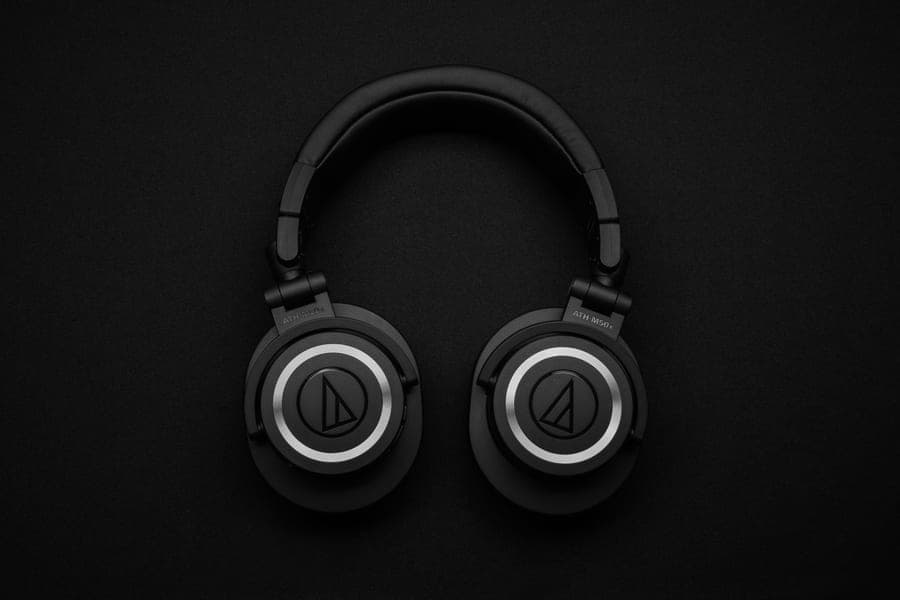 Sennheiser MOMENTUM 4 WirelessSennheiser publishes up to 60 hours. That is the difference between charging at the gate and not thinking about a charger for an entire two-week trip. | Most battery headroom to lose | 8.88.8 out of 10, our editorial score | |
| 2 | 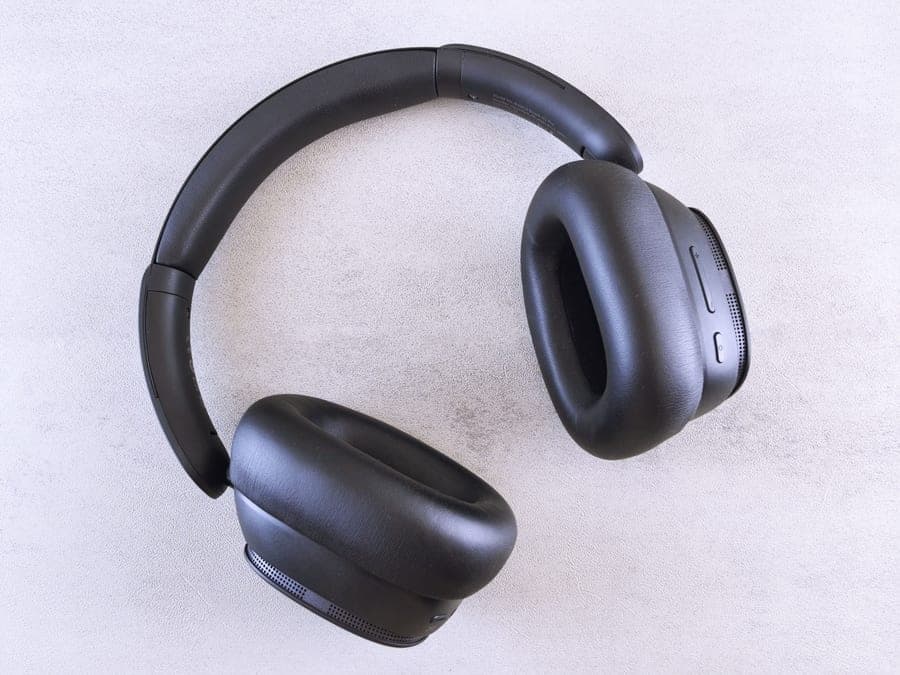 Sony WH-1000XM6The most complete travel headphone on sale: 254 g, 30 rated hours with noise canceling on, and it folds into a case small enough to stop being a decision. | Best long-term travel ownership | 9.19.1 out of 10, our editorial score | |
| 3 | 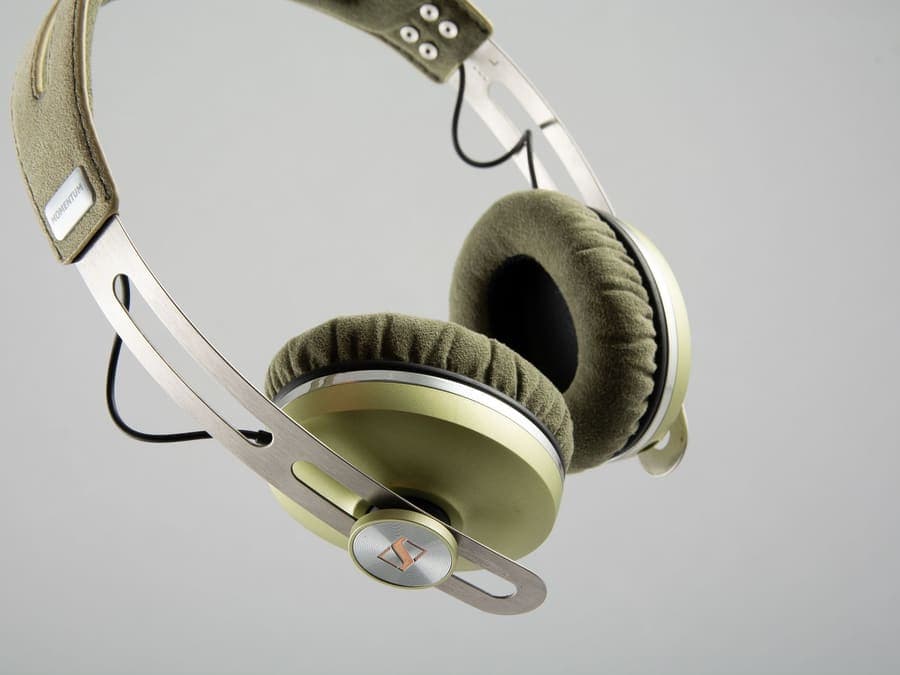 Koss Porta ProListed at $49.99 with a limited lifetime warranty, which means the cheapest headphone here is also the one least likely to need replacing. | Nothing to degrade | 7.47.4 out of 10, our editorial score |
#ad Amazon links are affiliate links. No live price is shown anywhere on this site, so every button reads “Check price on Amazon”. How this is funded.
The picks in full
Every pick, in detail
1. Most battery headroom to lose
Sennheiser MOMENTUM 4 Wireless
Sennheiser publishes up to 60 hours. That is the difference between charging at the gate and not thinking about a charger for an entire two-week trip.
Our editorial score: 8.8 / 10
#ad Live price not shown. How this is funded
Also sold direct by Sennheiser — we earn nothing there, so check both.
The best defense against battery degradation is starting with more capacity than you need. Up to 60 rated hours of playback means that after several years of cycling, a meaningful decline still leaves you with more usable runtime than most new headphones ship with.
Approximately 293-295 g with a 42 mm transducer, a carry case, a USB-C cable and a 1.2 m 3.5 mm auxiliary cable in the box. Sennheiser lists it at $299.95 at the time of writing.
The cable in the box is the other longevity point: when the cell eventually will not hold a useful charge, a headphone with a wired input is still a headphone.
What works on a plane
- Up to 60 rated hours, roughly double the flagship norm
- The 1.2 m 3.5 mm cable is in the box, so seatback screens work straight out of the bag
- Fold-flat earcups make the carry case slim rather than deep
- The 42 mm transducer is the most relaxed listen here over a very long session
What does not
- Published measurements consistently place its noise canceling a step behind the Bose
- The case is broad, so it eats width in a personal item even though it is slim
- Fold-flat is not fold-up, so the footprint is larger than the Sony's
How it scores against the five travel axes
Published specifications
| Spec | Figure | Source |
|---|---|---|
| Battery | Up to 60 hours playback | Sennheiser |
| Weight | Approx. 293-295 g | Sennheiser / published reviews |
| Transducer | 42 mm | Sennheiser |
| In the box | Carry case, USB-C cable, 1.2 m 3.5 mm auxiliary cable | Sennheiser |
| Folds | Fold-flat earcups | Sennheiser |
2. Best long-term travel ownership
Sony WH-1000XM6
The most complete travel headphone on sale: 254 g, 30 rated hours with noise canceling on, and it folds into a case small enough to stop being a decision.
Our editorial score: 9.1 / 10
#ad Live price not shown. How this is funded
Also sold direct by Sony — we earn nothing there, so check both.
Up to 30 rated hours with canceling on and 40 with it off, about 3.5 hours to a full charge. The canceling-off figure matters for lifespan: as a cell ages, running without canceling is the mode that keeps the headphone useful longest.
Approximately 254 g and it folds into a case — and the case is the single biggest factor in whether a travel headphone survives five years, because the hinge is what fails and loose-in-a-bag is what breaks it.
There is a 3.5 mm socket for the eventual wired life, but Sony does not supply the cable. Buy one now and keep it in the case, not later when you need it.
What works on a plane
- Folds, which halves the space it takes in a personal item
- 254 g is light for a flagship over-ear, and weight is what you feel at hour four
- LDAC plus LC3 means it is not locked to one phone ecosystem
- 30 rated hours with noise canceling on covers almost any single routing
What does not
- You pay a flagship price for the last increment of noise canceling
- The folding hinge is one more mechanism to eventually wear out
- No airline two-prong adapter in the box
How it scores against the five travel axes
Published specifications
| Spec | Figure | Source |
|---|---|---|
| Weight | Approx. 254 g (9 oz) | Sony Help Guide specifications |
| Battery, NC on | Up to 30 hours | Sony specifications |
| Battery, NC off | Up to 40 hours | Sony specifications |
| Full charge | Approx. 3.5 hours | Sony Help Guide specifications |
| Bluetooth | 5.3 | Sony Help Guide specifications |
| Codecs | SBC, AAC, LDAC, LC3 | Sony Help Guide specifications |
| Wired response | 4 Hz - 40,000 Hz (IEC) | Sony Help Guide specifications |
| Folds | Yes, into a magnetic-closure case | Sony |
3. Nothing to degrade
Koss Porta Pro
Listed at $49.99 with a limited lifetime warranty, which means the cheapest headphone here is also the one least likely to need replacing.
Our editorial score: 7.4 / 10
#ad Live price not shown. How this is funded
Also sold direct by Koss — we earn nothing there, so check both.
$49.99 at the time of writing, wired, with a limited lifetime warranty. There is no battery to lose capacity, no firmware to be abandoned and no Bluetooth standard to be left behind.
15 Hz to 25,000 Hz, 101 dB SPL/1mW sensitivity, and a 4 ft dual-entry cable with a 3.5 mm plug. The design has been in production for decades, which is itself the strongest statement about longevity available on this page.
It has no canceling and almost no isolation, so it is not a substitute for the two above. It is on this page as the honest comparison: a $50 wired headphone can easily outlast a $400 wireless one.
What works on a plane
- A limited lifetime warranty on a $49.99 headphone, which is not a normal thing to find
- Wired, so there is no battery to degrade and nothing to charge
- Collapses flat into a bag with no case and no hinge to snap
- The 3.5 mm plug works with a seatback screen directly, no transmitter required
What does not
- Open-backed on-ear, so it blocks very little and leaks sound to your neighbor
- No noise canceling whatsoever — this is the wrong purchase for engine drone
- Foam pads wear out, though replacements are cheap and easy to fit
How it scores against the five travel axes
Questions
Common questions
How long do noise-canceling headphones last?
Three to five years for a well-treated over-ear pair, and longer if you replace the ear pads when they wear out. The battery is usually what limits them, declining gradually rather than failing suddenly.
Do noise-canceling headphones wear out?
The canceling itself does not degrade, because it is processing rather than a wearing part. What degrades is the seal: once pads flatten or crack, both comfort and passive isolation drop, and the canceling has more noise to fight. Replacing pads often restores most of what felt like declining performance.
Can you replace the battery in noise-canceling headphones?
Rarely as an owner, sometimes through a manufacturer service center, and it depends heavily on the model. The practical plan is to buy extra rated capacity up front and to prefer a headphone with a 3.5 mm input, which keeps working regardless.
How do I make my headphones last longer?
Four habits: use the case rather than carrying them loose, keep them out of hot cars, avoid leaving them permanently at 100 percent or flat for months, and replace the ear pads when the surface starts to break down.
Do earbuds last as long as over-ear headphones?
No. Around three years in daily use against four or five for an over-ear. The cells are much smaller so each cycle costs a larger share of capacity, there are three cells to age rather than one, and they live in pockets and bags.
Sources
Where these figures come from
Read next
Related reading
- How to clean headphone ear pads
Slowing down the wear on the part that fails first.
- How to pack headphones for travel
The habit that decides whether the hinge survives.
- Headphone battery life for long-haul flights
The other meaning of “how long do they last”.
- Best wired headphones for flights
What a headphone becomes when there is no battery to age.