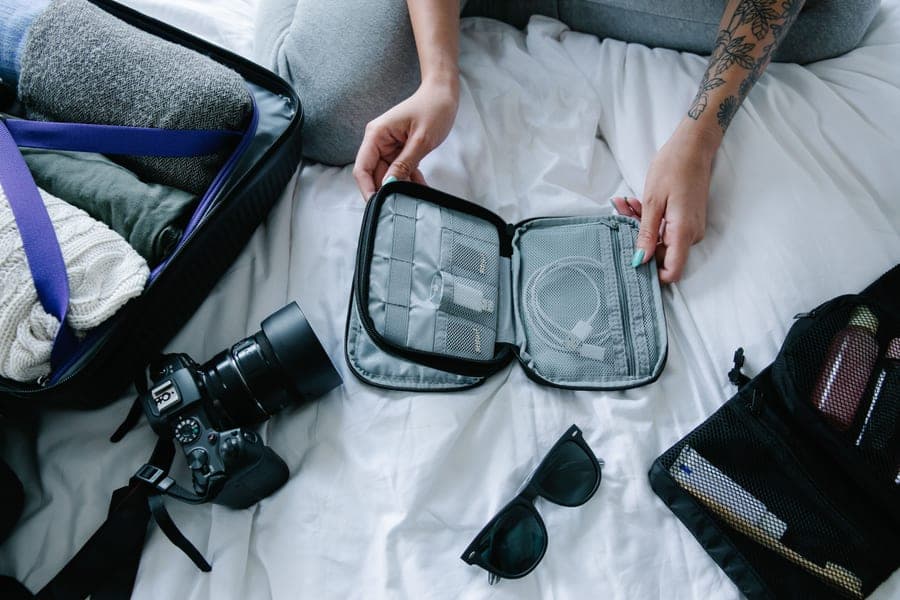
To pack headphones for travel: fold them into their rigid case rather than putting them loose in a bag, keep the audio cable and a two-prong airline adapter permanently in the case pocket, wind cables in alternating directions rather than one, charge the night before, place the case flat against a rigid neighbor such as a laptop compartment, and keep earbud cases out of trouser pockets.
Why this matters
A headphone spends most of a trip in a bag
On a five-day trip a pair of headphones might be worn for fifteen hours and packed for a hundred. The hundred is where the damage happens: compressed under a laptop, dropped into a footwell, wedged into an overhead bin beside a hard-shell case.
And the specific thing that fails is predictable. Headphone hinges are the most common eventual mechanical failure in the category, and they fail from being folded and then loaded — which is exactly what a folded headphone loose in a bag experiences.
One habit accounts for most of the value on this page: fold into the case, never loose into the bag.
The steps
Six steps, in order of how much they matter
- Fold into the case, never loose into the bag. Folding a headphone and then putting it loose in a bag applies precisely the loads that stress a hinge. Fold it into the supplied rigid case instead. If the two steps of the packing process are “fold” and “put in bag”, the case has to come between them.
- Load the case pocket permanently. The audio cable, a two-prong airline adapter and a short USB-C cable, in the pocket, for good. The entire problem with accessories is remembering them, and a loaded case makes that structural rather than a matter of willpower.
- Wind cables loosely, over and under. Coil in alternating directions rather than round and round the same way. A same-direction coil builds twist into the conductors, and that twist is what eventually breaks a cable at the strain relief next to the plug.
- Charge before you pack, not before you board. The night before, on a desk, rather than hunting for a gate outlet. Every current headphone charges over USB-C, so the same cable and plug adapter as your phone will do — which is the whole reason to standardize on USB-C for a trip.
- Put the case flat against a rigid neighbor. The laptop compartment, or a book. That gives the case something to share load with rather than being the object that absorbs a compression on its own. The bottom of a bag under everything is the worst place.
- Keep earbud cases out of trouser pockets. A trouser pocket means the case is sat on and takes body heat and moisture. A jacket or bag pocket is better for the case and considerably less likely to result in losing it.
Case geometry
Match the case shape to the bag
Which case you have determines where it should go, and the three types behave differently.
| Case type | Shape | Best place | Worst place |
|---|---|---|---|
| Fold-up hard case (Sony, Soundcore) | Compact block | A packing cube, or beside a laptop | Loose at the bottom of a tote |
| Fold-flat slim case (Sennheiser, JBL) | Thin and wide | A laptop compartment | A cylindrical daypack |
| Compact hard case (Bose) | Small rigid block | Anywhere structured | A bag you hoped to compress |
| Soft cover (Apple Smart Case) | Fixed, headband exposed | A bag with genuine room | Anywhere under compression |
| Earbud charging case | Pocketable | A jacket or bag pocket | A trouser pocket |
The Apple row is worth dwelling on if you own AirPods Max. The Smart Case weighs 134.5 g, covers the earcups and leaves the headband exposed, and its primary function is putting the headphones into a low-power state rather than protecting them. If you travel with them regularly, a third-party hard case is a genuinely worthwhile purchase — travel headphone cases goes into what a good one does.
Two more things
Worth doing, less critical
Take the pads off the heat
A headphone left in a hot car or against a sunlit window for hours is having its pad material aged prematurely. Perished pads seal worse, and a lost seal costs real canceling performance — see active canceling versus passive isolation. Pack the case out of direct sun.
Pack spare ear tips if you use earbuds
They cost almost nothing, they are the single item most likely to be lost, and a missing tip turns a premium earbud into a poorly-sealing one for the rest of the trip. Two spare pairs in the case.
The checklist
What should be in the case when you leave
- The headphones, folded, inside the case rather than beside it.
- The audio cable that came with them, or a cheap 3.5 mm one if they came without.
- A two-prong airline adapter for older seats.
- A short USB-C cable.
- A Bluetooth transmitter, if you use earbuds or want to reach a seatback screen wirelessly.
- Spare ear tips, for earbuds.
All of that weighs very little and lives in the case permanently. The point is that you never pack it, because you never unpack it.
In short
Key takeaways
- Fold into the case, never loose into the bag. This one habit prevents the most common mechanical failure.
- Load the case pocket permanently: audio cable, two-prong adapter, USB-C cable. Never take them out.
- Coil cables in alternating directions. Same-direction coiling builds the twist that breaks them.
- Place the case flat against a rigid neighbor such as a laptop compartment, not at the bottom of the bag.
- Match the case shape to your bag: fold-up suits a cube, fold-flat suits a laptop compartment.
- Keep earbud cases out of trouser pockets, and pack two spare pairs of tips.
At a glance
Quick picks
Scores are our editorial judgment from published specifications and cited third-party measurements, not our own testing. The rubric is published in full. Tap any row for the full write-up.
| # | Product | Best for | Score | Price |
|---|---|---|---|---|
| 1 | 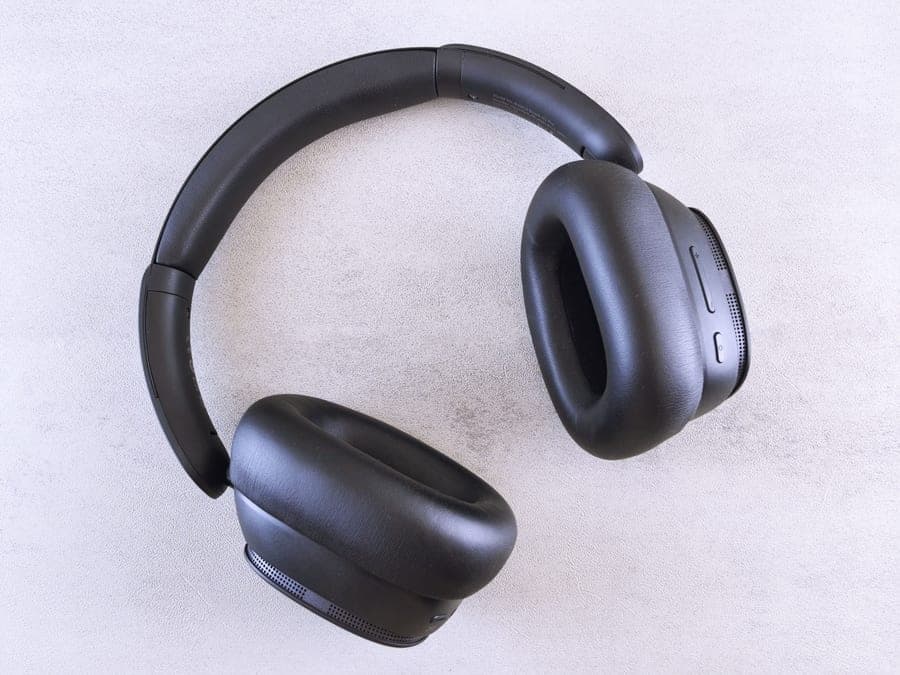 Sony WH-1000XM6The most complete travel headphone on sale: 254 g, 30 rated hours with noise canceling on, and it folds into a case small enough to stop being a decision. | Easiest to pack | 9.19.1 out of 10, our editorial score | |
| 2 | 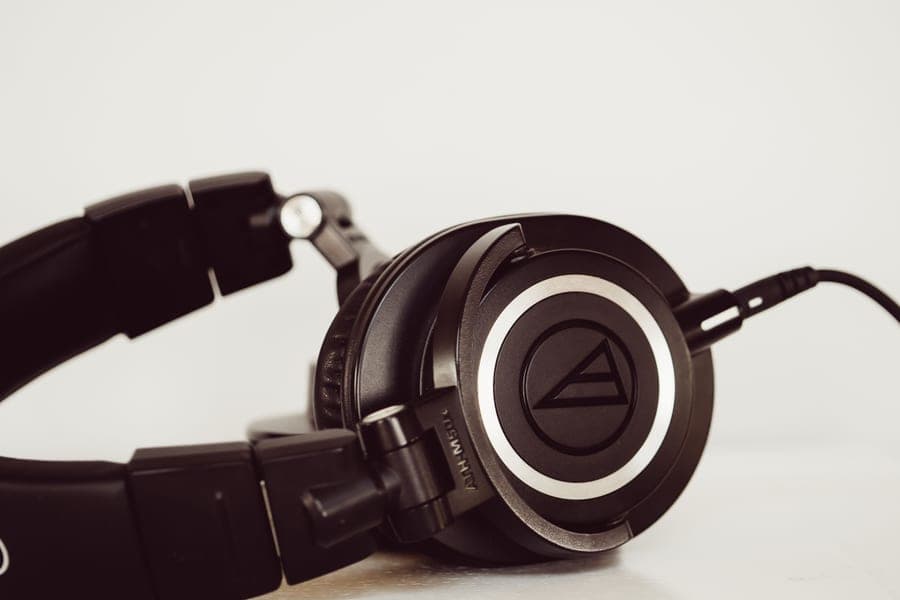 Bose QuietComfort Ultra Headphones (2nd Gen)The quietest cabin of anything here, and the only over-ear in this group whose box already contains the audio cable a seatback screen needs. | Best case pocket | 9.09.0 out of 10, our editorial score | |
| 3 | 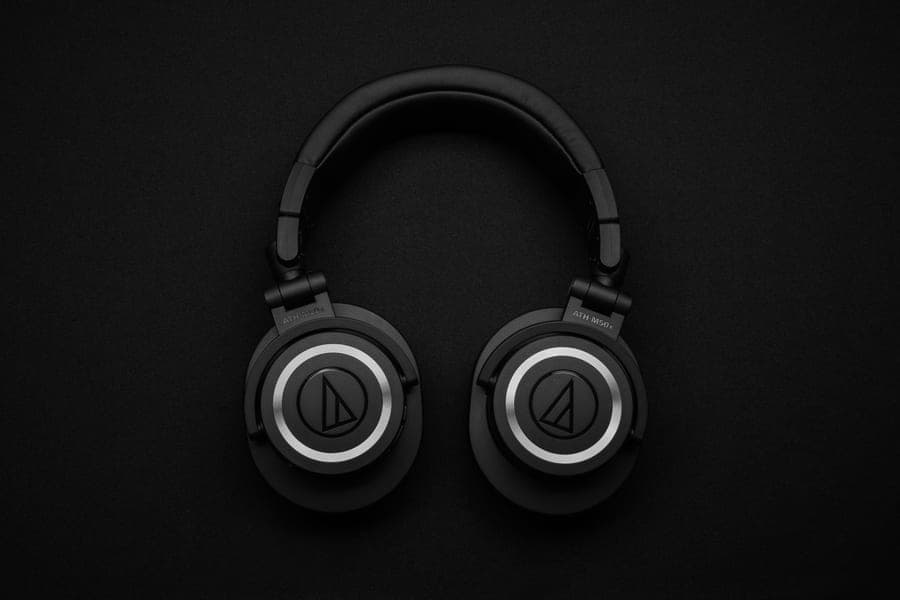 Soundcore Space Q45Fifty rated hours with canceling on, a hard case and a 3.5 mm cable in the box, at a fraction of flagship money. The compromise is in the last 10 percent of quiet, not the first 80. | Best case on a budget | 8.28.2 out of 10, our editorial score | |
| 4 | 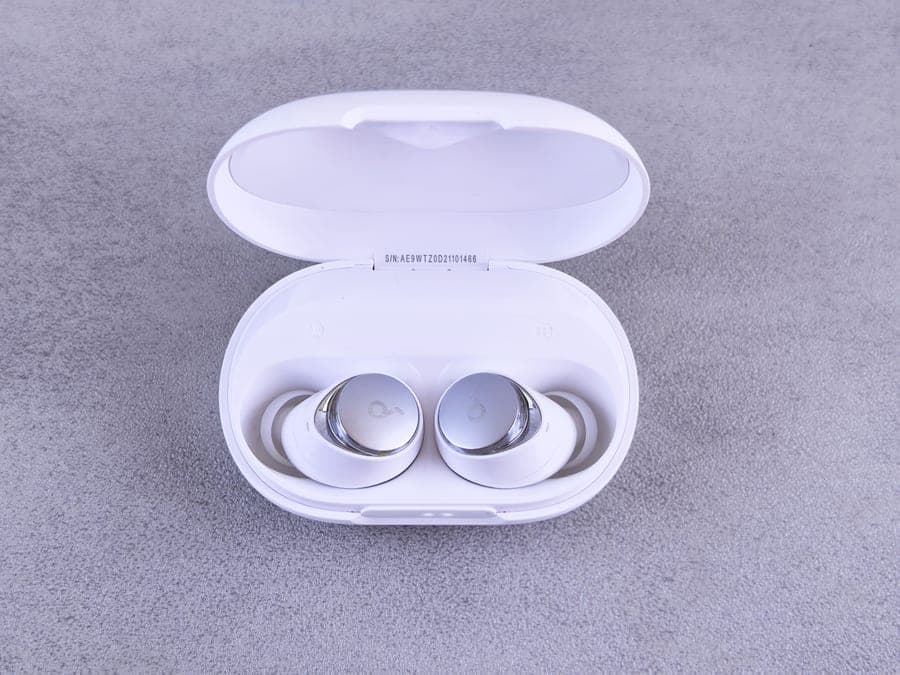 Sony WF-1000XM6Eight rated hours per bud and 24 with the case, at roughly 6.5 g each. The most sensible premium earbud for a flight, because you never have to plan around the battery. | If packing is the problem | 8.98.9 out of 10, our editorial score |
#ad Amazon links are affiliate links. No live price is shown anywhere on this site, so every button reads “Check price on Amazon”. How this is funded.
The picks in full
Every pick, in detail
1. Easiest to pack
Sony WH-1000XM6
The most complete travel headphone on sale: 254 g, 30 rated hours with noise canceling on, and it folds into a case small enough to stop being a decision.
Our editorial score: 9.1 / 10
#ad Live price not shown. How this is funded
Also sold direct by Sony — we earn nothing there, so check both.
The headphone that makes all of this easiest. It folds up — collapsing the headband as well as rotating the cups — into a compact hard case with a magnetic closure that opens one-handed in a seat.
At approximately 254 g it is also the lightest flagship, so the packed object is small and light rather than only small.
What works on a plane
- Folds, which halves the space it takes in a personal item
- 254 g is light for a flagship over-ear, and weight is what you feel at hour four
- LDAC plus LC3 means it is not locked to one phone ecosystem
- 30 rated hours with noise canceling on covers almost any single routing
What does not
- You pay a flagship price for the last increment of noise canceling
- The folding hinge is one more mechanism to eventually wear out
- No airline two-prong adapter in the box
How it scores against the five travel axes
Published specifications
| Spec | Figure | Source |
|---|---|---|
| Weight | Approx. 254 g (9 oz) | Sony Help Guide specifications |
| Battery, NC on | Up to 30 hours | Sony specifications |
| Battery, NC off | Up to 40 hours | Sony specifications |
| Full charge | Approx. 3.5 hours | Sony Help Guide specifications |
| Bluetooth | 5.3 | Sony Help Guide specifications |
| Codecs | SBC, AAC, LDAC, LC3 | Sony Help Guide specifications |
| Wired response | 4 Hz - 40,000 Hz (IEC) | Sony Help Guide specifications |
| Folds | Yes, into a magnetic-closure case | Sony |
2. Best case pocket
Bose QuietComfort Ultra Headphones (2nd Gen)
The quietest cabin of anything here, and the only over-ear in this group whose box already contains the audio cable a seatback screen needs.
Our editorial score: 9.0 / 10
#ad Live price not shown. How this is funded
Also sold direct by Bose — we earn nothing there, so check both.
The best implementation of step two on this page. The case has a pocket in the lid, and Bose ships the USB-C cable and the 2.5 mm-to-3.5 mm audio cable already in it.
Add a two-prong airline adapter to that pocket and your entire travel audio kit is one object you cannot forget half of.
What works on a plane
- The best low-frequency canceling in this group, which is exactly the band engine drone lives in
- The 2.5 mm-to-3.5 mm cable is in the box, so a seatback screen needs nothing extra
- Compact hard case for a full-size over-ear
- Up to 45 hours with canceling off, if you only want isolation on a train
What does not
- Immersive Audio costs you a third of the battery, dropping to 23 rated hours
- Heavier than the Sony by roughly 10 g, and clamp is firmer out of the box
- The hard case is compact but still rigid, so it will not squash into a full bag
How it scores against the five travel axes
Published specifications
| Spec | Figure | Source |
|---|---|---|
| Battery, ANC on | Up to 30 hours | Bose |
| Battery, ANC off | Up to 45 hours | Bose |
| Battery, Immersive Audio on | Up to 23 hours | Bose |
| Weight | Approx. 264 g (9.3 oz) as reported | Published reviews |
| USB-C audio | 16-bit, 44.1 or 48 kHz lossless input | Bose support |
| In the box | Hard case, USB-C cable, 2.5 mm-to-3.5 mm audio cable | Bose |
| Folds | Earcups rotate flat into a compact hard case | Bose |
Read the full Bose QuietComfort Ultra Headphones (2nd Gen) review
3. Best case on a budget
Soundcore Space Q45
Fifty rated hours with canceling on, a hard case and a 3.5 mm cable in the box, at a fraction of flagship money. The compromise is in the last 10 percent of quiet, not the first 80.
Our editorial score: 8.2 / 10
#ad Live price not shown. How this is funded
Also sold direct by Soundcore — we earn nothing there, so check both.
A hard-shell case on an inexpensive headphone, which is unusual because the case is a real cost and the first thing manufacturers cut at this price.
It matters more here than on a metal headphone: the Space Q45 is plastic, so the case is doing more of the protective work. It also folds, so the packed object is a compact block.
What works on a plane
- Up to 50 rated hours with canceling on, which beats every flagship here
- Hard case and 3.5 mm cable included, so nothing else to buy for a seatback screen
- Five minutes of charge buys four hours, which covers a gate-side mistake
- The cheapest way to get genuinely useful drone reduction on a plane
What does not
- Soundcore's own 98 percent figure is a marketing claim, not a measurement, and the gap to Bose is audible
- 295 g with plainer pad materials, so hour four is less comfortable than the Sennheiser's
- Plastic build will not survive being crushed in an overhead bin the way the metal Apple would
How it scores against the five travel axes
Published specifications
| Spec | Figure | Source |
|---|---|---|
| Battery, ANC on | Up to 50 hours | Soundcore |
| Battery, ANC off | Up to 65 hours | Soundcore |
| Quick charge | 5 minutes gives 4 hours | Soundcore |
| Weight | Approx. 295 g (10.3 oz) | Soundcore / published reviews |
| Bluetooth | 5.3 | Soundcore |
| In the box | Hard-shell case, 3.5 mm cable, USB-C cable | Soundcore |
4. If packing is the problem
Sony WF-1000XM6
Eight rated hours per bud and 24 with the case, at roughly 6.5 g each. The most sensible premium earbud for a flight, because you never have to plan around the battery.
Our editorial score: 8.9 / 10
#ad Live price not shown. How this is funded
Also sold direct by Sony — we earn nothing there, so check both.
The honest observation on a packing page: if these steps feel like too much effort, the answer may be a form factor that does not need them. An earbud case goes in a jacket pocket and there is nothing to fold.
Roughly 6.5 g a bud, eight rated hours and 24 with the case, and the case charges wirelessly so there is one fewer cable to coil.
What works on a plane
- Eight rated hours per charge clears most short-haul flights without touching the case
- 24 hours total with the case is the strongest reserve in the premium earbud set
- LDAC means it is not tied to one phone platform
- Roughly 6.5 g per bud effectively disappears when you are trying to sleep on your side
What does not
- Canceling is excellent but the Bose still takes the low-frequency band
- No wired fallback at all, so a seatback screen needs a transmitter
- IPX4 is splash resistance, not weather resistance
How it scores against the five travel axes
Published specifications
| Spec | Figure | Source |
|---|---|---|
| Battery, earbuds | Up to 8 hours | Sony |
| Total with case | Up to 24 hours (16 from the case) | Sony |
| Weight | Approx. 6.5 g per bud with M tips | Sony |
| Driver | 8.4 mm | Sony |
| Bluetooth | 5.3 | Sony |
| Codecs | SBC, AAC, LDAC, LC3 | Sony |
| Water resistance | IPX4 | Sony |
| Processor | HD Noise Canceling Processor QN3e, dual processors, eight microphones | Sony |
Questions
Common questions
How should I pack headphones so they do not break?
Fold them into the supplied rigid case rather than putting them folded and loose into a bag. A folded headphone under compression is exactly what stresses a hinge, and hinges are the most common eventual mechanical failure on a headphone.
Should I keep the case my headphones came with?
Yes, and use it. The case is part of the product rather than packaging, and on most flagships it is a rigid case designed around the headphone’s fold geometry. The exception is the Apple Smart Case, which is a soft cover that leaves the headband exposed — a third-party hard case is a real upgrade there.
What should I keep in my headphone case?
The audio cable, a two-prong airline adapter, a short USB-C cable, and spare ear tips if you use earbuds. Keep them there permanently rather than packing them each trip — the whole problem with accessories is remembering them.
How do I coil headphone cables without damaging them?
Loosely, in alternating directions — one loop clockwise, the next counter-clockwise. Coiling round and round the same way builds twist into the conductors, and that twist is what eventually breaks a cable at the strain relief next to the plug.
Where should headphones go in a carry-on?
Flat against something rigid, such as a laptop compartment, so the case shares load rather than absorbing a compression on its own. The worst place is the bottom of the bag under everything else.
Can I put headphones in a checked bag?
You can, but there are two reasons not to: you want them on the flight, and lithium batteries are generally expected to travel in the cabin rather than the hold. Headphones belong in your personal item.
Sources
Where these figures come from
Read next
Related reading
- Travel headphone cases
Which headphones ship a case worth carrying.
- Best foldable noise-canceling headphones
Fold geometry decides what shape you are packing.
- How to clean headphone ear pads
The other maintenance job that pays for itself.
- Airplane headphone jack adapters
What belongs in the case pocket.
- Best travel headphones
If you are choosing something easier to pack.