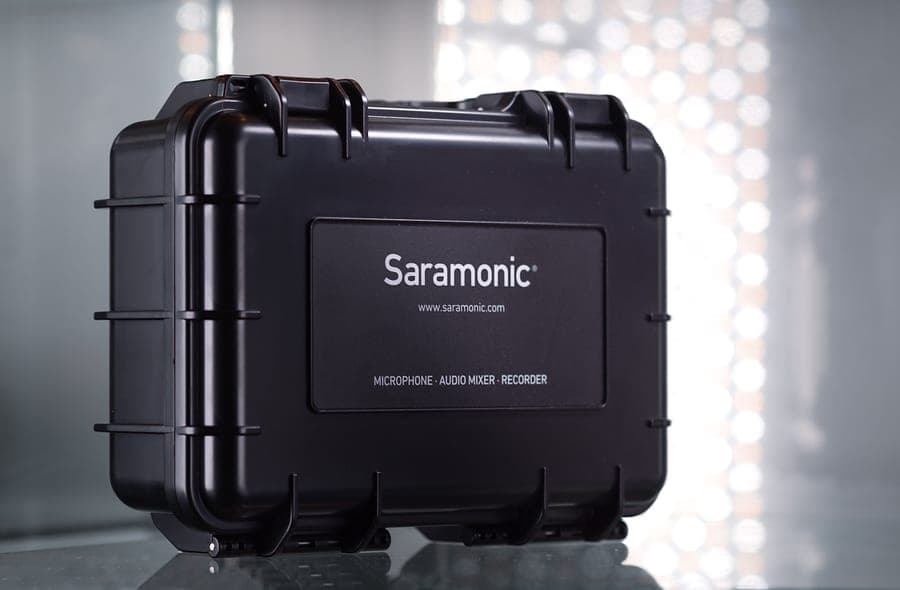
The best travel headphone case is a compact rigid one, and the best of the included cases is the Sony WH-1000XM6’s: it works with the headphone’s fold-up geometry, closes magnetically, and protects the folding hinge. The Bose, Soundcore and JBL also ship hard cases; the Sennheiser ships a slim fold-flat one. The Apple AirPods Max ships a soft Smart Case that adds 134.5 g and leaves the headband exposed.
Why this page exists
On a trip, the case is most of the product
A pair of headphones on a five-day trip is worn for maybe fifteen hours and packed for about a hundred. The hundred is where the damage happens: compressed under a laptop, dropped into a footwell, wedged into an overhead bin next to a hard-shell suitcase.
And yet almost nobody compares cases. Buying decisions are made on canceling and battery, and the object that determines whether the headphones survive the trip is treated as packaging.
Three headphones here ship a compact rigid case. One ships a soft cover that leaves the headband exposed. That is a product difference, not a packaging difference.
The comparison
What each headphone actually ships
| Model | Case type | Holds accessories | Protects the hinge |
|---|---|---|---|
| Sony WH-1000XM6 | Compact hard, magnetic closure | Yes, small pocket | Yes, and it folds up inside |
| Bose QuietComfort Ultra 2nd Gen | Compact hard | Yes, pocket in the lid with both cables | Yes |
| Soundcore Space Q45 | Hard shell | Yes | Yes |
| Sennheiser MOMENTUM 4 | Slim carry case | Yes, cables included | Partly, fold-flat only |
| JBL Tour One M3 | Case plus full accessory kit | Yes, transmitter and three cables | Partly, fold-flat only |
| Apple AirPods Max (USB-C) | Soft Smart Case, 134.5 g | No | No headband coverage at all |
What good looks like
Four things a travel case has to do
- Protect the hinge. A folding hinge is the most common eventual mechanical failure point on a headphone, and it fails from being folded and then compressed loose in a bag. A rigid case removes that load entirely. This is the single most valuable thing a case does.
- Hold the accessories. A pocket for a cable and a two-prong adapter turns “remember the adapter” from a willpower problem into a structural one. The Bose lid pocket is the best implementation here.
- Be small enough that you actually use it. A case so bulky that you leave it at home has failed at its only job. Compact rigid beats large rigid every time.
- Open one-handed. Trivial-sounding and genuinely useful in a seat with a tray table down. Magnetic closures win over zips for this.
The Apple problem
Why the Smart Case is the weak point
Apple’s Smart Case is a soft cover. It weighs 134.5 g, it covers the earcups, and it leaves the headband exposed. Its real function is to put the headphones into an ultra-low-power state, which it does well — it is a battery feature more than a protection feature.
For travel that combination is difficult. The headphones do not fold, so the packed object is a fixed cuboid; the case adds weight without adding meaningful protection to the most vulnerable part; and total published weight reaches 520.7 g. If you own AirPods Max and travel with them, a third-party hard case is a genuinely worthwhile purchase — see our AirPods Max review for the wider travel picture.
For earbuds
Earbud cases are a different problem
An earbud charging case is protection and power at once, which changes the priorities. What matters is whether it charges wirelessly — one fewer cable — and how much reserve it holds.
The spread is wide: 52 hours total for the EarFun Air Pro 4, 24 for the Sony WF-1000XM6 and Apple AirPods Pro 3, 18 for the Bose QuietComfort Ultra Earbuds. On a long trip the case reserve is the number that decides whether you carry a charger at all. See best noise-canceling earbuds for travel.
What to keep in the case
Whatever case you have, three things belong in it permanently: the audio cable if one was supplied, a two-prong airline adapter, and a short USB-C cable. None of them weighs anything, and each one is a flight you would otherwise have spent annoyed. How to pack headphones for travel covers the rest of the technique.
In short
Key takeaways
- On a trip, headphones are packed far longer than they are worn. The case is doing most of the work.
- A compact rigid case is the target: it protects the folding hinge without dominating your bag.
- The Sony, Bose, Soundcore and JBL all ship hard cases. The Sennheiser's is slim. Apple's is a soft cover.
- Apple's Smart Case is a battery feature more than a protection feature, and leaves the headband exposed.
- Keep the audio cable, a two-prong airline adapter and a USB-C cable in the case permanently.
- For earbuds the equivalent spec is case reserve: 52 hours for the EarFun, 18 for the Bose.
At a glance
Quick picks
Scores are our editorial judgment from published specifications and cited third-party measurements, not our own testing. The rubric is published in full. Tap any row for the full write-up.
| # | Product | Best for | Score | Price |
|---|---|---|---|---|
| 1 | 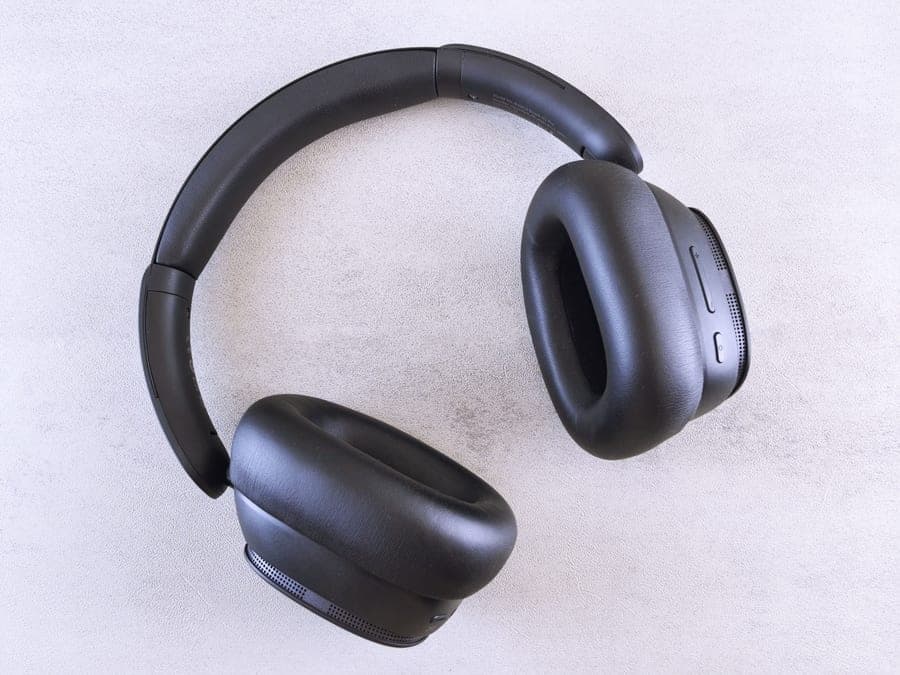 Sony WH-1000XM6The most complete travel headphone on sale: 254 g, 30 rated hours with noise canceling on, and it folds into a case small enough to stop being a decision. | Best included case | 9.19.1 out of 10, our editorial score | |
| 2 | 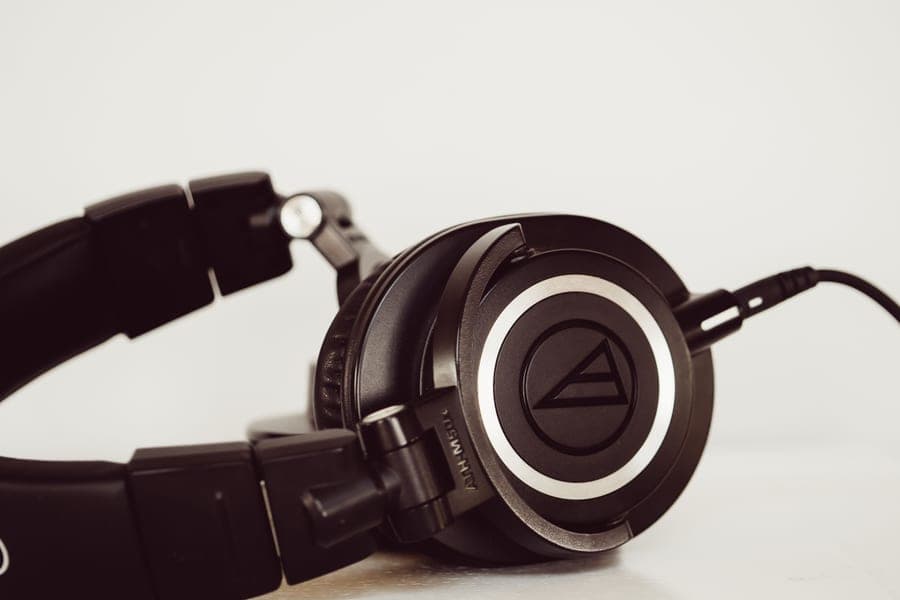 Bose QuietComfort Ultra Headphones (2nd Gen)The quietest cabin of anything here, and the only over-ear in this group whose box already contains the audio cable a seatback screen needs. | Best case for carrying accessories | 9.09.0 out of 10, our editorial score | |
| 3 | 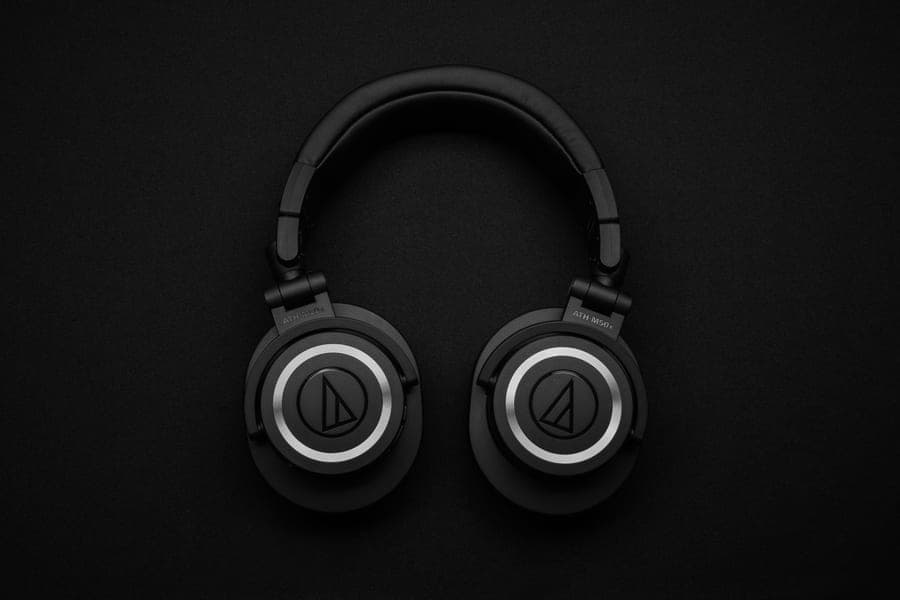 Soundcore Space Q45Fifty rated hours with canceling on, a hard case and a 3.5 mm cable in the box, at a fraction of flagship money. The compromise is in the last 10 percent of quiet, not the first 80. | Best case on a budget headphone | 8.28.2 out of 10, our editorial score | |
| 4 |  Sennheiser MOMENTUM 4 WirelessSennheiser publishes up to 60 hours. That is the difference between charging at the gate and not thinking about a charger for an entire two-week trip. | Best case for a laptop bag | 8.88.8 out of 10, our editorial score | |
| 5 |  JBL Tour One M3The only headphone here that ships with the answer to the airline-jack problem in the box: the Smart Tx transmitter plugs into the seat and sends the movie to your headphones over Bluetooth. | Best case for a full kit | 8.78.7 out of 10, our editorial score |
#ad Amazon links are affiliate links. No live price is shown anywhere on this site, so every button reads “Check price on Amazon”. How this is funded.
The picks in full
Every pick, in detail
1. Best included case
Sony WH-1000XM6
The most complete travel headphone on sale: 254 g, 30 rated hours with noise canceling on, and it folds into a case small enough to stop being a decision.
Our editorial score: 9.1 / 10
#ad Live price not shown. How this is funded
Also sold direct by Sony — we earn nothing there, so check both.
The XM6 case is the best in this group because it works with the headphone’s geometry rather than around it. The headphone folds up, so the case is a compact block rather than a wide slab, and the magnetic closure opens one-handed in a seat without a zip to fight.
Compact and rigid is the combination you want: the rigidity protects the folding hinge — which is the most common eventual mechanical failure on a headphone — and the compactness means it does not dominate a bag.
What works on a plane
- Folds, which halves the space it takes in a personal item
- 254 g is light for a flagship over-ear, and weight is what you feel at hour four
- LDAC plus LC3 means it is not locked to one phone ecosystem
- 30 rated hours with noise canceling on covers almost any single routing
What does not
- You pay a flagship price for the last increment of noise canceling
- The folding hinge is one more mechanism to eventually wear out
- No airline two-prong adapter in the box
How it scores against the five travel axes
Published specifications
| Spec | Figure | Source |
|---|---|---|
| Weight | Approx. 254 g (9 oz) | Sony Help Guide specifications |
| Battery, NC on | Up to 30 hours | Sony specifications |
| Battery, NC off | Up to 40 hours | Sony specifications |
| Full charge | Approx. 3.5 hours | Sony Help Guide specifications |
| Bluetooth | 5.3 | Sony Help Guide specifications |
| Codecs | SBC, AAC, LDAC, LC3 | Sony Help Guide specifications |
| Wired response | 4 Hz - 40,000 Hz (IEC) | Sony Help Guide specifications |
| Folds | Yes, into a magnetic-closure case | Sony |
2. Best case for carrying accessories
Bose QuietComfort Ultra Headphones (2nd Gen)
The quietest cabin of anything here, and the only over-ear in this group whose box already contains the audio cable a seatback screen needs.
Our editorial score: 9.0 / 10
#ad Live price not shown. How this is funded
Also sold direct by Bose — we earn nothing there, so check both.
The Bose case is unusually compact for a full-size over-ear, and it has the feature this whole page is really about: a pocket in the lid, with the USB-C cable and the 2.5 mm-to-3.5 mm audio cable already in it.
That pocket is where a two-prong airline adapter should also live, permanently. The entire problem with adapters is remembering them, and a case with a dedicated pocket solves it structurally rather than by willpower.
What works on a plane
- The best low-frequency canceling in this group, which is exactly the band engine drone lives in
- The 2.5 mm-to-3.5 mm cable is in the box, so a seatback screen needs nothing extra
- Compact hard case for a full-size over-ear
- Up to 45 hours with canceling off, if you only want isolation on a train
What does not
- Immersive Audio costs you a third of the battery, dropping to 23 rated hours
- Heavier than the Sony by roughly 10 g, and clamp is firmer out of the box
- The hard case is compact but still rigid, so it will not squash into a full bag
How it scores against the five travel axes
Published specifications
| Spec | Figure | Source |
|---|---|---|
| Battery, ANC on | Up to 30 hours | Bose |
| Battery, ANC off | Up to 45 hours | Bose |
| Battery, Immersive Audio on | Up to 23 hours | Bose |
| Weight | Approx. 264 g (9.3 oz) as reported | Published reviews |
| USB-C audio | 16-bit, 44.1 or 48 kHz lossless input | Bose support |
| In the box | Hard case, USB-C cable, 2.5 mm-to-3.5 mm audio cable | Bose |
| Folds | Earcups rotate flat into a compact hard case | Bose |
Read the full Bose QuietComfort Ultra Headphones (2nd Gen) review
3. Best case on a budget headphone
Soundcore Space Q45
Fifty rated hours with canceling on, a hard case and a 3.5 mm cable in the box, at a fraction of flagship money. The compromise is in the last 10 percent of quiet, not the first 80.
Our editorial score: 8.2 / 10
#ad Live price not shown. How this is funded
Also sold direct by Soundcore — we earn nothing there, so check both.
A hard-shell case on a budget headphone is genuinely notable, because the case is a real cost and the first thing most manufacturers cut at this price. Soundcore includes one.
It matters more here than on a metal headphone, too. The Space Q45 is plastic, so the case is doing more of the protection work — and the headphone folds up, so the case is a compact block rather than a slab.
What works on a plane
- Up to 50 rated hours with canceling on, which beats every flagship here
- Hard case and 3.5 mm cable included, so nothing else to buy for a seatback screen
- Five minutes of charge buys four hours, which covers a gate-side mistake
- The cheapest way to get genuinely useful drone reduction on a plane
What does not
- Soundcore's own 98 percent figure is a marketing claim, not a measurement, and the gap to Bose is audible
- 295 g with plainer pad materials, so hour four is less comfortable than the Sennheiser's
- Plastic build will not survive being crushed in an overhead bin the way the metal Apple would
How it scores against the five travel axes
Published specifications
| Spec | Figure | Source |
|---|---|---|
| Battery, ANC on | Up to 50 hours | Soundcore |
| Battery, ANC off | Up to 65 hours | Soundcore |
| Quick charge | 5 minutes gives 4 hours | Soundcore |
| Weight | Approx. 295 g (10.3 oz) | Soundcore / published reviews |
| Bluetooth | 5.3 | Soundcore |
| In the box | Hard-shell case, 3.5 mm cable, USB-C cable | Soundcore |
4. Best case for a laptop bag
Sennheiser MOMENTUM 4 Wireless
Sennheiser publishes up to 60 hours. That is the difference between charging at the gate and not thinking about a charger for an entire two-week trip.
Our editorial score: 8.8 / 10
#ad Live price not shown. How this is funded
Also sold direct by Sennheiser — we earn nothing there, so check both.
Fold-flat earcups produce a slim, wide case, and in a bag with a laptop compartment that is arguably the best geometry available: it slides in alongside the machine and takes up no depth at all.
It also carries the 1.2 m aux cable and the USB-C cable, so the seatback-screen kit travels with the headphones rather than separately. In a cube or a cylindrical daypack it is the worse shape — this is the clearest case of the right answer depending on your bag.
What works on a plane
- Up to 60 rated hours, roughly double the flagship norm
- The 1.2 m 3.5 mm cable is in the box, so seatback screens work straight out of the bag
- Fold-flat earcups make the carry case slim rather than deep
- The 42 mm transducer is the most relaxed listen here over a very long session
What does not
- Published measurements consistently place its noise canceling a step behind the Bose
- The case is broad, so it eats width in a personal item even though it is slim
- Fold-flat is not fold-up, so the footprint is larger than the Sony's
How it scores against the five travel axes
Published specifications
| Spec | Figure | Source |
|---|---|---|
| Battery | Up to 60 hours playback | Sennheiser |
| Weight | Approx. 293-295 g | Sennheiser / published reviews |
| Transducer | 42 mm | Sennheiser |
| In the box | Carry case, USB-C cable, 1.2 m 3.5 mm auxiliary cable | Sennheiser |
| Folds | Fold-flat earcups | Sennheiser |
5. Best case for a full kit
JBL Tour One M3
The only headphone here that ships with the answer to the airline-jack problem in the box: the Smart Tx transmitter plugs into the seat and sends the movie to your headphones over Bluetooth.
Our editorial score: 8.7 / 10
#ad Live price not shown. How this is funded
Also sold direct by JBL — we earn nothing there, so check both.
The JBL case has the most to hold: the Smart Tx transmitter, a USB-C-to-3.5 mm cable, a USB-C-to-USB-C cable and a USB-C-to-USB-A adapter, alongside the headphones.
That is a genuine advantage and a genuine cost. Everything you need is in one object, and that object is fuller and slightly bulkier than a case holding only headphones. For anyone who flies with seatback screens regularly, the trade is clearly worth it.
What works on a plane
- The Smart Tx transmitter solves in-flight entertainment without a separate purchase
- Up to 40 rated hours with canceling on, comfortably over a long-haul plus layover
- Five minutes of charge buys five hours
- Both a 3.5 mm and a USB-C wired path in the box
What does not
- The Smart Tx is one more small object to lose, and it needs its own charge
- 278 g sits between the Sony and the Sennheiser without beating either at their own game
- Noise canceling is very good rather than class-leading
How it scores against the five travel axes
Published specifications
| Spec | Figure | Source |
|---|---|---|
| Battery, Bluetooth | Up to 70 hours | JBL |
| Battery, ANC on | Up to 40 hours | JBL |
| Quick charge | 5 minutes gives 5 hours | JBL |
| Battery cell | 850 mAh, full charge approx. 2 hours | JBL |
| Weight | 278 g | JBL |
| Smart Tx | Transmitter streams from non-Bluetooth sources including in-flight entertainment | JBL |
| In the box | USB-C-to-3.5 mm and USB-C-to-USB-C cables, USB-C to USB-A adapter | JBL |
How we decide
How these picks were chosen
We do not run a test lab and we do not claim to have flown with these units. Every verdict on this page is one of three things: a measurement published by somebody who does own a test rig and is credited by name, a manufacturer specification we quote and then interpret against what a long flight actually demands, or a plainly-labeled editorial judgment. The five axes we score on — cabin-noise reduction, battery on a long-haul, pack size, comfort past hour three, and wired fallback — are the ones that decide a travel purchase, and the weighting is published in full.
Questions
Common questions
Do I need a case for my headphones when traveling?
Yes. The most common eventual mechanical failure on a headphone is the folding hinge, and it fails from being folded and then compressed loose in a bag. A rigid case removes that load. Most flagships include one, which is one of the reasons the included case is worth checking before you buy.
Which headphones come with the best travel case?
The Sony WH-1000XM6: compact, rigid, with a magnetic closure that opens one-handed, and it works with the headphone’s fold-up geometry so the packed object is a block rather than a slab. The Bose case is a close second and has the better accessory pocket.
Is the AirPods Max Smart Case good enough for travel?
Not really. It is a soft cover that adds 134.5 g, covers the earcups and leaves the headband exposed, and its main function is putting the headphones into a low-power state. Since the AirPods Max does not fold, a third-party hard case is a worthwhile purchase if you travel with them.
What should I keep in my headphone case?
The supplied audio cable, a two-prong airline adapter, and a short USB-C charging cable. None of them weighs anything, and keeping them in the case turns “remember the adapter” from a memory problem into a structural one.
Hard case or soft case for travel?
Hard, for protection — but compact hard rather than large hard. A rigid case holds its volume regardless, so a bulky one is awkward in a soft bag, and a case so bulky you leave it at home has failed at its only job.
Sources
Where these figures come from
Read next
Related reading
- How to pack headphones for travel
The technique, step by step.
- Best foldable noise-canceling headphones
Fold geometry decides what shape of case you end up with.
- Airplane headphone jack adapters
What belongs in the case pocket.
- How to clean headphone ear pads
The other piece of maintenance that pays for itself.
- Best travel headphones
The whole-trip picks, where the case counts for more.