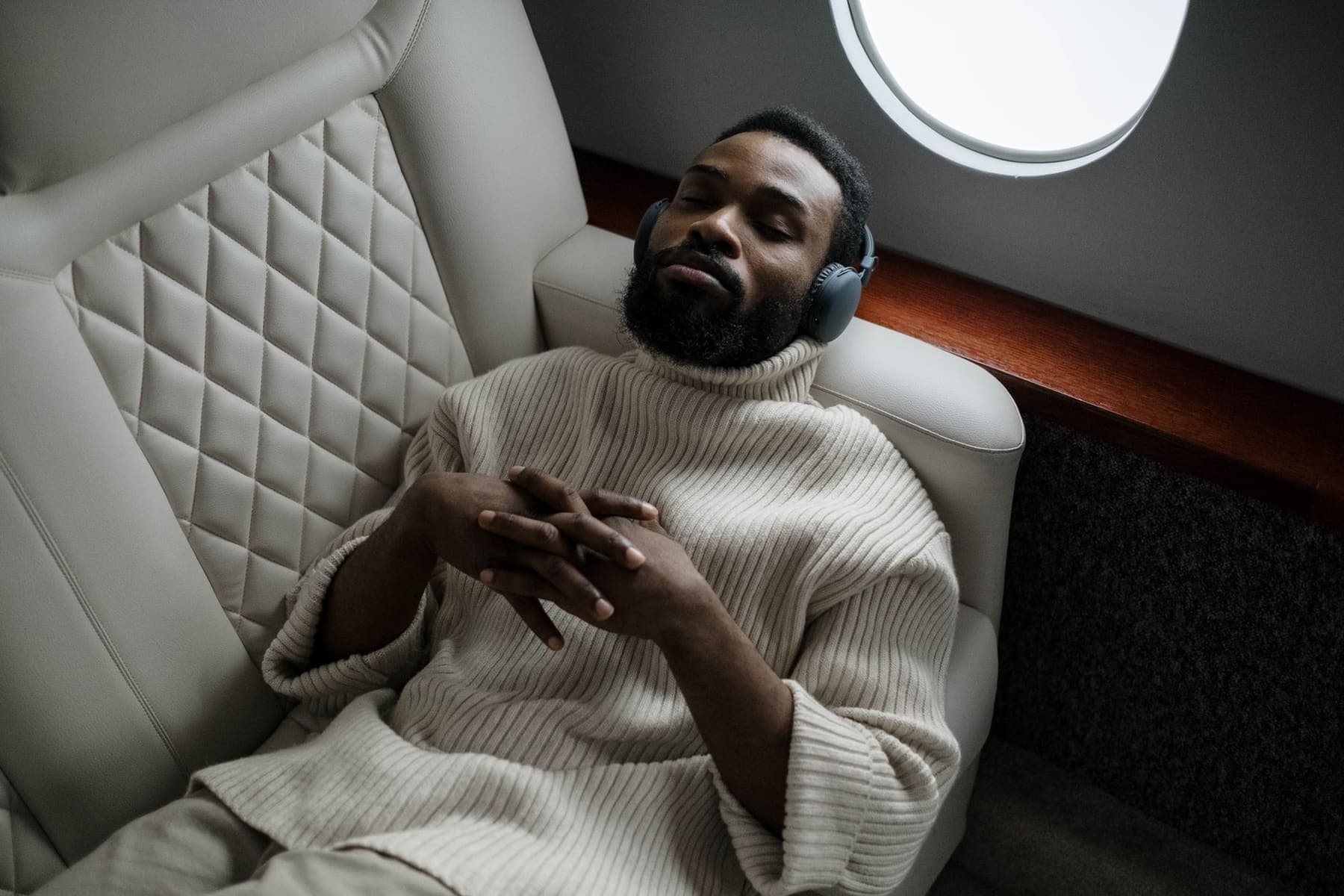
To sleep with headphones on, first decide whether you sleep on your back or your side. Back sleepers can use over-ear headphones. Side sleepers need a low-profile shallow-insertion earbud or a headband-style design, one tip size smaller than their daytime size, with a 30- to 60-minute sleep timer rather than audio running all night. Most canceling earbuds are rated for six to eight hours, which is less than a full night, so a wired pair is the reliable option.
The geometry
Why side sleeping is the whole problem
An over-ear headphone is about 25 to 40 mm deep on each side. Lying on your side puts your full head weight through that earcup into the pillow, which concentrates pressure on the outer ear in a way nothing is designed for. There is no over-ear headphone that solves this, and no amount of money changes the geometry.
An earbud reduces the depth to a few millimeters, which is why every workable answer is either an earbud or a flat driver sewn into a fabric band. A shallow-insertion earbud with a stabilizer band is the best balance of fit, canceling and availability.
If you sleep on your side, the question is not which headphone. It is how few millimeters can stand between your ear and the pillow.
The steps
Six steps, in order
- Decide: back sleeper or side sleeper. Back sleepers should use an over-ear, because battery and comfort are both better and the earcup is not loaded. Side sleepers cannot, at any price. Everything else follows from this.
- Choose the lowest-profile fit you can tolerate. Shallow-insertion earbuds with a stabilizer band, a low-profile wired in-ear monitor, or a headband design. What matters is how far the body protrudes, not how deep the tip goes.
- Go one tip size down from your daytime size. Pressure that is fine upright for an hour is not fine under your head for six. Foam spreads load better than silicone for most people.
- Plan for the battery dying before you do. Canceling earbuds are typically rated six to eight hours against a seven- to nine-hour night. Either accept it, or go wired.
- Use a sleep timer, not all-night audio. Thirty to sixty minutes. The headphones are there to get you to sleep; sound running until morning costs you the battery you want tomorrow.
- Clean the tips every few days. Seven warm hours of occlusion, repeated nightly, is a different hygiene situation from a commute. Wipe daily, wash silicone tips weekly, dry fully.
Not breaking them
How people break headphones in bed
Rolling onto a hinge
With an over-ear, the failure is mechanical: body weight through a folding hinge or a headband slider is exactly the load those parts are not designed for. If you use an over-ear for sleeping, you are using it on your back or you will eventually replace it.
Cable fatigue at the plug
With a wired pair, the cable gets bent sharply at the plug all night and fails there first. Route the cable over the top of your head and down behind you rather than across your face, and prefer a design with a replaceable cable — MMCX or similar — so a failure costs a cable rather than the headphone.
Losing a bud in the bedding
Unglamorous and extremely common. A bud that works loose at 2 a.m. ends up under a duvet and then on a floor. A stabilizer band or wing reduces it; checking the bed rather than the charger in the morning finds it.
General care that applies either way is in how to pack headphones for travel, which is mostly about the same loads applied in a bag.
Canceling or masking
Canceling, masking, or both
These are two different strategies and most people only try one.
| The noise | Best approach | Why |
|---|---|---|
| Traffic, a railway line, building plant | Active canceling | Steady and low-frequency, which is what canceling removes well |
| A partner snoring | Masking, plus a good seal | Irregular and broadband, so canceling barely touches it; low-level sound covers it |
| Voices or a television next door | Masking, plus a good seal | Speech is irregular and higher in the range than canceling handles |
| Footsteps upstairs | Neither, realistically | Impact noise through the structure; a transient cannot be predicted or easily masked |
| A hotel corridor | Seal first, canceling second | Door slams are transients; the steady hum of air handling is the canceling part |
Masking means low-level broadband sound — pink noise, a fan, rain — played quietly enough that it does not keep you awake itself. It works on exactly the noises canceling fails at, which is why the two together outperform either. Active canceling vs passive isolation explains the division of labor.
Is it safe
Is sleeping in headphones a bad idea?
Two real considerations and one overstated one. The real ones are ear canal hygiene — long warm occlusion night after night can cause irritation, so clean the tips and take nights off — and volume, because audio at a moderate level for seven hours is a long exposure even though it does not feel loud.
The overstated one is that canceling itself is harmful. It is not; the risk in headphone use is volume, which is covered in are noise-canceling headphones bad for your ears. If you feel pressure rather than discomfort when canceling is on, that sensation has its own explanation.
What to look for
What to wear, and the three specs that decide it
- Protrusion, not insertion depth. How far the body stands off your ear is what the pillow presses on. Shallow-insertion designs with stabilizer bands are the best available compromise.
- Rated hours against a whole night. Six to eight hours is typical for a canceling earbud, which means some mornings they are flat. Wired removes the question.
- Replaceable tips and cable. Both are consumables in this use, more so than in any other.
The three picks below are the shallowest canceling earbud, the one with the longest night coverage, and a wired pair with no battery to run out at all. For the aircraft-seat version of the same problem, where you also cannot lie flat, best earbuds for sleeping on a plane is the ranked list.
In short
Key takeaways
- Back sleepers can use over-ear headphones; side sleepers cannot, at any price — it is geometry, not product quality.
- Pick for how far the earbud body protrudes, and go one tip size down from your daytime size.
- Canceling earbuds are rated six to eight hours against a seven- to nine-hour night. Wired removes the problem.
- Use a 30- to 60-minute sleep timer rather than audio running until morning.
- Canceling handles traffic and plant noise; masking handles snoring, voices and door slams.
- Clean tips daily and take nights off — long warm occlusion is the real hygiene risk.
At a glance
Quick picks
Scores are our editorial judgment from published specifications and cited third-party measurements, not our own testing. The rubric is published in full. Tap any row for the full write-up.
| # | Product | Best for | Score | Price |
|---|---|---|---|---|
| 1 | 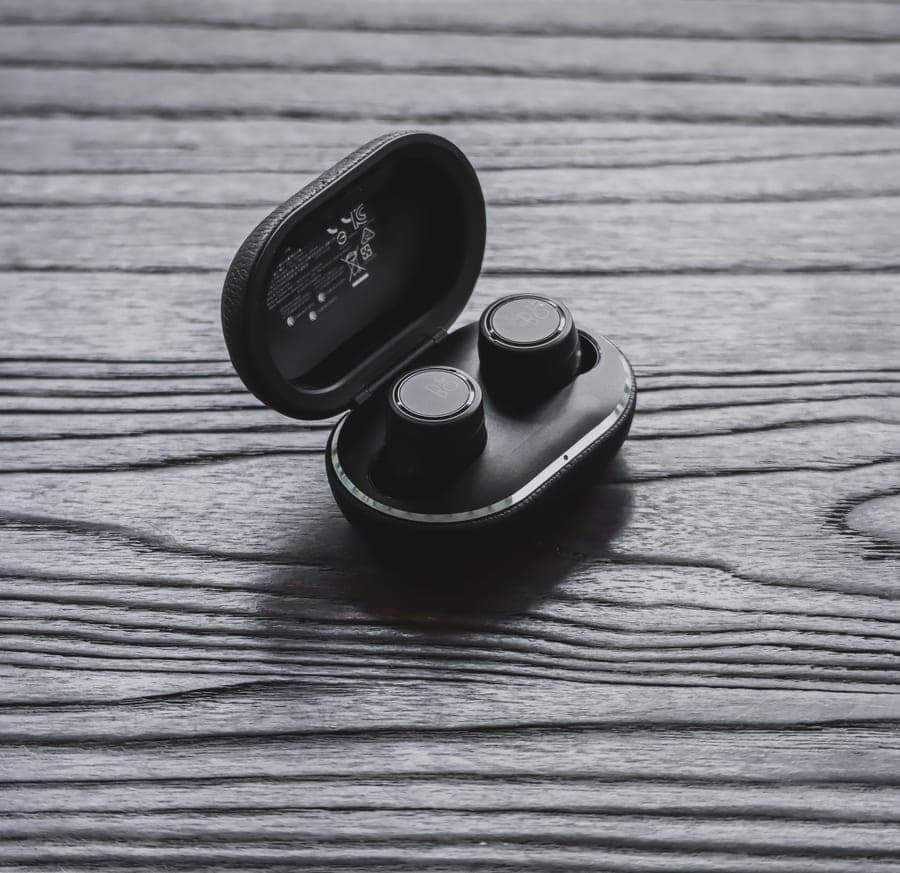 Bose QuietComfort Ultra Earbuds (2nd Gen)The quietest earbuds you can put in a pocket, with the shortest single-charge runtime of the premium set: six rated hours, four with Immersive Audio on. | Best fit for lying down | 8.48.4 out of 10, our editorial score | |
| 2 | 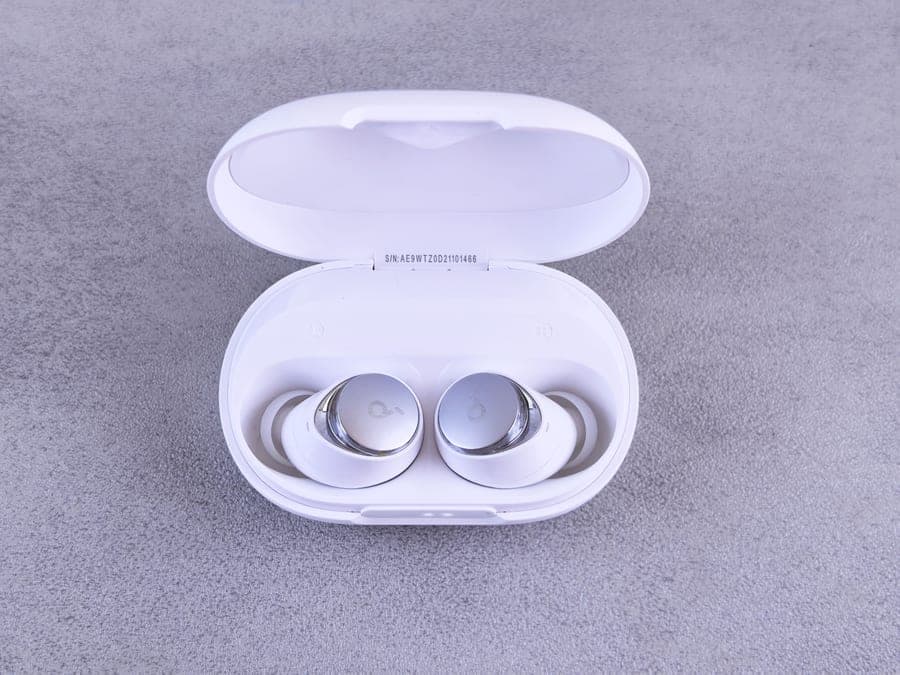 Sony WF-1000XM6Eight rated hours per bud and 24 with the case, at roughly 6.5 g each. The most sensible premium earbud for a flight, because you never have to plan around the battery. | Best battery for a full night | 8.98.9 out of 10, our editorial score | |
| 3 | 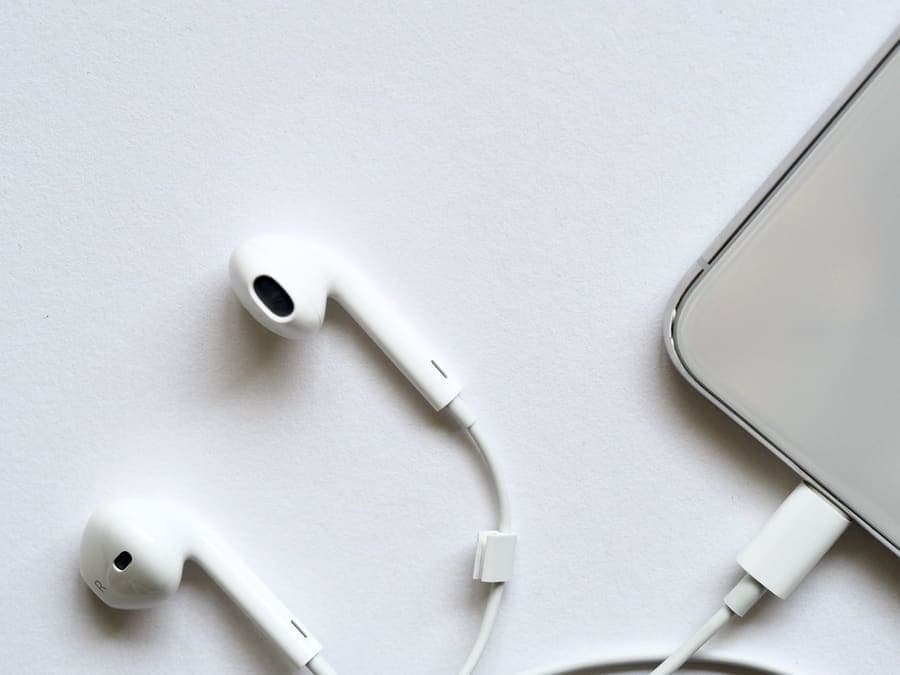 Sennheiser IE 200A wired in-ear monitor with a published specification sheet rather than a marketing number: 4 g per side, a 7 mm dynamic driver and tips you can mount two ways to change the bass. | Best if the battery is the whole problem | 8.78.7 out of 10, our editorial score |
#ad Amazon links are affiliate links. No live price is shown anywhere on this site, so every button reads “Check price on Amazon”. How this is funded.
The picks in full
Every pick, in detail
1. Best fit for lying down
Bose QuietComfort Ultra Earbuds (2nd Gen)
The quietest earbuds you can put in a pocket, with the shortest single-charge runtime of the premium set: six rated hours, four with Immersive Audio on.
Our editorial score: 8.4 / 10
#ad Live price not shown. How this is funded
Also sold direct by Bose — we earn nothing there, so check both.
The best canceling earbud to lie on, because the insertion is shallow and the fit is held by one of three stabilizer band sizes rather than by wedging a tip deep into the canal.
It also brings the deepest low-frequency canceling available in an earbud, which is the right technology if your sleep problem is traffic, a railway line or building plant rather than a conversation next door.
Up to 6 rated hours with Immersive Audio off and 4 with it on, up to 18 total with the case. Six hours is the honest limit and it is less than a night — use a sleep timer and expect to find them flat some mornings.
What works on a plane
- Canceling that genuinely rivals a full-size over-ear, in something pocketable
- The shallow fit is far more tolerable than deep-insertion buds on a long flight
- Wireless case charging is one fewer cable in the bag
What does not
- Six rated hours means a case top-up mid-flight on any long-haul
- Immersive Audio cuts that to four, so on a plane you will mostly leave it off
- 18 hours total with the case is the weakest reserve in the premium earbud set
How it scores against the five travel axes
Published specifications
| Spec | Figure | Source |
|---|---|---|
| Battery, Immersive off | Up to 6 hours | Bose support |
| Battery, Immersive on | Up to 4 hours | Bose support |
| Total with case | Up to 18 hours | Bose support |
| Case charging | USB-C and wireless | Bose support |
| Water resistance | IPX4 | Bose support |
| Fit | Three stabilizer band sizes, shallow insertion | Bose |
Read the full Bose QuietComfort Ultra Earbuds (2nd Gen) review
2. Best battery for a full night
Sony WF-1000XM6
Eight rated hours per bud and 24 with the case, at roughly 6.5 g each. The most sensible premium earbud for a flight, because you never have to plan around the battery.
Our editorial score: 8.9 / 10
#ad Live price not shown. How this is funded
Also sold direct by Sony — we earn nothing there, so check both.
Approximately 6.5 g per bud with the medium tips, and up to 8 rated hours per charge with 24 total from the case. Eight hours is the closest any canceling earbud here comes to covering an actual night.
The HD Noise Canceling Processor QN3e with dual processors and eight microphones, plus SBC, AAC, LDAC and LC3. IPX4, which is relevant in a warm bed.
The body sits slightly prouder than the Bose, so for a firm pillow and a dedicated side sleeper the Bose remains the better shape. This is the pick if endurance is the binding constraint.
What works on a plane
- Eight rated hours per charge clears most short-haul flights without touching the case
- 24 hours total with the case is the strongest reserve in the premium earbud set
- LDAC means it is not tied to one phone platform
- Roughly 6.5 g per bud effectively disappears when you are trying to sleep on your side
What does not
- Canceling is excellent but the Bose still takes the low-frequency band
- No wired fallback at all, so a seatback screen needs a transmitter
- IPX4 is splash resistance, not weather resistance
How it scores against the five travel axes
Published specifications
| Spec | Figure | Source |
|---|---|---|
| Battery, earbuds | Up to 8 hours | Sony |
| Total with case | Up to 24 hours (16 from the case) | Sony |
| Weight | Approx. 6.5 g per bud with M tips | Sony |
| Driver | 8.4 mm | Sony |
| Bluetooth | 5.3 | Sony |
| Codecs | SBC, AAC, LDAC, LC3 | Sony |
| Water resistance | IPX4 | Sony |
| Processor | HD Noise Canceling Processor QN3e, dual processors, eight microphones | Sony |
3. Best if the battery is the whole problem
Sennheiser IE 200
A wired in-ear monitor with a published specification sheet rather than a marketing number: 4 g per side, a 7 mm dynamic driver and tips you can mount two ways to change the bass.
Our editorial score: 8.7 / 10
#ad Live price not shown. How this is funded
Also sold direct by Sennheiser — we earn nothing there, so check both.
Wired, 4 g per side, no battery and nothing to pair. For sleeping that combination is genuinely compelling: nothing runs out at 3 a.m. and nothing needs charging before bed.
$159.95 at the time of writing, with a 7 mm closed dynamic transducer, 6 to 20,000 Hz, 16 ohm and distortion under 0.08 percent. The 1.2 m braided cable uses MMCX connectors, so a worn cable is replaceable rather than fatal.
Two honest caveats: a cable in a bed is a cable you can wrap around yourself, and there is no active canceling, so a steady low-frequency noise outside will get through more than it would with the Bose.
What works on a plane
- A real specification sheet with distortion and impedance figures, which most earbuds never publish
- 4 g per side and no battery, so it never runs out and never degrades
- Detachable MMCX cable means a frayed cable is a repair rather than a replacement
- Two tip-mounting positions change the bass without an app or an EQ
What does not
- Wired, so there is a cable in your lap and no Bluetooth on a plane without an adapter
- No active noise canceling at all — isolation comes entirely from the tip seal
- No microphone on the stock cable, so it is not a call headset
How it scores against the five travel axes
Published specifications
| Spec | Figure | Source |
|---|---|---|
| Frequency response | 6 - 20,000 Hz | Sennheiser |
| Impedance | 16 ohm (18 ohm with cable) | Sennheiser |
| Sound pressure level | 119 dB (1 kHz, 1 Vrms) | Sennheiser |
| Distortion | THD < 0.08 % | Sennheiser |
| Transducer | 7 mm dynamic, closed | Sennheiser |
| Weight | 4 g | Sennheiser |
| Cable | 1.2 m braided, MMCX connectors, 3.5 mm angled plug | Sennheiser |
| List price | $159.95 at the time of writing | Sennheiser |
Questions
Common questions
How do you sleep with headphones on?
Start with your sleeping position. Back sleepers can use over-ear headphones; side sleepers need a low-profile shallow-insertion earbud or a fabric headband design. Go one tip size smaller than your daytime size, set a 30- to 60-minute sleep timer, and expect most canceling earbuds to run out before morning.
Can you sleep on your side with headphones?
Not with over-ear headphones — your head weight presses the earcup into your outer ear and it becomes painful quickly. A shallow earbud that sits close to flush works, as does a headband with flat drivers sewn in. The variable is how far the thing protrudes.
Is it bad to sleep with headphones in every night?
The two genuine concerns are ear canal hygiene, because long warm occlusion repeated nightly can cause irritation, and cumulative volume exposure, since seven hours is a long session even at a modest level. Clean the tips, take some nights off, and use a sleep timer.
Do noise-canceling headphones help you sleep?
Against steady low-frequency noise — traffic, a railway, building plant — yes. Against snoring, voices or door slams, much less, because those are irregular and higher in the range. For those, low-level masking sound plus a good physical seal works better.
What headphones can last all night?
Realistically, wired ones, because they have no battery. Among wireless options the longest-rated canceling earbud here is eight hours per charge, which just reaches a short night; over-ear headphones rated at twenty to thirty hours cover it easily but only work if you sleep on your back.
Sources
Where these figures come from
Read next
Related reading
- Best earbuds for sleeping on a plane
The same fit problem in a seat you cannot lie flat in.
- Best headphones for sleeping on a plane
The over-ear side, for people who sleep upright or on their back.
- Best earbuds for renters
If the noise keeping you awake is coming through a wall.
- Active canceling vs passive isolation
Which approach handles snoring and which handles traffic.