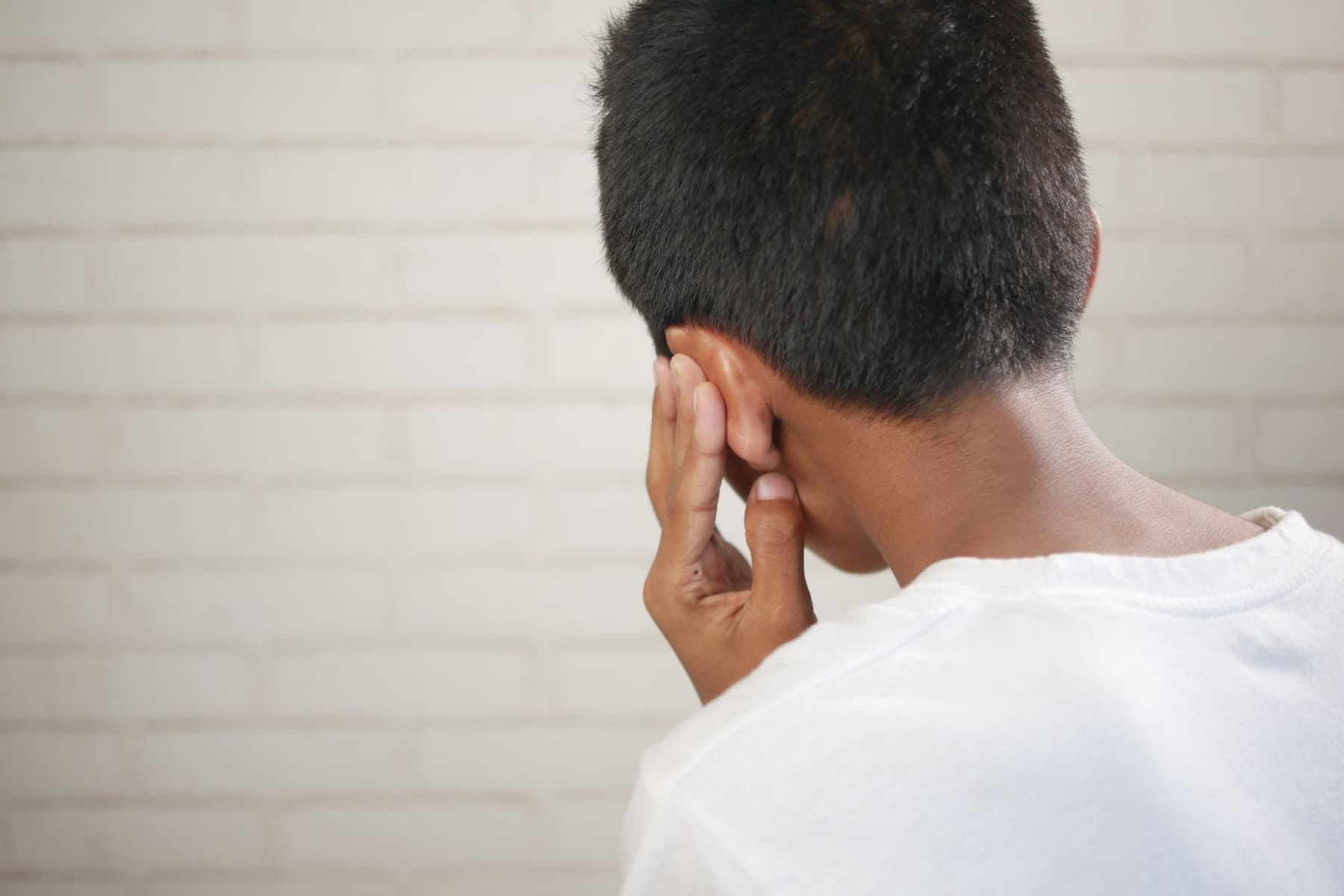
No — noise-cancelling headphones are not a treatment for tinnitus, and in a quiet room removing background noise can make it more noticeable. What they do usefully is reduce two things that are linked to it: exposure to loud environments, which the National Institute on Deafness and Other Communication Disorders names among the causes, and the listening volume you need in a noisy one. Separately, NIDCD describes sound generators and wearable sound generators among the management options clinicians use, and a headphone can deliver that kind of sound.
This page is not medical advice and we are not clinicians. It summarizes published specifications and published health-agency information, and names its sources. Tinnitus has many causes, some of them treatable and some of them signals of something else, so a clinician is the right first stop rather than a shopping page.
What it is
What the published health information actually says
NIDCD defines tinnitus as the perception of sound that does not have an external source, so other people cannot hear it, and cites surveys estimating that 10 to 25 percent of adults have it. Among the causes it names are noise exposure, hearing loss, medications, earwax and ear infections, and head or neck injuries, with less common factors including Ménière’s disease, jaw problems and vascular issues.
On treatment, NIDCD is direct: currently, there is no cure for tinnitus. What it describes instead is management, and the sound-based options it lists are tabletop or smartphone sound generators for relaxation or sleep, hearing aids that amplify external noises so tinnitus becomes less prominent, wearable sound generators that emit soft pleasant sounds, and combination devices. Alongside those it names education, cognitive behavioral therapy and tinnitus retraining therapy, which aims to get you to a point where you no longer notice it.
Read that list carefully and the shape of the honest answer appears. The sound-based approaches are all about adding sound, under clinical guidance. A canceling headphone is a device for removing sound. They are not the same intervention, even though both involve something on your ears.
The clinical approaches add sound. A canceling headphone subtracts it. Knowing which one you need is the whole question.
Three real effects
What a canceling headphone genuinely does, and in which direction
It reduces your exposure to loud noise, which helps
Noise exposure is on NIDCD’s list of causes, and a hearing protector with a certified NRR is a measured, standardized reduction. This is the one effect on this page with a clear mechanism and a certified number behind it. NIOSH sets its recommended exposure limit at 85 A-weighted decibels averaged over an eight-hour workday, and notes that at 85 dBA you likely have to raise your voice to be heard by someone three feet away, while at 95 dBA or higher you likely have to shout.
It reduces the volume you need, which helps
This is the indirect benefit and it is the one most travelers get. In a loud cabin you turn music up to hear it over the drone. Remove the drone and you turn it back down. Lower listening volume across a nine-hour flight is a genuine reduction in exposure, and it is covered in full in do noise-cancelling headphones protect your hearing.
It can make existing tinnitus more noticeable, which does not help
The effect people are most often surprised by. Tinnitus is a perception without an external source, so it does not get canceled — there is nothing at the microphone to invert. What changes is the contrast: remove the background noise that was partially masking it and the internal sound becomes the loudest thing you can hear.
That is not the headphone malfunctioning, and it is the exact inverse of why NIDCD lists sound generators as a management option. If silence is the problem for you, the device you want adds a soft sound rather than removing everything, and that is a conversation to have with an audiologist rather than a retailer.
The comparison
What each approach does and does not do
| Approach | Reduction, as published | Reduces exposure? | Adds masking sound? |
|---|---|---|---|
| ISOtunes LINK 2.0 | 25 dB NRR, ANSI certified | Yes, certified | Only what you play, capped at 85 dB |
| 3M WorkTunes Connect | 26 dB NRR, certified | Yes, certified | Only what you play |
| Canceling over-ear or earbud | No figure published | Indirectly, by lowering the volume you need | Only what you play |
| Earplugs | Varies by product, usually certified | Yes | No |
| Sound generator or wearable sound generator | n/a, adds sound | No | Yes, and this is the clinical option NIDCD lists |
If you are buying anyway
Four sensible rules
- Prefer a certified NRR where the environment is loud. It is the only reduction number in this category you can compare to anything. 25 and 26 dB NRR are real figures; a manufacturer’s canceling claim is not comparable to them.
- Consider a device with an output cap. ISOtunes publishes an 85 dB SafeMax limit, which is the only hardware volume ceiling on this site.
- Get the fit right, and re-check it. Reduction is seal-dependent, which is why 3M recommends fit testing. How to improve noise cancelling is the practical method.
- Do not buy a canceling headphone expecting silence to be pleasant. If your tinnitus is most intrusive in a quiet room, a canceling headphone in a quiet room is the worst case rather than the best. Try before the returns window closes.
Adjacent questions
Three related pages that answer what this one does not
- Are noise-cancelling headphones bad for your ears? — the broader safety question, including the pressure sensation some people report.
- Why do noise-cancelling headphones hurt my ears? — physical discomfort, which is a fit problem rather than a hearing one.
- Best noise-cancelling headphones for mowing lawns — where the certified protectors are ranked properly, if loud outdoor work is your actual exposure.
If sensory sensitivity rather than tinnitus is what brought you here, the page written for that is best noise-cancelling headphones for sensory sensitivity, which is a different problem with a different answer.
In short
Key takeaways
- NIDCD: tinnitus is the perception of sound with no external source, and currently there is no cure.
- NIDCD cites surveys estimating 10 to 25 percent of adults have tinnitus, and names noise exposure among the causes.
- Canceling headphones do not treat tinnitus; there is nothing external for the circuit to cancel.
- In a quiet room, removing background noise can make tinnitus more noticeable by removing its masking.
- The genuine benefits are reduced noise exposure and a lower listening volume in loud environments.
- NIOSH sets its recommended exposure limit at 85 dBA averaged over an eight-hour workday.
At a glance
Quick picks
Scores are our editorial judgment from published specifications and cited third-party measurements, not our own testing. The rubric is published in full. Tap any row for the full write-up.
| # | Product | Best for | Score | Price |
|---|---|---|---|---|
| 1 | 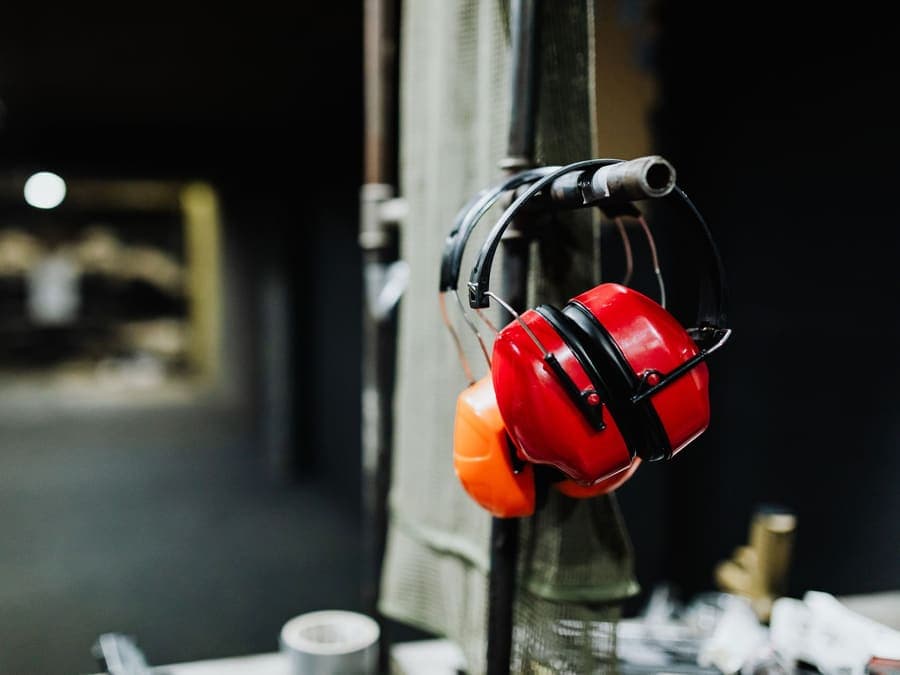 ISOtunes LINK 2.0The version of this idea with a hard limit built in: it caps its own output at 85 dB, so you cannot solve one hearing risk by creating another. | Best for a hard volume ceiling | 8.68.6 out of 10, our editorial score | |
| 2 | 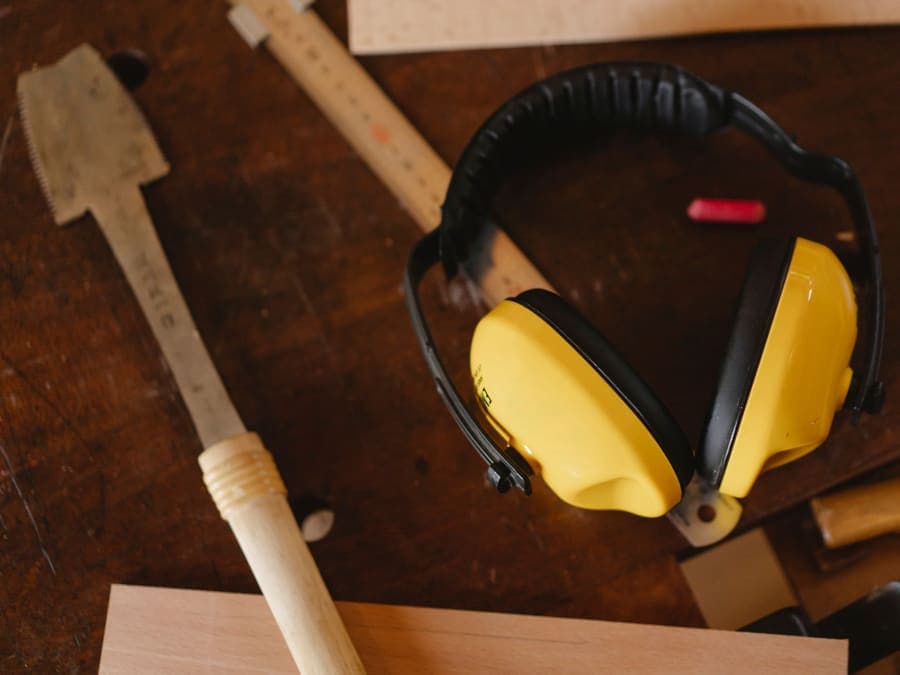 3M WorkTunes ConnectA certified hearing protector that happens to stream Bluetooth, which is the right way round for a petrol mower. Noise canceling headphones protect nothing. | Best certified protection from loud environments | 8.78.7 out of 10, our editorial score | |
| 3 | 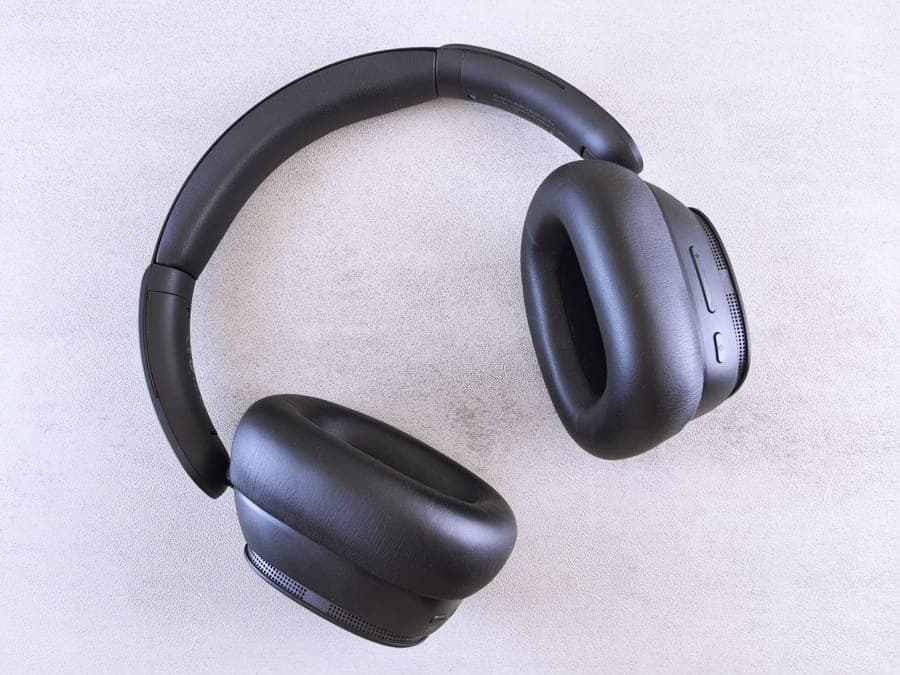 Sony WH-1000XM6The most complete travel headphone on sale: 254 g, 30 rated hours with noise canceling on, and it folds into a case small enough to stop being a decision. | Best for travel, where volume creep happens | 9.19.1 out of 10, our editorial score |
#ad Amazon links are affiliate links. No live price is shown anywhere on this site, so every button reads “Check price on Amazon”. How this is funded.
The picks in full
Every pick, in detail
1. Best for a hard volume ceiling
ISOtunes LINK 2.0
The version of this idea with a hard limit built in: it caps its own output at 85 dB, so you cannot solve one hearing risk by creating another.
Our editorial score: 8.6 / 10
#ad Live price not shown. How this is funded
Also sold direct by ISOtunes — we earn nothing there, so check both.
The product on this site most relevant to this page, and the reason is one specification: SafeMax caps output at 85 dB. If your concern is the volume you listen at rather than the noise around you, a hardware ceiling is more reliable than any intention.
25 dB Noise Reduction Rating, ANSI certified, OSHA and NIOSH compliant, up to 50 rated hours or AAA compatible, Bluetooth 5.0 with dual pairing, IPX4, a boom microphone, and a $129.99 list price at the time of writing.
The 85 dB figure is not arbitrary: NIOSH sets its recommended exposure limit at 85 A-weighted decibels averaged over an eight-hour workday. This is a work product rather than a travel one, and it is not pretty.
What works on a plane
- An 85 dB output ceiling you cannot override, which is the feature most protectors omit
- ANSI certified with stated OSHA and NIOSH compliance, not a self-declared number
- Falls back to AAA batteries, so a dead charge does not end the job
- The boom microphone makes it usable as a work headset, not only as ear protection
What does not
- The 85 dB ceiling is deliberately restrictive, and some people will find it too quiet
- IPX4 handles rain and sweat but not a hose-down
- Costs more than a plain protector, and the extra buys compliance rather than sound
How it scores against the five travel axes
Published specifications
| Spec | Figure | Source |
|---|---|---|
| Noise Reduction Rating | 25 dB NRR, ANSI certified | ISOtunes |
| Compliance | OSHA and NIOSH compliant | ISOtunes |
| Volume limit | SafeMax caps output at 85 dB | ISOtunes |
| Battery | Up to 50 hours, or AAA compatible | ISOtunes |
| Bluetooth | 5.0, dual pairing | ISOtunes |
| Water resistance | IPX4 | ISOtunes |
| Microphone | Boom microphone | ISOtunes |
| List price | $129.99 at the time of writing | ISOtunes |
2. Best certified protection from loud environments
3M WorkTunes Connect
A certified hearing protector that happens to stream Bluetooth, which is the right way round for a petrol mower. Noise canceling headphones protect nothing.
Our editorial score: 8.7 / 10
#ad Live price not shown. How this is funded
Also sold direct by 3M — we earn nothing there, so check both.
Noise exposure is one of the causes of tinnitus the National Institute on Deafness and Other Communication Disorders names, which makes certified protection the one genuinely evidence-linked purchase on this page. 26 dB NRR is a standardized figure, unlike every canceling claim in this category.
40+ rated hours, USB-C charging, Bluetooth with an integrated microphone for calls, water and sweat resistance, auto shut-off and a low-battery indicator.
3M publishes its own caution, and on this page it matters more than usual: 3M recommends fit testing, because many users receive less reduction than the NRR suggests. A protector worn badly is a protector that is not protecting.
What works on a plane
- A published, certified 26 dB NRR rather than an uncertified marketing decibel figure
- 40+ rated hours outlasts any weekend of yard work by a wide margin
- Passive attenuation keeps working if the battery dies, which is the whole safety point
- Built for dust, sweat and being dropped on a driveway
What does not
- Bulky and warm — this is safety equipment, not a travel headphone
- Sound quality is adequate rather than good, which is the correct trade here
- 3M itself warns that real-world fit usually delivers less than the rated NRR
How it scores against the five travel axes
Published specifications
| Spec | Figure | Source |
|---|---|---|
| Noise Reduction Rating | 26 dB NRR | 3M product page |
| Battery | 40+ hours, rechargeable | 3M product page |
| Charging | USB-C | 3M product page |
| Connection | Bluetooth wireless, with integrated microphone for calls | 3M product page |
| Durability | Water and sweat resistant | 3M product page |
| Convenience | Auto shut-off and low-battery indicator | 3M product page |
| 3M's own caution | 3M recommends fit testing; many users receive less reduction than the NRR suggests | 3M product page |
3. Best for travel, where volume creep happens
Sony WH-1000XM6
The most complete travel headphone on sale: 254 g, 30 rated hours with noise canceling on, and it folds into a case small enough to stop being a decision.
Our editorial score: 9.1 / 10
#ad Live price not shown. How this is funded
Also sold direct by Sony — we earn nothing there, so check both.
The mechanism that matters on a plane is indirect: a cabin forces you to raise the volume to hear over engine drone, and removing the drone removes the reason to. That is a real reduction in exposure across a long-haul flight rather than a claim about tinnitus itself.
Approximately 254 g, up to 30 rated hours with canceling on and 40 with it off, about 3.5 hours to a full charge, Bluetooth 5.3, SBC, AAC, LDAC and LC3, and it folds into a magnetic-closure case.
The honest caveat applies to this product as much as any: in a genuinely quiet room, removing background noise can make your own tinnitus more noticeable rather than less.
What works on a plane
- Folds, which halves the space it takes in a personal item
- 254 g is light for a flagship over-ear, and weight is what you feel at hour four
- LDAC plus LC3 means it is not locked to one phone ecosystem
- 30 rated hours with noise canceling on covers almost any single routing
What does not
- You pay a flagship price for the last increment of noise canceling
- The folding hinge is one more mechanism to eventually wear out
- No airline two-prong adapter in the box
How it scores against the five travel axes
Published specifications
| Spec | Figure | Source |
|---|---|---|
| Weight | Approx. 254 g (9 oz) | Sony Help Guide specifications |
| Battery, NC on | Up to 30 hours | Sony specifications |
| Battery, NC off | Up to 40 hours | Sony specifications |
| Full charge | Approx. 3.5 hours | Sony Help Guide specifications |
| Bluetooth | 5.3 | Sony Help Guide specifications |
| Codecs | SBC, AAC, LDAC, LC3 | Sony Help Guide specifications |
| Wired response | 4 Hz - 40,000 Hz (IEC) | Sony Help Guide specifications |
| Folds | Yes, into a magnetic-closure case | Sony |
Questions
Common questions
Do noise-cancelling headphones help tinnitus?
They are not a treatment for it. Tinnitus is the perception of sound with no external source, so there is nothing for a canceling circuit to invert. What they do help with is reducing exposure to loud environments and reducing the volume you need to listen at, both of which are worth having.
Can noise-cancelling headphones make tinnitus worse?
They can make it more noticeable. Background noise partially masks tinnitus, so removing that noise raises the contrast and the internal sound becomes the loudest thing you hear. That is a perception change rather than the tinnitus itself worsening, and it is the opposite of the sound-generator approach NIDCD lists among management options.
What does NIDCD say about treating tinnitus?
That there is currently no cure, and that management options include tabletop or smartphone sound generators, hearing aids that amplify external sound so tinnitus is less prominent, wearable sound generators, combination devices, education, cognitive behavioral therapy and tinnitus retraining therapy.
Are earplugs better than noise-cancelling headphones for tinnitus?
For reducing exposure in a loud environment, a certified protector or earplug is the stronger and more measurable option, because the reduction is standardized. For a quiet room neither helps, and the clinical approach described by NIDCD is to add a soft sound rather than remove everything.
What volume should I listen at?
We are not in a position to prescribe one. The reference point in published guidance is NIOSH’s recommended exposure limit of 85 A-weighted decibels averaged over an eight-hour workday. A device with a hardware output cap, such as the ISOtunes LINK 2.0 at 85 dB, is the most reliable way to stay under a ceiling.
Sources
Where these figures come from
- NIDCD (National Institute on Deafness and Other Communication Disorders), Tinnitus (definition, 10-25% of adults, causes, no cure, sound generators and other management options)
- CDC / NIOSH, About noise and hearing loss (85 dBA recommended exposure limit over an eight-hour workday; raised voice at 85 dBA, shouting at 95 dBA)
- ISOtunes LINK 2.0 product page (25 dB NRR ANSI certified, OSHA and NIOSH compliance, SafeMax 85 dB cap, battery, IPX4, list price)
- 3M WorkTunes Connect product page (26 dB NRR, 40+ hours, USB-C, Bluetooth with microphone, 3M's fit-testing caution)
- Sony WH-1000XM6 Help Guide specifications (weight, battery, charge time, Bluetooth, codecs)
Read next
Related reading
- Do noise-cancelling headphones protect your hearing?
The exposure argument, set out with the figures.
- Are noise-cancelling headphones bad for your ears?
The broader safety question, including the pressure sensation.
- Noise-cancelling headphones and white noise
The hiss some people hear, and how it differs from tinnitus.
- Best noise-cancelling headphones for sensory sensitivity
A different problem with a different answer.