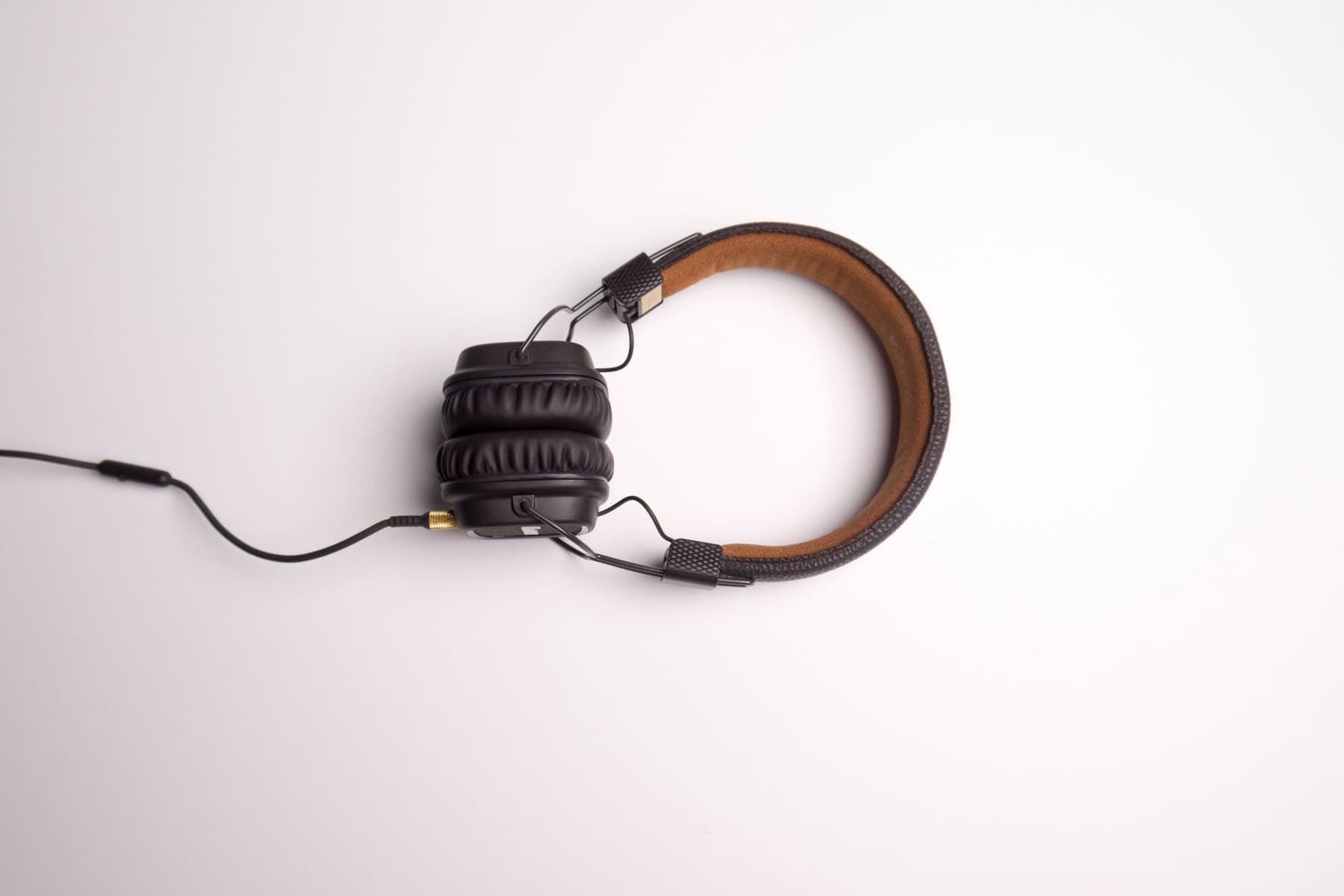
The lightest noise-canceling over-ear headphone here is the Sony WH-1000XM6 at approximately 254 g, followed by the Bose QuietComfort Ultra Headphones (2nd Gen) at approximately 264 g as reported and the Soundcore Space One at 265 g. The heaviest flagship is the Apple AirPods Max at 386.2 g, plus 134.5 g for its Smart Case. If weight is the whole problem, the Sony WF-1000XM6 earbuds are approximately 6.5 g per bud.
The ranking
Every canceling headphone here, by published weight
One table, sorted. Where a manufacturer does not publish a weight we say so rather than guessing, because a weight invented to fill a cell is worse than an empty cell.
| Headphone | Weight | Battery, canceling on | Folds |
|---|---|---|---|
| Sony WH-1000XM6 | approx. 254 g (9 oz) | up to 30 h | Yes, into a case |
| Bose QC Ultra Headphones (2nd Gen) | approx. 264 g as reported | up to 30 h (23 h Immersive) | Earcups rotate flat |
| Soundcore Space One | 265 g | up to 40 h | Yes |
| Sennheiser MOMENTUM 4 Wireless | approx. 293-295 g | up to 60 h playback | Yes |
| Soundcore Space Q45 | approx. 295 g (10.3 oz) | up to 50 h | Yes |
| Apple AirPods Max (USB-C) | 386.2 g (13.6 oz) | up to 20 h | No |
| Bose QuietComfort Headphones | Not published by Bose | up to 24 h | Yes |
| Sony WF-1000XM6 (earbuds) | approx. 6.5 g per bud | up to 8 h per bud | n/a |
Why it matters
What weight actually predicts, and what it does not
It predicts clamp, indirectly
No manufacturer publishes clamp force, which is unfortunate because clamp is what most people mean when they say a headphone is uncomfortable. Weight is the usable proxy: a headphone that weighs less needs less grip to stay in place on a moving train or a reclining seat, so lighter products tend to clamp more gently.
It predicts neck load on a long-haul
386 g on your head for a ten-hour flight is a different experience from 254 g, and the difference is cumulative rather than immediate. Nobody notices 130 g in a shop. Everybody notices it somewhere over the Atlantic.
It does not predict pad heat
The other half of long-session comfort is the pad: material, depth and how warm it runs against your skin. A light headphone with cheap pads can be less comfortable at hour three than a heavier one with good ones, which is the single biggest reason this page is not the same ranking as the most comfortable wireless headphones.
It does not predict packed size
Weight and bulk are different problems. The AirPods Max is heavy and also does not fold, which is a double penalty in a personal item; the Space One is light and folds flat. If space rather than mass is your constraint, use the foldable ranking instead.
Weight is the only comfort number manufacturers publish. That makes it useful, and it also makes it the number people over-trust.
What to look for
Four things to check if weight is driving your purchase
- Whether the quoted weight includes the cable or case. It usually does not. Apple publishes the AirPods Max at 386.2 g and the Smart Case separately at 134.5 g; added together that is more than two Sony WH-1000XM6.
- Headband padding, not just total mass. Mass spread across a wide, padded band feels lighter than the same mass on a narrow one. This is why two headphones with identical weights can feel different in the first minute.
- Pad depth. A deeper pad keeps the driver off your ear, which matters more for all-day wear than ten grams either way.
- Whether an earbud is the real answer. If your complaint is head-and-jaw pressure rather than noise, the step from 254 g to 6.5 g per bud is the change that actually fixes it.
Context
How light is light, in practice
The usable span in canceling over-ears is roughly 250 g to 300 g. Within that band the differences are small enough that pad quality and clamp decide the outcome, which is why we would not pick the Sony over the Bose purely on ten grams. Outside the band — the 386.2 g AirPods Max at one end — weight becomes a real factor you can feel.
If you are shopping because an existing headphone hurts, it is worth diagnosing which part hurts before buying on weight. Why canceling headphones hurt your ears separates clamp pain, pad pressure and the sensation canceling itself produces, because only one of those three is solved by buying something lighter.
In short
Key takeaways
- Sony WH-1000XM6 at approximately 254 g is the lightest canceling over-ear here, and it folds.
- Bose QC Ultra Headphones (2nd Gen) at approximately 264 g as reported is the lightest of the deepest-canceling set.
- Soundcore Space One is 265 g at $99.99 — eleven grams for a quarter of the money.
- Apple AirPods Max is 386.2 g plus a 134.5 g Smart Case, and does not fold.
- Weight predicts clamp and neck load. It does not predict pad heat or packed size.
- If head pressure rather than noise is the complaint, earbuds at approximately 6.5 g per bud are the real fix.
At a glance
Quick picks
Scores are our editorial judgment from published specifications and cited third-party measurements, not our own testing. The rubric is published in full. Tap any row for the full write-up.
| # | Product | Best for | Score | Price |
|---|---|---|---|---|
| 1 | 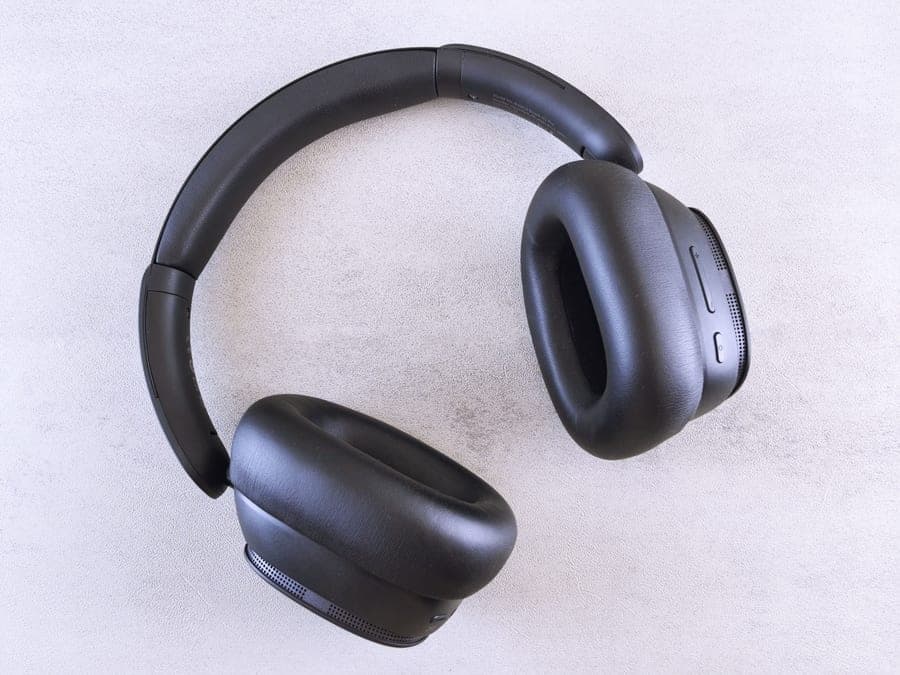 Sony WH-1000XM6The most complete travel headphone on sale: 254 g, 30 rated hours with noise canceling on, and it folds into a case small enough to stop being a decision. | Lightest canceling flagship | 9.19.1 out of 10, our editorial score | |
| 2 | 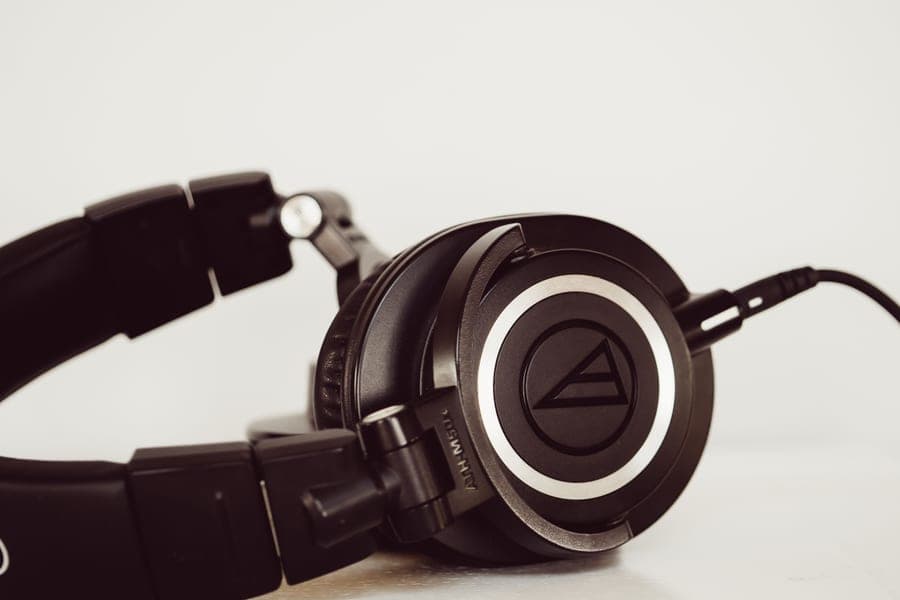 Bose QuietComfort Ultra Headphones (2nd Gen)The quietest cabin of anything here, and the only over-ear in this group whose box already contains the audio cable a seatback screen needs. | Lightest of the deep-canceling set | 9.09.0 out of 10, our editorial score | |
| 3 | 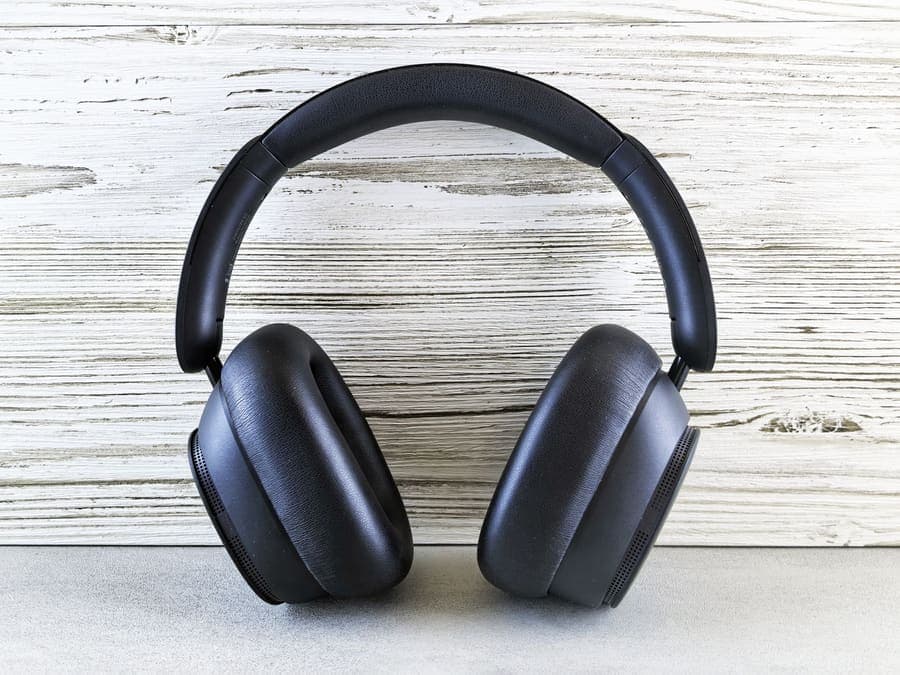 Soundcore Space OneA $99.99 list price that buys 40 rated hours with canceling on, LDAC, 40 mm drivers, a folding hinge and an aux cable. The specification sheet at this level is genuinely hard to argue with. | Lightest for about $100 | 8.58.5 out of 10, our editorial score | |
| 4 |  Sony WF-1000XM6Eight rated hours per bud and 24 with the case, at roughly 6.5 g each. The most sensible premium earbud for a flight, because you never have to plan around the battery. | If weight is genuinely the whole problem | 8.98.9 out of 10, our editorial score |
#ad Amazon links are affiliate links. No live price is shown anywhere on this site, so every button reads “Check price on Amazon”. How this is funded.
The picks in full
Every pick, in detail
1. Lightest canceling flagship
Sony WH-1000XM6
The most complete travel headphone on sale: 254 g, 30 rated hours with noise canceling on, and it folds into a case small enough to stop being a decision.
Our editorial score: 9.1 / 10
#ad Live price not shown. How this is funded
Also sold direct by Sony — we earn nothing there, so check both.
At approximately 254 g this is the lightest full-fat canceling over-ear on this site, and it is not a stripped-down product to get there: up to 30 rated hours with canceling on, 40 with it off, SBC, AAC, LDAC and LC3, and it folds into a case.
The 254 g figure matters more than it looks. Weight and clamp force trade against each other — a lighter headphone needs less clamp to stay on your head — so the lightest flagship tends also to be the one that leaves the least pressure behind your jaw after a long sitting.
It is the recommendation for almost anyone whose complaint about their current headphone is a sore spot on top of the head rather than noise getting through.
What works on a plane
- Folds, which halves the space it takes in a personal item
- 254 g is light for a flagship over-ear, and weight is what you feel at hour four
- LDAC plus LC3 means it is not locked to one phone ecosystem
- 30 rated hours with noise canceling on covers almost any single routing
What does not
- You pay a flagship price for the last increment of noise canceling
- The folding hinge is one more mechanism to eventually wear out
- No airline two-prong adapter in the box
How it scores against the five travel axes
Published specifications
| Spec | Figure | Source |
|---|---|---|
| Weight | Approx. 254 g (9 oz) | Sony Help Guide specifications |
| Battery, NC on | Up to 30 hours | Sony specifications |
| Battery, NC off | Up to 40 hours | Sony specifications |
| Full charge | Approx. 3.5 hours | Sony Help Guide specifications |
| Bluetooth | 5.3 | Sony Help Guide specifications |
| Codecs | SBC, AAC, LDAC, LC3 | Sony Help Guide specifications |
| Wired response | 4 Hz - 40,000 Hz (IEC) | Sony Help Guide specifications |
| Folds | Yes, into a magnetic-closure case | Sony |
2. Lightest of the deep-canceling set
Bose QuietComfort Ultra Headphones (2nd Gen)
The quietest cabin of anything here, and the only over-ear in this group whose box already contains the audio cable a seatback screen needs.
Our editorial score: 9.0 / 10
#ad Live price not shown. How this is funded
Also sold direct by Bose — we earn nothing there, so check both.
Reported at approximately 264 g, so ten grams behind the Sony and in the same class. You are buying it for the canceling — the deepest low-frequency reduction here — and getting a travel-usable weight with it.
Up to 30 rated hours with canceling on, 23 with Immersive Audio running, and up to 45 with canceling off. The earcups rotate flat into the supplied hard case, and the 2.5 mm-to-3.5 mm cable is in the box.
The honest caveat is clamp rather than mass: out of the box it grips more firmly than the Sennheiser below, and clamp is the variable weight does not capture.
What works on a plane
- The best low-frequency canceling in this group, which is exactly the band engine drone lives in
- The 2.5 mm-to-3.5 mm cable is in the box, so a seatback screen needs nothing extra
- Compact hard case for a full-size over-ear
- Up to 45 hours with canceling off, if you only want isolation on a train
What does not
- Immersive Audio costs you a third of the battery, dropping to 23 rated hours
- Heavier than the Sony by roughly 10 g, and clamp is firmer out of the box
- The hard case is compact but still rigid, so it will not squash into a full bag
How it scores against the five travel axes
Published specifications
| Spec | Figure | Source |
|---|---|---|
| Battery, ANC on | Up to 30 hours | Bose |
| Battery, ANC off | Up to 45 hours | Bose |
| Battery, Immersive Audio on | Up to 23 hours | Bose |
| Weight | Approx. 264 g (9.3 oz) as reported | Published reviews |
| USB-C audio | 16-bit, 44.1 or 48 kHz lossless input | Bose support |
| In the box | Hard case, USB-C cable, 2.5 mm-to-3.5 mm audio cable | Bose |
| Folds | Earcups rotate flat into a compact hard case | Bose |
Read the full Bose QuietComfort Ultra Headphones (2nd Gen) review
3. Lightest for about $100
Soundcore Space One
A $99.99 list price that buys 40 rated hours with canceling on, LDAC, 40 mm drivers, a folding hinge and an aux cable. The specification sheet at this level is genuinely hard to argue with.
Our editorial score: 8.5 / 10
#ad Live price not shown. How this is funded
Also sold direct by Soundcore — we earn nothing there, so check both.
265 g at a $99.99 list price, which means the weight penalty for spending a quarter of flagship money is roughly eleven grams. That is the most useful single fact on this page.
Up to 40 rated hours with canceling on, 55 in normal mode, five minutes of charge for four hours, 40 mm drivers, LDAC, and the earcups rotate and fold. A travel pouch and an aux cable come with it.
Where the money shows is pad material rather than mass. Cheap pads run warm, and heat at hour three is a comfort problem that weighing less does not solve.
What works on a plane
- 40 rated hours with canceling on, from a headphone listed at $99.99
- LDAC at this price is unusual, and it is the codec Android users actually want
- Folds and ships with an aux cable, so the seatback screen is covered
- 265 g is not heavy, and the pouch means it travels without a hard case
What does not
- The 98 percent noise-reduction claim is marketing, not a published measurement
- A pouch is not a hard case, so it needs care in a crushed bag
- Pads are the first thing that gives at this price, well before the electronics
How it scores against the five travel axes
Published specifications
| Spec | Figure | Source |
|---|---|---|
| List price | $99.99 at the time of writing | Soundcore |
| Battery, ANC on | Up to 40 hours | Soundcore |
| Battery, normal mode | Up to 55 hours | Soundcore |
| Quick charge | 5 minutes for 4 hours | Soundcore |
| Weight | 265 g (9.35 oz) | Soundcore |
| Drivers | 40 mm | Soundcore |
| Codecs | LDAC | Soundcore |
| Folds | Yes, ear cups rotate and fold | Soundcore |
| In the box | Travel pouch and aux cable | Soundcore |
4. If weight is genuinely the whole problem
Sony WF-1000XM6
Eight rated hours per bud and 24 with the case, at roughly 6.5 g each. The most sensible premium earbud for a flight, because you never have to plan around the battery.
Our editorial score: 8.9 / 10
#ad Live price not shown. How this is funded
Also sold direct by Sony — we earn nothing there, so check both.
Approximately 6.5 g per bud with the medium tips fitted. If you are on this page because over-ear headphones hurt after an hour, no over-ear ranking solves that — the form factor does.
Up to 24 hours total with the case, 16 of those coming from the case, driven by the HD Noise Canceling Processor QN3e with dual processors and eight microphones.
The trade is real and worth stating: an earbud puts the weight on your ear canal instead of your head, which suits some people far less. Sleeping on your side is the case where it clearly wins.
What works on a plane
- Eight rated hours per charge clears most short-haul flights without touching the case
- 24 hours total with the case is the strongest reserve in the premium earbud set
- LDAC means it is not tied to one phone platform
- Roughly 6.5 g per bud effectively disappears when you are trying to sleep on your side
What does not
- Canceling is excellent but the Bose still takes the low-frequency band
- No wired fallback at all, so a seatback screen needs a transmitter
- IPX4 is splash resistance, not weather resistance
How it scores against the five travel axes
Published specifications
| Spec | Figure | Source |
|---|---|---|
| Battery, earbuds | Up to 8 hours | Sony |
| Total with case | Up to 24 hours (16 from the case) | Sony |
| Weight | Approx. 6.5 g per bud with M tips | Sony |
| Driver | 8.4 mm | Sony |
| Bluetooth | 5.3 | Sony |
| Codecs | SBC, AAC, LDAC, LC3 | Sony |
| Water resistance | IPX4 | Sony |
| Processor | HD Noise Canceling Processor QN3e, dual processors, eight microphones | Sony |
How we decide
How these picks were chosen
We do not run a test lab and we do not claim to have flown with these units. Every verdict on this page is one of three things: a measurement published by somebody who does own a test rig and is credited by name, a manufacturer specification we quote and then interpret against what a long flight actually demands, or a plainly-labeled editorial judgment. The five axes we score on — cabin-noise reduction, battery on a long-haul, pack size, comfort past hour three, and wired fallback — are the ones that decide a travel purchase, and the weighting is published in full.
Questions
Common questions
What are the lightest noise-canceling headphones?
Of the models on this site, the Sony WH-1000XM6 at approximately 254 g. The Bose QuietComfort Ultra Headphones (2nd Gen) is reported at approximately 264 g and the Soundcore Space One is 265 g, so all three sit in the same class. The heaviest is the Apple AirPods Max at 386.2 g.
Does a lighter headphone mean a more comfortable headphone?
Partly. Lighter headphones need less clamp force to stay put, and they load the top of your head less over a long session. But pad material and pad depth decide the other half of comfort, and those are not in the weight figure at all.
How much does the AirPods Max weigh?
Apple publishes 13.6 oz, which is 386.2 g, with the Smart Case a further 4.74 oz or 134.5 g. It also does not fold, so in a full personal item the practical penalty is bigger than the weight alone suggests.
Are lightweight canceling headphones worse at canceling?
Not in this price class. The two lightest over-ears here are also two of the three best cancelers, because canceling depth comes from microphone placement and processing rather than from mass. Where you do pay for low weight is in battery size and pad depth.
Are earbuds lighter than over-ear headphones for travel?
Dramatically: roughly 6.5 g per bud against roughly 254 g. The weight moves from your head to your ear canal, which some people find better and some find worse. It is the right switch if your problem is pressure on the head, or if you sleep on your side.
Sources
Where these figures come from
- Sony WH-1000XM6 Help Guide specifications (weight, battery, codecs)
- Apple AirPods Max tech specs (weight 13.6 oz, Smart Case 4.74 oz, battery)
- Soundcore Space One product page (265 g, list price $99.99, battery, folding)
- Sennheiser MOMENTUM 4 Wireless product page (weight, 60 hours playback)
- Soundcore Space Q45 product page (weight, battery, quick charge)
- Sony WF-1000XM6 specifications (approx. 6.5 g per bud, battery, processor)
Read next
Related reading
- Best foldable noise-canceling headphones
Bulk rather than mass — the other half of the carry problem.
- The comfiest wireless headphones
Where pad material and clamp get weighted above the gram count.
- Best headphones for small heads
Fit rather than weight, if the band sits wrong on you.
- Why noise-canceling headphones hurt your ears
Diagnose which part hurts before you buy on weight.