Noise-cancelling headphones are the best single answer for a flight, because steady low-frequency engine drone is the one thing active cancelling is genuinely good at. They are the wrong answer in three cases: for sleeping, where foam earplugs weigh nothing and do not press against a window; for voices and sudden sounds, where a physical seal does more than a processor; and for anything loud enough to damage hearing, where only a certified Noise Reduction Rating counts and no cancelling headphone has one.
The field
Six ways to make a cabin quieter
Most pages that ask this question compare two things. In practice a traveler is choosing between six, and the honest answer changes depending on which half of the noise is bothering them, how much bag space they have, and whether they want to listen to anything at all.
| Option | Best against | Weak against | Listen through it? | Certified rating? |
|---|---|---|---|---|
| Cancelling over-ears | Steady low-frequency drone | Voices, sudden sounds | Yes | No |
| Cancelling earbuds | Drone, in a pocket-sized package | Long sessions without a recharge | Yes | No |
| Foam earplugs | Voices, clatter, higher frequencies | Engine drone and road rumble | No | Yes, an NRR |
| Certified earmuffs | Hearing-damage-level noise | Packing into any bag at all | Some models | Yes, an NRR |
| Sealing IEMs | Higher frequencies, with music | Drone, and anything needing a battery | Yes, wired | No |
| A white-noise app | Making noise less noticeable | Everything, as attenuation | It is the sound | No |
Five of these six reduce the noise reaching your ear. The sixth adds sound on top of it. Confusing the two is the single most common mistake in this whole category.
Option by option
What each one is genuinely good at
1. Cancelling over-ears — the default, and usually right
A cancelling circuit samples incoming noise and generates an inverted waveform, which only works when the noise is predictable enough to model. Jet engines, train bogies and road rumble are all steady and low, which is why cancelling feels like magic at cruise altitude and like nothing at all in a cafe. The mechanism is set out in full in how noise-cancelling headphones work on a plane.
Over-ears win within that category on battery and on comfort over a long stretch, and they are the only option here that does all three jobs — remove noise, play music, stay on your head for fourteen hours — without a compromise.
2. Cancelling earbuds — the same idea, minus the bag space
Everything above applies, with two trades. You gain a pocketable case and a sealing tip that does passive work the pad of an over-ear cannot. You lose runtime, badly: six rated hours against thirty is not a rounding difference on a long-haul, it is a planning problem. The full comparison of the two shapes is in headphones vs IEMs.
3. Foam earplugs — the cheapest answer, and the best one for sleeping
A plug is a physical barrier, and barriers are efficient against short wavelengths and poor against long ones. 3M rates its E-A-R Classic foam plugs at 29 dB NRR and its E-A-Rsoft range at 33 dB NRR. Those are certified laboratory figures, although 3M itself recommends reducing an NRR by 50 percent to estimate real-world protection, because fit varies.
For sleeping on a plane they are hard to beat: nothing to charge, nothing pressed between your head and the window, and they cost less than a coffee. They do nothing about the drone, and you cannot listen to anything. Noise-cancelling headphones vs earplugs works through that frequency split in detail.
4. Certified earmuffs — the only tested option in the field
Earmuffs sold as hearing protection carry an NRR, and the Bluetooth ones let you listen through them. 3M publishes 26 dB NRR for the WorkTunes Connect; ISOtunes publishes 25 dB NRR, ANSI certified, for the LINK 2.0. Both keep attenuating with the electronics off, which is the entire safety argument and the one thing cancelling cannot claim.
For a plane this is the wrong tool — nothing this shape packs into a personal item, and cabin noise is not a hearing-damage question. For a mower, a workshop or a shop floor it is the only correct answer, and the mowing page is blunt about why.
5. Sealing IEMs — passive isolation with music and no battery
An in-ear monitor with a proper tip seal is the middle ground people often actually want: earplug-style isolation at the top of the range, with something to listen to, and no processing at all. Nothing to charge, nothing to pair, and a 3.5 mm plug that reaches a seatback screen directly.
The cost is the bottom of the range. No cancelling means the engine stays audible, which on a fourteen-hour flight is exactly the frequency band you most wanted gone.
6. A white-noise app — masking, not attenuation
This belongs on the list because people genuinely use it instead of the others, and it works differently from all five. An app does not reduce the noise reaching your ear. It adds a broadband sound that makes the noise underneath harder to pick out, which is a perceptual effect rather than a physical one.
It costs nothing and it needs something to play through, so it is not a replacement for a headphone, it is a thing you do with one. It is also the only option here that raises the total sound level at your eardrum rather than lowering it — worth knowing if the reason you are asking is ear fatigue. Noise-cancelling headphones and white noise separates the app from the hiss a cancelling circuit makes on its own.
The certification gap
Only two of the six have a number you can trust
Earplugs and earmuffs sold as hearing protection in the US carry a Noise Reduction Rating, derived from a defined laboratory test. Cancelling headphones carry none, because they are not certified hearing protection and are not tested as such. When one advertises a percentage of noise removed, that is the manufacturer’s own claim by its own method.
| Product | Rating | Type of figure |
|---|---|---|
| 3M E-A-R Classic foam earplugs | 29 dB NRR | Certified laboratory rating |
| 3M E-A-Rsoft foam earplugs | 33 dB NRR | Certified laboratory rating |
| 3M WorkTunes Connect earmuff | 26 dB NRR | Certified laboratory rating |
| ISOtunes LINK 2.0 earmuff | 25 dB NRR, ANSI certified | Certified laboratory rating |
| Any noise-cancelling headphone | None published | No certified rating exists |
| Any sealing IEM | None published | No certified rating exists |
This matters in one direction only. For a cabin, the absence of an NRR is irrelevant — nobody is protecting their hearing from a 737. For anything with an engine you stand next to, it is the whole decision. Do noise-cancelling headphones protect your hearing? covers where the line sits.
By situation
Which option actually wins, and where
| Situation | Best option | Why |
|---|---|---|
| Long-haul in economy, awake | Cancelling over-ears | Steady drone is what cancelling removes, and thirty hours covers the itinerary. |
| Trying to sleep on a plane | Foam earplugs | Nothing to charge, and nothing clamped between your head and the window. |
| One personal item, short-haul | Cancelling earbuds | The case is pocket-sized and six hours is more than the flight. |
| A train or a coach | Cancelling over-ears | Low-frequency rumble, and you want something to listen to anyway. |
| Open-plan office, voices | Plugs, or a sealing IEM with music | Speech is the hardest case for a processor. The seal does most of the work. |
| Power tools, a mower, a shop floor | Certified earmuffs only | A hearing-damage question. Cancelling carries no NRR and protects nothing. |
| You want to hear as close to nothing as possible | Plugs under cancelling over-ears | Covers both halves of the range. Also the least comfortable thing on this list. |
| Budget is the constraint | Foam plugs, or a budget cancelling over-ear | Plugs cost almost nothing; a $70 over-ear reduces the drone rather than removing it. |
What to look for
How to choose between them
- Name the frequency before you name the product. A steady hum means cancelling. People, clatter and doors mean a barrier. Getting this backwards is why most disappointed buyers are disappointed.
- Decide whether you want to listen to anything. If yes, four of the six options are out of the running before price enters it. If no, plugs are lighter, cheaper and need no charge.
- Count the hours, not the rating. A 30-hour over-ear and a 6-hour earbud both “last a flight” until the flight is fourteen hours with a layover on each side. See headphone battery life for long-haul flights.
- If hearing damage is on the table, buy certified. A published NRR from a protector, not a percentage from a headphone — then derate it by half, which is what 3M itself recommends.
- Check the wired fallback. A plug, an IEM and a protector with AAA batteries all keep working when a battery does not. Most cancelling over-ears do not ship a cable.
If you have already decided the answer is a cancelling headphone and the only question left is which one, best noise-cancelling headphones for flights ranks the field on cabin noise, battery and packed size, and how to choose noise-cancelling headphones works through the five criteria that decide it.
If the honest answer turned out to be “none of them, I just want the flight to be shorter”, the value question is worth reading before you spend anything: are noise-cancelling headphones worth it for flying?
In short
Key takeaways
- Six real options exist, not two: cancelling over-ears, cancelling earbuds, foam plugs, certified earmuffs, sealing IEMs and a white-noise app.
- Cancelling removes steady low-frequency drone. A physical seal removes voices and clatter. They cover opposite halves.
- Only earplugs and earmuffs carry a certified Noise Reduction Rating. No cancelling headphone or IEM has one.
- A white-noise app masks rather than attenuates — it raises the sound level at your ear rather than lowering it.
- For sleeping on a plane, foam earplugs beat every headphone on this list on weight, comfort and price.
- For a mower, a workshop or a shop floor, a certified NRR is the only figure that counts.
At a glance
Quick picks
Scores are our editorial judgment from published specifications and cited third-party measurements, not our own testing. The rubric is published in full. Tap any row for the full write-up.
| # | Product | Best for | Score | Price |
|---|---|---|---|---|
| 1 | 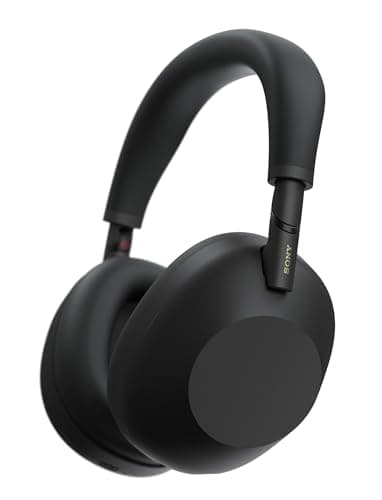 Sony WH-1000XM6The most complete travel headphone on sale: 254 g, 30 rated hours with noise canceling on, and it folds into a case small enough to stop being a decision. | If the answer really is a cancelling headphone | 9.19.1 out of 10, our editorial score | |
| 2 | 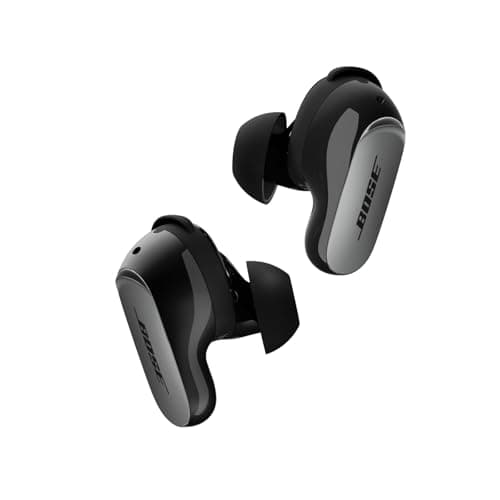 Bose QuietComfort Ultra Earbuds (2nd Gen)The quietest earbuds you can put in a pocket, with the shortest single-charge runtime of the premium set: six rated hours, four with Immersive Audio on. | The alternative that fits in a pocket | 8.48.4 out of 10, our editorial score | |
| 3 | 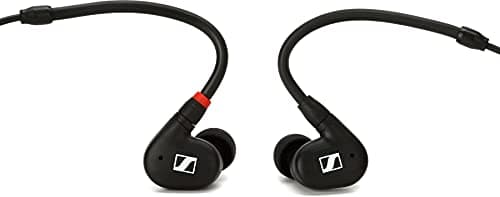 Sennheiser IE 100 PROA stage in-ear monitor with a published specification sheet rather than a marketing number: a single 10 mm broadband driver, a detachable cable and a distortion figure Sennheiser is willing to print. | The no-battery alternative | 8.58.5 out of 10, our editorial score | |
| 4 | 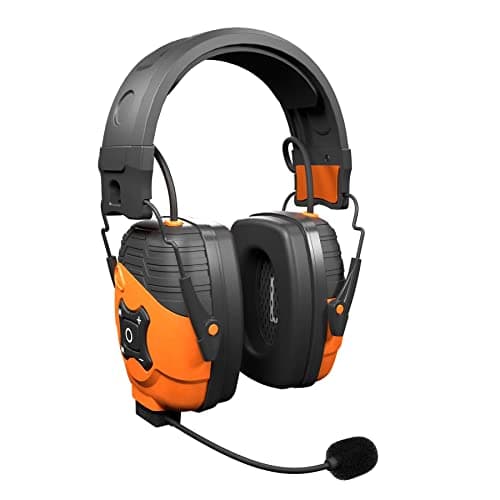 ISOtunes LINK 2.0The version of this idea with a hard limit built in: it caps its own output at 85 dB, so you cannot solve one hearing risk by creating another. | The only alternative with a certified number | 8.68.6 out of 10, our editorial score | |
| 5 | 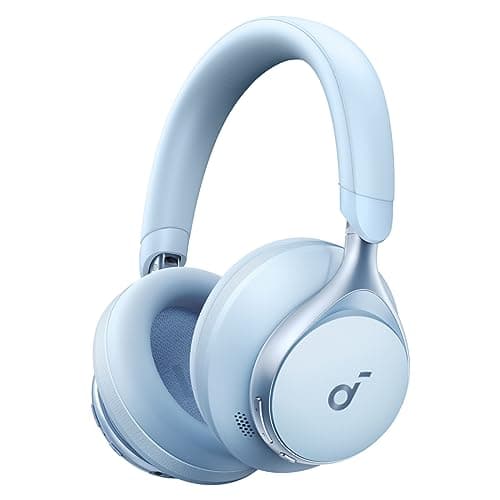 Soundcore Space OneThe budget specification sheet that is genuinely hard to argue with: 40 rated hours with canceling on, LDAC, 40 mm drivers, a folding hinge and an aux cable in the box. | If the real alternative is a cheaper headphone | 8.58.5 out of 10, our editorial score |
#ad Amazon links are affiliate links. Prices come from Amazon’s own data on the date stamped under the buttons above; where we have no current figure the button reads “Check price on Amazon” instead of guessing. How this is funded.
The picks in full
Every pick, in detail
1. If the answer really is a cancelling headphone
Sony WH-1000XM6
The most complete travel headphone on sale: 254 g, 30 rated hours with noise canceling on, and it folds into a case small enough to stop being a decision.
Our editorial score: 9.1 / 10
#ad Price as of November 11, 2026. How this is funded
For a flight, this is the option the rest of the page is being measured against, and for most people it wins because it does three jobs at once: it removes the engine drone, it gives you something to listen to, and it packs down.
Approximately 254 g, up to 30 rated hours with cancelling on and 40 with it off, Bluetooth 5.3 with SBC, AAC, LDAC and LC3, and a folding hinge into a magnetic-closure case. The weight and the fold are the two specifications that separate a headphone you carry from one you leave at home.
What it does not do is anything on the right-hand side of the table below. It carries no Noise Reduction Rating, it is useless once the battery is flat unless you buy a cable separately, and it is the single most expensive way to solve the problem.
What works on a plane
- Folds, which halves the space it takes in a personal item
- 254 g is light for a flagship over-ear, and weight is what you feel at hour four
- LDAC plus LC3 means it is not locked to one phone ecosystem
- 30 rated hours with noise canceling on covers almost any single routing
What does not
- You pay a flagship price for the last increment of noise canceling
- The folding hinge is one more mechanism to eventually wear out
- No airline two-prong adapter in the box
How it scores against the five travel axes
Published specifications
| Spec | Figure | Source |
|---|---|---|
| Weight | Approx. 254 g (9 oz) | Sony Help Guide specifications |
| Battery, NC on | Up to 30 hours | Sony specifications |
| Battery, NC off | Up to 40 hours | Sony specifications |
| Full charge | Approx. 3.5 hours | Sony Help Guide specifications |
| Bluetooth | 5.3 | Sony Help Guide specifications |
| Codecs | SBC, AAC, LDAC, LC3 | Sony Help Guide specifications |
| Wired response | 4 Hz - 40,000 Hz (IEC) | Sony Help Guide specifications |
| Folds | Yes, into a magnetic-closure case | Sony |
| In the box | Headset, headphone cable, USB-C cable, carrying case, documents | Sony Help Guide, Included items |
2. The alternative that fits in a pocket
Bose QuietComfort Ultra Earbuds (2nd Gen)
The quietest earbuds you can put in a pocket, with the shortest single-charge runtime of the premium set: six rated hours, four with Immersive Audio on.
Our editorial score: 8.4 / 10
#ad Price as of November 11, 2026. How this is funded
The reason to consider an earbud instead of an over-ear is not sound, it is volume — bag volume. An over-ear case takes the space of a paperback. This takes the space of a roll of mints, which on a short-haul with one personal item is sometimes the whole argument.
It also sits closer to the earplug end of the field than any over-ear can, because a sealing tip is doing passive work before the processing starts. Bose publishes up to 6 rated hours with Immersive Audio off, 4 with it on, IPX4 and wireless case charging.
Six hours is the catch, and it is a serious one on a long-haul: the case recharges it, but only while the buds are in the case and not in your ears. Over-ears do not make you schedule that.
What works on a plane
- Canceling that genuinely rivals a full-size over-ear, in something pocketable
- The shallow fit is far more tolerable than deep-insertion buds on a long flight
- Wireless case charging is one fewer cable in the bag
What does not
- Six rated hours means a case top-up mid-flight on any long-haul
- Immersive Audio cuts that to four, so on a plane you will mostly leave it off
- 18 hours total with the case is the weakest reserve in the premium earbud set
How it scores against the five travel axes
Published specifications
| Spec | Figure | Source |
|---|---|---|
| Battery, Immersive off | Up to 6 hours | Bose support |
| Battery, Immersive on | Up to 4 hours | Bose support |
| Total with case | Up to 18 hours | Bose support |
| Case charging | USB-C and wireless | Bose support |
| Water resistance | IPX4 | Bose support |
| Fit | Three stabilizer band sizes, shallow insertion | Bose |
Read the full Bose QuietComfort Ultra Earbuds (2nd Gen) review
3. The no-battery alternative
Sennheiser IE 100 PRO
A stage in-ear monitor with a published specification sheet rather than a marketing number: a single 10 mm broadband driver, a detachable cable and a distortion figure Sennheiser is willing to print.
Our editorial score: 8.5 / 10
#ad Price as of November 11, 2026. How this is funded
A stage in-ear monitor, which means all of its isolation comes from the tip seal and none of it from a circuit. That is the entire point: nothing to charge, nothing to pair, nothing to degrade, and a 3.5 mm plug that goes straight into a seatback jack.
Sennheiser publishes a real sheet rather than a marketing figure: a 10 mm dynamic broadband transducer, 20 ohms, 115 dB SPL at 1 kHz and 1 Vrms, total harmonic distortion under 0.1 percent, 20 to 18,000 Hz, and a 1.3 m detachable cable. Foam and silicone adapters are in the box, so the seal that does all the work is yours to tune.
Against a cancelling headphone it loses the low-frequency band outright — engine drone gets through in a way it would not with the Sony above. There is no microphone on the stock cable and no Bluetooth, so pairing it with a phone means buying an adapter.
What works on a plane
- A real specification sheet with distortion and impedance figures, which most earbuds never publish
- No battery at all, so it never runs out and never degrades
- Detachable cable means a frayed cable is a repair rather than a replacement
- Foam and silicone tips in the box, so the seal that does all the isolating is yours to tune
What does not
- Wired, so there is a cable in your lap and no Bluetooth on a plane without an adapter
- No active noise canceling at all — isolation comes entirely from the tip seal
- No microphone on the stock cable, so it is not a call headset
How it scores against the five travel axes
Published specifications
| Spec | Figure | Source |
|---|---|---|
| Frequency response | 20 - 18,000 Hz | Sennheiser |
| Impedance | 20 ohm | Sennheiser |
| Sound pressure level | 115 dB (1 kHz, 1 Vrms) | Sennheiser |
| Distortion | THD < 0.1 % (1 kHz, 94 dB) | Sennheiser |
| Transducer | 10 mm dynamic broadband | Sennheiser |
| Cable | 1.3 m detachable, 3.5 mm jack plug | Sennheiser |
| In the box | Foam and silicone ear adapters, soft pouch, cleaning tool | Sennheiser |
4. The only alternative with a certified number
ISOtunes LINK 2.0
The version of this idea with a hard limit built in: it caps its own output at 85 dB, so you cannot solve one hearing risk by creating another.
Our editorial score: 8.6 / 10
#ad Price as of November 11, 2026. How this is funded
Include this on the list because exactly one category in the field is tested and rated, and it is not the cancelling headphone. ISOtunes publishes 25 dB NRR, ANSI certified, with stated OSHA and NIOSH compliance — a figure arrived at by a defined test rather than a percentage chosen by a marketing department.
It also solves the problem most protectors create. SafeMax caps its own output at 85 dB, which lines up with the NIOSH recommended exposure limit of 85 A-weighted decibels averaged over an eight-hour workday, so you cannot fix one hearing risk by inventing another. Up to 50 rated hours, or AAA batteries when the charge is gone, plus IPX4 and a boom microphone.
It is emphatically not a travel product. An earmuff of this shape does not pack, it runs warm, the 85 dB ceiling will frustrate anyone who wanted it for music, and the extra cost over a plain protector buys compliance rather than sound.
What works on a plane
- An 85 dB output ceiling you cannot override, which is the feature most protectors omit
- ANSI certified with stated OSHA and NIOSH compliance, not a self-declared number
- Falls back to AAA batteries, so a dead charge does not end the job
- The boom microphone makes it usable as a work headset, not only as ear protection
What does not
- The 85 dB ceiling is deliberately restrictive, and some people will find it too quiet
- IPX4 handles rain and sweat but not a hose-down
- Costs more than a plain protector, and the extra buys compliance rather than sound
How it scores against the five travel axes
Published specifications
| Spec | Figure | Source |
|---|---|---|
| Noise Reduction Rating | 25 dB NRR, ANSI certified | ISOtunes |
| Compliance | OSHA and NIOSH compliant | ISOtunes |
| Volume limit | SafeMax caps output at 85 dB | ISOtunes |
| Battery | Up to 50 hours, or AAA compatible | ISOtunes |
| Bluetooth | 5.0, dual pairing | ISOtunes |
| Water resistance | IPX4 | ISOtunes |
| Microphone | Boom microphone | ISOtunes |
5. If the real alternative is a cheaper headphone
Soundcore Space One
The budget specification sheet that is genuinely hard to argue with: 40 rated hours with canceling on, LDAC, 40 mm drivers, a folding hinge and an aux cable in the box.
Our editorial score: 8.5 / 10
#ad Price as of November 11, 2026. How this is funded
The alternative people forget to consider: not a different category, but the same category for a quarter of the money. soundcore publishes up to 40 rated hours with cancelling on, 40 mm drivers, LDAC, a folding hinge and an aux cable in the box.
On the two specifications a traveler actually feels — hours between outlets and whether it still works wired — it beats the flagship it costs a fraction of. The aux cable alone covers the case a Sony does not: a flat battery on hour nine.
The gap is in the 50 to 300 Hz band where engine noise lives, and it is audible. The build is plastic, the pads are thinner, and if the reason you are buying is that flying exhausts you, this reduces the problem rather than removing it.
What works on a plane
- 40 rated hours with canceling on, from a headphone in the budget tier
- LDAC at this price is unusual, and it is the codec Android users actually want
- Folds and ships with an aux cable, so the seatback screen is covered
- 265 g is not heavy, and the pouch means it travels without a hard case
What does not
- The 98 percent noise-reduction claim is marketing, not a published measurement
- A pouch is not a hard case, so it needs care in a crushed bag
- Pads are the first thing that gives at this price, well before the electronics
How it scores against the five travel axes
Published specifications
| Spec | Figure | Source |
|---|---|---|
| Battery, ANC on | Up to 40 hours | Soundcore |
| Battery, normal mode | Up to 55 hours | Soundcore |
| Quick charge | 5 minutes for 4 hours | Soundcore |
| Weight | 265 g (9.35 oz) | Soundcore |
| Drivers | 40 mm | Soundcore |
| Codecs | LDAC | Soundcore |
| Folds | Yes, ear cups rotate and fold | Soundcore |
| In the box | Travel pouch and aux cable | Soundcore |
Questions
Common questions
What is the best alternative to noise-cancelling headphones?
It depends which half of the noise you are fighting. Foam earplugs are the best alternative against voices, clatter and for sleeping, and they carry a certified Noise Reduction Rating that no headphone does. Sealing in-ear monitors are the best alternative if you want isolation plus music with no battery. Certified earmuffs are the only correct answer when the noise is loud enough to damage hearing.
Are earplugs better than noise-cancelling headphones on a plane?
For sleeping, usually yes: they weigh nothing, need no charge and are not pressed between your head and the window. For being awake, no — the thing that makes a cabin exhausting is steady low-frequency engine drone, and that is precisely the band earplugs are weakest against and cancelling is strongest against.
Does a white-noise app work as well as noise cancelling?
No, because it works differently. An app masks: it adds a broadband sound that makes the noise underneath harder to pick out. It does not reduce the noise reaching your ear, and it raises the total sound level rather than lowering it. It is something you do through a headphone, not a replacement for one.
Can in-ear monitors replace noise-cancelling headphones?
Partly. A well-sealed IEM gives you earplug-style isolation at the higher frequencies with music on top, no battery and a 3.5 mm plug that reaches a seatback screen. What it cannot do is the low-frequency engine band, which is the reason most people buy cancelling in the first place.
Which option has a certified noise reduction rating?
Only hearing protection. 3M rates its E-A-R Classic foam plugs at 29 dB NRR and its E-A-Rsoft range at 33 dB NRR; 3M publishes 26 dB NRR for the WorkTunes Connect earmuff and ISOtunes publishes 25 dB NRR, ANSI certified, for the LINK 2.0. No cancelling headphone and no IEM carries an NRR.
Is it cheaper to use earplugs than buy noise-cancelling headphones?
Far cheaper, and for some trips it is also better. Foam plugs cost a fraction of any headphone here and are the best option on this page for sleeping. The reason to spend more is that they do not touch engine drone and you cannot listen to anything through them.
Sources
Where these figures come from
- 3M Hearing Protection Product Line Card (E-A-R Classic 29 dB NRR, E-A-Rsoft 33 dB NRR, and 3M's recommendation to reduce the NRR by 50 percent)
- 3M WorkTunes Connect product page (26 dB NRR, battery, fit-testing caution)
- ISOtunes LINK 2.0 product page (25 dB NRR ANSI certified, OSHA and NIOSH compliance, SafeMax 85 dB cap, up to 50 h or AAA, IPX4, boom mic)
- Sony WH-1000XM6 specifications (254 g, 30 h NC on, 40 h NC off, Bluetooth 5.3, codecs)
- Bose QuietComfort Ultra Earbuds (2nd Gen) specifications (up to 6 h, 4 h with Immersive Audio, IPX4, wireless case charging)
- Sennheiser IE 100 PRO specifications (10 mm broadband transducer, 20 ohm, 115 dB SPL, THD < 0.1 %, 20-18,000 Hz, 1.3 m detachable cable, foam and silicone adapters)
- soundcore Space One product page (40 h ANC on, 40 mm drivers, LDAC, folding, aux cable)
- CDC / NIOSH, About Noise (85 dBA recommended exposure limit averaged over an eight-hour workday)
Read next
Related reading
- Noise-cancelling headphones vs earplugs
The two-way version of this page, in frequency detail.
- Active cancelling vs passive isolation
The same split, inside a single headphone.
- Noise-cancelling headphones and white noise
Masking versus attenuation, and the hiss a circuit makes on its own.
- Best noise-cancelling headphones for flights
If you have decided the answer is a headphone after all.
- Do noise-cancelling headphones protect your hearing?
Where a certified rating stops being optional.