1. Best travel headphone under $100
Soundcore Space One
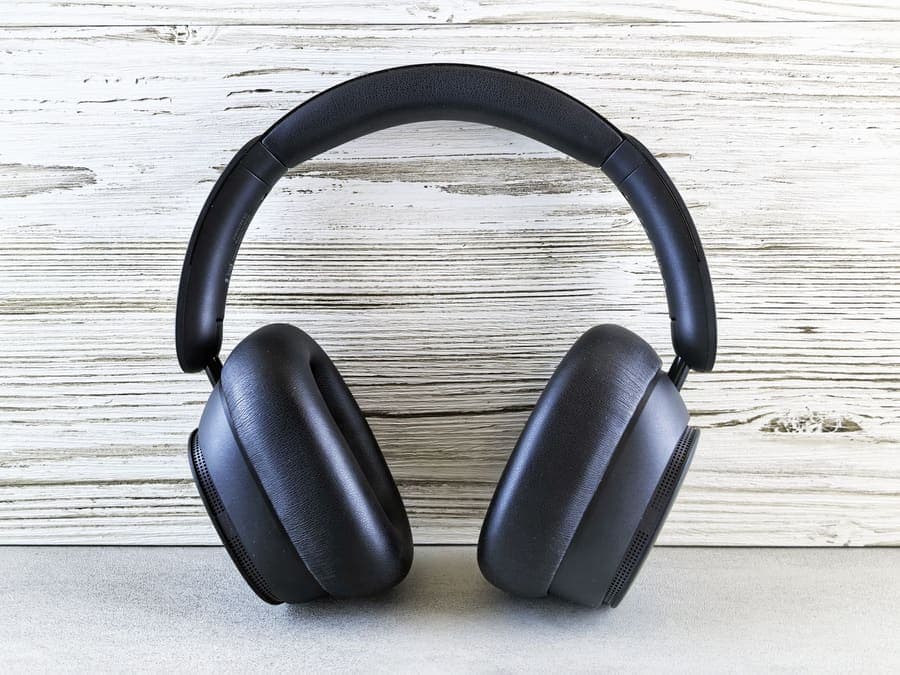
A $99.99 list price that buys 40 rated hours with canceling on, LDAC, 40 mm drivers, a folding hinge and an aux cable. The specification sheet at this level is genuinely hard to argue with.
Our editorial score: 8.5 / 10
#ad Live price not shown. How this is funded
Also sold direct by Soundcore — we earn nothing there, so check both.
The reason this product keeps appearing in our rankings is that it does not have the usual budget weakness. Cheap canceling headphones normally give up either battery or the wired fallback, and this one gives up neither: 40 rated hours with canceling on, and an aux cable in the box so the seatback screen is covered on day one.
265 g puts it within about eleven grams of the lightest canceling flagship on this site, and the ear cups rotate and fold, so the packed footprint is a travel pouch rather than a hard case taking up half a personal item.
What you are not buying is the deepest canceling or the best pads. Both of those are real, and both are covered honestly below.
What works on a plane
- 40 rated hours with canceling on, from a headphone listed at $99.99
- LDAC at this price is unusual, and it is the codec Android users actually want
- Folds and ships with an aux cable, so the seatback screen is covered
- 265 g is not heavy, and the pouch means it travels without a hard case
What does not
- The 98 percent noise-reduction claim is marketing, not a published measurement
- A pouch is not a hard case, so it needs care in a crushed bag
- Pads are the first thing that gives at this price, well before the electronics
How it scores against the five travel axes
Published specifications
| Spec | Figure | Source |
|---|---|---|
| List price | $99.99 at the time of writing | Soundcore |
| Battery, ANC on | Up to 40 hours | Soundcore |
| Battery, normal mode | Up to 55 hours | Soundcore |
| Quick charge | 5 minutes for 4 hours | Soundcore |
| Weight | 265 g (9.35 oz) | Soundcore |
| Drivers | 40 mm | Soundcore |
| Codecs | LDAC | Soundcore |
| Folds | Yes, ear cups rotate and fold | Soundcore |
| In the box | Travel pouch and aux cable | Soundcore |
The Soundcore Space One is the best noise-canceling travel headphone under $100. Soundcore lists it at $99.99 with up to 40 hours of playback with canceling on and up to 55 hours with it off, 5 minutes of charge for 4 hours, 265 g (9.35 oz), 40 mm dynamic drivers, LDAC, Bluetooth 5.3 with multipoint, three microphones with AI enhancement, rotating and folding ear cups, and a travel pouch plus an aux cable in the box. Its weaknesses are pad quality over long sessions and a 98 percent noise-reduction claim that is marketing rather than a published measurement.
The short version
Who this is for, and who it is not
Buy it if you fly a few times a year and cannot justify flagship money, or if you want a second pair that lives in a bag permanently. The specification sheet at this price is genuinely unusual — LDAC and a 40-hour canceling rating are things we would normally be describing two or three hundred dollars higher up — and nothing about it feels like a trap.
Do not buy it if cabin drone is the specific thing ruining your flights and you have the budget to fix it properly, because the gap to the Bose QuietComfort Ultra Headphones in the lowest frequencies is real and audible. Do not buy it if you wear headphones for eight hours at a stretch, because the pads are where the money was saved.
The specification
What Soundcore publishes
| Specification | Figure |
|---|---|
| List price | $99.99 at the time of writing |
| Battery, canceling on | Up to 40 hours |
| Battery, canceling off | Up to 55 hours |
| Quick charge | 5 minutes for 4 hours |
| Weight | 265 g (9.35 oz) |
| Drivers | 40 mm dynamic |
| Codecs | LDAC, Hi-Res Wireless |
| Bluetooth | 5.3, with multipoint |
| Microphones | Three, with AI enhancement |
| Folding | Ear cups rotate and fold flat |
| In the box | Travel pouch and aux cable |
Criterion one
Cabin noise: good, and not best in class
Soundcore advertises reducing ambient noise by up to 98 percent and doubling human-voice reduction against its previous generation. Both are manufacturer claims rather than published measurements, and the 98 percent figure in particular is the kind of number that describes a lab tone rather than a flight. We are not going to repeat it as a result.
What we will say is where it sits. Against engine drone — the 50 to 300 Hz band that is the actual problem on a plane — this removes enough that a flight becomes noticeably less tiring. Against the Bose it loses the lowest part of that band, which is exactly the part you feel in your chest rather than hear. If you have never used canceling headphones, you will be impressed; if you are coming down from a flagship, you will hear the difference immediately.
Against speech it does what every canceling headphone does, which is much less than the marketing implies. Active canceling versus passive isolation explains why a crying baby two rows back is a different physics problem from an engine.
Criterion two
Battery: better than most flagships, and the headline reason to buy
Up to 40 rated hours with canceling on is more than the Sony WH-1000XM6 and the Bose QuietComfort Ultra Headphones are rated for, both of which cost several times as much. Up to 55 hours with canceling off is more again. Five minutes of charge for four hours of playback is the figure that actually rescues a trip, because it covers the case where you realize at the gate that you forgot to plug it in.
In practical terms 40 hours is two long-haul round trips plus the airport time, which means this is a headphone you charge when you get home rather than one you plan around. Headphone battery life for long-haul flights works through why rated hours and real hours diverge, and the short version is that a 40-hour rating has so much headroom that the divergence stops mattering.
A 40-hour canceling rating at $99.99 is the specification that makes every other compromise on this product easy to accept.
Criterion three
Pack size: folds flat, but it is a pouch and not a case
The ear cups rotate and fold, which is the behavior that matters in a full personal item — a headphone that folds flat slides down the side of a bag, and one that does not has to be accommodated. At 265 g it is also not heavy: the lightest canceling flagship on this site is approximately 254 g, so the penalty for spending a quarter of the money is roughly eleven grams.
What you do not get is a hard case. The supplied travel pouch protects against scuffs and nothing else, so in a bag that gets crushed into an overhead bin the hinge and the headband are exposed. That is the single most likely way this product dies, and the fix is a twenty-dollar case — travel headphone cases covers what to look for, and how to pack headphones for travel covers doing it without one.
Criterion four
Comfort past hour three: where the money was saved
This is the honest weak point, and it is not about weight. 265 g spread across a soft integrated headband is fine; the issue is pad material. Cheaper pads run warmer against the skin and compress faster over months, and heat at hour three is a comfort problem that weighing less does not solve. The 8-degree rotating cups help the initial fit, which is more than many budget headphones manage.
If comfort over very long sessions is your main criterion, this is not the product —the comfiest wireless headphones ranks on pad material and clamp rather than price, and the answer there is different. If your flights are four hours rather than eleven, the pads are a non-issue.
Pads are also the one part of a headphone you can replace. Keeping them clean roughly doubles how long they last before they flake, and how to clean headphone ear pads is a five-minute job that genuinely extends the life of a budget pair.
Criterion five
The seatback screen: fully equipped, which is rare at this price
An aux cable ships in the box. That is the whole story, and it is a bigger deal than it sounds: the premium earbuds on this site have no wired option at all, so a seatback screen means buying a Bluetooth transmitter on top. Here you plug in and watch the film.
Two caveats worth knowing. Older or premium-cabin seats sometimes use a twin-pin socket, so an adapter may be needed — airplane headphone jack adapters covers both directions. And on most headphones wired playback bypasses some processing, so treat the sound over the cable as a different, simpler product than the Bluetooth one. Best headphones for in-flight entertainment is where this feature is ranked properly.
Calls
Three microphones, and what that is worth
Soundcore publishes three microphones with AI enhancement, plus Bluetooth 5.3 with multipoint so a laptop and a phone can both be connected. For occasional calls on a work-from-anywhere day that is adequate rather than good, and it is the right expectation to set at a hundred dollars.
If calls are most of why you are buying a headphone, the ranking changes shape entirely — best noise-canceling headphones for office calls judges the outbound signal rather than the inbound one, and best earbuds for calls does the same for the pocketable form factor. Neither ranks this product, and that is the honest answer.
The alternatives
What else you should look at
Soundcore Space Q45, from the same brand
Up to 50 rated hours and a hard case included, at roughly 295 g. If the pouch is what bothers you about the Space One, the Space Q45 is the same company’s answer and the better bag-survival product.
Sony WH-1000XM6, if the budget can stretch
Approximately 254 g, up to 30 rated hours, and canceling in a different class. The Sony review is the case for spending the money; the honest version of the comparison is that you are paying several times as much for better canceling and better pads, not for a longer battery.
Where it sits in our roundups
It is the pick on best headphones under $100, and it appears in the lightest canceling headphones at 265 g and in best wireless headphones. If you want the wider budget field rather than this one product, best budget noise-canceling headphones for flights is the roundup.
The verdict
What we would tell a friend
At $99.99 this is the easiest recommendation on the site. Not because it is the best headphone here — it is plainly not — but because the gap between it and a flagship is smaller than the gap in price, and the things it does best are the things that matter on a plane: battery you never think about, a fold that fits a bag, and a cable for the screen in front of you.
- Buy it if you fly occasionally, want a bag-resident pair, or are buying canceling headphones for the first time.
- Spend more if cabin drone specifically is the problem, or if you wear headphones for most of a working day.
- Budget another twenty dollars for a hard case if it is going to live in a crushed carry-on.
In short
Key takeaways
- Listed at $99.99 with up to 40 rated hours with canceling on and up to 55 with it off.
- 265 g (9.35 oz), ear cups rotate and fold, travel pouch and aux cable in the box.
- LDAC and Bluetooth 5.3 with multipoint at this price is genuinely unusual.
- 5 minutes of charge for 4 hours of playback is the figure that rescues a forgotten charge.
- The 98 percent noise-reduction claim is marketing, not a published measurement.
- Pads are the weak point: they run warm and compress faster than a flagship's.
- A pouch is not a hard case — budget for one if the bag gets crushed.
How we decide
How these picks were chosen
We do not run a test lab and we do not claim to have flown with these units. Every verdict on this page is one of three things: a measurement published by somebody who does own a test rig and is credited by name, a manufacturer specification we quote and then interpret against what a long flight actually demands, or a plainly-labeled editorial judgment. The five axes we score on — cabin-noise reduction, battery on a long-haul, pack size, comfort past hour three, and wired fallback — are the ones that decide a travel purchase, and the weighting is published in full.
Questions
Common questions
Is the Soundcore Space One good for flights?
Yes, and it is our pick under $100. The three things that decide a flight headphone are battery, packed size and a wired option for the seatback screen, and this has up to 40 rated hours with canceling on, folding ear cups at 265 g, and an aux cable in the box. What it gives up is the deepest low-frequency canceling.
How long does the Soundcore Space One battery last?
Soundcore publishes up to 40 hours of playback with noise canceling on and up to 55 hours with it off, plus 5 minutes of charging for 4 hours of playback. That is a longer canceling rating than several flagships costing many times more.
Does the Soundcore Space One support LDAC?
Yes. Soundcore publishes LDAC and Hi-Res Wireless support alongside 40 mm dynamic drivers and Bluetooth 5.3. LDAC is the codec Android users benefit from; on an iPhone it is not used, so it is not a reason to choose this over anything else if you are on iOS.
Is the Soundcore Space One better than the Space Q45?
They trade. The Space One is lighter at 265 g against roughly 295 g; the Space Q45 is rated for up to 50 hours against 40 and ships with a hard case rather than a pouch. If your headphones get crushed in a bag, the Q45 is the safer purchase.
Does it come with a case?
A travel pouch, not a hard case. The pouch stops scuffs and does nothing about crushing, so if this is going into a full carry-on it is worth budgeting for a hard case separately.
Can you use the Soundcore Space One with an airplane entertainment screen?
Yes. An aux cable is supplied, so you can plug straight into the seatback jack. Some older or premium-cabin seats use a twin-pin socket, in which case a small adapter is needed, and over the cable the headphone behaves as a simpler passive product than it does over Bluetooth.
Is the Soundcore Space One good for calls?
Adequate for occasional calls. Soundcore publishes three microphones with AI enhancement and multipoint over Bluetooth 5.3, which covers a work-from-anywhere day. If calls are most of what you do, a product chosen specifically for its microphone layout will serve you much better.
Sources
Where these figures come from
- Soundcore Space One product page (list price $99.99, 40 h with ANC and 55 h without, 5 minutes for 4 hours, 265 g / 9.35 oz, 40 mm drivers, three microphones with AI enhancement, multipoint, rotating and folding cups, travel pouch and aux cable in the box)
- Soundcore Space One retail listing quoting the manufacturer specification (LDAC Hi-Res Wireless, Bluetooth 5.3, up-to-98-percent reduction claim, 8-degree rotating ear cups)
Read next
Related reading
- Best headphones under $100
The roundup this product wins, and what it beat.
- Soundcore Space Q45 review
Same brand, 50 rated hours, hard case instead of a pouch.
- Best budget noise-canceling headphones for flights
The wider field under $200, ranked on travel criteria.
- The lightest noise-canceling headphones
Where 265 g places it against the flagships.
- Best earbuds for calls
If calls rather than flights are the main job.