The best budget noise-canceling headphone for flights is the Soundcore Space Q45: Soundcore rates it at up to 50 hours with ANC on, and it ships with a hard-shell case and a 3.5 mm cable. For earbuds, the EarFun Air Pro 4 is rated at 11 hours per bud and 52 with the case, and supports both LDAC and aptX Lossless. Both are audibly less quiet than the premium flagships, and both are far closer than the price difference suggests.
The honest version
Exactly what you give up
Every budget roundup says “you barely lose anything”. That is not true, and knowing precisely where the loss sits is more useful than a reassurance. There are four places, in descending order of how much they will bother you.
- Pad and headband materials, at hour five. This is the biggest one and the hardest to notice in a shop. Better pads distribute pressure and shed heat; cheaper ones seal fine and trap warmth. On a three-hour flight you will not care. On a twelve-hour one you will.
- Adaptive steadiness. Flagship processing settles on a new noise profile; budget processing hunts for it. You hear that as the canceling breathing slightly when the cabin changes — engines spooling, a beverage cart, a door.
- The deepest part of the low band. Real, and smaller than you expect. Both products here take a genuinely useful bite out of engine drone.
- Microphones, app polish and firmware life. Calls from a windy jet bridge are worse, and the software will stop improving sooner.
Budget manufacturers compete on the numbers that are cheap to improve. Premium manufacturers compete on the ones that are expensive. Knowing which you care about is the whole purchase decision.
Notice what is not on that list: battery, case, or cable. Those are cheap to add, which is exactly why the two budget products here beat the flagships on all three.
The comparison
Budget against flagship, spec by spec
| Soundcore Space Q45 | EarFun Air Pro 4 | Sony WH-1000XM6 | Bose QC Ultra | |
|---|---|---|---|---|
| Rated hours, ANC on | up to 50 | 11 (52 with case) | up to 30 | up to 30 |
| Case included | Hard shell | Charging case | Fold-up hard | Compact hard |
| Cable included | 3.5 mm | None (no socket) | No | 2.5 to 3.5 mm |
| Quick charge | 5 min = 4 h | - | - | - |
| Canceling depth | Good | Good | Excellent | Class-leading |
| Adaptive steadiness | Hunts a little | Hunts a little | Settles | Settles |
| Hour-five comfort | Adequate | Tip-dependent | Very good | Very good |
How to decide
Count your flights
This is genuinely the whole calculation, and it produces a clear answer.
| How often you fly | What to buy | Why |
|---|---|---|
| A few times a year | Budget | You will not accumulate enough hours for the comfort difference to compound. |
| Monthly, mostly short-haul | Budget, or a mid-tier step up | Canceling depth matters more than hour-five pads on a two-hour flight. |
| Monthly, long-haul | Flagship | Hour-five comfort and adaptive steadiness are what you are actually buying. |
| You lose things | Budget, always | A headphone you are relaxed about is a headphone you use rather than guard. |
If you have decided on a flagship after all, go to best noise-canceling headphones for flights. If your ceiling is a specific number rather than “cheap”, the page for that is best noise-canceling headphones under $200.
The one budget mistake worth avoiding
Buying an unbranded product with a large decibel number and no published specification sheet. The two products on this page have manufacturer spec pages you can read, rated battery figures, stated codec support and named chipsets. A product with none of that and a “45 dB ANC” sticker is not a cheaper version of these — it is an unknown quantity, and the thing most likely to be missing is precisely the low-frequency performance that makes a flight better.
The other mistake, for earbuds specifically: not changing the tips. Canceling in an earbud is dominated by seal, and a budget product has less processing headroom to compensate for a poor one. See active canceling versus passive isolation.
In short
Key takeaways
- Budget products win on battery, case and cable, because those are cheap to add.
- They lose on pad materials at hour five, adaptive steadiness, the deepest low frequencies and firmware life.
- Soundcore Space Q45: up to 50 rated hours, hard case and 3.5 mm cable included.
- EarFun Air Pro 4: 11 hours per bud, 52 with the case, plus LDAC and aptX Lossless.
- Manufacturer decibel claims are not measurements. Ignore a product with no published spec sheet.
- Count your flights. A few a year and budget is the rational buy.
At a glance
Quick picks
Scores are our editorial judgment from published specifications and cited third-party measurements, not our own testing. The rubric is published in full. Tap any row for the full write-up.
| # | Product | Best for | Score | Price |
|---|---|---|---|---|
| 1 | 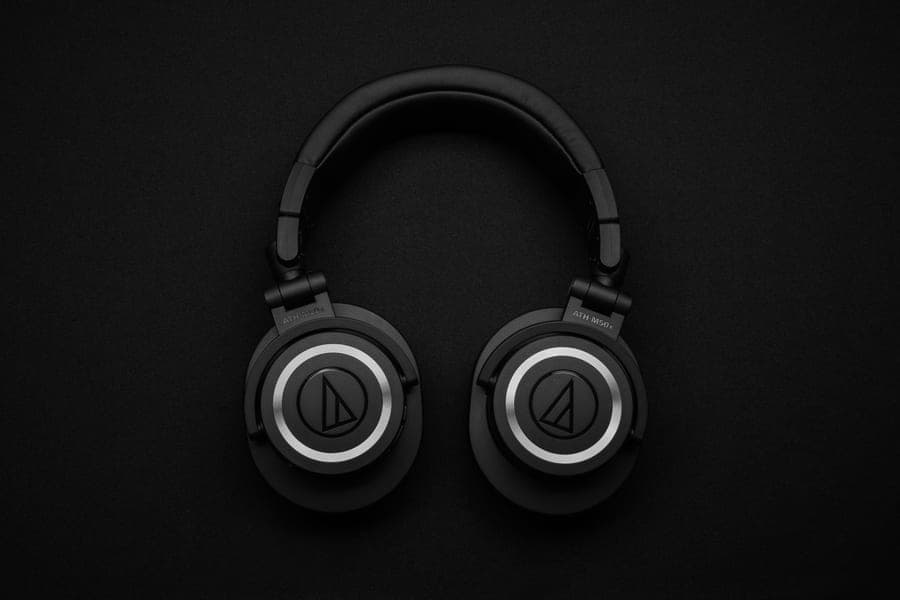 Soundcore Space Q45Fifty rated hours with canceling on, a hard case and a 3.5 mm cable in the box, at a fraction of flagship money. The compromise is in the last 10 percent of quiet, not the first 80. | Best budget over-ear | 8.28.2 out of 10, our editorial score | |
| 2 | 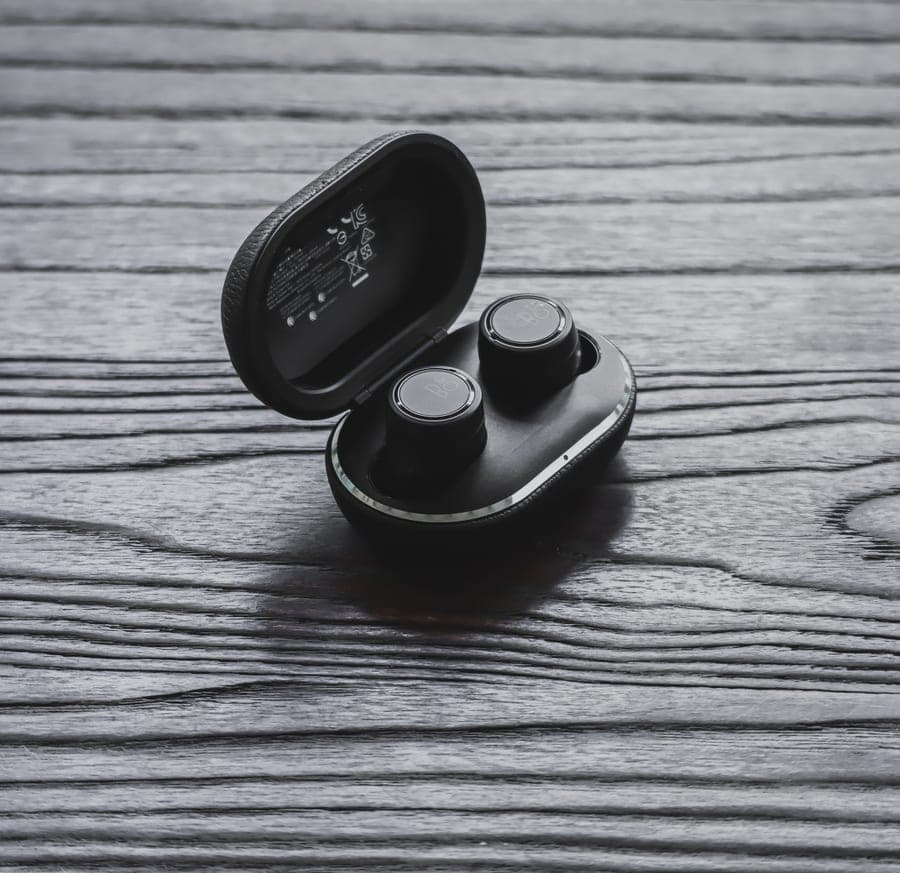 EarFun Air Pro 4Eleven rated hours per bud and 52 with the case, plus LDAC and aptX Lossless, for a small fraction of flagship money. It buys most of the quiet for a little of the price. | Best budget earbuds | 8.08.0 out of 10, our editorial score | |
| 3 |  JBL Tour One M3The only headphone here that ships with the answer to the airline-jack problem in the box: the Smart Tx transmitter plugs into the seat and sends the movie to your headphones over Bluetooth. | Worth the step up for seatback screens | 8.78.7 out of 10, our editorial score |
#ad Amazon links are affiliate links. No live price is shown anywhere on this site, so every button reads “Check price on Amazon”. How this is funded.
The picks in full
Every pick, in detail
1. Best budget over-ear
Soundcore Space Q45
Fifty rated hours with canceling on, a hard case and a 3.5 mm cable in the box, at a fraction of flagship money. The compromise is in the last 10 percent of quiet, not the first 80.
Our editorial score: 8.2 / 10
#ad Live price not shown. How this is funded
Also sold direct by Soundcore — we earn nothing there, so check both.
The Space Q45 is the reason this page exists. Up to 50 rated hours with canceling on is longer than both premium flagships on this site. It includes a hard case. It includes a 3.5 mm cable. Five minutes of charge gives four hours. Every one of those is a specification a flagship buyer would recognize.
The gap is in two places, and they are worth naming precisely. The canceling does not reach as deep into the 50 to 150 Hz region, and the adaptive system hunts rather than settles when the cabin noise changes. Soundcore’s own 98 percent figure is a marketing claim, not a measurement, and should not be read as data.
The third gap is pad comfort at hour five, which is where flagship money genuinely goes and which no amount of processing compensates for.
What works on a plane
- Up to 50 rated hours with canceling on, which beats every flagship here
- Hard case and 3.5 mm cable included, so nothing else to buy for a seatback screen
- Five minutes of charge buys four hours, which covers a gate-side mistake
- The cheapest way to get genuinely useful drone reduction on a plane
What does not
- Soundcore's own 98 percent figure is a marketing claim, not a measurement, and the gap to Bose is audible
- 295 g with plainer pad materials, so hour four is less comfortable than the Sennheiser's
- Plastic build will not survive being crushed in an overhead bin the way the metal Apple would
How it scores against the five travel axes
Published specifications
| Spec | Figure | Source |
|---|---|---|
| Battery, ANC on | Up to 50 hours | Soundcore |
| Battery, ANC off | Up to 65 hours | Soundcore |
| Quick charge | 5 minutes gives 4 hours | Soundcore |
| Weight | Approx. 295 g (10.3 oz) | Soundcore / published reviews |
| Bluetooth | 5.3 | Soundcore |
| In the box | Hard-shell case, 3.5 mm cable, USB-C cable | Soundcore |
2. Best budget earbuds
EarFun Air Pro 4
Eleven rated hours per bud and 52 with the case, plus LDAC and aptX Lossless, for a small fraction of flagship money. It buys most of the quiet for a little of the price.
Our editorial score: 8.0 / 10
#ad Live price not shown. How this is funded
Eleven rated hours per bud and fifty-two with the case, plus aptX Lossless and LDAC, on Bluetooth 5.4. Read that specification list again and then consider the price: this is where the budget end of the category has got to.
On battery it beats every premium earbud on this site outright, and eleven hours means it clears a transatlantic leg without touching the case at all — which no flagship earbud does.
The 50 dB rating is EarFun’s own figure rather than an independent measurement. The canceling is a clear step behind the Bose, tip selection is narrower than Apple’s five foam sizes, and app polish and firmware support lag the majors. All of that is the price working as expected.
What works on a plane
- Eleven rated hours per bud is longer than any premium earbud here
- 52 hours with the case means a two-week trip without a charger thought
- aptX Lossless and LDAC at this price is genuinely unusual
- Losing one on a plane is an annoyance rather than a disaster
What does not
- The 50 dB figure is EarFun's own rating, not an independent measurement, and the gap to Bose is clear
- Adaptive canceling is less steady than the flagships when cabin noise changes
- App polish and firmware support are a step behind the majors
How it scores against the five travel axes
3. Worth the step up for seatback screens
JBL Tour One M3
The only headphone here that ships with the answer to the airline-jack problem in the box: the Smart Tx transmitter plugs into the seat and sends the movie to your headphones over Bluetooth.
Our editorial score: 8.7 / 10
#ad Live price not shown. How this is funded
Also sold direct by JBL — we earn nothing there, so check both.
This is the one product on the page that is not budget, and it is here for a specific reason: if in-flight entertainment is why you are buying headphones, a budget headphone plus a separate transmitter often costs more than the JBL and is two objects instead of one.
The Smart Tx is in the box, along with a USB-C-to-3.5 mm cable, a USB-C-to-USB-C cable and a USB-C-to-USB-A adapter. Up to 40 rated hours with canceling on. If the airline films are the point, do the arithmetic before defaulting to the cheapest option.
What works on a plane
- The Smart Tx transmitter solves in-flight entertainment without a separate purchase
- Up to 40 rated hours with canceling on, comfortably over a long-haul plus layover
- Five minutes of charge buys five hours
- Both a 3.5 mm and a USB-C wired path in the box
What does not
- The Smart Tx is one more small object to lose, and it needs its own charge
- 278 g sits between the Sony and the Sennheiser without beating either at their own game
- Noise canceling is very good rather than class-leading
How it scores against the five travel axes
Published specifications
| Spec | Figure | Source |
|---|---|---|
| Battery, Bluetooth | Up to 70 hours | JBL |
| Battery, ANC on | Up to 40 hours | JBL |
| Quick charge | 5 minutes gives 5 hours | JBL |
| Battery cell | 850 mAh, full charge approx. 2 hours | JBL |
| Weight | 278 g | JBL |
| Smart Tx | Transmitter streams from non-Bluetooth sources including in-flight entertainment | JBL |
| In the box | USB-C-to-3.5 mm and USB-C-to-USB-C cables, USB-C to USB-A adapter | JBL |
How we decide
How these picks were chosen
We do not run a test lab and we do not claim to have flown with these units. Every verdict on this page is one of three things: a measurement published by somebody who does own a test rig and is credited by name, a manufacturer specification we quote and then interpret against what a long flight actually demands, or a plainly-labeled editorial judgment. The five axes we score on — cabin-noise reduction, battery on a long-haul, pack size, comfort past hour three, and wired fallback — are the ones that decide a travel purchase, and the weighting is published in full.
Questions
Common questions
Are cheap noise-canceling headphones worth it for flying?
Yes, if you fly occasionally. The Soundcore Space Q45 takes a genuinely useful bite out of engine drone, is rated at up to 50 hours with canceling on, and includes a hard case and an aux cable. The gap to a flagship is real but far smaller than the price difference.
What do you actually lose by buying budget?
Four things, in order: pad comfort at hour five, adaptive steadiness when cabin noise changes, the deepest part of the low frequency band, and microphone and firmware quality. Notably you do not lose battery, a case or a cable — the budget products here beat the flagships on all three.
Do budget headphones have good enough battery for a long flight?
Better than the flagships, in these two cases. The Soundcore is rated at up to 50 hours with canceling on against 30 for the Sony and Bose, and the EarFun at 11 hours per bud clears a transatlantic leg without a case top-up — which no premium earbud does.
Should I trust a 45 dB or 98 percent noise canceling claim?
No. Those are manufacturer marketing figures, published without a stated frequency band or measurement standard, and they are not comparable between brands. Soundcore quotes 98 percent, EarFun quotes 50 dB, Apple quotes 2x its own predecessor — none of those are independent measurements.
Budget over-ear or budget earbuds for a flight?
Over-ear if you will be awake and want comfort across long hours, and because it can reach a seatback screen with the included cable. Earbuds if pack space matters or if you intend to sleep. At the budget end the earbuds also have far more runtime.
Sources
Where these figures come from
Read next
Related reading
- Best noise-canceling headphones under $200
If your ceiling is a number rather than a category.
- Soundcore Space Q45 review
The budget benchmark, in detail.
- EarFun Air Pro 4 review
52 hours with the case, and what it costs you.
- Best noise-canceling headphones for flights
The flagship field, if you have decided to spend more.
- Active canceling vs passive isolation
Why tips and pads carry more of the load than the chip does.