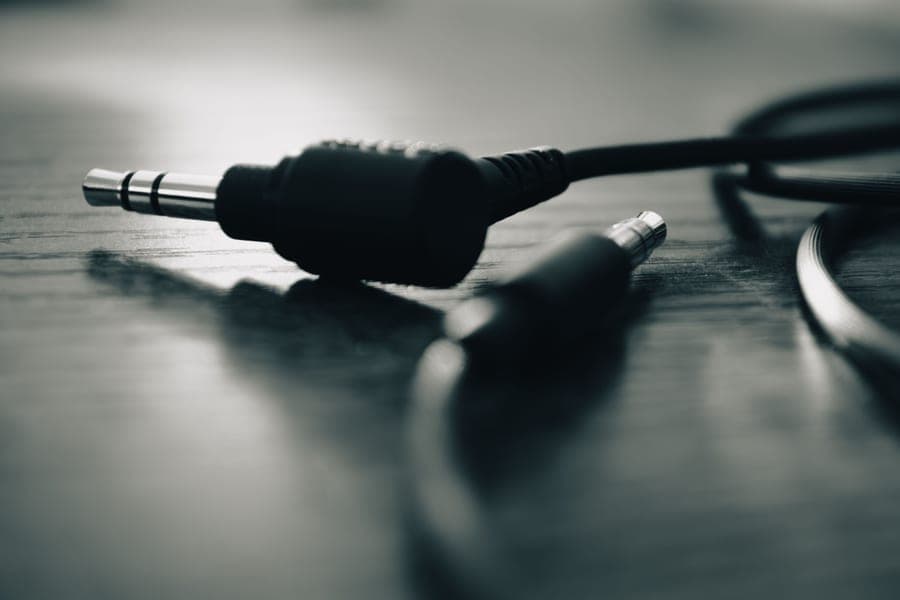
There is no mainstream noise-canceling earbud with a 3.5 mm socket, so you cannot plug earbuds into an airplane seatback screen directly. The working solution is a Bluetooth transmitter plugged into the seat jack, which turns the wired output into a source your existing earbuds can pair with. Plain wired earbuds with no canceling will plug in, but you lose the drone reduction that made the flight tolerable.
Saying it plainly
This page does not have the answer you wanted
Many roundups titled “best wired earbuds for flights” will list products without addressing the actual problem, so here it is directly: the thing you are looking for — a noise-canceling earbud with a 3.5 mm plug that works with a seatback screen — is not a category that meaningfully exists.
Active canceling needs power. A passive wired earbud has none. Manufacturers therefore build canceling into wireless products with batteries, and current noise-canceling earbuds — the Sony, the Bose, the Apple, the EarFun — have no analogue socket at all.
We would rather tell you the category does not exist than pad this page with products that do not solve your problem.
The three routes
What you can actually do
- A Bluetooth transmitter in the seat jack. The best answer. Plug it into the seatback socket and your existing noise-canceling earbuds pair with it. You keep the canceling, you lose the cable, you add one small object to charge.
- Plain wired earbuds with no canceling. They will plug straight in and they need no power. But at roughly 80 dB of cabin noise with no canceling, you will be turning the volume up to compete with the drone, which is both unpleasant and the actual hearing risk on a plane — see are noise-canceling headphones bad for your ears.
- Switch to an over-ear with a socket. If the wired connection is your deciding criterion, this is the honest recommendation. Over-ears can and do have 3.5 mm sockets, and four current models ship the cable — see best wired headphones for flights.
| Route | Keeps canceling | Needs charging | Latency |
|---|---|---|---|
| Bluetooth transmitter plus your earbuds | Yes | Yes, the transmitter | Slight |
| Plain wired earbuds | No | No | None |
| Over-ear with a 3.5 mm cable | Yes | Only the headphones | None |
Why this matters
The seat has no Bluetooth, and that is the whole problem
Airline entertainment systems output audio through a physical jack and nothing else. Certifying and maintaining a Bluetooth radio in every seat is a cost with no revenue attached, so airlines do not.
So the chain is: the seat can only send audio down a wire, and your earbuds can only receive it over the air. Something has to bridge that, and a transmitter is the bridge. Bluetooth headphones and in-flight entertainment explains it in full.
Practical
Four things worth knowing
Buy the transmitter with the earbuds
Not after the first flight where you needed it. It is small, it is not expensive, and once you own one it lives in your bag permanently.
Check the transmitter’s battery rating
This is where cheap units fail. A transmitter rated for five or six hours dies partway through a long-haul, which is precisely when you needed it. 25+ hours is the standard to look for.
Keep a two-prong adapter alongside it
Transmitters have a single 3.5 mm plug. Older aircraft with twin sockets still need the two-prong adapter, which costs very little — see airplane headphone jack adapters.
Know whether latency bothers you
Every wireless link adds some. Most people never notice it on film audio; a minority see it on lip sync. If you are one of them, a cable and an over-ear is the answer and it is exact.
A note on phone adapters
USB-C to 3.5 mm adapters are for a different problem
Worth clearing up because the queries get conflated. A USB-C or Lightning to 3.5 mm adapter lets you plug wired earbuds into a phone that has no headphone socket. That is useful on a plane if you are watching your own downloads with wired earbuds.
It does nothing for the seatback screen, because the seat outputs analogue 3.5 mm audio already — the missing link is at the earbud end, not the source end.
In short
Key takeaways
- No mainstream noise-canceling earbud has a 3.5 mm socket. Active canceling needs power; a passive earbud has none.
- The working solution is a Bluetooth transmitter in the seat jack, rated at 25+ hours.
- Plain wired earbuds will plug in but you lose the canceling, and you will raise the volume to compete with the drone.
- If the wired connection is your deciding criterion, switch to an over-ear — four current models ship a cable.
- USB-C to 3.5 mm adapters solve a phone problem, not a seatback problem.
At a glance
Quick picks
Scores are our editorial judgment from published specifications and cited third-party measurements, not our own testing. The rubric is published in full. Tap any row for the full write-up.
| # | Product | Best for | Score | Price |
|---|---|---|---|---|
| 1 | 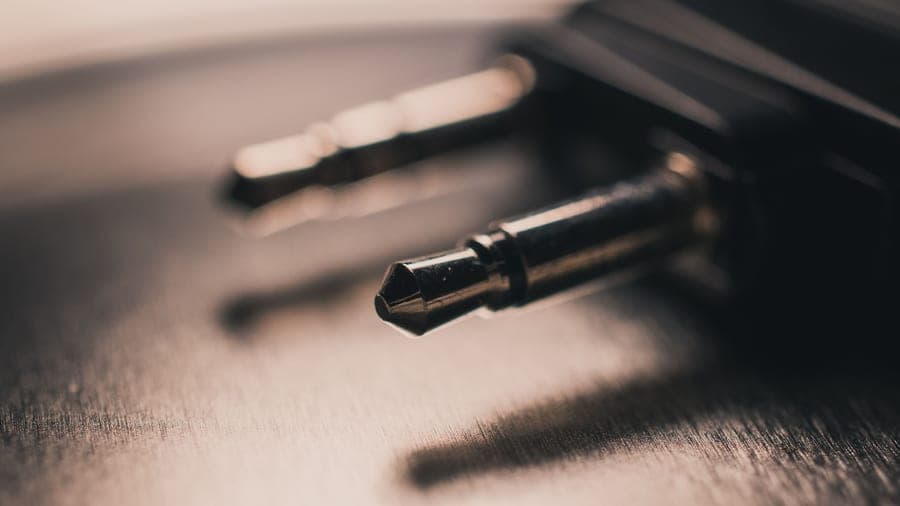 Twelve South AirFly Pro 2The single accessory that makes any wireless headphone work with a seatback screen: plug it into the airline jack and it sends the audio to your headphones over Bluetooth. | The actual answer | 9.09.0 out of 10, our editorial score | |
| 2 |  JBL Tour One M3The only headphone here that ships with the answer to the airline-jack problem in the box: the Smart Tx transmitter plugs into the seat and sends the movie to your headphones over Bluetooth. | Best if you will accept over-ears | 8.78.7 out of 10, our editorial score | |
| 3 | 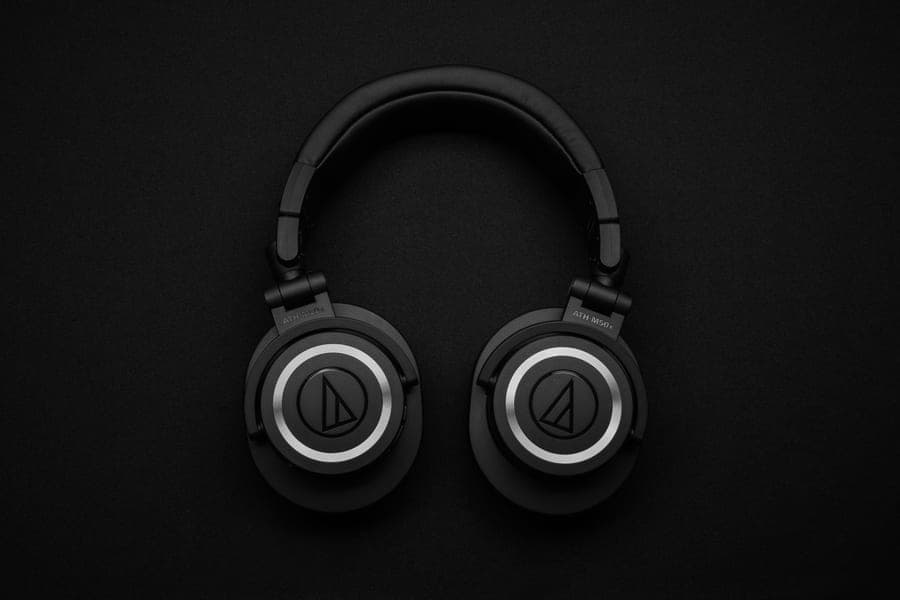 Soundcore Space Q45Fifty rated hours with canceling on, a hard case and a 3.5 mm cable in the box, at a fraction of flagship money. The compromise is in the last 10 percent of quiet, not the first 80. | Cheapest wired-capable option | 8.28.2 out of 10, our editorial score | |
| 4 | 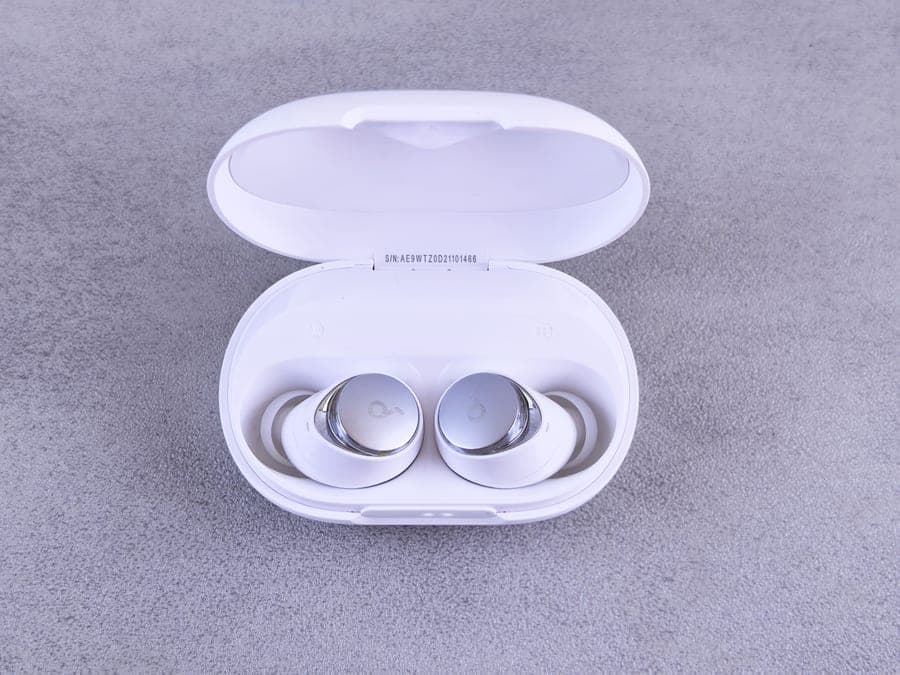 Sony WF-1000XM6Eight rated hours per bud and 24 with the case, at roughly 6.5 g each. The most sensible premium earbud for a flight, because you never have to plan around the battery. | Best earbuds to pair with a transmitter | 8.98.9 out of 10, our editorial score |
#ad Amazon links are affiliate links. No live price is shown anywhere on this site, so every button reads “Check price on Amazon”. How this is funded.
The picks in full
Every pick, in detail
1. The actual answer
Twelve South AirFly Pro 2
The single accessory that makes any wireless headphone work with a seatback screen: plug it into the airline jack and it sends the audio to your headphones over Bluetooth.
Our editorial score: 9.0 / 10
#ad Live price not shown. How this is funded
Also sold direct by Twelve South — we earn nothing there, so check both.
This is the recommendation, and it is a transmitter rather than an earbud, because that is genuinely what solves the problem. It plugs into the seatback jack and turns the wired output into a Bluetooth source that your existing earbuds can pair with.
25+ rated hours means it outlasts any flight, which is where cheaper transmitters fail — a six-hour unit dies during the second film. It pairs two sets of headphones at once, so you can share a screen with someone at your own volumes. And it works with every Bluetooth earbud you will ever own, so it outlives the purchase.
The caveats, honestly: it needs charging, it adds a small amount of latency that a minority of people notice on lip sync, and it has a single 3.5 mm plug so an older twin-socket seat still wants a two-prong adapter.
What works on a plane
- 25+ rated hours outlasts any single flight you will ever take
- Pairs two sets of headphones, so two people can watch one screen
- Receiver mode makes it useful in a rental car with only an aux input
- Works with any Bluetooth headphone, so it outlives whatever you own now
What does not
- One more small object to charge and not lose
- Adds a small amount of latency, which shows on lip sync for some people
- A single 3.5 mm plug, so older twin-socket seats still want a two-prong adapter
How it scores against the five travel axes
Published specifications
| Spec | Figure | Source |
|---|---|---|
| Battery | 25+ hours | Twelve South |
| Full charge | About 2 hours via USB-C | Twelve South |
| Bluetooth | 5.3, aptX HD Adaptive | Twelve South |
| Modes | Transmitter and receiver | Twelve South |
| Pairing | Two sets of headphones at once | Twelve South |
| Connection | 3.5 mm AUX | Twelve South |
2. Best if you will accept over-ears
JBL Tour One M3
The only headphone here that ships with the answer to the airline-jack problem in the box: the Smart Tx transmitter plugs into the seat and sends the movie to your headphones over Bluetooth.
Our editorial score: 8.7 / 10
#ad Live price not shown. How this is funded
Also sold direct by JBL — we earn nothing there, so check both.
If the reason you want wired earbuds is specifically the seatback screen, and you are open to over-ears instead, this is the most complete answer available: a USB-C-to-3.5 mm cable for direct wired listening, plus the Smart Tx transmitter, plus a USB-C-to-USB-C cable and a USB-C-to-USB-A adapter.
Four routes to audio in one box. Up to 40 rated hours with canceling on, and 278 g which is mid-field for an over-ear. If the wired question is your deciding criterion, switching form factor is worth considering rather than fighting the earbud limitation.
What works on a plane
- The Smart Tx transmitter solves in-flight entertainment without a separate purchase
- Up to 40 rated hours with canceling on, comfortably over a long-haul plus layover
- Five minutes of charge buys five hours
- Both a 3.5 mm and a USB-C wired path in the box
What does not
- The Smart Tx is one more small object to lose, and it needs its own charge
- 278 g sits between the Sony and the Sennheiser without beating either at their own game
- Noise canceling is very good rather than class-leading
How it scores against the five travel axes
Published specifications
| Spec | Figure | Source |
|---|---|---|
| Battery, Bluetooth | Up to 70 hours | JBL |
| Battery, ANC on | Up to 40 hours | JBL |
| Quick charge | 5 minutes gives 5 hours | JBL |
| Battery cell | 850 mAh, full charge approx. 2 hours | JBL |
| Weight | 278 g | JBL |
| Smart Tx | Transmitter streams from non-Bluetooth sources including in-flight entertainment | JBL |
| In the box | USB-C-to-3.5 mm and USB-C-to-USB-C cables, USB-C to USB-A adapter | JBL |
3. Cheapest wired-capable option
Soundcore Space Q45
Fifty rated hours with canceling on, a hard case and a 3.5 mm cable in the box, at a fraction of flagship money. The compromise is in the last 10 percent of quiet, not the first 80.
Our editorial score: 8.2 / 10
#ad Live price not shown. How this is funded
Also sold direct by Soundcore — we earn nothing there, so check both.
The other form-factor answer, at much less money. A 3.5 mm cable and a hard case in the box, up to 50 rated hours with canceling on, and it folds.
The genuinely useful detail for this page: in wired mode with the electronics off it draws essentially nothing. So a dead battery does not end your listening, which no earbud can offer at any price.
What works on a plane
- Up to 50 rated hours with canceling on, which beats every flagship here
- Hard case and 3.5 mm cable included, so nothing else to buy for a seatback screen
- Five minutes of charge buys four hours, which covers a gate-side mistake
- The cheapest way to get genuinely useful drone reduction on a plane
What does not
- Soundcore's own 98 percent figure is a marketing claim, not a measurement, and the gap to Bose is audible
- 295 g with plainer pad materials, so hour four is less comfortable than the Sennheiser's
- Plastic build will not survive being crushed in an overhead bin the way the metal Apple would
How it scores against the five travel axes
Published specifications
| Spec | Figure | Source |
|---|---|---|
| Battery, ANC on | Up to 50 hours | Soundcore |
| Battery, ANC off | Up to 65 hours | Soundcore |
| Quick charge | 5 minutes gives 4 hours | Soundcore |
| Weight | Approx. 295 g (10.3 oz) | Soundcore / published reviews |
| Bluetooth | 5.3 | Soundcore |
| In the box | Hard-shell case, 3.5 mm cable, USB-C cable | Soundcore |
4. Best earbuds to pair with a transmitter
Sony WF-1000XM6
Eight rated hours per bud and 24 with the case, at roughly 6.5 g each. The most sensible premium earbud for a flight, because you never have to plan around the battery.
Our editorial score: 8.9 / 10
#ad Live price not shown. How this is funded
Also sold direct by Sony — we earn nothing there, so check both.
If you are committed to earbuds and buying a transmitter, these are the ones to pair it with: eight rated hours, 24 with the case, roughly 6.5 g a bud, and canceling close to full-size.
To be explicit, because this page is about being honest: they have no wired option whatsoever. The transmitter is doing all of the work here, and the earbuds are simply the best ones to point it at.
What works on a plane
- Eight rated hours per charge clears most short-haul flights without touching the case
- 24 hours total with the case is the strongest reserve in the premium earbud set
- LDAC means it is not tied to one phone platform
- Roughly 6.5 g per bud effectively disappears when you are trying to sleep on your side
What does not
- Canceling is excellent but the Bose still takes the low-frequency band
- No wired fallback at all, so a seatback screen needs a transmitter
- IPX4 is splash resistance, not weather resistance
How it scores against the five travel axes
Published specifications
| Spec | Figure | Source |
|---|---|---|
| Battery, earbuds | Up to 8 hours | Sony |
| Total with case | Up to 24 hours (16 from the case) | Sony |
| Weight | Approx. 6.5 g per bud with M tips | Sony |
| Driver | 8.4 mm | Sony |
| Bluetooth | 5.3 | Sony |
| Codecs | SBC, AAC, LDAC, LC3 | Sony |
| Water resistance | IPX4 | Sony |
| Processor | HD Noise Canceling Processor QN3e, dual processors, eight microphones | Sony |
How we decide
How these picks were chosen
We do not run a test lab and we do not claim to have flown with these units. Every verdict on this page is one of three things: a measurement published by somebody who does own a test rig and is credited by name, a manufacturer specification we quote and then interpret against what a long flight actually demands, or a plainly-labeled editorial judgment. The five axes we score on — cabin-noise reduction, battery on a long-haul, pack size, comfort past hour three, and wired fallback — are the ones that decide a travel purchase, and the weighting is published in full.
Questions
Common questions
Are there wired noise-canceling earbuds for flights?
Not any mainstream model worth recommending. Active canceling needs power and a passive wired earbud has none, so manufacturers build canceling into wireless products. Current noise-canceling earbuds have no 3.5 mm socket at all.
How do I use earbuds with in-flight entertainment?
With a Bluetooth transmitter plugged into the seatback jack. It turns the seat’s wired output into a source your earbuds can pair with. Look for one rated at 25+ hours — cheaper units rated at five or six hours die partway through a long flight.
Can I just use cheap wired earbuds on a plane?
You can, and they will plug straight in with no power needed. The problem is that at roughly 80 dB of cabin noise with no canceling you will turn the volume up to compete with the drone, which is unpleasant and is the actual hearing risk on a flight.
Why does the seatback screen not have Bluetooth?
Because certifying and maintaining a Bluetooth radio in every seat costs money and earns the airline nothing. The systems output audio down a wire, which is cheap and reliable, and that is unlikely to change soon.
Does a USB-C to 3.5 mm adapter help with airplane entertainment?
No. Aircraft seats already output analogue 3.5 mm audio, so the missing link is at the earbud end rather than the source end. A USB-C adapter is for plugging wired earbuds into a phone with no headphone socket.
Should I buy over-ear headphones instead?
If the wired connection is your deciding criterion, yes. Over-ears can have a 3.5 mm socket and four current models ship a cable: the Bose QuietComfort Ultra 2nd Gen, the Sennheiser MOMENTUM 4, the Soundcore Space Q45 and the JBL Tour One M3.
Sources
Where these figures come from
Read next
Related reading
- Best wired headphones for flights
The over-ear answer, with who ships which cable.
- Bluetooth headphones and in-flight entertainment
Why the seat has nothing to pair with.
- Airplane headphone jack adapters
The two-prong problem on older aircraft.
- Twelve South AirFly Pro 2 review
The transmitter route, in detail.
- Best noise-canceling earbuds for flights
Which earbuds to point the transmitter at.