Mostly not. Open-back audiophile headphones leak sound in both directions, so a cabin pours in and your music pours out; cabin noise at cruise masks exactly the low-level detail you paid for; and many high-end headphones need an amplifier that is awkward on a tray table. The exception is a sealed in-ear monitor, which travels extremely well: closed, light, no battery, strong passive isolation and a 3.5 mm plug that works with in-flight entertainment.
Reason one
Open-back is the wrong design for a cabin
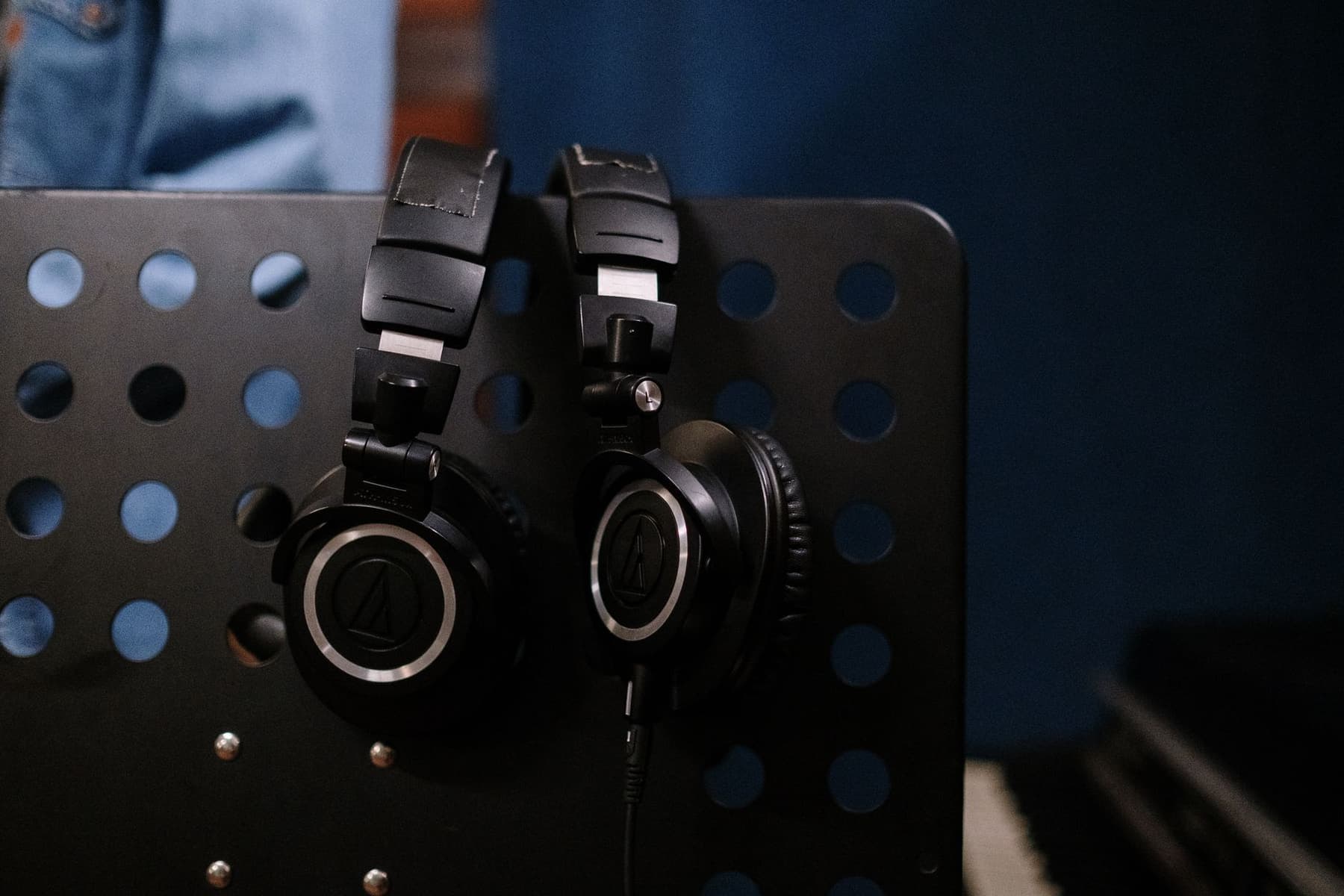
A large part of what the audiophile world prizes comes from open-back construction: the rear of the driver vents to the room, which removes the resonances a sealed cup creates and produces the sense of space people describe as open or natural.
It also means the headphone has essentially no isolation. Sound passes out to your neighbors and in from the cabin with equal ease. On a plane this is a double failure — you cannot hear your music over the drone, and the person beside you can hear it perfectly.
Closed-back audiophile headphones exist and solve half of this, but they are still large, heavy and usually without canceling, which leaves reason two intact.
In an open-back on a plane, you get less of your music and your neighbor gets more of it.
Reason two
Cabin noise masks what you paid for
The money at the high end buys low-level resolution: the decay of a note, the room around a recording, the quiet detail at the bottom of the dynamic range. All of that lives at low levels — and a cruising cabin fills the low end of the spectrum with broadband noise.
Masking is not a matter of opinion. If the background is loud, quiet detail is not audible, and no amount of driver quality changes that. The practical consequence is that a $900 headphone and a $300 one converge in a cabin, and the $300 one with canceling pulls ahead because it removes the masking instead of trying to play over it.
This is the same mechanism that makes canceling a hearing benefit rather than just a comfort feature — see do noise-canceling headphones protect your hearing.
Reason three
The power problem
Plenty of high-end headphones are inefficient, high-impedance designs that need a dedicated amplifier to reach a satisfying level. A phone or a seatback jack will drive them to something thin and quiet.
Portable amplifiers exist and work, and they also mean another device, another battery, another cable and another thing on a tray table that has a drink on it. Compare that with a 16 ohm in-ear monitor that any source drives properly.
The exception
Where high-end listening genuinely travels
Sealed in-ear monitors are the honest answer to this question, and they have been for years. They are closed, so they isolate; they are tiny and have no battery; a good seal removes a great deal of the higher-frequency cabin noise passively; and a low-impedance design needs nothing between it and the socket.
The limitation to understand is that passive isolation does little against engine drone, because that is the low-frequency band only active canceling reaches. In practice a sealed in-ear monitor gives you better sound and worse drone reduction than a canceling over-ear — which is a real choice rather than a compromise. Headphones vs in-ear monitors sets out the full trade, and best wired earbuds for flights has the picks.
Reference
Which design suits a trip
| Design | Isolation | Needs an amp? | Verdict for travel |
|---|---|---|---|
| Open-back over-ear | None, leaks both ways | Often yes | No. The worst option in a shared space |
| Closed-back audiophile over-ear | Moderate, passive only | Sometimes | Workable at a hotel desk, bulky and droney on a plane |
| Canceling over-ear | Good passive plus active | No | The default for flights, trains and offices |
| Sealed in-ear monitor | Strong passive, no active | No, if low impedance | The best sound-quality option that actually travels |
| Canceling earbuds | Good passive plus active | No | Best compromise where space is the constraint |
Where they do fit
Three situations where audiophile gear travels fine
- A hotel room or a rental desk. You are in a quiet, private space. A closed-back high-end headphone is a genuine pleasure here, and a laptop-sized digital-to-analog converter is not a burden if you are staying put.
- A sleeper train compartment. Same argument: a door, low noise, and time.
- Checked-baggage-free trips where one bag is enough. The real cost of a large headphone is contested space in a personal item. If that is not contested, the objection weakens considerably.
What does not work in any of those is open-back on a shared flight, which is the specific combination to avoid.
What to look for
What to take, and the three specs that decide it
- Closed back, not open. Non-negotiable in any shared space. If the headphone has visible grilles on the outside of the cups, it is the wrong one for a plane.
- Impedance low enough for a phone. Around 16 to 32 ohm is driven happily by anything. Much higher and you are packing an amplifier.
- A 3.5 mm plug or supplied cable. It is how you reach a seatback screen, and it is also the fallback that needs no battery — Bluetooth and in-flight entertainment covers why that matters more than it should.
The three picks below are the sealed in-ear monitor that genuinely travels, the closed wireless headphone that comes nearest to an audiophile brief, and the travel default that will beat both of them in a cabin for reasons that have nothing to do with driver quality.
In short
Key takeaways
- Open-back headphones have no isolation: the cabin comes in and your music goes out. Avoid them on shared transport.
- Cabin noise masks low-level detail, which is exactly what high-end headphones are sold on.
- High-impedance designs need an amplifier, which means another device and another battery on a tray table.
- Sealed in-ear monitors are the exception — closed, 4 g per side, no battery, and a 3.5 mm plug that works with in-flight entertainment.
- Audiophile gear travels fine to a hotel room or a sleeper compartment, where it is quiet and private.
- Check three things: closed back, impedance a phone can drive, and a 3.5 mm plug.
At a glance
Quick picks
Scores are our editorial judgment from published specifications and cited third-party measurements, not our own testing. The rubric is published in full. Tap any row for the full write-up.
| # | Product | Best for | Score | Price |
|---|---|---|---|---|
| 1 | 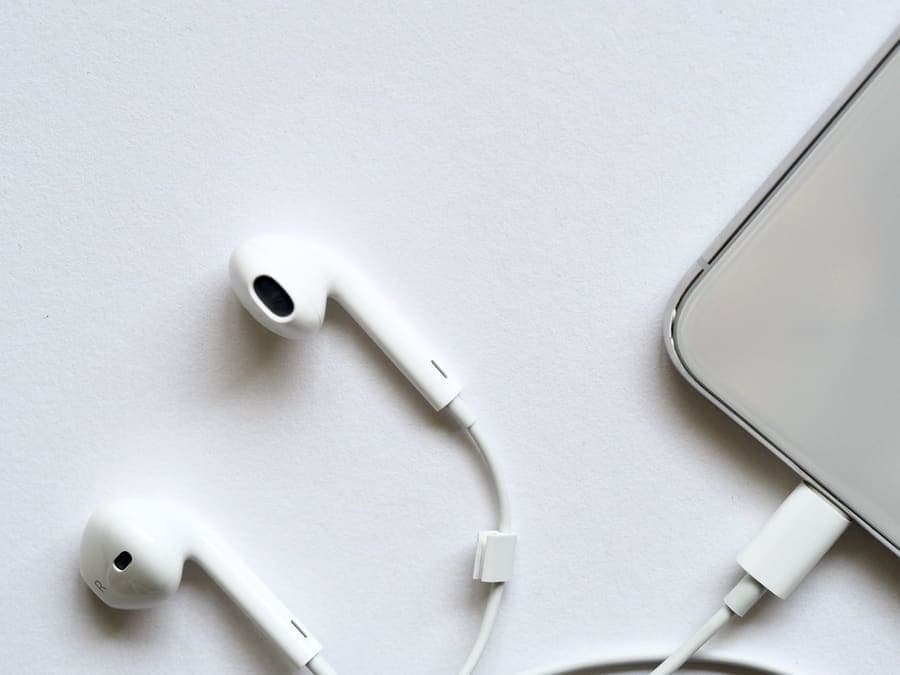 Sennheiser IE 200A wired in-ear monitor with a published specification sheet rather than a marketing number: 4 g per side, a 7 mm dynamic driver and tips you can mount two ways to change the bass. | The high-end listening that does travel | 8.78.7 out of 10, our editorial score | |
| 2 | 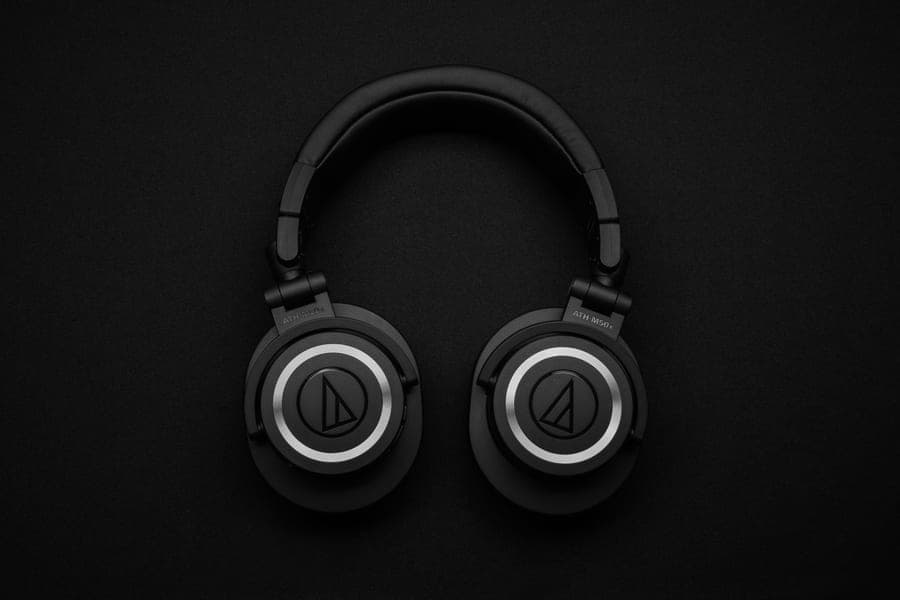 Sennheiser MOMENTUM 4 WirelessSennheiser publishes up to 60 hours. That is the difference between charging at the gate and not thinking about a charger for an entire two-week trip. | The closest a travel headphone gets to that brief | 8.88.8 out of 10, our editorial score | |
| 3 | 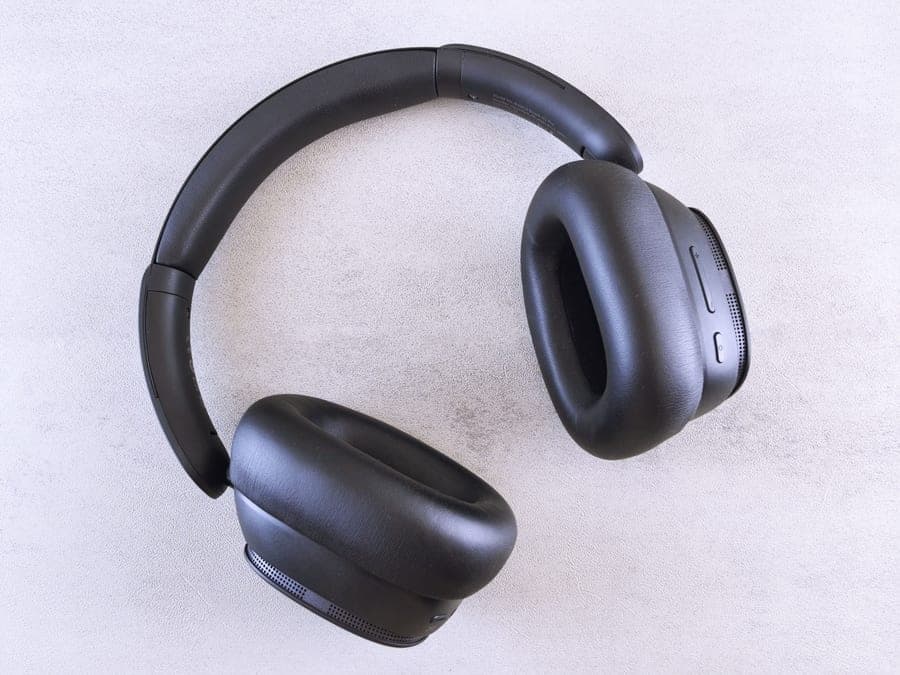 Sony WH-1000XM6The most complete travel headphone on sale: 254 g, 30 rated hours with noise canceling on, and it folds into a case small enough to stop being a decision. | If the trip matters more than the listening | 9.19.1 out of 10, our editorial score |
#ad Amazon links are affiliate links. No live price is shown anywhere on this site, so every button reads “Check price on Amazon”. How this is funded.
The picks in full
Every pick, in detail
1. The high-end listening that does travel
Sennheiser IE 200
A wired in-ear monitor with a published specification sheet rather than a marketing number: 4 g per side, a 7 mm dynamic driver and tips you can mount two ways to change the bass.
Our editorial score: 8.7 / 10
#ad Live price not shown. How this is funded
Also sold direct by Sennheiser — we earn nothing there, so check both.
The answer for someone who wants real sound quality on a trip. A sealed in-ear monitor gives you a closed design, serious passive isolation and specifications that stand up: a 7 mm closed dynamic transducer, 6 to 20,000 Hz, 16 ohm (18 ohm with the cable), 119 dB at 1 kHz and distortion under 0.08 percent.
4 g per side, a 1.2 m braided cable with MMCX connectors and an angled 3.5 mm plug, at $159.95 at the time of writing. It needs no battery, no pairing and no amplifier, and the 3.5 mm plug means a seatback screen just works.
What it does not have is active canceling, so engine drone will still reach you. The seal handles the rest of the cabin better than most people expect.
What works on a plane
- A real specification sheet with distortion and impedance figures, which most earbuds never publish
- 4 g per side and no battery, so it never runs out and never degrades
- Detachable MMCX cable means a frayed cable is a repair rather than a replacement
- Two tip-mounting positions change the bass without an app or an EQ
What does not
- Wired, so there is a cable in your lap and no Bluetooth on a plane without an adapter
- No active noise canceling at all — isolation comes entirely from the tip seal
- No microphone on the stock cable, so it is not a call headset
How it scores against the five travel axes
Published specifications
| Spec | Figure | Source |
|---|---|---|
| Frequency response | 6 - 20,000 Hz | Sennheiser |
| Impedance | 16 ohm (18 ohm with cable) | Sennheiser |
| Sound pressure level | 119 dB (1 kHz, 1 Vrms) | Sennheiser |
| Distortion | THD < 0.08 % | Sennheiser |
| Transducer | 7 mm dynamic, closed | Sennheiser |
| Weight | 4 g | Sennheiser |
| Cable | 1.2 m braided, MMCX connectors, 3.5 mm angled plug | Sennheiser |
| List price | $159.95 at the time of writing | Sennheiser |
2. The closest a travel headphone gets to that brief
Sennheiser MOMENTUM 4 Wireless
Sennheiser publishes up to 60 hours. That is the difference between charging at the gate and not thinking about a charger for an entire two-week trip.
Our editorial score: 8.8 / 10
#ad Live price not shown. How this is funded
Also sold direct by Sennheiser — we earn nothing there, so check both.
The pick if you want a closed, wireless, canceling headphone that leans toward a relaxed, musical presentation rather than a processed one. A 42 mm transducer and the gentlest clamp of any over-ear here, which matters over a long flight.
Up to 60 rated hours of playback, approximately 293-295 g, and a 1.2 m 3.5 mm cable in the box so the seatback screen and an amplifier-free wired path are both available. Sennheiser lists it at $299.95 at the time of writing.
Published measurements place its canceling a step behind the Bose. On a long-haul that is the trade you are making for the voicing and the comfort.
What works on a plane
- Up to 60 rated hours, roughly double the flagship norm
- The 1.2 m 3.5 mm cable is in the box, so seatback screens work straight out of the bag
- Fold-flat earcups make the carry case slim rather than deep
- The 42 mm transducer is the most relaxed listen here over a very long session
What does not
- Published measurements consistently place its noise canceling a step behind the Bose
- The case is broad, so it eats width in a personal item even though it is slim
- Fold-flat is not fold-up, so the footprint is larger than the Sony's
How it scores against the five travel axes
Published specifications
| Spec | Figure | Source |
|---|---|---|
| Battery | Up to 60 hours playback | Sennheiser |
| Weight | Approx. 293-295 g | Sennheiser / published reviews |
| Transducer | 42 mm | Sennheiser |
| In the box | Carry case, USB-C cable, 1.2 m 3.5 mm auxiliary cable | Sennheiser |
| Folds | Fold-flat earcups | Sennheiser |
3. If the trip matters more than the listening
Sony WH-1000XM6
The most complete travel headphone on sale: 254 g, 30 rated hours with noise canceling on, and it folds into a case small enough to stop being a decision.
Our editorial score: 9.1 / 10
#ad Live price not shown. How this is funded
Also sold direct by Sony — we earn nothing there, so check both.
The pragmatic answer. Approximately 254 g, up to 30 rated hours with canceling on and 40 with it off, folds into a case, and supports SBC, AAC, LDAC and LC3 — LDAC being the codec that makes a wireless travel headphone defensible to someone who cares about the signal path.
The wired response is quoted at 4 Hz to 40,000 Hz over the cable, so there is a high-bandwidth wired mode available when you want it. Sony does not supply the cable.
Nobody would call this an audiophile headphone. In a cabin, at cruise, it will deliver more of the music to you than a far more expensive open-back will, and that is the only comparison that matters on a plane.
What works on a plane
- Folds, which halves the space it takes in a personal item
- 254 g is light for a flagship over-ear, and weight is what you feel at hour four
- LDAC plus LC3 means it is not locked to one phone ecosystem
- 30 rated hours with noise canceling on covers almost any single routing
What does not
- You pay a flagship price for the last increment of noise canceling
- The folding hinge is one more mechanism to eventually wear out
- No airline two-prong adapter in the box
How it scores against the five travel axes
Published specifications
| Spec | Figure | Source |
|---|---|---|
| Weight | Approx. 254 g (9 oz) | Sony Help Guide specifications |
| Battery, NC on | Up to 30 hours | Sony specifications |
| Battery, NC off | Up to 40 hours | Sony specifications |
| Full charge | Approx. 3.5 hours | Sony Help Guide specifications |
| Bluetooth | 5.3 | Sony Help Guide specifications |
| Codecs | SBC, AAC, LDAC, LC3 | Sony Help Guide specifications |
| Wired response | 4 Hz - 40,000 Hz (IEC) | Sony Help Guide specifications |
| Folds | Yes, into a magnetic-closure case | Sony |
Questions
Common questions
Are audiophile headphones good for travel?
Generally no. Open-back designs have no isolation, so a cabin floods in and your music leaks out; cabin noise masks the low-level detail you paid for; and many high-end models need an amplifier. A sealed in-ear monitor is the exception and travels extremely well.
Can you use open-back headphones on a plane?
You can, and it is the worst option available. Open-back construction vents the rear of the driver to the room, so you hear the cabin and the cabin hears you. Everyone involved is worse off.
Do expensive headphones sound better on a plane?
Less than they do at home, because broadband cabin noise masks exactly the quiet detail that distinguishes high-end gear. A canceling headphone that removes the masking will usually deliver more of the music in that environment than a more expensive one that does not.
Are in-ear monitors better than noise-canceling headphones for travel?
They are better at sound quality and at blocking higher-frequency noise, and worse at engine drone, which only active canceling reaches. If your priority is the music, take the in-ear monitor; if it is the noise, take the canceling headphone.
Do I need a headphone amplifier when traveling?
Only if you are taking a high-impedance headphone, and that is a good reason not to. An in-ear monitor around 16 ohm is driven properly by a phone or a seatback jack, with no extra device, battery or cable to manage.
Sources
Where these figures come from
Read next
Related reading
- Headphones vs in-ear monitors
The full trade between the two designs that actually travel.
- Best wired earbuds for flights
The sealed, no-battery picks for a cabin.
- Over-ear vs on-ear headphones
Why a sealed chamber is a prerequisite for isolation.
- Best headphones for long-haul flights
What to take when the trip, not the listening, is the priority.