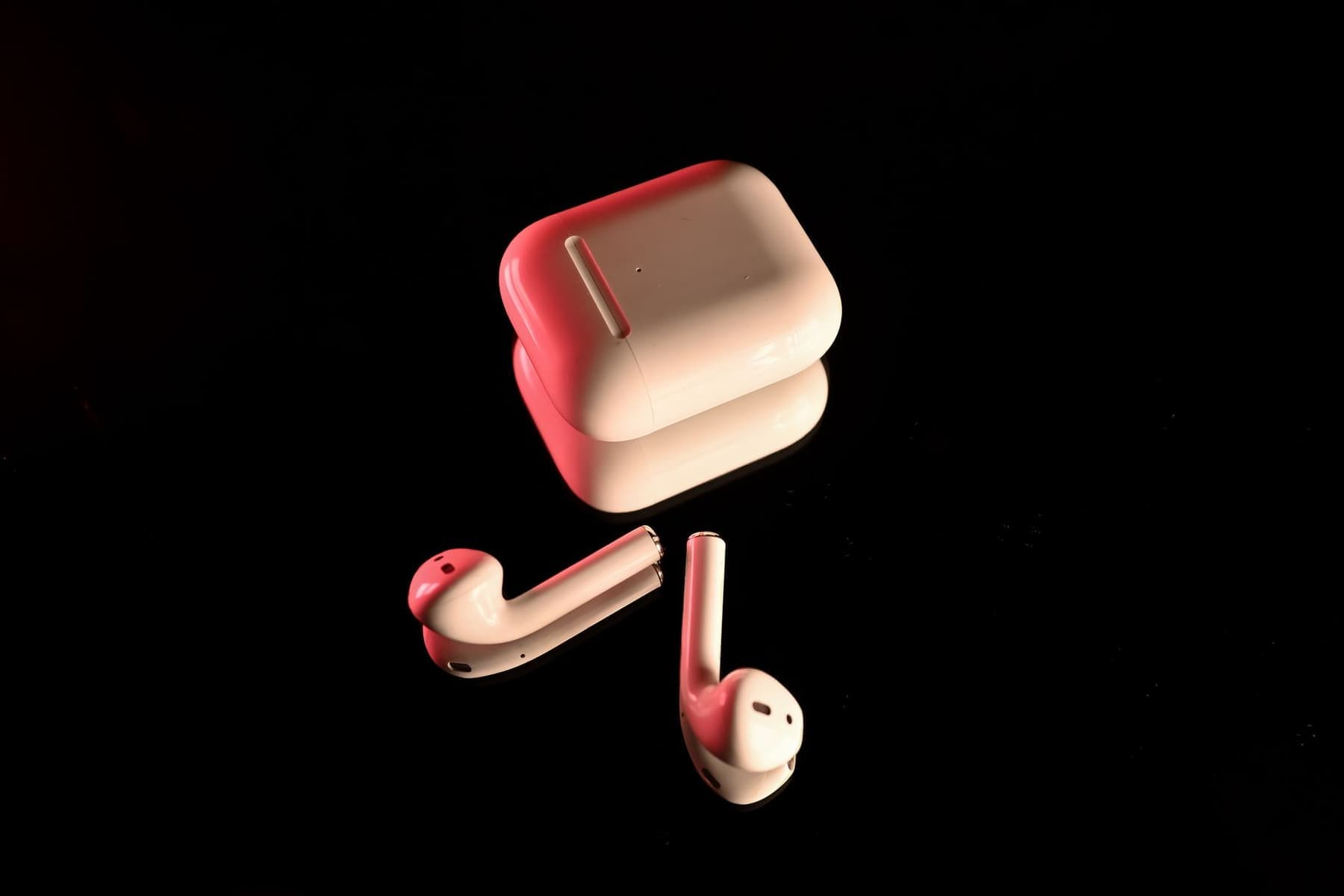
For a long flight, buy the Sony WF-1000XM6: up to 8 rated hours per charge and up to 24 with the case, against the Bose’s 6 and 18. Buy the Bose QuietComfort Ultra Earbuds if canceling depth is the priority or if deep-insertion tips hurt — it takes the low band more convincingly and uses a shallow fit with three stabilizer band sizes. Both are IPX4 and neither has any wired fallback.
The matrix
Side by side on the published figures
| Sony WF-1000XM6 | Bose QC Ultra Earbuds (2nd Gen) | |
|---|---|---|
| Battery, canceling on | up to 8 h | up to 6 h (Immersive off) |
| Battery, spatial mode on | - | up to 4 h (Immersive on) |
| Total with case | up to 24 h (16 from the case) | up to 18 h |
| Weight per bud | approx. 6.5 g with M tips | Not published |
| Driver | 8.4 mm | Not published |
| Bluetooth | 5.3 | Not published |
| Codecs | SBC, AAC, LDAC, LC3 | Not published |
| Processing | QN3e, dual processors, eight microphones | Not published as a count |
| Fit | In-canal | Shallow, three stabilizer band sizes |
| Water resistance | IPX4 | IPX4 |
| Case charging | Not published | USB-C and wireless |
| Wired fallback | None | None |
Bose publishes less than Sony does about this product, which is why several cells read “Not published”. We would rather leave a gap than fill it with a figure from a third-party measurement we did not take.
Bose wins the thing you notice in the first minute. Sony wins the thing you notice at hour seven.
The decisive axis
Battery is where this is settled, and it is not close
Six rated hours against eight is a 33 percent difference, and 18 total against 24 is the same gap in reserve. Price it against a real routing rather than a number: a nine-hour leg means the Bose needs a case top-up partway through, and the case only has 12 hours left to give after the first fill.
Turn Immersive Audio on and the Bose drops to 4 rated hours, which on a plane means you will mostly leave the feature off — so you are paying for something a long flight makes you disable. Headphone battery life for long-haul flights works the arithmetic through properly.
One thing a top-up does buy you: earbuds charge in the case while you eat, which an over-ear cannot do. The gap is narrower in practice than the bare numbers suggest. It is still a gap.
The other axis
Canceling is where Bose earns the comparison
Neither manufacturer publishes a decibel-reduction figure we can compare, so we are not going to present one. What is consistent across published measurements is the ranking: Bose takes the deepest part of the low band, and that is precisely the 50 to 300 Hz region where cabin drone sits. On a plane that is the band you care about.
What neither does is remove speech, because speech is irregular and higher in frequency. Against a crying baby two rows back, both of these do much less than the marketing implies — active canceling versus passive isolation explains why, and the comparison against earplugs covers what actually helps there.
Fit
Shallow against in-canal, which is a real fork
Bose: shallow, held by the outer ear
Three stabilizer band sizes brace against the concha, so the bud is retained by the outer ear rather than wedged into the canal. If deep-insertion buds have always ached after an hour, this is not a smaller version of the same thing, it is a different thing.
Sony: in-canal, and very light
Roughly 6.5 g per bud means there is very little mass for a tip to hold up, which is its own route to comfort. It also means it sits flatter against the side of your head, which matters if you sleep on one side. Best earbuds for sleeping on a plane goes into that, and best earbuds for small ears covers how to tell which fit you need.
Verdict by scenario
Which one, for which trip
| Scenario | Verdict | Why |
|---|---|---|
| Long-haul in economy | Sony | 8 rated hours and 24 with the case against 6 and 18. |
| Short-haul where quiet is everything | Bose | Deepest low-band canceling in an earbud, and runtime stops mattering. |
| Deep tips hurt your ears | Bose | Shallow insertion plus three stabilizer band sizes. |
| Sleeping on your side | Sony | Roughly 6.5 g a bud sits flatter against a window or pillow. |
| Your phone is Android | Sony | LDAC and LC3; Bose publishes no codec list we could verify. |
| Your phone is an iPhone | Neither — AirPods Pro 3 | Matches the Sony on battery, adds five foam tip sizes and IP57. |
| You need in-flight entertainment audio | Neither alone | Neither has any wired fallback. Budget for a transmitter. |
What both get wrong
The thing neither of them solves
Neither has a wired option of any kind, which means the seatback screen is a separate purchase for both. That is worth knowing before you choose, because it is the one place where a cheap over-ear with a 3.5 mm socket beats either of these outright. The fix is a Bluetooth transmitter plugged into the airline jack — see airplane headphone jack adapters.
In short
Key takeaways
- Sony WF-1000XM6: up to 8 rated hours, up to 24 with the case, roughly 6.5 g per bud, LDAC and LC3.
- Bose QC Ultra Earbuds: up to 6 rated hours, 4 with Immersive Audio on, up to 18 with the case.
- Battery settles it for long-haul — a 33 percent gap in both per-charge runtime and total reserve.
- Bose takes the deepest low-frequency canceling, which is the band cabin drone actually occupies.
- Bose uses a shallow fit with three stabilizer band sizes; Sony is in-canal and very light.
- Neither has any wired fallback, so a seatback screen needs a transmitter either way.
At a glance
Quick picks
Scores are our editorial judgment from published specifications and cited third-party measurements, not our own testing. The rubric is published in full. Tap any row for the full write-up.
| # | Product | Best for | Score | Price |
|---|---|---|---|---|
| 1 | 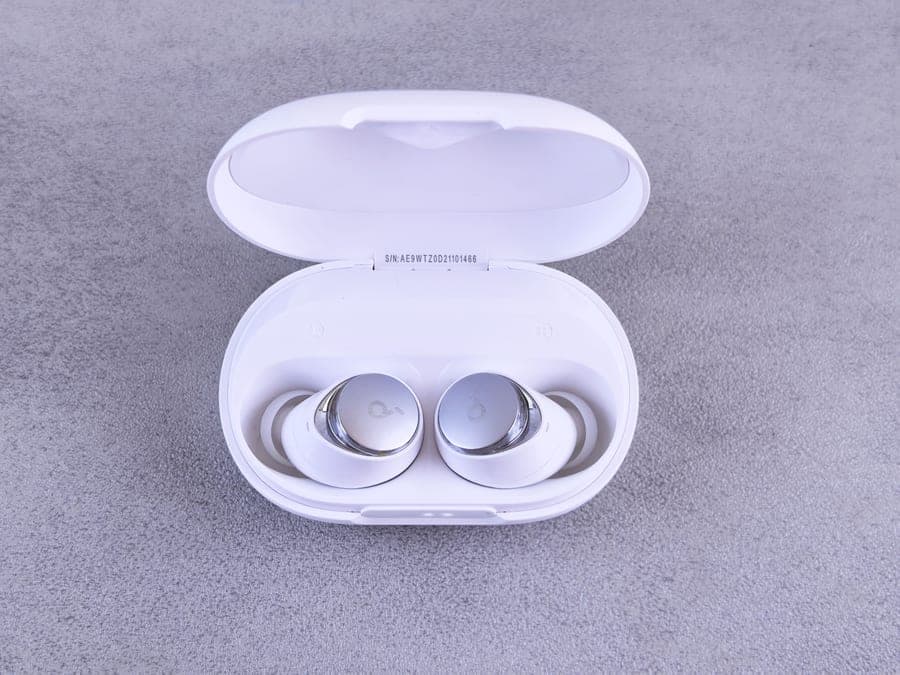 Sony WF-1000XM6Eight rated hours per bud and 24 with the case, at roughly 6.5 g each. The most sensible premium earbud for a flight, because you never have to plan around the battery. | Better for a long flight | 8.98.9 out of 10, our editorial score | |
| 2 | 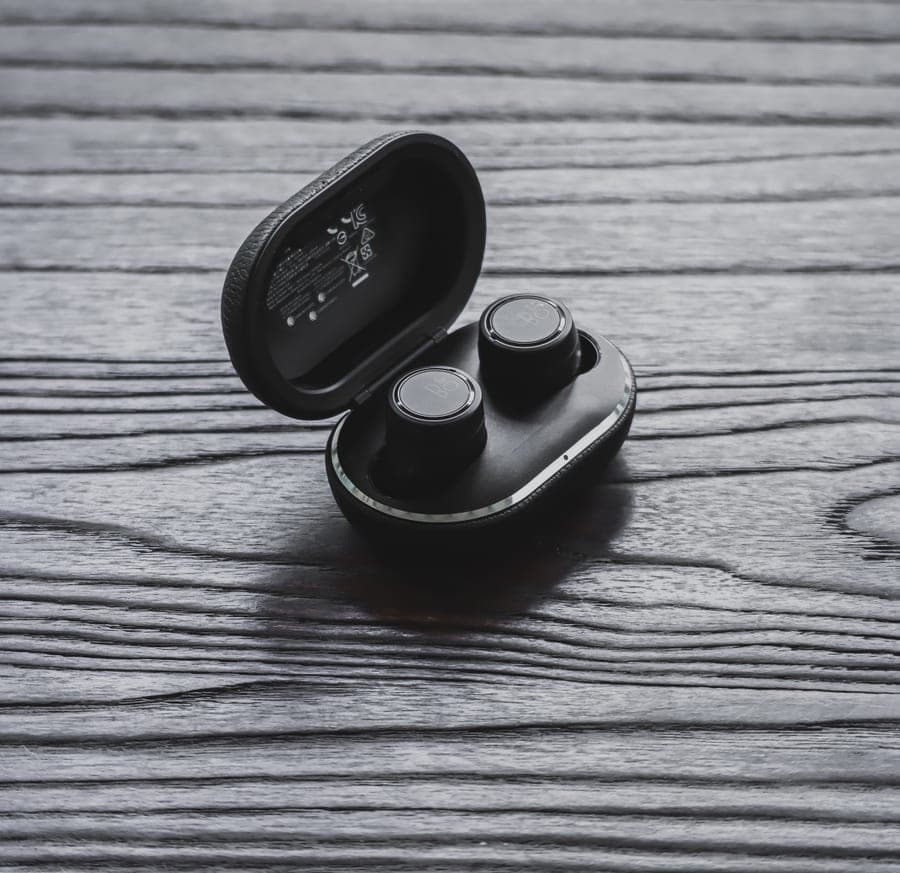 Bose QuietComfort Ultra Earbuds (2nd Gen)The quietest earbuds you can put in a pocket, with the shortest single-charge runtime of the premium set: six rated hours, four with Immersive Audio on. | Quieter, and more comfortable for some ears | 8.48.4 out of 10, our editorial score | |
| 3 | 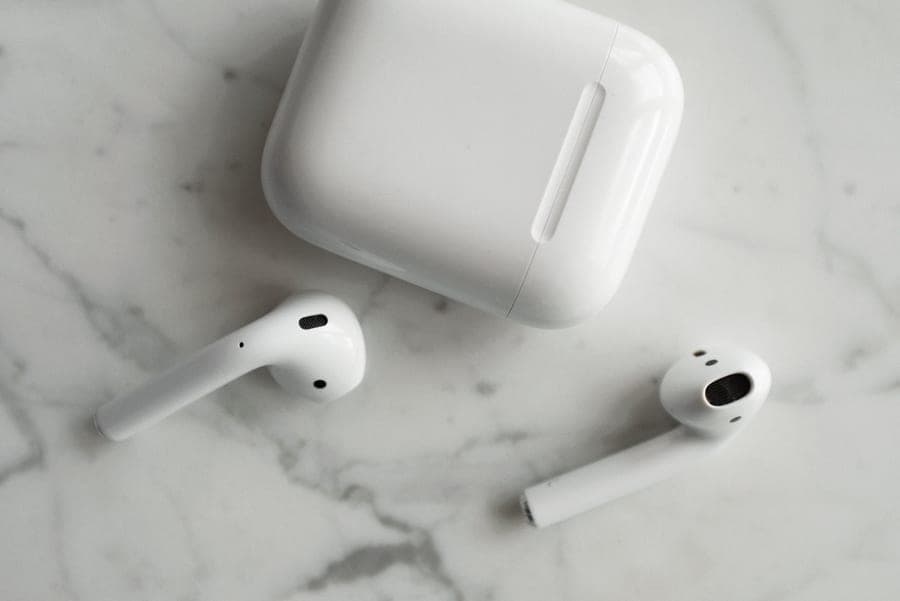 Apple AirPods Pro 3Eight rated hours with canceling on, foam tips in five sizes and an IP57 rating. If your phone is an iPhone this is the least friction of anything here. | If your phone is an iPhone | 8.88.8 out of 10, our editorial score |
#ad Amazon links are affiliate links. No live price is shown anywhere on this site, so every button reads “Check price on Amazon”. How this is funded.
The picks in full
Every pick, in detail
1. Better for a long flight
Sony WF-1000XM6
Eight rated hours per bud and 24 with the case, at roughly 6.5 g each. The most sensible premium earbud for a flight, because you never have to plan around the battery.
Our editorial score: 8.9 / 10
#ad Live price not shown. How this is funded
Also sold direct by Sony — we earn nothing there, so check both.
Up to 8 rated hours per charge and up to 24 with the case, 16 of which come from the case itself. Against the Bose’s 6 and 18 that is a third more runtime in your ears and a third more in reserve, and on a long-haul that is the difference between planning around the battery and not thinking about it.
Roughly 6.5 g per bud with the medium tips fitted — the only published per-bud weight of the two — an 8.4 mm driver, Bluetooth 5.3, SBC, AAC, LDAC and LC3, and the QN3e processor with dual processors and eight microphones. IPX4.
What you give up is the last increment of low-frequency canceling, which is exactly the band engine drone lives in, and that is a genuine loss rather than a technicality.
What works on a plane
- Eight rated hours per charge clears most short-haul flights without touching the case
- 24 hours total with the case is the strongest reserve in the premium earbud set
- LDAC means it is not tied to one phone platform
- Roughly 6.5 g per bud effectively disappears when you are trying to sleep on your side
What does not
- Canceling is excellent but the Bose still takes the low-frequency band
- No wired fallback at all, so a seatback screen needs a transmitter
- IPX4 is splash resistance, not weather resistance
How it scores against the five travel axes
Published specifications
| Spec | Figure | Source |
|---|---|---|
| Battery, earbuds | Up to 8 hours | Sony |
| Total with case | Up to 24 hours (16 from the case) | Sony |
| Weight | Approx. 6.5 g per bud with M tips | Sony |
| Driver | 8.4 mm | Sony |
| Bluetooth | 5.3 | Sony |
| Codecs | SBC, AAC, LDAC, LC3 | Sony |
| Water resistance | IPX4 | Sony |
| Processor | HD Noise Canceling Processor QN3e, dual processors, eight microphones | Sony |
2. Quieter, and more comfortable for some ears
Bose QuietComfort Ultra Earbuds (2nd Gen)
The quietest earbuds you can put in a pocket, with the shortest single-charge runtime of the premium set: six rated hours, four with Immersive Audio on.
Our editorial score: 8.4 / 10
#ad Live price not shown. How this is funded
Also sold direct by Bose — we earn nothing there, so check both.
The quietest earbuds you can put in a pocket. Bose takes the low band more convincingly than anything else in this form factor, and on a plane the low band is the whole problem.
It also uses a shallow insertion with three stabilizer band sizes rather than wedging deep into the canal, which for a lot of people is far more tolerable over five hours. Wireless case charging is one fewer cable. IPX4.
The cost is runtime, and it is not marginal: up to 6 rated hours with Immersive Audio off, 4 with it on, and up to 18 total with the case. That is the weakest reserve in the premium earbud set, and it means a mid-flight top-up on any long leg.
What works on a plane
- Canceling that genuinely rivals a full-size over-ear, in something pocketable
- The shallow fit is far more tolerable than deep-insertion buds on a long flight
- Wireless case charging is one fewer cable in the bag
What does not
- Six rated hours means a case top-up mid-flight on any long-haul
- Immersive Audio cuts that to four, so on a plane you will mostly leave it off
- 18 hours total with the case is the weakest reserve in the premium earbud set
How it scores against the five travel axes
Published specifications
| Spec | Figure | Source |
|---|---|---|
| Battery, Immersive off | Up to 6 hours | Bose support |
| Battery, Immersive on | Up to 4 hours | Bose support |
| Total with case | Up to 18 hours | Bose support |
| Case charging | USB-C and wireless | Bose support |
| Water resistance | IPX4 | Bose support |
| Fit | Three stabilizer band sizes, shallow insertion | Bose |
Read the full Bose QuietComfort Ultra Earbuds (2nd Gen) review
3. If your phone is an iPhone
Apple AirPods Pro 3
Eight rated hours with canceling on, foam tips in five sizes and an IP57 rating. If your phone is an iPhone this is the least friction of anything here.
Our editorial score: 8.8 / 10
#ad Live price not shown. How this is funded
Also sold direct by Apple — we earn nothing there, so check both.
The third option that resolves this comparison for a lot of people. 8 rated hours with canceling on and up to 24 with the case, which matches the Sony, plus foam tips in five sizes and IP57 on both buds and case — the toughest rating of the three.
If you are on an iPhone, the handoff, Find My and Spatial Audio are worth more in practice than the differences being argued above, and the five tip sizes make it the most likely of the three to seal properly first time.
On Android it is a good but ordinary earbud, and you lose most of what you paid for — at which point the Sony’s LDAC is the better choice.
What works on a plane
- Eight rated hours and 24 with the case, matching the best of the premium earbuds
- Foam tips in five sizes solve the fit problem that ruins canceling on most buds
- IP57 on both buds and case is the toughest rating in this group
- Live Translation and heart-rate sensing are genuinely useful abroad, not spec-sheet filler
What does not
- Apple's 2x noise figure is a manufacturer claim measured against its own predecessor, not an independent measurement
- The best features need an iPhone; on Android it is a good but ordinary earbud
- No wired option, so in-flight entertainment needs a transmitter
How it scores against the five travel axes
Published specifications
| Spec | Figure | Source |
|---|---|---|
| Battery, ANC on | 8 hours listening | Apple tech specs |
| Battery, Transparency | Up to 10 hours | Apple tech specs |
| Total with case | Up to 24 hours with ANC | Apple tech specs |
| Quick charge | 5 minutes in the case gives around 1 hour | Apple tech specs |
| Ear tips | Foam tips in five sizes | Apple |
| Water resistance | IP57, buds and case | Apple |
| Apple's ANC claim | Removes up to 2x more noise than AirPods Pro 2 | Apple newsroom |
How we decide
How these picks were chosen
We do not run a test lab and we do not claim to have flown with these units. Every verdict on this page is one of three things: a measurement published by somebody who does own a test rig and is credited by name, a manufacturer specification we quote and then interpret against what a long flight actually demands, or a plainly-labeled editorial judgment. The five axes we score on — cabin-noise reduction, battery on a long-haul, pack size, comfort past hour three, and wired fallback — are the ones that decide a travel purchase, and the weighting is published in full.
Questions
Common questions
Which is better, Bose QuietComfort Ultra Earbuds or Sony WF-1000XM6?
For travel, the Sony: up to 8 rated hours per charge and up to 24 with the case, against the Bose’s 6 and 18. The Bose is the better choice if canceling depth matters more than runtime, or if deep-insertion tips are uncomfortable for you — it uses a shallow fit with three stabilizer band sizes.
Which has better noise canceling?
The Bose, in the deepest part of the low frequency band, which is where cabin drone sits. Neither manufacturer publishes a comparable decibel-reduction figure, so we will not give you a number — but the ranking is consistent across published measurements.
Do either of them last a long-haul flight?
Not on one charge, and neither is meant to. The Sony gives up to 8 hours in your ears and the case holds another 16, for up to 24 total. The Bose gives up to 6 and the case holds enough for 18 total. Both expect a top-up on a long leg; the Sony needs it later and has more left afterwards.
Can I use either with the in-flight entertainment screen?
Not directly. Neither has a wired option of any kind, so the airline jack needs a Bluetooth transmitter plugged into it. That is one small object to charge and not lose, and it works with any Bluetooth headphone you own later.
Which is more comfortable for sleeping on a plane?
The Sony, if you sleep on your side: roughly 6.5 g a bud sits flat and there is very little mass pressed between your ear and the window. The Bose can be more comfortable while awake, because the shallow fit does not load the canal, but the stabilizer band is more noticeable lying down.
Is Immersive Audio worth using on a flight?
Mostly not, because it costs you a third of the battery — 4 rated hours rather than 6. On a short flight it is a pleasant extra. On a long one it turns the weakest battery in the premium earbud set into a real constraint.
Sources
Where these figures come from
Read next
Related reading
- Sony WF-1000XM6 review
The winner here, against all five travel criteria.
- Bose QuietComfort Ultra Earbuds review
Why the quietest earbud still ranks where it does.
- AirPods Pro 3 vs Bose QuietComfort Ultra Earbuds
The same Bose against the Apple option.
- Best noise-canceling earbuds for flights
Where both sit against the wider field.
- Best earbuds for small ears
How to tell whether the shallow fit or the light in-canal fit suits you.