
For running outdoors, the Shokz OpenRun Pro 2 is the best choice, because its open-ear design leaves your ear canal free to hear traffic and it is rated IP55 for sweat. For treadmill and trail running where awareness matters less, the Beats Powerbeats Pro 2 is the best sealed option, with ear hooks that stop drift and up to 8 hours a bud with noise canceling on. On a budget, the Soundcore P40i is rated IPX5 and listed at $79.99.
The main point
Noise canceling is the wrong feature here
Every other page on this site is about removing sound. This one is not. On a road run, the thing approaching you from behind is information, and a headphone that removes it is actively working against you.
That inverts the usual ranking. The flagship travel headphones we recommend for a long-haul cabin — see the flights roundup — are the wrong purchase for a run, and it is not close.
On a plane you are paying to delete the world. On a road run you are paying to keep it. Same category, opposite goal.
The three axes
What actually decides a running headphone
| Axis | Why it decides the purchase |
|---|---|
| Fit under motion | An earbud that migrates out halfway through a run is unusable regardless of sound |
| Sweat rating | Sweat is corrosive and gets everywhere. This is the most common failure mode |
| Situational awareness | On a road, hearing traffic is a safety feature, not a nice-to-have |
| Battery | Almost irrelevant. Any of these covers a week of running between charges |
| Canceling depth | Actively unhelpful outdoors, and only useful on a treadmill in a busy gym |
| Sound quality | Matters least. Road noise and your own breathing dominate the mix anyway |
The ratings
What the IP number really promises
IP ratings get quoted as if they were a single scale, and they are not. The second digit is the water one, and the difference between the products here is genuine.
- IPX4 — splashing water from any direction. Sweat and rain are fine. This is the Powerbeats Pro 2.
- IP55 — dust protected, and protected against low-pressure water jets. This is the OpenRun Pro 2.
- IPX5 — the same water-jet protection, on the Soundcore P40i.
- None of these are swimming ratings. Submersion needs IP68 or IPX8, and that is a different product entirely — see the best headphones for swimming.
Choosing
Pick by where you run, not by what you listen to
You run on roads with traffic
Open-ear, every time. The OpenRun Pro 2 keeps your canal clear, which is the entire argument. Accept the bass compromise as the price of hearing a car.
You run on a treadmill or an empty trail
Sealed, with a hook. The Powerbeats Pro 2 will sound considerably better and stay put, and in a gym the canceling is genuinely useful against the plant room and everyone else’s music.
You also want one pair for the commute
Then buy for the commute and accept a compromise on the run — the commuting earbuds roundup is the page for that, and it is a different set of winners.
In short
Key takeaways
- Shokz OpenRun Pro 2 is the road-running pick: open-ear, 30.3 g, up to 12 hours, IP55.
- Beats Powerbeats Pro 2 is the sealed pick: ear hooks stop drift, up to 8 hours a bud with canceling on, IPX4.
- Soundcore P40i is the budget pick at $79.99, rated IPX5 with 60 hours including the case.
- Noise canceling is a liability on a road run — awareness is the feature you are buying.
- None of these is a swimming headphone. Sweat ratings and submersion ratings are different things.
At a glance
Quick picks
Scores are our editorial judgment from published specifications and cited third-party measurements, not our own testing. The rubric is published in full. Tap any row for the full write-up.
| # | Product | Best for | Score | Price |
|---|---|---|---|---|
| 1 |  Shokz OpenRun Pro 2An open-ear headphone that leaves your ear canal empty, so you hear the traffic behind you as well as the playlist. The point of it is the opposite of noise canceling. | Best for running outdoors | 8.58.5 out of 10, our editorial score | |
| 2 | 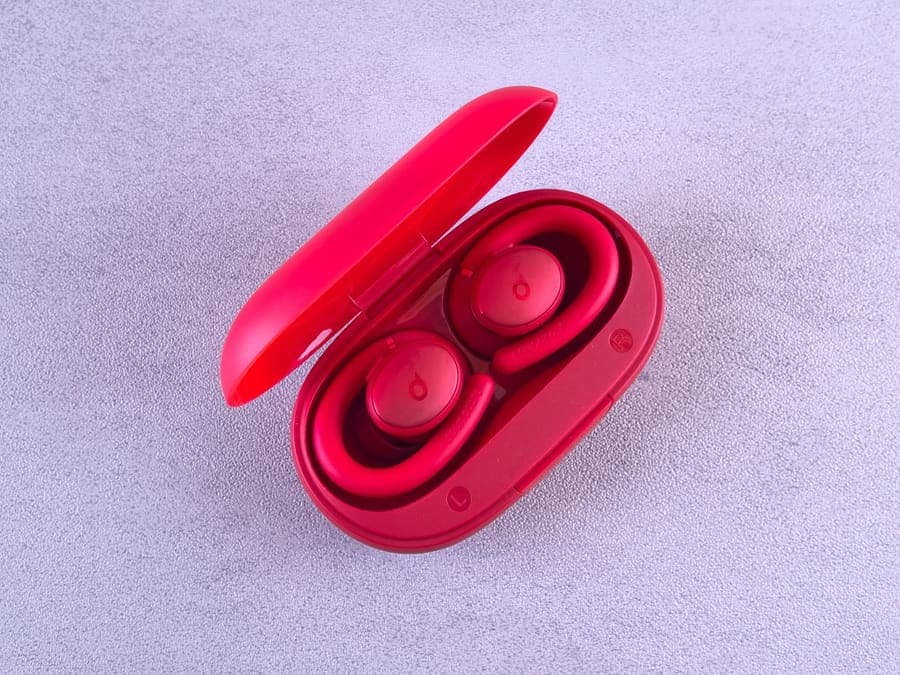 Beats Powerbeats Pro 2The ear hook is the whole argument: a sealed earbud that does not migrate out on a long run, with noise canceling for the treadmill and transparency for the road. | Best sealed earbud for running | 8.48.4 out of 10, our editorial score | |
| 3 | 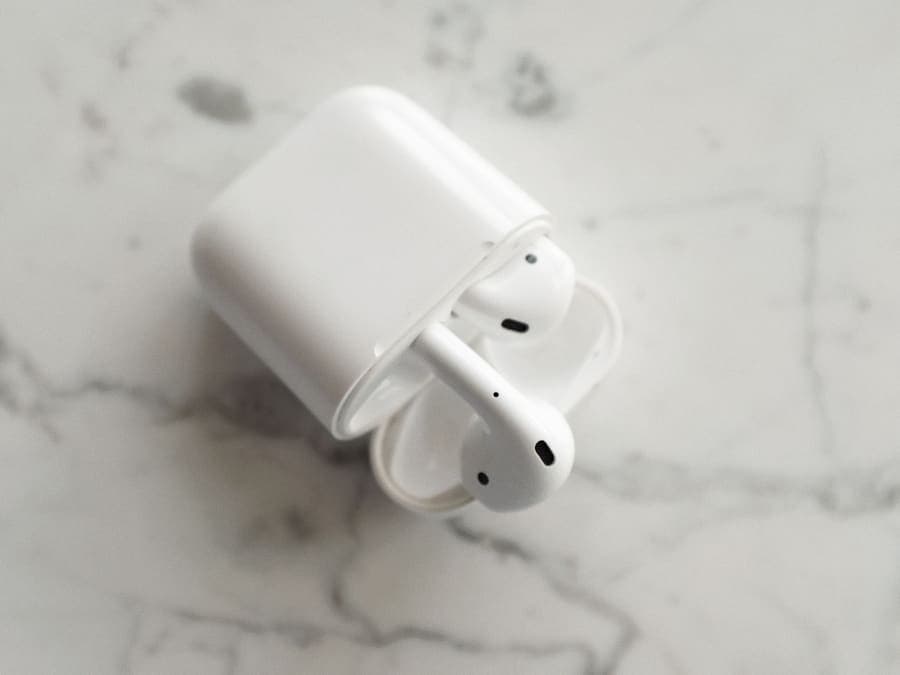 Soundcore P40iA $79.99 earbud rated at 12 hours a charge and 60 with the case, with adaptive canceling and a case that folds out into a phone stand. | The budget option that survives sweat | 8.08.0 out of 10, our editorial score |
#ad Amazon links are affiliate links. No live price is shown anywhere on this site, so every button reads “Check price on Amazon”. How this is funded.
The picks in full
Every pick, in detail
1. Best for running outdoors
Shokz OpenRun Pro 2
An open-ear headphone that leaves your ear canal empty, so you hear the traffic behind you as well as the playlist. The point of it is the opposite of noise canceling.
Our editorial score: 8.5 / 10
#ad Live price not shown. How this is funded
Also sold direct by Shokz — we earn nothing there, so check both.
Running outdoors is the one context on this whole site where blocking noise is the wrong goal. A bone-conduction band sits in front of your ear rather than in it, so the canal stays open and you hear the car, the bike bell and the dog before you see them.
Shokz rates it at 30.3 g, up to 12 hours, Bluetooth 5.3 and IP55. That IP55 is the number to read carefully: it covers sweat and splashes, which is what kills running headphones, and it explicitly does not cover swimming.
The trade is bass. A driver that vibrates your cheekbone cannot move air the way a sealed tip can, and no firmware update changes that. If the bass is why you run, buy the sealed option below instead.
What works on a plane
- Your ear canal stays open, so road and trail awareness is not a compromise
- 30.3 g on a titanium band means it stops registering as something you are wearing
- IP55 shrugs off sweat, which is the failure mode that kills running earbuds
- 12 rated hours covers a marathon block without a mid-week charge
What does not
- Bone conduction gives up bass depth against a sealed earbud, and no firmware fixes physics
- IP55 is splash resistance, not submersion — this is not a swimming headphone
- Open by design, so it is the wrong tool on a plane or in an open-plan office
How it scores against the five travel axes
Published specifications
| Spec | Figure | Source |
|---|---|---|
| Weight | 30.3 g | Shokz OpenRun Pro 2 specifications |
| Battery | Up to 12 hours | Shokz OpenRun Pro 2 specifications |
| Quick charge | 5 minutes for 2.5 hours | Shokz OpenRun Pro 2 specifications |
| Full charge | 1 hour | Shokz OpenRun Pro 2 specifications |
| Bluetooth | 5.3 | Shokz OpenRun Pro 2 specifications |
| Water resistance | IP55 (sweat and splashes, not swimming) | Shokz OpenRun Pro 2 specifications |
| Drivers | Bone conduction plus an 18 x 11 mm air-conduction low-frequency unit | Shokz OpenRun Pro 2 specifications |
| Multipoint | Yes | Shokz OpenRun Pro 2 specifications |
2. Best sealed earbud for running
Beats Powerbeats Pro 2
The ear hook is the whole argument: a sealed earbud that does not migrate out on a long run, with noise canceling for the treadmill and transparency for the road.
Our editorial score: 8.4 / 10
#ad Live price not shown. How this is funded
Also sold direct by Beats — we earn nothing there, so check both.
If you want the music to land properly and you run somewhere with no traffic, the ear hook is the feature that matters. Drift is what ruins running earbuds, and a hook removes the problem mechanically rather than asking a tip to do a job it cannot do while you are moving.
Beats rates it at up to 8 hours a bud with canceling or transparency on and 36 hours with the case, or 10 and 45 in Adaptive EQ. It is IPX4, has heart-rate sensors on board and charges over USB-C or Qi.
Two honest caveats: IPX4 is splash and sweat only, and the best of what you are paying for assumes an Apple phone. On Android it is a good earbud with hooks rather than the full product.
What works on a plane
- Ear hooks solve the one problem that ruins running earbuds, which is drift
- Switchable canceling and transparency, so the same pair works on the treadmill and the road
- Heart-rate sensing on board removes one more strap from the kit
- USB-C and Qi charging, so it uses whatever cable you already carry
What does not
- IPX4 is splash and sweat only — do not take these into a pool
- The hooks make the case noticeably larger than a stem earbud case
- Best features assume an Apple device, so an Android buyer loses part of what they paid for
How it scores against the five travel axes
Published specifications
| Spec | Figure | Source |
|---|---|---|
| Battery, ANC or transparency on | Up to 8 hours per bud, 36 hours with the case | Beats |
| Battery, Adaptive EQ | Up to 10 hours per bud, 45 hours with the case | Beats |
| Water resistance | IPX4 (sweat and splashes) | Beats |
| Chip | Apple H2 | Beats |
| Noise control | Active noise canceling and transparency | Beats |
| Heart rate | Built-in heart-rate sensors | Beats |
| Charging | USB-C and Qi wireless | Beats |
| List price | $249.99 at the time of writing | Beats |
3. The budget option that survives sweat
Soundcore P40i
A $79.99 earbud rated at 12 hours a charge and 60 with the case, with adaptive canceling and a case that folds out into a phone stand.
Our editorial score: 8.0 / 10
#ad Live price not shown. How this is funded
Also sold direct by Soundcore — we earn nothing there, so check both.
IPX5 is a step above the Beats on water ingress, which is a surprising thing to be able to write about a cheaper product. Soundcore lists it at $79.99, rated at 12 hours a charge and 60 with the case.
It has no ear hook, so fit is entirely down to your ear and the tips. If a standard tip already stays put in your ear when you run, this is a lot of product for the money. If it does not, no amount of budget saves it.
What works on a plane
- 60 rated hours with the case, from an earbud listed at $79.99
- IPX5 means sweat and rain are not a worry on a commute
- The fold-out case stand is a genuinely useful thing on a tray table
- Adaptive canceling at a price where fixed canceling is the norm
What does not
- Canceling depth is a long way behind the premium earbuds, especially in the low band
- No LDAC, so Android listeners do not get the better codec
- The stock tip selection is narrow, and the seal is what decides earbud canceling
How it scores against the five travel axes
Published specifications
| Spec | Figure | Source |
|---|---|---|
| List price | $79.99 at the time of writing | Soundcore |
| Battery | 12 hours per charge, 60 hours with the case | Soundcore |
| Noise canceling | Adaptive ANC | Soundcore |
| Drivers | 11 mm composite | Soundcore |
| Water resistance | IPX5 | Soundcore |
| Microphones | 6, with an AI call algorithm | Soundcore |
| Case | Doubles as a phone stand | Soundcore |
How we decide
How these picks were chosen
We do not run a test lab and we do not claim to have flown with these units. Every verdict on this page is one of three things: a measurement published by somebody who does own a test rig and is credited by name, a manufacturer specification we quote and then interpret against what a long flight actually demands, or a plainly-labeled editorial judgment. The five axes we score on — cabin-noise reduction, battery on a long-haul, pack size, comfort past hour three, and wired fallback — are the ones that decide a travel purchase, and the weighting is published in full.
Questions
Common questions
Are noise canceling headphones bad for running?
Outdoors, yes, in the sense that they remove information you need. Canceling is tuned to erase steady low-frequency sound, which is exactly what an approaching car is. On a treadmill it is fine and often welcome. On a road, use an open-ear design or leave transparency mode switched on.
Do bone conduction headphones work for running?
Yes, and that is the use case they were designed for. They sit on the cheekbone in front of the ear and leave the canal open, so you hear your surroundings normally. The trade is bass depth, because a bone-conduction driver cannot move air the way a sealed tip does.
What IP rating do I need for running?
IPX4 is the practical minimum and covers sweat and rain. IP55 or IPX5 adds protection against low-pressure water jets, so a hose or heavy rain is not a worry. You do not need a submersion rating unless you are swimming.
Will sweat ruin my running headphones?
It is the single most common way they die, yes. Sweat is salty and corrosive and it collects in the nozzle and around the charging contacts. Wipe them dry after every run and let the case air before closing it, whatever the rating says.
Are ear hooks better than standard earbud tips for running?
Mechanically, yes. A hook holds the bud against your ear regardless of what your jaw and your stride are doing, while a tip relies on a friction seal that gets worse as you sweat. The cost is a noticeably larger charging case.
Sources
Where these figures come from
Read next
Related reading
- Best waterproof headphones for swimming
The submersion ratings these sweat ratings do not cover.
- Best noise-canceling earbuds for commuting
Where sealing becomes the feature rather than the problem.
- Transparency mode vs noise canceling
The setting that makes a sealed earbud safer outdoors.
- Earbuds vs over-ear
The form-factor decision, framed for travel rather than sport.
- How we choose
Including why no prices are quoted anywhere on this site.