
For the subway the Sony WF-1000XM6 is the best pick: approximately 6.5 g per bud, up to 8 rated hours and 24 with the case, and a sealed tip that handles wheel squeal in a way active canceling alone cannot. The Bose QuietComfort Ultra Headphones go deepest on tunnel rumble, the Sony WH-1000XM6 is the over-ear to own if you also fly, and the Soundcore P40i is the cheap daily pair.
Two noises
A subway makes two completely different noises
The first is tunnel rumble: a sustained low-frequency roar from the motors and from the train displacing air in a confined tube. That is the band active canceling is built for, and it is why the Bose does well here.
The second is wheel squeal on a tight curve — a narrow, high-frequency screech. Active canceling is at its weakest in that range, because cancelling a short wavelength requires timing accuracy no consumer system has. What reduces a squeal is a physical seal: a silicone tip or a well-clamped pad. Active canceling versus passive isolation is the full version of that split.
Which is why earbuds do well underground
A sealed in-ear gives a better high-frequency seal than almost any over-ear, in a package that survives a crowded carriage. On a plane the over-ear wins because the noise is almost entirely low-frequency and you are sitting still for nine hours. Underground, the balance moves.
And why you should not run full canceling the whole ride
You need the platform announcement, the service change and the person asking you to move down the car. Keep transparency or aware mode one tap away and use it at every station. This is the same discipline the commuting roundup argues for on a street.
A plane is one noise for nine hours. A subway is two noises for twenty minutes, and one of them is announcements you have to hear.
The matrix
The four picks on the figures that matter underground
| Sony WF-1000XM6 | Bose QC Ultra | Sony WH-1000XM6 | Soundcore P40i | |
|---|---|---|---|---|
| Form | Earbuds | Over-ear | Over-ear, folds | Earbuds |
| Battery | up to 8 h per bud | up to 30 h ANC on | up to 30 h ANC on | 12 h per charge |
| Total with case | up to 24 h (16 from case) | n/a | n/a | 60 h |
| Weight | approx. 6.5 g per bud | approx. 264 g as reported | approx. 254 g | Not published |
| Water rating | IPX4 | Not published | Not published | IPX5 |
| Wired fallback | None, no socket | 2.5 mm-to-3.5 mm supplied | Wired 4 Hz - 40 kHz, no cable supplied | None |
| Pocketable | Yes | No | Folded, into a case | Yes |
Underground specifics
Four things that only matter on a subway
You are standing, and so is everyone else
An over-ear headband is at exactly backpack height in a crowd. Nothing in a specification warns you, and it is the most common reason a commuter switches to earbuds after a month.
There is no socket
Twenty minutes twice a day is around three and a half hours a week, so even a 24-hour total covers a fortnight. Battery is genuinely not the deciding spec here, which is unusual on this site — the battery rankings matter much more to a flyer than to a subway rider.
Theft is a real variable
An expensive pair of headphones is a visible, valuable, removable object in a crowd. That is an argument for the cheap pick, for keeping the charging case in a zipped pocket, and for not putting a bud down on a seat.
Winter adds gloves and a hat
Touch controls do not work through a glove, and a hat changes the clamp of an over-ear. If you ride through a real winter, physical buttons are worth more than they look on a spec sheet.
What to look for
Four checks before you buy for the subway
- A proper seal, in your ear. Try the tip sizes. Isolation does the high-frequency work that canceling cannot, and it only happens with the right tip.
- One-tap transparency. You will use it at every station. If it takes two presses and a menu, you will stop using it.
- Pocket size over battery size. A subway commute is short. Being able to put the pair away in a second is worth more than twenty extra rated hours.
- Price you can afford to lose. Decide this before the shop, not after the incident.
In short
Key takeaways
- Sony WF-1000XM6: approximately 6.5 g per bud, up to 8 h and 24 with the case, and a seal that handles wheel squeal.
- Bose QuietComfort Ultra Headphones: deepest low-frequency reduction here, which is what deep-tunnel roar needs.
- Sony WH-1000XM6: approximately 254 g and folds into a case, the over-ear for a commute that continues to an airport.
- Soundcore P40i: 12 h per charge, 60 with the case and IPX5, at a price where losing it is survivable.
- Tunnel rumble is low-frequency and canceling handles it. Wheel squeal is high-frequency and only a seal reduces it.
- Keep transparency one tap away and use it at every station. Announcements are the point.
At a glance
Quick picks
Scores are our editorial judgment from published specifications and cited third-party measurements, not our own testing. The rubric is published in full. Tap any row for the full write-up.
| # | Product | Best for | Score | Price |
|---|---|---|---|---|
| 1 | 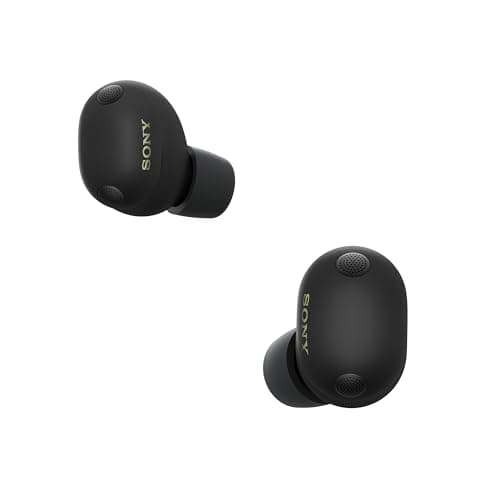 Sony WF-1000XM6Eight rated hours per bud and 24 with the case, at roughly 6.5 g each. The most sensible premium earbud for a flight, because you never have to plan around the battery. | Best overall for a subway | 8.98.9 out of 10, our editorial score | |
| 2 | 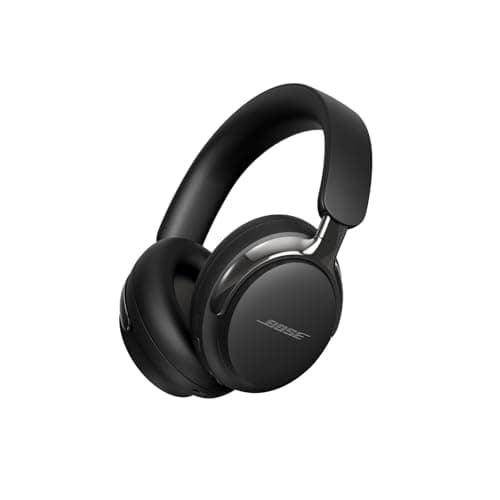 Bose QuietComfort Ultra Headphones (2nd Gen)The quietest cabin of anything here, and the only over-ear in this group whose box already contains the audio cable a seatback screen needs. | Best against tunnel roar | 9.09.0 out of 10, our editorial score | |
| 3 | 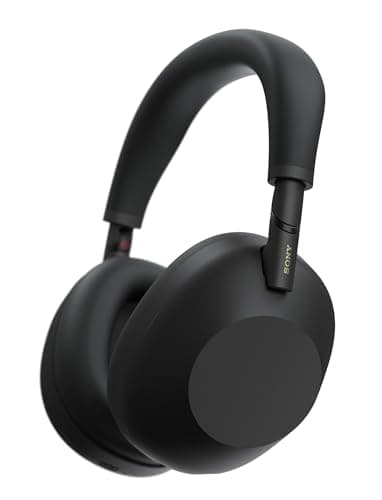 Sony WH-1000XM6The most complete travel headphone on sale: 254 g, 30 rated hours with noise canceling on, and it folds into a case small enough to stop being a decision. | Best over-ear if you also fly | 9.19.1 out of 10, our editorial score | |
| 4 | 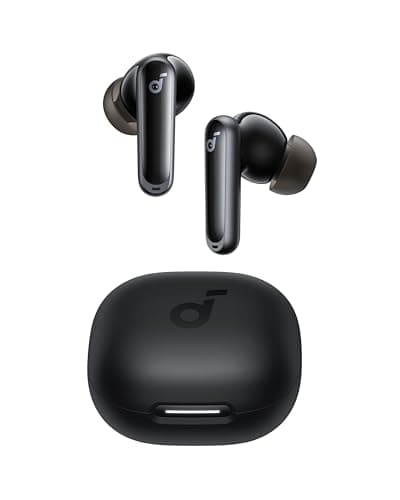 Soundcore P40iA budget earbud rated at 12 hours a charge and 60 with the case, with adaptive canceling and a case that folds out into a phone stand. | Best cheap pair for a daily ride | 8.08.0 out of 10, our editorial score |
#ad Amazon links are affiliate links. Prices come from Amazon’s own data on the date stamped under the buttons above; where we have no current figure the button reads “Check price on Amazon” instead of guessing. How this is funded.
The picks in full
Every pick, in detail
1. Best overall for a subway
Sony WF-1000XM6
Eight rated hours per bud and 24 with the case, at roughly 6.5 g each. The most sensible premium earbud for a flight, because you never have to plan around the battery.
Our editorial score: 8.9 / 10
#ad Price as of November 11, 2026. How this is funded
The right form factor for a crowded carriage. Approximately 6.5 g per bud with the medium tips means nothing on your head to be knocked by a backpack, and the whole pair disappears into a jacket pocket at the top of the escalator.
The HD Noise Canceling Processor QN3e with dual processors and eight microphones does the tunnel rumble, and — more usefully underground — the silicone tip does the wheel squeal, because a physical seal is what attenuates the high frequencies that active canceling is weakest against.
Up to 8 rated hours per bud and 24 with the case, SBC, AAC, LDAC and LC3, IPX4. Two limits for this specific use: there is no wired fallback at all, and a bud is the easiest thing on this page to drop onto a track. Put the case away before the doors open.
What works on a plane
- Eight rated hours per charge clears most short-haul flights without touching the case
- 24 hours total with the case is the strongest reserve in the premium earbud set
- LDAC means it is not tied to one phone platform
- Roughly 6.5 g per bud effectively disappears when you are trying to sleep on your side
What does not
- Canceling is excellent but the Bose still takes the low-frequency band
- No wired fallback at all, so a seatback screen needs a transmitter
- IPX4 is splash resistance, not weather resistance
How it scores against the five travel axes
Published specifications
| Spec | Figure | Source |
|---|---|---|
| Battery, earbuds | Up to 8 hours | Sony |
| Total with case | Up to 24 hours (16 from the case) | Sony |
| Weight | Approx. 6.5 g per bud with M tips | Sony |
| Driver | 8.4 mm | Sony |
| Bluetooth | 5.3 | Sony |
| Codecs | SBC, AAC, LDAC, LC3 | Sony |
| Water resistance | IPX4 | Sony |
| Processor | HD Noise Canceling Processor QN3e, dual processors, eight microphones | Sony |
2. Best against tunnel roar
Bose QuietComfort Ultra Headphones (2nd Gen)
The quietest cabin of anything here, and the only over-ear in this group whose box already contains the audio cable a seatback screen needs.
Our editorial score: 9.0 / 10
#ad Price as of November 11, 2026. How this is funded
If your line runs in deep tube tunnels rather than cut-and-cover, the noise is a sustained low-frequency roar off the tunnel walls, and this has the deepest low-frequency reduction on the site. On that one measure nothing here is close.
Up to 30 rated hours with canceling on, up to 45 with it off, approximately 264 g as reported, earcups that rotate flat into a hard case, and a 2.5 mm-to-3.5 mm cable in the box. Aware mode is the setting to keep one finger on for announcements.
Two honest objections to an over-ear underground. It is conspicuous, which some riders reasonably care about, and in a packed carriage in winter it is hot. Neither is a specification; both decide whether you actually wear it.
What works on a plane
- The best low-frequency canceling in this group, which is exactly the band engine drone lives in
- The 2.5 mm-to-3.5 mm cable is in the box, so a seatback screen needs nothing extra
- Compact hard case for a full-size over-ear
- Up to 45 hours with canceling off, if you only want isolation on a train
What does not
- Immersive Audio costs you a third of the battery, dropping to 23 rated hours
- Heavier than the Sony by roughly 10 g, and clamp is firmer out of the box
- The hard case is compact but still rigid, so it will not squash into a full bag
How it scores against the five travel axes
Published specifications
| Spec | Figure | Source |
|---|---|---|
| Battery, ANC on | Up to 30 hours | Bose |
| Battery, ANC off | Up to 45 hours | Bose |
| Battery, Immersive Audio on | Up to 23 hours | Bose |
| Weight | Approx. 264 g (9.3 oz) as reported | Published reviews |
| USB-C audio | 16-bit, 44.1 or 48 kHz lossless input | Bose support |
| In the box | Hard case, USB-C cable, 2.5 mm-to-3.5 mm audio cable | Bose |
| Folds | Earcups rotate flat into a compact hard case | Bose |
Read the full Bose QuietComfort Ultra Headphones (2nd Gen) review
3. Best over-ear if you also fly
Sony WH-1000XM6
The most complete travel headphone on sale: 254 g, 30 rated hours with noise canceling on, and it folds into a case small enough to stop being a decision.
Our editorial score: 9.1 / 10
#ad Price as of November 11, 2026. How this is funded
The pick for the commuter whose subway ride is one leg of a journey that also includes a plane. Approximately 254 g, up to 30 rated hours with canceling on and 40 with it off, and it folds into a magnetic-closure case — the best carry story of any over-ear here.
Bluetooth 5.3 with SBC, AAC, LDAC and LC3, plus a 4 Hz to 40,000 Hz wired response which covers a seatback screen later in the day. Sony does not supply a cable, so buy one if you need it.
Underground it is a slight step behind the Bose on raw low-frequency depth and ahead of it on everything to do with carrying the thing. For twenty minutes twice a day, the carry argument usually wins.
What works on a plane
- Folds, which halves the space it takes in a personal item
- 254 g is light for a flagship over-ear, and weight is what you feel at hour four
- LDAC plus LC3 means it is not locked to one phone ecosystem
- 30 rated hours with noise canceling on covers almost any single routing
What does not
- You pay a flagship price for the last increment of noise canceling
- The folding hinge is one more mechanism to eventually wear out
- No airline two-prong adapter in the box
How it scores against the five travel axes
Published specifications
| Spec | Figure | Source |
|---|---|---|
| Weight | Approx. 254 g (9 oz) | Sony Help Guide specifications |
| Battery, NC on | Up to 30 hours | Sony specifications |
| Battery, NC off | Up to 40 hours | Sony specifications |
| Full charge | Approx. 3.5 hours | Sony Help Guide specifications |
| Bluetooth | 5.3 | Sony Help Guide specifications |
| Codecs | SBC, AAC, LDAC, LC3 | Sony Help Guide specifications |
| Wired response | 4 Hz - 40,000 Hz (IEC) | Sony Help Guide specifications |
| Folds | Yes, into a magnetic-closure case | Sony |
| In the box | Headset, headphone cable, USB-C cable, carrying case, documents | Sony Help Guide, Included items |
4. Best cheap pair for a daily ride
Soundcore P40i
A budget earbud rated at 12 hours a charge and 60 with the case, with adaptive canceling and a case that folds out into a phone stand.
Our editorial score: 8.0 / 10
#ad Price as of November 11, 2026. How this is funded
The pair to buy when the honest risk assessment is that something will eventually get lost, sat on, or snatched. 12 hours per charge and 60 with the case is more total runtime than either flagship above.
Adaptive canceling, 11 mm composite drivers, IPX5 for a rainy walk to the station, six microphones with an AI call algorithm, and a case that doubles as a phone stand.
It will not match the Sony’s canceling or the Bose’s low-frequency depth, and it is not trying to. What it does is deliver a sealed, canceling earbud at a price where replacing it is annoying rather than painful — which for a daily subway rider is a real feature.
What works on a plane
- 60 rated hours with the case, from an earbud in the budget tier
- IPX5 means sweat and rain are not a worry on a commute
- The fold-out case stand is a genuinely useful thing on a tray table
- Adaptive canceling at a price where fixed canceling is the norm
What does not
- Canceling depth is a long way behind the premium earbuds, especially in the low band
- No LDAC, so Android listeners do not get the better codec
- The stock tip selection is narrow, and the seal is what decides earbud canceling
How it scores against the five travel axes
Published specifications
| Spec | Figure | Source |
|---|---|---|
| Battery, canceling off | 12 hours per charge, 60 hours with the case | Soundcore |
| Battery, canceling on | 10 hours per charge, 50 hours with the case | Soundcore |
| Noise canceling | Adaptive ANC | Soundcore |
| Drivers | 11 mm composite | Soundcore |
| Water resistance | IPX5 | Soundcore |
| Microphones | 6, with an AI call algorithm | Soundcore |
| Case | Doubles as a phone stand | Soundcore |
How we decide
How these picks were chosen
We do not run a test lab and we do not claim to have flown with these units. Every verdict on this page is one of three things: a measurement published by somebody who does own a test rig and is credited by name, a manufacturer specification we quote and then interpret against what a long flight actually demands, or a plainly-labeled editorial judgment. The five axes we score on — cabin-noise reduction, battery on a long-haul, pack size, comfort past hour three, and wired fallback — are the ones that decide a travel purchase, and the weighting is published in full.
Questions
Common questions
What are the best headphones for the subway?
The Sony WF-1000XM6. At approximately 6.5 g per bud it survives a crowded carriage, the silicone tip seals against wheel squeal, and the HD Noise Canceling Processor QN3e handles the tunnel rumble. Up to 8 rated hours per bud and 24 with the case covers a fortnight of commuting.
Are earbuds or over-ear headphones better on a subway?
Earbuds, for most riders. You are standing in a crowd where a headband sits at backpack height, the ride is short so battery barely matters, and a sealed tip isolates high-frequency screech better than a pad does. Over-ear wins if the same journey continues onto a plane.
Do noise cancelling headphones work on the subway?
For the low-frequency roar, yes — that is exactly what active canceling is designed to remove. For wheel squeal on a tight curve, much less so, because short wavelengths are where active systems are weakest. The physical seal does that part.
Will I still hear station announcements?
Only if you switch modes. With full canceling on and music playing, a muffled platform announcement is exactly the thing you will miss. Every pick here has a transparency or aware mode; use it as the train slows.
Is it safe to wear noise cancelling headphones on a subway platform?
A platform is an edge, a crowd and a moving train, so treat it the way you would a road. Switch to transparency before you reach the platform, keep the volume down, and look rather than rely on hearing. The risk is not the technology, it is wearing it in full canceling mode where you need situational awareness.
Sources
Where these figures come from
- Sony WF-1000XM6 specifications (battery, weight per bud, processor, codecs, IPX4)
- Bose QuietComfort Ultra Headphones (2nd Gen) product page (battery modes, weight, box contents)
- Sony WH-1000XM6 specifications (weight, battery, Bluetooth, codecs, wired response)
- Soundcore P40i product page (battery, IPX5, drivers, microphones, case)
Read next
Related reading
- Best noise-canceling headphones for commuting
The wider commute case, including streets and buses.
- Best headphones for train travel
Intercity rail, where you are seated for hours instead of minutes.
- Best noise-canceling earbuds for commuting
The full earbud field, ranked for the same journey.
- Active canceling vs passive isolation
Why a tip beats a processor above a few kilohertz.