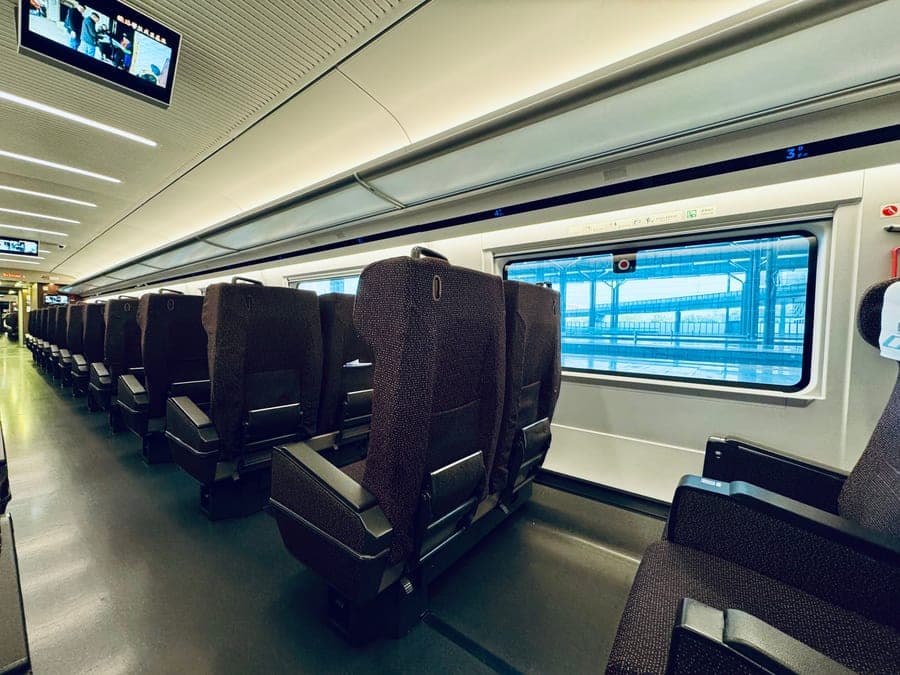
For train travel the best headphone is the Bose QuietComfort Ultra Headphones (2nd Gen), because rail noise is continuous and low-frequency — the case active canceling handles best — and its battery limitation stops mattering when there is a power socket at your table. The Sennheiser MOMENTUM 4 Wireless is more comfortable on a journey over about six hours, and the Soundcore Space Q45 is the strongest value case here.
Where rail sits
Between a flight and a commute
Long-distance rail has the acoustics of a flight and the logistics of neither.
| Characteristic | Like a flight | Like a commute | Unique to rail |
|---|---|---|---|
| Steady low-frequency rolling noise | Yes | Partly | - |
| Hours in a seat | Yes | No | - |
| Sharp transients and announcements | Some | Yes | - |
| Power socket at the seat | Sometimes | No | Usually, on long-distance |
| You can get up and walk about | Barely | No | Yes |
| Carriage conversation at close range | Some | Yes | Often the main annoyance |
The power socket is the single biggest practical difference, and it is why battery ranks so much lower here than on the long-haul flight page. If you can charge at your seat, a 30-hour rating and a 60-hour rating are functionally identical.
The acoustics
What rail noise actually is
Three components, and they want different things from a headphone.
- Rolling and bogie noise. Continuous, low-frequency, and the largest part of the total. Active canceling removes most of it, and this is where the Bose earns its position.
- Tunnel and pressure events. On high-speed services, entering a tunnel produces a sudden pressure change and a large noise increase. A canceling system that settles quickly handles this well; one that hunts is noticeably unpleasant.
- Carriage conversation. Often the real annoyance, and the thing active canceling barely touches. Speech sits where the technology is weakest, so this is handled by the pad seal plus something playing — see active canceling versus passive isolation.
The rolling noise is the easy part. The person on a speakerphone four rows down is the part no headphone fully solves.
Practical
Four things specific to trains
Take the cable
More useful on a train than on a plane. A laptop on a table is the commonest source on a long rail journey, and a 1.2 m cable reaches comfortably. Some long-distance services also have seat-back entertainment with a 3.5 mm socket.
Charge at the table, not before
If there is a socket, plug in when you sit down. It costs nothing and it means you arrive with full headphones for whatever comes next, which is the thing people forget on multi-modal journeys.
Use transparency at stations
Rail travel involves more announcements that genuinely matter than flying does — platform changes, connections, replacement services. A fast transparency toggle is worth more on a train than on a plane. See transparency mode versus noise canceling.
Expect to doze
More people sleep on trains than expect to, usually leaning against a window. That is the same geometry problem as a flight: an over-ear earcup against glass becomes a pressure point. If you habitually doze on rail journeys, earbuds are worth considering — see best earbuds for sleeping on a plane, which applies identically to a train.
If the journey is short
Commuter rail is a different page
Everything above assumes a journey measured in hours. If your rail use is a twenty-minute commuter service twice a day, the priorities shift again — toward transparency quality, durability and how fast you can put the headphones on and take them off. That is best noise-canceling headphones for commuting.
In short
Key takeaways
- Rail noise is continuous and low-frequency, which is the case active canceling handles best.
- A power socket at the table makes battery ratings largely irrelevant — a 30-hour and a 60-hour headphone behave the same.
- Bose moves up the ranking on trains for exactly that reason, plus a firm seal against carriage conversation.
- Tunnel pressure events reward canceling that settles quickly rather than hunting.
- Take the aux cable: a laptop on a table is the commonest source on a long rail journey.
- If you doze against a window, the over-ear pressure problem applies on a train exactly as on a plane.
At a glance
Quick picks
Scores are our editorial judgment from published specifications and cited third-party measurements, not our own testing. The rubric is published in full. Tap any row for the full write-up.
| # | Product | Best for | Score | Price |
|---|---|---|---|---|
| 1 | 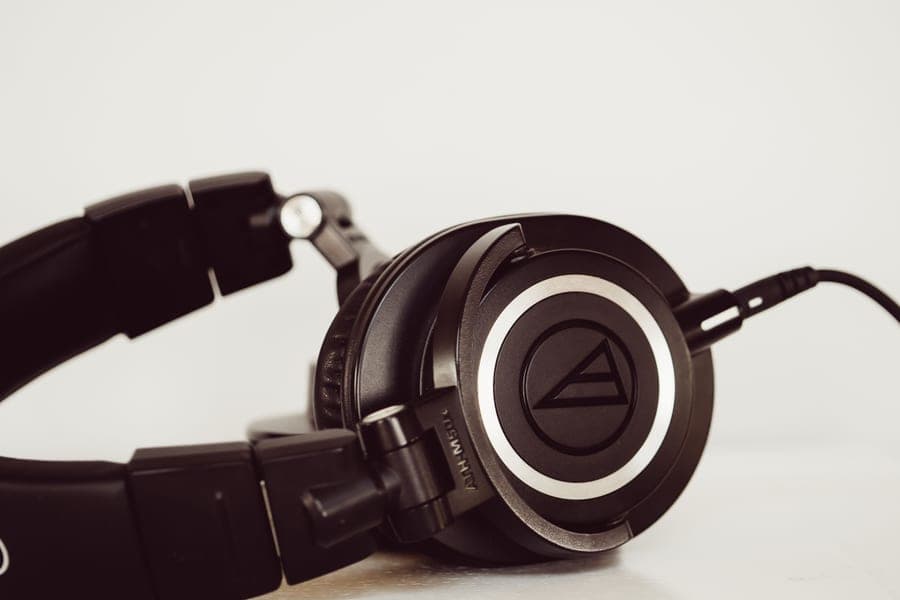 Bose QuietComfort Ultra Headphones (2nd Gen)The quietest cabin of anything here, and the only over-ear in this group whose box already contains the audio cable a seatback screen needs. | Best for train travel | 9.09.0 out of 10, our editorial score | |
| 2 | 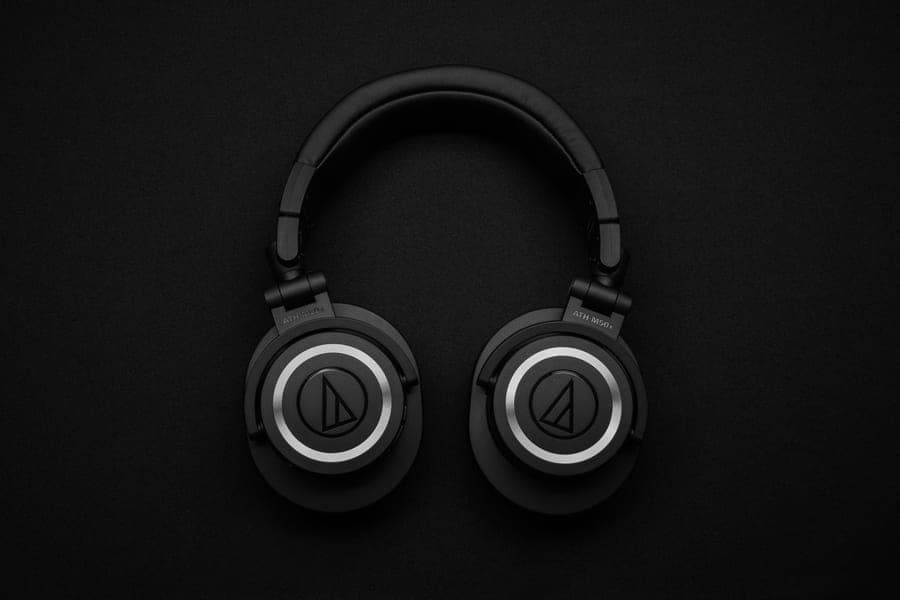 Sennheiser MOMENTUM 4 WirelessSennheiser publishes up to 60 hours. That is the difference between charging at the gate and not thinking about a charger for an entire two-week trip. | Best for a very long journey | 8.88.8 out of 10, our editorial score | |
| 3 | 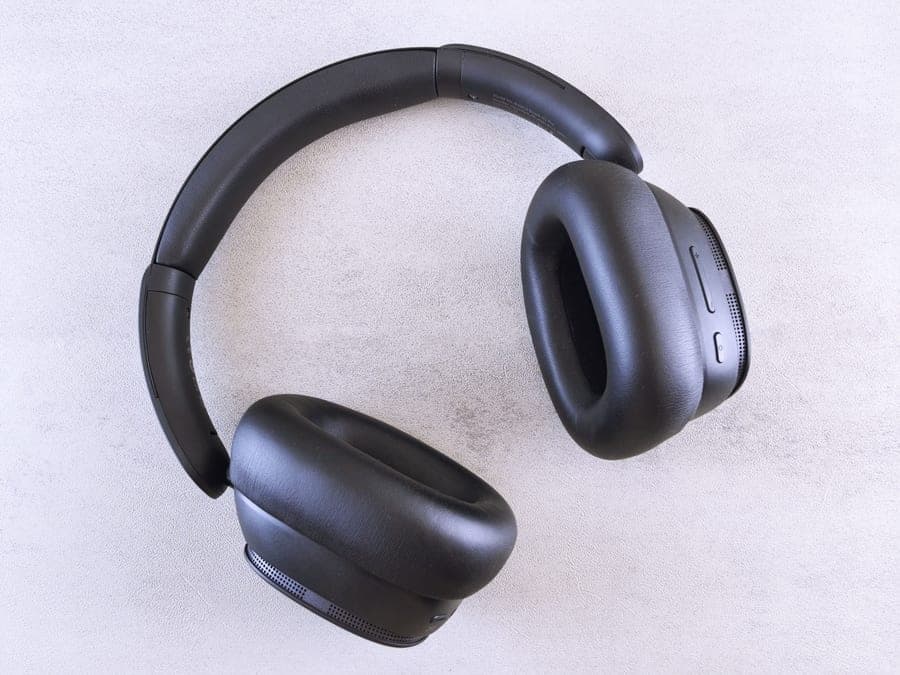 Sony WH-1000XM6The most complete travel headphone on sale: 254 g, 30 rated hours with noise canceling on, and it folds into a case small enough to stop being a decision. | Best all-round rail pick | 9.19.1 out of 10, our editorial score | |
| 4 | 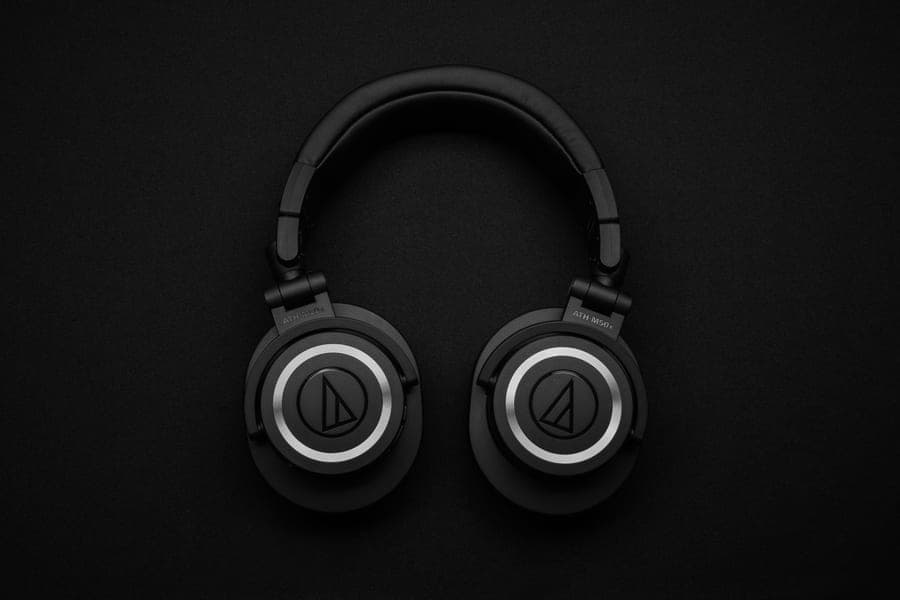 Soundcore Space Q45Fifty rated hours with canceling on, a hard case and a 3.5 mm cable in the box, at a fraction of flagship money. The compromise is in the last 10 percent of quiet, not the first 80. | Best rail value | 8.28.2 out of 10, our editorial score | |
| 5 | 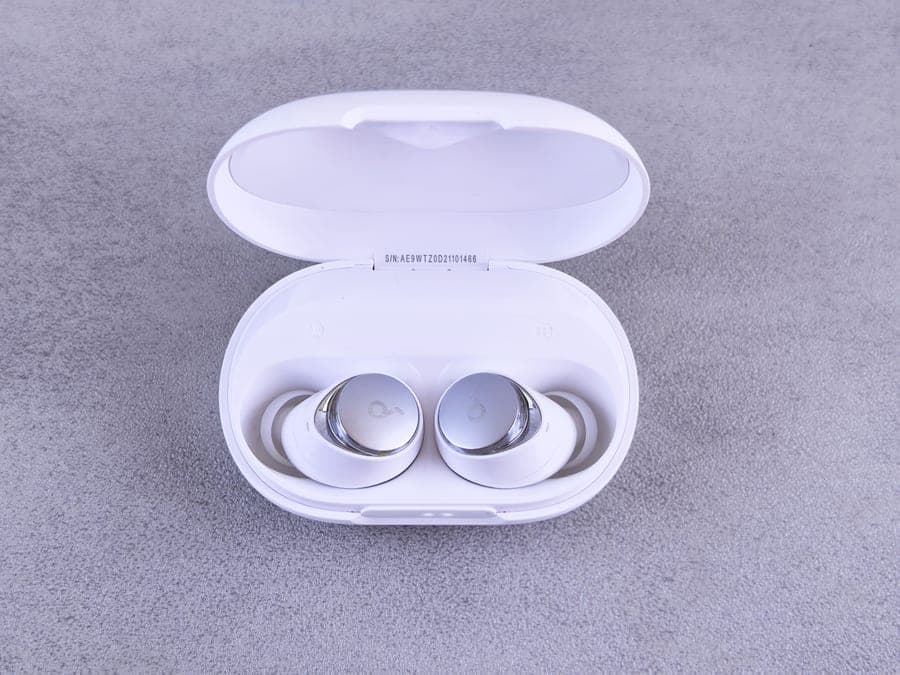 Sony WF-1000XM6Eight rated hours per bud and 24 with the case, at roughly 6.5 g each. The most sensible premium earbud for a flight, because you never have to plan around the battery. | Best if you travel light by rail | 8.98.9 out of 10, our editorial score |
#ad Amazon links are affiliate links. No live price is shown anywhere on this site, so every button reads “Check price on Amazon”. How this is funded.
The picks in full
Every pick, in detail
1. Best for train travel
Bose QuietComfort Ultra Headphones (2nd Gen)
The quietest cabin of anything here, and the only over-ear in this group whose box already contains the audio cable a seatback screen needs.
Our editorial score: 9.0 / 10
#ad Live price not shown. How this is funded
Also sold direct by Bose — we earn nothing there, so check both.
On a train the Bose moves up the ranking relative to flying, for two reasons that are specific to rail.
First, its battery limitation stops mattering. There is usually a socket at a long-distance train table, and it charges over USB-C, so the 30 versus 60 hour argument that decides a long-haul flight simply does not apply.
Second, rail noise is a good match for what it does best. Rolling noise, bogies and tunnel pressure are continuous and low-frequency, and this removes more of that than anything else. Its firm clamp also seals better against carriage conversation, which is the other thing you are escaping. Up to 45 rated hours with canceling off is a genuine bonus on a quiet service where you only want isolation.
What works on a plane
- The best low-frequency canceling in this group, which is exactly the band engine drone lives in
- The 2.5 mm-to-3.5 mm cable is in the box, so a seatback screen needs nothing extra
- Compact hard case for a full-size over-ear
- Up to 45 hours with canceling off, if you only want isolation on a train
What does not
- Immersive Audio costs you a third of the battery, dropping to 23 rated hours
- Heavier than the Sony by roughly 10 g, and clamp is firmer out of the box
- The hard case is compact but still rigid, so it will not squash into a full bag
How it scores against the five travel axes
Published specifications
| Spec | Figure | Source |
|---|---|---|
| Battery, ANC on | Up to 30 hours | Bose |
| Battery, ANC off | Up to 45 hours | Bose |
| Battery, Immersive Audio on | Up to 23 hours | Bose |
| Weight | Approx. 264 g (9.3 oz) as reported | Published reviews |
| USB-C audio | 16-bit, 44.1 or 48 kHz lossless input | Bose support |
| In the box | Hard case, USB-C cable, 2.5 mm-to-3.5 mm audio cable | Bose |
| Folds | Earcups rotate flat into a compact hard case | Bose |
Read the full Bose QuietComfort Ultra Headphones (2nd Gen) review
2. Best for a very long journey
Sennheiser MOMENTUM 4 Wireless
Sennheiser publishes up to 60 hours. That is the difference between charging at the gate and not thinking about a charger for an entire two-week trip.
Our editorial score: 8.8 / 10
#ad Live price not shown. How this is funded
Also sold direct by Sennheiser — we earn nothing there, so check both.
For an eight-hour rail journey the criteria are the same as a long-haul flight, and this is the same answer for the same reason: the gentlest clamp here, the deepest pads, and a 42 mm transducer whose relaxed presentation is less tiring over a long session.
The included 1.2 m aux cable is more useful on a train than on a plane, oddly — it reaches a laptop on a table comfortably, which is exactly how people use headphones on long rail journeys.
What works on a plane
- Up to 60 rated hours, roughly double the flagship norm
- The 1.2 m 3.5 mm cable is in the box, so seatback screens work straight out of the bag
- Fold-flat earcups make the carry case slim rather than deep
- The 42 mm transducer is the most relaxed listen here over a very long session
What does not
- Published measurements consistently place its noise canceling a step behind the Bose
- The case is broad, so it eats width in a personal item even though it is slim
- Fold-flat is not fold-up, so the footprint is larger than the Sony's
How it scores against the five travel axes
Published specifications
| Spec | Figure | Source |
|---|---|---|
| Battery | Up to 60 hours playback | Sennheiser |
| Weight | Approx. 293-295 g | Sennheiser / published reviews |
| Transducer | 42 mm | Sennheiser |
| In the box | Carry case, USB-C cable, 1.2 m 3.5 mm auxiliary cable | Sennheiser |
| Folds | Fold-flat earcups | Sennheiser |
3. Best all-round rail pick
Sony WH-1000XM6
The most complete travel headphone on sale: 254 g, 30 rated hours with noise canceling on, and it folds into a case small enough to stop being a decision.
Our editorial score: 9.1 / 10
#ad Live price not shown. How this is funded
Also sold direct by Sony — we earn nothing there, so check both.
The default, and on a train the folding case matters for a slightly different reason than on a plane: rail travel involves more getting up and moving about, and a headphone that packs into a small block goes into a bag on the rack rather than being left on a table.
Approximately 254 g and moderate clamp make it comfortable for the three or four hours a typical long-distance journey lasts, and LDAC means it works properly with whatever you are listening on.
What works on a plane
- Folds, which halves the space it takes in a personal item
- 254 g is light for a flagship over-ear, and weight is what you feel at hour four
- LDAC plus LC3 means it is not locked to one phone ecosystem
- 30 rated hours with noise canceling on covers almost any single routing
What does not
- You pay a flagship price for the last increment of noise canceling
- The folding hinge is one more mechanism to eventually wear out
- No airline two-prong adapter in the box
How it scores against the five travel axes
Published specifications
| Spec | Figure | Source |
|---|---|---|
| Weight | Approx. 254 g (9 oz) | Sony Help Guide specifications |
| Battery, NC on | Up to 30 hours | Sony specifications |
| Battery, NC off | Up to 40 hours | Sony specifications |
| Full charge | Approx. 3.5 hours | Sony Help Guide specifications |
| Bluetooth | 5.3 | Sony Help Guide specifications |
| Codecs | SBC, AAC, LDAC, LC3 | Sony Help Guide specifications |
| Wired response | 4 Hz - 40,000 Hz (IEC) | Sony Help Guide specifications |
| Folds | Yes, into a magnetic-closure case | Sony |
4. Best rail value
Soundcore Space Q45
Fifty rated hours with canceling on, a hard case and a 3.5 mm cable in the box, at a fraction of flagship money. The compromise is in the last 10 percent of quiet, not the first 80.
Our editorial score: 8.2 / 10
#ad Live price not shown. How this is funded
Also sold direct by Soundcore — we earn nothing there, so check both.
Rail travel is where inexpensive headphones make the most sense of anywhere on this site. Journeys are long enough that you want canceling, short enough that hour-five pad comfort rarely bites, and there is a socket if the battery gets low.
Up to 50 rated hours, a hard case and a 3.5 mm cable in the box. The cable is genuinely useful on a train: seat-back entertainment exists on some long-distance services, and a laptop on a table is a common source.
What works on a plane
- Up to 50 rated hours with canceling on, which beats every flagship here
- Hard case and 3.5 mm cable included, so nothing else to buy for a seatback screen
- Five minutes of charge buys four hours, which covers a gate-side mistake
- The cheapest way to get genuinely useful drone reduction on a plane
What does not
- Soundcore's own 98 percent figure is a marketing claim, not a measurement, and the gap to Bose is audible
- 295 g with plainer pad materials, so hour four is less comfortable than the Sennheiser's
- Plastic build will not survive being crushed in an overhead bin the way the metal Apple would
How it scores against the five travel axes
Published specifications
| Spec | Figure | Source |
|---|---|---|
| Battery, ANC on | Up to 50 hours | Soundcore |
| Battery, ANC off | Up to 65 hours | Soundcore |
| Quick charge | 5 minutes gives 4 hours | Soundcore |
| Weight | Approx. 295 g (10.3 oz) | Soundcore / published reviews |
| Bluetooth | 5.3 | Soundcore |
| In the box | Hard-shell case, 3.5 mm cable, USB-C cable | Soundcore |
5. Best if you travel light by rail
Sony WF-1000XM6
Eight rated hours per bud and 24 with the case, at roughly 6.5 g each. The most sensible premium earbud for a flight, because you never have to plan around the battery.
Our editorial score: 8.9 / 10
#ad Live price not shown. How this is funded
Also sold direct by Sony — we earn nothing there, so check both.
The earbud case on a train is different from the earbud case on a plane. You are not fighting for bag space in the same way — there is a luggage rack — so the argument is about convenience rather than volume.
Roughly 6.5 g a bud means you can lean against a window and doze, which on a long train journey is a large part of the appeal. Eight rated hours covers most journeys outright, and you can top up from the table socket.
What works on a plane
- Eight rated hours per charge clears most short-haul flights without touching the case
- 24 hours total with the case is the strongest reserve in the premium earbud set
- LDAC means it is not tied to one phone platform
- Roughly 6.5 g per bud effectively disappears when you are trying to sleep on your side
What does not
- Canceling is excellent but the Bose still takes the low-frequency band
- No wired fallback at all, so a seatback screen needs a transmitter
- IPX4 is splash resistance, not weather resistance
How it scores against the five travel axes
Published specifications
| Spec | Figure | Source |
|---|---|---|
| Battery, earbuds | Up to 8 hours | Sony |
| Total with case | Up to 24 hours (16 from the case) | Sony |
| Weight | Approx. 6.5 g per bud with M tips | Sony |
| Driver | 8.4 mm | Sony |
| Bluetooth | 5.3 | Sony |
| Codecs | SBC, AAC, LDAC, LC3 | Sony |
| Water resistance | IPX4 | Sony |
| Processor | HD Noise Canceling Processor QN3e, dual processors, eight microphones | Sony |
How we decide
How these picks were chosen
We do not run a test lab and we do not claim to have flown with these units. Every verdict on this page is one of three things: a measurement published by somebody who does own a test rig and is credited by name, a manufacturer specification we quote and then interpret against what a long flight actually demands, or a plainly-labeled editorial judgment. The five axes we score on — cabin-noise reduction, battery on a long-haul, pack size, comfort past hour three, and wired fallback — are the ones that decide a travel purchase, and the weighting is published in full.
Questions
Common questions
Do noise-canceling headphones work on trains?
Very well. Rolling and bogie noise is continuous and low-frequency, which is the ideal case for active canceling. What they do much less about is carriage conversation, which sits in the frequency range where the technology is weakest and where the pad seal does the work.
What are the best headphones for long train journeys?
The Bose QuietComfort Ultra Headphones (2nd Gen) for most rail travel, because it removes the most rolling noise and its battery limitation disappears when there is a socket at your table. For journeys over about six hours the Sennheiser MOMENTUM 4 is more comfortable.
Does battery life matter on a train?
Much less than on a flight. Long-distance services usually have a power socket at the seat and every headphone here charges over USB-C, so a 30-hour rating and a 60-hour rating behave identically. Plug in when you sit down rather than when the battery is low.
Will headphones block out a loud phone conversation in the carriage?
Not fully. Speech is the hardest thing for active canceling to remove, so what helps is a firm pad seal plus something playing at a moderate level. A firm-clamping headphone can outperform a gentler one here even with comparable canceling.
Should I take earbuds or over-ears on a train?
Over-ears for comfort across a long journey and better isolation against voices. Earbuds if you tend to doze against the window, because an earcup pressed against glass becomes a pressure point in about an hour — the same problem as on a plane.
Sources
Where these figures come from
Read next
Related reading
- Best noise-canceling headphones for commuting
If your rail use is a short daily service instead.
- Best headphones for road trips
The adjacent long-journey case.
- Active canceling vs passive isolation
Why carriage conversation is the hard part.
- Best travel headphones
If the train is one leg of a bigger trip.
- Bose QuietComfort Ultra (2nd Gen) review
The top pick here, in detail.