For bus travel the Sony WH-1000XM6 is the best overall pick: approximately 254 g, up to 30 rated hours with canceling on, it folds into a seat-pocket-sized case, and it has a 3.5 mm socket as a fallback. The Soundcore Space One at a $99.99 list price is the better value for most coach journeys, and the Sony WF-1000XM6 earbuds are the right answer if you sleep upright against a window.
Why a bus is different
A coach is not a short flight
Most travel-headphone advice is written about planes, and then quietly reused for every other vehicle. For a bus that is wrong in three specific ways, and all three change which headphone you should buy.
The noise comes from underneath
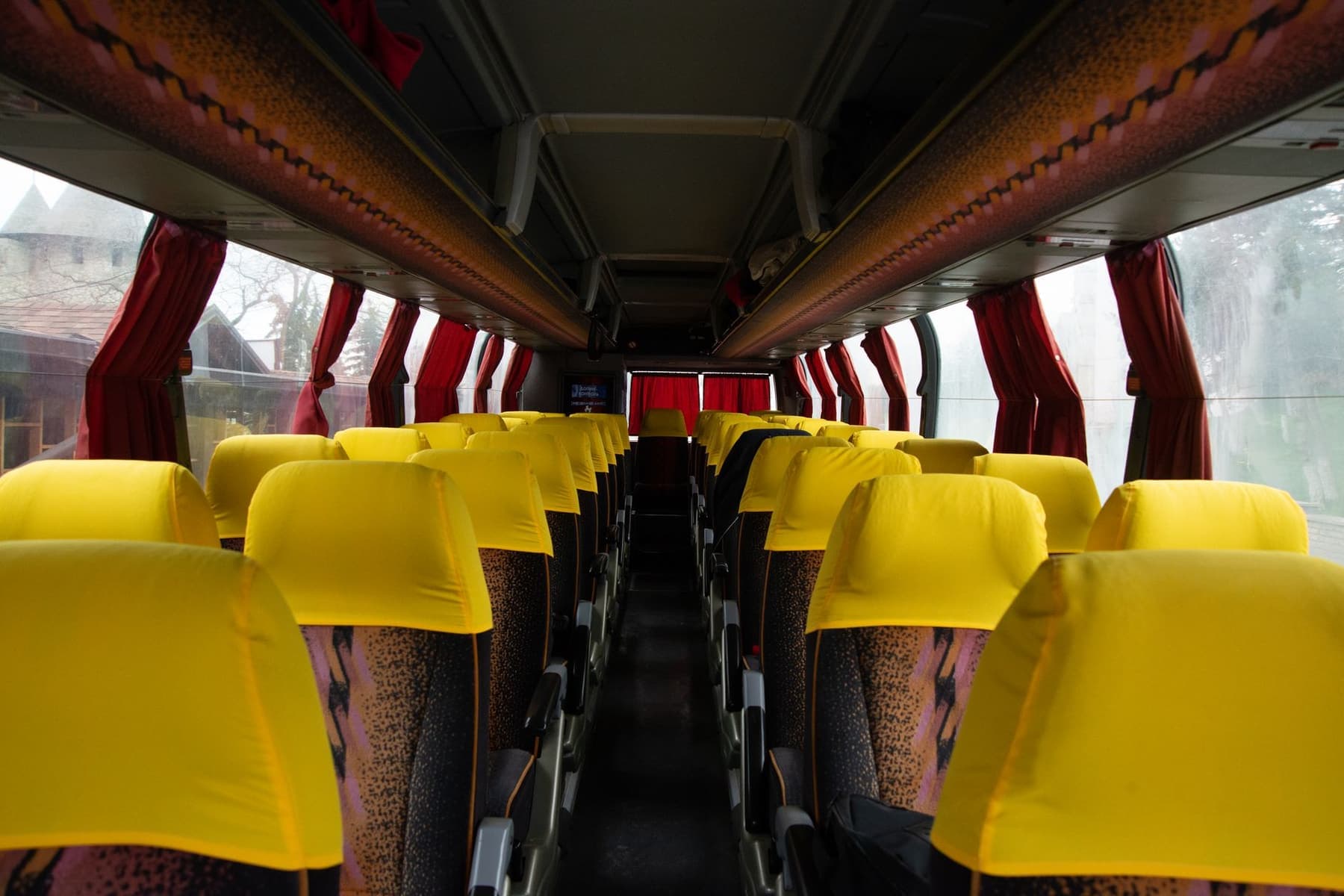
On a plane the dominant sound is a steady broadband rush beside and behind you. On a coach the two sources are tire and road noise coming up through the floor, and an engine that on most long-distance coaches sits at the rear. Both are low-frequency, which is the band active canceling handles best — so canceling works well on a bus. What it does not remove is the rest of the cabin: conversations, a phone call two rows back, a child. That is speech, and the open-plan office page explains why no amount of processing fixes speech.
There is nowhere to put anything
A coach seat gives you a seat pocket and your lap. There is no tray table to open a hard case on, no spare seat beside you on a full service, and the overhead rack is out of reach once you are sitting. A headphone that folds into a small case you can keep in the seat pocket is genuinely easier to live with than one that does not.
You will probably fall asleep sitting up
Coach seats recline a few degrees at best. That means sleeping with your head against the window or the seat edge, with whatever you are wearing pressed between your skull and a hard surface. This is the single strongest argument for earbuds on a bus, and it is the reason the earbud pick on this page is ranked where it is rather than last.
The matrix
The four picks on the published figures
| Sony WH-1000XM6 | Soundcore Space One | Sony WF-1000XM6 | Soundcore P40i | |
|---|---|---|---|---|
| Form | Over-ear | Over-ear | Earbuds | Earbuds |
| Battery, canceling on | up to 30 h | up to 40 h | up to 8 h | 12 h |
| Total with case | - | - | up to 24 h | 60 h |
| Weight | approx. 254 g | 265 g | approx. 6.5 g per bud | Not published |
| Folds | Yes, fold-up | Yes, cups rotate and fold | n/a | n/a |
| Wired fallback | 3.5 mm socket | Aux cable in box | None | None |
| Water resistance | Not published | Not published | IPX4 | IPX5 |
| Quick charge | - | 5 min = 4 h | - | - |
| List price | Not quoted here | $99.99 | Not quoted here | $79.99 |
Where a cell reads “Not published” the manufacturer does not state the figure in the specifications we could verify, so we do not print one. Where a price appears it is the manufacturer’s own list price at the time of writing, cited below — we publish no street prices, because this site has no verified live retailer feed.
On a plane you pack a headphone. On a coach you carry it, queue with it, and then sleep on it.
What to look for
Four things that decide a bus headphone
- A folded size that fits a seat pocket. Not a case you admire, a case you can stow without standing up. Fold-up beats fold-flat here, because fold-flat cases are wide and a seat pocket is shallow.
- Rated battery well past your longest route. Coaches rarely offer a working outlet and never guarantee one. Anything from 30 rated hours upward removes the question; 8 hours per charge on earbuds is fine only because the case refills them.
- A wired fallback, or an accepted lack of one. Over-ears here either have a 3.5 mm socket or ship the cable. Earbuds have neither, which is a decision to make deliberately rather than discover at hour five.
- Something you are relaxed about owning in public. A coach station is not a lounge. This is the quiet reason the $99.99 pick is the right answer for a lot of people, and it is not a spec you will find on a product page.
Two things to skip
What not to buy for a bus
Open-ear and bone-conduction designs. They are built to let ambient sound through, which is exactly wrong in a vehicle whose main problem is ambient sound. See whether bone conduction suits a cabin — the answer transfers to a coach.
Anything with a large rigid case and no fold. A fixed-dimension over-ear is manageable on a plane with an overhead bin and a tray table. On a full coach it lives on your lap for the whole journey.
In short
Key takeaways
- Sony WH-1000XM6: approximately 254 g, up to 30 rated hours with canceling, folds up small, 3.5 mm socket.
- Soundcore Space One at a $99.99 list price covers most coach travel — up to 40 rated hours, LDAC, folds, aux cable in the box.
- Sony WF-1000XM6 is the pick if you sleep upright against a window: roughly 6.5 g a bud, 8 rated hours, 24 with the case.
- Soundcore P40i at $79.99 with IPX5 is the cheapest sensible option for occasional journeys.
- Bus noise is low-frequency road and engine noise, which canceling removes well. It does not remove conversations.
- Skip open-ear and bone-conduction designs, and skip any over-ear that does not fold.
At a glance
Quick picks
Scores are our editorial judgment from published specifications and cited third-party measurements, not our own testing. The rubric is published in full. Tap any row for the full write-up.
| # | Product | Best for | Score | Price |
|---|---|---|---|---|
| 1 | 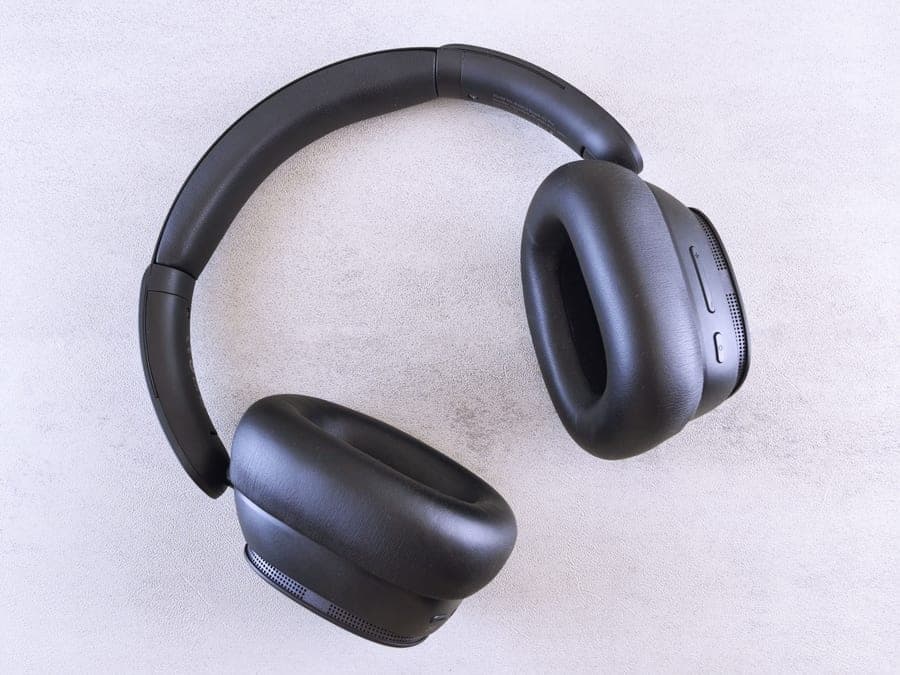 Sony WH-1000XM6The most complete travel headphone on sale: 254 g, 30 rated hours with noise canceling on, and it folds into a case small enough to stop being a decision. | Best overall for a coach | 9.19.1 out of 10, our editorial score | |
| 2 | 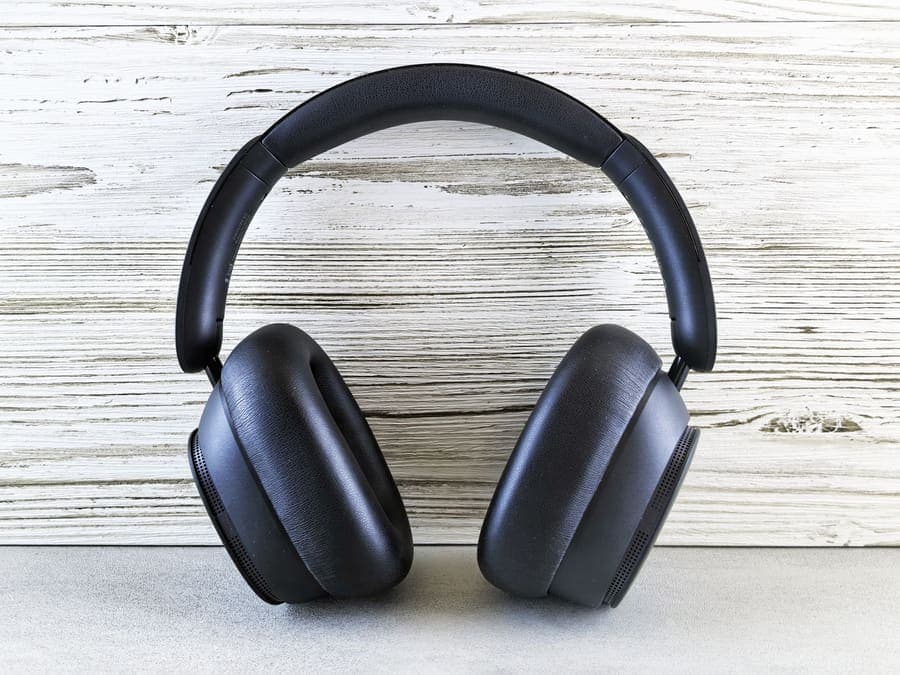 Soundcore Space OneA $99.99 list price that buys 40 rated hours with canceling on, LDAC, 40 mm drivers, a folding hinge and an aux cable. The specification sheet at this level is genuinely hard to argue with. | Best value for a coach | 8.58.5 out of 10, our editorial score | |
| 3 | 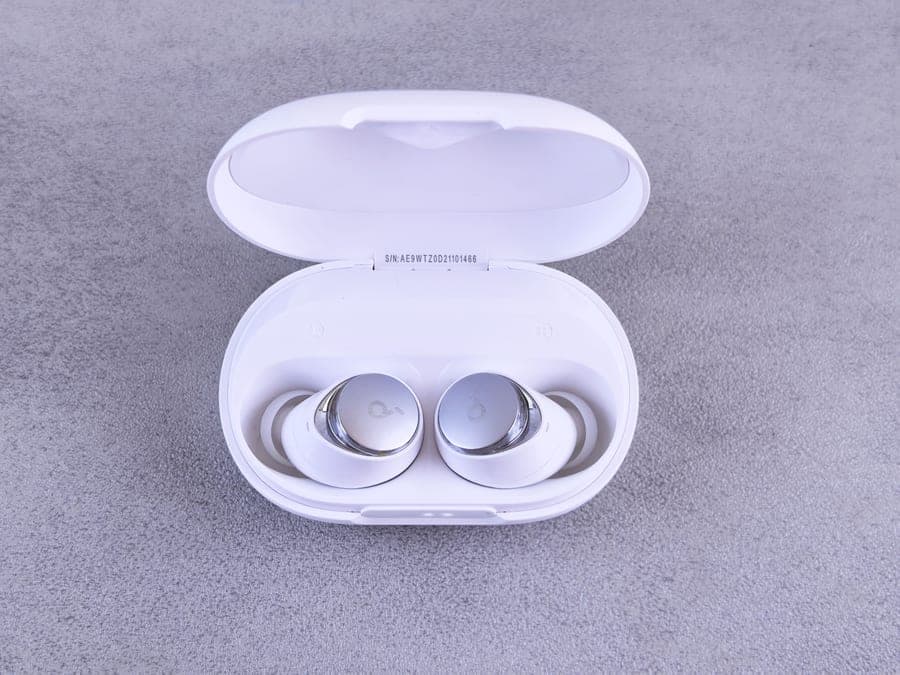 Sony WF-1000XM6Eight rated hours per bud and 24 with the case, at roughly 6.5 g each. The most sensible premium earbud for a flight, because you never have to plan around the battery. | If you sleep sitting upright | 8.98.9 out of 10, our editorial score | |
| 4 | 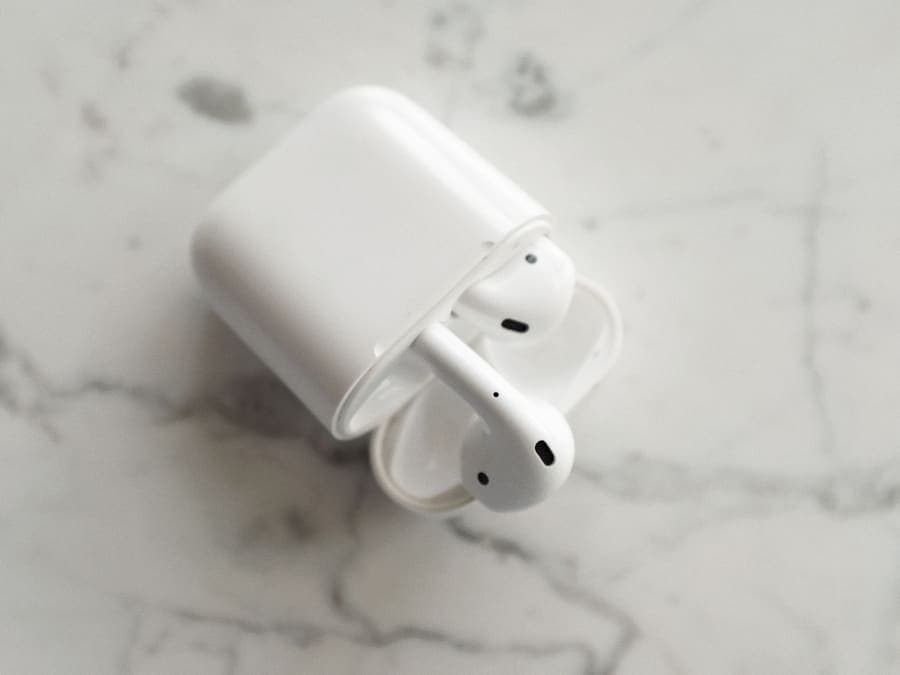 Soundcore P40iA $79.99 earbud rated at 12 hours a charge and 60 with the case, with adaptive canceling and a case that folds out into a phone stand. | Cheapest sensible option | 8.08.0 out of 10, our editorial score |
#ad Amazon links are affiliate links. No live price is shown anywhere on this site, so every button reads “Check price on Amazon”. How this is funded.
The picks in full
Every pick, in detail
1. Best overall for a coach
Sony WH-1000XM6
The most complete travel headphone on sale: 254 g, 30 rated hours with noise canceling on, and it folds into a case small enough to stop being a decision.
Our editorial score: 9.1 / 10
#ad Live price not shown. How this is funded
Also sold direct by Sony — we earn nothing there, so check both.
On a bus the two things that decide a headphone are how small it packs and how long it runs, because you have no tray table and often no outlet. The Sony wins both without giving up canceling depth.
Approximately 254 g, up to 30 rated hours with canceling on, and it folds up — headband collapsed, cups rotated — into a case that fits a seat pocket rather than needing floor space. On a coach that matters more than it does on a plane, because the seat pocket is usually the only storage you get.
It also has a 3.5 mm socket, which is worth more on a bus than you would expect: if the battery dies four hours into a seven-hour run, a cheap cable to your phone keeps the music going. The Bose earbuds below cannot do that at all.
What works on a plane
- Folds, which halves the space it takes in a personal item
- 254 g is light for a flagship over-ear, and weight is what you feel at hour four
- LDAC plus LC3 means it is not locked to one phone ecosystem
- 30 rated hours with noise canceling on covers almost any single routing
What does not
- You pay a flagship price for the last increment of noise canceling
- The folding hinge is one more mechanism to eventually wear out
- No airline two-prong adapter in the box
How it scores against the five travel axes
Published specifications
| Spec | Figure | Source |
|---|---|---|
| Weight | Approx. 254 g (9 oz) | Sony Help Guide specifications |
| Battery, NC on | Up to 30 hours | Sony specifications |
| Battery, NC off | Up to 40 hours | Sony specifications |
| Full charge | Approx. 3.5 hours | Sony Help Guide specifications |
| Bluetooth | 5.3 | Sony Help Guide specifications |
| Codecs | SBC, AAC, LDAC, LC3 | Sony Help Guide specifications |
| Wired response | 4 Hz - 40,000 Hz (IEC) | Sony Help Guide specifications |
| Folds | Yes, into a magnetic-closure case | Sony |
2. Best value for a coach
Soundcore Space One
A $99.99 list price that buys 40 rated hours with canceling on, LDAC, 40 mm drivers, a folding hinge and an aux cable. The specification sheet at this level is genuinely hard to argue with.
Our editorial score: 8.5 / 10
#ad Live price not shown. How this is funded
Also sold direct by Soundcore — we earn nothing there, so check both.
The honest pick for most bus travel, and the reason is the thing nobody mentions on review sites: coaches involve luggage holds, crowded aisles and standing in the rain, and a $99.99 headphone is a much more relaxed thing to own in that environment than a flagship.
Soundcore lists it at $99.99 with up to 40 rated hours with canceling on, 40 mm drivers, LDAC, 265 g, a folding hinge, and a travel pouch plus an aux cable in the box. Five minutes of charge buys four hours, which covers the mistake you will eventually make at a bus station.
The gap to the Sony is in pad materials and how steadily the canceling holds when the noise floor changes — and a bus changes constantly, because it keeps stopping. That is a real cost, not a rounding error, but it is a third of the price.
What works on a plane
- 40 rated hours with canceling on, from a headphone listed at $99.99
- LDAC at this price is unusual, and it is the codec Android users actually want
- Folds and ships with an aux cable, so the seatback screen is covered
- 265 g is not heavy, and the pouch means it travels without a hard case
What does not
- The 98 percent noise-reduction claim is marketing, not a published measurement
- A pouch is not a hard case, so it needs care in a crushed bag
- Pads are the first thing that gives at this price, well before the electronics
How it scores against the five travel axes
Published specifications
| Spec | Figure | Source |
|---|---|---|
| List price | $99.99 at the time of writing | Soundcore |
| Battery, ANC on | Up to 40 hours | Soundcore |
| Battery, normal mode | Up to 55 hours | Soundcore |
| Quick charge | 5 minutes for 4 hours | Soundcore |
| Weight | 265 g (9.35 oz) | Soundcore |
| Drivers | 40 mm | Soundcore |
| Codecs | LDAC | Soundcore |
| Folds | Yes, ear cups rotate and fold | Soundcore |
| In the box | Travel pouch and aux cable | Soundcore |
3. If you sleep sitting upright
Sony WF-1000XM6
Eight rated hours per bud and 24 with the case, at roughly 6.5 g each. The most sensible premium earbud for a flight, because you never have to plan around the battery.
Our editorial score: 8.9 / 10
#ad Live price not shown. How this is funded
Also sold direct by Sony — we earn nothing there, so check both.
The specific bus problem an over-ear cannot solve: coach seats recline barely at all, so you sleep with your head against a window or a seat edge, and a full-size cup gets pressed into the side of your skull.
At roughly 6.5 g a bud there is nothing to press. Eight rated hours per charge and 24 with the case covers an overnight run, and the case goes in a jacket pocket rather than a bag you have to keep hold of.
The trade is real: no wired fallback at all, and canceling that is excellent but still behind the Bose over-ears in the low band. See earbuds versus over-ear for the full argument, which transfers directly to a coach.
What works on a plane
- Eight rated hours per charge clears most short-haul flights without touching the case
- 24 hours total with the case is the strongest reserve in the premium earbud set
- LDAC means it is not tied to one phone platform
- Roughly 6.5 g per bud effectively disappears when you are trying to sleep on your side
What does not
- Canceling is excellent but the Bose still takes the low-frequency band
- No wired fallback at all, so a seatback screen needs a transmitter
- IPX4 is splash resistance, not weather resistance
How it scores against the five travel axes
Published specifications
| Spec | Figure | Source |
|---|---|---|
| Battery, earbuds | Up to 8 hours | Sony |
| Total with case | Up to 24 hours (16 from the case) | Sony |
| Weight | Approx. 6.5 g per bud with M tips | Sony |
| Driver | 8.4 mm | Sony |
| Bluetooth | 5.3 | Sony |
| Codecs | SBC, AAC, LDAC, LC3 | Sony |
| Water resistance | IPX4 | Sony |
| Processor | HD Noise Canceling Processor QN3e, dual processors, eight microphones | Sony |
4. Cheapest sensible option
Soundcore P40i
A $79.99 earbud rated at 12 hours a charge and 60 with the case, with adaptive canceling and a case that folds out into a phone stand.
Our editorial score: 8.0 / 10
#ad Live price not shown. How this is funded
Also sold direct by Soundcore — we earn nothing there, so check both.
Listed at $79.99, rated at 12 hours a charge and 60 with the case, with adaptive canceling, IPX5 and 11 mm drivers. For an occasional bus journey this is enough, and it is the pick to make if losing a bud at a service station would be an annoyance rather than a problem.
IPX5 earns its place here specifically. Bus travel means waiting outside, and a splash rating is more useful than it sounds.
Canceling depth is a long way behind the premium buds, especially in the low band where road noise lives, and the stock tip selection is narrow — which matters, because on any earbud the tip seal does most of the work.
What works on a plane
- 60 rated hours with the case, from an earbud listed at $79.99
- IPX5 means sweat and rain are not a worry on a commute
- The fold-out case stand is a genuinely useful thing on a tray table
- Adaptive canceling at a price where fixed canceling is the norm
What does not
- Canceling depth is a long way behind the premium earbuds, especially in the low band
- No LDAC, so Android listeners do not get the better codec
- The stock tip selection is narrow, and the seal is what decides earbud canceling
How it scores against the five travel axes
Published specifications
| Spec | Figure | Source |
|---|---|---|
| List price | $79.99 at the time of writing | Soundcore |
| Battery | 12 hours per charge, 60 hours with the case | Soundcore |
| Noise canceling | Adaptive ANC | Soundcore |
| Drivers | 11 mm composite | Soundcore |
| Water resistance | IPX5 | Soundcore |
| Microphones | 6, with an AI call algorithm | Soundcore |
| Case | Doubles as a phone stand | Soundcore |
How we decide
How these picks were chosen
We do not run a test lab and we do not claim to have flown with these units. Every verdict on this page is one of three things: a measurement published by somebody who does own a test rig and is credited by name, a manufacturer specification we quote and then interpret against what a long flight actually demands, or a plainly-labeled editorial judgment. The five axes we score on — cabin-noise reduction, battery on a long-haul, pack size, comfort past hour three, and wired fallback — are the ones that decide a travel purchase, and the weighting is published in full.
Questions
Common questions
What are the best headphones for a long bus journey?
The Sony WH-1000XM6 overall: approximately 254 g, up to 30 rated hours with canceling on, a fold-up case small enough for a seat pocket, and a 3.5 mm socket as a fallback. If budget matters more, the Soundcore Space One at a $99.99 list price covers most of the same ground with up to 40 rated hours.
Do noise-canceling headphones work on a bus?
Yes, and arguably better than you expect. The dominant noise on a coach is tire roar through the floor plus a rear engine, both low-frequency, which is the band active canceling is best at. What it will not remove is people talking, because speech is irregular and lives higher up the range.
Are earbuds or over-ear headphones better for bus travel?
Over-ear for pure quiet and battery; earbuds if you sleep sitting upright. Coach seats barely recline, so a full-size earcup ends up pressed between your head and the window. At roughly 6.5 g a bud there is nothing to press, which is why earbuds rank higher on a bus than they would on a plane.
How much battery do I need for a coach trip?
More than the journey, because coaches rarely have a working outlet. Over-ears here are rated from 30 to 40 hours with canceling on, which removes the question entirely. Earbuds give 8 to 12 hours per charge but refill from the case for 24 to 60 hours total, which covers an overnight run if you put them away during stops.
Is it safe to wear noise-canceling headphones on a bus?
On a long-distance coach where you are seated for hours, yes. Be more careful at stations and when boarding or leaving: that is moving-vehicle territory and worth switching to transparency mode for, which every canceling model on this page supports.
Sources
Where these figures come from
Read next
Related reading
- Best headphones for train travel
The same journey length with a table, an outlet and far more space.
- Best headphones for road trips
The other long-haul-on-wheels case, where you may be driving.
- Best noise-canceling headphones for commuting
The short daily version of this problem.
- Earbuds vs over-ear for flying
The form-factor argument in full. It transfers to a coach seat.
- Best headphones under $100
Where the Space One sits against the rest of that ceiling.