
No. Bone conduction headphones sit on your cheekbones and leave the ear canal completely open, which is a deliberate design choice for road awareness — and it means they provide essentially no passive isolation and no active noise canceling. A cabin’s steady low-frequency drone reaches your ear unobstructed. They are a good buy for running or cycling and the wrong tool for a flight; a sealed earbud with canceling is the right one.
How they work
Why the design excludes a cabin
A bone conduction headphone transmits sound as vibration through the bone of your skull to the inner ear, bypassing the eardrum. Nothing goes into or over your ear, which is the whole point: your hearing is left entirely unobstructed so you can hear traffic, a training partner or an announcement.
An unobstructed ear canal is exactly what a plane punishes. Noise reduction in any headphone has two halves — a physical seal that blocks higher frequencies, and active processing that cancels low ones — and an open-ear design has neither. There is no seal because nothing is covering your ear, and these products carry no active canceling at all. Active canceling versus passive isolation covers the split.
So the drone arrives at your ear at full strength and the music arrives through your cheekbones on top of it. You are not removing noise, you are adding signal and competing with it. The predictable result is that you turn the volume up.
On a plane an open-ear headphone does not reduce the noise. It adds music on top of it, and then asks you to turn the music up.
The volume problem
The reason this matters beyond convenience
A cruising cabin sits at roughly 80 dB. To hear dialogue over that with nothing blocking your ears, you have to exceed it — and you will keep raising the level over a long flight as your ears adapt, which is the normal and entirely unconscious behavior.
This is the strongest version of the argument against flying with an open-ear design, and it is the same reasoning in reverse that makes canceling headphones a sensible purchase: with the drone removed you listen at a much lower level, because you are not competing with anything. Are noise-canceling headphones bad for your ears handles that properly.
Side by side
An open-ear design against two sealed earbuds
| Shokz OpenRun Pro 2 | Sony WF-1000XM6 | Bose QC Ultra Earbuds | |
|---|---|---|---|
| Design | Open-ear bone conduction | Sealed in-canal | Sealed, shallow insertion |
| Blocks the ear canal | No, by design | Yes | Yes |
| Active noise canceling | None | Yes | Yes |
| Weight | 30.3 g total | approx. 6.5 g per bud | Not published |
| Battery | up to 12 h | up to 8 h, 24 with case | up to 6 h, 18 with case |
| Quick charge | 5 min = 2.5 h | Not published | Not published |
| Water resistance | IP55, not submersion | IPX4 | IPX4 |
| Right for a cabin | No | Yes | Yes |
Two situations
Where an open-ear design is the right answer
Anywhere you need to hear what is around you
Running on a road, cycling, hiking with other people, or working somewhere you need to stay reachable. Here the open canal is the product and a sealed earbud is the compromise. This is a real and useful category, which is why we stock these at all — see best headphones for running.
In water, where nothing else works
Bluetooth does not travel through water, so a swimming headphone has to carry the music on board. The OpenSwim Pro’s IP68 rating and 32 GB of storage make it one of very few products that genuinely works submerged — best headphones for swimming covers that narrow field.
Neither of those is a cabin, and that is the distinction this page exists to make. Packing an open-ear headphone for a trip is often a good idea. Wearing it for the flight is not.
A near miss
If what you want is awareness some of the time
A lot of people arrive at bone conduction because they want to hear announcements or a flight attendant without taking something off. That is a solved problem, and the solution is not an open-ear design — it is transparency mode on a sealed headphone, which pipes the outside world in through the microphones and can be switched off again.
You get awareness when you want it and a sealed, canceling headphone when you do not, instead of being permanently open. Transparency mode versus noise canceling explains how it works and where it falls short.
What to look for
What to pack instead, judged on four things
- A seal you can actually achieve. This is the specification, not the processor. If sealed tips have always bothered you, a shallow-insertion design is the category to try before giving up on sealed buds entirely.
- Active canceling, for the drone specifically. It is the only thing that addresses 50 to 300 Hz, and that is the band a cabin is made of.
- A transparency mode, if awareness is what drew you to open-ear. Switchable beats permanent.
- Weight and packed size, if that was the appeal. A premium earbud at roughly 6.5 g a side is lighter per ear than a 30.3 g neckband and disappears into a pocket the same way.
In short
Key takeaways
- No — bone conduction leaves the ear canal open by design, so it has neither a passive seal nor active canceling.
- A cabin's steady low-frequency drone therefore reaches your ear unobstructed, and you compensate with volume.
- A cruising cabin is around 80 dB, so hearing dialogue over it with open ears means exceeding it.
- Shokz OpenRun Pro 2 is a genuinely good product for running: 30.3 g, up to 12 rated hours, IP55.
- The OpenSwim Pro wins the one trip case that matters — IP68 to 2 m with 32 GB on board, because Bluetooth does not work underwater.
- If you wanted awareness, use transparency mode on a sealed headphone instead. Switchable beats permanently open.
At a glance
Quick picks
Scores are our editorial judgment from published specifications and cited third-party measurements, not our own testing. The rubric is published in full. Tap any row for the full write-up.
| # | Product | Best for | Score | Price |
|---|---|---|---|---|
| 1 |  Shokz OpenRun Pro 2An open-ear headphone that leaves your ear canal empty, so you hear the traffic behind you as well as the playlist. The point of it is the opposite of noise canceling. | What it is genuinely good for | 8.58.5 out of 10, our editorial score | |
| 2 | 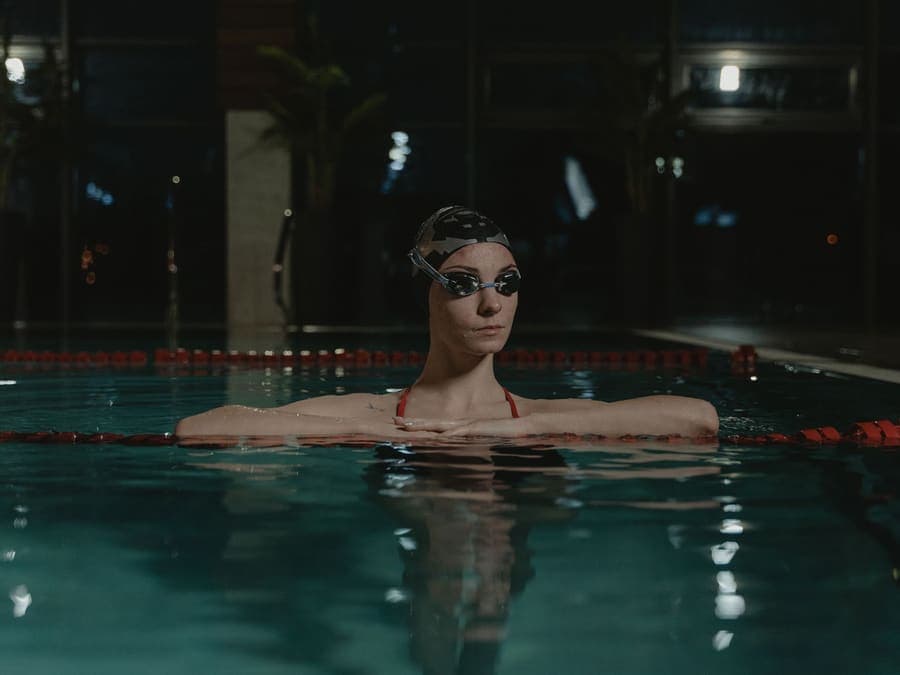 Shokz OpenSwim ProThe rare headphone that actually works underwater, because it stores the music on board rather than relying on Bluetooth, which does not travel through water. | The one trip case it does win | 8.68.6 out of 10, our editorial score | |
| 3 | 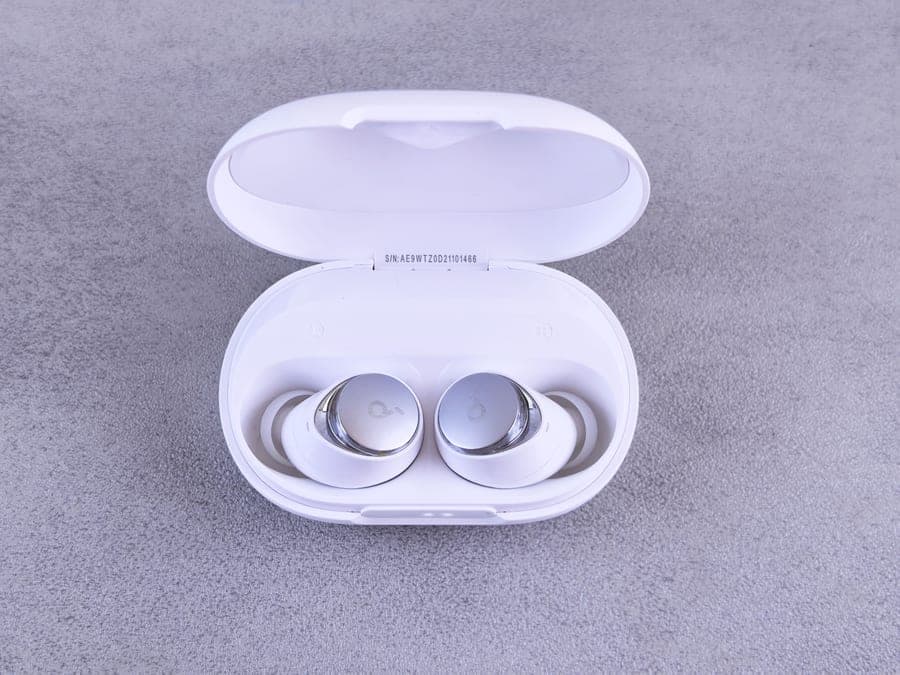 Sony WF-1000XM6Eight rated hours per bud and 24 with the case, at roughly 6.5 g each. The most sensible premium earbud for a flight, because you never have to plan around the battery. | What to actually fly with | 8.98.9 out of 10, our editorial score | |
| 4 | 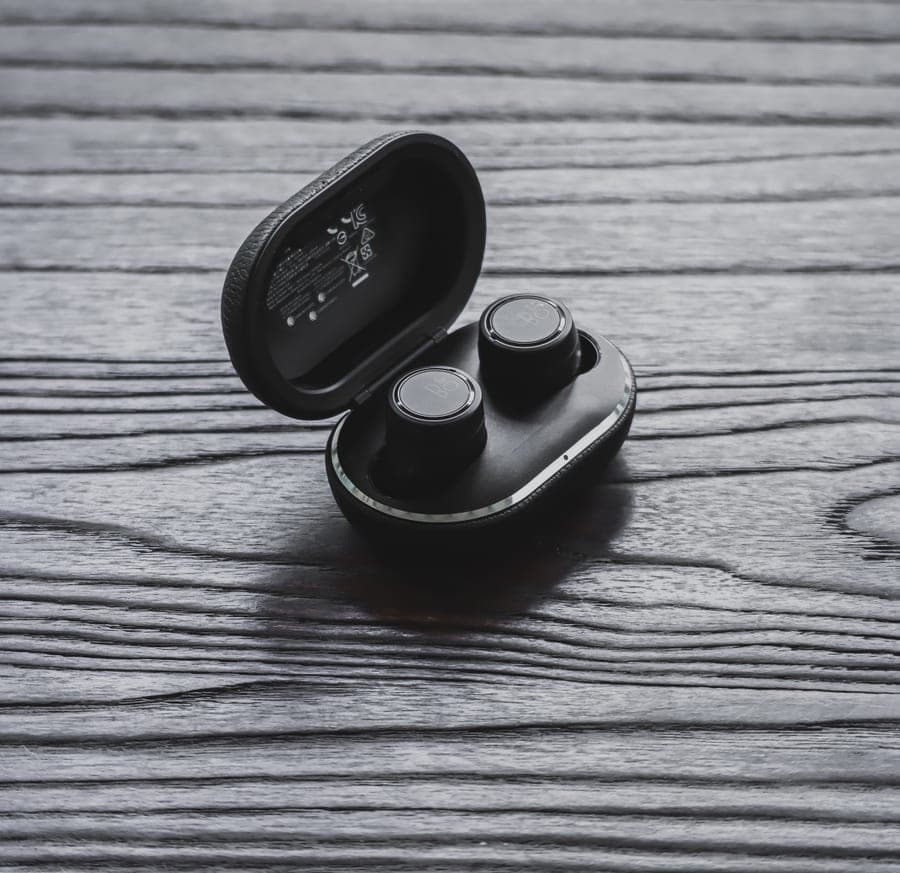 Bose QuietComfort Ultra Earbuds (2nd Gen)The quietest earbuds you can put in a pocket, with the shortest single-charge runtime of the premium set: six rated hours, four with Immersive Audio on. | If drone is the whole problem | 8.48.4 out of 10, our editorial score |
#ad Amazon links are affiliate links. No live price is shown anywhere on this site, so every button reads “Check price on Amazon”. How this is funded.
The picks in full
Every pick, in detail
1. What it is genuinely good for
Shokz OpenRun Pro 2
An open-ear headphone that leaves your ear canal empty, so you hear the traffic behind you as well as the playlist. The point of it is the opposite of noise canceling.
Our editorial score: 8.5 / 10
#ad Live price not shown. How this is funded
Also sold direct by Shokz — we earn nothing there, so check both.
A very good product used in the right place, which is outdoors. 30.3 g on a titanium band, up to 12 rated hours, five minutes of charge for 2.5 hours, a full charge in an hour, Bluetooth 5.3, IP55, and bone conduction paired with an 18 x 11 mm air-conduction low-frequency unit.
On a run or a ride, leaving your ear canal open is the feature you are paying for: you hear a car behind you as well as the playlist. IP55 shrugs off the sweat that kills sealed sport earbuds.
On a plane every one of those strengths inverts. Shokz’s own positioning says as much, and our registry entry has said since launch that it is the wrong tool on a plane or in an open-plan office. Pack it for the trip, not for the flight.
What works on a plane
- Your ear canal stays open, so road and trail awareness is not a compromise
- 30.3 g on a titanium band means it stops registering as something you are wearing
- IP55 shrugs off sweat, which is the failure mode that kills running earbuds
- 12 rated hours covers a marathon block without a mid-week charge
What does not
- Bone conduction gives up bass depth against a sealed earbud, and no firmware fixes physics
- IP55 is splash resistance, not submersion — this is not a swimming headphone
- Open by design, so it is the wrong tool on a plane or in an open-plan office
How it scores against the five travel axes
Published specifications
| Spec | Figure | Source |
|---|---|---|
| Weight | 30.3 g | Shokz OpenRun Pro 2 specifications |
| Battery | Up to 12 hours | Shokz OpenRun Pro 2 specifications |
| Quick charge | 5 minutes for 2.5 hours | Shokz OpenRun Pro 2 specifications |
| Full charge | 1 hour | Shokz OpenRun Pro 2 specifications |
| Bluetooth | 5.3 | Shokz OpenRun Pro 2 specifications |
| Water resistance | IP55 (sweat and splashes, not swimming) | Shokz OpenRun Pro 2 specifications |
| Drivers | Bone conduction plus an 18 x 11 mm air-conduction low-frequency unit | Shokz OpenRun Pro 2 specifications |
| Multipoint | Yes | Shokz OpenRun Pro 2 specifications |
2. The one trip case it does win
Shokz OpenSwim Pro
The rare headphone that actually works underwater, because it stores the music on board rather than relying on Bluetooth, which does not travel through water.
Our editorial score: 8.6 / 10
#ad Live price not shown. How this is funded
Also sold direct by Shokz — we earn nothing there, so check both.
The exception worth knowing about, because it is not a cabin case: a hotel pool or an open-water swim, where no sealed earbud works at all.
IP68 and submersible to 2 m of fresh water, 32 GB of on-board storage, 9 rated hours on Bluetooth and 6 in MP3 mode, 27.3 g, Bluetooth 5.4, and support for MP3, FLAC, WAV, AAC, M4A, APE and WMA. The storage is the point: Bluetooth does not travel through water, so lap swimming means loading files first.
It is still an open-ear design, so it is no better in the cabin than the OpenRun Pro 2. It earns a place in the bag for what happens after you land.
What works on a plane
- IP68 to 2 m is a real submersion rating, not splash resistance with optimistic marketing
- 32 GB of on-board storage is the only thing that works underwater, and it is generous
- Switches to Bluetooth on land, so it is not a single-purpose purchase
- 27.3 g under a swim cap is light enough to forget about
What does not
- Bluetooth does not work submerged, so lap swimming means loading files first
- A proprietary 4-pin magnetic charging cable is one more thing to lose
- Bone conduction in water is clear but never rich — expect intelligibility, not depth
How it scores against the five travel axes
Published specifications
| Spec | Figure | Source |
|---|---|---|
| Weight | 27.3 g | Shokz OpenSwim Pro specifications |
| Water resistance | IP68, submersible to 2 m of fresh water | Shokz OpenSwim Pro specifications |
| Battery, Bluetooth | 9 hours | Shokz OpenSwim Pro specifications |
| Battery, MP3 mode | 6 hours | Shokz OpenSwim Pro specifications |
| On-board storage | 32 GB | Shokz OpenSwim Pro specifications |
| File formats | MP3, FLAC, WAV, AAC, M4A, APE, WMA | Shokz OpenSwim Pro specifications |
| Bluetooth | 5.4 | Shokz OpenSwim Pro specifications |
| Full charge | 1.5 hours, 4-pin magnetic cable | Shokz OpenSwim Pro specifications |
3. What to actually fly with
Sony WF-1000XM6
Eight rated hours per bud and 24 with the case, at roughly 6.5 g each. The most sensible premium earbud for a flight, because you never have to plan around the battery.
Our editorial score: 8.9 / 10
#ad Live price not shown. How this is funded
Also sold direct by Sony — we earn nothing there, so check both.
If what attracted you to bone conduction was the size and the lack of bulk, this is the product that delivers that without giving up the seal. Roughly 6.5 g per bud, up to 8 rated hours and up to 24 with the case.
An 8.4 mm driver, Bluetooth 5.3, SBC, AAC, LDAC and LC3, the QN3e processor with eight microphones, and IPX4. It disappears in a pocket in the same way, and it seals.
No wired fallback at all, so a seatback screen needs a transmitter, and canceling depth is a step behind the Bose in the low band.
What works on a plane
- Eight rated hours per charge clears most short-haul flights without touching the case
- 24 hours total with the case is the strongest reserve in the premium earbud set
- LDAC means it is not tied to one phone platform
- Roughly 6.5 g per bud effectively disappears when you are trying to sleep on your side
What does not
- Canceling is excellent but the Bose still takes the low-frequency band
- No wired fallback at all, so a seatback screen needs a transmitter
- IPX4 is splash resistance, not weather resistance
How it scores against the five travel axes
Published specifications
| Spec | Figure | Source |
|---|---|---|
| Battery, earbuds | Up to 8 hours | Sony |
| Total with case | Up to 24 hours (16 from the case) | Sony |
| Weight | Approx. 6.5 g per bud with M tips | Sony |
| Driver | 8.4 mm | Sony |
| Bluetooth | 5.3 | Sony |
| Codecs | SBC, AAC, LDAC, LC3 | Sony |
| Water resistance | IPX4 | Sony |
| Processor | HD Noise Canceling Processor QN3e, dual processors, eight microphones | Sony |
4. If drone is the whole problem
Bose QuietComfort Ultra Earbuds (2nd Gen)
The quietest earbuds you can put in a pocket, with the shortest single-charge runtime of the premium set: six rated hours, four with Immersive Audio on.
Our editorial score: 8.4 / 10
#ad Live price not shown. How this is funded
Also sold direct by Bose — we earn nothing there, so check both.
The opposite end of the design spectrum from an open-ear: the deepest low-frequency canceling available in an earbud, which is precisely the band an open-ear design cannot touch.
Shallow insertion with three stabilizer band sizes, so it seals without wedging deep into the canal — a reasonable landing point if what put you off sealed buds was discomfort rather than awareness.
Up to 6 rated hours with Immersive Audio off, 4 with it on, up to 18 total with the case. That is the weakest reserve in the premium earbud set, and it means a top-up on a long leg.
What works on a plane
- Canceling that genuinely rivals a full-size over-ear, in something pocketable
- The shallow fit is far more tolerable than deep-insertion buds on a long flight
- Wireless case charging is one fewer cable in the bag
What does not
- Six rated hours means a case top-up mid-flight on any long-haul
- Immersive Audio cuts that to four, so on a plane you will mostly leave it off
- 18 hours total with the case is the weakest reserve in the premium earbud set
How it scores against the five travel axes
Published specifications
| Spec | Figure | Source |
|---|---|---|
| Battery, Immersive off | Up to 6 hours | Bose support |
| Battery, Immersive on | Up to 4 hours | Bose support |
| Total with case | Up to 18 hours | Bose support |
| Case charging | USB-C and wireless | Bose support |
| Water resistance | IPX4 | Bose support |
| Fit | Three stabilizer band sizes, shallow insertion | Bose |
Read the full Bose QuietComfort Ultra Earbuds (2nd Gen) review
Questions
Common questions
Are bone conduction headphones good for flying?
No. They sit on your cheekbones and leave the ear canal completely open, which means no passive isolation and no active noise canceling. The engine drone reaches your ear at full strength, so you end up turning the volume up to compete with it rather than removing it.
Do bone conduction headphones block any noise at all?
Essentially none, and that is deliberate rather than a shortcoming. The design exists so that your hearing stays unobstructed — for road awareness on a run. Nothing covers or enters your ear, so there is no seal to block sound and no canceling circuitry either.
Can you wear bone conduction headphones on a plane?
You can, and they will work in the sense that you will hear audio. They simply will not do the job you want on a plane. If you already own a pair, there is no reason not to pack them for the trip — just do not expect them to make the cabin quieter.
What should I use instead of bone conduction on a flight?
A sealed earbud with active canceling, or a canceling over-ear. If the appeal was the small size, a premium earbud is roughly 6.5 g a side with up to 8 rated hours and 24 from the case, which is lighter per ear than a bone conduction neckband and seals properly.
What are bone conduction headphones actually good for?
Running, cycling and anywhere you need to hear what is around you, where an open ear canal is the feature you are buying. Also swimming, in the specific case of a model with on-board storage and a real submersion rating, because Bluetooth does not travel through water.
Are bone conduction headphones better for your ears?
Not inherently, and on a plane arguably worse. Hearing risk is driven by level and duration, and an open design makes you raise the level to compete with the cabin. A sealed canceling headphone lets you listen quieter, because you are not competing with anything.
Sources
Where these figures come from
Read next
Related reading
- Active canceling vs passive isolation
The two halves of noise reduction an open-ear design gives up.
- Transparency mode vs noise canceling
The switchable way to get awareness without staying open.
- Best headphones for running
Where an open-ear design is the right answer rather than the wrong one.
- Best noise-canceling earbuds for flights
What to fly with if small size was the appeal.
- Best headphones for swimming
The one case where on-board storage and IP68 beat everything else.