
Walking in headphones is safe enough if you stay in transparency or ambient mode at a moderate volume, and genuinely risky in full noise canceling. Canceling is most effective in the low frequencies, which is exactly where an approaching vehicle lives, and it also removes the subtle differences between your two ears that let you tell which direction a sound came from. An open-ear design avoids the problem entirely.
What you lose
Three things canceling takes away on a pavement
The approach warning
A vehicle announces itself with low-frequency engine and tyre noise long before it is in view. That band is precisely what active canceling is built to remove — how canceling works explains why the low end is the tractable part. On a plane that is the whole point. On a street it deletes your early warning.
Direction
You locate a sound using tiny differences in timing and level between your two ears, plus the way your outer ear shapes what arrives. A sealed earcup removes the outer ear from the process, and processing can reinstate the sound without reinstating the cues. You may hear the car and still not know which side it is on.
Quiet vehicles entirely
An electric car at low speed makes very little noise to begin with, as does a bicycle and an electric scooter. Those are the things that already slip past unaided hearing, and canceling removes what little signal there was.
Noise canceling is a feature that works exactly as advertised. On a pavement, that is the problem.
The reverse is also true: the one case where canceling helps on foot is sustained noise you are not navigating by, such as walking beside a motorway with no crossings. That is a narrow case.
Transparency
What transparency mode does and does not restore
| Mode | What you hear | What is missing |
|---|---|---|
| Open-ear, no canceling | The street, unprocessed | Bass, and any isolation at all |
| Transparency or ambient | A microphone copy of the street, usually convincing | Processing delay, directional precision, and it stops if the battery does |
| Canceling off, sealed | A muffled version of the street | Most high-frequency detail; the seal is still blocking it |
| Full canceling | Very little of the street | The approach warning you need most |
Transparency is good and it is not the same as hearing. Transparency mode versus noise canceling goes through the mechanism, and the practical point stands: it is a system that can be off, flat, or quietly misconfigured.
The rules
Five rules that make it reasonable
- Transparency or ambient mode by default on any street. Make it the mode you have to leave rather than the mode you have to find.
- Volume low enough to hear a car. If you cannot hear your own footsteps, it is too loud.
- Pause at every crossing. Not transparency — pause. The most reliable way to hear a road is to have nothing playing.
- One bud out if you only own sealed buds. Crude, effective, and it restores one ear’s worth of direction.
- Look rather than listen. Hearing is the backup sense at a kerb. Use your eyes as the primary one and nothing you wear matters much.
The law
Is it illegal?
That depends entirely on where you are, and it is worth checking rather than assuming. Rules differ by country, state and city, several US states restrict wearing headphones in both ears while driving, and pedestrian rules are a separate question again with some jurisdictions regulating headphone use at crossings and others not at all. Local regulations are the authority here, not a buying guide.
What is consistent everywhere is the practical position: a pedestrian who cannot hear traffic is less safe than one who can, regardless of what any statute says.
Other situations
Walking is not running, cycling or a station platform
Running
Same reasoning, higher speed, plus sweat and cadence constraints on the product. The running picks are built around open-ear designs for exactly this reason.
Cycling
Considerably more exposed, and wind noise defeats microphones at speed, so transparency is less reliable than it is on foot — the cycling roundup treats open-ear as the baseline rather than the alternative.
A station platform
An edge, a crowd and announcements. Treat it like a road: switch modes before you reach the platform, as the subway roundup argues.
Walking the dog or walking at night
Both reduce your other margins — a lead that can pull you sideways, less light for a driver to see you by. Neither is an argument against headphones; both are arguments for keeping one ear on the world.
In short
Key takeaways
- Full noise canceling removes the low-frequency engine and tyre noise that warns you a vehicle is approaching.
- A sealed earcup also removes the outer-ear cues you use to tell which direction a sound came from.
- Transparency mode is a convincing microphone copy, not your own hearing: it has delay, less directional precision and a battery dependency.
- Open-ear designs such as the Shokz OpenRun Pro 2 avoid the whole problem because nothing blocks the canal.
- Pause your audio at crossings rather than relying on a mode, and keep the volume low enough to hear your own footsteps.
- Rules on headphone use differ by country, state and city. Check local regulations rather than assuming.
At a glance
Quick picks
Scores are our editorial judgment from published specifications and cited third-party measurements, not our own testing. The rubric is published in full. Tap any row for the full write-up.
| # | Product | Best for | Score | Price |
|---|---|---|---|---|
| 1 | 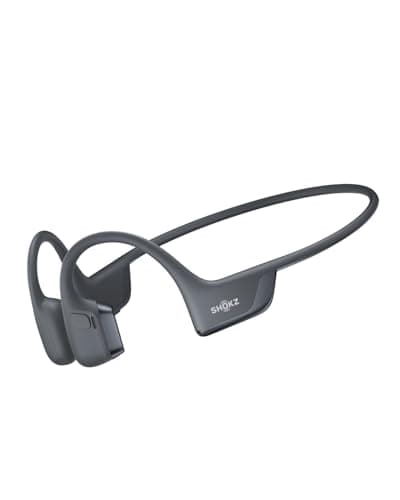 Shokz OpenRun Pro 2An open-ear headphone that leaves your ear canal empty, so you hear the traffic behind you as well as the playlist. The point of it is the opposite of noise canceling. | The safest design on a pavement | 8.58.5 out of 10, our editorial score | |
| 2 |  Apple AirPods Pro 3Eight rated hours with canceling on, foam tips in five sizes and an IP57 rating. If your phone is an iPhone this is the least friction of anything here. | Best transparency mode if you want sealed buds | 8.88.8 out of 10, our editorial score | |
| 3 | 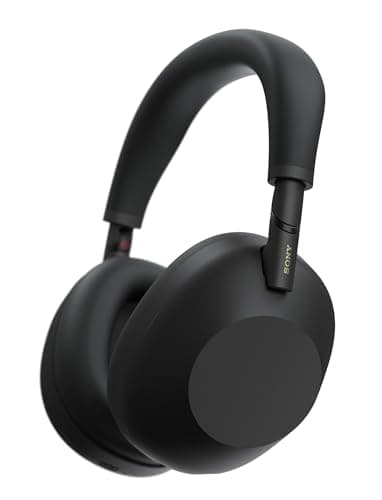 Sony WH-1000XM6The most complete travel headphone on sale: 254 g, 30 rated hours with noise canceling on, and it folds into a case small enough to stop being a decision. | If you walk in an over-ear, make it this one | 9.19.1 out of 10, our editorial score |
#ad Amazon links are affiliate links. Prices come from Amazon’s own data on the date stamped under the buttons above; where we have no current figure the button reads “Check price on Amazon” instead of guessing. How this is funded.
The picks in full
Every pick, in detail
1. The safest design on a pavement
Shokz OpenRun Pro 2
An open-ear headphone that leaves your ear canal empty, so you hear the traffic behind you as well as the playlist. The point of it is the opposite of noise canceling.
Our editorial score: 8.5 / 10
#ad Price as of November 11, 2026. How this is funded
The only approach here that does not block the ear canal at all. Bone conduction plus an 18 x 11 mm air-conduction low-frequency unit sends sound through your cheekbones and the air in front of your ear, leaving your natural hearing completely intact.
That matters because nothing is being simulated. There is no microphone, no processing delay and no battery dependency between you and the traffic — you hear the street exactly as you would with nothing on your head.
30.3 g, up to 12 rated hours, five minutes of charge for 2.5 hours, a full charge in an hour, Bluetooth 5.3, IP55 and multipoint. What you give up is bass and isolation, which on a pavement is the correct trade.
What works on a plane
- Your ear canal stays open, so road and trail awareness is not a compromise
- 30.3 g on a titanium band means it stops registering as something you are wearing
- IP55 shrugs off sweat, which is the failure mode that kills running earbuds
- 12 rated hours covers a marathon block without a mid-week charge
What does not
- Bone conduction gives up bass depth against a sealed earbud, and no firmware fixes physics
- IP55 is splash resistance, not submersion — this is not a swimming headphone
- Open by design, so it is the wrong tool on a plane or in an open-plan office
How it scores against the five travel axes
Published specifications
| Spec | Figure | Source |
|---|---|---|
| Weight | 30.3 g | Shokz OpenRun Pro 2 specifications |
| Battery | Up to 12 hours | Shokz OpenRun Pro 2 specifications |
| Quick charge | 5 minutes for 2.5 hours | Shokz OpenRun Pro 2 specifications |
| Full charge | 1 hour | Shokz OpenRun Pro 2 specifications |
| Bluetooth | 5.3 | Shokz OpenRun Pro 2 specifications |
| Water resistance | IP55 (sweat and splashes, not swimming) | Shokz OpenRun Pro 2 specifications |
| Drivers | Bone conduction plus an 18 x 11 mm air-conduction low-frequency unit | Shokz OpenRun Pro 2 specifications |
| Multipoint | Yes | Shokz OpenRun Pro 2 specifications |
2. Best transparency mode if you want sealed buds
Apple AirPods Pro 3
Eight rated hours with canceling on, foam tips in five sizes and an IP57 rating. If your phone is an iPhone this is the least friction of anything here.
Our editorial score: 8.8 / 10
#ad Price as of November 11, 2026. How this is funded
If you want a sealed earbud anyway, this is the one with the most convincing transparency implementation, and the practical point is that you must actually use it.
8 rated hours of listening with canceling on, up to 10 hours in Transparency mode and up to 24 with the case — and the fact that Transparency is the longer figure tells you Apple expects it to be used as a primary mode rather than an occasional one.
Foam tips in five sizes, IP57 for both buds and case, and five minutes in the case for around an hour of playback. Apple’s own claim is that it removes up to twice as much noise as the previous generation — a vendor figure, and a reason to be deliberate about switching modes on a street.
What works on a plane
- Eight rated hours and 24 with the case, matching the best of the premium earbuds
- Foam tips in five sizes solve the fit problem that ruins canceling on most buds
- IP57 on both buds and case is the toughest rating in this group
- Live Translation and heart-rate sensing are genuinely useful abroad, not spec-sheet filler
What does not
- Apple's 2x noise figure is a manufacturer claim measured against its own predecessor, not an independent measurement
- The best features need an iPhone; on Android it is a good but ordinary earbud
- No wired option, so in-flight entertainment needs a transmitter
How it scores against the five travel axes
Published specifications
| Spec | Figure | Source |
|---|---|---|
| Battery, ANC on | 8 hours listening | Apple tech specs |
| Battery, Transparency | Up to 10 hours | Apple tech specs |
| Total with case | Up to 24 hours with ANC | Apple tech specs |
| Quick charge | 5 minutes in the case gives around 1 hour | Apple tech specs |
| Ear tips | Foam tips in five sizes | Apple |
| Water resistance | IP57, buds and case | Apple |
| Apple's ANC claim | Removes up to 2x more noise than AirPods Pro 2 | Apple newsroom |
3. If you walk in an over-ear, make it this one
Sony WH-1000XM6
The most complete travel headphone on sale: 254 g, 30 rated hours with noise canceling on, and it folds into a case small enough to stop being a decision.
Our editorial score: 9.1 / 10
#ad Price as of November 11, 2026. How this is funded
Plenty of people walk in the same over-ear they fly in, and this is the sensible version of that. Approximately 254 g, up to 30 rated hours with canceling on and 40 with it off, and a physical control you can reach without looking.
Bluetooth 5.3 with SBC, AAC, LDAC and LC3, and a wired response quoted at 4 Hz to 40,000 Hz for the rest of the trip. It folds into a magnetic-closure case, which is what makes it plausible as a one-pair-for-everything purchase.
On a pavement the correct configuration is ambient mode, not canceling, and a volume low enough that you can hear a car. An over-ear also blocks the small amount of directional information your outer ear gives you, which is a cost no mode can return.
What works on a plane
- Folds, which halves the space it takes in a personal item
- 254 g is light for a flagship over-ear, and weight is what you feel at hour four
- LDAC plus LC3 means it is not locked to one phone ecosystem
- 30 rated hours with noise canceling on covers almost any single routing
What does not
- You pay a flagship price for the last increment of noise canceling
- The folding hinge is one more mechanism to eventually wear out
- No airline two-prong adapter in the box
How it scores against the five travel axes
Published specifications
| Spec | Figure | Source |
|---|---|---|
| Weight | Approx. 254 g (9 oz) | Sony Help Guide specifications |
| Battery, NC on | Up to 30 hours | Sony specifications |
| Battery, NC off | Up to 40 hours | Sony specifications |
| Full charge | Approx. 3.5 hours | Sony Help Guide specifications |
| Bluetooth | 5.3 | Sony Help Guide specifications |
| Codecs | SBC, AAC, LDAC, LC3 | Sony Help Guide specifications |
| Wired response | 4 Hz - 40,000 Hz (IEC) | Sony Help Guide specifications |
| Folds | Yes, into a magnetic-closure case | Sony |
| In the box | Headset, headphone cable, USB-C cable, carrying case, documents | Sony Help Guide, Included items |
Questions
Common questions
Is it safe to wear headphones while walking?
In transparency or ambient mode at a moderate volume, yes for most situations. In full noise canceling, no — canceling is strongest in exactly the low frequencies that warn you a vehicle is approaching, and a sealed earcup also removes the cues you use to tell which direction a sound came from.
Is it illegal to wear headphones while walking?
It varies by country, state and city, so check your own local regulations. Several US states restrict both-ear headphone use while driving, and pedestrian rules are a separate matter again, regulated in some places and not at all in others.
Does transparency mode make headphones safe for walking?
It makes them much safer, but it is a processed copy of the outside world rather than your own hearing. It has a processing delay, less directional precision than an open ear, and it stops working if the battery does. Treat it as a good substitute, not an equivalent.
Are bone conduction headphones safer for walking?
Yes, because they do not block the ear canal at all. Sound arrives through the cheekbones and the air in front of your ear while your natural hearing continues unaffected, with no microphone, no processing and no battery between you and the traffic.
Should I take one earbud out when walking near traffic?
If sealed earbuds are all you own, yes. It is crude but it restores one ear’s worth of unobstructed hearing and most of your sense of direction. Pausing playback entirely at crossings is better still.
Sources
Where these figures come from
Read next
Related reading
- Best headphones for walking
The products, ranked for exactly this use.
- Transparency mode vs noise canceling
What a microphone feed can and cannot replace.
- Best headphones for cycling
The same argument at speed, where wind defeats microphones.
- Best noise-canceling headphones for commuting
Streets, buses and trains in one purchase.