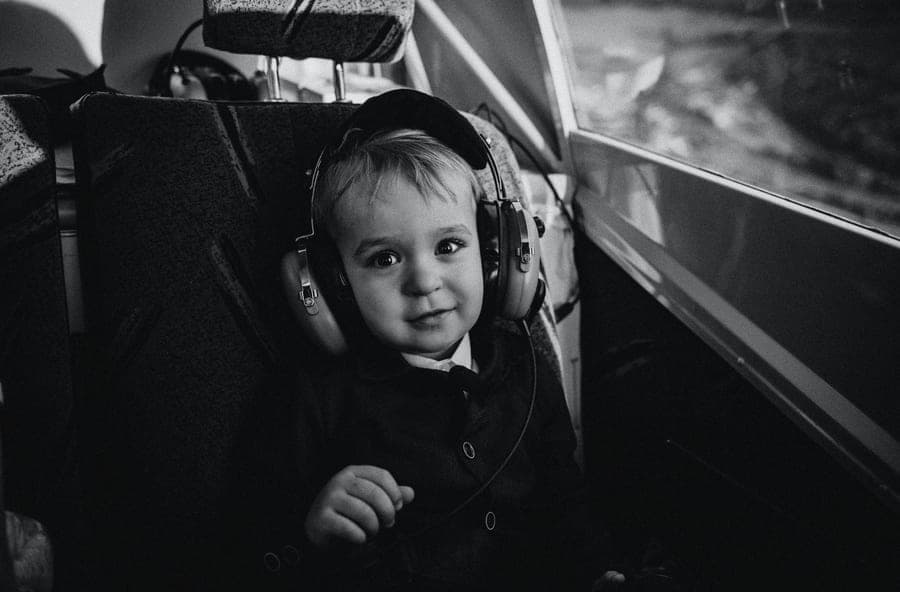
For a child on a plane, volume limiting matters more than noise canceling, because a child turning the volume up to overcome cabin noise is the actual risk. Look for a headphone with a hardware volume cap, or set a limit on the device. The single most useful purchase for a family is a Bluetooth transmitter with dual pairing, which lets two people watch one seatback screen at their own volumes. Noise canceling helps less against a crying baby than parents expect.
The priority
Volume limiting comes before everything else
Here is the mechanism that matters, and it is worth understanding rather than just following a rule. A cabin sits at roughly 80 dB. A child listening to something at a comfortable margin above that background is listening at a level that would be obviously too loud in a quiet room. And because the background is constant, they will keep nudging it up.
There are two ways to cap it:
- A hardware-limited headphone. Products marketed for children frequently cap output at a fixed level in the headphone itself, which cannot be overridden by a device or an app. None of the general-purpose headphones on this site do this, and we have not researched specific children’s models, so we do not name any — but this is the thing to look for if it is your priority.
- A device-level limit. Both iOS and Android have settings that cap headphone output, and both work with any headphone. This is the practical route if you are handing over an adult headphone.
There is a second, subtler point in favor of good canceling here. If the drone is removed, the child does not need to turn the volume up to hear over it. Effective noise canceling is indirectly a volume-safety feature, and that is the strongest argument for spending on it for a child.
Good canceling is a volume-safety feature in disguise: remove the background and nobody needs to compete with it.
Correcting a common belief
Noise canceling and a crying child
Two versions of this question come up, and both deserve a straight answer.
Will it help my child sleep through engine noise?
Yes, meaningfully. Continuous low-frequency drone is exactly what active canceling removes, and it is a real contributor to how tiring a flight is for a child.
Will it help me block out somebody else’s crying baby?
Much less than you hope. A baby’s cry is pitched, evolutionarily, in the range human hearing is most sensitive to — which is also the range where active canceling is weakest. What reduces it is the physical seal of the earcup or tip, plus something playing.
So for that specific problem, a well-sealing headphone at moderate volume beats a better algorithm. Active canceling versus passive isolation explains why.
A false premise worth correcting
Headphones do not help with ear pressure
This comes up constantly from parents, and it rests on a misunderstanding worth clearing up: noise-canceling headphones do nothing for cabin pressure. They work on sound, not air pressure, and the ear discomfort a child feels on descent is their Eustachian tubes struggling to equalize.
What helps that is swallowing, sucking, chewing or a bottle on descent — not a headphone. If ear pain on landing is your actual concern, the headphone is the wrong purchase, and do noise-canceling headphones help with cabin pressure explains the physiology properly.
Practical
Four things that help with a child on a flight
| Problem | What actually helps |
|---|---|
| They want the seatback screen but have wireless headphones | A Bluetooth transmitter with dual pairing, so you both watch at your own volume |
| They turn the volume too high | A device-level output cap, or a hardware volume-limited headphone |
| The headphones do not stay on | Fit, not brand. An adult over-ear on a small head will not stay put |
| Ear pain on descent | Swallowing, chewing or a bottle. Not a headphone |
Fit, and what we are not claiming
An adult over-ear on a small head sits badly: the headband does not adjust down far enough, the cups swallow the ears without sealing, and it slides. Broadly a child needs to be around ten or older before adult-sized headphones work, though that varies enough by child that it is a thing to check rather than a rule to follow.
We have not researched children’s-specific headphone models, so this page does not name any — every product here was verified against sources fetched during research and children’s models were not part of that. For a younger child, a dedicated volume-limited product is likely the right purchase, and the two features to check are a hardware volume cap and an adjustable band that genuinely goes small.
In short
Key takeaways
- Volume limiting matters more than noise canceling. A cabin at 80 dB pushes a child to turn the volume up.
- Good canceling is indirectly a safety feature: remove the drone and nobody needs to compete with it.
- Noise canceling does far less against a crying baby than against engine drone — a seal plus audio does more.
- Headphones do nothing for ear pressure on descent. Swallowing, chewing or a bottle does.
- A dual-pairing Bluetooth transmitter solves more family problems on a plane than better headphones do.
- Adult over-ears generally do not fit well below about age ten. Check the band's minimum size.
At a glance
Quick picks
Scores are our editorial judgment from published specifications and cited third-party measurements, not our own testing. The rubric is published in full. Tap any row for the full write-up.
| # | Product | Best for | Score | Price |
|---|---|---|---|---|
| 1 | 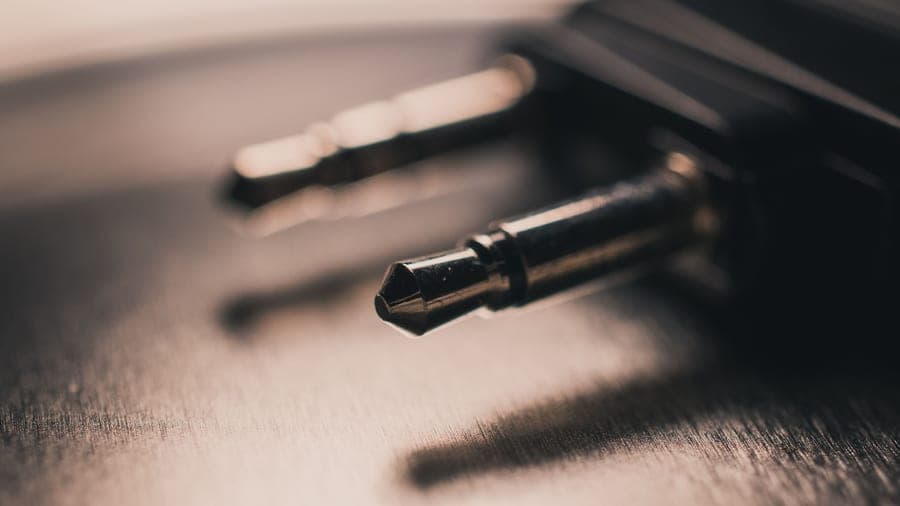 Twelve South AirFly Pro 2The single accessory that makes any wireless headphone work with a seatback screen: plug it into the airline jack and it sends the audio to your headphones over Bluetooth. | Best purchase for flying with a child | 9.09.0 out of 10, our editorial score | |
| 2 | 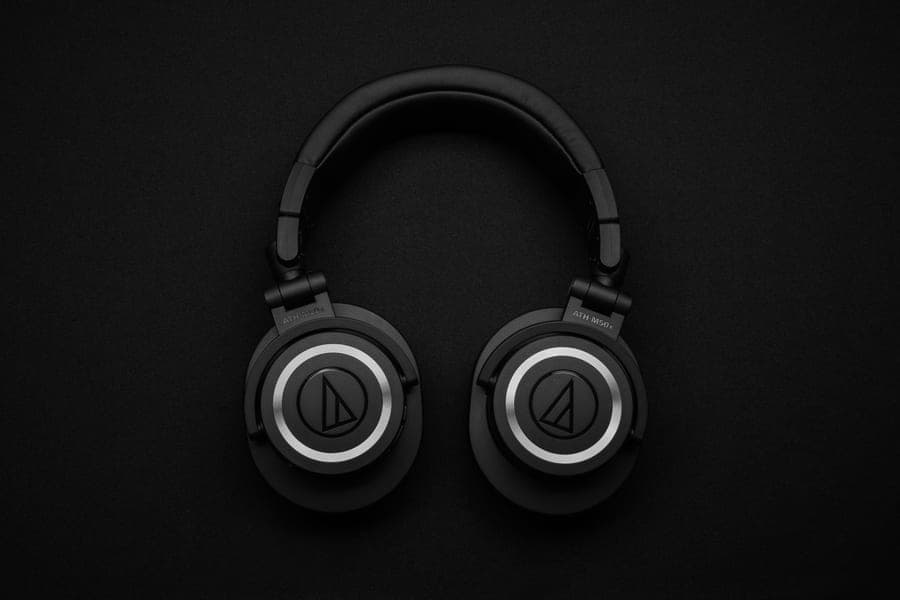 Soundcore Space Q45Fifty rated hours with canceling on, a hard case and a 3.5 mm cable in the box, at a fraction of flagship money. The compromise is in the last 10 percent of quiet, not the first 80. | Best over-ear for an older child | 8.28.2 out of 10, our editorial score | |
| 3 | 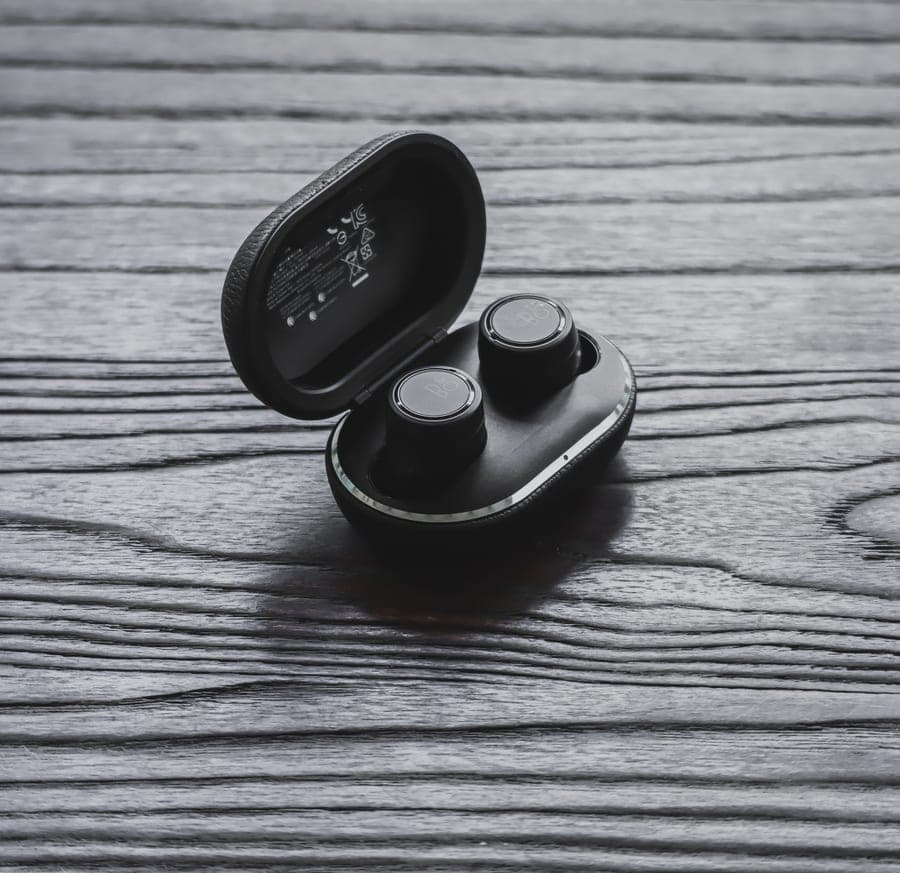 EarFun Air Pro 4Eleven rated hours per bud and 52 with the case, plus LDAC and aptX Lossless, for a small fraction of flagship money. It buys most of the quiet for a little of the price. | Best for a teenager | 8.08.0 out of 10, our editorial score | |
| 4 | 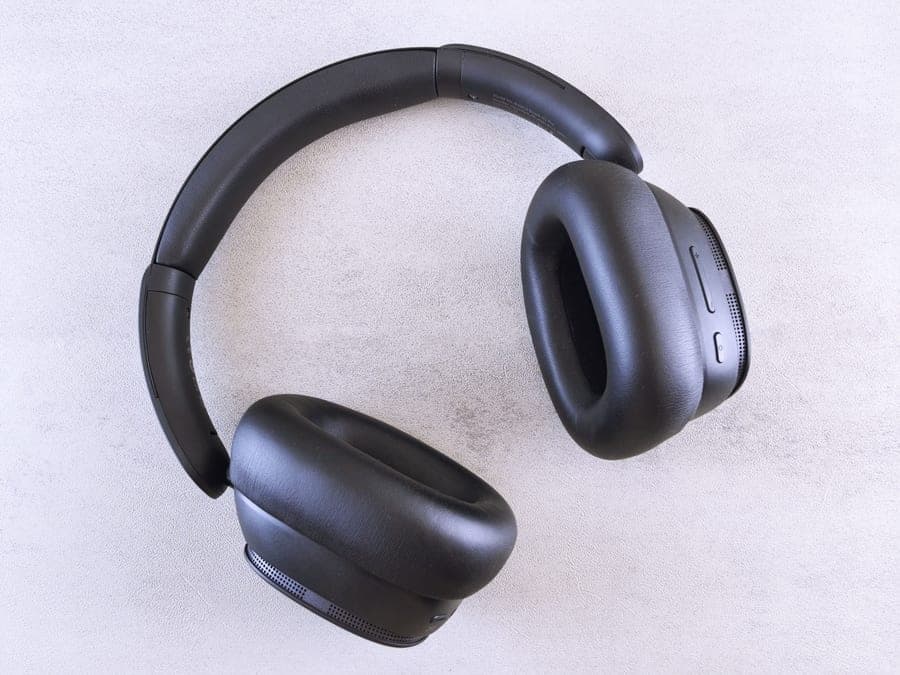 Sony WH-1000XM6The most complete travel headphone on sale: 254 g, 30 rated hours with noise canceling on, and it folds into a case small enough to stop being a decision. | If you are sharing your own | 9.19.1 out of 10, our editorial score |
#ad Amazon links are affiliate links. No live price is shown anywhere on this site, so every button reads “Check price on Amazon”. How this is funded.
The picks in full
Every pick, in detail
1. Best purchase for flying with a child
Twelve South AirFly Pro 2
The single accessory that makes any wireless headphone work with a seatback screen: plug it into the airline jack and it sends the audio to your headphones over Bluetooth.
Our editorial score: 9.0 / 10
#ad Live price not shown. How this is funded
Also sold direct by Twelve South — we earn nothing there, so check both.
This is the recommendation at the top of the page, and it is not a headphone, which needs explaining.
Flying with a child means two people wanting one seatback screen, or a child wanting the screen while their headphones are wireless. A splitter shares one volume control between two people, which is precisely wrong when one of them is a child who should be at a lower level than you.
The AirFly pairs two sets of headphones at once, each at its own volume, each with its own canceling. 25+ rated hours outlasts any flight. For a parent this solves more real problems on a plane than upgrading anybody’s headphones does.
What works on a plane
- 25+ rated hours outlasts any single flight you will ever take
- Pairs two sets of headphones, so two people can watch one screen
- Receiver mode makes it useful in a rental car with only an aux input
- Works with any Bluetooth headphone, so it outlives whatever you own now
What does not
- One more small object to charge and not lose
- Adds a small amount of latency, which shows on lip sync for some people
- A single 3.5 mm plug, so older twin-socket seats still want a two-prong adapter
How it scores against the five travel axes
Published specifications
| Spec | Figure | Source |
|---|---|---|
| Battery | 25+ hours | Twelve South |
| Full charge | About 2 hours via USB-C | Twelve South |
| Bluetooth | 5.3, aptX HD Adaptive | Twelve South |
| Modes | Transmitter and receiver | Twelve South |
| Pairing | Two sets of headphones at once | Twelve South |
| Connection | 3.5 mm AUX | Twelve South |
2. Best over-ear for an older child
Soundcore Space Q45
Fifty rated hours with canceling on, a hard case and a 3.5 mm cable in the box, at a fraction of flagship money. The compromise is in the last 10 percent of quiet, not the first 80.
Our editorial score: 8.2 / 10
#ad Live price not shown. How this is funded
Also sold direct by Soundcore — we earn nothing there, so check both.
For a child old enough for adult-sized headphones — broadly from about ten, depending on the child — this is the sensible buy for one reason above all the specifications: it is the one you will not mind being sat on.
It also has the specifications. Up to 50 rated hours means it survives a trip without a parent managing it, a hard case means it survives a child’s bag, and the included 3.5 mm cable means it works with the seatback screen without anything extra.
Important caveat: this is not a volume-limited product. If volume limiting is what you need, see the section below — that is a genuine safety feature and a general-purpose headphone does not have it.
What works on a plane
- Up to 50 rated hours with canceling on, which beats every flagship here
- Hard case and 3.5 mm cable included, so nothing else to buy for a seatback screen
- Five minutes of charge buys four hours, which covers a gate-side mistake
- The cheapest way to get genuinely useful drone reduction on a plane
What does not
- Soundcore's own 98 percent figure is a marketing claim, not a measurement, and the gap to Bose is audible
- 295 g with plainer pad materials, so hour four is less comfortable than the Sennheiser's
- Plastic build will not survive being crushed in an overhead bin the way the metal Apple would
How it scores against the five travel axes
Published specifications
| Spec | Figure | Source |
|---|---|---|
| Battery, ANC on | Up to 50 hours | Soundcore |
| Battery, ANC off | Up to 65 hours | Soundcore |
| Quick charge | 5 minutes gives 4 hours | Soundcore |
| Weight | Approx. 295 g (10.3 oz) | Soundcore / published reviews |
| Bluetooth | 5.3 | Soundcore |
| In the box | Hard-shell case, 3.5 mm cable, USB-C cable | Soundcore |
3. Best for a teenager
EarFun Air Pro 4
Eleven rated hours per bud and 52 with the case, plus LDAC and aptX Lossless, for a small fraction of flagship money. It buys most of the quiet for a little of the price.
Our editorial score: 8.0 / 10
#ad Live price not shown. How this is funded
For an older child or teenager who wants earbuds rather than over-ears, the case is straightforward: 11 rated hours per bud and 52 with the case means they will not be asking you for a charger, and the price means a lost bud is not a crisis.
The honest concerns are the ones that come with any earbud and a younger user. Small parts are a genuine hazard for young children and these are not appropriate below school age at all. And no earbud is volume-limited by default, so the phone or tablet has to do that job.
What works on a plane
- Eleven rated hours per bud is longer than any premium earbud here
- 52 hours with the case means a two-week trip without a charger thought
- aptX Lossless and LDAC at this price is genuinely unusual
- Losing one on a plane is an annoyance rather than a disaster
What does not
- The 50 dB figure is EarFun's own rating, not an independent measurement, and the gap to Bose is clear
- Adaptive canceling is less steady than the flagships when cabin noise changes
- App polish and firmware support are a step behind the majors
How it scores against the five travel axes
4. If you are sharing your own
Sony WH-1000XM6
The most complete travel headphone on sale: 254 g, 30 rated hours with noise canceling on, and it folds into a case small enough to stop being a decision.
Our editorial score: 9.1 / 10
#ad Live price not shown. How this is funded
Also sold direct by Sony — we earn nothing there, so check both.
A pattern worth naming because plenty of families use it: the parent buys one good headphone and lends it to the child for the film, then takes it back.
For that the XM6 is the best choice here — light at approximately 254 g so it is not absurd on a smaller head, folds so it survives being handed back and forth, and 30 rated hours covers two people using it across a long flight.
The caveat is the same as everywhere on this page: there is no volume limiting, so the device is where you set the ceiling.
What works on a plane
- Folds, which halves the space it takes in a personal item
- 254 g is light for a flagship over-ear, and weight is what you feel at hour four
- LDAC plus LC3 means it is not locked to one phone ecosystem
- 30 rated hours with noise canceling on covers almost any single routing
What does not
- You pay a flagship price for the last increment of noise canceling
- The folding hinge is one more mechanism to eventually wear out
- No airline two-prong adapter in the box
How it scores against the five travel axes
Published specifications
| Spec | Figure | Source |
|---|---|---|
| Weight | Approx. 254 g (9 oz) | Sony Help Guide specifications |
| Battery, NC on | Up to 30 hours | Sony specifications |
| Battery, NC off | Up to 40 hours | Sony specifications |
| Full charge | Approx. 3.5 hours | Sony Help Guide specifications |
| Bluetooth | 5.3 | Sony Help Guide specifications |
| Codecs | SBC, AAC, LDAC, LC3 | Sony Help Guide specifications |
| Wired response | 4 Hz - 40,000 Hz (IEC) | Sony Help Guide specifications |
| Folds | Yes, into a magnetic-closure case | Sony |
How we decide
How these picks were chosen
We do not run a test lab and we do not claim to have flown with these units. Every verdict on this page is one of three things: a measurement published by somebody who does own a test rig and is credited by name, a manufacturer specification we quote and then interpret against what a long flight actually demands, or a plainly-labeled editorial judgment. The five axes we score on — cabin-noise reduction, battery on a long-haul, pack size, comfort past hour three, and wired fallback — are the ones that decide a travel purchase, and the weighting is published in full.
Questions
Common questions
Do kids need noise-canceling headphones on a plane?
They help, mainly by removing the constant engine drone that makes a flight tiring — and indirectly by removing the reason to turn the volume up. But volume limiting is the more important feature, and a hardware-limited children’s headphone or a device-level output cap matters more than the canceling does.
Will noise-canceling headphones block out a crying baby?
Only partially. A baby’s cry sits in the frequency range human hearing is most sensitive to and active canceling is weakest in. What reduces it is the physical seal of the earcup or ear tip, plus something playing. A well-sealing headphone at moderate volume beats a better algorithm for this.
Do headphones help with ear pain on landing?
No. Noise-canceling headphones work on sound, not air pressure, and ear discomfort on descent is the Eustachian tubes equalizing. Swallowing, chewing, sucking or a bottle helps; a headphone does not.
What age can a child use adult headphones?
Broadly from around ten, though it varies enough by child that it is worth checking rather than assuming. Below that an adult over-ear usually will not adjust small enough, the cups swallow the ears without sealing, and it slides off.
How can my child and I watch the same seatback screen?
A Bluetooth transmitter with dual pairing, such as the Twelve South AirFly Pro 2. It connects two sets of headphones at once, so each of you gets your own volume and your own canceling — which matters when one of you should be listening at a lower level.
Why do you not recommend specific kids' headphone brands?
Because every product on this site was verified as currently sold against sources fetched during research, and children’s models were not part of that research. Rather than name something we have not checked, this page explains the two features to look for: a hardware volume cap and a band that genuinely adjusts small.
Sources
Where these figures come from
Read next
Related reading
- Do noise-canceling headphones help with cabin pressure?
The false premise behind the most common parent question.
- Are noise-canceling headphones bad for your ears?
The volume question, and what the actual risk is.
- Twelve South AirFly Pro 2 review
Two headphones, one screen, two volumes.
- Best headphones for in-flight entertainment
The full seatback-screen cluster.
- Active canceling vs passive isolation
Why a seal beats an algorithm against a crying child.