Choose the Sennheiser MOMENTUM 4 Wireless for battery and comfort: up to 60 rated hours against the Bose’s up to 30 with canceling on, and the gentlest clamp of any over-ear here. Choose the Bose QuietComfort Ultra Headphones for silence and carry size: the deepest low-frequency reduction on this site, approximately 264 g as reported, and earcups that rotate flat into a hard case.
The figures
The two, side by side
| Sennheiser MOMENTUM 4 | Bose QC Ultra (2nd Gen) | |
|---|---|---|
| Battery, canceling on | up to 60 h (single quoted figure) | up to 30 h |
| Battery, canceling off | quoted as one figure | up to 45 h |
| Battery, spatial mode | Not applicable | up to 23 h, Immersive Audio |
| Weight | approx. 293-295 g | approx. 264 g as reported |
| Transducer | 42 mm | Not published |
| Fold | Fold-flat earcups | Earcups rotate flat into a hard case |
| Case supplied | Carry case | Hard case |
| Cable supplied | 1.2 m 3.5 mm auxiliary | 2.5 mm-to-3.5 mm audio cable |
| USB-C audio | Not published | 16-bit, 44.1 or 48 kHz lossless input |
Battery
Sixty hours against thirty is not as decisive as it looks
Sixty rated hours is roughly five transatlantic round trips. Thirty is still two. For the overwhelming majority of trips, both numbers are far more than the journey needs — the long-haul battery arithmetic puts a 14-hour sector with connections at under 20 hours of possible listening.
Where 60 hours genuinely changes something is behavior. At that figure the charging cable stops travelling with you, and the headphone stops being a device you maintain. At 30 hours with Immersive Audio dropping it to 23, you still think about it.
The Sennheiser figure is also the more honest one
Sennheiser quotes one number. Bose quotes three, and the largest of them (45 hours) requires switching off the feature you bought the product for. When you compare these two, make sure you are comparing 60 against 30 and not 60 against 45.
Canceling
Where the Bose is simply better
Low-frequency reduction is the one place this comparison is not close. The energy in a cabin is concentrated roughly between 50 and 300 Hz, and that is where the Bose system goes deepest. How canceling works on a plane explains why that band is the one that is tractable at all.
What neither does well is voices. Speech is mid-frequency and irregular, so a crying child two rows back survives both products almost intact — do canceling headphones block voices is the honest version of that limitation.
One of these removes more of the aeroplane. The other means you stop carrying a charger. Decide which sentence describes your problem.
Carry and comfort
The two specifications that actually decide it
Pack size
Fold-flat earcups in a soft case against rotating earcups in a hard case is a real difference in a full personal item, and the Bose wins it. Thirty grams of weight favours the Bose as well. If carry size is your binding constraint, the foldable roundup ranks the whole field on exactly that.
Clamp past hour three
Nobody publishes clamping force, so weight and pad material are the available proxies and both are imperfect. On this site’s reading the Sennheiser is the gentlest over-ear grip available and the Bose is firmer — which is also part of why the Bose seals and cancels better. The two are related, not independent. The comfort rankings treat that trade-off directly.
The verdict
Who should buy which
- Buy the Sennheiser if you fly occasionally but listen constantly, if your sessions run past three hours, or if you have ever been uncomfortable in a firm-clamping over-ear.
- Buy the Bose if you fly often, if engine drone is the specific thing you are paying to remove, or if the headphones have to live in a carry-on that is already full.
- Buy the Sony instead if neither axis dominates. It is the lightest of the three, it folds properly, and it is not the worst of the three at anything.
In short
Key takeaways
- Sennheiser MOMENTUM 4: up to 60 rated hours as a single quoted figure, and the gentlest clamp of any over-ear here.
- Bose QuietComfort Ultra Headphones: the deepest low-frequency reduction on this site, at up to 30 rated hours with canceling on.
- Weight favours the Bose at approximately 264 g against approximately 293-295 g.
- Carry favours the Bose too: earcups rotate flat into a hard case, against fold-flat cups in a soft case.
- Both supply an analogue cable, and the Bose also accepts 16-bit USB-C lossless audio.
- Neither removes voices. That limit is shared, and it is a property of active canceling rather than of either brand.
At a glance
Quick picks
Scores are our editorial judgment from published specifications and cited third-party measurements, not our own testing. The rubric is published in full. Tap any row for the full write-up.
| # | Product | Best for | Score | Price |
|---|---|---|---|---|
| 1 | 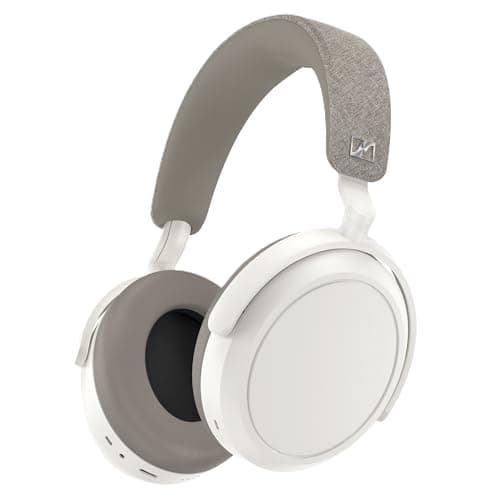 Sennheiser MOMENTUM 4 WirelessSennheiser publishes up to 60 hours. That is the difference between charging at the gate and not thinking about a charger for an entire two-week trip. | If battery and comfort decide it | 8.88.8 out of 10, our editorial score | |
| 2 | 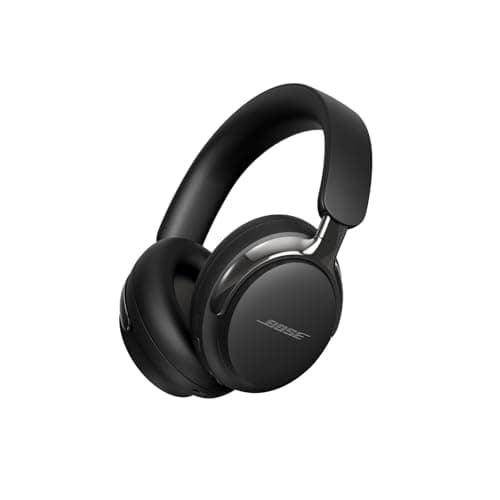 Bose QuietComfort Ultra Headphones (2nd Gen)The quietest cabin of anything here, and the only over-ear in this group whose box already contains the audio cable a seatback screen needs. | If canceling depth decides it | 9.09.0 out of 10, our editorial score | |
| 3 | 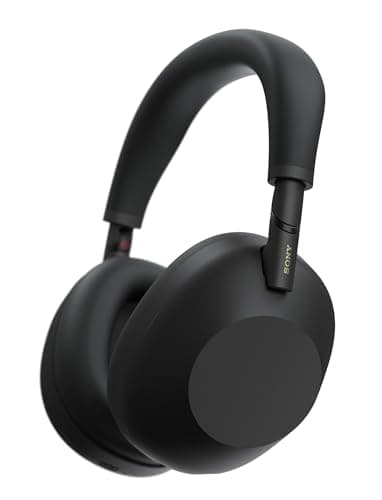 Sony WH-1000XM6The most complete travel headphone on sale: 254 g, 30 rated hours with noise canceling on, and it folds into a case small enough to stop being a decision. | If you cannot choose, this is the compromise | 9.19.1 out of 10, our editorial score |
#ad Amazon links are affiliate links. Prices come from Amazon’s own data on the date stamped under the buttons above; where we have no current figure the button reads “Check price on Amazon” instead of guessing. How this is funded.
The picks in full
Every pick, in detail
1. If battery and comfort decide it
Sennheiser MOMENTUM 4 Wireless
Sennheiser publishes up to 60 hours. That is the difference between charging at the gate and not thinking about a charger for an entire two-week trip.
Our editorial score: 8.8 / 10
#ad Price as of November 11, 2026. How this is funded
Up to 60 rated hours of playback, quoted as a single figure rather than split into canceling-on and canceling-off variants. Against the Bose’s up-to-30 with canceling on, that is double the runtime on the measure most people check first.
The second argument is clamp. This is the gentlest grip of any over-ear in this registry, and that is the specification nobody publishes and everybody feels at hour four. A 42 mm transducer and a relaxed presentation suit long sessions at moderate volume.
The cost is size and weight: approximately 293-295 g, the heaviest over-ear here, with fold-flat earcups and a soft carry case rather than the Bose hard case. A 1.2 m 3.5 mm auxiliary cable is in the box, which the Sony above does not supply.
What works on a plane
- Up to 60 rated hours, roughly double the flagship norm
- The 1.2 m 3.5 mm cable is in the box, so seatback screens work straight out of the bag
- Fold-flat earcups make the carry case slim rather than deep
- The 42 mm transducer is the most relaxed listen here over a very long session
What does not
- Published measurements consistently place its noise canceling a step behind the Bose
- The case is broad, so it eats width in a personal item even though it is slim
- Fold-flat is not fold-up, so the footprint is larger than the Sony's
How it scores against the five travel axes
Published specifications
| Spec | Figure | Source |
|---|---|---|
| Battery | Up to 60 hours playback | Sennheiser |
| Weight | Approx. 293-295 g | Sennheiser / published reviews |
| Transducer | 42 mm | Sennheiser |
| In the box | Carry case, USB-C cable, 1.2 m 3.5 mm auxiliary cable | Sennheiser |
| Folds | Fold-flat earcups | Sennheiser |
2. If canceling depth decides it
Bose QuietComfort Ultra Headphones (2nd Gen)
The quietest cabin of anything here, and the only over-ear in this group whose box already contains the audio cable a seatback screen needs.
Our editorial score: 9.0 / 10
#ad Price as of November 11, 2026. How this is funded
The deepest low-frequency reduction of anything on this site. If the problem is engine drone at 35,000 feet, train rumble or building plant, this is the product that removes most of it, and no amount of extra battery substitutes for that.
Up to 30 rated hours with canceling on, up to 45 with it off and up to 23 with Immersive Audio, at approximately 264 g as reported — roughly 30 g lighter than the Sennheiser. The earcups rotate flat into a compact hard case, which is a materially better carry story inside a full personal item.
It also takes USB-C audio at 16-bit, 44.1 or 48 kHz lossless input, and ships a hard case, a USB-C cable and a 2.5 mm-to-3.5 mm audio cable. The objections are the 30-hour figure and a firmer clamp than the Sennheiser.
What works on a plane
- The best low-frequency canceling in this group, which is exactly the band engine drone lives in
- The 2.5 mm-to-3.5 mm cable is in the box, so a seatback screen needs nothing extra
- Compact hard case for a full-size over-ear
- Up to 45 hours with canceling off, if you only want isolation on a train
What does not
- Immersive Audio costs you a third of the battery, dropping to 23 rated hours
- Heavier than the Sony by roughly 10 g, and clamp is firmer out of the box
- The hard case is compact but still rigid, so it will not squash into a full bag
How it scores against the five travel axes
Published specifications
| Spec | Figure | Source |
|---|---|---|
| Battery, ANC on | Up to 30 hours | Bose |
| Battery, ANC off | Up to 45 hours | Bose |
| Battery, Immersive Audio on | Up to 23 hours | Bose |
| Weight | Approx. 264 g (9.3 oz) as reported | Published reviews |
| USB-C audio | 16-bit, 44.1 or 48 kHz lossless input | Bose support |
| In the box | Hard case, USB-C cable, 2.5 mm-to-3.5 mm audio cable | Bose |
| Folds | Earcups rotate flat into a compact hard case | Bose |
Read the full Bose QuietComfort Ultra Headphones (2nd Gen) review
3. If you cannot choose, this is the compromise
Sony WH-1000XM6
The most complete travel headphone on sale: 254 g, 30 rated hours with noise canceling on, and it folds into a case small enough to stop being a decision.
Our editorial score: 9.1 / 10
#ad Price as of November 11, 2026. How this is funded
The reason this comparison often ends in a third product. Approximately 254 g makes it the lightest of the three, up to 30 rated hours with canceling on and 40 with it off sits between them on battery, and it folds into a magnetic-closure case rather than just rotating flat.
Bluetooth 5.3 with SBC, AAC, LDAC and LC3, and a 4 Hz to 40,000 Hz wired response for a seatback screen. Sony does not include a cable, so budget for one.
It loses to the Bose on canceling depth and to the Sennheiser on battery and clamp. It loses to neither on carry size, which is the criterion travellers most often under-weight and then regret. The full review works through all five of this site’s criteria.
What works on a plane
- Folds, which halves the space it takes in a personal item
- 254 g is light for a flagship over-ear, and weight is what you feel at hour four
- LDAC plus LC3 means it is not locked to one phone ecosystem
- 30 rated hours with noise canceling on covers almost any single routing
What does not
- You pay a flagship price for the last increment of noise canceling
- The folding hinge is one more mechanism to eventually wear out
- No airline two-prong adapter in the box
How it scores against the five travel axes
Published specifications
| Spec | Figure | Source |
|---|---|---|
| Weight | Approx. 254 g (9 oz) | Sony Help Guide specifications |
| Battery, NC on | Up to 30 hours | Sony specifications |
| Battery, NC off | Up to 40 hours | Sony specifications |
| Full charge | Approx. 3.5 hours | Sony Help Guide specifications |
| Bluetooth | 5.3 | Sony Help Guide specifications |
| Codecs | SBC, AAC, LDAC, LC3 | Sony Help Guide specifications |
| Wired response | 4 Hz - 40,000 Hz (IEC) | Sony Help Guide specifications |
| Folds | Yes, into a magnetic-closure case | Sony |
| In the box | Headset, headphone cable, USB-C cable, carrying case, documents | Sony Help Guide, Included items |
How we decide
How these picks were chosen
We do not run a test lab and we do not claim to have flown with these units. Every verdict on this page is one of three things: a measurement published by somebody who does own a test rig and is credited by name, a manufacturer specification we quote and then interpret against what a long flight actually demands, or a plainly-labeled editorial judgment. The five axes we score on — cabin-noise reduction, battery on a long-haul, pack size, comfort past hour three, and wired fallback — are the ones that decide a travel purchase, and the weighting is published in full.
Questions
Common questions
Is the Sennheiser MOMENTUM 4 better than the Bose QuietComfort Ultra?
On battery and comfort, yes: up to 60 rated hours against up to 30 with canceling on, and a gentler clamp. On noise canceling depth and pack size, no — the Bose goes deeper in the low frequencies and folds into a smaller hard case at roughly 30 g less.
Which has better noise cancelling?
The Bose QuietComfort Ultra Headphones. Its low-frequency reduction is the deepest of any product in this registry, which is the band that engine drone and train rumble occupy. Neither product removes speech well.
Which is more comfortable for a long flight?
The Sennheiser, on clamping force. It is heavier at approximately 293-295 g against approximately 264 g, so the Bose is better on pure mass, but the Sennheiser’s gentler grip is what most people notice past hour three.
Do both come with a cable for in-flight entertainment?
Yes. Sennheiser supplies a 1.2 m 3.5 mm auxiliary cable and Bose supplies a 2.5 mm-to-3.5 mm audio cable. An older seatback system with twin sockets may still need an adapter.
Is the Sony WH-1000XM6 a better buy than either?
It is the better compromise rather than the better product. At approximately 254 g it is the lightest of the three and it folds into a case, but it is behind the Bose on canceling depth and well behind the Sennheiser on rated hours and clamp.
Sources
Where these figures come from
Read next
Related reading
- Sennheiser MOMENTUM 4 vs Sony WH-1000XM6
The same battery argument, against the lightest flagship instead.
- Bose QuietComfort Ultra vs Sony WH-1000XM6
The matchup most buyers shortlist first.
- The longest battery life headphones
Where the Sennheiser's 60 hours sits in the wider field.
- The comfiest wireless headphones
Clamp and pad heat, judged past hour three.