Buy the Sony WH-1000XM6 if you pack tightly or fly in economy: it is lighter at approximately 254 g, it folds up into a smaller case, and its 30-hour rating has no mode-dependent caveat. Buy the Bose QuietComfort Ultra Headphones (2nd Gen) if maximum quiet is the point, or if you want the seatback audio cable in the box. The Bose is the quieter headphone; the Sony is the better travel object.
The matrix
Side by side on the published figures
| Sony WH-1000XM6 | Bose QuietComfort Ultra (2nd Gen) | |
|---|---|---|
| Weight | approx. 254 g | approx. 264 g (reported) |
| Battery, ANC on | up to 30 h | up to 30 h |
| Battery, ANC off | up to 40 h | up to 45 h |
| Battery, spatial mode on | n/a | up to 23 h (Immersive Audio) |
| Full charge | approx. 3.5 h | - |
| Fold | Folds up (compact block) | Rotates flat (slim hard case) |
| Audio cable in box | No | Yes, 2.5 mm-to-3.5 mm |
| USB-C audio | - | Yes, 16-bit 44.1/48 kHz |
| Bluetooth | 5.3 | - |
| Codecs | SBC, AAC, LDAC, LC3 | - |
| Clamp | Moderate | Firm |
| Cabin-noise reduction | Excellent | Class-leading |
Verdict by scenario
Which one, for which trip
| Scenario | Verdict | Why |
|---|---|---|
| Long-haul in economy, tight bag | Sony | The fold-up case and 10 g saved matter more than the canceling gap. |
| Long-haul in a premium cabin | Bose | Space is not the constraint, so take the quieter headphone. |
| You are exhausted by flying specifically | Bose | It removes more of the low-frequency energy that causes it. |
| Daily rail or subway commute | Either | Genuinely close. Sony for daily carry, Bose for a loud underground. |
| Open-plan office | Bose | Firmer clamp seals better against speech, which is the office problem. |
| You wear glasses | Sony | The firmer Bose clamp plus spectacle arms is the combination that fails. |
| You watch airline films | Bose | The cable is in the box. With the Sony you buy one. |
| Your phone is Android | Sony | LDAC and LC3 are a real advantage there. |
| You will use spatial audio a lot | Sony | The Bose drops to 23 rated hours with Immersive Audio on. |
The Bose wins the specification everyone compares. The Sony wins the two nobody does, and those two are weight and whether it folds.
The real difference
Ten grams and a hinge
The canceling gap between these two is real and small. In a cabin you would notice it if you switched between them back to back, and you would not notice it if you owned one and never tried the other.
The packing difference is large and permanent. The Sony collapses the headband as well as rotating the cups, producing a compact block. The Bose rotates flat into a rigid case that is unusually small for a full-size over-ear but keeps the headphone’s width and does not compress.
In a 40-liter personal item with a laptop, a charger, a water bottle and something to read, that is the difference between the headphones going in the bag and going round your neck. It is a difference you encounter on every single trip, whereas the canceling gap is one you encounter only in comparison. Best foldable noise-canceling headphones ranks the whole field on that axis.
The Immersive footnote
The Bose battery figure depends on a mode
Worth reading carefully because it is easy to miss. Bose publishes three figures for the same headphone: up to 45 hours with canceling off, up to 30 with it on, and up to 23 with Immersive Audio running.
Immersive Audio is the feature Bose markets hardest, and it costs roughly a third of the battery. The Sony has no equivalent penalty: its 30 hours is 30 hours.
Practically, most Bose owners on a plane will leave Immersive off and enable it for a film, which makes 30 the working number. But if you intend to use it throughout, 23 hours does not clear a long-haul plus a connection with much to spare — see headphone battery life for long-haul flights.
The cable
The one place the Bose is plainly better equipped
The Bose ships a 2.5 mm-to-3.5 mm audio cable in a pocket in the case lid. The Sony ships no cable at all, despite having a socket.
If you watch airline films, that is a real difference on your first flight. Two notes though. The Bose cable is 2.5 mm on the headphone side, which is an uncommon connector, so losing it is a more specific errand than replacing a generic aux lead. And with the Sony, a cheap 3.5 mm cable plus a two-prong airline adapter is a very small purchase that you should be making anyway — see airplane headphone jack adapters.
Both reviews
Read the full assessments
- Sony WH-1000XM6 review — all five travel criteria, with the published specifications and their sources.
- Bose QuietComfort Ultra Headphones (2nd Gen) review — the same, including the Immersive Audio arithmetic.
In short
Key takeaways
- Bose is the quieter headphone. Sony is the better travel object. Both statements are true.
- Sony: approximately 254 g, folds up into a compact block, 30 rated hours with no mode caveat, LDAC.
- Bose: class-leading low-frequency canceling, seatback cable in the box, firmer clamp, 23 hours with Immersive Audio.
- For economy long-haul with a tight bag, take the Sony. For maximum quiet, take the Bose.
- If you wear glasses, the Sony's moderate clamp is the safer choice.
- On Android the Sony's LDAC support is a genuine advantage.
At a glance
Quick picks
Scores are our editorial judgment from published specifications and cited third-party measurements, not our own testing. The rubric is published in full. Tap any row for the full write-up.
| # | Product | Best for | Score | Price |
|---|---|---|---|---|
| 1 | 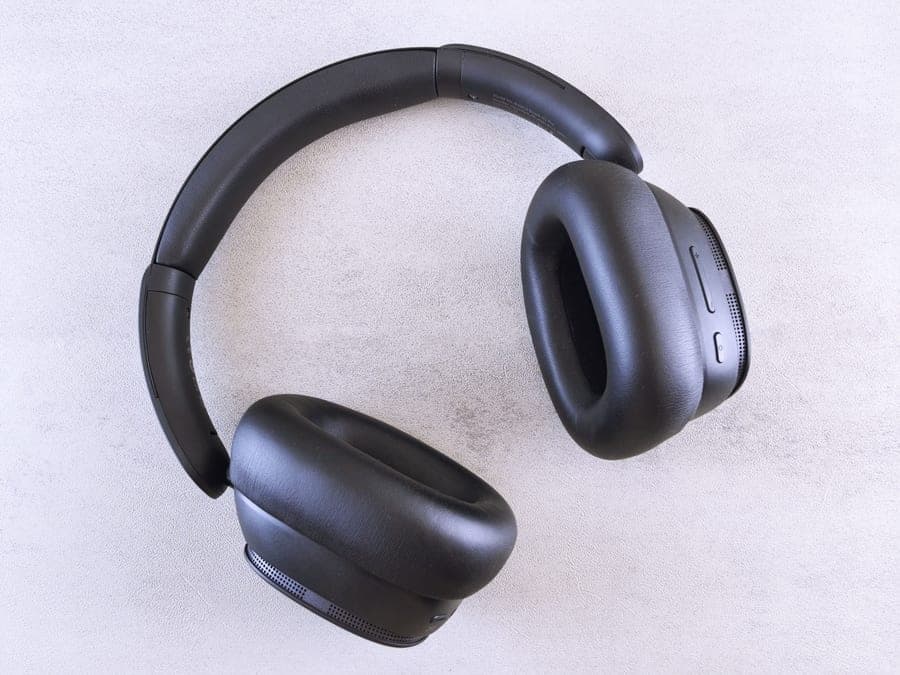 Sony WH-1000XM6The most complete travel headphone on sale: 254 g, 30 rated hours with noise canceling on, and it folds into a case small enough to stop being a decision. | For most travelers | 9.19.1 out of 10, our editorial score | |
| 2 | 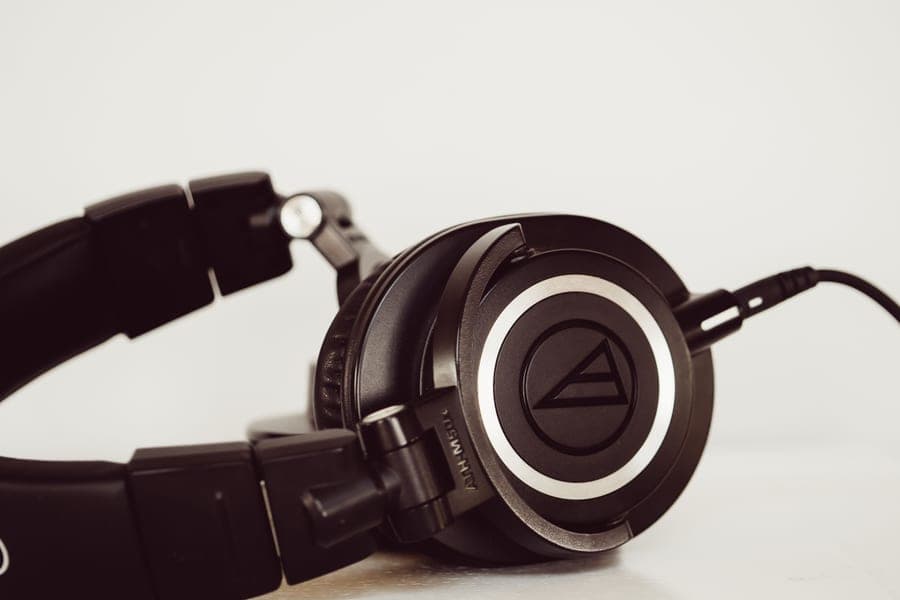 Bose QuietComfort Ultra Headphones (2nd Gen)The quietest cabin of anything here, and the only over-ear in this group whose box already contains the audio cable a seatback screen needs. | If quiet is the priority | 9.09.0 out of 10, our editorial score |
#ad Amazon links are affiliate links. No live price is shown anywhere on this site, so every button reads “Check price on Amazon”. How this is funded.
The picks in full
Every pick, in detail
1. For most travelers
Sony WH-1000XM6
The most complete travel headphone on sale: 254 g, 30 rated hours with noise canceling on, and it folds into a case small enough to stop being a decision.
Our editorial score: 9.1 / 10
#ad Live price not shown. How this is funded
Also sold direct by Sony — we earn nothing there, so check both.
The Sony wins this comparison for most people, and it does so without winning the headline specification. It is not the quieter headphone. It is the one that asks less of you.
Approximately 254 g against roughly 264 g. It folds up rather than only rotating flat, which halves the packed volume. Thirty rated hours with no Immersive Audio caveat attached. LDAC and LC3, so it works properly on Android. And the same 30-hour figure as the Bose without the mode-dependent footnote.
The thing it lacks is the audio cable, which the Bose includes. That is a small purchase, but it is a purchase, and it is the one point where the Bose is unambiguously better equipped.
What works on a plane
- Folds, which halves the space it takes in a personal item
- 254 g is light for a flagship over-ear, and weight is what you feel at hour four
- LDAC plus LC3 means it is not locked to one phone ecosystem
- 30 rated hours with noise canceling on covers almost any single routing
What does not
- You pay a flagship price for the last increment of noise canceling
- The folding hinge is one more mechanism to eventually wear out
- No airline two-prong adapter in the box
How it scores against the five travel axes
Published specifications
| Spec | Figure | Source |
|---|---|---|
| Weight | Approx. 254 g (9 oz) | Sony Help Guide specifications |
| Battery, NC on | Up to 30 hours | Sony specifications |
| Battery, NC off | Up to 40 hours | Sony specifications |
| Full charge | Approx. 3.5 hours | Sony Help Guide specifications |
| Bluetooth | 5.3 | Sony Help Guide specifications |
| Codecs | SBC, AAC, LDAC, LC3 | Sony Help Guide specifications |
| Wired response | 4 Hz - 40,000 Hz (IEC) | Sony Help Guide specifications |
| Folds | Yes, into a magnetic-closure case | Sony |
2. If quiet is the priority
Bose QuietComfort Ultra Headphones (2nd Gen)
The quietest cabin of anything here, and the only over-ear in this group whose box already contains the audio cable a seatback screen needs.
Our editorial score: 9.0 / 10
#ad Live price not shown. How this is funded
Also sold direct by Bose — we earn nothing there, so check both.
The Bose is the quieter headphone, and if the reason you are buying is that flying exhausts you, that is the criterion that should decide it. Published measurement-led reviews consistently put Bose ahead in the deepest low frequencies, which is exactly where engine drone lives.
It also ships the 2.5 mm-to-3.5 mm audio cable in a pocket in the case lid, which makes it the only one of the two that reaches a seatback screen straight out of the bag.
Two honest caveats. Immersive Audio drops the rating from 30 hours to 23, so plan around whichever you will use. And the clamp is firmer, which matters if you wear glasses or have a wider head.
What works on a plane
- The best low-frequency canceling in this group, which is exactly the band engine drone lives in
- The 2.5 mm-to-3.5 mm cable is in the box, so a seatback screen needs nothing extra
- Compact hard case for a full-size over-ear
- Up to 45 hours with canceling off, if you only want isolation on a train
What does not
- Immersive Audio costs you a third of the battery, dropping to 23 rated hours
- Heavier than the Sony by roughly 10 g, and clamp is firmer out of the box
- The hard case is compact but still rigid, so it will not squash into a full bag
How it scores against the five travel axes
Published specifications
| Spec | Figure | Source |
|---|---|---|
| Battery, ANC on | Up to 30 hours | Bose |
| Battery, ANC off | Up to 45 hours | Bose |
| Battery, Immersive Audio on | Up to 23 hours | Bose |
| Weight | Approx. 264 g (9.3 oz) as reported | Published reviews |
| USB-C audio | 16-bit, 44.1 or 48 kHz lossless input | Bose support |
| In the box | Hard case, USB-C cable, 2.5 mm-to-3.5 mm audio cable | Bose |
| Folds | Earcups rotate flat into a compact hard case | Bose |
Read the full Bose QuietComfort Ultra Headphones (2nd Gen) review
How we decide
How these picks were chosen
We do not run a test lab and we do not claim to have flown with these units. Every verdict on this page is one of three things: a measurement published by somebody who does own a test rig and is credited by name, a manufacturer specification we quote and then interpret against what a long flight actually demands, or a plainly-labeled editorial judgment. The five axes we score on — cabin-noise reduction, battery on a long-haul, pack size, comfort past hour three, and wired fallback — are the ones that decide a travel purchase, and the weighting is published in full.
Questions
Common questions
Is Bose or Sony better for flying?
Sony for most travelers: approximately 254 g, a fold-up case that halves the packed volume, and 30 rated hours with no mode-dependent caveat. Bose if the quietest possible cabin is the point, or if you want the seatback audio cable in the box. The Bose is quieter; the Sony is easier to live with.
Which cancels more noise, Bose QuietComfort Ultra or Sony WH-1000XM6?
The Bose, in the deepest low frequencies where engine drone concentrates. Published measurement-led reviews are consistent about this. The gap is real and small — noticeable switching between them back to back, not noticeable if you only own one.
Which has better battery life?
Both are rated at up to 30 hours with canceling on. The Bose goes to 45 with canceling off against the Sony’s 40, but drops to 23 with Immersive Audio running. The Sony’s figure has no equivalent mode penalty, which makes it the more predictable number.
Which is more comfortable?
The Sony for most people: roughly 10 g lighter with a moderate rather than firm clamp. The Bose clamp relaxes over a few months of use. If you wear glasses the Sony is the clearly safer choice, because firm clamp plus spectacle arms is the combination that becomes painful.
Which packs smaller?
The Sony, clearly. It folds up — collapsing the headband as well as rotating the cups — producing a compact block. The Bose rotates flat into a rigid case that is small for a full-size over-ear but keeps the full width and does not compress.
Which one can I use with the seatback screen?
Both, but only the Bose out of the box — it includes a 2.5 mm-to-3.5 mm cable in the case lid. The Sony has a 3.5 mm socket and no cable, so you need to buy one. Older twin-socket aircraft need a two-prong adapter either way.
Sources
Where these figures come from
Read next
Related reading
- Sony WH-1000XM6 review
The full assessment against all five travel criteria.
- Bose QuietComfort Ultra (2nd Gen) review
Including the Immersive Audio battery arithmetic.
- Bose vs Sony as brands
What each company consistently optimizes for.
- Best noise-canceling headphones for flights
The whole field, if you want more options than two.
- Best foldable noise-canceling headphones
The packing axis, where this comparison is actually decided.