Bose optimizes for silence: its headphones consistently lead published measurements in the deep low-frequency band where engine drone lives, and it accepts firmer clamp and shorter battery to get there. Sony optimizes for versatility: lighter, folding, broader codec support, longer predictable battery, and canceling that is close to the best rather than at it. For flying specifically, Sony usually wins; for maximum quiet, Bose always does.
Two philosophies
What each brand is actually optimizing for
Bose: silence first, and accept the costs
Bose has been working on active canceling longer than anyone, and its whole lineup reflects a single decision: when a trade-off appears, take the quiet.
- Firm clamp, because clamp holds the passive seal that the active system builds on. Less comfortable initially, quieter.
- Shorter battery when a feature costs power — Immersive Audio takes the headphone from 30 rated hours to 23, and the earbuds from six to four.
- Practical travel details included: the audio cable in the case lid, a compact hard case, a fit system with three stabilizer band sizes.
- Less interest in codec breadth. Bose competes on what reaches your ear, not on the format it arrived in.
Sony: no weak spots
Sony’s products look like they were designed by someone listing every criterion a reviewer might score and refusing to be poor at any of them.
- Lightest flagship at approximately 254 g, because weight is what people feel over hours.
- A genuine folding hinge, which halves packed volume — the only current flagship that does this.
- LDAC and LC3 as well as AAC, so it is not an Apple-adjacent product on Android.
- Predictable battery figures with no mode-dependent footnote.
- Canceling that is second-best rather than best, which is the price of all of the above.
Bose asks what the quietest possible headphone would be. Sony asks what the fewest-compromises headphone would be. Both answered their own question well.
The pattern holds
The same trade in both form factors
| Sony | Bose | The trade | |
|---|---|---|---|
| Over-ear flagship | WH-1000XM6: approx. 254 g, 30 h, folds up, LDAC | QC Ultra 2nd Gen: approx. 264 g, 30 h (23 immersive), rotates flat, cable in box | Sony lighter and more packable; Bose quieter with the cable |
| Earbud flagship | WF-1000XM6: 8 h, 24 h total, LDAC | QC Ultra Earbuds: 6 h (4 immersive), 18 h total | Sony longer runtime; Bose more quiet |
| Clamp philosophy | Moderate | Firm | Sony comfort; Bose seal |
| Codec philosophy | Broad (SBC, AAC, LDAC, LC3) | Focused | Sony platform-neutral; Bose indifferent to format |
| Spatial audio battery cost | None published | A third of the battery | Sony predictability; Bose accepts the cost |
How to choose
Which philosophy is yours?
| If this is you | Brand |
|---|---|
| Flying is genuinely exhausting and you want it to stop | Bose |
| You fly economy and pack tightly | Sony |
| Your phone is Android | Sony |
| You wear glasses | Sony |
| You want the seatback cable included | Bose |
| You want one pair for flights, commute, office and desk | Sony |
| You work in a loud open-plan office | Bose |
| You want predictable battery with no footnotes | Sony |
| You will use spatial audio constantly | Sony |
| You want the quietest thing money can buy, full stop | Bose |
For the model-level versions of this decision, read Bose QuietComfort Ultra versus Sony WH-1000XM6 for the over-ears, and best noise-canceling earbuds for flights for how both earbud flagships sit against the wider field.
One thing neither does
The specification both brands lose on
Battery. Both flagships are rated at up to 30 hours with canceling on, and both are beaten substantially by products neither brand makes: the Sennheiser MOMENTUM 4 at up to 60 rated hours, the Soundcore Space Q45 at up to 50, and the JBL Tour One M3 at up to 40.
If battery is your binding constraint, this comparison is the wrong page and both brands are the wrong answer. See best headphones for long-haul flights.
The same applies to the seatback screen in a different way: JBL is the only manufacturer shipping a Bluetooth transmitter in the box, which neither Bose nor Sony does — see best headphones for in-flight entertainment.
In short
Key takeaways
- Bose optimizes for silence and accepts firmer clamp and shorter battery to get it.
- Sony optimizes for no weak spots: lightest, folds, broad codecs, predictable battery, second-best canceling.
- The same trade appears in both form factors — Sony gives more runtime, Bose gives more quiet.
- For economy long-haul with a tight bag, Sony. For maximum quiet or an open-plan office, Bose.
- On Android or with glasses, Sony. For the seatback cable in the box, Bose.
- Both lose on battery to Sennheiser, Soundcore and JBL. If that is your constraint, look elsewhere.
At a glance
Quick picks
Scores are our editorial judgment from published specifications and cited third-party measurements, not our own testing. The rubric is published in full. Tap any row for the full write-up.
| # | Product | Best for | Score | Price |
|---|---|---|---|---|
| 1 | 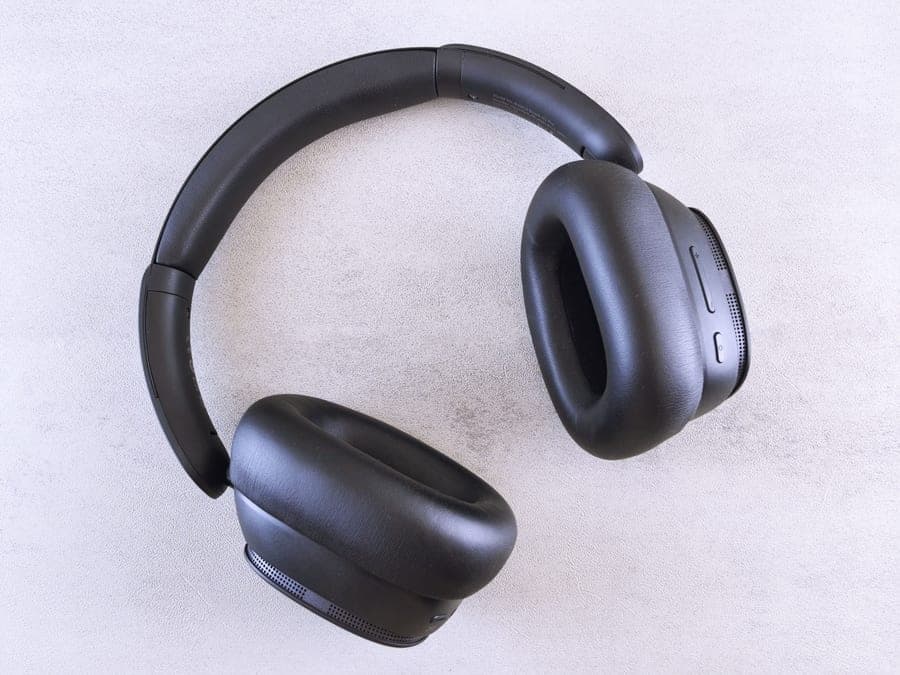 Sony WH-1000XM6The most complete travel headphone on sale: 254 g, 30 rated hours with noise canceling on, and it folds into a case small enough to stop being a decision. | Sony's over-ear flagship | 9.19.1 out of 10, our editorial score | |
| 2 | 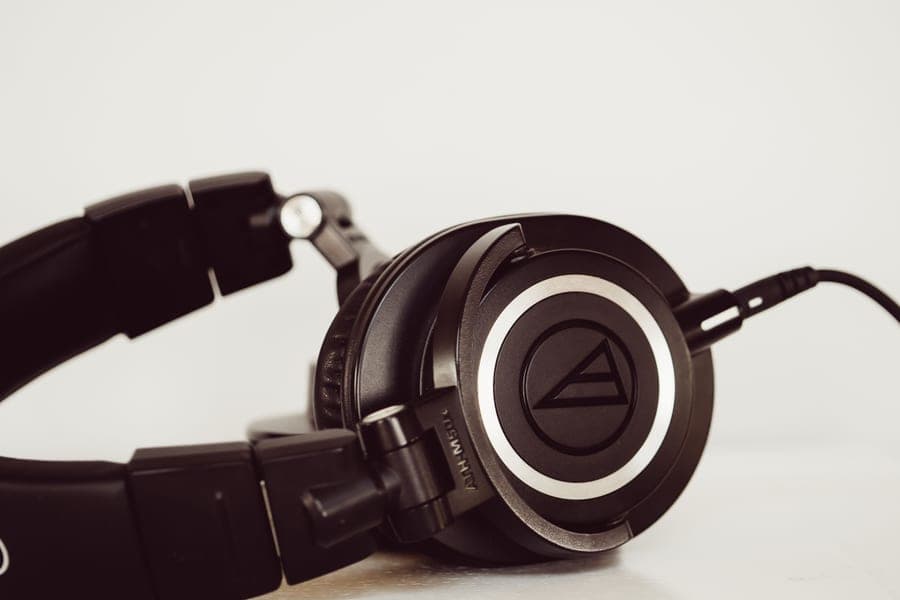 Bose QuietComfort Ultra Headphones (2nd Gen)The quietest cabin of anything here, and the only over-ear in this group whose box already contains the audio cable a seatback screen needs. | Bose's over-ear flagship | 9.09.0 out of 10, our editorial score | |
| 3 | 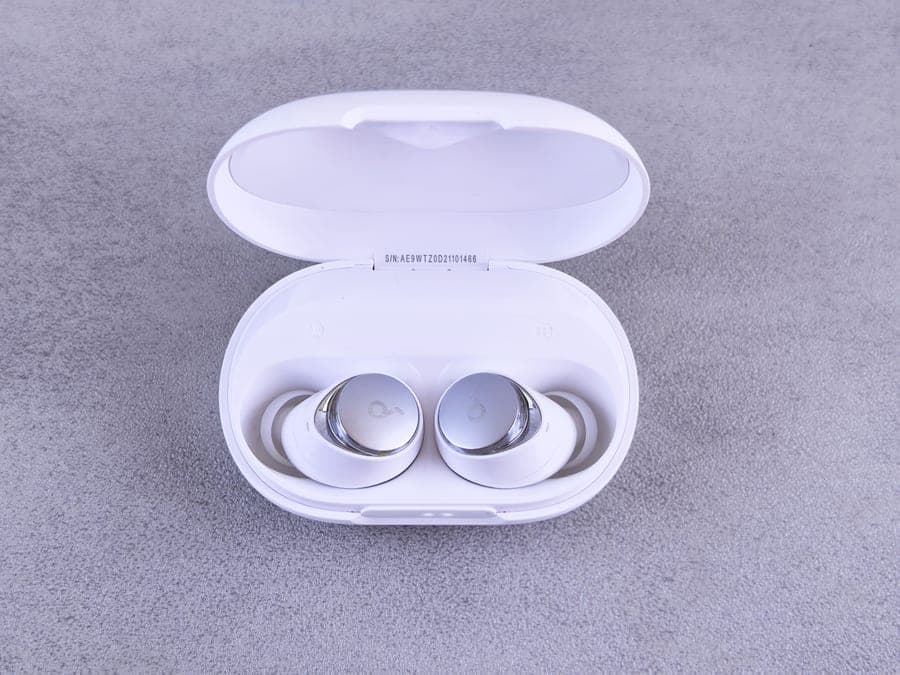 Sony WF-1000XM6Eight rated hours per bud and 24 with the case, at roughly 6.5 g each. The most sensible premium earbud for a flight, because you never have to plan around the battery. | Sony's earbud flagship | 8.98.9 out of 10, our editorial score | |
| 4 | 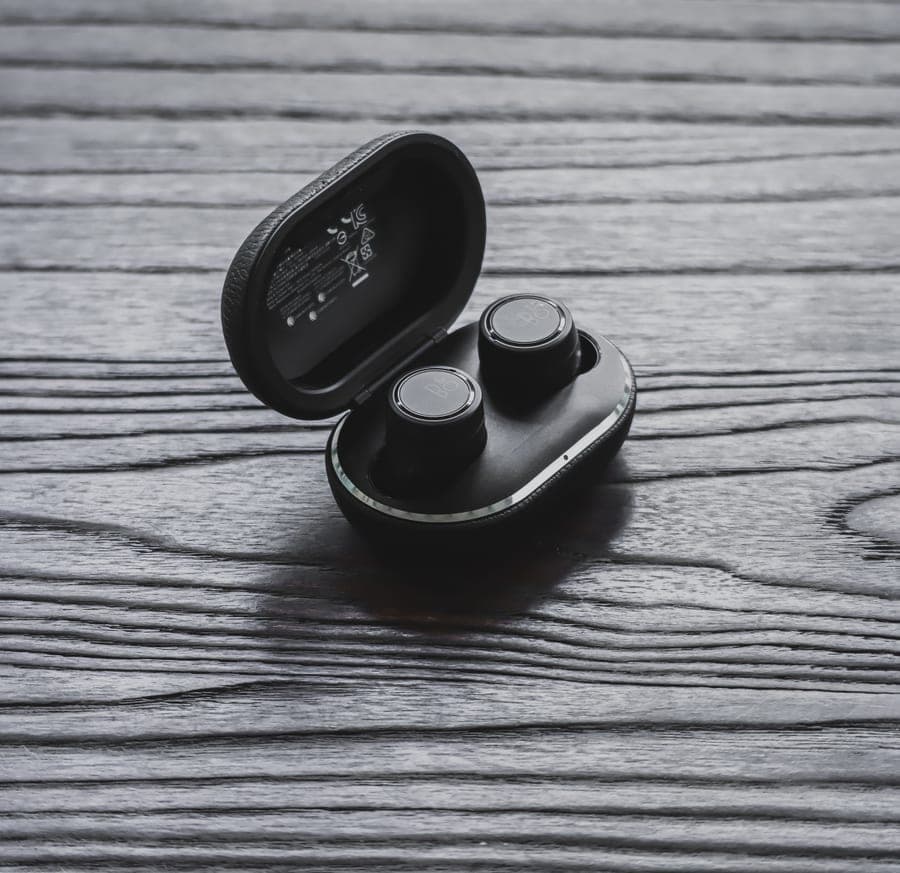 Bose QuietComfort Ultra Earbuds (2nd Gen)The quietest earbuds you can put in a pocket, with the shortest single-charge runtime of the premium set: six rated hours, four with Immersive Audio on. | Bose's earbud flagship | 8.48.4 out of 10, our editorial score |
#ad Amazon links are affiliate links. No live price is shown anywhere on this site, so every button reads “Check price on Amazon”. How this is funded.
The picks in full
Every pick, in detail
1. Sony's over-ear flagship
Sony WH-1000XM6
The most complete travel headphone on sale: 254 g, 30 rated hours with noise canceling on, and it folds into a case small enough to stop being a decision.
Our editorial score: 9.1 / 10
#ad Live price not shown. How this is funded
Also sold direct by Sony — we earn nothing there, so check both.
The clearest statement of Sony’s philosophy. Approximately 254 g, a folding hinge, LDAC and LC3 alongside AAC, 30 rated hours, a 3.5 mm socket, and canceling within a hair of the best rather than at it.
Nothing here is the outright best figure in the category. Everything is close to it, and the combination has fewer holes than anything else on sale. That is Sony: breadth over peak.
What works on a plane
- Folds, which halves the space it takes in a personal item
- 254 g is light for a flagship over-ear, and weight is what you feel at hour four
- LDAC plus LC3 means it is not locked to one phone ecosystem
- 30 rated hours with noise canceling on covers almost any single routing
What does not
- You pay a flagship price for the last increment of noise canceling
- The folding hinge is one more mechanism to eventually wear out
- No airline two-prong adapter in the box
How it scores against the five travel axes
Published specifications
| Spec | Figure | Source |
|---|---|---|
| Weight | Approx. 254 g (9 oz) | Sony Help Guide specifications |
| Battery, NC on | Up to 30 hours | Sony specifications |
| Battery, NC off | Up to 40 hours | Sony specifications |
| Full charge | Approx. 3.5 hours | Sony Help Guide specifications |
| Bluetooth | 5.3 | Sony Help Guide specifications |
| Codecs | SBC, AAC, LDAC, LC3 | Sony Help Guide specifications |
| Wired response | 4 Hz - 40,000 Hz (IEC) | Sony Help Guide specifications |
| Folds | Yes, into a magnetic-closure case | Sony |
2. Bose's over-ear flagship
Bose QuietComfort Ultra Headphones (2nd Gen)
The quietest cabin of anything here, and the only over-ear in this group whose box already contains the audio cable a seatback screen needs.
Our editorial score: 9.0 / 10
#ad Live price not shown. How this is funded
Also sold direct by Bose — we earn nothing there, so check both.
The clearest statement of Bose’s philosophy: the quietest cabin available, plus the practical details a traveler actually needs — the 2.5 mm-to-3.5 mm cable in the case lid, a compact hard case, USB-C lossless input.
What it does not chase is codec breadth or the lightest weight. Bose has decided what this product is for and optimized hard for it, and the 23-hour Immersive Audio figure is the cost of that focus rather than an oversight.
What works on a plane
- The best low-frequency canceling in this group, which is exactly the band engine drone lives in
- The 2.5 mm-to-3.5 mm cable is in the box, so a seatback screen needs nothing extra
- Compact hard case for a full-size over-ear
- Up to 45 hours with canceling off, if you only want isolation on a train
What does not
- Immersive Audio costs you a third of the battery, dropping to 23 rated hours
- Heavier than the Sony by roughly 10 g, and clamp is firmer out of the box
- The hard case is compact but still rigid, so it will not squash into a full bag
How it scores against the five travel axes
Published specifications
| Spec | Figure | Source |
|---|---|---|
| Battery, ANC on | Up to 30 hours | Bose |
| Battery, ANC off | Up to 45 hours | Bose |
| Battery, Immersive Audio on | Up to 23 hours | Bose |
| Weight | Approx. 264 g (9.3 oz) as reported | Published reviews |
| USB-C audio | 16-bit, 44.1 or 48 kHz lossless input | Bose support |
| In the box | Hard case, USB-C cable, 2.5 mm-to-3.5 mm audio cable | Bose |
| Folds | Earcups rotate flat into a compact hard case | Bose |
Read the full Bose QuietComfort Ultra Headphones (2nd Gen) review
3. Sony's earbud flagship
Sony WF-1000XM6
Eight rated hours per bud and 24 with the case, at roughly 6.5 g each. The most sensible premium earbud for a flight, because you never have to plan around the battery.
Our editorial score: 8.9 / 10
#ad Live price not shown. How this is funded
Also sold direct by Sony — we earn nothing there, so check both.
The same philosophy in miniature. Eight rated hours and 24 with the case, roughly 6.5 g a bud, LDAC and LC3, IPX4, and canceling close to the best.
Compare it with the Bose earbud below and the brand difference is stark: Sony gives you two more hours per charge and six more in total; Bose gives you more quiet. Same trade, smaller package.
What works on a plane
- Eight rated hours per charge clears most short-haul flights without touching the case
- 24 hours total with the case is the strongest reserve in the premium earbud set
- LDAC means it is not tied to one phone platform
- Roughly 6.5 g per bud effectively disappears when you are trying to sleep on your side
What does not
- Canceling is excellent but the Bose still takes the low-frequency band
- No wired fallback at all, so a seatback screen needs a transmitter
- IPX4 is splash resistance, not weather resistance
How it scores against the five travel axes
Published specifications
| Spec | Figure | Source |
|---|---|---|
| Battery, earbuds | Up to 8 hours | Sony |
| Total with case | Up to 24 hours (16 from the case) | Sony |
| Weight | Approx. 6.5 g per bud with M tips | Sony |
| Driver | 8.4 mm | Sony |
| Bluetooth | 5.3 | Sony |
| Codecs | SBC, AAC, LDAC, LC3 | Sony |
| Water resistance | IPX4 | Sony |
| Processor | HD Noise Canceling Processor QN3e, dual processors, eight microphones | Sony |
4. Bose's earbud flagship
Bose QuietComfort Ultra Earbuds (2nd Gen)
The quietest earbuds you can put in a pocket, with the shortest single-charge runtime of the premium set: six rated hours, four with Immersive Audio on.
Our editorial score: 8.4 / 10
#ad Live price not shown. How this is funded
Also sold direct by Bose — we earn nothing there, so check both.
The most Bose product on this page. It is the quietest earbud on sale and it runs for six rated hours — four with Immersive Audio — against eight for the Sony.
Bose has looked at that trade and taken the quiet. Whether that is the right call is entirely a question about you, which is the point of this page.
The shallow fit and three stabilizer band sizes are also characteristically Bose: an engineering solution to holding the seal, because the seal is where the quiet comes from.
What works on a plane
- Canceling that genuinely rivals a full-size over-ear, in something pocketable
- The shallow fit is far more tolerable than deep-insertion buds on a long flight
- Wireless case charging is one fewer cable in the bag
What does not
- Six rated hours means a case top-up mid-flight on any long-haul
- Immersive Audio cuts that to four, so on a plane you will mostly leave it off
- 18 hours total with the case is the weakest reserve in the premium earbud set
How it scores against the five travel axes
Published specifications
| Spec | Figure | Source |
|---|---|---|
| Battery, Immersive off | Up to 6 hours | Bose support |
| Battery, Immersive on | Up to 4 hours | Bose support |
| Total with case | Up to 18 hours | Bose support |
| Case charging | USB-C and wireless | Bose support |
| Water resistance | IPX4 | Bose support |
| Fit | Three stabilizer band sizes, shallow insertion | Bose |
Read the full Bose QuietComfort Ultra Earbuds (2nd Gen) review
How we decide
How these picks were chosen
We do not run a test lab and we do not claim to have flown with these units. Every verdict on this page is one of three things: a measurement published by somebody who does own a test rig and is credited by name, a manufacturer specification we quote and then interpret against what a long flight actually demands, or a plainly-labeled editorial judgment. The five axes we score on — cabin-noise reduction, battery on a long-haul, pack size, comfort past hour three, and wired fallback — are the ones that decide a travel purchase, and the weighting is published in full.
Questions
Common questions
Is Bose or Sony better for noise canceling?
Bose, consistently, in the deep low-frequency band where engine and traffic noise concentrate. Published measurement-led reviews place it at the front of the field. The gap over Sony is real and small.
Is Bose or Sony better for travel?
Sony, for most travelers. Its flagship is approximately 254 g against roughly 264 g, it folds up rather than only rotating flat, and its 30-hour battery figure has no mode-dependent caveat. Bose wins if maximum quiet is the priority or you want the seatback cable included.
Why is Bose clamp firmer?
Because clamp force holds the pad seal, and the pad seal is where a large share of total noise reduction comes from — particularly against speech, which active canceling barely touches. Bose has traded initial comfort for isolation deliberately. Clamp relaxes over months of use.
Does Sony have better sound quality than Bose?
They tune differently rather than one being clearly better, and on a plane at roughly 80 dB of cabin noise much of the difference is inaudible anyway. Sony’s LDAC support means a better source signal on Android, which is a more concrete advantage than a tuning preference.
Which brand is better for an iPhone?
Neither has an advantage, because on an iPhone both are limited to AAC — Sony’s LDAC support is unused. That removes one of Sony’s advantages, which slightly strengthens the Bose case for iPhone owners.
Do either Bose or Sony make the longest-lasting headphones?
No. Both flagships are rated at up to 30 hours with canceling on, and both are beaten by the Sennheiser MOMENTUM 4 (up to 60), the Soundcore Space Q45 (up to 50) and the JBL Tour One M3 (up to 40). If battery is your binding constraint, look outside both brands.
Sources
Where these figures come from
Read next
Related reading
- Bose QuietComfort Ultra vs Sony WH-1000XM6
The model-level version of this decision.
- Bose QuietComfort Ultra vs QuietComfort
Choosing inside the Bose lineup.
- Best noise-canceling earbuds for flights
How both earbud flagships sit against the field.
- Best headphones for long-haul flights
The specification both brands lose on.
- Best noise-canceling headphones for flights
The whole field, both brands and four others.