Buy Bose if canceling depth or a wired path to a work laptop decides it: the QuietComfort Ultra Headphones (2nd Gen) take 16-bit, 44.1 or 48 kHz lossless audio over USB-C and ship with a 2.5 mm-to-3.5 mm cable. Buy JBL if battery and awkward sockets decide it: the Tour One M3 is rated up to 70 hours over Bluetooth, 40 with canceling on, and includes a Smart Tx transmitter that streams from in-flight entertainment and other non-Bluetooth sources.
Two bets
What each brand decided a canceling headphone is for
Bose invented this category and still behaves like it. The product is organized around the canceling itself and around being usable when wireless is not an option: a cable in every box, a USB-C audio input with a published bit depth and sample rate, and a feature set that is deliberately conservative.
JBL came at it from the other side. The Tour One M3 is organized around never being an obstacle: seventy rated hours, a five-minute charge that buys five hours, and a transmitter that makes any 3.5 mm socket in the world into a Bluetooth source. Canceling is very good rather than class-leading, and JBL is comfortable with that trade.
Bose sells you the quietest hour. JBL sells you the seventieth hour.
The matrix
The four models on the published figures
| Bose QC Ultra | JBL Tour One M3 | Bose QuietComfort | Bose QC Ultra Earbuds | |
|---|---|---|---|---|
| Battery, canceling on | up to 30 h | up to 40 h | up to 24 h | up to 6 h |
| Battery, canceling off | up to 45 h | up to 70 h (Bluetooth) | Not published | - |
| Spatial mode cost | 23 h with Immersive Audio | - | Not supported | 4 h with Immersive Audio |
| Total with case | - | - | - | up to 18 h |
| Quick charge | Not published | 5 min = 5 h | Full charge up to 2 h | Not published |
| Wired or USB-C audio | USB-C 16-bit, 44.1/48 kHz lossless; 2.5-3.5 mm cable | USB-C-to-3.5 mm; Smart Tx transmitter | Audio cable with in-line mic | None |
| Weight | approx. 264 g as reported | 278 g | Not published | Not published |
| Folds | Earcups rotate flat into a hard case | Not published | Carry case | n/a |
| Water resistance | Not published | Not published | Not published | IPX4 |
Office use
Which one is better for an office
This is the question people actually ask about JBL, and it has a clear answer that depends on one thing: whether your work machine will let you use Bluetooth.
If the laptop is locked down, buy Bose
A managed company laptop frequently has Bluetooth disabled by policy, or has a conferencing client that will not release the audio device. The Bose QuietComfort Ultra’s published USB-C lossless input, and the non-Ultra QuietComfort’s supplied cable with an in-line microphone, are both paths that cannot be administered away. JBL’s box contains a USB-C-to-3.5 mm cable, which covers playback, but JBL does not publish a USB audio-device specification the way Bose does.
If the laptop is yours, buy JBL
At a desk you wear a headphone for eight hours and then forget to charge it. Forty rated hours with canceling on, and a five-minute top-up that buys five hours, turns that from a daily problem into a monthly one. Over a working month that is worth more than the last increment of canceling depth, because office noise is voices and voices are the one thing canceling handles worst in both brands.
If it is mostly calls, neither of these is the right page
How you sound to other people is a microphone-array question, not a canceling question, and it is judged separately in best noise-cancelling headphones for office calls and, in the earbud form factor, in best earbuds for calls.
Flights
Which one is better on a plane
Split decision, and the deciding factor is whether you plan to watch the seatback screen.
- If you watch the screen, JBL. Smart Tx makes the aircraft socket a Bluetooth source, which removes the one frustration a premium wireless headphone cannot otherwise solve. Bose’s 2.5 mm-to-3.5 mm cable does the job but tethers you.
- If you want the cabin to disappear, Bose. Engine drone is the 50 to 300 Hz band canceling is built for, and Bose’s flagship is the deepest canceling product in this registry.
- If the carry-on is the constraint, Bose. The earcups rotate flat into the hard case; JBL does not publish a folding specification.
- If it is a multi-leg trip with no charger, JBL. Forty hours with canceling on against thirty is the margin that stops you planning around it.
For the wider field on that question, both of these are judged against everything else in the flagship flights roundup, and the Sony leg of the same argument is settled in JBL Tour One M3 vs Sony WH-1000XM6.
The honest gaps
What neither brand will tell you
Three things, and they are the three things a comparison like this is usually built on:
- No comparable canceling figure. Neither brand publishes a reduction measurement, and no consumer canceling product carries a certified rating the way a hearing protector carries an NRR. Any confident ranking of depth between these two would be invented.
- Bose does not publish weights. Not for the Ultra, not for the non-Ultra, not for the earbuds. JBL publishes 278 g. On a comfort axis that leaves one side of the table empty.
- Neither publishes a clamping force or a pad depth. Which is the actual reason people stop wearing a headphone at hour three — see the comfort roundup for how far the published data goes.
In short
Key takeaways
- Bose for canceling depth and for a wired path: USB-C 16-bit, 44.1 or 48 kHz lossless, plus a 2.5-3.5 mm cable in the box.
- JBL for endurance: up to 70 rated hours over Bluetooth, 40 with canceling on, 5 minutes for 5 hours.
- JBL Smart Tx turns any 3.5 mm socket into a Bluetooth source, including in-flight entertainment.
- Bose QuietComfort (non-Ultra) at up to 24 hours ships a cable with an in-line mic, which makes it a full wired headset.
- Bose QuietComfort Ultra Earbuds are the only earbud in this comparison: up to 6 hours, 18 with the case, IPX4.
- Neither brand publishes a comparable noise-reduction figure, and Bose publishes no weights at all.
At a glance
Quick picks
Scores are our editorial judgment from published specifications and cited third-party measurements, not our own testing. The rubric is published in full. Tap any row for the full write-up.
| # | Product | Best for | Score | Price |
|---|---|---|---|---|
| 1 | 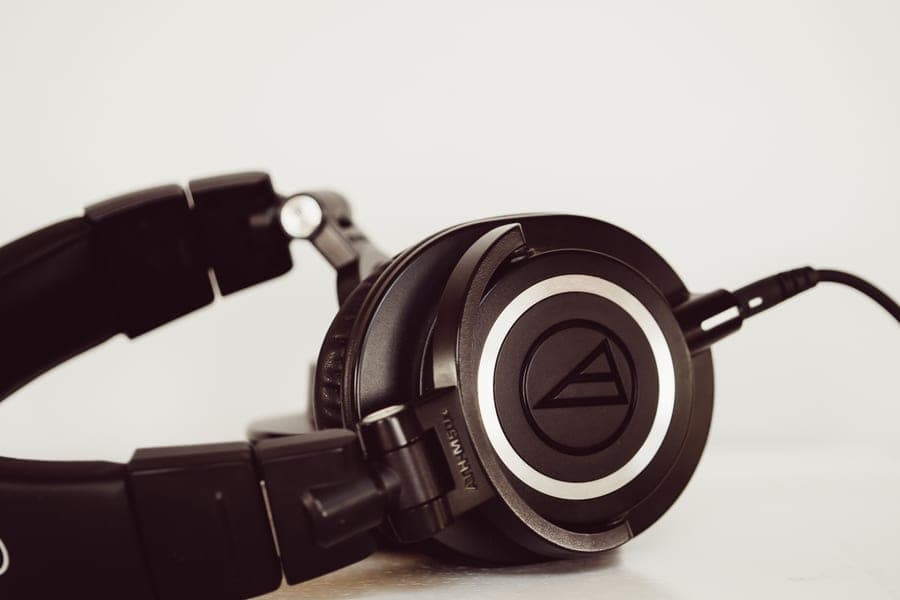 Bose QuietComfort Ultra Headphones (2nd Gen)The quietest cabin of anything here, and the only over-ear in this group whose box already contains the audio cable a seatback screen needs. | Best for canceling depth and for a work laptop | 9.09.0 out of 10, our editorial score | |
| 2 |  JBL Tour One M3The only headphone here that ships with the answer to the airline-jack problem in the box: the Smart Tx transmitter plugs into the seat and sends the movie to your headphones over Bluetooth. | Best for endurance and any 3.5 mm socket | 8.78.7 out of 10, our editorial score | |
| 3 | 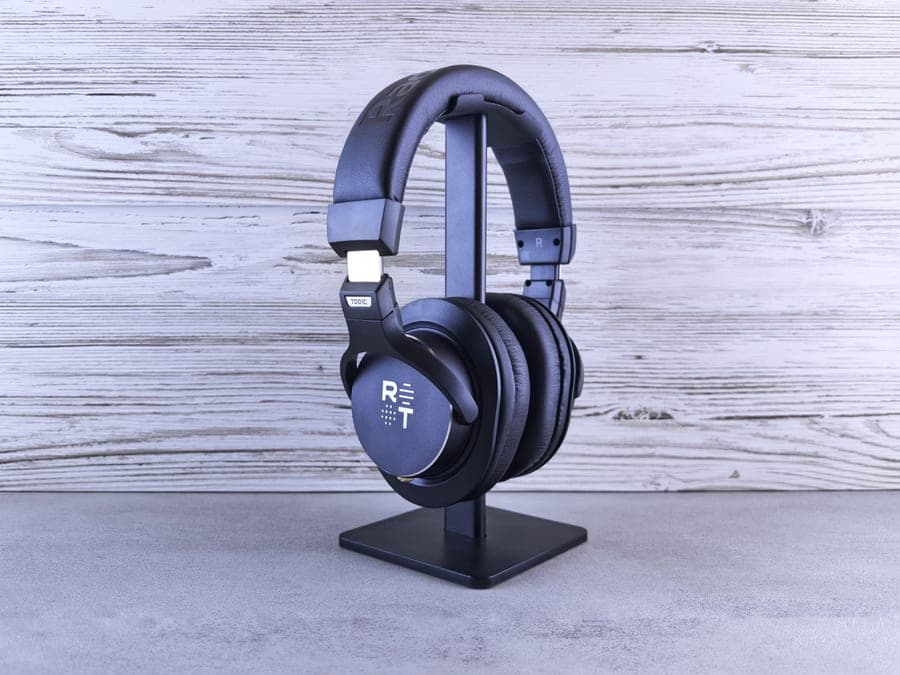 Bose QuietComfort HeadphonesThe non-Ultra Bose: the same brand's canceling philosophy at 24 rated hours, with the audio cable and carry case included and no Immersive Audio to drain the battery. | Best Bose at a lower price | 8.58.5 out of 10, our editorial score | |
| 4 | 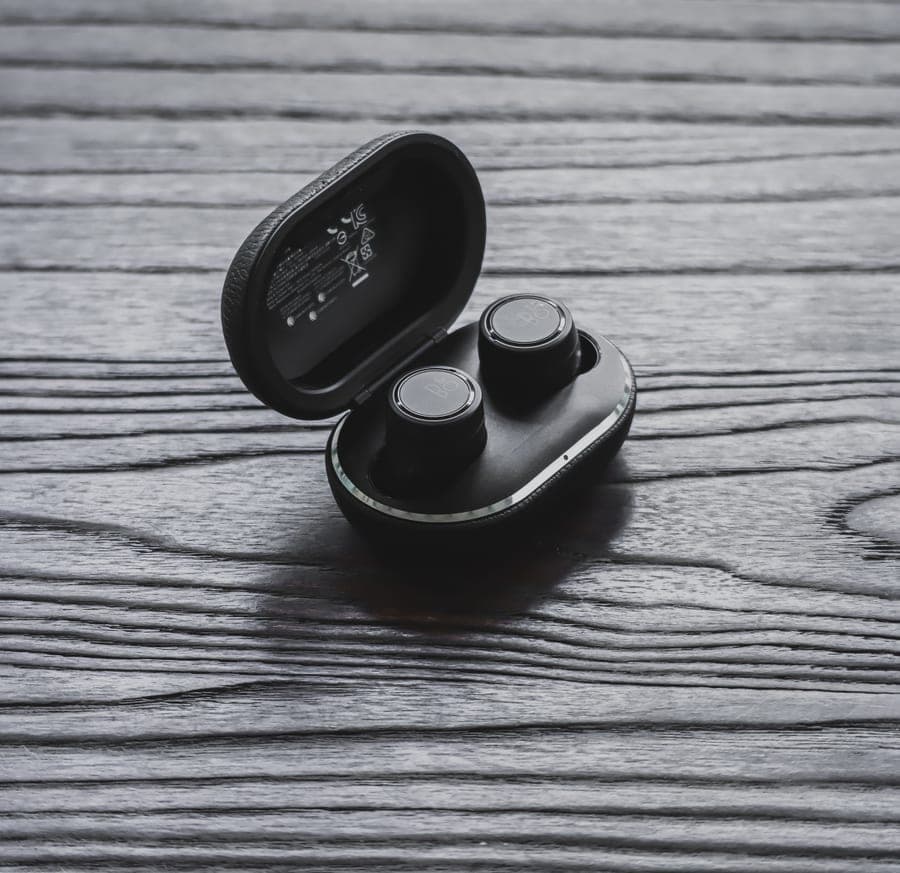 Bose QuietComfort Ultra Earbuds (2nd Gen)The quietest earbuds you can put in a pocket, with the shortest single-charge runtime of the premium set: six rated hours, four with Immersive Audio on. | Best if you want Bose canceling in an earbud | 8.48.4 out of 10, our editorial score |
#ad Amazon links are affiliate links. No live price is shown anywhere on this site, so every button reads “Check price on Amazon”. How this is funded.
The picks in full
Every pick, in detail
1. Best for canceling depth and for a work laptop
Bose QuietComfort Ultra Headphones (2nd Gen)
The quietest cabin of anything here, and the only over-ear in this group whose box already contains the audio cable a seatback screen needs.
Our editorial score: 9.0 / 10
#ad Live price not shown. How this is funded
Also sold direct by Bose — we earn nothing there, so check both.
Bose’s flagship is the canceling benchmark on this site, and the specification that backs the claim is not a decibel figure — nobody publishes a comparable one — it is the fact that Bose built the category and still ships a hard case, a USB-C cable and a 2.5 mm-to-3.5 mm audio cable in the box.
The spec that decides office use is the USB-C audio input: 16-bit, 44.1 or 48 kHz lossless. A canceling headphone that works as a wired USB device on a managed company laptop is a genuinely different product from one that only speaks Bluetooth, and JBL does not publish an equivalent.
Up to 30 rated hours with canceling on and 45 with it off, dropping to 23 with Immersive Audio enabled. The earcups rotate flat into the case. Approximately 264 g as reported — Bose does not publish a weight in the specifications we could verify, which is the one real gap on its side of this comparison.
What works on a plane
- The best low-frequency canceling in this group, which is exactly the band engine drone lives in
- The 2.5 mm-to-3.5 mm cable is in the box, so a seatback screen needs nothing extra
- Compact hard case for a full-size over-ear
- Up to 45 hours with canceling off, if you only want isolation on a train
What does not
- Immersive Audio costs you a third of the battery, dropping to 23 rated hours
- Heavier than the Sony by roughly 10 g, and clamp is firmer out of the box
- The hard case is compact but still rigid, so it will not squash into a full bag
How it scores against the five travel axes
Published specifications
| Spec | Figure | Source |
|---|---|---|
| Battery, ANC on | Up to 30 hours | Bose |
| Battery, ANC off | Up to 45 hours | Bose |
| Battery, Immersive Audio on | Up to 23 hours | Bose |
| Weight | Approx. 264 g (9.3 oz) as reported | Published reviews |
| USB-C audio | 16-bit, 44.1 or 48 kHz lossless input | Bose support |
| In the box | Hard case, USB-C cable, 2.5 mm-to-3.5 mm audio cable | Bose |
| Folds | Earcups rotate flat into a compact hard case | Bose |
Read the full Bose QuietComfort Ultra Headphones (2nd Gen) review
2. Best for endurance and any 3.5 mm socket
JBL Tour One M3
The only headphone here that ships with the answer to the airline-jack problem in the box: the Smart Tx transmitter plugs into the seat and sends the movie to your headphones over Bluetooth.
Our editorial score: 8.7 / 10
#ad Live price not shown. How this is funded
Also sold direct by JBL — we earn nothing there, so check both.
JBL’s bet is that you will never run out of battery and never meet a socket it cannot use. Up to 70 rated hours over Bluetooth and up to 40 with canceling on, from an 850 mAh cell that fills in roughly two hours, with five minutes of charge buying about five hours.
Seventy hours against Bose’s forty-five is not a marginal win. It is the difference between a headphone you charge weekly and one you charge on a schedule. For an office desk that means it is simply always ready; for a multi-leg trip it means the charger stays in the bag.
Then Smart Tx: a transmitter that streams from non-Bluetooth sources, including in-flight entertainment. Bose gives you a cable for that job, which works but ties you to the seat; JBL gives you a transmitter, which does not. 278 g, with USB-C-to-3.5 mm, USB-C-to-USB-C and a USB-C-to-USB-A adapter in the box.
What works on a plane
- The Smart Tx transmitter solves in-flight entertainment without a separate purchase
- Up to 40 rated hours with canceling on, comfortably over a long-haul plus layover
- Five minutes of charge buys five hours
- Both a 3.5 mm and a USB-C wired path in the box
What does not
- The Smart Tx is one more small object to lose, and it needs its own charge
- 278 g sits between the Sony and the Sennheiser without beating either at their own game
- Noise canceling is very good rather than class-leading
How it scores against the five travel axes
Published specifications
| Spec | Figure | Source |
|---|---|---|
| Battery, Bluetooth | Up to 70 hours | JBL |
| Battery, ANC on | Up to 40 hours | JBL |
| Quick charge | 5 minutes gives 5 hours | JBL |
| Battery cell | 850 mAh, full charge approx. 2 hours | JBL |
| Weight | 278 g | JBL |
| Smart Tx | Transmitter streams from non-Bluetooth sources including in-flight entertainment | JBL |
| In the box | USB-C-to-3.5 mm and USB-C-to-USB-C cables, USB-C to USB-A adapter | JBL |
3. Best Bose at a lower price
Bose QuietComfort Headphones
The non-Ultra Bose: the same brand's canceling philosophy at 24 rated hours, with the audio cable and carry case included and no Immersive Audio to drain the battery.
Our editorial score: 8.5 / 10
#ad Live price not shown. How this is funded
Also sold direct by Bose — we earn nothing there, so check both.
The non-Ultra model, and the honest answer for most office buyers who do not need the flagship. Up to 24 rated hours with canceling on, a full charge in up to two hours over USB-C, and a carry case, a USB-C cable and an audio cable with an in-line microphone in the box.
The in-line microphone on the supplied cable is a small detail that matters at a desk: it means the wired path is a full headset path, not just playback, so a locked-down conferencing client has a microphone to use.
What you lose against the Ultra is Immersive Audio, which this model does not support, and six hours of rated battery. Bose does not publish a weight for this one either.
What works on a plane
- The audio cable with in-line mic is in the box, so seatback screens work out of the bag
- Bose canceling philosophy without paying the Ultra premium
- No Immersive Audio means no mode that quietly halves your battery
- Carry case included
What does not
- 24 rated hours is six fewer than the Ultra and half the Sennheiser
- Canceling is a step behind the QuietComfort Ultra
- No USB-C lossless audio input, unlike the Ultra
- Bose does not publish a weight figure we could verify, so we do not quote one
How it scores against the five travel axes
4. Best if you want Bose canceling in an earbud
Bose QuietComfort Ultra Earbuds (2nd Gen)
The quietest earbuds you can put in a pocket, with the shortest single-charge runtime of the premium set: six rated hours, four with Immersive Audio on.
Our editorial score: 8.4 / 10
#ad Live price not shown. How this is funded
Also sold direct by Bose — we earn nothing there, so check both.
JBL has no equivalent on this site, so this is the leg of the comparison Bose wins by default: canceling earbuds with three stabilizer band sizes and a shallow-insertion fit, which is the design that makes a sealed bud tolerable for hours.
Up to 6 rated hours with Immersive Audio off and 4 with it on, up to 18 hours total with the case, case charging over USB-C and wirelessly, and IPX4.
Six hours is the number to plan around and it is short. On a long-haul flight the case becomes part of the routine rather than a backup, and there is no wired fallback at all.
What works on a plane
- Canceling that genuinely rivals a full-size over-ear, in something pocketable
- The shallow fit is far more tolerable than deep-insertion buds on a long flight
- Wireless case charging is one fewer cable in the bag
What does not
- Six rated hours means a case top-up mid-flight on any long-haul
- Immersive Audio cuts that to four, so on a plane you will mostly leave it off
- 18 hours total with the case is the weakest reserve in the premium earbud set
How it scores against the five travel axes
Published specifications
| Spec | Figure | Source |
|---|---|---|
| Battery, Immersive off | Up to 6 hours | Bose support |
| Battery, Immersive on | Up to 4 hours | Bose support |
| Total with case | Up to 18 hours | Bose support |
| Case charging | USB-C and wireless | Bose support |
| Water resistance | IPX4 | Bose support |
| Fit | Three stabilizer band sizes, shallow insertion | Bose |
Read the full Bose QuietComfort Ultra Earbuds (2nd Gen) review
How we decide
How these picks were chosen
We do not run a test lab and we do not claim to have flown with these units. Every verdict on this page is one of three things: a measurement published by somebody who does own a test rig and is credited by name, a manufacturer specification we quote and then interpret against what a long flight actually demands, or a plainly-labeled editorial judgment. The five axes we score on — cabin-noise reduction, battery on a long-haul, pack size, comfort past hour three, and wired fallback — are the ones that decide a travel purchase, and the weighting is published in full.
Questions
Common questions
Is JBL or Bose better for noise cancelling?
Bose, on the balance of published evidence and the brand’s design priorities — its QuietComfort Ultra Headphones are the deepest canceling product in this site’s registry. Neither brand publishes a comparable reduction figure, so this is an editorial judgment rather than a measured one, and JBL is very good rather than weak.
Which is better for office use, JBL or Bose?
Bose if your work laptop is managed and may have Bluetooth disabled, because its USB-C lossless input and supplied cables give you a wired path that policy cannot remove. JBL if the laptop is yours, because up to 40 rated hours with canceling on and a five-minute charge for five hours means you stop thinking about it.
Does JBL have better battery life than Bose?
Yes, clearly. The JBL Tour One M3 is rated up to 70 hours over Bluetooth and up to 40 with canceling on. The Bose QuietComfort Ultra Headphones are rated up to 45 hours with canceling off and 30 with it on.
Do Bose headphones come with an airline adapter?
The QuietComfort Ultra Headphones ship with a 2.5 mm-to-3.5 mm audio cable, which fits a standard single-prong seatback socket. Neither brand includes a two-prong airline adapter. The adapter options are covered on the adapters page.
How much does the Bose QuietComfort Ultra weigh?
Bose does not publish a weight in the specifications we could verify. Approximately 264 g is the widely reported figure, which is why this site labels it as reported rather than quoting it as a specification. JBL publishes 278 g for the Tour One M3.
Sources
Where these figures come from
- Bose QuietComfort Ultra Headphones (2nd Gen) product page (battery, Immersive Audio cost, USB-C lossless input, in the box)
- JBL Tour One M3 product page (70 hours, 40 hours canceling on, quick charge, 850 mAh cell, 278 g, Smart Tx, in the box)
- Bose QuietComfort Ultra Earbuds (2nd Gen) specifications (battery, case total, charging, IPX4, stabilizer bands)
Read next
Related reading
- JBL Tour One M3 vs Sony WH-1000XM6
The same JBL argument against the lightest flagship.
- Bose vs Sony noise-cancelling headphones
The other brand-level fight, settled on canceling and fold size.
- Bose QuietComfort Ultra vs QuietComfort
Whether the Ultra premium is worth it inside the Bose range.
- Best headphones for in-flight entertainment
Where Smart Tx stops being a feature and starts being the reason.