Buy the Bose QuietComfort Headphones if weight, price and a complete box matter most: Bose publishes 0.520 lb (approximately 236 g), which is lighter than the Sony, and the carry case, audio cable and USB-C cable are all included. Buy the Sony WH-1000XM6 if cancelling depth and battery decide it: 30 rated hours against 24, 40 with cancelling off, LDAC and LC3 for Android, and a stronger low-frequency result. The Bose is the better value; the Sony is the better headphone.
The matrix
Side by side on the published figures
| Bose QuietComfort Headphones | Sony WH-1000XM6 | |
|---|---|---|
| Weight | 0.520 lb (approx. 236 g) | approx. 254 g (9 oz) |
| Battery, cancelling on | up to 24 h | up to 30 h |
| Battery, cancelling off | Not published | up to 40 h |
| Full charge | 2.5 h | approx. 3.5 h |
| Dimensions | 7.68" H x 6.18" W x 3.15" D | Not published |
| Fold | Rotates flat | Folds up, magnetic-closure case |
| Audio cable in box | Yes, 3.5 mm-to-2.5 mm | Yes, headphone cable |
| Carry case in box | Yes | Yes |
| Ear cushions | Removable, protein leather | Not published as removable |
| Bluetooth | Not published | 5.3 |
| Codecs | Not published | SBC, AAC, LDAC, LC3 |
| Wired response | Not published | 4 Hz - 40,000 Hz (IEC) |
| Spatial audio | Not supported | Not published for this model |
| USB-C lossless input | No | Not published |
| Cancelling depth | Very good | Class-leading |
Two honest notes on that table. Bose publishes far less about this model than Sony does about the XM6 — no Bluetooth version, no codec list, no frequency response — and an absence of a published figure is not the same as a bad one. And Bose’s own product page contradicts itself on the cable: the Technical Specifications block says “Audio cable included: No” while the What’s in the box list on the same page includes a 3.5 mm-to-2.5 mm audio cable. Both readings are recorded here rather than quietly resolved.
The headline
The cheaper one is the lighter one
This is the finding worth carrying away. Bose publishes 0.520 lb for the QuietComfort Headphones, which is approximately 236 g, and Sony publishes approximately 254 g for the WH-1000XM6. Eighteen grams does not sound like much. It is about 7 percent, and it runs in the opposite direction to what the price suggests.
Weight is not a tiebreaker on a plane, it is one of the two or three things that decide whether you take the headphone off at hour four. Our lightest noise-cancelling headphones page ranks the field on published weight and explains what the grams do to hour four; note that it does not yet feature this Bose, because Bose published no weight for the model until recently.
Bose publishes a weight for this model and publishes none at all for the Ultra above it. The cheaper headphone is the better documented one on the single spec that decides hour four.
Where the money goes
The four real differences
1. Cancelling depth — Sony, and it matters most on long-haul
Both are good. The Sony is better in the deepest part of the low-frequency band, which is the part that produces the particular exhaustion of a fourteen-hour flight. Neither publishes a measured reduction figure, because no manufacturer does — how to compare noise-cancelling headphones explains why a percentage on a box is not a measurement. If you fly short-haul, the gap is academic. If you fly long-haul monthly, it is the whole purchase.
2. Battery — Sony, with arithmetic you should do yourself
Thirty against 24 with cancelling on, and Sony additionally publishes 40 hours with it off where Bose publishes nothing for that mode. A 13-hour leg, a four-hour connection and gate time is roughly 23 hours of realistic use: the Sony covers it with margin, the Bose covers it only just. Both charge over USB-C, so a power bank erases the distinction — see headphone battery life for long-haul flights. The Bose does charge faster: 2.5 hours against 3.5.
3. Codecs and the Android question — Sony, unambiguously
Sony publishes SBC, AAC, LDAC and LC3. Bose publishes no codec list for this model at all. On an Android phone that is a real difference rather than a specification-sheet one, and LDAC vs AAC for travel works through what the higher-bitrate codec actually buys and what it costs in battery.
4. Weight and the box — Bose, by more than the price suggests
Lighter on Bose’s own published figure, with removable protein-leather cushions, a 2.5-hour charge and everything you need in the box. Removable cushions in particular are the quiet durability feature: pads are the first thing to fail on any over-ear, and a headphone whose pads come off is a headphone with a second life. See how to clean headphone ear pads for what that maintenance actually involves.
Verdict by scenario
Which one, for which trip
| Scenario | Verdict | Why |
|---|---|---|
| Long-haul in economy, flying monthly | Sony | Deeper cancelling where the drone actually sits, and 30 rated hours covers the itinerary. |
| Two or three flights a year | Bose | The cancelling gap is academic at that frequency; the price gap is not. |
| You wear glasses or feel pressure at hour four | Bose | The lighter published weight, at 0.520 lb against approximately 254 g. |
| Android phone, and you care about it | Sony | LDAC and LC3 published; Bose publishes no codec list for this model. |
| Tightly packed personal item | Sony | It folds up into a compact block rather than rotating flat into a wider case. |
| Seatback screens and in-flight films | Either | Both include a cable. Bose's is 3.5 mm-to-2.5 mm; Sony lists a headphone cable. |
| You want it to last five years | Bose | Removable protein-leather cushions, and one fewer hinge mechanism to fail. |
| Open-plan office more than planes | Close, lean Bose | Speech is a seal problem more than a processing one, and the saving is large. |
What this is not
A note on which Bose this is
This page is about the QuietComfort Headphones, not the QuietComfort Ultra Headphones (2nd Gen). The Ultra is the deeper-cancelling model with Immersive Audio and USB-C lossless input, and it is the one that goes head to head with this Sony on equal money — that comparison lives at Bose QuietComfort Ultra vs Sony WH-1000XM6. If you are choosing inside the Bose range rather than across brands, QuietComfort Ultra vs QuietComfort sets out exactly what the Ultra premium buys.
One oddity worth knowing: Bose publishes a weight for this model and publishes none for the Ultra. So the only Bose over-ear on this site with a manufacturer weight is the cheaper one.
What to look for
How to decide between them
- Count your longest realistic stretch away from a socket. If it is under 20 hours, the battery difference is noise. If it is over 24, the Sony is the only one of the two that covers it.
- Be honest about how often you fly long-haul. The cancelling gap is mostly a long-haul gap. On a train or a two-hour hop, both disappear the rumble.
- Weigh the weight. 236 g against 254 g sounds trivial and is not, if you are someone who takes headphones off because of pressure rather than boredom.
- Check your phone. Android plus a care about codecs points at the Sony. An iPhone makes the codec column irrelevant, because AAC is the ceiling either way.
- Look at the total, not the headphone. Both include a case and a cable, so neither needs topping up with accessories — which is not true of every flagship.
If you want the full field rather than these two, best noise-cancelling headphones for flights ranks everything on cabin noise, battery and packed size. And if you are not yet sure a cancelling headphone is the right tool at all, noise-cancelling headphones vs the alternatives puts earplugs, earmuffs and sealing IEMs on the same table.
In short
Key takeaways
- Bose publishes 0.520 lb (approximately 236 g) for the QuietComfort Headphones — lighter than the Sony's approximately 254 g.
- Sony publishes 30 rated hours with cancelling on and 40 with it off; Bose publishes 24 and nothing for cancelling off.
- Sony publishes SBC, AAC, LDAC and LC3. Bose publishes no codec list and no Bluetooth version for this model.
- Both include a carry case and an audio cable, so both reach a seatback screen out of the bag.
- Bose charges faster (2.5 h against approximately 3.5 h) and has removable protein-leather cushions.
- Bose's own page contradicts itself on the cable: the spec block says none is included, the box list includes one.
At a glance
Quick picks
Scores are our editorial judgment from published specifications and cited third-party measurements, not our own testing. The rubric is published in full. Tap any row for the full write-up.
| # | Product | Best for | Score | Price |
|---|---|---|---|---|
| 1 | 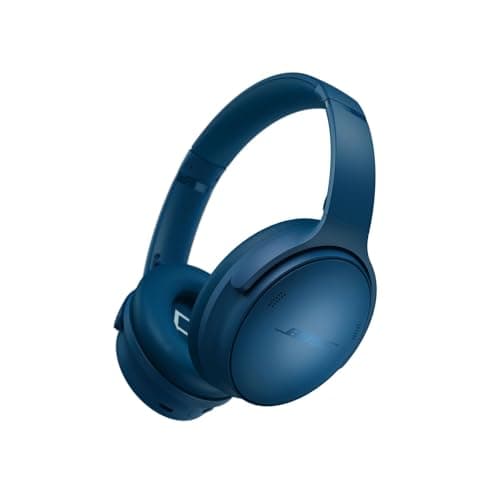 Bose QuietComfort HeadphonesThe non-Ultra Bose: the same brand's canceling philosophy at 24 rated hours, with the audio cable and carry case included and no Immersive Audio to drain the battery. | The lighter headphone, for much less money | 8.58.5 out of 10, our editorial score | |
| 2 | 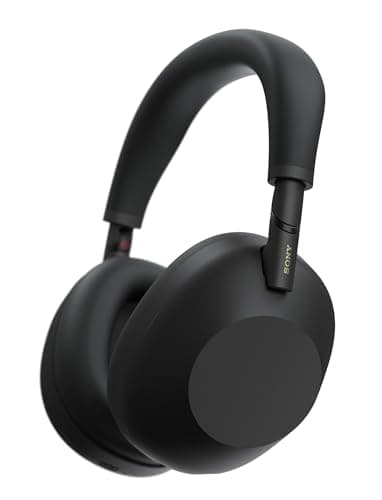 Sony WH-1000XM6The most complete travel headphone on sale: 254 g, 30 rated hours with noise canceling on, and it folds into a case small enough to stop being a decision. | The better canceling and the longer battery | 9.19.1 out of 10, our editorial score |
#ad Amazon links are affiliate links. Prices come from Amazon’s own data on the date stamped under the buttons above; where we have no current figure the button reads “Check price on Amazon” instead of guessing. How this is funded.
The picks in full
Every pick, in detail
1. The lighter headphone, for much less money
Bose QuietComfort Headphones
The non-Ultra Bose: the same brand's canceling philosophy at 24 rated hours, with the audio cable and carry case included and no Immersive Audio to drain the battery.
Our editorial score: 8.5 / 10
#ad Price as of November 11, 2026. How this is funded
The surprise of this comparison is on the scale. Bose publishes 0.520 lb for the QuietComfort Headphones — approximately 236 g — against Sony’s published 254 g. The cheaper headphone is the lighter one, and weight is the specification you feel at hour four of a long-haul rather than in a showroom.
It also arrives complete. Bose’s box list is the headphones, a carry case, a 3.5 mm-to-2.5 mm audio cable, a 12-inch USB-C cable and a safety sheet. The ear cushions are removable protein leather, which is the difference between a headphone you can keep and one that ages into the bin. A full charge takes 2.5 hours.
The costs are real. Twenty-four rated hours against thirty. Cancelling a clear step behind the QuietComfort Ultra and, on the weight of published measurement-led reviews, behind this Sony in the deepest part of the engine band. No USB-C lossless input, no LDAC, and Bose does not publish a Bluetooth version for it at all.
What works on a plane
- The audio cable with in-line mic is in the box, so seatback screens work out of the bag
- Bose canceling philosophy without paying the Ultra premium
- No Immersive Audio means no mode that quietly halves your battery
- Carry case included
- Bose publishes 0.520 lb for it — lighter than any canceling flagship here — and publishes no weight at all for the Ultra
What does not
- 24 rated hours is six fewer than the Ultra and half the Sennheiser
- Canceling is a step behind the QuietComfort Ultra
- No USB-C lossless audio input, unlike the Ultra
- Bose's own specification block says no audio cable is included while its box list includes one
How it scores against the five travel axes
Published specifications
| Spec | Figure | Source |
|---|---|---|
| Battery, ANC on | Up to 24 hours | Bose |
| Battery charge time | 2.5 hours via USB | Bose |
| Dimensions | 7.68" H x 6.18" W x 3.15" D | Bose |
| Ear cushions | Removable, protein leather | Bose |
| In the box | Carry case, USB-C cable, audio cable with in-line mic | Bose |
| Immersive Audio | Not supported | Bose |
| Weight | 0.520 lb (approx. 236 g) | Bose |
2. The better canceling and the longer battery
Sony WH-1000XM6
The most complete travel headphone on sale: 254 g, 30 rated hours with noise canceling on, and it folds into a case small enough to stop being a decision.
Our editorial score: 9.1 / 10
#ad Price as of November 11, 2026. How this is funded
If the reason you are buying is that flying leaves you wrung out, the Sony is the safer answer. Published measurement-led reviews consistently put it at or near the top of the field for low-frequency reduction, and 50 to 300 Hz is exactly where cabin drone lives.
Thirty rated hours with cancelling on and 40 with it off, Bluetooth 5.3, SBC, AAC, LDAC and LC3, a 4 Hz to 40,000 Hz wired response, and a folding hinge into a magnetic-closure case. Sony’s Included items list is the headset, a headphone cable, a USB-C cable, the carrying case and documents.
What it costs you is money and 18 g. A 3.5-hour full charge is an hour longer than the Bose. And the folding hinge that makes it pack so well is one more mechanism that can eventually fail — the Bose rotates flat with fewer moving parts.
What works on a plane
- Folds, which halves the space it takes in a personal item
- 254 g is light for a flagship over-ear, and weight is what you feel at hour four
- LDAC plus LC3 means it is not locked to one phone ecosystem
- 30 rated hours with noise canceling on covers almost any single routing
What does not
- You pay a flagship price for the last increment of noise canceling
- The folding hinge is one more mechanism to eventually wear out
- No airline two-prong adapter in the box
How it scores against the five travel axes
Published specifications
| Spec | Figure | Source |
|---|---|---|
| Weight | Approx. 254 g (9 oz) | Sony Help Guide specifications |
| Battery, NC on | Up to 30 hours | Sony specifications |
| Battery, NC off | Up to 40 hours | Sony specifications |
| Full charge | Approx. 3.5 hours | Sony Help Guide specifications |
| Bluetooth | 5.3 | Sony Help Guide specifications |
| Codecs | SBC, AAC, LDAC, LC3 | Sony Help Guide specifications |
| Wired response | 4 Hz - 40,000 Hz (IEC) | Sony Help Guide specifications |
| Folds | Yes, into a magnetic-closure case | Sony |
| In the box | Headset, headphone cable, USB-C cable, carrying case, documents | Sony Help Guide, Included items |
How we decide
How these picks were chosen
We do not run a test lab and we do not claim to have flown with these units. Every verdict on this page is one of three things: a measurement published by somebody who does own a test rig and is credited by name, a manufacturer specification we quote and then interpret against what a long flight actually demands, or a plainly-labeled editorial judgment. The five axes we score on — cabin-noise reduction, battery on a long-haul, pack size, comfort past hour three, and wired fallback — are the ones that decide a travel purchase, and the weighting is published in full.
Questions
Common questions
Is the Bose QuietComfort or the Sony WH-1000XM6 better?
The Sony is the better headphone and the Bose is the better value. Sony publishes six more rated hours, a full codec list including LDAC, and is stronger in the deep low-frequency band where cabin drone sits. Bose publishes the lighter weight at 0.520 lb against approximately 254 g, charges faster, and costs substantially less.
Which is lighter, the Bose QuietComfort or the Sony WH-1000XM6?
The Bose. Bose publishes 0.520 lb for the QuietComfort Headphones, which is approximately 236 g, against Sony’s published approximately 254 g for the WH-1000XM6. That is about 18 g, or roughly 7 percent, in favor of the cheaper headphone.
How long does each one last on a charge?
Sony publishes up to 30 hours with noise cancelling on and up to 40 with it off, and a full charge in approximately 3.5 hours. Bose publishes up to 24 hours with cancelling on, nothing for cancelling off, and a full charge in 2.5 hours.
Do both come with an audio cable for a seatback screen?
Yes. Bose lists a 3.5 mm-to-2.5 mm audio cable in its box contents, and Sony lists a headphone cable in its Included items. Worth noting that Bose’s Technical Specifications block says no audio cable is included, contradicting its own box list on the same page.
Is the Bose QuietComfort the same as the QuietComfort Ultra?
No. The Ultra is the step-up model with deeper cancelling, Immersive Audio and USB-C lossless input, and Bose rates it at up to 30 hours rather than 24. This page covers the non-Ultra QuietComfort Headphones, which is the model most often cross-shopped against the Sony on price.
Which is better for Android?
The Sony. It publishes SBC, AAC, LDAC and LC3, and LDAC is the higher-bitrate option that Android supports natively. Bose publishes no codec list for the QuietComfort Headphones at all, so there is nothing to compare against.
Sources
Where these figures come from
- Bose QuietComfort Headphones product page (0.520 lb, 7.68 x 6.18 x 3.15 in, 24 hours, 2.5 hour charge, removable protein-leather cushions, box contents including the 3.5 mm-to-2.5 mm audio cable, and the contradictory 'Audio cable included: No' line) — read 2026-11-04
- Sony WH-1000XM6 Help Guide specifications (approx. 254 g, Bluetooth 5.3, SBC / AAC / LDAC / LC3, 4 Hz - 40,000 Hz IEC, approx. 3.5 hour charge)
- Sony WH-1000XM6 Help Guide, Included items (headset, headphone cable, USB Type-C cable, carrying case, documents) — read 2026-11-04
- Sony WH-1000XM6 specifications (up to 30 hours NC on, up to 40 hours NC off)
Read next
Related reading
- Bose QuietComfort Ultra vs Sony WH-1000XM6
The same cross-shop, one tier up.
- Bose QuietComfort Ultra vs QuietComfort
What the Ultra premium buys inside the Bose range.
- Bose QuietComfort Headphones review
The full read on the cheaper Bose.
- Sony WH-1000XM6 review
The full read on Sony's flagship.
- Best noise-cancelling headphones for flights
Where both of these sit in the wider field.