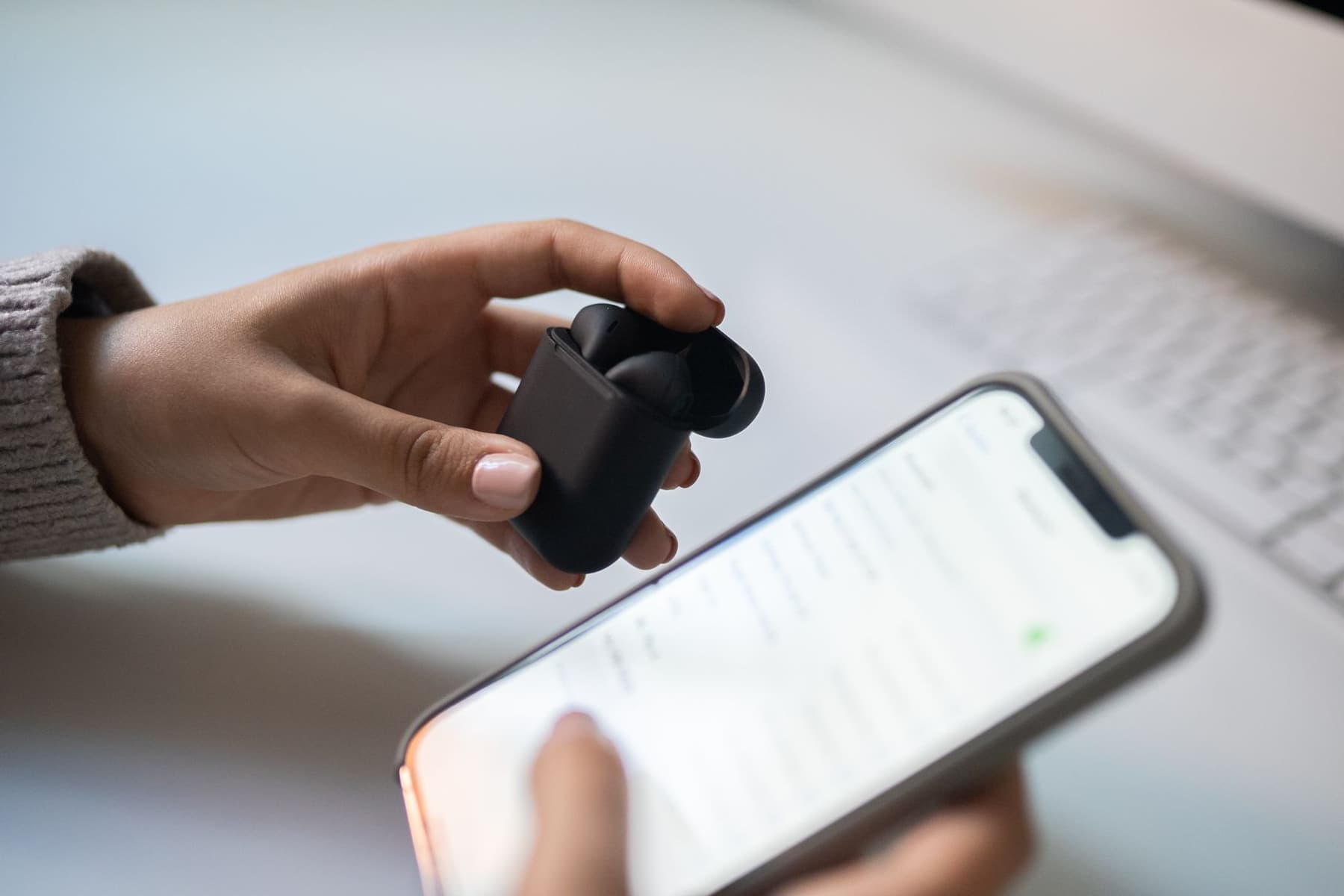
LDAC transmits at up to 990 kbps and steps between 330, 660 and 990 kbps as conditions allow; Sony describes that as roughly three times the data of conventional Bluetooth audio, which it quotes at 328 kbps and 44.1 kHz. On a flight most of that advantage is wasted, because cabin noise raises the floor above the detail the extra bitrate carries, and holding 990 kbps in a crowded 2.4 GHz cabin costs battery and connection stability. Codec is the least important travel specification.
The numbers
What each codec actually moves
Sony publishes the LDAC figures directly. LDAC enables transmission of audio content, including high-resolution audio, at a maximum bitrate of 990 kbps, and it operates at three adaptive levels — 330, 660 and 990 kbps — which adjust automatically according to conditions. Sony contrasts that with standard Bluetooth A2DP, which it quotes at 328 kbps and 44.1 kHz, and describes LDAC at its maximum as approximately three times the data.
The WH-1000XM6 Help Guide makes the same point in terms of bandwidth rather than bitrate: transmission over A2DP covers 20 Hz to 20,000 Hz at 44.1 kHz sampling, extending to 40,000 Hz with LDAC at 96 kHz and 990 kbps. For reference on the other side of the comparison, Qualcomm rates aptX Adaptive at a typical 279 to 420 kbps in its own product brief.
| Codec | Bitrate, as published | Bandwidth | Source of the figure |
|---|---|---|---|
| LDAC, maximum | 990 kbps | to 40,000 Hz at 96 kHz | Sony |
| LDAC, adaptive steps | 330 / 660 / 990 kbps | - | Sony |
| Standard Bluetooth A2DP | 328 kbps at 44.1 kHz | 20 Hz - 20,000 Hz | Sony |
| aptX Adaptive, typical | 279 - 420 kbps | Not published | Qualcomm product brief |
| AAC | Not published | Not published | - |
| aptX Lossless | Not published here | Not published here | - |
Note the empty rows. Nobody in this registry publishes an AAC bitrate, and the real-world variable that matters most for AAC — how a given phone’s encoder behaves — is published by nobody at all. Anyone quoting you a precise AAC figure is quoting a convention, not a specification.
990 kbps is a real number. The question is whether a jet engine lets you hear any of it.
The cabin problem
Why a flight is the worst place to spend bitrate
The noise floor eats the difference
What a higher bitrate preserves is low-level detail: decay tails, the quietest part of a recording, the space between instruments. A cabin raises the noise floor across the spectrum, and even a good canceling headphone only removes the low-frequency portion of it. The detail the extra 660 kbps is carrying is sitting underneath what is left.
The radio band is crowded
Bluetooth operates in the 2.4 GHz band — 2.4000 to 2.4835 GHz on the WH-1000XM6, per Sony’s own specification. A full cabin contains several hundred phones, tablets, watches and earbuds in that same band, inside a metal tube. LDAC’s adaptive steps exist precisely for this: when the link degrades, it drops to 660 or 330 kbps. That is the system working correctly, and it means the 990 kbps figure is frequently not what you are getting.
Bitrate costs battery
More data per second is more radio time and more processing. No manufacturer publishes a per-codec battery figure, so there is no honest number to give you, but the direction is not in doubt, and rated battery figures are measured under the manufacturer’s own conditions rather than at maximum bitrate. On a long-haul routing where the battery budget is the constraint — see headphone battery life for long-haul flights — that is a real trade.
It can cost you multipoint
Holding two device connections and streaming at the highest bitrate compete for the same radio time, and many headphones will not do both at once. If two-device switching is why you bought the headphone, the multipoint roundup is the page that matters more than this one.
What to look for
Four checks, in order of how much they matter on a trip
- Does your phone support the codec at all? This is the whole question. AAC is the practical codec on an iPhone; LDAC is an Android feature and has to be enabled on many devices. A headphone’s codec list is worthless if your source does not share it.
- Does your source material justify it? Streaming at a standard tier, downloaded podcasts and in-flight films are all compressed well below what LDAC can carry. A lossless tier on a quiet train is a different story.
- Would you rather have the battery? On a multi-leg trip, dropping to a lower codec is a free extension of your listening budget.
- Do you need a wired path instead? No codec discussion survives a seatback screen, which is a 3.5 mm socket. For in-flight entertainment the relevant pages are Bluetooth headphones and in-flight entertainment and best wired headphones for flights.
When LDAC is worth it
Three situations where the extra bitrate earns its keep
- A quiet train in a lossless tier. A long rail journey has a much lower noise floor than a cabin and far less radio congestion. This is the travel case where it genuinely helps — best headphones for train travel.
- A hotel room or a lounge. Stationary, quiet, few competing devices, and usually a charger within reach so the battery cost does not matter.
- Critical listening at home. Which is not travel, and is where the audiophile framing of this question comes from — are audiophile headphones good for travel covers that collision.
The honest verdict
Buy for canceling, battery and fit. The codec is a tiebreaker.
On this site’s own criteria — cabin-noise reduction, battery on a long-haul, fold size and comfort past hour three — a codec list does not appear. That is deliberate. A headphone that cancels 10 dB more of engine drone changes a flight; a headphone that moves 660 kbps more data does not.
The reason to pay attention at all is coverage rather than quality: a headphone with SBC, AAC and LDAC works well on any phone you or anyone you travel with owns, and one with a narrow list does not. Buy the broad list because it is flexible, not because it is better. And if you want the field ranked on the criteria that do matter, how to choose noise-cancelling headphones is the place to start.
In short
Key takeaways
- Sony publishes LDAC at a maximum 990 kbps, with adaptive steps at 330, 660 and 990 kbps.
- Sony quotes standard Bluetooth A2DP at 328 kbps and 44.1 kHz, so LDAC at maximum is roughly three times the data.
- The WH-1000XM6 Help Guide extends bandwidth to 40,000 Hz with LDAC at 96 kHz against 20,000 Hz over A2DP.
- Nobody in this registry publishes an AAC bitrate, so precise AAC figures are conventions rather than specs.
- A cabin's noise floor and 2.4 GHz congestion waste most of LDAC's advantage, and it can cost you multipoint.
- LDAC is not a premium feature: the $99.99 Soundcore Space One publishes it.
At a glance
Quick picks
Scores are our editorial judgment from published specifications and cited third-party measurements, not our own testing. The rubric is published in full. Tap any row for the full write-up.
| # | Product | Best for | Score | Price |
|---|---|---|---|---|
| 1 | 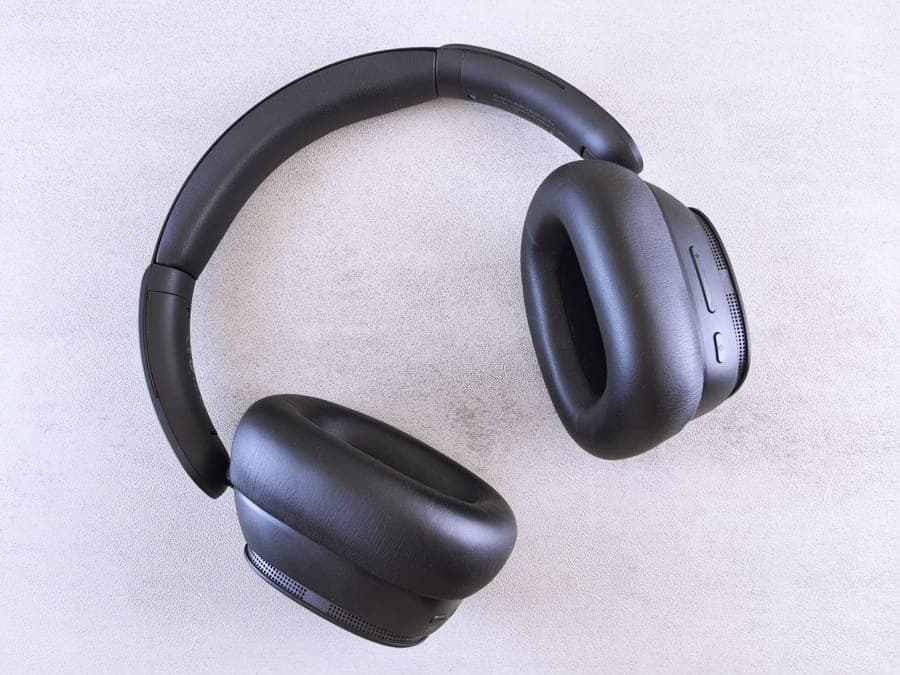 Sony WH-1000XM6The most complete travel headphone on sale: 254 g, 30 rated hours with noise canceling on, and it folds into a case small enough to stop being a decision. | Best codec coverage in an over-ear | 9.19.1 out of 10, our editorial score | |
| 2 | 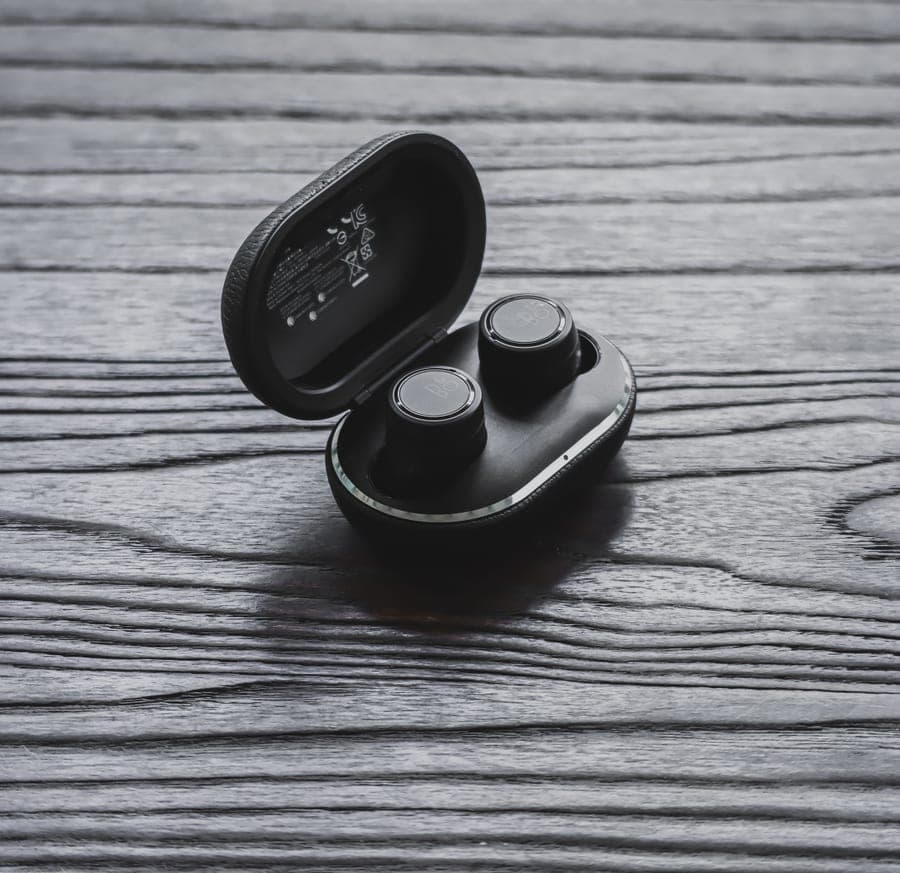 EarFun Air Pro 4Eleven rated hours per bud and 52 with the case, plus LDAC and aptX Lossless, for a small fraction of flagship money. It buys most of the quiet for a little of the price. | Best codec list at any price | 8.08.0 out of 10, our editorial score | |
| 3 | 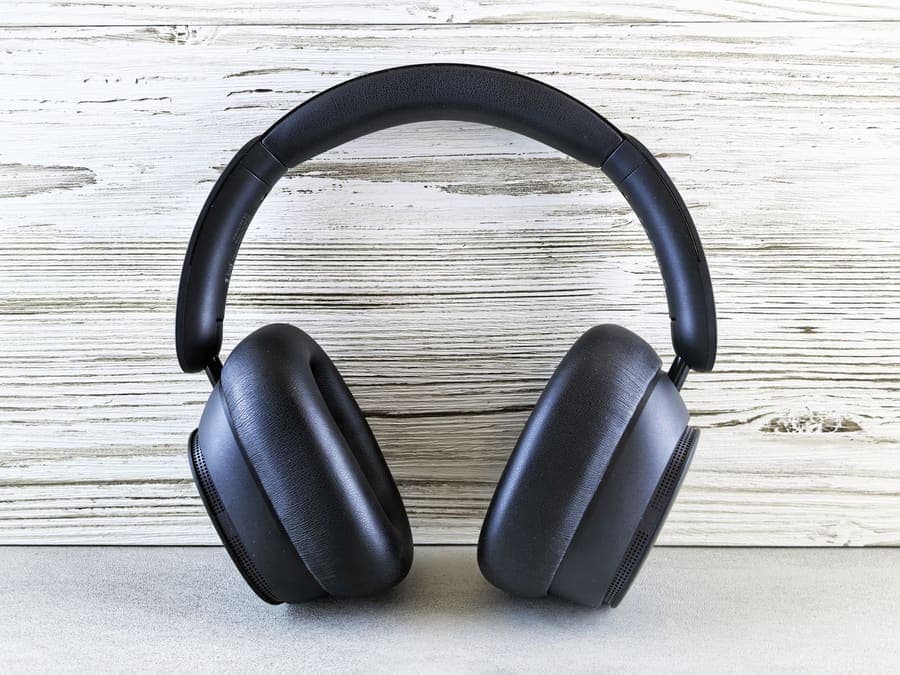 Soundcore Space OneA $99.99 list price that buys 40 rated hours with canceling on, LDAC, 40 mm drivers, a folding hinge and an aux cable. The specification sheet at this level is genuinely hard to argue with. | Proof that LDAC is not a premium feature | 8.58.5 out of 10, our editorial score |
#ad Amazon links are affiliate links. No live price is shown anywhere on this site, so every button reads “Check price on Amazon”. How this is funded.
The picks in full
Every pick, in detail
1. Best codec coverage in an over-ear
Sony WH-1000XM6
The most complete travel headphone on sale: 254 g, 30 rated hours with noise canceling on, and it folds into a case small enough to stop being a decision.
Our editorial score: 9.1 / 10
#ad Live price not shown. How this is funded
Also sold direct by Sony — we earn nothing there, so check both.
The headphone that makes the whole argument available to you: Sony’s Help Guide lists SBC, AAC, LDAC and LC3. That is the broadest practical set in an over-ear — AAC for an iPhone, LDAC for an Android phone that supports it, and LC3 for the newer low-energy audio standard as devices adopt it.
The same Help Guide gives the transmission ranges, and this is the clearest published illustration of what a codec buys: 20 Hz to 20,000 Hz over A2DP at 44.1 kHz sampling, extending to 40,000 Hz with LDAC at 96 kHz and 990 kbps.
Approximately 254 g, up to 30 rated hours with canceling on and 40 with it off, Bluetooth 5.3, and it folds into a magnetic-closure case. The honest note is that the 30-hour figure is a rating, not a promise at 990 kbps.
What works on a plane
- Folds, which halves the space it takes in a personal item
- 254 g is light for a flagship over-ear, and weight is what you feel at hour four
- LDAC plus LC3 means it is not locked to one phone ecosystem
- 30 rated hours with noise canceling on covers almost any single routing
What does not
- You pay a flagship price for the last increment of noise canceling
- The folding hinge is one more mechanism to eventually wear out
- No airline two-prong adapter in the box
How it scores against the five travel axes
Published specifications
| Spec | Figure | Source |
|---|---|---|
| Weight | Approx. 254 g (9 oz) | Sony Help Guide specifications |
| Battery, NC on | Up to 30 hours | Sony specifications |
| Battery, NC off | Up to 40 hours | Sony specifications |
| Full charge | Approx. 3.5 hours | Sony Help Guide specifications |
| Bluetooth | 5.3 | Sony Help Guide specifications |
| Codecs | SBC, AAC, LDAC, LC3 | Sony Help Guide specifications |
| Wired response | 4 Hz - 40,000 Hz (IEC) | Sony Help Guide specifications |
| Folds | Yes, into a magnetic-closure case | Sony |
2. Best codec list at any price
EarFun Air Pro 4
Eleven rated hours per bud and 52 with the case, plus LDAC and aptX Lossless, for a small fraction of flagship money. It buys most of the quiet for a little of the price.
Our editorial score: 8.0 / 10
#ad Live price not shown. How this is funded
$89.99 at the time of writing, with aptX Lossless, LDAC, AAC and SBC. That is a broader list than any flagship on this site, on a Qualcomm QCC3091 chipset with Bluetooth 5.4, and it is the single most surprising specification in the registry.
11 rated hours in the buds and 52 with the case, 10 mm composite dynamic drivers, USB-C and wireless charging, and two simultaneous device connections.
It is worth being clear about what that list is worth on a plane: very little. It is worth a great deal at home on a wired-quality source over a quiet listening session, which is the opposite of a cabin.
What works on a plane
- Eleven rated hours per bud is longer than any premium earbud here
- 52 hours with the case means a two-week trip without a charger thought
- aptX Lossless and LDAC at this price is genuinely unusual
- Losing one on a plane is an annoyance rather than a disaster
What does not
- The 50 dB figure is EarFun's own rating, not an independent measurement, and the gap to Bose is clear
- Adaptive canceling is less steady than the flagships when cabin noise changes
- App polish and firmware support are a step behind the majors
How it scores against the five travel axes
3. Proof that LDAC is not a premium feature
Soundcore Space One
A $99.99 list price that buys 40 rated hours with canceling on, LDAC, 40 mm drivers, a folding hinge and an aux cable. The specification sheet at this level is genuinely hard to argue with.
Our editorial score: 8.5 / 10
#ad Live price not shown. How this is funded
Also sold direct by Soundcore — we earn nothing there, so check both.
$99.99 at the time of writing, with LDAC published in the specifications. If you have been told that high-bitrate streaming is a reason to buy a flagship, this is the counter-example that costs a hundred dollars.
265 g (9.35 oz), up to 40 rated hours with canceling on and up to 55 in normal mode, five minutes of charge for four hours, 40 mm drivers, and earcups that rotate and fold into the supplied travel pouch.
What a flagship actually buys you is canceling depth, pad quality and build. It does not buy you a codec that this does not already have.
What works on a plane
- 40 rated hours with canceling on, from a headphone listed at $99.99
- LDAC at this price is unusual, and it is the codec Android users actually want
- Folds and ships with an aux cable, so the seatback screen is covered
- 265 g is not heavy, and the pouch means it travels without a hard case
What does not
- The 98 percent noise-reduction claim is marketing, not a published measurement
- A pouch is not a hard case, so it needs care in a crushed bag
- Pads are the first thing that gives at this price, well before the electronics
How it scores against the five travel axes
Published specifications
| Spec | Figure | Source |
|---|---|---|
| List price | $99.99 at the time of writing | Soundcore |
| Battery, ANC on | Up to 40 hours | Soundcore |
| Battery, normal mode | Up to 55 hours | Soundcore |
| Quick charge | 5 minutes for 4 hours | Soundcore |
| Weight | 265 g (9.35 oz) | Soundcore |
| Drivers | 40 mm | Soundcore |
| Codecs | LDAC | Soundcore |
| Folds | Yes, ear cups rotate and fold | Soundcore |
| In the box | Travel pouch and aux cable | Soundcore |
Questions
Common questions
Is LDAC better than AAC?
On published bitrate, yes by a wide margin: Sony quotes LDAC at up to 990 kbps against 328 kbps for standard Bluetooth A2DP. Whether you can hear the difference depends on your source material, your phone and your listening environment, and in a loud aircraft cabin the answer is usually no.
Does LDAC drain the battery faster?
More data per second means more radio time and more processing, so the direction is not in doubt. No manufacturer publishes a per-codec battery figure, so we are not going to quote one. Rated battery numbers are measured under the manufacturer’s own conditions, not at maximum bitrate.
Does the iPhone support LDAC?
AAC is the practical codec on Apple devices; LDAC is an Android-side feature. A headphone with a long codec list still works perfectly on an iPhone — it simply uses AAC, which is why codec coverage matters more than codec ceiling.
Why does LDAC keep dropping to a lower bitrate?
Because that is the design. Sony publishes three adaptive levels — 330, 660 and 990 kbps — that adjust automatically based on conditions. In a full cabin, with several hundred devices sharing the 2.4 GHz band inside a metal tube, dropping down is the system protecting the connection.
Which codec is best for watching films on a flight?
None of them, if the film is on the seatback screen — that is a 3.5 mm socket and needs a cable or a transmitter. If the film is downloaded on your own device, latency matters more than bitrate, and the numbers on that are in Bluetooth audio latency on a plane.
Sources
Where these figures come from
- Sony LDAC product page (maximum 990 kbps, adaptive 330/660/990 kbps, comparison with 328 kbps 44.1 kHz standard Bluetooth A2DP)
- Sony WH-1000XM6 Help Guide specifications (SBC, AAC, LDAC, LC3; A2DP 20 Hz - 20,000 Hz at 44.1 kHz; 40,000 Hz with LDAC at 96 kHz / 990 kbps; 2.4 GHz band; weight; battery)
- Qualcomm aptX Adaptive Audio Technology product brief, 87-CE932-1 Rev A (typical 279-420 kbps)
- EarFun Air Pro 4 product page (aptX Lossless, LDAC, AAC, SBC; QCC3091; Bluetooth 5.4; battery; list price)
- Soundcore Space One product page (LDAC, list price $99.99, battery, weight, folding earcups)
Read next
Related reading
- Bluetooth audio latency on a plane
The codec figure that actually affects watching something.
- Best multipoint Bluetooth headphones
The feature a high-bitrate codec often costs you.
- How to choose noise-cancelling headphones
The criteria that outrank a codec list on every trip.
- Are audiophile headphones good for travel?
Where the high-bitrate argument comes from, and why travel breaks it.