
The best open-ear headphone is the Shokz OpenRun Pro 2: 30.3 g, up to 12 rated hours, IP55, and bone conduction paired with an air-conduction low-frequency unit, for anyone who needs road awareness while they listen. For water, the Shokz OpenSwim Pro is the only pick that works, with IP68 to 2 m and 32 GB of on-board storage because Bluetooth does not pass through water. The budget pick is the Koss KSC75, an open-backed clip-on with a limited lifetime warranty and no battery at all. Prices come from Amazon’s own data and are stamped with the date inside each button.
The comparison
What the three open-ear designs publish
| Design | Weight | Water rating | Battery | |
|---|---|---|---|---|
| Shokz OpenRun Pro 2 | Bone conduction plus air-conduction bass unit | 30.3 g | IP55, sweat and splashes | Up to 12 h |
| Shokz OpenSwim Pro | Bone conduction with 32 GB on-board storage | 27.3 g | IP68, submersible to 2 m | 9 h Bluetooth, 6 h MP3 |
| Koss KSC75 | Open-backed clip-on, wired | Not published | None | No battery |
An open-ear headphone is a safety device first and an audio device second. Judge it on whether you can hear a car, not on whether it has bass.
The trade
What you give up, stated plainly
Open-ear designs sit outside the ear canal, so there is no seal. No seal means no passive isolation, and without passive isolation active canceling has nothing to build on — which is why none of these three has any. On a plane, in a library, or at a shared desk, an open-ear headphone will let the room straight in and let your audio straight out.
| Open-ear wins | Open-ear loses |
|---|---|
| Roads, trails and traffic awareness | Planes, trains and engine drone |
| Long sessions with no in-ear pressure | Bass depth against a sealed earbud |
| Hearing a colleague or a train announcement | Keeping your audio to yourself |
| Sweat and water, on the rated models | Loud environments of any kind |
| Not blocking a conversation you want | Volume competing with background noise |
If your actual problem is cabin or office noise, the answer is the opposite category: start at best noise-canceling headphones for flights or best noise-canceling headphones for an open-plan office. If you want situational awareness from a sealed headphone instead, transparency mode is the halfway house: best headphones with transparency mode.
Which one
Pick by where you will use it
Roads and trails
The OpenRun Pro 2. The titanium band stays put at a run, IP55 shrugs off the sweat that kills sealed running earbuds, and 12 rated hours covers a marathon training block without a mid-week charge. More options are at best headphones for running and best headphones for cycling.
Water
The OpenSwim Pro, and only the OpenSwim Pro. IP55 and IPX4 ratings elsewhere in our registry mean splashes, not submersion — a distinction that becomes expensive at the deep end. The pool case is covered at best headphones for swimming.
A desk, and a tight budget
The KSC75, as long as you are not trying to block anything. It is wired, so it plugs into a seatback screen or a laptop with no transmitter and no battery anxiety. Where it sits against the rest of the cheap end is covered at best over-ear headphones under $100.
Whether bone conduction belongs in a carry-on at all is answered honestly at are bone conduction headphones good for flying — the short version is that they are the wrong tool for a cabin and the right tool for the walk at either end.
In short
Key takeaways
- Shokz OpenRun Pro 2: 30.3 g, up to 12 rated hours, IP55, multipoint, and an air-conduction unit added for bass.
- Shokz OpenSwim Pro: IP68 submersible to 2 m with 32 GB of on-board storage, because Bluetooth does not work underwater.
- Budget pick: Koss KSC75, an open-backed clip-on with a published distortion figure, a limited lifetime warranty and no battery.
- No open-ear headphone has active noise canceling, because without a seal there is nothing for canceling to build on.
- Open-ear is a road, pool and shared-space tool. For engine drone, the sealed cancellers are the right category.
At a glance
Quick picks
Scores are our editorial judgment from published specifications and cited third-party measurements, not our own testing. The rubric is published in full. Tap any row for the full write-up.
| # | Product | Best for | Score | Price |
|---|---|---|---|---|
| 1 | 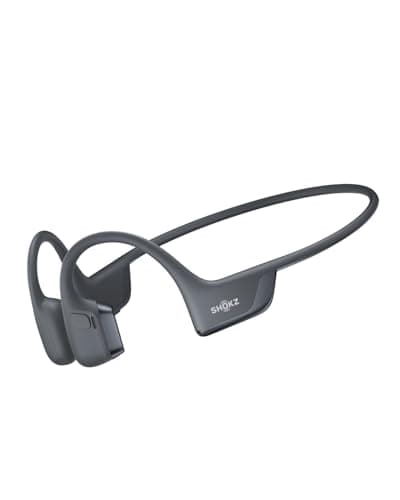 Shokz OpenRun Pro 2An open-ear headphone that leaves your ear canal empty, so you hear the traffic behind you as well as the playlist. The point of it is the opposite of noise canceling. | Best open-ear overall | 8.58.5 out of 10, our editorial score | |
| 2 | 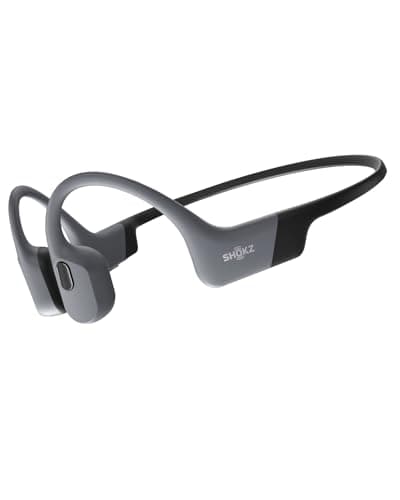 Shokz OpenSwim ProThe rare headphone that actually works underwater, because it stores the music on board rather than relying on Bluetooth, which does not travel through water. | Best for water | 8.68.6 out of 10, our editorial score | |
| 3 | 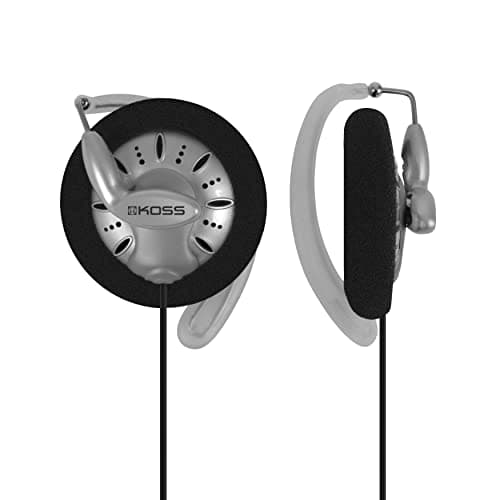 Koss KSC75A clip-on with titanium-coated diaphragms, a published distortion figure and the same limited lifetime warranty. Nothing at this price is more honest. | Budget pick: open sound for pocket money | 7.27.2 out of 10, our editorial score |
#ad Amazon links are affiliate links. Prices come from Amazon’s own data on the date stamped under the buttons above; where we have no current figure the button reads “Check price on Amazon” instead of guessing. How this is funded.
The picks in full
Every pick, in detail
1. Best open-ear overall
Shokz OpenRun Pro 2
An open-ear headphone that leaves your ear canal empty, so you hear the traffic behind you as well as the playlist. The point of it is the opposite of noise canceling.
Our editorial score: 8.5 / 10
#ad Price as of November 27, 2026. How this is funded
The pick for anyone who runs, cycles or walks on a road and needs to hear what is behind them. Shokz publishes 30.3 g on a titanium band, up to 12 hours of playback, Bluetooth 5.3, multipoint, and an IP55 rating that handles sweat and splashes.
It is not pure bone conduction: Shokz pairs the transducers with an 18 x 11 mm air-conduction unit for the low frequencies, which is why it has more bass body than earlier bone-conduction headphones. Quick charge gives 2.5 hours from five minutes and a full charge takes an hour.
Bone conduction still gives up bass depth to any sealed earbud, and no firmware changes that. IP55 is splash resistance and not submersion, so this is not a swimming headphone. And because it is open by design, it is the wrong tool on a plane or in an open-plan office, where the noise is the problem.
What works on a plane
- Your ear canal stays open, so road and trail awareness is not a compromise
- 30.3 g on a titanium band means it stops registering as something you are wearing
- IP55 shrugs off sweat, which is the failure mode that kills running earbuds
- 12 rated hours covers a marathon block without a mid-week charge
What does not
- Bone conduction gives up bass depth against a sealed earbud, and no firmware fixes physics
- IP55 is splash resistance, not submersion — this is not a swimming headphone
- Open by design, so it is the wrong tool on a plane or in an open-plan office
How it scores against the five travel axes
Published specifications
| Spec | Figure | Source |
|---|---|---|
| Weight | 30.3 g | Shokz OpenRun Pro 2 specifications |
| Battery | Up to 12 hours | Shokz OpenRun Pro 2 specifications |
| Quick charge | 5 minutes for 2.5 hours | Shokz OpenRun Pro 2 specifications |
| Full charge | 1 hour | Shokz OpenRun Pro 2 specifications |
| Bluetooth | 5.3 | Shokz OpenRun Pro 2 specifications |
| Water resistance | IP55 (sweat and splashes, not swimming) | Shokz OpenRun Pro 2 specifications |
| Drivers | Bone conduction plus an 18 x 11 mm air-conduction low-frequency unit | Shokz OpenRun Pro 2 specifications |
| Multipoint | Yes | Shokz OpenRun Pro 2 specifications |
2. Best for water
Shokz OpenSwim Pro
The rare headphone that actually works underwater, because it stores the music on board rather than relying on Bluetooth, which does not travel through water.
Our editorial score: 8.6 / 10
#ad Price as of November 27, 2026. How this is funded
For the swimmer, and for anyone whose headphones live in a gym bag with a wet towel. Shokz publishes IP68 with submersion to 2 m of fresh water, 27.3 g, 32 GB of on-board storage and nine hours of Bluetooth playback or six in MP3 mode.
The on-board storage is the whole point: Bluetooth does not travel through water, so a swimming headphone has to carry the music itself. It plays MP3, FLAC, WAV, AAC, M4A, APE and WMA files, then switches to Bluetooth on land, so it is not a single-purpose purchase.
Lap swimming means loading files before you get in, which is a habit rather than a flaw but it is a habit. The 4-pin magnetic charging cable is proprietary and easy to lose, and bone conduction underwater is clear without ever being rich.
What works on a plane
- IP68 to 2 m is a real submersion rating, not splash resistance with optimistic marketing
- 32 GB of on-board storage is the only thing that works underwater, and it is generous
- Switches to Bluetooth on land, so it is not a single-purpose purchase
- 27.3 g under a swim cap is light enough to forget about
What does not
- Bluetooth does not work submerged, so lap swimming means loading files first
- A proprietary 4-pin magnetic charging cable is one more thing to lose
- Bone conduction in water is clear but never rich — expect intelligibility, not depth
How it scores against the five travel axes
Published specifications
| Spec | Figure | Source |
|---|---|---|
| Weight | 27.3 g | Shokz OpenSwim Pro specifications |
| Water resistance | IP68, submersible to 2 m of fresh water | Shokz OpenSwim Pro specifications |
| Battery, Bluetooth | 9 hours | Shokz OpenSwim Pro specifications |
| Battery, MP3 mode | 6 hours | Shokz OpenSwim Pro specifications |
| On-board storage | 32 GB | Shokz OpenSwim Pro specifications |
| File formats | MP3, FLAC, WAV, AAC, M4A, APE, WMA | Shokz OpenSwim Pro specifications |
| Bluetooth | 5.4 | Shokz OpenSwim Pro specifications |
| Full charge | 1.5 hours, 4-pin magnetic cable | Shokz OpenSwim Pro specifications |
3. Budget pick: open sound for pocket money
Koss KSC75
A clip-on with titanium-coated diaphragms, a published distortion figure and the same limited lifetime warranty. Nothing at this price is more honest.
Our editorial score: 7.2 / 10
#ad Price as of November 27, 2026. How this is funded
The budget pick, and the cheapest way to get genuinely open sound. This is not bone conduction — it is an open-backed clip-on, which means the driver sits outside your ear canal and the back of it is open to the room, so you hear everything around you.
Koss publishes 15 Hz to 25,000 Hz, 60 ohms, 101 dB SPL/1mW, distortion under 0.2 percent and a limited lifetime warranty. There is no battery to charge or degrade, and the whole thing disappears into a jacket pocket.
It is wired, so it is a desk, train and plane headphone rather than a running one. It blocks essentially nothing and leaks sound to your neighbor, the ear clips are an acquired taste, and there is no microphone, no controls and no canceling — it is a driver on a wire.
What works on a plane
- A limited lifetime warranty at the lowest price on this site, which is a genuinely unusual combination
- Publishes a distortion figure, which almost nothing at this price does
- Clip-on and tiny, so it disappears into a jacket pocket
- Wired and battery-free, so it is always ready and never degrades
What does not
- Open-backed by design, so it blocks essentially nothing
- The ear clips are an acquired taste and do not suit every ear
- No microphone, no controls, no canceling — it is a driver on a wire
How it scores against the five travel axes
How we decide
How these picks were chosen
We do not run a test lab and we do not claim to have flown with these units. Every verdict on this page is one of three things: a measurement published by somebody who does own a test rig and is credited by name, a manufacturer specification we quote and then interpret against what a long flight actually demands, or a plainly-labeled editorial judgment. The five axes we score on — cabin-noise reduction, battery on a long-haul, pack size, comfort past hour three, and wired fallback — are the ones that decide a travel purchase, and the weighting is published in full.
Questions
Common questions
What is the difference between open-ear and bone conduction?
Bone conduction is one way of building an open-ear headphone: transducers rest on the cheekbone and send vibration through bone rather than air. Other open-ear designs, including the open-backed Koss clip-on here, still use a normal driver but leave the ear canal and the back of the driver open. Both leave you able to hear the room.
Can you use open-ear headphones on a plane?
You can, but you will not enjoy it. With no seal there is no isolation, so engine drone comes straight in and you end up pushing the volume. They are genuinely useful on the walk to the gate and in a quiet hotel room, which is the case we make at are bone conduction headphones good for flying.
Do open-ear headphones leak sound?
Yes, all of them, by design — and at volume the person next to you will hear your music. If you share a desk or a library table, this is the wrong category: a sealed closed-back headphone keeps your audio where you put it.
Are open-ear headphones better for your ears?
They avoid the pressure and the trapped heat of a deep in-ear tip, which some people find much more comfortable over hours. They do not protect your hearing: because they do not block the background, you may raise the volume to compete with it, which is the opposite of protection. Certified protection is a different product — see best headphones for hearing protection.
Sources
Where these figures come from
Read next
Related reading
- Are bone conduction headphones good for flying?
The honest answer for a cabin, as opposed to a road.
- Best headphones for running
Where open-ear is weighed against sealed sport earbuds.
- Best headphones for swimming
Why submersion ratings and on-board storage decide the pool.
- Best headphones with transparency mode
Awareness from a sealed headphone, the halfway option.
- Shokz alternatives
What to buy if the band or the fit is not for you.