
The best headphones with a transparency mode are the Apple AirPods Pro 3: Apple is the only manufacturer here that publishes a battery figure for the mode itself, at up to 10 hours in Transparency against 8 with canceling on, with foam tips in five sizes and IP57 on buds and case. For switching modes while moving, the Beats Powerbeats Pro 2 adds an ear hook. The budget pick is the Soundcore Q20i, the cheapest product here with a named, published Transparency mode and up to 40 rated hours. If you would rather not depend on a mode at all, the Shokz OpenRun Pro 2 leaves your ear canal open by design. Prices come from Amazon’s own data and are stamped with the date inside each buy button.
How this page was cut
Five criteria, and one rule about what gets listed
Almost every canceling headphone on sale has some kind of ambient mode, which makes “has transparency” useless as a filter. So this page only ranks models whose awareness feature is a named, published mode in the manufacturer’s own specifications. Several products in our registry are excluded for exactly that reason: we are not going to rank a mode we cannot cite.
- Is the mode published at all? A named mode in the specification sheet is a commitment. A sentence in marketing copy is not, and the two are not the same thing.
- What does it cost in battery? Transparency runs microphones and a processor continuously. Only one manufacturer here publishes a separate figure for the mode, and it is the pick at the top of this page.
- What is the microphone hardware? Transparency is only as good as the array feeding it. Published microphone counts are the best proxy available — and a single microphone, as on the budget pick, is a real limit.
- How does it fail? A mode fails silently: the battery dies, or a mis-tap leaves you sealed when you thought you were open. An open-backed or bone-conduction design cannot fail this way, which is why one is on this page.
- Can you reach the control without looking? On a platform or a road, a mode you have to find in an app is a mode you will not use.
Transparency is a microphone feeding your ear. Treat it as a feature with a battery cost and a failure mode, not as a window.
The comparison
What each model actually publishes
| Published mode | Battery in the mode | Mic hardware | Water | |
|---|---|---|---|---|
| Apple AirPods Pro 3 | Transparency | Up to 10 h (8 h with ANC) | Not published as a count | IP57, buds and case |
| Beats Powerbeats Pro 2 | ANC and transparency | 8 h bud / 36 h case either mode | Not published as a count | IPX4 |
| SteelSeries Arctis Nova Pro Wireless | ANC with transparency | Two hot-swap packs, 22 h each | Retractable boom, 25 dB AI NC | None published |
| Soundcore Q20i | ANC / Normal / Transparency | Up to 40 h NC on, 60 normal | Single microphone | None published |
| Shokz OpenRun Pro 2 | None needed: canal left open | Up to 12 h | Not published as a count | IP55 |
Read the battery column carefully, because it is the one most buyers get wrong. A single quoted figure almost always describes the cheapest mode to run, not the one you are planning to live in.
The three failure modes
What goes wrong with transparency, and which pick fixes it
Wind
A microphone array in wind produces a roar that has nothing to do with the sound you wanted to hear, and transparency makes it worse rather than better because it amplifies exactly what the microphones pick up. There is no setting that fixes this — do noise-canceling headphones work in wind? covers why. On a windy platform the bone-conduction pick is genuinely better, because there is no microphone in the path at all.
Your own voice
Sealing your ear changes how you hear yourself, and a transparency mode is the usual fix. How well it works varies enormously between models and is almost never specified, which is why it is worth trying a mode before you depend on it for conversations. The microphone-first case is covered at best noise-canceling headphones for office calls.
Forgetting which mode you are in
This is the one that matters on a road. Canceling and transparency sound obviously different with music playing and much less different with nothing playing, so people step off a curb believing they are in a mode they are not. Is it safe to wear headphones while walking? takes that seriously, and it is the reason this page ranks an open-ear design rather than dismissing it.
Where transparency is the wrong answer
Two cases where you want something else
On a plane. The point of a cabin is to remove the drone, not to let it in, and every minute in transparency is a minute of battery spent on the opposite of what you bought the headphone for. Start at best noise-canceling headphones for flights instead.
Where the noise is a hazard. No transparency mode is hearing protection, and no canceling headphone in our registry carries a Noise Reduction Rating. If your awareness problem is a forklift or a saw, the category you want is at best headphones for hearing protection and best headphones for warehouse work.
If the conclusion you are reaching is that you would rather not have a mode at all, the whole substitution exercise is at Shokz alternatives, and the mechanism comparison is at transparency mode vs noise canceling.
No price is written into this page, because a number in prose is wrong within weeks. Today’s figure sits inside each buy button, read from Amazon’s own data and stamped with the date it was read, per how we choose.
In short
Key takeaways
- Apple AirPods Pro 3: the only model here that publishes a battery figure for the mode itself, at up to 10 hours in Transparency against 8 with canceling on.
- Beats Powerbeats Pro 2 for switching modes while moving: ANC and transparency switchable, with an ear hook that does not drift.
- SteelSeries Arctis Nova Pro Wireless at a desk: ANC with transparency plus a retractable boom microphone and two hot-swappable 22-hour batteries.
- Budget pick: Soundcore Q20i, the cheapest product here with a named, published Transparency mode and up to 40 rated hours.
- Shokz OpenRun Pro 2 if you would rather not rely on a mode: the ear canal is left open by design, so awareness cannot be switched off by accident.
- This page only ranks models whose awareness feature is a published, named mode. Transparency is a microphone feeding your ear, with a battery cost and a silent failure mode.
At a glance
Quick picks
Scores are our editorial judgment from published specifications and cited third-party measurements, not our own testing. The rubric is published in full. Tap any row for the full write-up.
| # | Product | Best for | Score | Price |
|---|---|---|---|---|
| 1 | 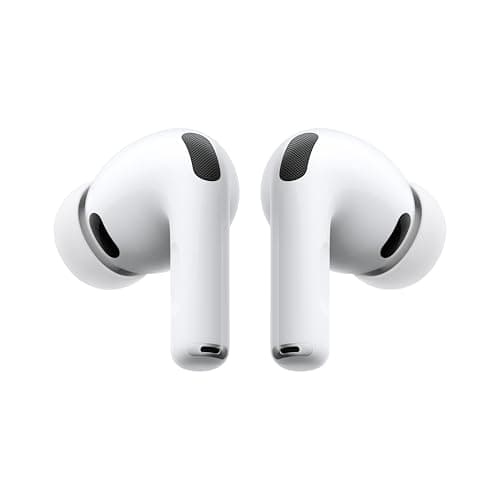 Apple AirPods Pro 3Eight rated hours with canceling on, foam tips in five sizes and an IP57 rating. If your phone is an iPhone this is the least friction of anything here. | Best transparency mode overall | 8.88.8 out of 10, our editorial score | |
| 2 | 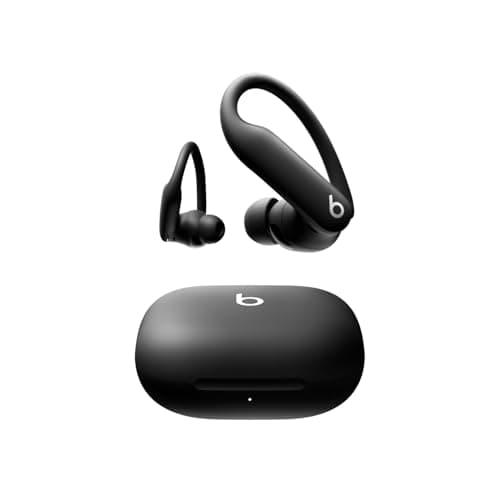 Beats Powerbeats Pro 2The ear hook is the whole argument: a sealed earbud that does not migrate out on a long run, with noise canceling for the treadmill and transparency for the road. | Best for switching modes while moving | 8.48.4 out of 10, our editorial score | |
| 3 | 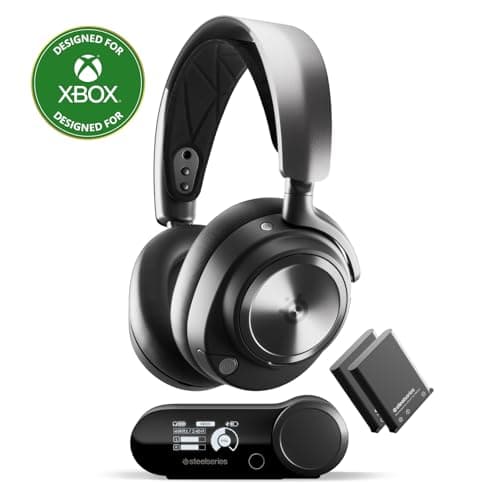 SteelSeries Arctis Nova Pro WirelessThe headset answer rather than the headphone answer: a retractable broadcast microphone, a base station, and two hot-swap batteries so it never has to stop to charge. | Best at a desk, where you also have to talk | 8.88.8 out of 10, our editorial score | |
| 4 | 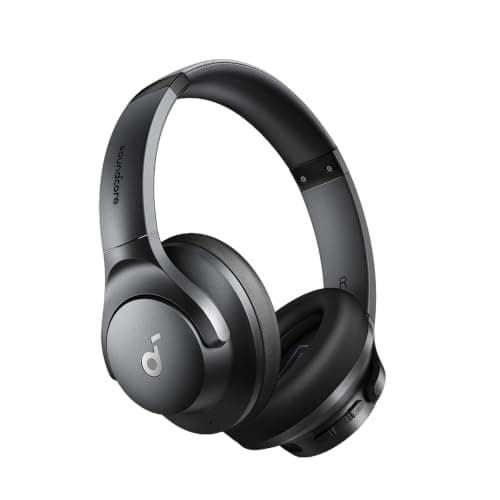 Soundcore Q20iThe cheapest over-ear on this site with hybrid canceling and a real specification sheet: 40 rated hours with canceling on and 40 mm drivers. | Budget pick: the cheapest that does the job | 7.87.8 out of 10, our editorial score | |
| 5 | 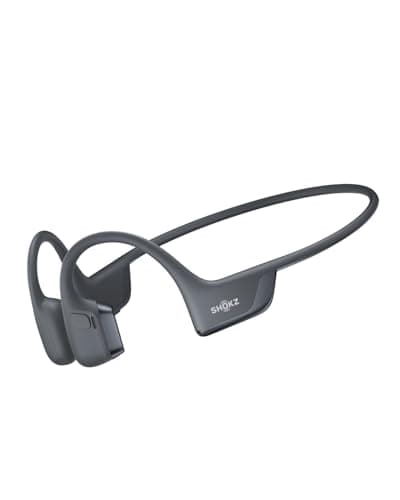 Shokz OpenRun Pro 2An open-ear headphone that leaves your ear canal empty, so you hear the traffic behind you as well as the playlist. The point of it is the opposite of noise canceling. | If you would rather not rely on a mode at all | 8.58.5 out of 10, our editorial score |
#ad Amazon links are affiliate links. Prices come from Amazon’s own data on the date stamped under the buttons above; where we have no current figure the button reads “Check price on Amazon” instead of guessing. How this is funded.
The picks in full
Every pick, in detail
1. Best transparency mode overall
Apple AirPods Pro 3
Eight rated hours with canceling on, foam tips in five sizes and an IP57 rating. If your phone is an iPhone this is the least friction of anything here.
Our editorial score: 8.8 / 10
#ad Price as of November 27, 2026. How this is funded
For almost anyone who wants to hear an announcement without taking a bud out. Apple is the only manufacturer in our registry that publishes a separate battery figure for the mode itself: up to 10 hours of listening in Transparency, against 8 with canceling on. A feature with its own published runtime is a feature the manufacturer is prepared to be held to.
Two supporting specifications matter more here than on a normal earbud page. Foam tips in five sizes get you the seal that makes the switch between modes feel like a change of room rather than a change of volume. And IP57 on both buds and case means the walk to the platform in the rain is not a risk.
The honest costs: Apple’s “up to 2x more noise” figure is a manufacturer claim measured against its own predecessor rather than an independent measurement, the best features assume an iPhone, and there is no wired path at all, so a seatback screen needs a transmitter.
What works on a plane
- Eight rated hours and 24 with the case, matching the best of the premium earbuds
- Foam tips in five sizes solve the fit problem that ruins canceling on most buds
- IP57 on both buds and case is the toughest rating in this group
- Live Translation and heart-rate sensing are genuinely useful abroad, not spec-sheet filler
What does not
- Apple's 2x noise figure is a manufacturer claim measured against its own predecessor, not an independent measurement
- The best features need an iPhone; on Android it is a good but ordinary earbud
- No wired option, so in-flight entertainment needs a transmitter
How it scores against the five travel axes
Published specifications
| Spec | Figure | Source |
|---|---|---|
| Battery, ANC on | 8 hours listening | Apple tech specs |
| Battery, Transparency | Up to 10 hours | Apple tech specs |
| Total with case | Up to 24 hours with ANC | Apple tech specs |
| Quick charge | 5 minutes in the case gives around 1 hour | Apple tech specs |
| Ear tips | Foam tips in five sizes | Apple |
| Water resistance | IP57, buds and case | Apple |
| Apple's ANC claim | Removes up to 2x more noise than AirPods Pro 2 | Apple newsroom |
2. Best for switching modes while moving
Beats Powerbeats Pro 2
The ear hook is the whole argument: a sealed earbud that does not migrate out on a long run, with noise canceling for the treadmill and transparency for the road.
Our editorial score: 8.4 / 10
#ad Price as of November 27, 2026. How this is funded
For the runner and the cyclist, who need the mode to change while their hands are busy and their head is moving. Beats publishes active noise canceling and transparency as a switchable pair, and the ear hook means neither mode is interrupted by a bud working loose.
The battery is quoted by mode, which is the honest way to do it: up to 8 hours per bud and 36 with the case using canceling or transparency, rising to 10 and 45 on Adaptive EQ with both switched off. Heart-rate sensors are on board and it charges over USB-C or Qi.
Against it: IPX4 covers sweat and splashes but not a soaking, the hooks make the case noticeably larger than a stem earbud’s, and the best features assume an Apple device, so an Android buyer loses part of what they paid for.
What works on a plane
- Ear hooks solve the one problem that ruins running earbuds, which is drift
- Switchable canceling and transparency, so the same pair works on the treadmill and the road
- Heart-rate sensing on board removes one more strap from the kit
- USB-C and Qi charging, so it uses whatever cable you already carry
What does not
- IPX4 is splash and sweat only — do not take these into a pool
- The hooks make the case noticeably larger than a stem earbud case
- Best features assume an Apple device, so an Android buyer loses part of what they paid for
How it scores against the five travel axes
Published specifications
| Spec | Figure | Source |
|---|---|---|
| Battery, ANC or transparency on | Up to 8 hours per bud, 36 hours with the case | Beats |
| Battery, Adaptive EQ | Up to 10 hours per bud, 45 hours with the case | Beats |
| Water resistance | IPX4 (sweat and splashes) | Beats |
| Chip | Apple H2 | Beats |
| Noise control | Active noise canceling and transparency | Beats |
| Heart rate | Built-in heart-rate sensors | Beats |
| Charging | USB-C and Qi wireless | Beats |
3. Best at a desk, where you also have to talk
SteelSeries Arctis Nova Pro Wireless
The headset answer rather than the headphone answer: a retractable broadcast microphone, a base station, and two hot-swap batteries so it never has to stop to charge.
Our editorial score: 8.8 / 10
#ad Price as of November 27, 2026. How this is funded
For the person whose awareness problem is a colleague at the door rather than a bus. SteelSeries publishes active noise canceling with a transparency mode, and pairs it with the one thing no travel headphone has: a retractable broadcast-quality bidirectional microphone with AI noise cancellation rated at 25 dB.
The specification that makes it a genuinely different product is the pair of hot-swappable batteries, each rated at up to 22 hours. A transparency mode that dies with the battery is not much use on a long shift, and here the headset is never out of action, only one battery is. It connects over 2.4 GHz plus Bluetooth with multi-system connect.
The limits are structural: a base station on the desk makes this the opposite of a portable product, it is heavy and large next to anything built for a personal item, and it costs flagship-headphone money while being unable to replace one on a plane.
What works on a plane
- Hot-swap batteries mean the headset is never out of action, only one battery is
- 2.4 GHz is the low-latency link that Bluetooth cannot match for games
- A retractable boom microphone beats every travel headphone's built-in array
- Switches between two systems, so the PC and the console share one headset
What does not
- A base station on the desk makes this the opposite of a travel product
- Heavy and large next to anything designed to go in a personal item
- Costs flagship-headphone money and cannot replace one on a plane
How it scores against the five travel axes
Published specifications
| Spec | Figure | Source |
|---|---|---|
| Battery | Up to 22 hours per battery, two hot-swappable batteries | SteelSeries |
| Noise control | Active noise canceling with transparency mode | SteelSeries |
| Wireless | 2.4 GHz plus Bluetooth, with multi-system connect | SteelSeries |
| DAC | GameDAC Gen 2, ESS Sabre quad-DAC, 96 kHz / 24-bit Hi-Res certified | SteelSeries |
| Microphone | Retractable broadcast-quality bidirectional, AI noise cancellation rated at 25 dB | SteelSeries |
| Drivers | Hi-Res capable, frequency range quoted up to 40 kHz | SteelSeries |
| Tuning | 10-band parametric EQ via SteelSeries software | SteelSeries |
4. Budget pick: the cheapest that does the job
Soundcore Q20i
The cheapest over-ear on this site with hybrid canceling and a real specification sheet: 40 rated hours with canceling on and 40 mm drivers.
Our editorial score: 7.8 / 10
#ad Price as of November 27, 2026. How this is funded
The cheapest product on this site with a named, published Transparency mode: soundcore lists ANC, Normal and Transparency as three modes, on an over-ear with up to 40 rated hours with canceling on, 60 in normal mode, 40 mm dynamic drivers, 246 g and five minutes of charge for four hours.
It earns the slot because the feature is published rather than implied, which is not something to take for granted at this price. For hearing a stop announcement on a commute or a colleague across a room, a cheap published mode does the same job as an expensive one.
What you give up is the quality of the mode rather than its existence. soundcore lists a single microphone, which is the hardware transparency depends on, there is no IP rating at all, Bluetooth 5.0 with no LDAC is a basic connection, and the plastic build and thin pads are where the money was saved.
What works on a plane
- Active canceling with ANC, Normal and Transparency modes, at a price where canceling is usually a sticker
- 40 rated hours with canceling on is more than most flagships
- Quick charge gives four hours from five minutes, which covers a forgotten charge
- 40 mm drivers and a published spec sheet, rather than an unbranded decibel claim
What does not
- Priced above a strict fifty-dollar ceiling, so it is not the rock-bottom option
- Bluetooth 5.0 and no LDAC — the codec list is basic, and soundcore lists only a single microphone
- Plastic build and thin pads, which is exactly where the money was saved
How it scores against the five travel axes
Published specifications
| Spec | Figure | Source |
|---|---|---|
| Battery, ANC on | Up to 40 hours | Soundcore |
| Battery, normal mode | Up to 60 hours | Soundcore |
| Quick charge | 5 minutes for 4 hours | Soundcore |
| Drivers | 40 mm dynamic | Soundcore |
| Modes | ANC / Normal / Transparency | Soundcore |
| Microphone | Single mic | Soundcore |
| Weight | 246 g | Soundcore |
| Bluetooth | 5.0 | Soundcore |
5. If you would rather not rely on a mode at all
Shokz OpenRun Pro 2
An open-ear headphone that leaves your ear canal empty, so you hear the traffic behind you as well as the playlist. The point of it is the opposite of noise canceling.
Our editorial score: 8.5 / 10
#ad Price as of November 27, 2026. How this is funded
For the buyer who reads the rest of this page and decides the switch is the problem. Bone conduction leaves the ear canal completely empty, so awareness is a property of the design rather than a setting: there is no mode to be in, and nothing to fail.
Shokz publishes 30.3 g on a titanium band, up to 12 hours of battery, five minutes of charge for 2.5 hours, a one-hour full charge, Bluetooth 5.3, multipoint and IP55 for sweat and splashes. At 30.3 g it stops registering as something you are wearing.
It is also the pick with the clearest costs. Bone conduction gives up bass depth against a sealed earbud and no firmware fixes physics, IP55 is splash resistance rather than submersion, and because it is open by design it is the wrong tool on a plane or in an open-plan office — which is to say it has no canceling to switch to.
What works on a plane
- Your ear canal stays open, so road and trail awareness is not a compromise
- 30.3 g on a titanium band means it stops registering as something you are wearing
- IP55 shrugs off sweat, which is the failure mode that kills running earbuds
- 12 rated hours covers a marathon block without a mid-week charge
What does not
- Bone conduction gives up bass depth against a sealed earbud, and no firmware fixes physics
- IP55 is splash resistance, not submersion — this is not a swimming headphone
- Open by design, so it is the wrong tool on a plane or in an open-plan office
How it scores against the five travel axes
Published specifications
| Spec | Figure | Source |
|---|---|---|
| Weight | 30.3 g | Shokz OpenRun Pro 2 specifications |
| Battery | Up to 12 hours | Shokz OpenRun Pro 2 specifications |
| Quick charge | 5 minutes for 2.5 hours | Shokz OpenRun Pro 2 specifications |
| Full charge | 1 hour | Shokz OpenRun Pro 2 specifications |
| Bluetooth | 5.3 | Shokz OpenRun Pro 2 specifications |
| Water resistance | IP55 (sweat and splashes, not swimming) | Shokz OpenRun Pro 2 specifications |
| Drivers | Bone conduction plus an 18 x 11 mm air-conduction low-frequency unit | Shokz OpenRun Pro 2 specifications |
| Multipoint | Yes | Shokz OpenRun Pro 2 specifications |
How we decide
How these picks were chosen
We do not run a test lab and we do not claim to have flown with these units. Every verdict on this page is one of three things: a measurement published by somebody who does own a test rig and is credited by name, a manufacturer specification we quote and then interpret against what a long flight actually demands, or a plainly-labeled editorial judgment. The five axes we score on — cabin-noise reduction, battery on a long-haul, pack size, comfort past hour three, and wired fallback — are the ones that decide a travel purchase, and the weighting is published in full.
Questions
Common questions
Which headphones have the best transparency mode?
The Apple AirPods Pro 3, on the evidence available. Apple is the only manufacturer in our registry that publishes a separate battery rating for the mode — up to 10 hours in Transparency against 8 with canceling on — and it ships foam tips in five sizes, which is the fit hardware the effect depends on. We have not measured any of these modes and do not claim to.
Does transparency mode use more battery than noise canceling?
Not necessarily, and the only product here that lets you check publishes the opposite: Apple rates Transparency at up to 10 hours and canceling at 8. Beats quotes the same 8-hour figure for either mode. The useful rule is that a single quoted battery figure usually describes the cheapest mode to run, so look for a per-mode number.
Is transparency mode safe for walking near traffic?
It is better than canceling and it is not the same as having your ears open. The mode depends on a battery, it can be switched off by a mis-tap, and in wind the microphone array produces a roar that masks the sounds you need. If awareness is a safety requirement rather than a convenience, an open-ear design removes the failure mode entirely.
Why are the Bose and Sony flagships not on this page?
Because this page only ranks models whose awareness feature is a named, published mode in the manufacturer’s own specifications, and we hold ourselves to citing what we print. Where a specification sheet does not give us a mode name or a figure to quote, the product is left off rather than ranked on an impression. That is a limit of our sourcing, not a judgment about the hardware.
What is the cheapest headphone with a real transparency mode?
The Soundcore Q20i, which lists ANC, Normal and Transparency as three named modes along with up to 40 rated hours with canceling on. The honest caveat is the hardware behind the feature: soundcore lists a single microphone, where the pricier picks use arrays, and the quality of a transparency mode is mostly a function of that array.
Sources
Where these figures come from
- Apple AirPods Pro 3 technical specifications (Transparency battery, IP57, ear tips)
- Beats Powerbeats Pro 2 product page (noise control, battery by mode, IPX4)
- SteelSeries Arctis Nova Pro Wireless product page (noise control, batteries, microphone)
- Soundcore Q20i product page (ANC / Normal / Transparency modes, battery, microphone)
- Shokz OpenRun Pro 2 product page (weight, battery, IP55, multipoint)
Read next
Related reading
- Transparency mode vs noise canceling
When each mode is the right one.
- Shokz alternatives
If you would rather not depend on a mode at all.
- Best headphones for walking
The use case this feature exists for.
- Is it safe to wear headphones while walking?
Why the silent failure mode matters.
- Best noise-canceling headphones for an open-plan office
Where you switch between both modes all day.