
For backpacking the Shokz OpenRun Pro 2 is the best pick: 30.3 g, IP55, up to 12 rated hours and an open-ear design that leaves you able to hear the trail. The Shokz OpenSwim Pro is the choice if you want to leave the phone in the pack, with 32 GB of on-board storage and an IP68 rating submersible to 2 m, and the wired Koss KSC75 at $24.99 has no battery to run out at all.
Inverted priorities
Why a backpacking headphone is not a travel headphone
Canceling is nearly worthless out there
Active canceling is built for continuous low-frequency noise — the 50 to 300 Hz band that an aircraft engine or a train bogie produces. A trail produces wind, birds, footfall and water, which are broadband, intermittent and mostly higher up. The circuitry has nothing to lock onto, so you are carrying the weight and the battery cost of a feature that is doing very little. ANC vs passive isolation sets out which band each approach actually handles.
Watt-hours, not hours
The real question is not how long the headphone lasts. It is how much of your power bank it will eat over a week, and whether it charges from the same USB-C cable as everything else you carry. A charging case is a dedicated reserve; a proprietary magnetic cable is a single point of failure.
Hearing the world is a feature
Road walking, bear country, shared trails, a partner behind you. This is the one category on this site where an open design beats a sealed one on merit rather than on comfort, and where bone conduction — which is a poor choice on a plane — becomes the sensible default.
Weather, not splashes
IPX4 means splash resistance. IP55 adds dust and a low-pressure water jet. IP68 means dust tight and submersible to the depth the manufacturer states. Those are three genuinely different products in three genuinely different weather systems, and the rating is published on every one of them, so there is no excuse for guessing.
Every gram you carry uphill you chose. The only headphone spec that is honest about that is the weight.
The matrix
The five picks on weight, rating and reserve
| OpenRun Pro 2 | OpenSwim Pro | Koss KSC75 | Soundcore P40i | Sony WF-1000XM6 | |
|---|---|---|---|---|---|
| Weight | 30.3 g | 27.3 g | Not published | Not published | approx. 6.5 g per bud |
| Water rating | IP55 | IP68, 2 m fresh water | None | IPX5 | IPX4 |
| Battery | up to 12 h | 9 h Bluetooth, 6 h MP3 | None, wired | 12 h per charge | up to 8 h per bud |
| Reserve in the case | - | - | - | 60 h total | up to 24 h total |
| On-board storage | No | 32 GB | No | No | No |
| Charging | USB-C, 1 h full | 4-pin magnetic, 1.5 h | None | USB-C | USB-C |
| Hear the trail | Yes, open-ear | Yes, open-ear | Yes, on-ear | No, sealed | No, sealed |
| List price | Not quoted here | Not quoted here | $24.99 | $79.99 | Not quoted here |
Pick by trip
Three trips, three different answers
A long-distance trail, resupplying weekly
The OpenSwim Pro, because loading music on board means the phone can stay in airplane mode in the bottom of the pack. Back that up with the KSC75 and a 3.5 mm adapter as a nine-gram insurance policy that cannot go flat.
A hut-to-hut or hostel trip in Europe
There is an outlet most nights, so battery is not the constraint — sleep is. The Sony WF-1000XM6 in a dorm, and the OpenRun Pro 2 for the walking. If you want the sleep problem treated properly, best earbuds for sleeping on a plane applies almost unchanged to a bunk.
A long-haul flight at either end of it
None of these picks is the right headphone for the flight itself, and that is worth saying plainly. A cabin is a 50 to 300 Hz problem and it wants a sealed canceling design — the lightest canceling headphones is the page for anyone trying to serve both the plane and the pack with one purchase.
What to look for
Five checks before you buy for a backpacking trip
- Published weight, in grams. If a manufacturer does not publish it, treat that as information. Two of the five products here do not.
- An IP rating with a number you understand. IPX4, IP55 and IP68 are not interchangeable. Match it to the worst weather you will actually be out in.
- USB-C, or accept the risk. One cable for everything is worth more on day six than any audio specification.
- Total reserve, not per-charge battery. A case with 60 hours in it changes the trip. Twelve hours in the buds does not.
- Whether you need to hear the trail. Decide this before you shop, because it rules out half the category either way.
In short
Key takeaways
- Shokz OpenRun Pro 2: 30.3 g, IP55, up to 12 rated hours, and you still hear the trail.
- Shokz OpenSwim Pro: 32 GB on board and IP68 to 2 m, so the phone can stay in the pack.
- Koss KSC75 at $24.99 is wired with no battery, no app and a limited lifetime warranty.
- Soundcore P40i at $79.99 carries a 60-hour reserve in the case, which is the number that matters.
- Sony WF-1000XM6 is the pick for the night bus and the dorm, not the ridge.
- Active canceling does almost nothing on a trail: it is built for continuous low-frequency noise.
At a glance
Quick picks
Scores are our editorial judgment from published specifications and cited third-party measurements, not our own testing. The rubric is published in full. Tap any row for the full write-up.
| # | Product | Best for | Score | Price |
|---|---|---|---|---|
| 1 |  Shokz OpenRun Pro 2An open-ear headphone that leaves your ear canal empty, so you hear the traffic behind you as well as the playlist. The point of it is the opposite of noise canceling. | Best overall for a trail | 8.58.5 out of 10, our editorial score | |
| 2 | 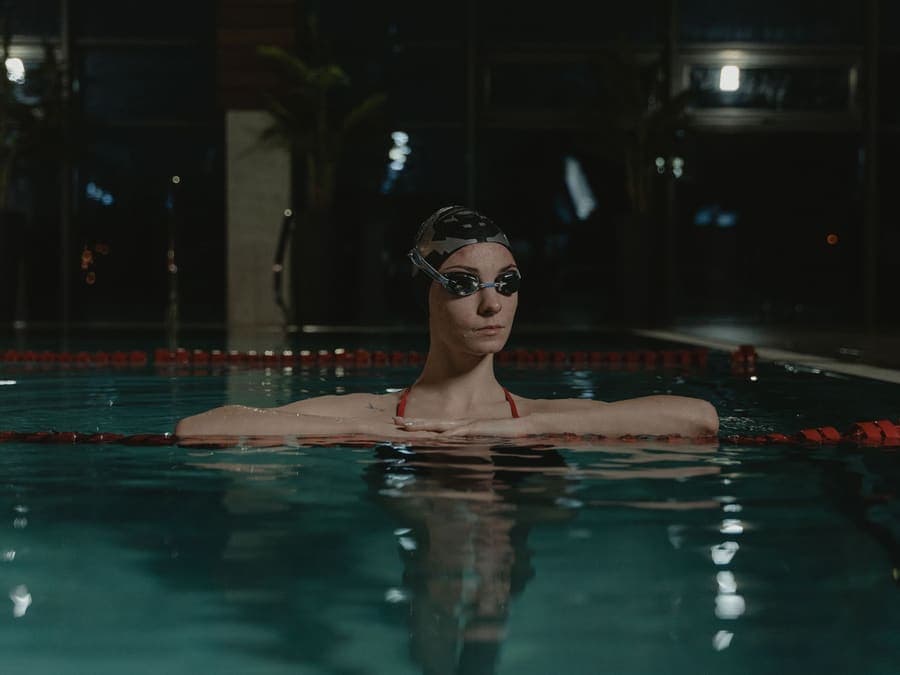 Shokz OpenSwim ProThe rare headphone that actually works underwater, because it stores the music on board rather than relying on Bluetooth, which does not travel through water. | Best if you leave the phone in the pack | 8.68.6 out of 10, our editorial score | |
| 3 | 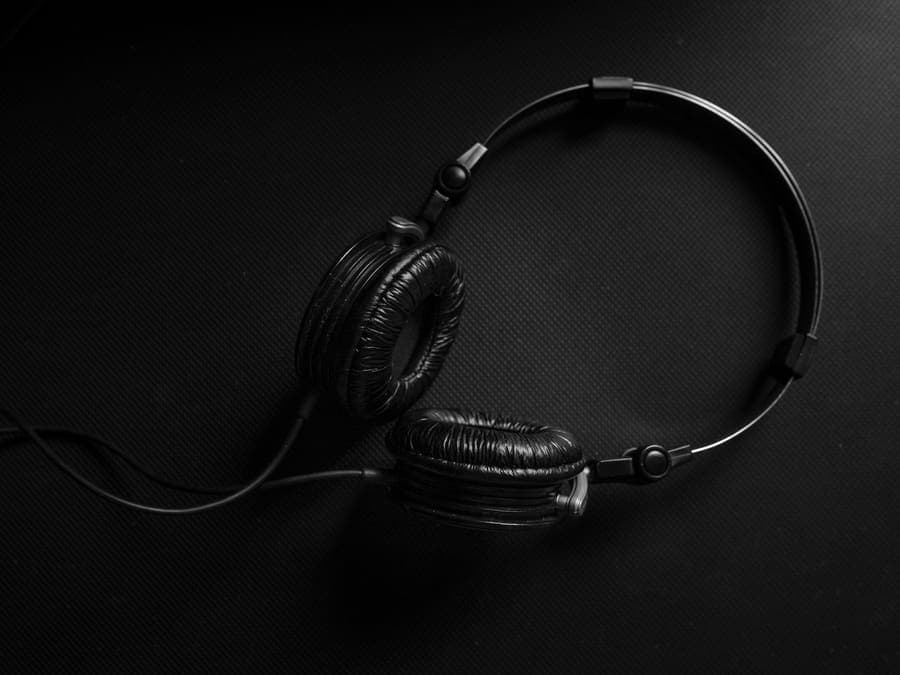 Koss KSC75$24.99 for a clip-on with titanium-coated diaphragms, a published distortion figure and the same limited lifetime warranty. Nothing at this price is more honest. | Best zero-battery option | 7.27.2 out of 10, our editorial score | |
| 4 | 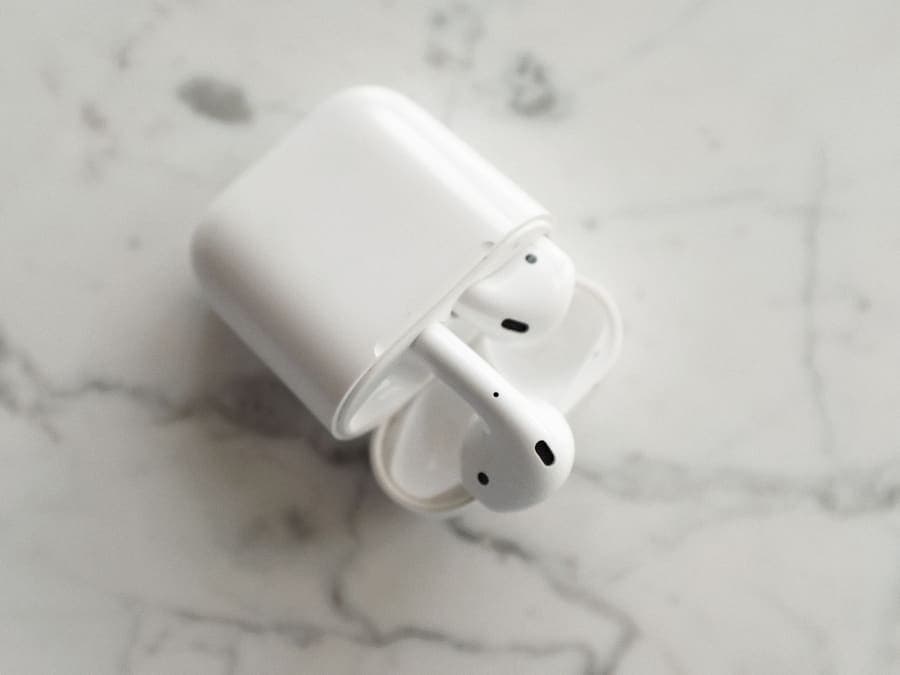 Soundcore P40iA $79.99 earbud rated at 12 hours a charge and 60 with the case, with adaptive canceling and a case that folds out into a phone stand. | Best battery per dollar | 8.08.0 out of 10, our editorial score | |
| 5 | 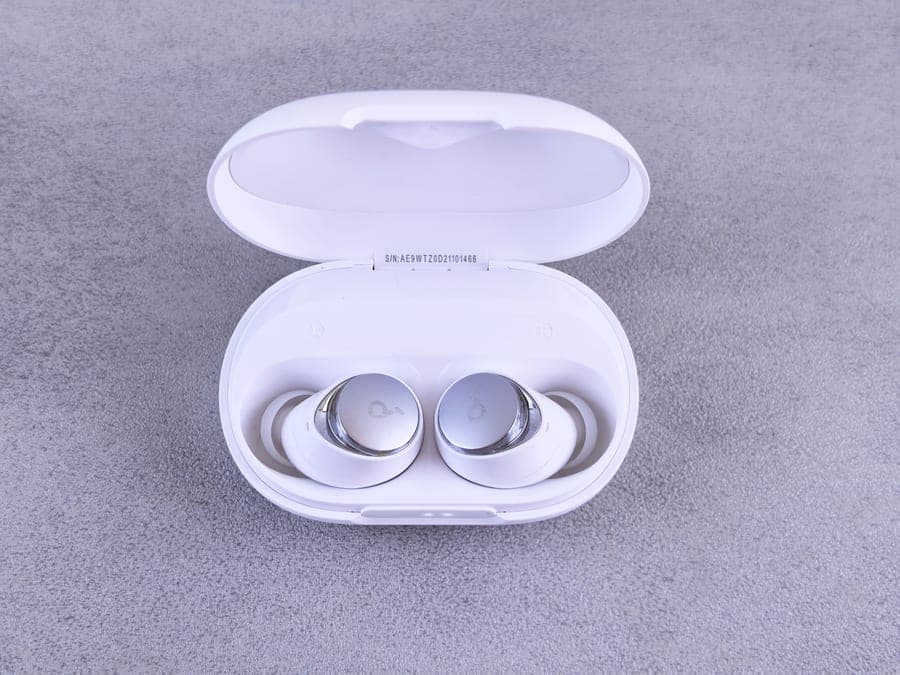 Sony WF-1000XM6Eight rated hours per bud and 24 with the case, at roughly 6.5 g each. The most sensible premium earbud for a flight, because you never have to plan around the battery. | Best for the hostel and the bus | 8.98.9 out of 10, our editorial score |
#ad Amazon links are affiliate links. No live price is shown anywhere on this site, so every button reads “Check price on Amazon”. How this is funded.
The picks in full
Every pick, in detail
1. Best overall for a trail
Shokz OpenRun Pro 2
An open-ear headphone that leaves your ear canal empty, so you hear the traffic behind you as well as the playlist. The point of it is the opposite of noise canceling.
Our editorial score: 8.5 / 10
#ad Live price not shown. How this is funded
Also sold direct by Shokz — we earn nothing there, so check both.
30.3 g, which is a tenth of a flagship over-ear, and an open-ear design that leaves your ear canal empty. On a trail that second point is a safety feature rather than a compromise: you hear the vehicle, the dog, the river, the person behind you.
Up to 12 rated hours, five minutes of charge for 2.5 hours, a full charge in an hour, Bluetooth 5.3, multipoint and IP55 — rated for sweat and splashes, which Shokz states explicitly is not swimming. The driver arrangement pairs bone conduction with an 18 x 11 mm air-conduction low-frequency unit, which is how it gets more bass than a pure bone-conduction design.
Twelve hours is the figure to plan around. It is a day and a half of casual listening, not a week, so on a multi-day trip it still depends on your power bank. Nothing here is canceled or isolated, which is the trade.
What works on a plane
- Your ear canal stays open, so road and trail awareness is not a compromise
- 30.3 g on a titanium band means it stops registering as something you are wearing
- IP55 shrugs off sweat, which is the failure mode that kills running earbuds
- 12 rated hours covers a marathon block without a mid-week charge
What does not
- Bone conduction gives up bass depth against a sealed earbud, and no firmware fixes physics
- IP55 is splash resistance, not submersion — this is not a swimming headphone
- Open by design, so it is the wrong tool on a plane or in an open-plan office
How it scores against the five travel axes
Published specifications
| Spec | Figure | Source |
|---|---|---|
| Weight | 30.3 g | Shokz OpenRun Pro 2 specifications |
| Battery | Up to 12 hours | Shokz OpenRun Pro 2 specifications |
| Quick charge | 5 minutes for 2.5 hours | Shokz OpenRun Pro 2 specifications |
| Full charge | 1 hour | Shokz OpenRun Pro 2 specifications |
| Bluetooth | 5.3 | Shokz OpenRun Pro 2 specifications |
| Water resistance | IP55 (sweat and splashes, not swimming) | Shokz OpenRun Pro 2 specifications |
| Drivers | Bone conduction plus an 18 x 11 mm air-conduction low-frequency unit | Shokz OpenRun Pro 2 specifications |
| Multipoint | Yes | Shokz OpenRun Pro 2 specifications |
2. Best if you leave the phone in the pack
Shokz OpenSwim Pro
The rare headphone that actually works underwater, because it stores the music on board rather than relying on Bluetooth, which does not travel through water.
Our editorial score: 8.6 / 10
#ad Live price not shown. How this is funded
Also sold direct by Shokz — we earn nothing there, so check both.
The one product here that does not need a phone at all. 32 GB of on-board storage with MP3, FLAC, WAV, AAC, M4A, APE and WMA support, so you load it before you leave and then carry nothing else. For a long trail that removes the single biggest battery drain on the trip, which is the phone, not the headphone.
27.3 g and IP68, rated submersible to 2 m of fresh water — the only genuinely waterproof product on this site, and the one that does not care about three days of rain. Up to 9 rated hours over Bluetooth and 6 in MP3 mode, with a full charge in 1.5 hours over a 4-pin magnetic cable.
Two honest limits. The magnetic cable is proprietary, so losing it on a trip is a problem a USB-C product would not have. And 6 hours in MP3 mode is the shortest canceling-free figure here.
What works on a plane
- IP68 to 2 m is a real submersion rating, not splash resistance with optimistic marketing
- 32 GB of on-board storage is the only thing that works underwater, and it is generous
- Switches to Bluetooth on land, so it is not a single-purpose purchase
- 27.3 g under a swim cap is light enough to forget about
What does not
- Bluetooth does not work submerged, so lap swimming means loading files first
- A proprietary 4-pin magnetic charging cable is one more thing to lose
- Bone conduction in water is clear but never rich — expect intelligibility, not depth
How it scores against the five travel axes
Published specifications
| Spec | Figure | Source |
|---|---|---|
| Weight | 27.3 g | Shokz OpenSwim Pro specifications |
| Water resistance | IP68, submersible to 2 m of fresh water | Shokz OpenSwim Pro specifications |
| Battery, Bluetooth | 9 hours | Shokz OpenSwim Pro specifications |
| Battery, MP3 mode | 6 hours | Shokz OpenSwim Pro specifications |
| On-board storage | 32 GB | Shokz OpenSwim Pro specifications |
| File formats | MP3, FLAC, WAV, AAC, M4A, APE, WMA | Shokz OpenSwim Pro specifications |
| Bluetooth | 5.4 | Shokz OpenSwim Pro specifications |
| Full charge | 1.5 hours, 4-pin magnetic cable | Shokz OpenSwim Pro specifications |
3. Best zero-battery option
Koss KSC75
$24.99 for a clip-on with titanium-coated diaphragms, a published distortion figure and the same limited lifetime warranty. Nothing at this price is more honest.
Our editorial score: 7.2 / 10
#ad Live price not shown. How this is funded
Also sold direct by Koss — we earn nothing there, so check both.
$24.99 at the time of writing, wired, with no battery, no app, no firmware and nothing to charge. On a trip measured in days between outlets, that is not a budget compromise — it is the correct engineering answer, and it is why experienced hikers keep a pair in a lid pocket.
15 Hz to 25,000 Hz, 60 ohms, 101 dB SPL/1mW sensitivity, total harmonic distortion under 0.2 percent, a 4 ft straight dual-entry cable with a 3.5 mm plug, and a limited lifetime warranty. At this price the warranty is almost funnier than the specification.
What you give up: isolation, canceling, water resistance and a modern connector. Most phones no longer have a 3.5 mm socket, so budget for an adapter — one more tiny thing to lose, but one that does not need charging either.
What works on a plane
- $24.99 with a limited lifetime warranty, which is a genuinely unusual combination
- Publishes a distortion figure, which almost nothing at this price does
- Clip-on and tiny, so it disappears into a jacket pocket
- Wired and battery-free, so it is always ready and never degrades
What does not
- Open-backed by design, so it blocks essentially nothing
- The ear clips are an acquired taste and do not suit every ear
- No microphone, no controls, no canceling — it is a driver on a wire
How it scores against the five travel axes
4. Best battery per dollar
Soundcore P40i
A $79.99 earbud rated at 12 hours a charge and 60 with the case, with adaptive canceling and a case that folds out into a phone stand.
Our editorial score: 8.0 / 10
#ad Live price not shown. How this is funded
Also sold direct by Soundcore — we earn nothing there, so check both.
$79.99 at the time of writing, with 12 hours per charge and 60 hours with the case. The case is the point: on a backpacking trip a charging case is a small, sealed power bank dedicated to one device, and 60 hours of reserve is four or five days of evening listening without touching your main battery.
IPX5, adaptive canceling, 11 mm composite drivers, six microphones with an AI call algorithm, and a case that doubles as a phone stand. At this price losing one in a river crossing is an annoyance rather than a disaster, which is a real consideration.
The limit is that sealed earbuds remove your awareness of the trail, which is exactly what the Shokz above preserves. Use them in camp and in a hostel, not on a road walk.
What works on a plane
- 60 rated hours with the case, from an earbud listed at $79.99
- IPX5 means sweat and rain are not a worry on a commute
- The fold-out case stand is a genuinely useful thing on a tray table
- Adaptive canceling at a price where fixed canceling is the norm
What does not
- Canceling depth is a long way behind the premium earbuds, especially in the low band
- No LDAC, so Android listeners do not get the better codec
- The stock tip selection is narrow, and the seal is what decides earbud canceling
How it scores against the five travel axes
Published specifications
| Spec | Figure | Source |
|---|---|---|
| List price | $79.99 at the time of writing | Soundcore |
| Battery | 12 hours per charge, 60 hours with the case | Soundcore |
| Noise canceling | Adaptive ANC | Soundcore |
| Drivers | 11 mm composite | Soundcore |
| Water resistance | IPX5 | Soundcore |
| Microphones | 6, with an AI call algorithm | Soundcore |
| Case | Doubles as a phone stand | Soundcore |
5. Best for the hostel and the bus
Sony WF-1000XM6
Eight rated hours per bud and 24 with the case, at roughly 6.5 g each. The most sensible premium earbud for a flight, because you never have to plan around the battery.
Our editorial score: 8.9 / 10
#ad Live price not shown. How this is funded
Also sold direct by Sony — we earn nothing there, so check both.
Backpacking is not all trail. It is also a night bus, a twelve-bed dorm and a ferry terminal, and those are the places where canceling earns back the weight you carried it in.
Approximately 6.5 g per bud with the medium tips, up to 8 rated hours per bud and up to 24 with the case — 16 of those from the case. IPX4, an 8.4 mm driver, Bluetooth 5.3, SBC, AAC, LDAC and LC3, and the HD Noise Canceling Processor QN3e with dual processors and eight microphones.
This is the most expensive thing on the page and the most stealable, and IPX4 is a splash rating rather than a weather rating. Carry it for the transit, not for the ridge.
What works on a plane
- Eight rated hours per charge clears most short-haul flights without touching the case
- 24 hours total with the case is the strongest reserve in the premium earbud set
- LDAC means it is not tied to one phone platform
- Roughly 6.5 g per bud effectively disappears when you are trying to sleep on your side
What does not
- Canceling is excellent but the Bose still takes the low-frequency band
- No wired fallback at all, so a seatback screen needs a transmitter
- IPX4 is splash resistance, not weather resistance
How it scores against the five travel axes
Published specifications
| Spec | Figure | Source |
|---|---|---|
| Battery, earbuds | Up to 8 hours | Sony |
| Total with case | Up to 24 hours (16 from the case) | Sony |
| Weight | Approx. 6.5 g per bud with M tips | Sony |
| Driver | 8.4 mm | Sony |
| Bluetooth | 5.3 | Sony |
| Codecs | SBC, AAC, LDAC, LC3 | Sony |
| Water resistance | IPX4 | Sony |
| Processor | HD Noise Canceling Processor QN3e, dual processors, eight microphones | Sony |
How we decide
How these picks were chosen
We do not run a test lab and we do not claim to have flown with these units. Every verdict on this page is one of three things: a measurement published by somebody who does own a test rig and is credited by name, a manufacturer specification we quote and then interpret against what a long flight actually demands, or a plainly-labeled editorial judgment. The five axes we score on — cabin-noise reduction, battery on a long-haul, pack size, comfort past hour three, and wired fallback — are the ones that decide a travel purchase, and the weighting is published in full.
Questions
Common questions
What are the best headphones for backpacking?
The Shokz OpenRun Pro 2, at 30.3 g with an IP55 rating, up to 12 rated hours and an open-ear design that leaves you aware of the trail. If you want to leave your phone in the pack, the Shokz OpenSwim Pro carries 32 GB of music on board and is rated IP68, submersible to 2 m of fresh water.
Do you need noise cancelling headphones for backpacking?
No. Canceling is designed for continuous low-frequency noise, which a trail does not produce. It is worth carrying for the flight, the night bus and the dorm, and it does almost nothing between campsites.
Are wired headphones better for a long trip?
For a trip measured in days between outlets, there is a real argument for them. The Koss KSC75 at $24.99 has no battery, no firmware and nothing to charge. The catch is that most phones no longer have a 3.5 mm socket, so you carry an adapter.
What IP rating do I need for hiking in the rain?
IPX4 is splash resistance and is not a weather rating. IP55 adds dust protection and resistance to a low-pressure water jet, which covers sustained rain. IP68 means dust tight and submersible to the stated depth, which is what the OpenSwim Pro publishes at 2 m of fresh water.
Is it safe to wear headphones while hiking?
It depends entirely on what you need to hear. On a shared trail, a road walk or anywhere with wildlife or vehicles, an open-ear or bone-conduction design that leaves your ear canal clear is the responsible choice. Sealed canceling earbuds remove exactly the awareness you need.
Sources
Where these figures come from
- Shokz OpenRun Pro 2 specifications (30.3 g, 12 hours, IP55, Bluetooth 5.3, drivers, multipoint)
- Shokz OpenSwim Pro specifications (27.3 g, IP68 to 2 m, 32 GB storage, file formats, battery, charging)
- Koss KSC75 product page (list price $24.99, frequency response, impedance, sensitivity, distortion, warranty)
- Soundcore P40i product page (list price $79.99, 12 h and 60 h with case, IPX5, drivers, case stand)
- Sony WF-1000XM6 specifications (weight per bud, battery, IPX4, driver, codecs, processor and microphones)
Read next
Related reading
- The lightest noise-cancelling headphones
If one purchase has to serve the plane and the pack.
- Best headphones for running
The same open-ear argument, at a higher heart rate.
- Are bone-conduction headphones good for flying?
Why the best trail design is the worst cabin design.
- Best earbuds for sleeping on a plane
Applies almost unchanged to a twelve-bed dorm.